
Here, pumpkin pie from scratch means two things: a roasted sugar pumpkin and a butter crust you mix by hand. It’s more work than opening a can, and I won’t pretend otherwise. In return you get a custard that tastes a little earthy and less like the inside of a spice jar.
This recipe makes one 7-inch pie. That’s enough for four people, with seconds.
Busy week? Split it up. Roast the pumpkin and make the dough one evening, then bake the pie the next. Neither one suffers for the wait.
The first time I used fresh pumpkin, I skipped draining the puree and the pie wept a puddle onto every plate. I haven’t skipped that step since.
Ingredients
For the pumpkin
- 1 small sugar pumpkin (pie pumpkin), about 700–900 g / 1½–2 lb. You only need about 1 cup of puree, so you’ll have some left over.
- 1 tsp neutral oil (canola or vegetable), to rub on the cut sides
For the crust
- 1 cup (125 g) all-purpose flour
- ⅛ tsp salt
- 5½ tbsp (78 g) cold unsalted butter, cubed. Keep it cold because that’s where the flakiness comes from.
- 2–3 tbsp (30–45 ml) ice-cold water
You can use a store-bought crust instead. Look for a small or deep-dish one and trim it to fit. It won’t taste as buttery, but it’ll save you 20 minutes.
For the filling
- 1 cup (about 245 g) fresh pumpkin puree, drained
- 6 tbsp (75 g) granulated sugar
- ¼ tsp salt
- ¾ tsp ground cinnamon
- ½ tsp ground ginger
- ¼ tsp ground nutmeg (optional)
- Pinch of ground cloves (optional. They’re strong, so a pinch really is enough.)
- 1 large egg plus 1 egg yolk. The extra yolk gives the custard a richer set than one egg alone.
- ¾ cup (180 ml) evaporated milk
Light brown sugar works in place of white sugar. The pie comes out a little darker and more caramel-flavored.
Step-by-Step Pumpkin Pie From Scratch
- Roast the pumpkin. Heat the oven to 375°F (190°C). Cut the pumpkin in half from top to bottom, scrape out the seeds and stringy bits, and rub the cut sides with oil. Put the halves cut-side down on a lined baking sheet and roast for 45 minutes to 1 hour. They’re done when a knife slides through the skin with no resistance and the halves start to slump.
Heads up: use a sugar pumpkin or pie pumpkin, not a carving pumpkin. Carving pumpkins are stringy and watery, and they taste like almost nothing.
-
Puree and drain. Let the halves cool until you can handle them, then scoop the flesh away from the skin. Blend or process it until smooth. Next, scrape the puree into a fine-mesh sieve lined with a paper towel or cheesecloth and let it drain for 30 minutes. Fresh pumpkin can hold a surprising amount of water. This is the step that decides whether your pie sets or weeps, so don’t skip it. Measure out 1 cup and keep the rest for later.
-
Make the dough. Whisk the flour and salt together in a bowl. Add the cold butter and rub it in with your fingertips (or a pastry cutter) until the mixture looks like coarse crumbs with some pea-sized bits of butter still showing. Sprinkle in the water a tablespoon at a time, tossing with a fork. Stop as soon as the dough holds together when you squeeze it. Press it into a disk, wrap it, and chill for at least 30 minutes.
-
Line the pan. On a floured counter, roll the dough into a circle about 2 inches wider than your 7-inch pie plate. Lay it in the plate and press it gently into the corners, but don’t stretch it, because stretched dough shrinks. Trim the overhang, then fold it under and crimp the edge. Chill the lined plate for 15 minutes.
-
Blind bake. With the oven still at 375°F, line the crust with foil and fill it with pie weights or dried beans. Bake for about 12 minutes, until the sides look set and no longer shiny. Take out the foil and weights, then turn the oven down to 350°F (175°C).
-
Mix the filling. In a large bowl, whisk the egg, yolk, sugar, salt, and spices until smooth. Stir in the pumpkin puree, then the evaporated milk. It’ll look thin, almost soupy, and that’s normal for a custard before it bakes.
-
Fill and bake. Set the pie plate on a foil-lined baking sheet, which makes it much easier to carry a full pie to the oven. Pour in the filling. If the crust edges are already browning, cover them with a ring of foil. Bake for 35 to 45 minutes. Start checking at 30 because small pies and different ovens vary a lot.
-
Check for doneness. The edges should look set and slightly puffed, while the center still has a slight wobble when you nudge the pan. A knife inserted halfway between the edge and the center should come out clean. Don’t wait for the center to go firm. If you do, it’ll overcook and crack while it cools.
-
Cool it properly. Set the pie on a rack and let it cool for at least 2 hours. The custard keeps setting as it cools. If you cut it warm, you’ll get filling that slumps across the plate.
(A glass pie plate is worth using here, since it lets you see whether the bottom crust has browned.)
What to Expect
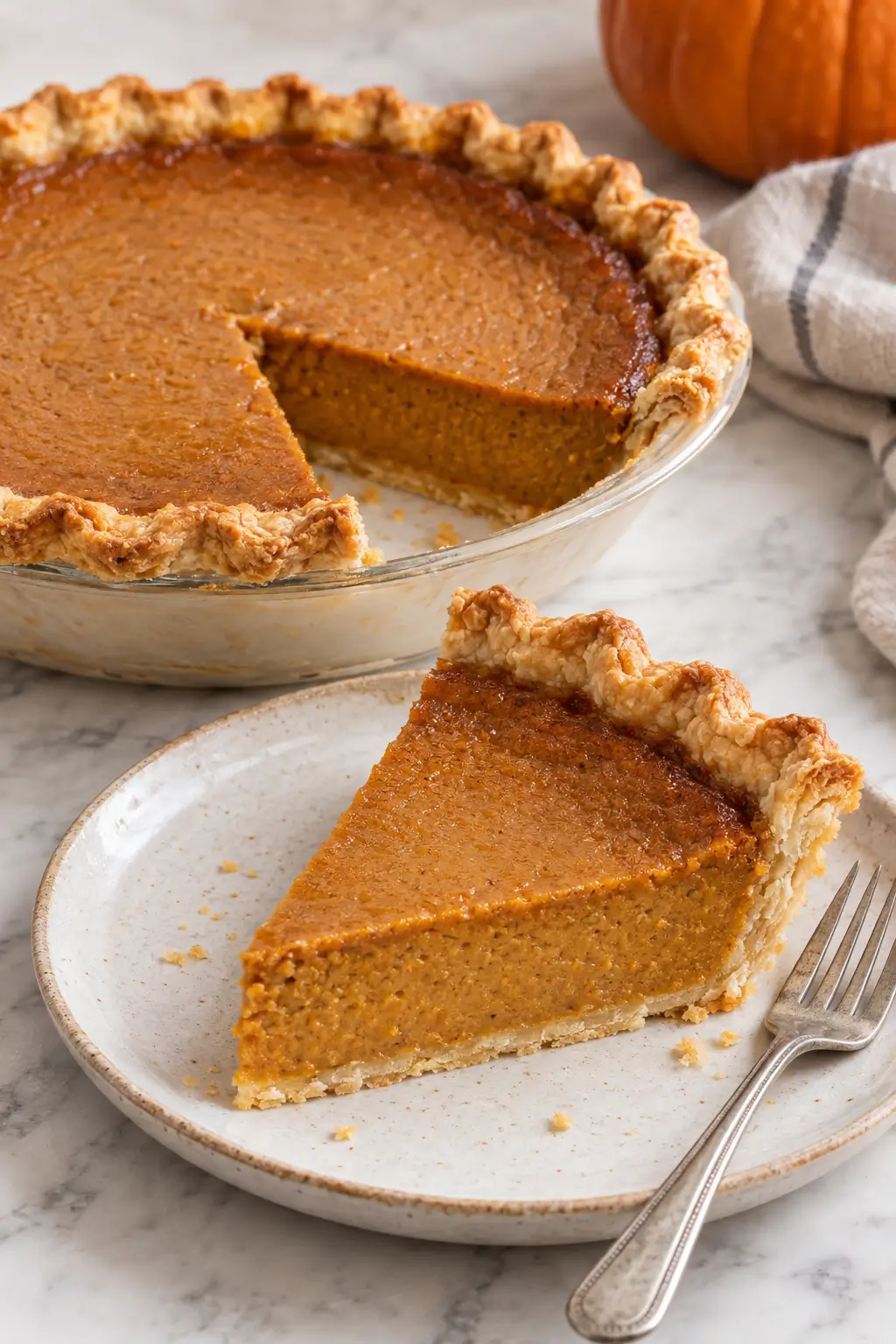
The filling sets into a smooth, sliceable custard, a bit lighter in color than pies made with canned puree. You might see a few fine cracks if it went a couple of minutes long, and that’s purely cosmetic. Fresh pumpkin tastes milder and slightly vegetal, so the spices come through more cleanly. The crust stays crisp at the edges and softens a little underneath, which is about as good as a custard pie gets. How much your puree varies depends on the pumpkin, so two pies won’t come out identical.
Ways to Change It Up
If you need it dairy-free, use full-fat canned coconut milk in place of the evaporated milk and swap the butter in the crust for a firm plant-based butter block. It sets, just a little softer, and you’ll taste the coconut. Give it an extra hour in the fridge before slicing.
For a deeper, darker flavor, use brown sugar and add 1 teaspoon of molasses to the filling. Some scratch versions use molasses, and it pushes the pie toward gingerbread.
- Canned pumpkin shortcut: Use 1 cup of plain canned pumpkin (not pie filling) and skip steps 1 and 2. I’m not going to judge you. Canned pumpkin has been the standard since the late 1920s.
- No pastry at all: If you want the flavor without rolling dough, these no-bake pumpkin cheesecake cups are a lot less work.
Serving and Storage
Serve it cool or at room temperature with softly whipped cream. Lightly sweetened is best, since the pie is already sweet enough. On a holiday table it sits well after a meal with cranberry sauce with orange zest and a from-scratch green bean casserole.
Once it’s cool, cover the pie loosely and refrigerate it. Don’t leave a custard pie on the counter overnight. It keeps for 3 to 4 days in the fridge, though the crust softens a little more each day.
You can freeze it, wrapped tightly, for up to a month. Thaw it overnight in the fridge. The filling holds up fine, but the crust comes out noticeably softer, so freezing is a backup plan rather than something I’d do on purpose.
Common Questions
Why did my pie crack down the middle?
It baked too long. Cracks almost always mean the center went past set. Next time, take it out while the middle still jiggles a little. Cooling it too fast can also make the cracks worse, so keep it away from open windows.
The bottom crust was soggy. What went wrong?
The likely causes are wet puree, skipping the blind bake, or both. Drain the pumpkin properly and make sure the crust sides look set before you pour in the filling. A metal or glass plate on the lower oven rack also helps.
How far ahead can I make it?
You can bake the pie a day ahead without any trouble, and I actually think it slices better on day two. The puree keeps for 4 to 5 days in the fridge, and the dough keeps for 2 days.
What do I do with the leftover puree?
There’ll usually be at least a cup. Stir it into pumpkin baked oatmeal for the week, use it in pumpkin bread with chocolate chips, or save it for pumpkin bread pudding with caramel sauce. It also freezes well in a zip-top bag for a few months.
Can I double this for a 9-inch pie?
Yes. Double everything, but use 2 whole eggs plus 1 yolk instead of doubling the yolk. Expect a longer bake, closer to an hour at 350°F, and judge doneness by the wobble rather than the timer.
If you want to read up on where this dish came from, here’s a short history of pumpkin pie from Tudor England to American Thanksgiving. It includes the year it was discouraged at Thanksgiving to save eggs. This article on early pumpkin pies baked inside hollowed pumpkins covers the earlier versions, which were closer to a baked pudding.
One last thing: taste the pumpkin itself once it’s roasted. If it’s bland, add a little more cinnamon and ginger to the filling. If it’s sweet and nutty, leave the spices alone. I’m curious whether anyone tries this with a kabocha squash instead, so tell me how it sets if you do.
Pumpkin Pie From Scratch With Real Roasted Pumpkin

Equipment
- Large rimmed baking sheet
- Parchment paper
- 7-inch pie plate
- Fine-mesh sieve
- Paper towel or cheesecloth
- Pie weights or dried beans
- Foil
- Fork
- Whisk
- Pastry cutter
- Blender or food processor
- Large bowl
- Wire rack
Ingredients
For the pumpkin
- 1 small sugar pumpkin (pie pumpkin) about 700–900 g / 1½–2 lb; you only need about 1 cup of puree
- 1 tsp neutral oil canola or vegetable, to rub on the cut sides
For the crust
- 1 cup (125 g) all-purpose flour
- 1/8 tsp salt
- 5½ tbsp (78 g) unsalted butter cold, cubed; keep it cold for flakiness
- 2–3 tbsp (30–45 ml) ice-cold water
For the filling
- 1 cup (about 245 g) fresh pumpkin puree drained
- 6 tbsp (75 g) granulated sugar
- 1/4 tsp salt
- 3/4 tsp ground cinnamon
- 1/2 tsp ground ginger
- 1/4 tsp ground nutmeg optional
- 1 pinch ground cloves optional; they are strong, so a pinch is enough
- 1 large egg
- 1 egg yolk extra yolk gives a richer set
- 3/4 cup (180 ml) evaporated milk
Instructions
- Roast the pumpkin. Heat the oven to 375°F (190°C). Cut the pumpkin in half from top to bottom, scrape out the seeds and stringy bits, and rub the cut sides with oil. Put the halves cut-side down on a lined baking sheet and roast for 45 minutes to 1 hour, until a knife slides through the skin with no resistance and the halves start to slump. Use a sugar or pie pumpkin, not a carving pumpkin, which is stringy, watery, and bland.
- Puree and drain. Let the halves cool until you can handle them, then scoop the flesh away from the skin. Blend or process until smooth. Scrape the puree into a fine-mesh sieve lined with a paper towel or cheesecloth and drain for 30 minutes. This step decides whether your pie sets or weeps, so do not skip it. Measure out 1 cup and keep the rest for later.
- Make the dough. Whisk the flour and salt together in a bowl. Add the cold butter and rub it in with your fingertips or a pastry cutter until the mixture looks like coarse crumbs with some pea-sized bits of butter showing. Sprinkle in the ice-cold water a tablespoon at a time, tossing with a fork. Stop as soon as the dough holds together when squeezed. Press it into a disk, wrap it, and chill for at least 30 minutes.
- Line the pan. On a floured counter, roll the dough into a circle about 2 inches wider than your 7-inch pie plate. Lay it in the plate and press gently into the corners without stretching, since stretched dough shrinks. Trim the overhang, fold it under, and crimp the edge. Chill the lined plate for 15 minutes.
- Blind bake. With the oven still at 375°F (190°C), line the crust with foil and fill it with pie weights or dried beans. Bake for about 12 minutes, until the sides look set and no longer shiny. Remove the foil and weights, then lower the oven to 350°F (175°C).
- Mix the filling. In a large bowl, whisk the egg, egg yolk, sugar, salt, and spices until smooth. Stir in the pumpkin puree, then the evaporated milk. The filling will look thin and almost soupy, which is normal for a custard before it bakes.
- Fill and bake. Set the pie plate on a foil-lined baking sheet for easier carrying. Pour in the filling. If the crust edges are already browning, cover them with a ring of foil. Bake for 35 to 45 minutes, starting to check at 30 minutes because ovens and small pies vary.
- Check for doneness. The edges should look set and slightly puffed, while the center still has a slight wobble when you nudge the pan. A knife inserted halfway between the edge and center should come out clean. Do not wait for the center to firm up completely, or it will overcook and crack while cooling.
- Cool it properly. Set the pie on a wire rack and let it cool for at least 2 hours. The custard keeps setting as it cools. Cutting it warm will cause the filling to slump across the plate.



Leave a Reply