
If a pot of briny, tomato‑kissed seafood sounds like dinner relief, Sailor’s Soup checks every box. It’s a coastal, mariner‑style fish soup common along Spain’s shores and in many Latin American kitchens, built on simple technique rather than fancy ingredients. Expect tender shrimp, flaky white fish, and steam‑opened mussels in a light yet flavorful broth.
Busy weeknight? This one‑pot method leans on pantry staples and a short simmer. Newer cooks will appreciate the step‑by‑step order for adding seafood so nothing turns rubbery, while seasoned home chefs can riff with what’s fresh.
The flavor is bright from white wine, savory from paprika and garlic, and gently rounded with olive oil. It’s hearty enough for a main, especially in cooler months, but never heavy. Grab bread for dunking and you’re set.
INGREDIENTS
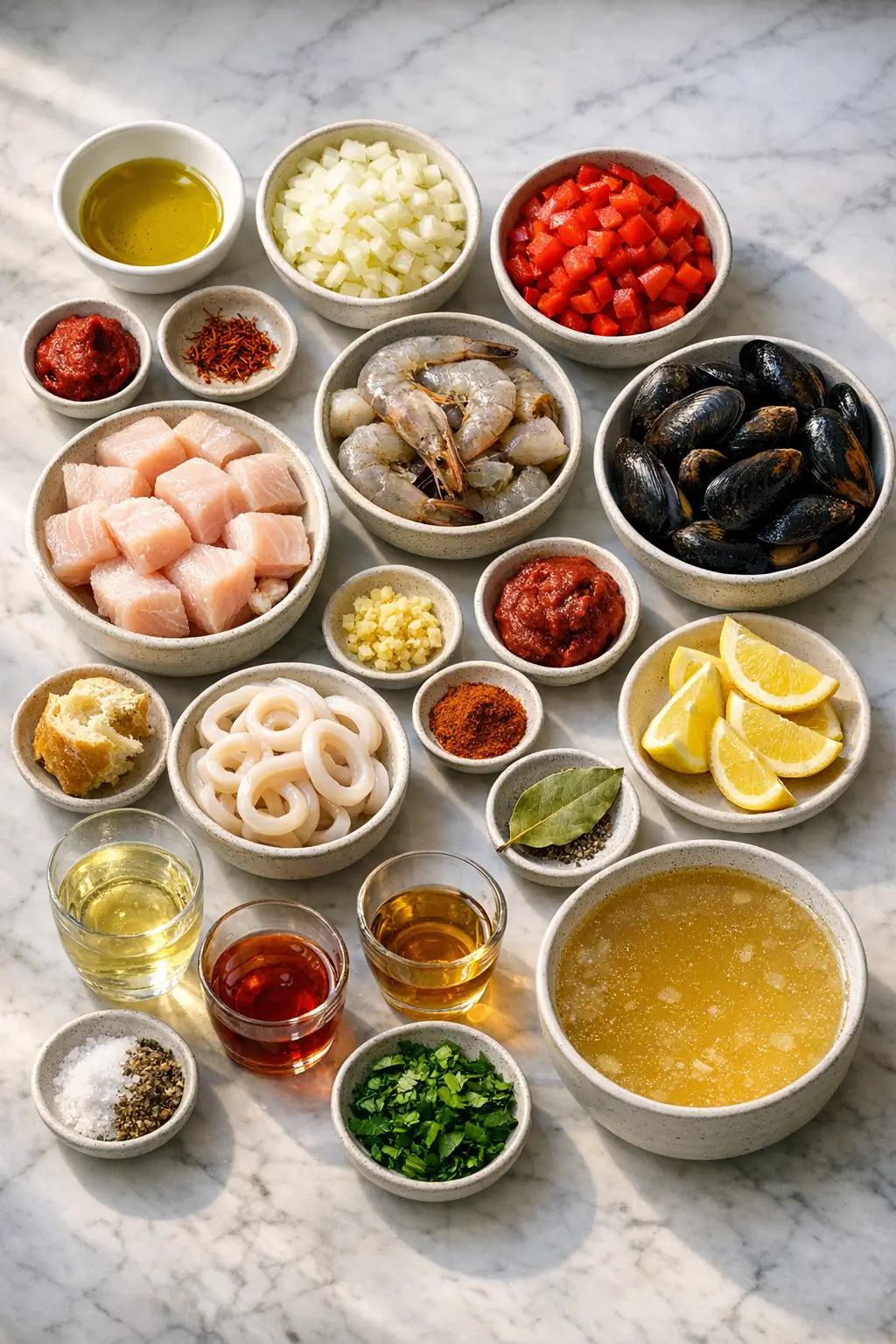
- 2 tablespoons (30 ml) extra-virgin olive oil – base for the sofrito
- 1 small yellow onion, finely chopped (about 150 g / 1 cup) – sweet aromatic
- 1 small red bell pepper, finely chopped (about 120 g / 3/4 cup) – color and sweetness; green bell pepper works
- 3 garlic cloves, minced – savory backbone
- 1 teaspoon sweet paprika (pimentón dulce) – warmth and color; smoked paprika for a smokier note; halve if sensitive to smoke
- Pinch saffron threads (optional) – aromatic lift; omit if unavailable
- 1 tablespoon (15 g) tomato paste – depth; or 1 cup/240 g canned crushed tomatoes
- 1/2 cup (120 ml) dry white wine – acidity; or use fish stock plus 1 tablespoon lemon juice
- 2 tablespoons (30 ml) brandy or cognac (optional) – classic richness; skip if avoiding alcohol
- 4 cups (1 liter) fish stock or a mix of 2 cups fish stock + 2 cups bottled clam juice – savory base; chicken broth in a pinch, but flavor shifts
- 1 bay leaf – herbal note
- 8 ounces (225 g) skinless white fish, 1‑inch cubes – cod, halibut, or hake
- 12 ounces (340 g) large shrimp, shell‑on if possible – shells for quick stock boost; peeled shrimp work too
- 1 pound (450 g) mussels or small clams, scrubbed and debearded – briny pop; use all mussels if clams are unavailable
- 4 ounces (115 g) squid rings (optional) – silky texture if cooked briefly or gently simmered
- 1 small slice crusty bread (about 15–20 g), torn (optional) – natural thickener inspired by coastal soups
- Salt and freshly ground black pepper, to taste
- 2 tablespoons (8 g) chopped fresh parsley – finish
- Lemon wedges, for serving
STEP-BY-STEP INSTRUCTIONS
- Prep the seafood first.
- Scrub mussels, remove beards, and discard any with cracked shells or those that don’t close after a firm tap.
- Peel shrimp if desired and save the shells. Pat fish dry and cut into even cubes. Keep everything chilled until needed.
- Optional quick boost: make a 5‑minute shell infusion.
- Warm a small saucepan over medium heat with a drizzle of olive oil. Add shrimp shells and cook 2 minutes until pink and fragrant.
- Pour in 1 cup (240 ml) of your stock, simmer 3 minutes, then strain back into the rest of the stock.
- Build the sofrito.
- Heat 2 tablespoons olive oil in a wide pot or Dutch oven over medium. Add onion and red pepper with a pinch of salt. Cook 6–8 minutes, stirring, until translucent and lightly soft.
- Stir in garlic and paprika. Cook 30 seconds until aromatic. If using saffron, crumble it in now.
- Add tomato and deglaze.
- Stir in tomato paste; cook 1 minute to caramelize slightly. Splash in white wine and brandy (if using). Simmer 2–3 minutes, scraping the pan, until the alcohol cooks off and the liquid reduces by about half. Avoid open flames when adding alcohol.
- Build the broth.
- Add the remaining fish stock (or stock/clam juice blend), bay leaf, and the torn bread slice if you want a slightly thicker body. Bring to a gentle boil, then lower to a lively simmer for 8–10 minutes. Skim any foam.
- Taste and season with salt and pepper now; it’s easier to adjust before seafood goes in.
- Cook seafood in smart stages.
- If using squid rings, drop them in first and simmer 10 minutes very gently for tenderness.
- Add mussels/clams. Cover and cook 4–6 minutes, shaking once or twice, just until shells open. Uncover; discard any that remain closed.
- Add fish cubes and shrimp. Simmer uncovered 2–3 minutes more, until the fish turns opaque and flakes and the shrimp are pink and just firm.
- Finish and serve.
- Off the heat, stir in chopped parsley. Taste and adjust seasoning; a squeeze of lemon brightens the broth.
- Ladle into warm bowls. Serve with more lemon and crusty bread for dipping.
Notes on timing: stoves vary. If your broth isn’t flavorful at minute 10, give it a few extra minutes before adding seafood. Once seafood is in, cooking moves fast—stay close to the pot.
WHAT TO EXPECT: Sailor’s Soup
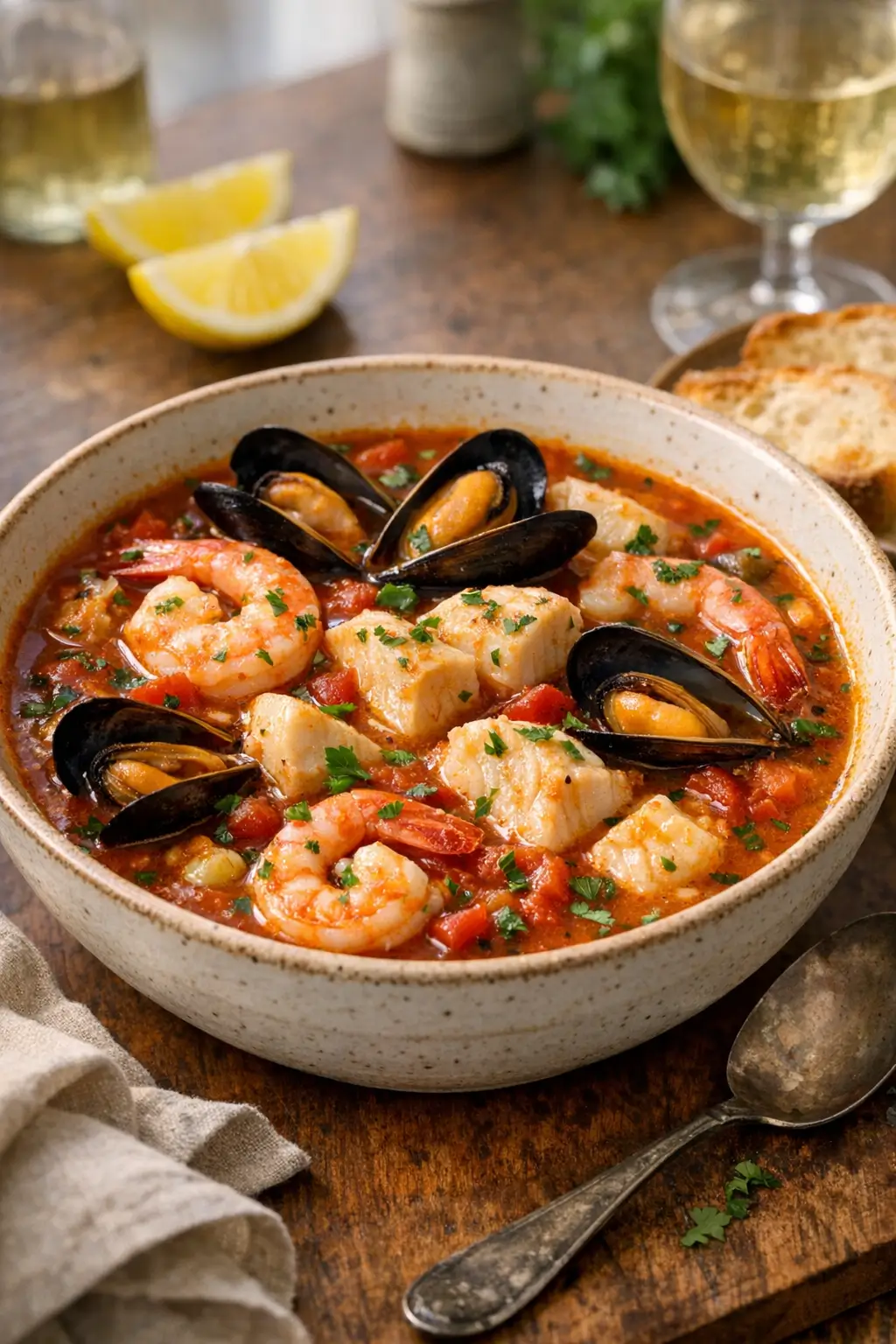
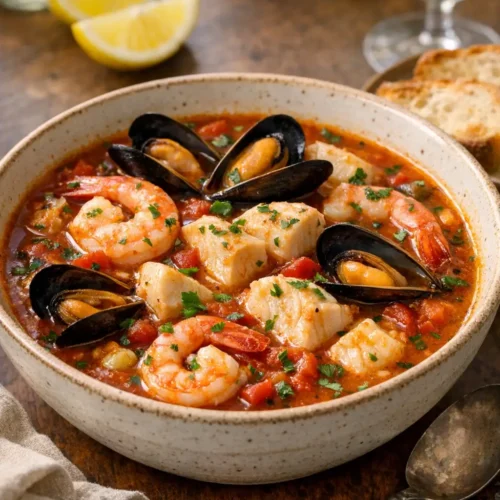
This soup lands between a light fish broth and a rustic stew. The liquid is clear enough to sip but has body from the sofrito, tomato, and optional bread.
Flavor skews savory and gently smoky from paprika, brightened by wine and parsley. Mussels lend brininess; shrimp and white fish add sweetness.
Expect seafood to be tender, not bouncy. Mussels should be just‑opened and juicy; fish should flake but not fall apart. A faint orange tint is normal if you used paprika and tomato.
Cookware and brand differences matter. A wider pot evaporates more and concentrates salt—taste as you go. Some clam juices are saltier than others; dilute with water if needed.
WAYS TO CHANGE IT UP
-
Vegetarian/vegan coastal vibe
Build a mineral‑rich base with 1.2 liters (5 cups) vegetable stock plus a 3‑inch strip of kombu and a handful of dried shiitakes. Simmer 20 minutes, remove kombu, then follow the recipe using chickpeas (1 can, rinsed), diced potatoes, and fennel in place of seafood. Season with smoked paprika and finish with lemon and parsley. -
Spicier or milder
For heat, use 1/2 teaspoon hot paprika or a pinch of red pepper flakes with the garlic. To go milder, stick to sweet paprika and skip saffron. -
Faster, simplified weeknight version
Use 3 cups (720 ml) low‑sodium bottled clam juice plus 1 cup (240 ml) water. Skip mussels and squid. Add only shrimp (12 oz) and cod (12 oz). Use canned crushed tomatoes and omit the bread. -
Add rice or potatoes
For a heartier bowl, simmer 1/3 cup short‑grain rice or 1 medium waxy potato in the broth 12–15 minutes before adding seafood.
SERVING AND STORAGE
Serve hot with thick slices of toasted baguette or country bread. A garlicky aioli on the side is optional but excellent swirled in at the table.
Pair with a crisp white such as Albariño, Vermentino, or Sauvignon Blanc. A simple green salad with citrus vinaigrette balances the brininess.
Leftovers keep up to 2 days in the refrigerator. For best texture, cool quickly and store the seafood and broth together. Reheat gently—avoid boiling. Discard any shellfish left from service that never opened.
Freezing isn’t ideal for cooked shellfish or fish. Freeze the broth alone for up to 3 months, then add fresh seafood when reheating.
CULTURAL CONTEXT
Across Spain, “a la marinera” simply means “sailor‑style,” and home cooks adapt it to whatever the day’s catch provides. Variations show up all along the Mediterranean and Atlantic coasts—some add rice, others thicken with bread, and many start with a sofrito and a quick fish stock. That flexibility is why plates like this travel so well to home kitchens.
For readers curious about the wider maritime foodways that shaped dishes like this, the Mystic Seaport Museum shares a concise history of cod in Atlantic communities, from drying to trade, highlighting why preserved fish mattered aboard long voyages. Read here: Mystic Seaport Museum article on salt cod.
You can also explore how coastal ingredients and communal eating are woven into the broader Mediterranean diet, recognized as Intangible Cultural Heritage by UNESCO: UNESCO overview of the Mediterranean diet.
COMMON QUESTIONS AND TROUBLESHOOTING
1) My soup tastes flat. What should I adjust?
Salt level and acidity are the first levers. Add a small pinch of salt and a squeeze of lemon. If the base feels thin, simmer the broth 3–5 minutes before adding seafood next time, or include the optional bread for body.
2) The shellfish were gritty. How do I prevent sand?
Soak mussels/clams in cold water for 10–15 minutes and scrub well. Discard any damaged shells. For clams, purge in salted water (3%) for 20 minutes.
3) Can I skip the wine and brandy?
Yes. Replace wine with more stock and finish with lemon. Skip brandy or swap in 1–2 tablespoons of sherry vinegar added off heat.
4) Can I use frozen seafood?
Absolutely. Thaw overnight and pat dry. If using pre‑cooked frozen mussels, add them at the end just to warm through.
5) The fish broke apart. What went wrong?
Stir minimally after adding fish and keep a gentle simmer. Use firm white fish cut into uniform pieces.
6) How can I make it creamier without dairy?
Blend 1–2 ladles of broth with torn bread and return it to the pot before adding seafood.
7) Is saffron necessary?
Not at all. It adds aroma and golden color but isn’t essential.
8) Safe internal temperatures?
Shrimp and fish are done when opaque and firm; mussels/clams are safe when shells open. Use a thermometer for fish: 145°F/63°C.
CONCLUSION
If you try this pot and make it your own—switching in clams for mussels, adding a potato, or dialing up the paprika—leave a comment with what worked. Your notes help other home cooks get dinner on the table with confidence. Ratings and feedback are always appreciated, and photos of your Sailor’s Soup are welcome at the table here.
Sailor’s Soup Made Easy: Weeknight Seafood Comfort

Equipment
- Wide pot or Dutch oven
- Small saucepan (optional, for shell infusion)
- Fine-mesh strainer (optional)
Ingredients
- 2 tbsp extra-virgin olive oil
- 1 small yellow onion finely chopped (about 150 g / 1 cup)
- 1 small red bell pepper finely chopped (about 120 g / 3/4 cup)
- 3 garlic cloves minced
- 1 tsp sweet paprika (pimentón dulce)
- 1 pinch saffron threads optional
- 1 tbsp tomato paste
- 1/2 cup dry white wine
- 2 tbsp brandy or cognac optional
- 4 cups fish stock or a mix of 2 cups fish stock + 2 cups bottled clam juice
- 1 bay leaf
- 8 oz skinless white fish cut into 1-inch cubes (cod, halibut, or hake)
- 12 oz large shrimp shell-on if possible
- 1 lb mussels or small clams scrubbed and debearded
- 4 oz squid rings optional
- 1 small slice crusty bread torn (optional)
- salt to taste
- freshly ground black pepper to taste
- 2 tbsp fresh parsley chopped
- lemon wedges for serving
Instructions
- Prep the seafood first: scrub mussels/clams, remove beards, and discard any with cracked shells or that don’t close after a firm tap. Peel shrimp if desired (save shells). Pat fish dry and cut into even cubes. Keep seafood chilled until needed.
- Optional quick boost (5 minutes): warm a small saucepan over medium with a drizzle of olive oil. Add shrimp shells and cook about 2 minutes until pink and fragrant. Pour in 1 cup (240 ml) stock, simmer 3 minutes, then strain back into the remaining stock.
- Build the sofrito: heat the olive oil in a wide pot or Dutch oven over medium. Add onion and red pepper with a pinch of salt and cook 6–8 minutes, stirring, until translucent and softened. Stir in garlic and paprika and cook about 30 seconds until aromatic; crumble in saffron now if using.
- Add tomato and deglaze: stir in tomato paste and cook 1 minute. Add white wine and brandy (if using) and simmer 2–3 minutes, scraping the pan, until reduced by about half.
- Build the broth: add fish stock (or the stock/clam juice blend), bay leaf, and torn bread (if using). Bring to a gentle boil, then reduce to a lively simmer for 8–10 minutes, skimming foam if needed. Taste and season with salt and pepper before adding seafood.
- Cook seafood in stages: if using squid rings, add first and simmer very gently about 10 minutes. Add mussels/clams, cover, and cook 4–6 minutes (shaking once or twice) until shells open; discard any that stay closed. Add fish and shrimp and simmer uncovered 2–3 minutes, until fish is opaque and flakes and shrimp are pink and just firm.
- Finish and serve: remove from heat and stir in chopped parsley. Taste and adjust seasoning; add a squeeze of lemon to brighten. Ladle into warm bowls and serve with lemon wedges and crusty bread for dipping.



Leave a Reply