
If you’ve wanted to try Chiles en Nogada at home but need a manageable plan, this version keeps the spirit of the dish while staying realistic for weeknight prep. You’ll roast poblano peppers, fill them with a savory-sweet pork and fruit picadillo, then finish with a creamy walnut sauce and pomegranate seeds.
Expect mild heat from the poblanos, gentle spice from cinnamon and clove, and a sauce that tastes nutty and slightly sweet. It’s a celebratory main most commonly enjoyed in late summer and early fall when pomegranates arrive, but it’s welcome any time.
This recipe suits home cooks who appreciate clear steps, sensible make-ahead options, and supermarket ingredients. There’s no deep frying, and the results are elegant without fuss.
INGREDIENTS
-
For the peppers
-
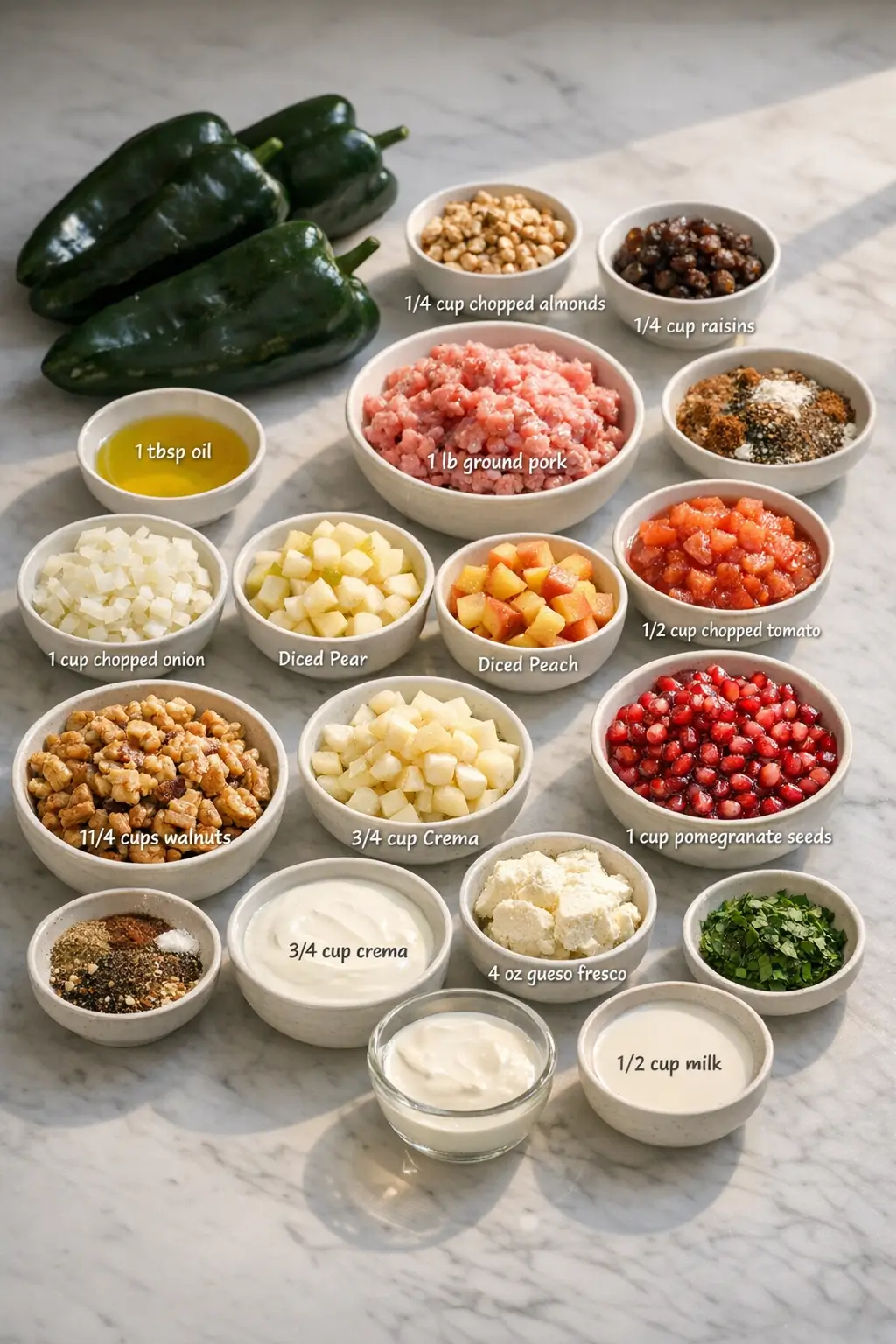
4 large poblano peppers (about 650–750 g / 1.4–1.6 lb total)
-
For the savory-sweet filling (picadillo)
-
1 tbsp neutral oil (15 ml) — helps soften aromatics
-
1 small white onion, finely chopped (about 150 g / 1 cup)
-
2 garlic cloves, minced (about 8 g)
-
1 lb ground pork (450 g) — juicy, classic choice for picadillo
-
1 medium tart apple, peeled and diced (about 175 g) — brightness and crunch
-
1 small ripe pear, peeled and diced (about 150 g) — gentle sweetness
-
1 small peach, peeled and diced (about 150 g) — seasonal fruit note; sub: 1/3 cup (55 g) chopped dried apricots
-
1/4 cup raisins (40 g) — chewy sweetness; golden or dark both fine
-
1/4 cup chopped almonds, lightly toasted (30 g) — texture
-
1 small tomato, chopped (about 120 g) or 1/2 cup canned crushed tomatoes (120 g) — moisture and acidity
-
1 tsp ground cinnamon (3 g)
-
1/8 tsp ground clove (a small pinch; about 0.3 g)
-
1 bay leaf
-
1 tsp kosher salt (6 g), plus more to taste
-
1/2 tsp freshly ground black pepper (1 g)
-
1 tsp brown sugar or piloncillo, optional — balances tart fruit
-
Optional: 1–2 tbsp dry sherry or white wine (15–30 ml) to deglaze
-
For the walnut sauce (nogada)
-
1 1/4 cups shelled walnuts (140 g), soaked in hot water to loosen skins — key to a soft, creamy flavor
-
3/4 cup Mexican crema or sour cream (180 ml)
-
1/2 cup whole milk (120 ml), plus more to thin as needed
-
4 oz queso fresco or mild goat cheese (113 g) — body and tang
-
1–2 tbsp dry sherry or brandy (15–30 ml), optional but traditional in many versions
-
1/2 tsp sugar (2 g), or to taste
-
Pinch ground cinnamon
-
Fine salt, to taste
-
To finish
-
Seeds from 1 small pomegranate (about 1 cup / 150 g)
-
2 tbsp chopped flat-leaf parsley (6–8 g)
Notes on purpose and substitutions:
- Peeling walnut skins reduces bitterness and keeps the sauce pale. If using fresher, new-crop walnuts, peeling is essential; supermarket walnuts still benefit from a quick blanch and peel.
- Almonds add crunch to the filling; sub: toasted pecans.
- If peaches are out of season, use dried apricots and a splash of water to plump them.
- For a beefier filling, swap half the pork for ground beef; chopped ham (30–60 g) can be added for depth.
STEP-BY-STEP INSTRUCTIONS
- Prep the walnuts for the sauce.
- Pour boiling water over the walnuts in a heatproof bowl. Let stand 5 minutes.
- Drain, refresh under cool water, and rub the skins off with your fingers or a clean towel. Don’t worry if a few flecks remain.
- For the smoothest flavor, cover peeled walnuts with the 1/2 cup milk and chill while you continue. This brief soak tames bitterness and softens the nuts for blending.
- Roast and peel the poblanos.
- Gas flame: Set peppers directly over medium gas flame, turning with tongs until the skins are evenly blistered and blackened, 5–8 minutes total.
- Broiler: Arrange on a foil-lined sheet about 6 inches (15 cm) from the heat. Broil, turning every 3–4 minutes, until blistered, 8–12 minutes total.
- Immediately transfer to a bowl and cover, or place in a zip-top bag to steam 10–15 minutes. This loosens the skins.
- Gently peel the char with your fingers or a paper towel. Avoid rinsing under running water, which can wash away flavor. If bits won’t release, a quick splash to dislodge stubborn flecks is fine; pat dry.
- Cut a 2–3 inch (5–7 cm) slit along one side of each pepper, keeping the stem intact. Carefully remove seeds and most of the ribs. If you prefer more heat, leave some ribs.
- Cook the filling (picadillo).
- Warm the oil in a wide skillet over medium heat. Add onion and a pinch of salt; cook until translucent and tender, 5–7 minutes.
- Stir in garlic; cook just until fragrant, 30 seconds.
- Add ground pork and bay leaf. Cook, breaking it up but leaving some small nubbly pieces for texture, until no longer pink and lightly browned, 6–8 minutes. Spoon off excess fat if needed.
- Season with cinnamon, clove, black pepper, and 1 tsp kosher salt. Stir in the tomato (fresh or canned). If using sherry or wine, add now and let it sizzle for 30 seconds.
- Fold in apple, pear, peach (or apricots), raisins, and almonds. Sprinkle in the optional brown sugar only if the fruit is very tart.
- Simmer gently, stirring, until the fruit is tender but not collapsed and the mixture is juicy yet cohesive, 5–8 minutes. You’re aiming for a spoonable, thick picadillo without excess liquid.
- Taste and adjust salt and sweetness. Remove the bay leaf. Let the filling cool until warm, not hot, so it won’t tear the peppers.
- Blend the nogada.
- Drain the walnuts (reserve the soaking milk). Add to a blender with crema, cheese, cinnamon, sugar, a pinch of salt, and 2–3 tbsp of the soaking milk. If using sherry or brandy, add it now.
- Blend until very smooth and creamy, 30–60 seconds, adding more milk a tablespoon at a time as needed. The texture should lightly coat the back of a spoon, not run straight off.
- Taste, then fine-tune salt and sugar. Note: The sauce will thicken slightly as it rests.
- Stuff, garnish, and serve.
- Gently open each pepper and spoon in a generous amount of warm picadillo, about 3/4 cup (110–130 g) per pepper, depending on size.
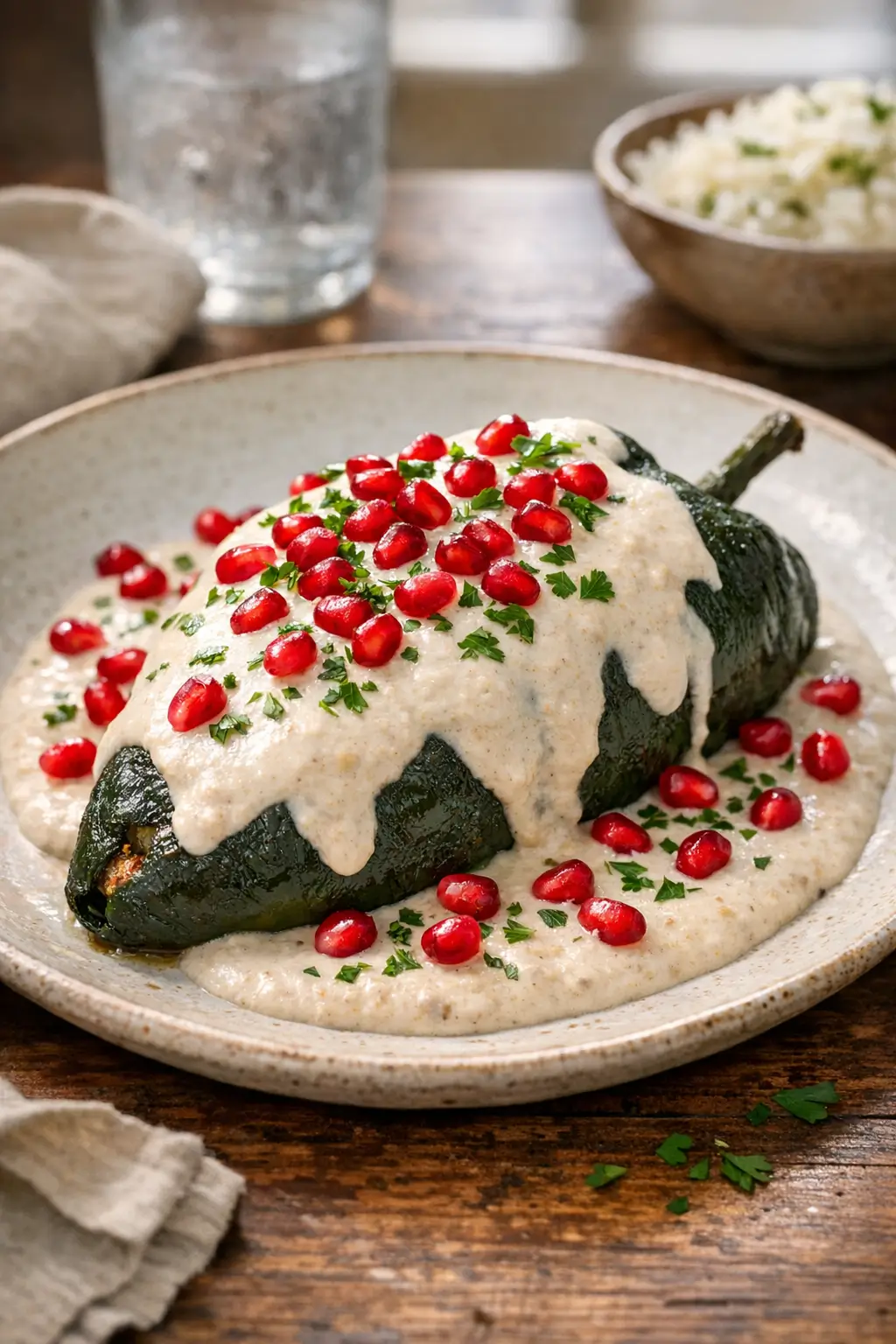
- Place the peppers on a platter. Spoon nogada over the top to mostly blanket each chile.
- Scatter with pomegranate seeds and parsley. Let sit 5–10 minutes so the sauce settles, then serve at room temperature.
Beginner safeguards:
- Fully blister the skins before steaming, otherwise peeling becomes frustrating and tears the flesh.
- Don’t overfill; if the seam won’t close or the pepper splits, use less filling and serve any extra on the side.
- Keep the sauce cool. Heating nogada can cause it to loosen or separate.
Timing variability to expect:
- Poblanos vary in thickness; thicker chiles take longer to char.
- Fruit ripeness changes moisture; simmer picadillo until thick, not by the clock.
- Blenders differ; a high-speed blender purées faster and may need a touch more milk.
WHAT TO EXPECT
- Texture: The peppers are tender but still hold their shape. The filling is nubbly and juicy with soft fruit and a little crunch from almonds. The sauce is silky and coats the chile in a blanket, not a puddle.
- Flavor: A balanced play of savory pork, gentle spice, and fruity sweetness. Nogada is nutty with mild dairy notes and a whisper of cinnamon. Pomegranate adds pops of freshness.
- Visuals: Sauce may be off‑white to pale beige depending on how thoroughly you peel the walnuts and whether you use goat cheese (slightly creamier tint). Both are normal.
- Variability: Different brands of crema, milk fat percentage, and cheese can make the sauce thicker or looser. It’s easy to adjust with a splash more milk or a small handful of walnuts.
WAYS TO CHANGE IT UP
-
Vegetarian or vegan version:
-
Sauté 250 g (2 1/2 cups) finely chopped mushrooms with 1 cup (200 g) cooked lentils and the same aromatics, fruit, and spices. Add 2 tbsp olive oil for richness.
-
For a dairy-free “nogada,” blend 1 cup (140 g) soaked cashews with 3/4 cup (180 ml) oat milk, 2 tbsp olive oil, 1–2 tsp sugar, a pinch of cinnamon, and salt. Trade-off: flavor shifts from walnutty to more neutral and the color leans creamier; still delicious.
-
Spicier or milder:
-
For more heat, leave some ribs in the poblanos or add a finely minced jalapeño to the filling.
-
For less heat, remove ribs thoroughly and briefly soak seeded poblanos in lightly salted water for 15–20 minutes before stuffing. This softens any lingering sharpness.
-
Faster, simplified path:
-
Use pre-roasted, peeled poblanos if your market sells them, or roast the peppers and make the picadillo 1–2 days ahead. Assemble and sauce right before serving.
-
If peeling walnuts feels like one step too many, use lightly toasted pecans in the sauce. Trade-off: the sauce will be more beige and taste distinctly pecan, which is common in many modern home versions.
-
Swap in shredded rotisserie chicken for the pork and simmer briefly with the aromatics, fruit, spices, and tomato to marry flavors.
SERVING AND STORAGE
Serve Chiles en Nogada on a warm plate but at room temperature. This keeps the sauce thick and the peppers tender without steaming under heat.
What to pair with:
- Buttered rice or simple white rice
- Crisp green salad with lime vinaigrette
- Warm tortillas to scoop up extra filling
Storage and reheating:
- Store components separately for best texture. Refrigerate stuffed peppers (without sauce) and nogada in covered containers for up to 3 days. Keep pomegranate seeds and parsley separately.
- The walnut sauce may darken slightly as it sits; whisk and thin with a splash of milk if needed.
- Reheat peppers gently, covered, in a 300°F (150°C) oven for 10–15 minutes, or microwave in short bursts just to warm the filling. Do not heat the nogada; spoon it on after warming.
- Freezer tips: The cooked filling freezes well for 2–3 months. Roasted, peeled poblanos can also be frozen flat between sheets of parchment. Thaw overnight in the refrigerator before stuffing. Avoid freezing the nogada; it can separate.
CULTURAL CONTEXT: Chiles en Nogada
This dish is strongly associated with the city of Puebla and late-summer seasonality. Many accounts link its convent-kitchen roots to the Agustinas Recoletas at Santa Mónica in the early 19th century. For an overview of that setting, see the Instituto Nacional de Antropología e Historia’s page on the Museo de Arte Religioso Ex Convento de Santa Mónica.
Government cultural resources note both the patriotic color symbolism and the seasonal availability of key ingredients like walnuts and pomegranates. The Secretaría de Agricultura summarizes those histories and timelines here: Ricos y tradicionales chiles en nogada.
These sources provide helpful context without prescribing a single “correct” version, which is why many regional and home variations coexist today.
COMMON QUESTIONS AND TROUBLESHOOTING
-
My walnut sauce tastes bitter. What happened?
-
Bitterness usually comes from walnut skins. Blanching and peeling helps, and a short milk soak mellows any remaining edge. Balance with a pinch of sugar and salt. If it still tastes a touch bitter, blend in another tablespoon of crema or a small piece (15–20 g) of cheese.
-
The sauce is too thin/thick. How do I fix it?
-
Too thin: blend in a few more walnuts or a bit more cheese, then rest 5 minutes to thicken. Too thick: whisk in milk a tablespoon at a time until it softly drapes from a spoon.
-
Can I substitute nuts or dairy?
-
Pecans work well in the sauce when walnuts aren’t available. For dairy, Mexican crema or sour cream are interchangeable, and mild goat cheese or queso fresco both add body. For a nut-free option, serve the peppers with a simple crema-and-cheese sauce seasoned with a pinch of cinnamon; it’s not nogada, but it’s compatible with the flavors.
-
Do I have to peel the walnuts?
-
Peeling gives the cleanest flavor and color. If you’re short on time, peel most and don’t stress if a few specks remain; the sauce may be slightly beige but still tastes great.
-
My poblanos tore while peeling. Are they ruined?
-
Not at all. Turn the tear into the slit for stuffing, or overlap the edges after filling. Once sauced and garnished, small seams won’t show.
-
Can I batter and fry the stuffed peppers?
-
Yes, some versions are dipped in a fluffy egg batter (capeado) and shallow-fried before saucing. Expect a heavier, richer result and add 20–30 minutes to your timeline. Drain well so the sauce clings.
-
Why is the dish served at room temperature?
-
The flavors are clearer and the sauce holds its texture. Warm the peppers only slightly if you prefer, then add cool sauce.
-
What if I can’t find pomegranate seeds out of season?
-
Serve without, or sprinkle a small handful of dried cranberries for a tart accent. The flavor differs, but the dish remains balanced.
-
Can I make parts ahead for a party?
-
Absolutely. Up to 2 days ahead: roast/peel poblanos, cook filling, peel walnuts. Day of: blend sauce, stuff peppers, garnish right before serving. Keep components chilled and covered.
CONCLUSION
If you cook this, leave a comment with how it went and what you adjusted for your kitchen—fruit choices, nut swaps, or how you balanced the spice. Your notes help other home cooks plan with confidence and make the dish their own while respecting its spirit.



Leave a Reply