
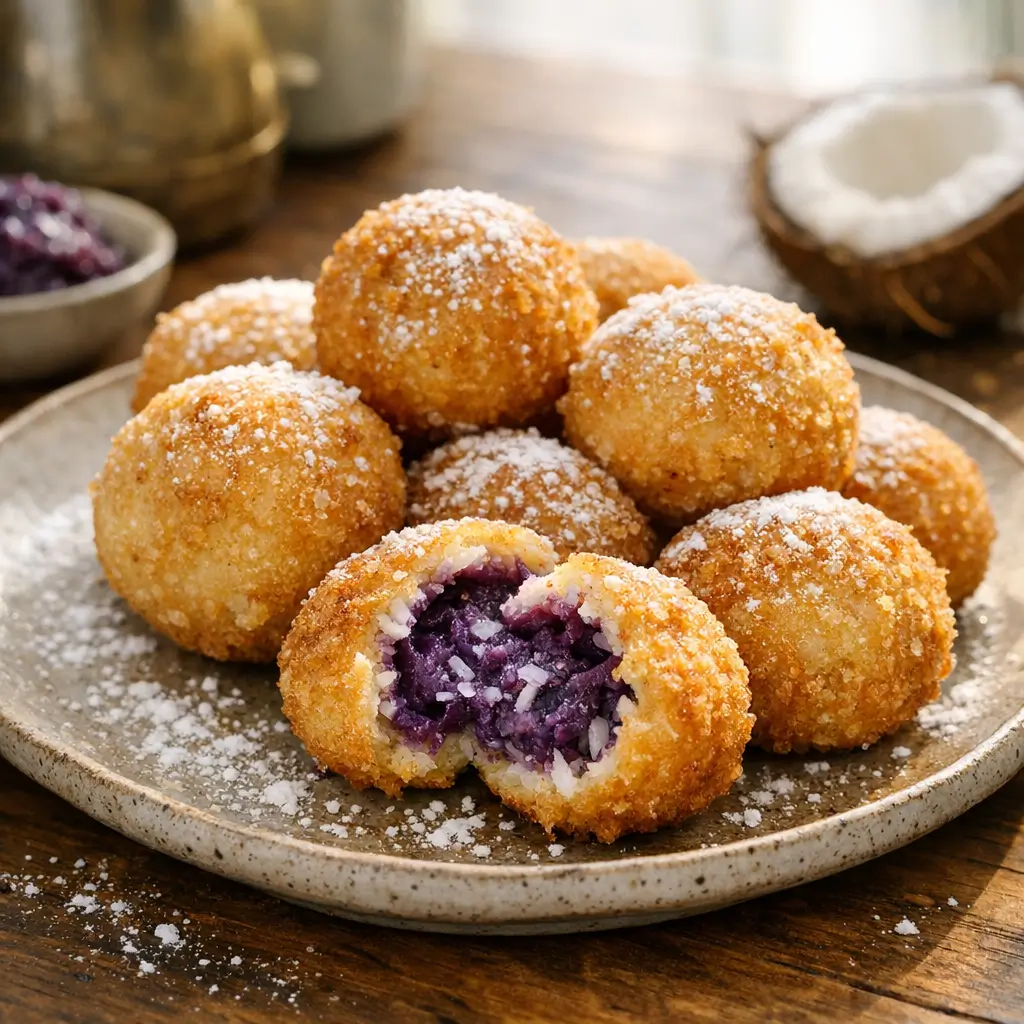
If you love warm, hand-held snacks with a little surprise inside, these Ube Coconut Fritters deliver. The outside fries up crisp and lightly sweet; the center hides a scoop of jammy ube halaya and coconut. Think weekend merienda or after-school treat, but doable on a weeknight.
Here’s the draw: supermarket-friendly cassava (yuca) turns into a soft, shapeable dough that fries in minutes. Store-bought ube halaya keeps prep easy, while the coconut adds texture and fragrance. Busy home cooks will appreciate the short ingredient list and realistic timing. Expect a contrast of textures—crunchy shell, chewy cassava, creamy-sweet filling—without needing specialty gear beyond a pot and thermometer. Flavor skews gently sweet and coconutty with ube’s vanilla-nut notes.
This Filipino-inspired snack shows up best as an afternoon pick‑me‑up, party starter, or dessert bite. Ube Coconut Fritters also reheat decently, so they’re friendly to make-ahead plans.
INGREDIENTS
-
Ube-coconut filling
-
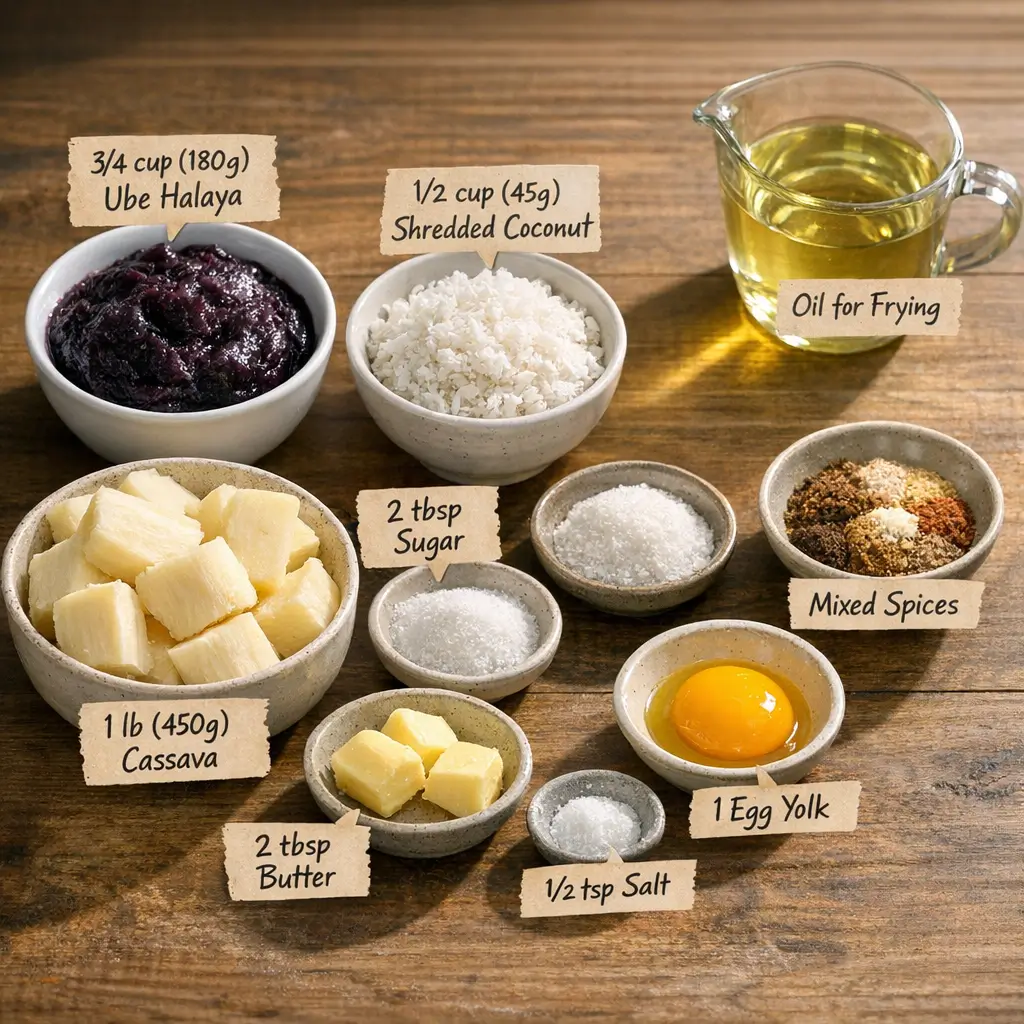
3/4 cup (180 g) ube halaya (purple yam jam); store‑bought or homemade. Purpose: the sweet, purple center.
-
1/2 cup (45 g) sweetened shredded coconut, finely chopped if long strands. Purpose: texture and aroma.
-
Substitute: use unsweetened coconut plus 1–2 teaspoons sugar.
-
Cassava (yuca) dough
-
1 lb (450 g) peeled cassava/yuca, fresh or frozen (pre‑peeled frozen yuca is fine). Purpose: the fritter dough.
-
2 tablespoons (28 g) unsalted butter, room temperature. Purpose: richness and pliability.
-
2 tablespoons (25 g) granulated sugar. Purpose: light sweetness in the shell.
-
1/2 teaspoon fine salt. Purpose: balance.
-
1 large egg yolk. Purpose: binding so the dumplings hold during frying.
-
Substitute: for dairy‑free, use 2 tablespoons (28 g) coconut oil instead of butter. For egg‑free, omit yolk and chill shaped dumplings longer (notes in Variations).
-
For frying and finishing
-
3–4 cups (720–960 ml) neutral oil (canola, peanut, or corn) for deep‑frying.
-
2 tablespoons (15–20 g) all‑purpose flour or rice flour for light dusting, optional. Purpose: a thin, protective coat to reduce sticking and encourage crisping.
-
Powdered sugar or a drizzle of coconut caramel (optional) for serving.
Notes on sourcing
- Fresh yuca is often sold as “cassava” or “yuca.” Frozen peeled yuca is common in large supermarkets and Latin or Asian grocers.
- Ube halaya is frequently available in jars at Filipino or Asian markets. You can also make it at home with frozen grated ube, canned milks, and butter.
STEP-BY-STEP INSTRUCTIONS
- Mix the filling.
- In a small bowl, combine ube halaya and shredded coconut until evenly distributed.
- Cover and refrigerate 20 minutes to firm it slightly; this makes stuffing easier and helps prevent leaks.
- Boil the yuca.
- Place peeled yuca in a pot and cover with cold water by about 1 inch (2.5 cm). Add a pinch of salt.
- Bring to a boil, then reduce to a lively simmer. Cook until very tender, 15–25 minutes depending on chunk size. A paring knife should slide through easily.
- Important: After draining, return yuca to the warm pot and let steam‑dry 2–3 minutes to drive off surface moisture. Excess water makes the dough gummy.
- Remove the fibrous core and mash.
- Split each yuca piece lengthwise; pry out the tough, woody core if present.
- Mash the yuca until smooth with minimal lumps. A potato ricer yields an extra-smooth dough if you have one.
- Season and bind.
- While the mash is still warm but not piping hot, mix in butter, sugar, and salt until combined.
- Let cool to just warm to the touch, then add the egg yolk and work it in. The dough should feel soft and cohesive, not wet. If it’s sticky, rest it 5–10 minutes; it will firm as the starch sets.
- Portion and fill.
- Line a tray with parchment. Lightly dust your hands with flour or oil them.
- Scoop about 2 tablespoons (30 g) dough; flatten into a 2-inch (5 cm) disc. Add 1–2 teaspoons chilled ube‑coconut filling to the center.
- Bring the edges up and over the filling, pinch closed, then roll gently into a ball to seal. Place seam‑side down on the tray. Repeat to make 12–14 dumplings.
- Tip: If a ball develops a hairline crack, patch with a pea‑sized piece of dough and smooth it over.
- Chill and optionally dust.
- Refrigerate the tray 20–30 minutes to firm the shape. Lightly dust with flour or rice flour if your kitchen is warm; a whisper‑thin coat helps the exterior crisp.
- Heat the oil.
- Pour 2 inches (5 cm) of oil into a deep, heavy pot. Heat to 350°F (175°C).
- No thermometer? A small bread cube should sizzle and turn golden in about a minute. If it burns in 30 seconds, the oil is too hot; if it barely bubbles, wait longer.
- Fry in batches.
- Fry 4–6 dumplings at a time, turning occasionally, until deep golden and crisp, about 2–3 minutes.
- Keep the oil near 350°F; too hot will brown the shell before the center warms, too cool makes oily fritters. Adjust heat between batches as needed.
- Drain and rest.
- Transfer to a rack or paper towels to drain. Let fritters rest 3–5 minutes; the shells set and the filling settles.
- Serve.
- Dust with powdered sugar or drizzle a quick coconut caramel if you like. Enjoy warm.
Safeguards and sensory cues
- Yuca must be fully cooked before eating; raw cassava contains natural compounds that dissipate with proper cooking.
- Properly mashed yuca feels soft like fluffy mashed potatoes but slightly tackier. If it looks glossy‑wet, it needs more steam‑drying before shaping.
- The finished balls should sound hollow‑crisp when tapped with tongs and smell lightly nutty and coconut‑sweet.
WHAT TO EXPECT FROM UBE COCONUT FRITTERS
- Texture: A thin, crackly crust yields to chewy, tender cassava, then a soft, jammy center. Minor surface cracks are normal and don’t affect eating quality.
- Flavor: Balanced sweetness. The shell is lightly sweet and starchy; the filling brings ube’s vanilla‑nut profile and coconut’s aroma. A small pinch of salt in the dough keeps it from tasting flat.
- Variability:
- Oil temperature and pan depth affect browning speed; shallow oil may brown faster on contact points.
- Frozen yuca often holds a bit more moisture than fresh; add a few extra minutes of steam‑drying after draining to avoid gummy dough.
- Jarred ube halaya brands vary in sweetness. If yours is very sweet, you can reduce the sugar in the dough by 1 tablespoon.
WAYS TO CHANGE IT UP
-
Vegan (dairy‑ and egg‑free)
-
Replace butter with refined coconut oil. Omit the egg yolk and chill the shaped dumplings at least 45 minutes before frying to help them hold. Expect slightly more surface cracking, but structure will be fine if the mash is well‑dried.
-
More or less sweet/spiced
-
For a cozier profile, stir a pinch of cinnamon or cardamom into the ube‑coconut filling. For a milder result, reduce the dough sugar to 1 tablespoon and keep the filling as is.
-
Simpler, faster assembly
-
Skip stuffing on a busy night: mix the coconut directly into the warm yuca mash, shape and fry as directed, then serve with ube halaya on the side for dipping. You’ll trade the molten center for speed but keep the tropical flavors.
Trade‑offs: Removing the egg or skipping the filling reduces richness or “gooey center” payoff, but you gain easier shaping and shorter prep.
SERVING AND STORAGE
- Serve warm as an afternoon snack (merienda), party appetizer, or dessert bite. They pair nicely with hot tea, coffee, or cold milk. For extra coconut fragrance, scatter toasted coconut over the platter.
- Dips and drizzles: try a light dusting of powdered sugar, honey, or a quick coconut caramel made by simmering equal parts coconut milk and brown sugar until syrupy.
- Storage: Cool leftovers completely. Refrigerate in an airtight container up to 3 days. Reheat on a rack in a 350°F (175°C) oven for 8–10 minutes to re‑crisp; avoid microwaving, which softens the crust. Freeze shaped, unfried dumplings on a parchment‑lined tray until solid, then bag; fry from chilled (not rock‑hard frozen) to minimize oil spatter.
CULTURAL CONTEXT
Cassava (yuca) and ube (purple yam) both have long histories in the Philippines, appearing in street snacks and home‑style sweets enjoyed at merienda. Cassava is a key root crop researched and promoted by the Philippine Rootcrop Research and Training Center at Visayas State University; their overview gives a useful snapshot of the crop’s role in local agriculture and processing. Read more at Visayas State University’s PhilRootcrops.
For background on ube’s characteristics and how it differs from purple sweet potato, this primer explains the ingredient’s flavor, forms (frozen, powder, jam), and why it should be thoroughly cooked before eating. See Food & Wine: What Is Ube?.
COMMON QUESTIONS AND TROUBLESHOOTING
-
My fritters cracked and some filling leaked. What went wrong?
-
Usually the dough was too wet or the filling too loose. Steam‑dry the yuca a bit longer next time and chill the filling well. Keep the filling to 1–2 teaspoons and seal seams thoroughly. A light flour dusting helps, too.
-
Can I use purple sweet potato instead of ube halaya?
-
You can mash cooked purple sweet potato with a splash of coconut milk and sugar for color and sweetness. The flavor will be different—less floral, a bit earthier—but still tasty. If you find jarred ube halaya, it delivers a more recognizable ube profile.
-
My oil temperature is hard to keep steady. Tips?
-
Use a deep, heavy pot and fry in small batches. Let the oil recover between rounds, and keep a thermometer clipped to the side. Without a thermometer, test with a small bread cube; it should turn golden in about a minute.
-
Are these safe to make with fresh cassava?
-
Yes—peeled cassava must be cooked thoroughly before eating. Never consume it raw. Boiling until tender and steam‑drying are key steps.
-
Can I make these ahead?
-
Shape and chill the dumplings up to 24 hours before frying. They can also be frozen on a tray and stored airtight; for best texture, thaw in the refrigerator until just firm before frying.
-
Why do my fritters taste oily?
-
The oil was likely too cool. Keep it near 350°F (175°C) and avoid crowding the pot. Draining on a rack instead of paper towels also preserves crispness.
-
What if I can’t find yuca?
-
Many U.S. supermarkets carry frozen peeled yuca in the freezer aisle. As a fallback, you can use thawed frozen grated cassava (squeeze well and steam 5 minutes before mashing) to achieve a similar dough, though it may be softer.
CONCLUSION
If you try these, leave a comment with your notes—what flour you dusted with, how sweet your halaya brand ran, and whether you chilled longer for an egg‑free version. Your tweaks help other home cooks dial this snack in for their own kitchens. Happy frying!



Leave a Reply