
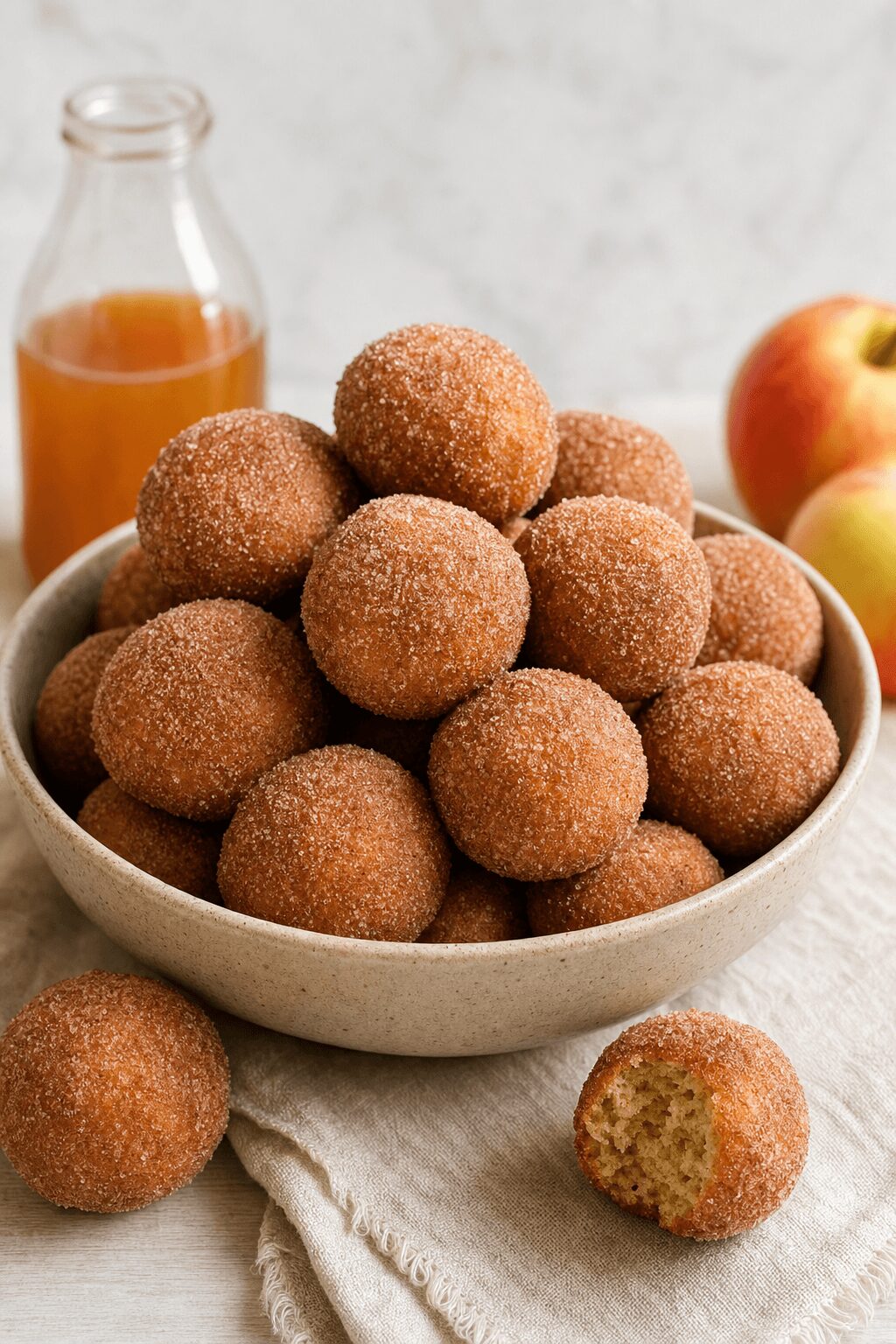
Apple cider donut holes baked not fried are my answer to “I want the fall donut shop thing” without a pot of oil, a thermometer, and the inevitable greasy cleanup. These are basically mini-muffins that behave like cake donuts once you do the butter dip + cinnamon-sugar coat.
Reader check-in: if you’re making these on a chaotic morning, reduce the cider the night before and leave it in the fridge—then all you’re doing is mixing, baking, and coating. First time I tested them, I rushed the coating step and let the holes cool too much; the sugar didn’t cling as well. Warm matters here.
Ingredients
Makes: about 24 donut holes (2–4 people, depending on how ambitious everyone is)
Donut holes
- Apple cider (not hard cider): 360 ml / 1 1/2 cups (you’ll reduce this)
- All-purpose flour: 250 g / 2 cups
- Baking powder: 3 g / 3/4 tsp
- Baking soda: 5 g / 1 tsp
- Fine salt: 1.5 g / 1/4 tsp
- Ground cinnamon: 2.5 g / 1 tsp
- Apple pie spice: 2.5 g / 1 tsp
If you don’t have it, use extra cinnamon + a pinch of nutmeg and/or cardamom. It’s not identical, but it gets you there. - Unsalted butter, melted (in the batter): 28 g / 2 Tbsp
- Light or dark brown sugar (for moisture and caramel notes): 100 g / 1/2 cup packed
- Granulated sugar: 100 g / 1/2 cup
- Large egg, room temp: 1
- Milk, room temp: 120 ml / 1/2 cup
Whole milk is best; 2% works. Unsweetened oat milk works in a pinch. - Vanilla extract: 5 ml / 1 tsp
Coating (the part that makes them donut-y)
- Unsalted butter, melted: 85 g / 6 Tbsp
- Granulated sugar: 200 g / 1 cup
- Ground cinnamon: 2 g / 3/4 tsp
- Apple pie spice: 2 g / 3/4 tsp
Equipment
- Mini muffin pan (24 wells) and nonstick spray
- Small saucepan (for reducing cider)
- Wire rack (helps keep the coating from turning soggy)
Step-by-Step Apple Cider Donut Holes Baked Not Fried
-
Reduce the cider (this is the flavor).
Pour 360 ml / 1 1/2 cups apple cider into a small saucepan. Simmer on low until you have 120 ml / 1/2 cup. Mine takes about 20 minutes, but it can swing 5 minutes either way depending on your pan and stove. Cool it for 10 minutes so it doesn’t scramble the egg. -
Heat the oven and prep the pan.
Set the oven to 177°C / 350°F. Spray a mini muffin pan well. -
Mix the dry ingredients.
In a large bowl, whisk together the flour, baking powder, baking soda, salt, cinnamon, and apple pie spice. Break up any spice clumps—those little pockets taste harsh. -
Mix the wet ingredients.
In a medium bowl, whisk the melted butter, brown sugar, granulated sugar, egg, milk, and vanilla until smooth. -
Combine, then add the reduced cider.
Pour wet into dry and whisk just until the flour disappears. Add the cooled cider reduction and whisk again until you’ve got a smooth, thick batter.One thing — don’t overmix. If you keep going “just in case,” the crumb tightens up and you lose that tender donut texture.
-
Portion the batter.
Spoon a heaping tablespoon of batter into each mini muffin well (about 3/4 full). A small cookie scoop is great, but a spoon works. -
Bake.
Bake 7–9 minutes, until the tops look set and lightly golden. A toothpick should come out clean or with a couple moist crumbs. -
Make the sugar coating while they bake.
In one bowl, whisk the granulated sugar, cinnamon, and apple pie spice. In another bowl, melt the butter. -
Coat while warm.
Let the donut holes cool just 2–3 minutes in the pan (you want them warm but handleable). Pop them out.Working one at a time, dip each hole in melted butter (let the excess drip back), then toss in the spiced sugar.
Heads up: if the holes cool completely, the butter soaks in unevenly and the coating gets patchy. If that happens anyway, warm the holes for 10 seconds in the microwave, then coat.
-
Rest on a rack.
Put coated donut holes on a wire rack for a few minutes so they don’t steam themselves soggy.
What to Expect
These bake up more like tender cake donuts than bready yeast donuts: a tight, fine crumb with a light spring when you bite in. The flavor is mostly warm spice and browned-sugar vibes, with apple showing up as a deeper, slightly tangy sweetness (that reduction is doing all the work). The outside won’t be truly “fried-crisp,” but the butter-and-sugar shell gives you that pleasant crunch at first bite.
Ways to Change It Up
-
Dairy-free: Use unsweetened oat milk in the batter and plant-based butter for the dip. It works, but the coating softens faster, so serve them soon after coating.
-
Prefer more apple punch? Reduce the cider a touch further than 1/2 cup (stop at about 1/3 cup) and add it all. The batter gets thicker and the bake time can creep up by a minute.
-
Skip the butter dip (if you must): Brush the tops lightly with butter instead of dunking. You’ll use less butter, but the sugar layer won’t be as even. I’m not precious about butter in baking, but this is the step I wouldn’t “healthify.”
Serving and Storage
Serve them warm with coffee, hot chocolate, or a glass of cold milk. If you’re doing a brunch spread, these make sense next to scrambled eggs and fruit—not alongside another big sweet thing.
They’re best the same day. If you’ve got leftovers, store them in a container at room temp for up to 2 days. After that the coating starts to melt and the crumb dries out.
To re-warm: microwave 8–12 seconds just to take the chill off. The sugar crust won’t go back to crunchy-crisp, but the flavor still hits.
If you want the “bake ahead” move, bake the holes, cool completely, and store plain overnight. Rewarm briefly and coat right before serving.
For a little context: cider mills were a big seasonal operation in New England, turning apples into cider in early fall—Old Sturbridge Village has a solid overview of how those mills worked and why cider mattered as an everyday drink. Old Sturbridge Village on historic New England cider mills
And if you’ve ever wondered why it’s “donut” vs. “doughnut,” the Smithsonian has a quick, approachable explainer that ties the pastry to American food history. Smithsonian: Doughnut vs. Donut
Common Questions
Can I use apple juice instead of apple cider?
You can, but it’s noticeably flatter. Cider usually has more character (and sometimes a little tang). If juice is what you’ve got, reduce it the same way and lean a bit more on the spice.
I don’t have a mini muffin pan. Now what?
Use a regular muffin tin and make “donut muffins.” Fill the cups about 3/4 full and bake closer to 18–20 minutes at 350°F/177°C, until a toothpick comes out clean. The coating still works.
Why reduce the cider? Can’t I just add more?
More liquid makes a gummy, heavy crumb. Reduction concentrates flavor without drowning the batter. It’s annoying, yes. It’s also the difference between “spice muffins” and “apple cider donuts.”
My coating turned wet and slick. What happened?
Usually it’s heat + steam. If you pile warm donut holes in a bowl or container, condensation melts the sugar. Let them cool on a rack in a single layer.
Can I freeze them?
I wouldn’t freeze them coated—the sugar gets weird when it thaws. Freeze the baked, uncoated holes in a zip-top bag for up to 2 months. Thaw, warm, then do the butter dip and sugar.
If you make these, tell me whether you’re team “full dunk” or “quick brush” for the butter. I’m firmly on the dunk side, and I’ll debate it. Next time, try reducing the cider the night before—you’ll be shocked how fast the whole thing comes together.
Apple Cider Donut Holes Baked Not Fried, Still Crisp

Equipment
- Mini muffin pan (24 wells)
- Nonstick spray
- Small saucepan
- Wire rack
- Mixing bowls
- Whisk
Ingredients
Donut holes
- 1 1/2 cups apple cider not hard cider; reduce to 1/2 cup (120 ml)
- 2 cups all-purpose flour
- 3/4 tsp baking powder
- 1 tsp baking soda
- 1/4 tsp fine salt
- 1 tsp ground cinnamon
- 1 tsp apple pie spice or extra cinnamon + a pinch of nutmeg and/or cardamom
- 2 Tbsp unsalted butter melted (for the batter)
- 1/2 cup brown sugar packed; light or dark
- 1/2 cup granulated sugar
- 1 large egg room temperature
- 1/2 cup milk room temperature; whole preferred (2% ok; unsweetened oat milk works)
- 1 tsp vanilla extract
Coating
- 6 Tbsp unsalted butter melted (for dipping)
- 1 cup granulated sugar
- 3/4 tsp ground cinnamon
- 3/4 tsp apple pie spice
Instructions
- Reduce the cider: Pour 1 1/2 cups (360 ml) apple cider into a small saucepan. Simmer on low until reduced to 1/2 cup (120 ml), about 20 minutes. Cool 10 minutes so it doesn’t scramble the egg.
- Heat the oven and prep the pan: Preheat to 350°F / 177°C. Spray a mini muffin pan well with nonstick spray.
- Mix the dry ingredients: In a large bowl, whisk together flour, baking powder, baking soda, salt, cinnamon, and apple pie spice, breaking up any clumps.
- Mix the wet ingredients: In a medium bowl, whisk melted butter, brown sugar, granulated sugar, egg, milk, and vanilla until smooth.
- Combine, then add the reduced cider: Pour wet into dry and whisk just until the flour disappears. Add the cooled cider reduction and whisk until the batter is smooth and thick (don’t overmix).
- Portion the batter: Spoon a heaping tablespoon of batter into each mini muffin well, about 3/4 full.
- Bake: Bake 7–9 minutes, until tops are set and lightly golden and a toothpick comes out clean or with a couple moist crumbs.
- Make the sugar coating: In one bowl, whisk together the granulated sugar, cinnamon, and apple pie spice. In another bowl, melt the butter.
- Coat while warm: Cool donut holes 2–3 minutes in the pan, then remove. Dip each hole in melted butter (let excess drip off), then toss in the spiced sugar. If they cool too much, microwave about 10 seconds, then coat.
- Rest on a rack: Set coated donut holes on a wire rack for a few minutes so they don’t steam and turn soggy.



Leave a Reply