
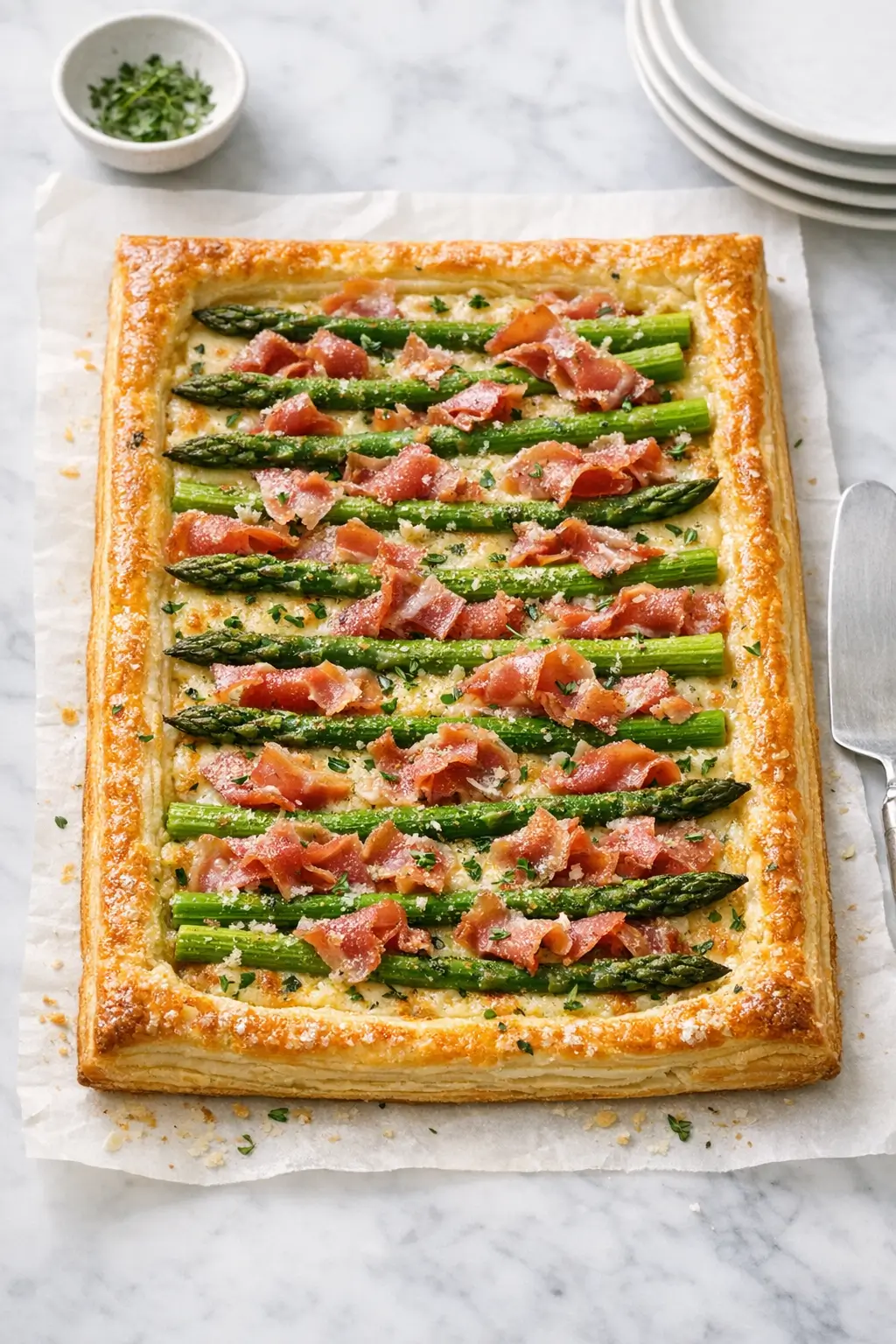
A savory asparagus and prosciutto tart is one of those spring brunch dishes that looks dressy but doesn’t ask much of you. Buttery puff pastry, salty prosciutto, and just-tender asparagus spears bake into a crisp, golden slab that you can slice into squares for a buffet or casual table.
If you’re hosting a spring brunch and juggling coffee, fruit, and eggs, start by getting the puff pastry out to thaw and trimming the asparagus so it’s ready to go. If your oven runs hot or has uneven spots, plan to rotate the pan once so the pastry browns evenly.
This tart leans on store-bought puff pastry and simple layering, so it suits newer bakers and experienced cooks who just want something reliable. Expect crisp edges, a lightly cheesy base, and asparagus that still has a bit of bite, not a soft quiche-style custard.
Ingredients
Makes 1 tart (serves 4 as a main or 6 as a side)
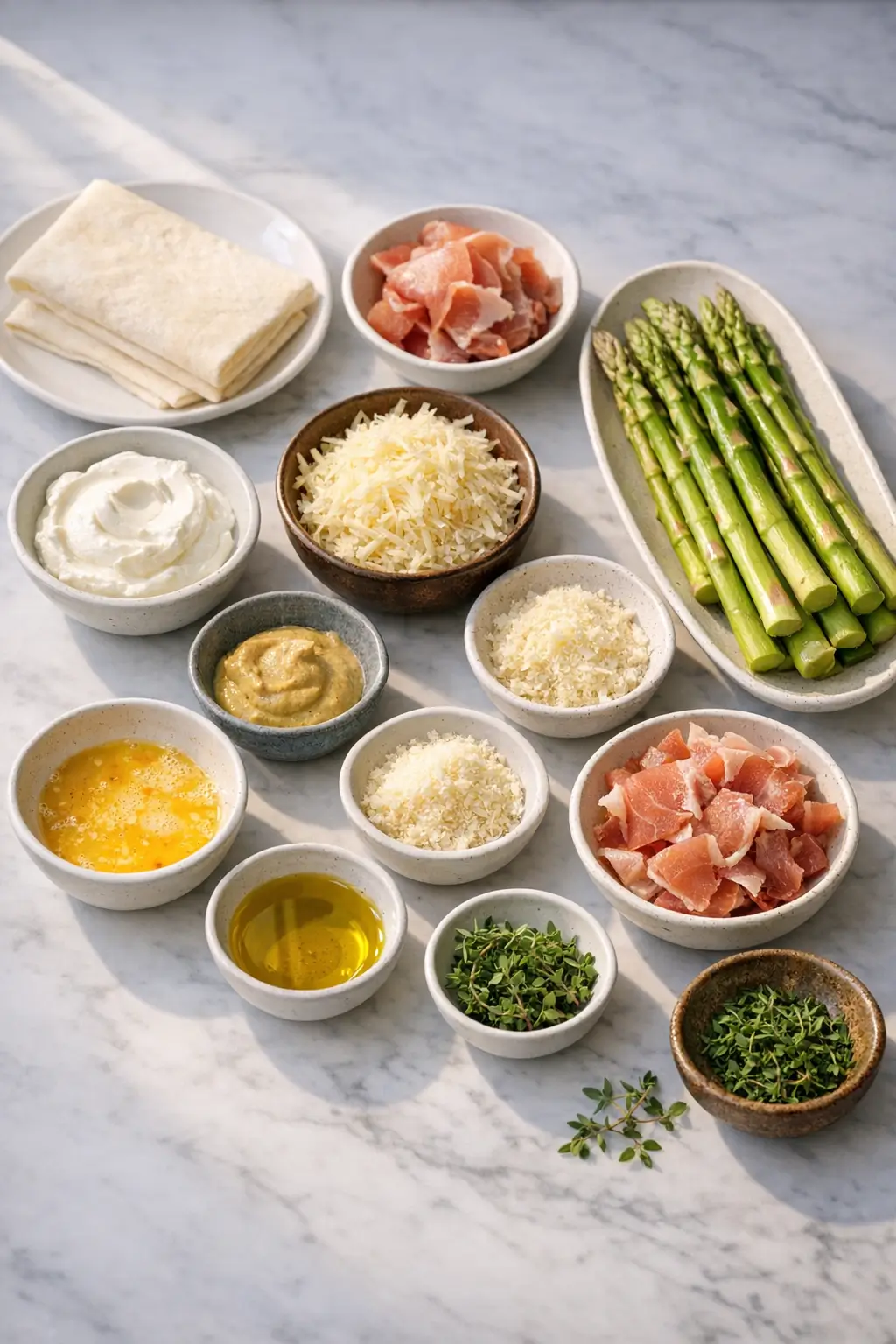
- 1 sheet (about 250 g / 9 oz) all-butter puff pastry, thawed but still cold
- 1 tablespoon (15 ml) Dijon mustard – adds a sharp, savory base
- 3 tablespoons (45 g) crème fraîche or full-fat sour cream – for a tangy, creamy layer
- 1/2 cup (50 g) finely grated Gruyère or Fontina cheese – melts smoothly and adds nutty flavor
- 1/4 cup (25 g) finely grated Parmesan cheese, divided – some for the base, some for topping
- 1 large egg, beaten – for egg wash and to enrich the cheese layer
- 8–10 thin asparagus spears (about 250 g / 9 oz), woody ends trimmed
- 3–4 thin slices prosciutto (about 50–60 g / 2 oz), torn into bite-size pieces
- 1 tablespoon (15 ml) olive oil – to gloss the asparagus
- 1/4 teaspoon fine sea salt, plus more to taste
- 1/4 teaspoon freshly ground black pepper
- 1 teaspoon fresh thyme leaves or 1/2 teaspoon dried thyme – optional, for a herbal note
Substitutions:
- Cheese: Use shredded low-moisture mozzarella in place of Gruyère/Fontina, keeping the Parmesan for flavor.
- Creamy base: Full-fat plain Greek yogurt can stand in for crème fraîche/sour cream; drain off any excess whey first.
- Prosciutto: Substitute thinly sliced serrano ham or a good-quality smoked ham; avoid very wet deli ham, which can make the tart soggy.
- Asparagus: If spears are thick, slice them lengthwise in half so they cook through without over-browning the pastry.
Step-by-Step Instructions for Asparagus and Prosciutto Tart
Preheat the oven and prepare the pan.
Preheat your oven to 400°F / 200°C with a rack in the lower-middle position. Line a rimmed baking sheet with parchment paper so the tart releases cleanly and the underside browns without sticking.Roll out the puff pastry.
Lightly flour your work surface and roll the puff pastry into roughly a 10 x 14 inch (25 x 35 cm) rectangle. Aim for even thickness so it puffs uniformly. Transfer the pastry to the lined baking sheet.Create a border.
Using a sharp knife, lightly score a 1.5 cm (1/2 inch) border all the way around the pastry, without cutting through. Inside the border, prick the dough all over with a fork. This keeps the center flatter while the edges puff.
Kitchen note: If the pastry warms and feels soft or greasy while you’re working, slide the pan into the fridge for 10–15 minutes. Cold pastry puffs higher and stays flakier.
Mix the creamy cheese layer.
In a small bowl, whisk together the Dijon mustard and crème fraîche (or sour cream) until smooth. Add 1/4 cup (25 g) of the Gruyère/Fontina, 2 tablespoons of the Parmesan, and 2 teaspoons of the beaten egg. Season with a pinch of salt and pepper, then stir until evenly combined.Spread the base.
Spoon the cheese mixture onto the pastry, staying within the scored border. Use the back of the spoon to spread it in a thin, even layer. It will look sparse; resist the urge to pile it on, or the center may turn soggy.Prep the asparagus.
Pat the trimmed asparagus dry. In another bowl, toss the spears with the olive oil, remaining salt, and remaining pepper until lightly coated. If your spears are quite thick, slice them in half lengthwise so they cook through in the same time as the pastry.Arrange asparagus and prosciutto.
Lay the asparagus spears in a single layer over the cheese base, all in one direction for easy slicing. Tuck and drape the prosciutto pieces around and between the spears rather than laying them in a solid sheet; this helps the fat render and edges crisp slightly.Finish with cheese and herbs.
Sprinkle the remaining Gruyère/Fontina and Parmesan evenly over the tart, again keeping cheese away from the outer border so it doesn’t burn. Scatter the thyme leaves, if using, over the top.Egg wash the border.
Add a small splash of water to the remaining beaten egg and whisk to loosen. Brush the border of the pastry lightly with the egg wash for a glossy, golden edge. Avoid brushing the center, which can weigh down the layers.
Kitchen note: If any cheese or toppings fall onto the parchment, push them back onto the pastry. Stray bits burn quickly and can leave a bitter taste or smoky oven.
Bake until puffed and golden.
Bake the tart for 18–22 minutes, rotating the pan halfway through. The pastry should be deeply golden at the edges, crisp on the bottom, and the asparagus just tender when pierced with the tip of a knife. Thicker spears may need an extra 2–3 minutes.Rest briefly and season.
Transfer the pan to a cooling rack and let the tart rest for 5–10 minutes. This allows the cheese to set slightly and makes slicing cleaner. Taste a small piece of asparagus and prosciutto from the edge and add a light pinch of salt or more pepper over the top if needed.Slice and serve.
Use a sharp knife or pizza wheel to cut into 6–8 squares. Serve warm or at room temperature.
Kitchen note: If the bottom looks pale when the top is done, slide the tart (still on parchment) directly onto the oven rack for 2–3 minutes. Watch closely so the edges don’t over-brown.
What to Expect
This asparagus and prosciutto tart bakes up with crisp, flaky pastry edges and a center that is firm enough to pick up by hand, not soft like a quiche. The creamy cheese layer is thin, just enough to anchor the toppings and add richness.
Flavor-wise, expect a balance of salty prosciutto, nutty cheese, and grassy asparagus, with a gentle sharpness from the Dijon and crème fraîche. It should taste savory and bright rather than heavy.
Your exact texture may vary a bit. All-butter puff pastry tends to puff higher and brown more evenly than cheaper blends. A darker, heavier sheet pan may brown the underside more quickly than a pale one, so peek under a corner if you’re unsure.
Kitchen note: Prosciutto varies in saltiness. If yours is very assertive, go lighter on added salt and consider serving lemon wedges at the table instead.
Ways to Change It Up
Vegetarian version (no prosciutto).
Leave off the prosciutto and boost flavor with extra cheese and vegetables. Add a few ribbons of sautéed leeks or caramelized onions under the asparagus, and increase the Gruyère/Fontina to 3/4 cup (75 g). The tart will be slightly richer and more cheese-forward, with sweetness from the onions instead of cured meat.Spicier, bold-flavor variation.
For guests who like heat, scatter a small pinch of red pepper flakes over the cheese layer before baking, and finish the tart with freshly grated lemon zest. The chili adds warmth without overpowering the asparagus, while the lemon keeps the flavors bright.Faster, weeknight-friendly mini tarts.
Instead of one large tart, cut the puff pastry into 6 smaller rectangles and divide the toppings between them. Bake for about 15–18 minutes. Minis cool faster, are easier to serve as passed appetizers, and can be baked on a second tray if you need more oven space for other brunch dishes.Extra-cheesy brunch main.
If your crowd prefers a more indulgent tart, top the baked tart with a few torn pieces of soft cheese like Brie or burrata and return it to the oven for 2–3 minutes to soften. Expect a creamier, looser topping that’s best eaten with plates and forks rather than out of hand.
Serving and Storage
For a spring brunch, serve the asparagus and prosciutto tart warm or at room temperature. It pairs well with a simple green salad dressed with lemon and olive oil, or a lightly dressed arugula salad to echo the peppery notes.
Because the tart is rich, small squares work well alongside eggs, fruit, and other brunch dishes. A crisp white wine, sparkling wine, or non-alcoholic sparkling water with citrus fits the salty, savory flavors.
Leftovers keep covered in the refrigerator for up to 2 days. The pastry will soften, but the flavors remain good.
To reheat, place slices on a parchment-lined baking sheet in a 350°F / 175°C oven for 8–10 minutes, until warmed through and re-crisped at the edges. Avoid the microwave, which makes the pastry tough and chewy.
Cultural Context
Asparagus has long been a marker of spring across several European food traditions. Historical sources trace its cultivation in ancient Mediterranean cultures, and by the Middle Ages it appeared on tables across parts of Europe as a seasonal vegetable associated with the first fresh produce of the year, rather than winter storage crops. You can read more about its background in this overview of asparagus history from a horticultural perspective: White Asparagus Production for the Gourmet Market.
Prosciutto, particularly the styles made in specific Italian regions, has an equally long history as a preserved meat. Dry-cured hams such as Prosciutto di Parma are tied to defined geographic areas and methods that have been refined over centuries. For a concise look at how this type of cured ham is produced and protected within the European Union, see this overview: Prosciutto di Parma PDO profile from the European Commission.
Common Questions and Troubleshooting
Why is my puff pastry pale on the bottom even though the top is brown?
If the bottom is underdone, move the tart (on its parchment) directly onto the oven rack for the last 3–5 minutes of baking. Next time, use the lower-middle rack position and make sure your baking sheet isn’t insulated, which can slow browning.
My asparagus is still firm when the pastry is done. What should I do?
For very thick spears, slice them lengthwise before baking, or briefly blanch them in boiling water for 1–2 minutes, then pat dry and proceed. If you’ve already baked the tart, cover it loosely with foil and return it to the oven for a few minutes; the steam will help finish the asparagus.
Can I assemble this asparagus and prosciutto tart in advance?
You can roll the pastry and mix the cheese layer up to 1 day ahead, storing both in the refrigerator. Wait to assemble and top with asparagus and prosciutto until just before baking, otherwise the pastry can absorb moisture and puff less.
What if I don’t have Gruyère or Fontina?
Use another good melting cheese such as Emmental, Jarlsberg, or mild cheddar. Keep some Parmesan in the mix if possible for its savory depth, and avoid very wet fresh cheeses in the base layer so the pastry stays crisp.
How do I keep the tart from getting too salty?
Prosciutto and Parmesan both bring significant salt. Taste your cheese mixture before adding more salt, and consider using unsalted butter–based puff pastry if you have a choice. A squeeze of lemon over the finished tart can brighten flavors without extra salt.
Kitchen note: If you’re making several tarts for a crowd, bake one first as a test. Note the exact time for good browning in your oven, then use that as your guide for the rest.
Conclusion
This asparagus and prosciutto tart is a practical way to bring spring flavors to a brunch table without committing to a complicated main dish. Puff pastry keeps the process mostly about assembly, and the toppings can flex a bit based on what you have.
If you try it, leave a comment with how it baked in your oven, any cheeses or herbs you swapped in, and whether you served it warm or at room temperature. Other home cooks will appreciate those real-world tweaks when they plan their own spring brunch menus.
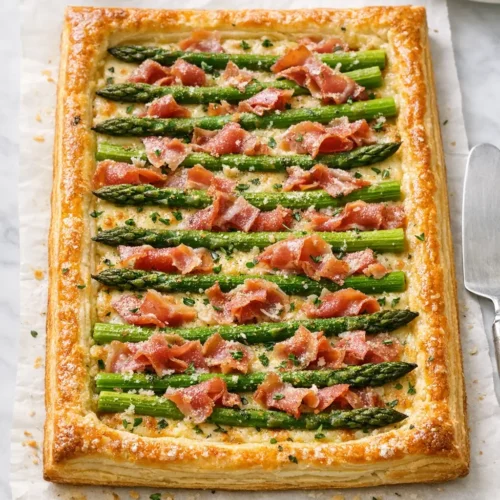
Asparagus and Prosciutto Tart for Easy Spring Brunch

Equipment
- Rimmed baking sheet
- Parchment paper
- Rolling Pin
- Sharp knife
- Fork
- Small bowl
- Pastry brush
- Cooling rack
Ingredients
- 1 sheet all-butter puff pastry about 250 g / 9 oz; thawed but still cold
- 1 tbsp Dijon mustard
- 3 tbsp crème fraîche or full-fat sour cream
- 1/2 cup finely grated Gruyère or Fontina cheese
- 1/4 cup finely grated Parmesan cheese divided
- 1 large egg beaten
- 8–10 thin asparagus spears about 250 g / 9 oz; woody ends trimmed
- 3–4 slices prosciutto about 50–60 g / 2 oz; torn into bite-size pieces
- 1 tbsp olive oil
- 1/4 tsp fine sea salt plus more to taste
- 1/4 tsp freshly ground black pepper
- 1 tsp fresh thyme leaves or 1/2 tsp dried thyme (optional)
Instructions
- Preheat your oven to 400°F / 200°C with a rack in the lower-middle position. Line a rimmed baking sheet with parchment paper.
- Lightly flour your work surface and roll the puff pastry into roughly a 10 x 14 inch (25 x 35 cm) rectangle. Transfer the pastry to the lined baking sheet.
- Using a sharp knife, lightly score a 1.5 cm (1/2 inch) border all the way around the pastry without cutting through. Inside the border, prick the dough all over with a fork.
- In a small bowl, whisk together the Dijon mustard and crème fraîche (or sour cream) until smooth. Add 1/4 cup (25 g) of the Gruyère/Fontina, 2 tablespoons of the Parmesan, and 2 teaspoons of the beaten egg. Season with a pinch of salt and pepper and stir until evenly combined.
- Spoon the cheese mixture onto the pastry, staying within the scored border, and spread into a thin, even layer.
- Pat the trimmed asparagus dry. Toss with the olive oil, salt, and pepper until lightly coated (slice thick spears lengthwise if needed).
- Lay the asparagus spears in a single layer over the cheese base. Tuck and drape the prosciutto pieces around and between the spears.
- Sprinkle the remaining Gruyère/Fontina and Parmesan over the tart, keeping cheese away from the border. Scatter thyme over the top if using.
- Add a small splash of water to the remaining beaten egg and whisk. Brush the pastry border lightly with egg wash for a glossy edge.
- Bake for 18–22 minutes, rotating the pan halfway through, until the pastry is deeply golden and crisp and the asparagus is just tender.
- Let the tart rest 5–10 minutes on a cooling rack. Season with a pinch more salt or pepper if needed.
- Slice into 6–8 squares and serve warm or at room temperature.



Leave a Reply