
A juicy hamburger with American cheese melts hits a specific comfort zone: salty, beefy, melty, and fast. This version leans into that diner-style vibe but stays realistic for a home stove. You get deeply browned edges, soft buns, and cheese that fully melts instead of sitting in stiff slices on top.
If it’s a busy weeknight, start by pulling the ground beef from the fridge and slicing any toppings so they’re ready before you heat the pan. Cooking in a small kitchen? Clear one landing zone for finished patties so you’re not scrambling with hot burgers in your hands.
The recipe works for newer cooks who want guidance and for experienced grillers who just need a solid, repeatable method. Expect a well-done but still juicy interior, a pronounced American cheese flavor, and a simple, flexible sauce you can tweak.
Ingredients
Serves 3–4 (makes 4 burgers)
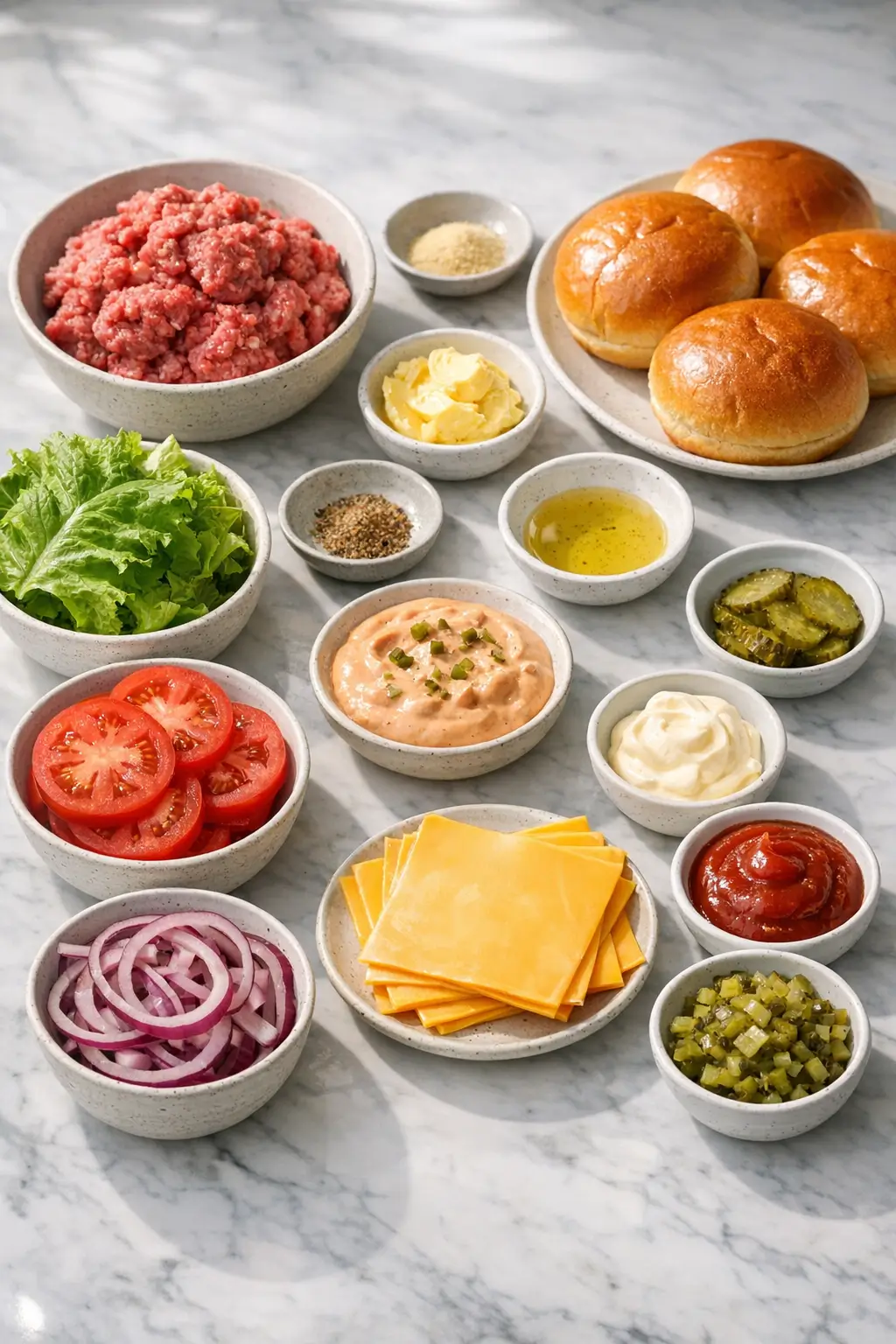
- 680 g / 1 1/2 lb ground beef, 80/20 (20% fat) – moisture and flavor
- 1 tsp fine sea salt, plus more to taste
- 1/2 tsp freshly ground black pepper
- 1/2 tsp garlic powder
- 4 soft hamburger buns (potato or brioche if possible)
- 4–8 slices American cheese (1–2 slices per burger, depending on how melty you like it)
- 2 tbsp (30 g) unsalted butter, softened – for toasting buns
- 1 tbsp (15 ml) neutral oil (canola, vegetable, or grapeseed) – for the pan or griddle
For a simple burger sauce (optional but recommended)
- 60 g / 1/4 cup mayonnaise
- 15 g / 1 tbsp ketchup
- 10 g / 2 tsp yellow mustard
- 10 g / 2 tsp finely chopped dill pickles or relish
- 1–2 tsp pickle brine or lemon juice, to taste
Toppings (mix and match)
- 4 leaves crisp lettuce (romaine or iceberg), dried well
- 4–8 slices tomato
- 1/4 small red onion, thinly sliced
- Dill pickle slices
Substitutions:
- Ground beef: You can use 85/15, but the burgers will be slightly less juicy; avoid very lean blends.
- American cheese: Mild cheddar or Colby Jack will work, but they don’t melt quite as smoothly.
- Buns: Any soft sandwich roll or even sliced bread will work in a pinch; keep thickness similar to standard burger buns.
Step-by-Step Instructions for Juicy Hamburgers with American Cheese Melts
-
Chill the meat, prep the toppings.
Keep the ground beef in the fridge until just before shaping; cold meat holds together better and browns nicely. Slice lettuce, tomato, onion, and pickles, and stir together the sauce ingredients in a small bowl. Taste the sauce and adjust salt or acidity with a bit more pickle brine or lemon juice. -
Shape loose, tall patties.
Divide the beef into 4 equal portions (about 170 g / 6 oz each). Gently form each into a ball, then press just enough to create a thick puck about 2–3 cm (1 inch) tall. Don’t knead or compress the meat; visible loose strands help keep the burgers tender. -
Season the surface only.
Sprinkle salt, pepper, and garlic powder evenly over both sides of each patty. Because the meat isn’t mixed, the seasoning sits where the browning happens and avoids a dense, sausage-like texture. -
Preheat your pan or griddle.
Set a large cast-iron skillet or heavy stainless-steel pan over medium-high heat and let it preheat for 4–5 minutes until very hot. Add the oil and swirl to coat. You should see a shimmer across the surface; that shimmer tells you the pan is ready.
Kitchen note: If the pan isn’t hot enough, the burgers will steam rather than sear, and you’ll lose both crust and juiciness. Give the pan more time to preheat than feels necessary.
-
Toast the buns.
While the pan heats, spread the cut sides of the buns with softened butter. Place them cut-side down on the outer edges of the hot pan or in a second pan over medium heat. Toast until golden, 1–2 minutes. Transfer to a plate and set aside. -
Sear the first side.
Place 2 patties in the hot pan, leaving a little space between them. You should hear an immediate sizzle. Cook without moving them for 3–4 minutes, until you see the bottom edges darken and fat begins to bead around the patty. -
Flip and start melting the cheese.
Use a sturdy spatula to scrape under each burger, keeping the browned crust attached, and flip quickly. Immediately top each patty with 1–2 slices American cheese. Turn the heat down slightly to medium; this prevents burning while the cheese melts. -
Cover to finish cooking.
Add a teaspoon of water to the empty area of the pan (not on the burgers) and cover with a lid or large metal bowl for 1–2 minutes. The steam helps the cheese fully melt and drape over the patties while the center cooks through.
Kitchen note: A little steam makes the cheese melt beautifully, but too much water will dilute the pan drippings and can splatter. Start with just a small splash and keep the lid slightly vented if your pan feels too wet.
-
Check for doneness.
For classic diner-style burgers, you’re aiming for well done but juicy. The patties should feel firm when pressed with the spatula, and the juices running out should be clear, not pink. If you prefer a bit less done and are confident in your beef source, stop the cooking 30–60 seconds earlier. -
Rest briefly and repeat.
Transfer the cooked patties to a plate and let them rest for 2–3 minutes so the juices redistribute. Cook the remaining 2 patties the same way, adjusting heat if the pan has gotten very hot. -
Build the burgers.
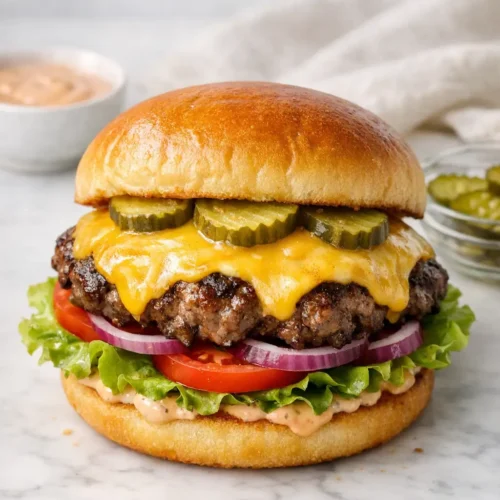
Spread a spoonful of burger sauce on each bun bottom. Add lettuce, tomato, and onion if using. Place a cheesy patty on top, add pickles, then cap with the top bun. Press gently to help everything settle without squeezing out the juices. -
Taste and adjust at the table.
Take a test bite from one burger. If it tastes flat, offer extra salt, pickles, or a splash of hot sauce at the table. Because buns and toppings can mute seasoning, final adjustments are easiest after that first bite.
Kitchen note: If the first batch came out drier than you like, shorten the cooking by 30–45 seconds per side on the next round or use slightly thicker patties. Every stove runs a bit differently, and small tweaks make a big difference.
What to Expect
These burgers should be fully cooked through but still moist, not pink in the center. The exterior forms a browned crust with some darker spots around the edges where the fat meets the pan.
American cheese melts into a thick, even layer that clings to the patty instead of separating into oil. The sauce brings a tangy, slightly sweet note that balances the beef and richness.
Texture can vary with your pan and heat. Cast iron tends to produce a more pronounced crust, while nonstick pans usually give a gentler sear and a slightly softer bite. Leaner beef will be firmer and a bit drier, while 80/20 stays juicier and has more drip.
Kitchen note: If you’re used to thick pub-style burgers, these will feel thinner but more intensely browned. That crust is where a lot of the flavor hides.
Ways to Change It Up
-
Simple double-patty melts.
Make 8 smaller patties instead of 4 (about 85 g / 3 oz each). Cook them thinner and stack two cheesy patties on each bun. This gives you more browned surface and a classic “double” feel without changing the base ingredients. -
Milder, kid-friendly version.
Skip the onions and use only ketchup and a little mayo on the buns instead of the tangier sauce. Stick to 1 slice of cheese per burger and keep the patties slightly thicker so they stay extra juicy. -
Spicier burgers.
Add 1/2 tsp smoked paprika and a pinch of chili powder to the surface seasoning. Stir hot sauce or finely chopped pickled jalapeños into the sauce. You can also top finished burgers with fresh jalapeño rings for a sharper heat. -
Quick patty melt-style twist.
Swap the buns for sturdy sliced bread and add a layer of sautéed onions under the patty, closer to a patty melt. Cook the assembled sandwich briefly on each side in a lightly buttered pan until the bread is golden. -
Lighter-feeling option.
Use smaller patties (about 100 g / 3.5 oz), serve on thin buns or halved ciabatta rolls, and load up with crisp lettuce and tomato. The burgers will still be satisfying but won’t feel as heavy.
Serving and Storage
Serve the burgers as soon as they’re built; the cheese and juices are at their best within the first 10 minutes. A side of oven fries, a basic green salad, or crunchy coleslaw all work well without demanding more stove time.
If you want to hold burgers briefly for a group, keep cooked patties on a wire rack set over a sheet pan in a 90–95°C / 200°F oven for up to 20 minutes. Add the cheese in the pan before moving them to the oven so it doesn’t dry out.
Leftover cooked patties can be cooled, then stored in an airtight container in the fridge for up to 3 days. Reheat gently in a covered skillet over low heat with a teaspoon of water, or in a 160°C / 325°F oven for about 8–10 minutes, adding fresh cheese near the end.
Kitchen note: Reheated burgers will always be a bit more cooked than the first time. If you plan for leftovers, cook those patties slightly under your ideal doneness on day one.

Cultural Context
Hamburgers and American cheese are closely associated with 20th-century U.S. diner and fast-food culture. Thin, well-browned patties topped with processed cheese became widespread as griddles and quick-service restaurants took hold.
Food historians trace early hamburger patties to late-19th-century fairs and worksite food stands in the United States, where cooks pressed ground beef into hot pans for speed and efficiency. You can read more about the evolution of thin, griddled patties in this overview of smash-style burgers: history and variations of smash-style burgers.
American cheese itself developed as a standardized product for melting and storage, later becoming a hallmark of diner cheeseburgers and patty melts. For a related sandwich that blends grilled cheese and a burger patty, see the patty melt discussion here: background on the patty melt as a burger variant.
Common Questions and Troubleshooting
Why are my burgers dry even though I used 80/20 beef?
Overcooking is usually the culprit. Try reducing the cook time by 30–45 seconds per side, and make sure the patties are at least 2 cm (3/4 inch) thick. Resting the burgers for a couple of minutes before serving also helps keep juices from running out immediately.
The cheese isn’t melting fully. What should I do?
Turn the heat down slightly after flipping, add a teaspoon of water to the pan, and cover the burgers for a minute. That quick burst of steam helps American cheese relax and flow over the patty instead of staying stiff.
My burgers are steaming instead of browning. How can I fix this?
Crowding the pan or starting with a pan that isn’t hot enough both cause steaming. Cook only 2 patties at a time in a large skillet, preheat thoroughly, and avoid covering the pan during the first sear. Excess surface moisture from very cold, wet meat can also slow browning, so pat the beef dry if needed.
Can I make the patties ahead of time?
You can shape and season the patties up to 4 hours ahead. Arrange them in a single layer on a tray, cover, and refrigerate. Let them sit at room temperature for about 10 minutes before cooking so they don’t stay cold in the center.
Is it safe to cook these less than well done?
Food safety guidelines recommend cooking ground beef to an internal temperature of 71°C / 160°F. If you choose to cook them slightly less, use very fresh beef from a trusted source and understand that you’re accepting a bit more risk.
How do I freeze and reheat cooked burgers?
Cool patties completely, then wrap each one tightly in foil or plastic and place them in a freezer bag. Freeze for up to 2 months. Reheat from frozen in a covered skillet over low heat with a splash of water, or in a 160°C / 325°F oven until hot throughout, then add fresh cheese near the end to avoid overcooking.
Conclusion
Juicy hamburgers with American cheese melts are more about technique than special ingredients. With well-chosen beef, a properly heated pan, and attention to timing, you can get that diner-style crust and melty cheese in an ordinary kitchen.
If you try this version, leave a comment with how it went, including any tweaks to toppings, sauces, or cook time that worked for your stove. Those small details help other home cooks dial in a version that fits their own preferences and equipment.
Juicy Hamburgers with American Cheese Melts

Equipment
- Large cast-iron skillet or heavy stainless-steel pan
- Spatula
- Lid or large metal bowl (to cover pan)
- Small bowl (for sauce)
Ingredients
Burgers
- 680 g ground beef (80/20)
- 1 tsp fine sea salt plus more to taste
- 1/2 tsp freshly ground black pepper
- 1/2 tsp garlic powder
- 4 soft hamburger buns potato or brioche
- 4–8 slices American cheese 1–2 slices per burger
- 2 tbsp unsalted butter softened, for toasting buns
- 1 tbsp neutral oil for the pan or griddle
Simple burger sauce (optional)
- 1/4 cup mayonnaise
- 1 tbsp ketchup
- 2 tsp yellow mustard
- 2 tsp dill pickles or relish finely chopped
- 1–2 tsp pickle brine or lemon juice to taste
Toppings (optional)
- 4 leaves crisp lettuce dried well
- 4–8 slices tomato
- 1/4 small red onion thinly sliced
- dill pickle slices
Instructions
- Chill the meat, prep the toppings. Keep the ground beef in the fridge until just before shaping. Slice lettuce, tomato, onion, and pickles, and stir together the sauce ingredients in a small bowl. Taste and adjust salt or acidity with more pickle brine or lemon juice.
- Shape loose, tall patties. Divide the beef into 4 equal portions (about 170 g / 6 oz each). Gently form into balls, then press into thick pucks about 2–3 cm (1 inch) tall; don’t knead or compress.
- Season the surface only. Sprinkle salt, pepper, and garlic powder evenly over both sides of each patty.
- Preheat your pan or griddle. Heat a large cast-iron skillet or heavy stainless-steel pan over medium-high for 4–5 minutes until very hot. Add the oil and swirl to coat.
- Toast the buns. Spread cut sides with softened butter and toast cut-side down until golden, 1–2 minutes. Set aside.
- Sear the first side. Cook 2 patties at a time without moving for 3–4 minutes, until edges darken and fat beads around the patty.
- Flip and start melting the cheese. Flip quickly, then top each patty with 1–2 slices American cheese. Reduce heat slightly to medium.
- Cover to finish cooking. Add about 1 teaspoon water to an empty spot in the pan and cover with a lid or large metal bowl for 1–2 minutes to steam-melt the cheese and finish cooking.
- Check for doneness. Aim for well done but juicy; patties should feel firm and juices should run clear. If desired, stop 30–60 seconds earlier for less-done burgers (food safety note: 71°C / 160°F is recommended for ground beef).
- Rest briefly and repeat. Rest cooked patties 2–3 minutes, then cook remaining patties the same way, adjusting heat as needed.
- Build the burgers. Spread sauce on each bun bottom, add lettuce/tomato/onion if using, add a cheesy patty, add pickles, and cap with the top bun. Press gently to settle.
- Taste and adjust at the table. Add extra salt, pickles, or hot sauce if needed after the first bite.



Leave a Reply