
Baked salmon with maple Dijon glaze is one of those dishes that tastes restaurant-level but slides into a busy weeknight without drama. The sweet, sharp glaze flatters rich salmon without hiding it, and everything cooks on a single pan in under 20 minutes.
If you’re walking in the door at 6:00, start by getting the oven heating and lining your pan; you can whisk the glaze while the oven comes up to temperature. Cooking for kids or distracted by homework at the table? Your main job is keeping an eye on color at the edges of the fillet so the fish stays moist, not dry.
This style of glazed salmon shows up in many North American kitchens and restaurant menus, especially in regions where salmon is plentiful. It’s usually eaten as a simple dinner with vegetables and rice, potatoes, or salad and works in any season. The recipe suits newer cooks and anyone who wants a reliable, low-mess fish dinner with straightforward flavors.
Ingredients
Serves 3–4
For the salmon
- 680 g / 1½ lb skin-on salmon fillet, center-cut if possible
- ½ tsp fine sea salt
- ¼ tsp freshly ground black pepper
- 1 tsp neutral oil (canola, avocado, or light olive oil) – helps prevent sticking
For the maple Dijon glaze
(Adapted in spirit from several baked salmon with mustard–maple glazes.)
- 60 ml / ¼ cup pure maple syrup – provides sweetness and caramelization
- 30 ml / 2 tbsp Dijon mustard – gives tang and slight heat
- 10 ml / 2 tsp whole-grain mustard – adds texture and pops of flavor; use more Dijon if you don’t have whole-grain
- 10 ml / 2 tsp low-sodium soy sauce – deepens savoriness; tamari or coconut aminos work if gluten-free
- 15 ml / 1 tbsp olive oil – helps the glaze cling and prevents the top from drying
- 10 ml / 2 tsp fresh lemon juice – balances the sweetness
- 2 garlic cloves, finely minced (about 2 tsp) – aromatic backbone
- ¼ tsp smoked or sweet paprika – gentle color and warmth
- ⅛ tsp red pepper flakes – optional, for mild heat; omit for a very mild dish
To finish (optional but helpful)
- 1 tbsp chopped fresh parsley, chives, or dill – for freshness at the end
- Lemon wedges, for serving
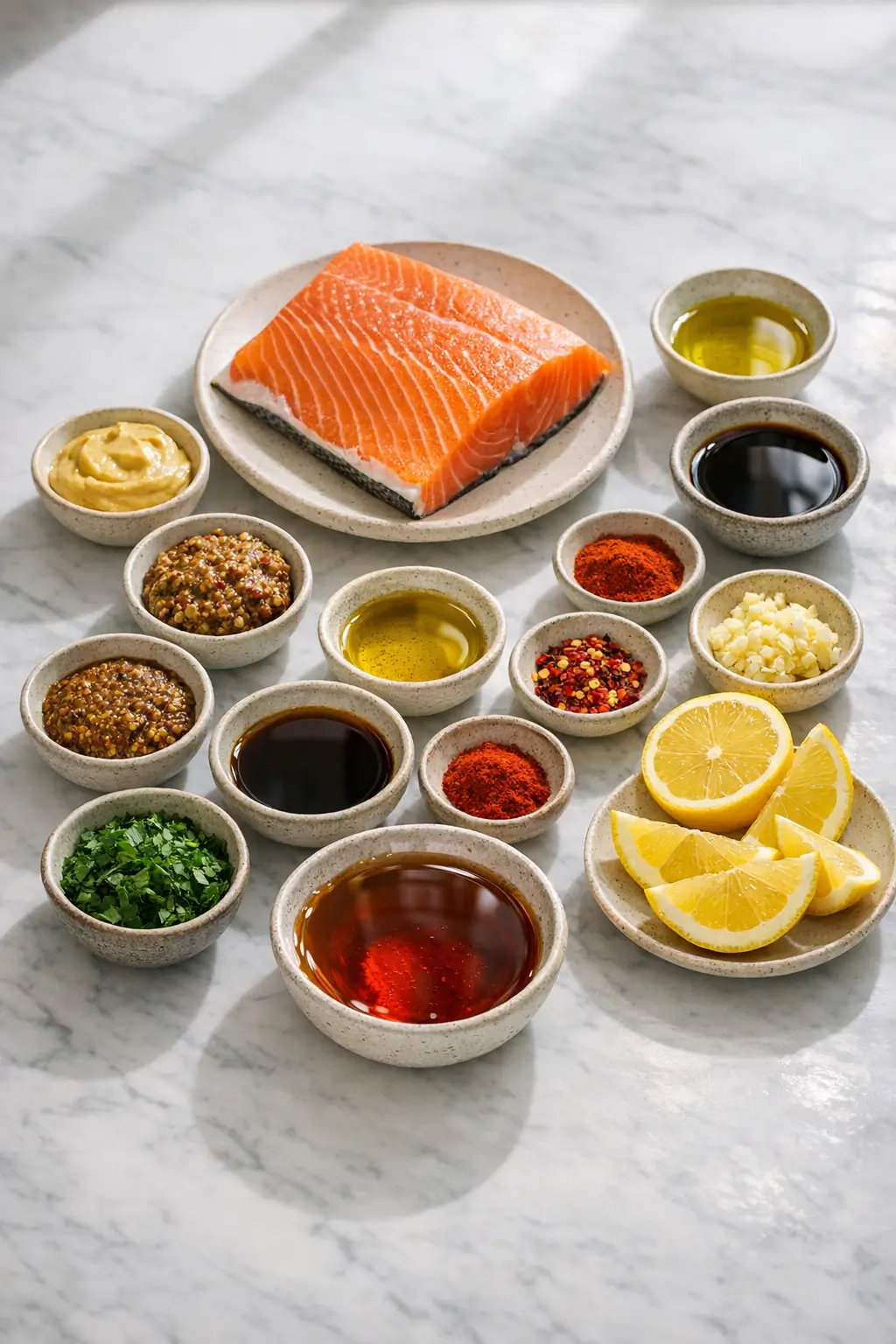
Step-by-Step Instructions for Baked Salmon With Maple Dijon Glaze
Preheat the oven and prep the pan.
Heat the oven to 200°C / 400°F with a rack in the middle. Line a small rimmed baking sheet with parchment or lightly oiled foil for easy cleanup. Lightly brush or rub the center of the parchment with the 1 tsp oil where the salmon will sit.Dry and season the salmon.
Pat the salmon fillet dry on all sides with paper towels; this helps the glaze cling instead of sliding off. Place it skin-side down on the prepared pan. Sprinkle evenly with the ½ tsp salt and ¼ tsp pepper.Stir together the glaze.
In a small bowl, whisk the maple syrup, Dijon mustard, whole-grain mustard, soy sauce, olive oil, lemon juice, minced garlic, paprika, and red pepper flakes (if using) until smooth and slightly thickened. Taste a small dab; it should be sweet-tangy-salty with a little heat. Adjust with an extra squeeze of lemon or a pinch of salt if needed.Coat the salmon generously.
Spoon or brush most of the glaze over the top and sides of the salmon in an even layer. Reserve 1–2 tbsp of glaze in the bowl to brush on later. The top should look well-coated but not drowning; any excess will run to the pan and can be spooned over after baking.Let the glaze sit briefly.
Leave the salmon on the counter for 5–10 minutes while the oven finishes preheating. This short rest helps the fish take the chill off and gives the glaze time to adhere.
Kitchen note: If your salmon is very thick in the center (more than 1½ inches), take it out of the fridge 15–20 minutes before baking so it cooks more evenly from edge to center.
Bake until almost done.
Place the pan in the hot oven. Bake for 10–14 minutes, depending on thickness. A thinner fillet (around 1 inch at the thickest point) will be close to done at 10–11 minutes; a thicker one may take closer to 14 minutes. Look for the sides of the fish to turn opaque and the top to look glossy and slightly caramelized.Brush with remaining glaze.
Pull the pan out briefly around the 9–10 minute mark. Brush the reserved glaze over the top, focusing on any spots that look dry. Return the pan to the oven for the remaining time.Check for doneness by feel, not just time.
Begin checking doneness a couple of minutes before you expect it to be ready. A fork inserted into the thickest part should slide in easily, and the flesh should separate into large, moist flakes but still look slightly translucent in the very center if you prefer medium. If you like it more done, give it another 1–2 minutes.
Kitchen note: If white protein (albumin) is pooling on top in thick streaks, the fish is slightly overcooking. Next time, pull it from the oven a minute earlier and rest it a bit longer; the texture will be silkier and the glaze will still set.
Rest briefly.
Transfer the pan to a cooling rack or stovetop and let the salmon rest 3–5 minutes. Carryover heat will finish the cooking and allow juices to redistribute.Finish and serve.
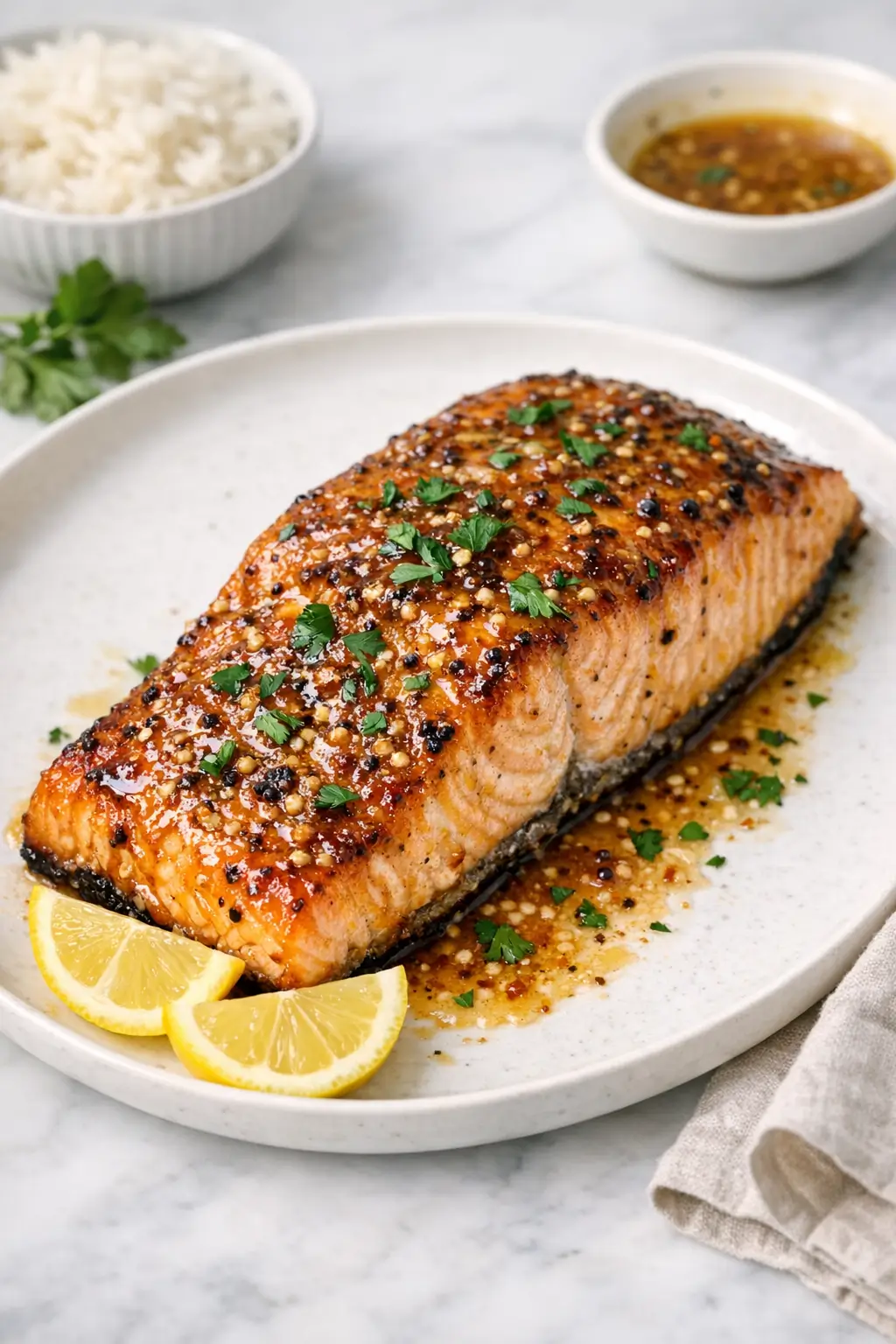
Use a wide spatula to lift portions from the skin (the skin often sticks to the parchment, which is fine). Sprinkle with chopped herbs. Serve warm with lemon wedges and some of the pan juices spooned on top.
What to Expect
This baked salmon comes out tender and flaky, with a moist interior rather than a firm, steak-like texture. The glaze bakes into a glossy layer that clings to the fish instead of forming a hard crust.
Flavor-wise, expect a clear maple sweetness balanced by mustard sharpness and a gentle background of garlic and soy. The soy doesn’t make the dish taste like a stir-fry; it mostly deepens the savory notes so the sweetness doesn’t feel one-dimensional.
Ovens vary, so the edges may brown more quickly in a very hot oven or on a dark pan. Thin tail pieces cook faster than the thicker center, which is why it’s helpful to aim your doneness checks at the center portion. Different mustards and maple brands vary in intensity too, so the glaze may taste slightly more tangy or more sweet from kitchen to kitchen.
Kitchen note: If your household prefers a crisper top, you can move the pan to the upper rack and broil on high for 30–60 seconds at the very end. Stay right there watching; the sugars in maple syrup can scorch quickly.
Ways to Change It Up
Vegetarian or vegan adaptation.
The maple Dijon glaze works well on firm tofu or thick slices of cauliflower. Press extra moisture from firm tofu, slice into slabs, and roast at 400°F / 200°C for about 25–30 minutes, brushing with glaze halfway through. For cauliflower “steaks,” slice from the center of the head, brush with glaze, and roast until tender with caramelized edges. Use tamari or coconut aminos and a neutral oil to keep it vegan.Make it milder and kid-friendly.
For very sensitive palates, reduce the Dijon to 1 tbsp and skip the red pepper flakes. You can increase the maple syrup to 3 tbsp for a slightly sweeter result, then serve with extra lemon at the table for those who want more brightness.Boost the heat.
If you enjoy more spice, add ½ tsp red pepper flakes or a small squeeze of sriracha to the glaze. Another option is to sprinkle a light dusting of cayenne over the salmon before glazing so the heat sits under the sweet top layer.Faster, more hands-off version.
To shave off prep time, whisk the glaze a day ahead and keep it covered in the fridge. When you get home, all you need to do is preheat, season the fish, and pour. You can also skip the mid-bake glazing step; simply use all of the glaze at the beginning, knowing the flavor will be a bit more concentrated on the top.Add a crunchy topping.
For more texture, mix ¼ cup panko breadcrumbs with 1 tsp olive oil and a pinch of salt. Sprinkle lightly over the glazed salmon before baking. The crumbs will toast as the salmon cooks, giving a subtle contrast without fully crusting the fish.
Serving and Storage
At the table, this baked salmon with maple Dijon glaze pairs well with simple sides that soak up the extra sauce. Steamed or roasted vegetables, brown or white rice, quinoa, or roasted potatoes all fit nicely. A crisp green salad with a lemony vinaigrette cuts through the richness.
For a lighter meal, serve warm flakes of salmon over mixed greens with extra lemon and any leftover pan juices as part of the dressing. Leftovers also work tucked into grain bowls with roasted vegetables or in a sandwich with cucumber and greens.
Cool leftovers to room temperature within 1 hour, then store in an airtight container in the refrigerator for up to 3 days. To reheat, use a low oven (about 275°F / 135°C) for 8–10 minutes, just until warmed through; the goal is to reheat gently so the fish doesn’t dry out.
Kitchen note: Avoid microwaving on full power, which can toughen the fish and intensify any fishy aromas. If the microwave is your only option, reheat in short bursts at 30–40% power and stop while the center is just warm.
Cultural Context
Salmon has long been central to food traditions and economies across the northern hemisphere, especially along the Pacific Northwest coast. Indigenous nations in that region have relied on salmon for thousands of years for nourishment, ceremony, and trade; the fish is often described as a cultural and ecological keystone species. Resources such as the U.S. Fish & Wildlife Service overview on salmon as a Pacific Northwest icon and Native-focused education materials from the Smithsonian’s National Museum of the American Indian describe how tightly salmon is woven into regional identities and stewardship practices.
Maple syrup, meanwhile, comes from a sap-harvesting and sugar-making practice that developed in northeastern North America. Historical summaries from organizations like the International Maple Syrup Institute trace how Indigenous knowledge of tapping and concentrating sap formed the basis of today’s maple syrup production. A modern home recipe that combines salmon with maple and mustard brings together these widely available ingredients in a contemporary, weeknight-friendly way, without trying to replicate any specific traditional preparation.
Common Questions and Troubleshooting
Why is my salmon coming out dry?
Overcooking is the usual culprit. Try baking for a shorter time and start checking doneness a few minutes earlier, especially if your fillet is on the thinner side. Using a thermometer, aim for about 125°F / 52°C in the thickest part for medium, then let carryover heat finish the job.
The glaze burned around the edges—what happened?
Maple syrup has natural sugars that caramelize quickly, especially on dark pans or under a strong broiler. If your oven runs hot, lower the temperature to 375°F / 190°C next time and place the pan on the middle or lower rack. Also avoid adding an extra sugary glaze at the very start; reserve a little for the mid-bake brushing.
Can I use frozen salmon?
Yes, but thaw it completely in the refrigerator before cooking and pat it very dry. Frozen fillets sometimes release more moisture as they bake, which can thin the glaze slightly. If that happens, you can briefly simmer a spoonful of the pan juices in a small saucepan to thicken them and spoon over at the table.
Is there a substitute for maple syrup?
The recipe is built around maple’s flavor, but you can use honey in a pinch. Honey will be slightly thicker and sweeter, so you may want to add a small splash of extra lemon juice to keep the balance.
How do I make this without soy sauce?
Simply replace soy sauce with an equal amount of water plus a generous pinch of salt, or use coconut aminos or tamari if those fit your pantry. The savory depth will be a bit gentler but the glaze will still work.
Can I grill instead of bake?
You can, but take care with the sugary glaze over direct heat. Grill the salmon skin-side down over medium heat with the lid closed, and consider cooking most of the way with just a light coating of glaze. Brush on more in the last couple of minutes to avoid flare-ups and burning.
Conclusion
Baked salmon with maple Dijon glaze is a practical way to serve fish that feels special without requiring special skills or equipment. Once you’ve made it once or twice, adjusting sweetness, tang, or heat to your household’s taste becomes very straightforward.
If you try this version, consider leaving a comment and note how your oven time lined up with the suggested range—that helps other home cooks judge their own timing. I’m always interested in hearing what sides you served it with or how you adapted the glaze for your own kitchen.
Easy Baked Salmon With Maple Dijon Glaze

Equipment
- Rimmed baking sheet
- Parchment paper or foil
- Small bowl
- Whisk
- Measuring spoons
- Wide spatula
- Paper towels
Ingredients
For the salmon
- 680 g skin-on salmon fillet center-cut if possible (about 1 1/2 lb)
- 1/2 tsp fine sea salt
- 1/4 tsp freshly ground black pepper
- 1 tsp neutral oil canola, avocado, or light olive oil; helps prevent sticking
For the maple Dijon glaze
- 60 ml pure maple syrup
- 30 ml Dijon mustard
- 10 ml whole-grain mustard use more Dijon if you don’t have whole-grain
- 10 ml low-sodium soy sauce tamari or coconut aminos work if gluten-free
- 15 ml olive oil
- 10 ml fresh lemon juice
- 2 garlic cloves finely minced (about 2 tsp)
- 1/4 tsp smoked or sweet paprika
- 1/8 tsp red pepper flakes optional
To finish (optional)
- 1 tbsp chopped fresh parsley, chives, or dill
- lemon wedges for serving
Instructions
- Preheat the oven to 200°C / 400°F with a rack in the middle. Line a small rimmed baking sheet with parchment or lightly oiled foil. Lightly rub the parchment with the 1 tsp neutral oil where the salmon will sit.
- Pat the salmon dry on all sides with paper towels. Place it skin-side down on the pan and season evenly with the salt and pepper.
- In a small bowl, whisk together the maple syrup, Dijon mustard, whole-grain mustard, soy sauce, olive oil, lemon juice, minced garlic, paprika, and red pepper flakes (if using) until smooth and slightly thickened. Taste and adjust with extra lemon or a pinch of salt if needed.
- Spoon or brush most of the glaze over the top and sides of the salmon. Reserve 1–2 tbsp of glaze to brush on later.
- Let the glazed salmon sit at room temperature for 5–10 minutes while the oven finishes heating.
- Bake for 10–14 minutes, depending on thickness, until the sides turn opaque and the top is glossy and slightly caramelized.
- Around the 9–10 minute mark, briefly remove the pan and brush the reserved glaze over any dry spots. Return to the oven to finish baking.
- Check doneness: a fork should slide in easily and the salmon should flake into large, moist pieces (you may prefer it slightly translucent in the center). Add 1–2 minutes if you want it more done.
- Rest 3–5 minutes on a cooling rack or stovetop to finish cooking and redistribute juices.
- Serve: use a wide spatula to lift portions from the skin, sprinkle with chopped herbs, and serve warm with lemon wedges and pan juices spooned over the top.



Leave a Reply