
Basque chicken with peppers is a stovetop braise that turns simple pantry produce into a saucy, satisfying meal. You’ll sear chicken until golden, then simmer it with sweet bell peppers, tomatoes, onions, and garlic until the meat is tender and the peppers are silky. The flavor leans tomato‑sweet and pepper‑fragrant with gentle warmth from paprika or Espelette pepper.
If it’s a busy weeknight, slice the onions and peppers first so the pan never waits on you. Small kitchen? Grab your widest skillet or Dutch oven so the chicken browns instead of steams.
This dish shows up in home kitchens across the Basque region and the southwest of France. It’s hearty enough for cool weather yet light enough for late summer when peppers and tomatoes shine. Cooks who like straightforward steps, make-ahead potential, and big payoff from simple ingredients will find this very doable.
Ingredients
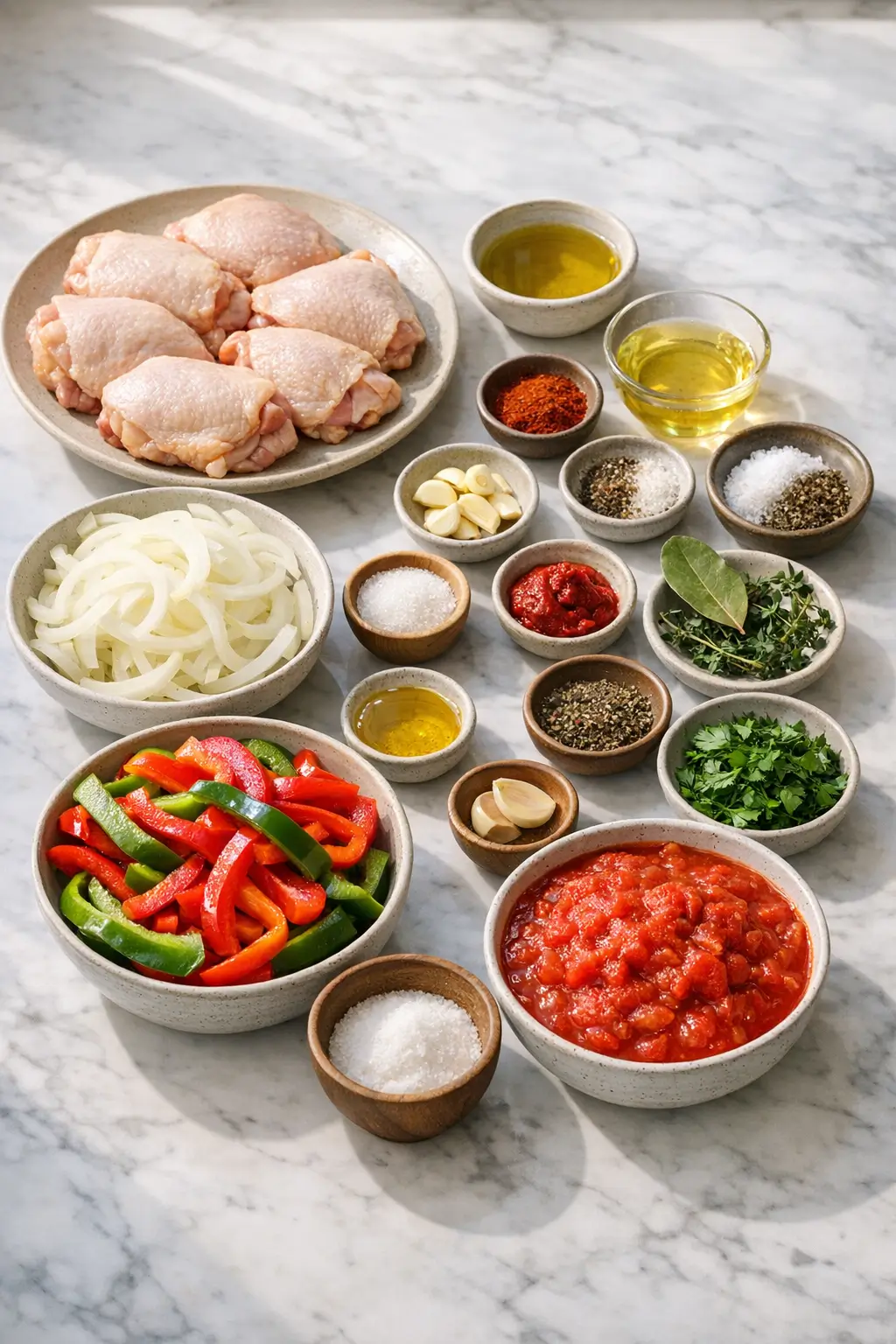
- 6 small bone-in, skin-on chicken thighs (about 2 lb / 900 g) — rich flavor and forgiving for braising.
- 2 tbsp (30 ml) extra-virgin olive oil — for searing and sautéing.
- 1 large yellow onion, thinly sliced (10–11 oz / 300 g) — base sweetness.
- 3 bell peppers (2 red, 1 green), cut into 1/2-inch (1.25 cm) strips (about 1 1/2 lb / 675 g) — red brings sweetness; green adds a mild, grassy note.
- 4 garlic cloves, thinly sliced or minced — aromatic backbone.
- 1/2 cup (120 ml) dry white wine — lifts and deglazes; sub: use chicken broth plus 1 tsp (5 ml) white wine vinegar or lemon juice.
- 1 can (14.5 oz / 400 g) crushed or diced tomatoes — consistent acidity and body; sub: 4 ripe tomatoes, peeled and chopped.
- 1 tbsp (15 g) tomato paste — optional but useful if tomatoes are thin.
- 1 bay leaf — classic herbal depth.
- 3–4 fresh thyme sprigs (or 1/2 tsp / 1 g dried thyme) — savory warmth.
- 1 tsp (2–3 g) Espelette pepper — mild heat and fruitiness; sub: 3/4 tsp (2 g) sweet paprika plus a pinch of cayenne.
- 3/4–1 tsp (4–6 g) kosher salt, plus more to taste.
- Freshly ground black pepper, to taste.
- 2 tbsp (8 g) chopped flat-leaf parsley — bright finish.
Optional but nice:
- 1 tsp (5 g) sugar if your tomatoes taste very sharp.
- 1–2 tsp (5–10 ml) extra olive oil to drizzle at the end for gloss.
Step-by-Step Instructions for Basque Chicken with Peppers
- Pat the chicken dry and season all over with about 3/4 tsp (4–5 g) salt and black pepper. Heat 2 tbsp (30 ml) olive oil in a wide 11–12 inch (28–30 cm) skillet or Dutch oven over medium heat until shimmering.
- Sear the chicken skin-side down without moving until deeply golden, 7–9 minutes. Flip and brown the second side for 2–3 minutes. Transfer to a plate; leave the flavorful fat in the pan.
- Add the onion with a small pinch of salt. Cook, stirring and scraping up brown bits, until translucent and lightly golden at the edges, 5–7 minutes.
- Stir in the bell peppers. Cook until softened and glossy with a few browned spots, 8–10 minutes. If the pan looks dry, add a spoon of oil.
- Add the garlic and cook just until fragrant, 30–45 seconds. Stir in the Espelette pepper (or paprika/cayenne) and tomato paste; cook 30 seconds to bloom the spices.
- Deglaze with the white wine. Scrape the pan bottom thoroughly and let the wine reduce by roughly half, 2–3 minutes.
- Add the tomatoes, bay leaf, and thyme. Bring to a lively simmer, then taste the sauce and season lightly — it will concentrate as it cooks.
- Nestle the chicken back in, skin-side up. The sauce should come about halfway up the pieces; add a splash of water if needed. Cover and simmer gently over medium-low heat for 20–25 minutes, until the thighs are tender (internal temp 175–185°F / 79–85°C).
- Uncover and simmer 8–12 minutes to reduce to a spoon-coating consistency. Stir occasionally, nudging peppers under the sauce so they soften fully. If the sauce tastes sharp, add up to 1 tsp (5 g) sugar.
- Fish out the bay and woody thyme stems. Sprinkle with parsley and black pepper. Rest 5 minutes so juices settle, then serve straight from the pan.
Kitchen note: Crowding prevents browning and leads to a pale, greasy sauce. If your pan is small, brown the chicken in batches and keep the heat at steady medium so fond forms without scorching.
What to Expect
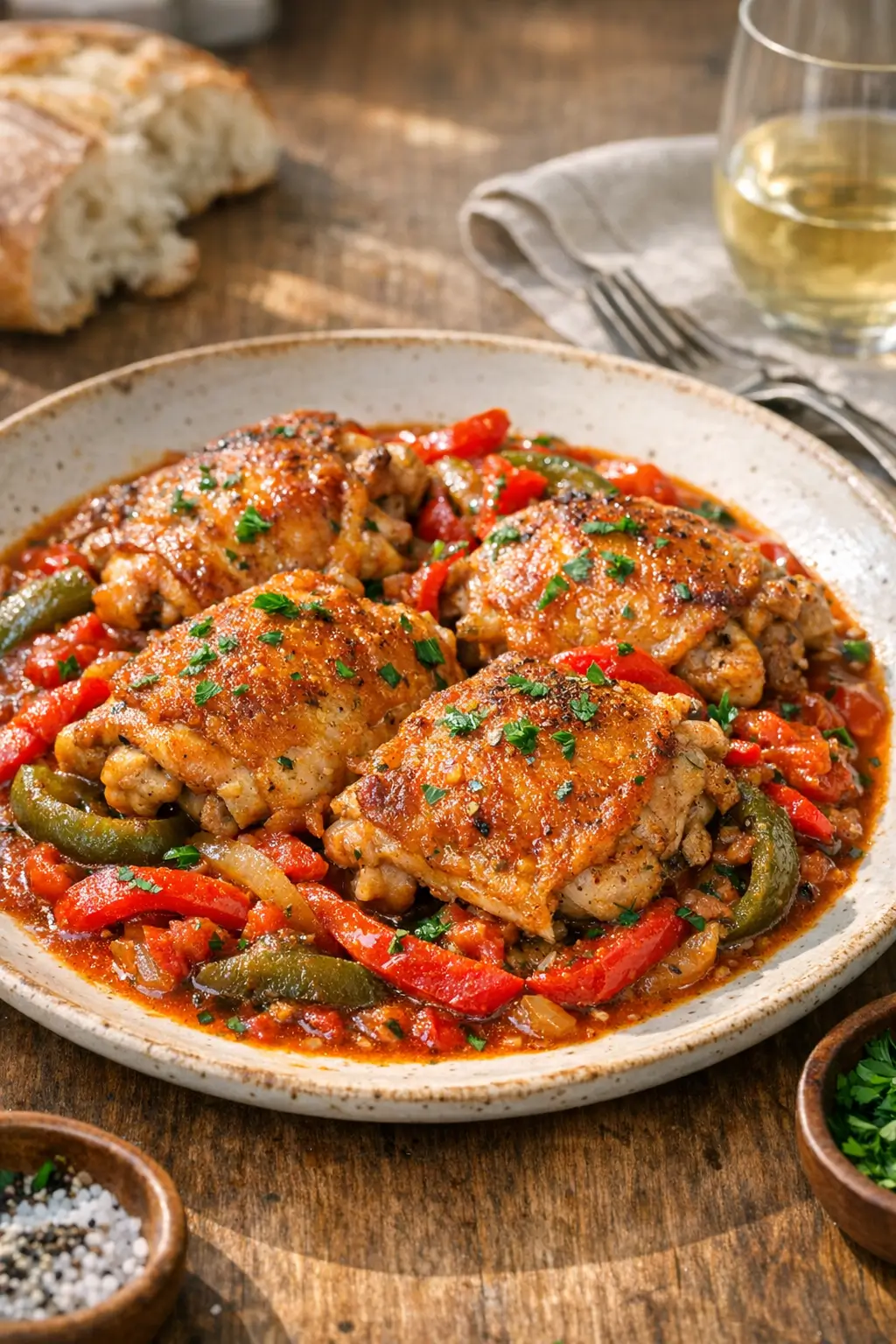
The peppers cook down to soft ribbons that still hold shape. The chicken will be tender but not shreddy; thighs deliver juiciness even if you simmer a little longer.
Flavors skew savory-sweet from onions and red peppers, with light heat if you used Espelette pepper. White wine adds lift, while thyme and bay keep things herbal instead of spicy.
Expect some variation by brand of tomatoes: fire-roasted cans are smokier and a touch sweeter; plain crushed tomatoes are brighter and more acidic. The pan matters, too. A heavy Dutch oven retains heat and yields deeper browning, while a thinner skillet may need slightly lower heat to avoid sticking.
Kitchen note: If the finished sauce tastes sharp, keep simmering uncovered for 3–5 minutes to drive off acidity before adding sugar. Aim for balanced, not sweet.
Ways to Change It Up
- Vegetarian or vegan: Swap the chicken for two 15-oz (425 g) cans drained chickpeas or 16 oz (450 g) thickly sliced cremini mushrooms. Brown the mushrooms well, then proceed with the peppers and sauce. Simmer 10–12 minutes and finish with extra olive oil for richness.
- Spicier or milder: For gentle heat, stick with Espelette pepper or sweet paprika. To boost spice, add 1/4–1/2 tsp red pepper flakes with the garlic. To go milder, use only sweet paprika and skip any cayenne.
- Faster weeknight version: Use boneless, skinless chicken thighs (1 1/2 lb / 680 g) cut into large chunks. Brown briefly, then simmer covered for 12–15 minutes. You’ll trade crispy skin for shorter cook time, but keep all the pepper-sweet sauce.
- With olives or cured ham: Stir in 1/3 cup (50 g) pitted green or black olives for briny contrast, or sauté 2 oz (55 g) chopped Bayonne ham with the onions for a smokier profile. Both are optional, not required.
Serving and Storage
Serve with plain white rice, buttered noodles, or crusty bread to catch the sauce. Crispy potatoes are excellent, too. For a fresh counterpoint, a crunchy salad works well — the texture pops against the soft peppers. Try our Cucumber Salad That Stays Crunchy in 15 Minutes.
If you’re building a French-leaning menu, a bowl of French Onion Soup with Deep Flavor, Simple Steps makes a cozy starter, and for dessert you could go modern-classic with Basque Cheesecake Made Easy: Burnt Top, Creamy Center.
Storage: Cool leftovers, then refrigerate airtight for up to 4 days. The sauce thickens and improves by day two. Freeze up to 3 months; thaw overnight in the fridge.
Reheat gently on the stovetop over medium-low heat, adding a splash of water to loosen. If you want the skin a bit crisper after reheating, broil the chicken pieces briefly on a sheet pan before returning them to the sauce.
Kitchen note: For best texture after freezing, cook the peppers until just tender before you portion and freeze. They’ll soften further when reheated.
Cultural Context
This braise is closely related to poulet basquaise, a home-style dish from the French Basque region. The sauce leans on piperade — a mix of tomatoes, onions, and peppers — and often includes the region’s mild, fruity Espelette pepper. To learn more about foodways across the Basque Country, see this overview of Basque cuisine. For background on the pepper itself and its protected status (AOP/PDO), this entry on Espelette pepper is useful.
Common Questions and Troubleshooting
- My sauce is thin. How do I fix it? Simmer uncovered for a few minutes until it clings to a spoon. If you used very watery tomatoes, whisk in 1–2 tsp tomato paste and cook 1–2 minutes more.
- The chicken isn’t tender yet. What now? Keep the simmer gentle and give it 5–10 more minutes. Thighs are happiest around 175–185°F (79–85°C); that’s when the connective tissues relax and the meat tastes juicy.
- Can I use chicken breasts? Yes, but reduce the covered simmer to about 12–15 minutes and target 160°F (71°C) internal, then rest 5 minutes. Breasts overcook quickly and dry out.
- I don’t cook with wine. What’s the best swap? Use chicken broth and add 1 tsp white wine vinegar or lemon juice for brightness.
- I can’t find Espelette pepper. What’s closest? Use sweet paprika plus a small pinch of cayenne for a gentle kick. You want warmth, not sharp heat.
- My peppers taste a little bitter. Why? Green peppers can read slightly bitter if undercooked. Keep simmering until they’re fully tender and glossy; red peppers add sweetness to balance.
- Slow cooker or Instant Pot? You can, but stovetop gives better pepper texture. If slow cooking, soften the onions and peppers first in a skillet, then cook on Low 4–5 hours. In a pressure cooker, 10 minutes high pressure with natural release works for boneless thighs; reduce the sauce afterward on Sauté.
Conclusion
This is a no-fuss braise with friendly steps and rewarding flavor. If you cook it, leave a comment and rating — and share any tweaks you tried, from olives to chickpeas. Your notes help other home cooks dial it in for their own kitchen.
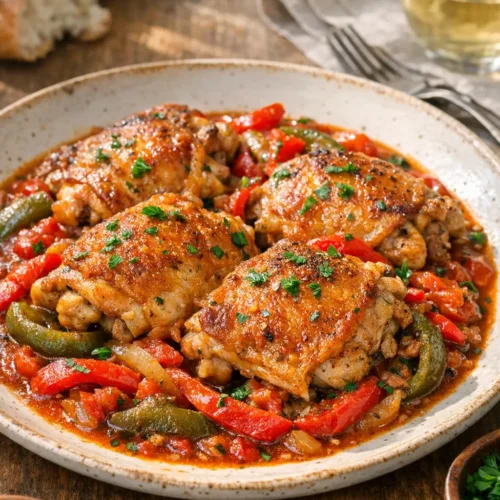
Basque Chicken with Peppers, Tomatoes, and Herbs Tonight

Equipment
- Wide 11–12 inch (28–30 cm) skillet or Dutch oven with lid
- Tongs
- Knife
- Cutting board
Ingredients
- 6 small bone-in, skin-on chicken thighs about 2 lb / 900 g
- 2 tbsp extra-virgin olive oil for searing and sautéing
- 1 large yellow onion thinly sliced (about 10–11 oz / 300 g)
- 3 bell peppers (2 red, 1 green) cut into 1/2-inch (1.25 cm) strips (about 1 1/2 lb / 675 g)
- 4 cloves garlic thinly sliced or minced
- 1/2 cup dry white wine
- 1 can crushed or diced tomatoes 14.5 oz / 400 g
- 1 tbsp tomato paste optional
- 1 bay leaf
- 3–4 fresh thyme sprigs or 1/2 tsp / 1 g dried thyme
- 1 tsp Espelette pepper or 3/4 tsp sweet paprika plus a pinch of cayenne
- 3/4–1 tsp kosher salt plus more to taste
- freshly ground black pepper to taste
- 2 tbsp flat-leaf parsley chopped
- 1 tsp sugar optional, if tomatoes taste very sharp
- 1–2 tsp extra-virgin olive oil optional, to drizzle at the end
Instructions
- Pat the chicken dry and season all over with about 3/4 tsp (4–5 g) salt and black pepper. Heat 2 tbsp (30 ml) olive oil in a wide 11–12 inch (28–30 cm) skillet or Dutch oven over medium heat until shimmering.
- Sear the chicken skin-side down without moving until deeply golden, 7–9 minutes. Flip and brown the second side for 2–3 minutes. Transfer to a plate; leave the flavorful fat in the pan.
- Add the onion with a small pinch of salt. Cook, stirring and scraping up brown bits, until translucent and lightly golden at the edges, 5–7 minutes.
- Stir in the bell peppers. Cook until softened and glossy with a few browned spots, 8–10 minutes. If the pan looks dry, add a spoon of oil.
- Add the garlic and cook just until fragrant, 30–45 seconds. Stir in the Espelette pepper (or paprika/cayenne) and tomato paste; cook 30 seconds to bloom the spices.
- Deglaze with the white wine. Scrape the pan bottom thoroughly and let the wine reduce by roughly half, 2–3 minutes.
- Add the tomatoes, bay leaf, and thyme. Bring to a lively simmer, then taste the sauce and season lightly — it will concentrate as it cooks.
- Nestle the chicken back in, skin-side up. The sauce should come about halfway up the pieces; add a splash of water if needed. Cover and simmer gently over medium-low heat for 20–25 minutes, until the thighs are tender (internal temp 175–185°F / 79–85°C).
- Uncover and simmer 8–12 minutes to reduce to a spoon-coating consistency. Stir occasionally, nudging peppers under the sauce so they soften fully. If the sauce tastes sharp, add up to 1 tsp (5 g) sugar.
- Fish out the bay and woody thyme stems. Sprinkle with parsley and black pepper. Rest 5 minutes so juices settle, then serve straight from the pan.



Leave a Reply