
Berry shortcake skewers turn classic shortcake into something you can carry in one hand, which is exactly what you want at summer parties, barbecues, and potlucks. All the familiar pieces are here—tender cake, juicy berries, and whipped cream—but stacked on sticks for easy serving and minimal dishes.
If you’re juggling a busy weeknight before guests arrive, start by cubing the cake and rinsing the berries so they can dry while you handle everything else. If your kitchen is small, clear one section of counter just for skewering; it keeps the process calm instead of chaotic. These skewers are sweet, fresh, and a little bit messy in the best way—more relaxed picnic than plated restaurant dessert.
Ingredients
Serves 4 (makes about 8–10 short skewers)
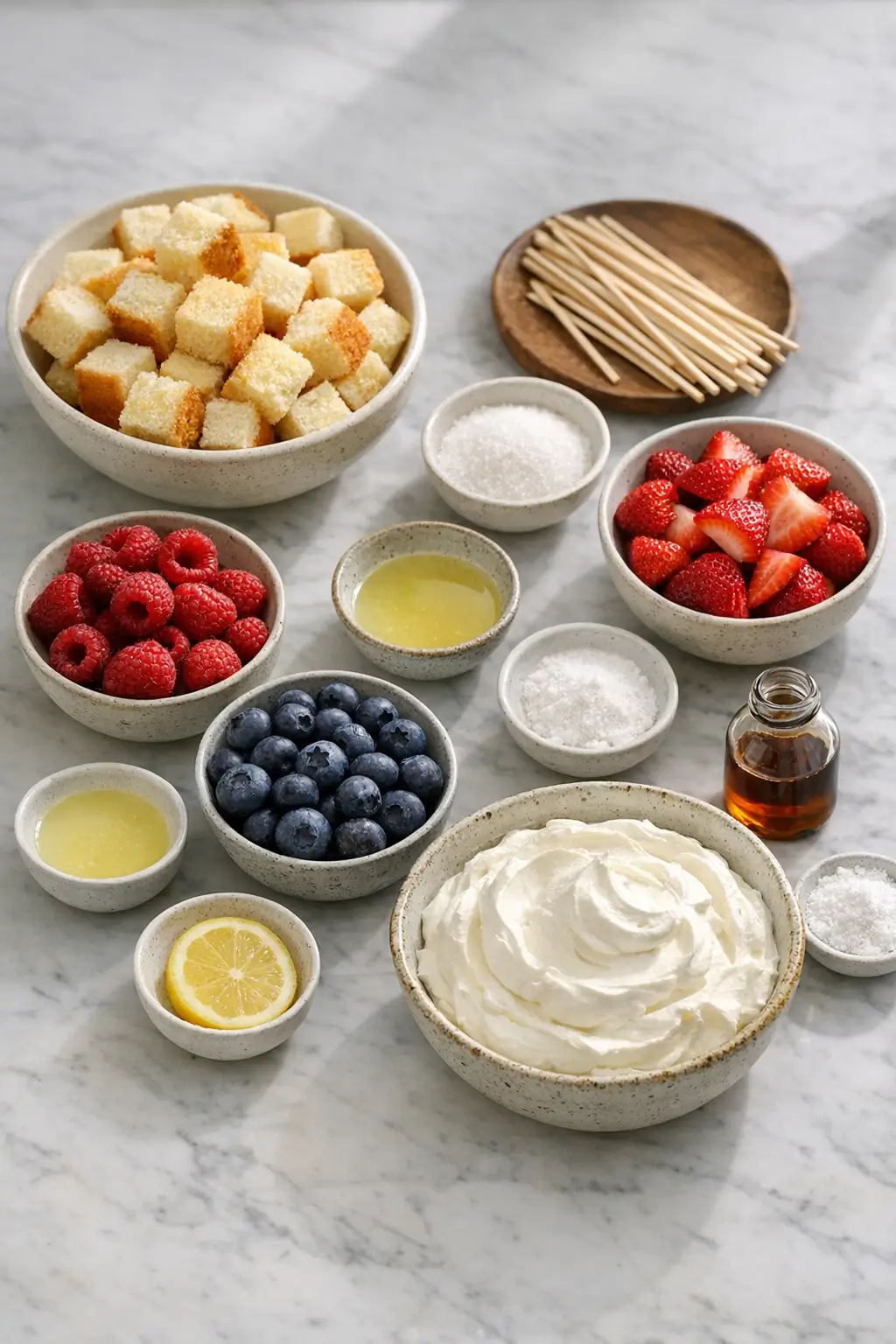
- 200 g / 7 oz pound cake or angel food cake, cut into 2–2.5 cm / ¾–1 inch cubes (about 3–4 cups of cubes)
- 200 g / 7 oz fresh strawberries (about 1½ cups hulled and halved or quartered, depending on size)
- 75 g / 2.6 oz fresh blueberries (about ½ cup)
- 75 g / 2.6 oz fresh raspberries (about ½ cup, optional but adds color)
- 240 ml / 1 cup heavy whipping cream, well chilled
- 2 Tbsp (25 g) granulated sugar, or to taste
- ½ tsp vanilla extract
- 1 Tbsp (15 ml) lemon juice (optional, to brighten the berries)
- 1–2 tsp (5–10 g) powdered sugar, for dusting at the end (optional)
- 8–10 short wooden skewers, about 6–8 inches long
Substitutions and notes:
- Cake: Pound cake is sturdy and rich, angel food cake is lighter and a bit more delicate. Store-bought loaves are fine. You can also use store-bought sponge cake if that’s what you have.
- Berries: Use any mix of strawberries, blueberries, raspberries, or blackberries. If one berry is unavailable, just increase another.
- Cream: You can swap in stabilized whipped cream or unsweetened canned whipped cream for speed, but homemade holds its shape and flavor better.
Step-by-Step Instructions for Berry Shortcake Skewers
Prep the skewers and berries.
If using wooden skewers and you plan to hold the finished skewers on a platter for a while, quickly rinse and pat them dry to remove any splinters. Rinse the strawberries, blueberries, and raspberries in cold water, then spread onto a clean towel and gently pat dry. Excess moisture will make the cake soggy.
Cut the cake into even cubes.
Slice the pound cake or angel food cake into even strips, then into cubes about 2–2.5 cm / ¾–1 inch. Aim for pieces that are big enough to pierce without crumbling, but small enough for a comfortable bite.
Kitchen note: If your cake is very soft or freshly baked, chill it in the fridge for 20–30 minutes before cutting. Slightly firm cake slices much more cleanly and is less likely to shred on the skewers.
Lightly season the strawberries (optional but helpful).
Place the hulled, halved strawberries in a small bowl and drizzle with the lemon juice and 1 teaspoon of the sugar (taken from the 2 Tbsp measured for the cream). Toss gently and let them sit for 5–10 minutes. They’ll release a bit of syrup, which adds flavor without making the skewers too wet.
Whip the cream.
In a chilled bowl, combine the heavy cream, remaining sugar, and vanilla. Using a whisk or an electric mixer on medium speed, beat until soft peaks form, then continue just until medium peaks. The cream should hold a shape on a spoon but still look smooth and glossy, not grainy.
Kitchen note: Stop the mixer and check the cream frequently near the end. Over-whipped cream turns stiff and lumpy fast; if that happens, gently fold in a spoonful of fresh cream to loosen it.
Set up a skewering station.
Arrange the cake cubes and berries in separate bowls around a large plate or cutting board. Keep a clean plate or tray nearby for the finished skewers. This makes assembly faster, especially if you’re working with kids or helpers.
Thread the skewers.
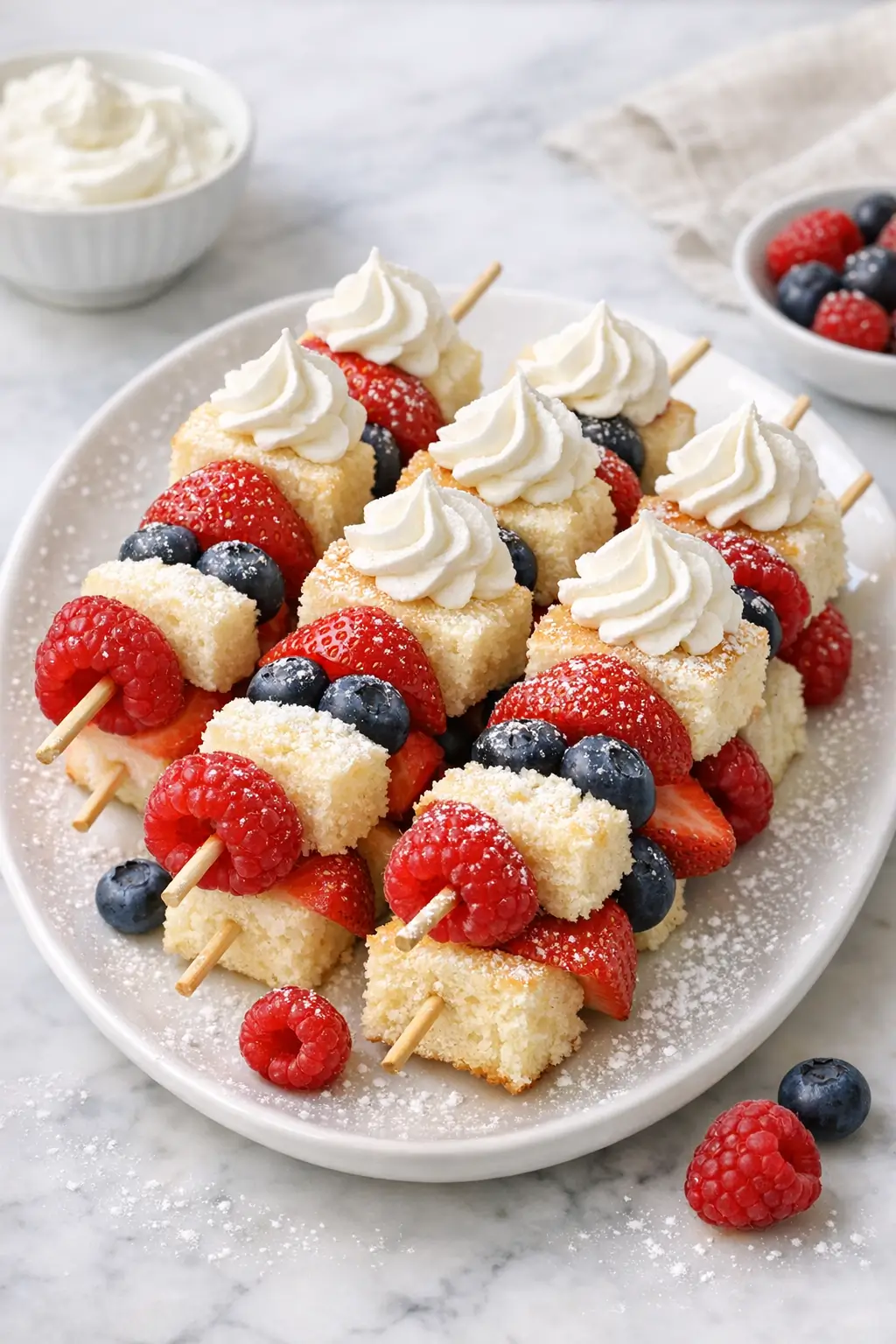
Take one skewer and start with a cake cube, then add a strawberry piece, a blueberry, another cake cube, then a raspberry, and repeat until the skewer is full, leaving about 2–3 cm / 1 inch at each end for holding. Press everything together gently but firmly so the pieces don’t slide around.
Repeat with remaining ingredients.
Continue threading cake and berries onto skewers, rotating the colors and shapes so each one looks balanced. You should get about 8–10 short skewers, depending on how tightly you pack them and the length of your sticks.
Chill briefly (recommended for parties).
If you’ll serve within 1–2 hours, arrange the skewers in a single layer on a tray and refrigerate, uncovered, for up to 30 minutes, then lightly cover with plastic wrap or a clean towel. This helps the berries stay firm and the cake slightly dry on the edges, which keeps the texture pleasant.
Add whipped cream just before serving.
There are two good options:
- Spoon the whipped cream into a small serving bowl and place it on the platter so guests can dip their skewers.
- Or, pipe small rosettes of cream directly onto the skewers right before they go out. Use a small piping bag or a zip-top bag with a corner snipped off.
Kitchen note: If it’s hot outside (backyard parties, picnics), keep the whipped cream chilled until the last minute and consider serving it on the side in a bowl set over ice. Cream softens very quickly in sun and warm air.
Finish and garnish.
Just before serving, you can lightly dust the skewers with powdered sugar, then transfer them to a clean platter. A few extra loose berries on the tray make everything look generous and inviting.
What to Expect
These berry shortcake skewers are meant to be casual and unfussy. The cake should feel soft and slightly springy, with enough structure that it doesn’t crumble as you pick up the skewer.
Berries stay fresh and juicy rather than cooked or jammy, so the overall sweetness depends a lot on how ripe your fruit is. Expect a balance of rich cake, bright berries, and cool cream, with each bite tasting slightly different depending on which berry you catch.
Texture will vary a little based on the cake you choose. Pound cake gives a denser, buttery bite that holds its shape very well on the stick. Angel food cake is lighter and airier and may compress a bit when threaded, which some people actually enjoy because it soaks up the berry juices more.
Kitchen note: If your berries are on the tart side, don’t hesitate to sprinkle a teaspoon or two of extra sugar over the assembled skewers or stir a bit more sugar into the whipped cream. It’s easier to add sweetness than to fight an overly sugary dessert.
Ways to Change It Up
Simple vegetarian and vegan adaptation.
The basic idea of berry shortcake skewers adapts easily. For a vegetarian version, use a cake made with dairy and eggs but serve with a non-dairy whipped topping if needed. For a vegan version, choose a sturdy vegan pound cake or sponge (many grocery stores now carry one in the freezer or bakery case) and pair it with whipped coconut cream or another plant-based whipping cream. Chill coconut cream thoroughly and whip with sugar and vanilla until thick.
Spicier or more adult flavor profile.
To add a gentle kick and more complexity, fold 1–2 teaspoons of finely grated lemon or orange zest into the whipped cream, or sprinkle the finished skewers with a tiny pinch of ground black pepper or freshly grated nutmeg. For strictly adult parties, you can lightly brush the cake cubes with a mixture of citrus juice and a splash of liqueur, such as orange liqueur or berry liqueur, before threading.
Even faster, semi-homemade version.
When time is tight, skip whipping cream from scratch and use canned or tub whipped topping, keeping it very cold. Rely on pre-cut cake cubes if your store sells them, or slice ready-made pound cake quickly into thick strips and then cubes. You can also assemble “deconstructed” skewers by piling cake and berries in clear cups and topping with a spoonful of cream—no sticks required.
Color-themed or holiday skewers.
For patriotic summer gatherings, use just strawberries and blueberries with the pale cake as the “white” element. For a softer palette, lean on raspberries and blackberries. You can also alternate only two fruits (like strawberries and blueberries) for a cleaner striped look that kids find easier to recognize.
Serving and Storage
These skewers are at their best within a few hours of assembly, when the cake is still pleasantly firm and the berries are bright. Plan to thread them the day you serve them.
Serve the berry shortcake skewers on a large platter, either in a tight spiral or in rows so guests can easily grab one. A shallow rimmed baking sheet lined with parchment is a practical option if you’re transporting them to a friend’s house.
They pair well with grilled mains, light salads, and other fruit-forward desserts. For larger spreads, you might offer them alongside a pan dessert like a crisp or cobbler, or with a bowl of extra berries for people who want more fruit than cake.
Leftover skewers (without whipped cream on them) can be covered and refrigerated for up to 24 hours. The cake will soften slightly from the berry juices but will still taste good, just less tidy.
For storage with whipped cream already on the skewers, aim to eat them within 4–6 hours. Store them in a single layer on a tray, loosely covered, and keep them cold. Rewhipping cream isn’t really practical here; if the cream deflates, simply scrape it off and add a fresh spoonful when serving.
Cultural Context
Berry shortcake skewers borrow their flavors and basic components from strawberry shortcake, a dessert closely associated with early summer in the United States. The classic combination of sweetened berries, tender shortcake, and whipped cream evolved from European shortcake traditions and became especially popular in the 19th century American kitchen, when fresh strawberries were celebrated as a seasonal treat.
Historical accounts note that American strawberry shortcake was typically made with a biscuit-style shortcake split and layered with fruit and cream, and it appeared in printed cookbooks as early as the mid-1800s. You can read more about the history and evolution of strawberry shortcake in this piece from PBS Food: Local and Seasonal: Strawberry Shortcake. Another overview of the dessert’s background and its place in baking history is available at The Origins and History of Strawberry Shortcake.
Common Questions and Troubleshooting
My cake keeps breaking when I push it onto the skewers. What should I do?
If the cubes are too small or the cake is very fresh and soft, it can crumble. Cut slightly larger pieces, chill the cake for 20–30 minutes before slicing, and use a gentle twisting motion as you thread the skewer through the center.
The berries are very tart—how can I balance the flavor?
Toss cut strawberries with a little more sugar and let them sit for 10–15 minutes to release some juices. You can also sweeten the whipped cream a bit more or dust the finished skewers lightly with powdered sugar right before serving.
Can I assemble these berry shortcake skewers the night before?
You can prep the components a day ahead—wash and dry the berries, cut the cake, and whip the cream (stabilized if possible). Store the berries and cake separately in airtight containers in the fridge. For the nicest texture, thread the skewers within a few hours of serving so the cake doesn’t absorb too much moisture.
How do I keep whipped cream from collapsing at an outdoor party?
Keep the cream as cold as you can. Whip it to medium peaks, not super stiff, and store it in the refrigerator until just before serving. At the table, set the bowl of cream over a larger bowl filled with ice to help it stay cool.
Kitchen note: If you regularly host in hot weather, consider using a small cooler or insulated bag to transport the whipped cream to the serving area, then transfer only part of it to the table at a time.
Can I use frozen berries instead of fresh?
Frozen berries will release a lot of liquid as they thaw and tend to be too soft to stay on skewers neatly. They are better reserved for sauces or compotes you might spoon over cake in a bowl. For handheld skewers, fresh berries really are worth seeking out.
What size skewers work best for this recipe?
Short skewers (6–8 inches) are easier for guests to manage on crowded party plates. Very long skewers look dramatic but can be awkward to balance and encourage people to take more dessert than they need in one serving.
Conclusion
Berry shortcake skewers are an easy way to translate a familiar, seasonal dessert into a format that works well for summer parties, potlucks, and casual gatherings. The components are flexible, so you can adjust the fruit mix, sweetness, and richness of the cream to match your crowd and what’s in season.
If you try these, I’d value hearing how you built yours—different berries, a favorite cake, or a twist you found especially helpful for entertaining. Feel free to leave a rating and share any adjustments you made so other home cooks can benefit from your experience as well.
Berry Shortcake Skewers for Easy Summer Parties

Equipment
- Wooden skewers (6–8 inches)
- Mixing bowl (chilled for whipping cream)
- Whisk or electric mixer
- Cutting board
- Knife
- Platter or tray
- Small bowl
Ingredients
- 200 g pound cake or angel food cake cut into 2–2.5 cm / ¾–1 inch cubes (about 3–4 cups of cubes)
- 200 g fresh strawberries hulled and halved or quartered (about 1½ cups)
- 75 g fresh blueberries (about ½ cup)
- 75 g fresh raspberries (about ½ cup; optional)
- 240 ml heavy whipping cream well chilled
- 2 Tbsp granulated sugar (25 g), or to taste
- 1/2 tsp vanilla extract
- 1 Tbsp lemon juice optional, to brighten the berries
- 1–2 tsp powdered sugar (5–10 g), for dusting at the end (optional)
- 8–10 short wooden skewers about 6–8 inches long
Instructions
- Prep the skewers and berries. If using wooden skewers and you plan to hold the finished skewers on a platter for a while, quickly rinse and pat them dry to remove any splinters. Rinse the strawberries, blueberries, and raspberries in cold water, then spread onto a clean towel and gently pat dry; excess moisture will make the cake soggy.
- Cut the cake into even cubes. Slice the pound cake or angel food cake into even strips, then into cubes about 2–2.5 cm / ¾–1 inch. If the cake is very soft or freshly baked, chill it in the fridge for 20–30 minutes before cutting for cleaner cubes.
- Lightly season the strawberries (optional). Place the hulled, halved strawberries in a small bowl and drizzle with the lemon juice and 1 teaspoon of the sugar (taken from the measured sugar for the cream). Toss gently and let sit 5–10 minutes to release a little syrup.
- Whip the cream. In a chilled bowl, combine the heavy cream, remaining sugar, and vanilla. Whisk or beat on medium speed to soft peaks, then continue just until medium peaks; the cream should hold its shape but still look smooth and glossy.
- Set up a skewering station. Arrange cake cubes and berries in separate bowls around a large plate or cutting board, and keep a clean plate or tray nearby for finished skewers.
- Thread the skewers. Start with a cake cube, then add a strawberry piece, a blueberry, another cake cube, then a raspberry, and repeat until the skewer is full, leaving about 2–3 cm / 1 inch at each end for holding. Press pieces together gently so they don’t slide.
- Repeat with remaining ingredients, rotating colors so each skewer looks balanced. You should get about 8–10 short skewers depending on length and how tightly you pack them.
- Chill briefly (recommended). Arrange skewers in a single layer on a tray and refrigerate uncovered up to 30 minutes, then lightly cover if holding longer. This helps berries stay firm and keeps texture pleasant.
- Add whipped cream just before serving. Either serve the whipped cream in a bowl for dipping, or pipe small rosettes of cream onto the skewers right before serving (a piping bag or zip-top bag with a corner snipped off works).
- Finish and garnish. Dust lightly with powdered sugar if desired and transfer to a clean platter; scatter a few extra berries around for a generous look.



Leave a Reply