
Blueberry chiffon cake is one of those desserts that looks like it took all day, but the components are straightforward once you break them up. You get a tall, fluffy sponge, bright blueberry compote, and a soft blueberry whipped cream that feels special without being fussy. The flavor leans lightly sweet with real blueberry and a hint of vanilla, not heavy frosting.
If you’re walking in the door after a long day, start by cooking the blueberry compote so it can cool while you make the chiffon. If your kitchen is small or you’re sharing the space, clear one counter just for whipping and folding the meringue so nothing knocks the bowl while you work.
This style of cake shows up often in Asian-style bakeries and modern patisseries, especially in spring and summer when berries are everywhere. It’s great for birthdays, family gatherings, and any time you want a dessert that feels airy instead of rich.
Ingredients
Makes one 20–23 cm / 8–9 inch tube cake (8–10 modest slices)
For the blueberry compote
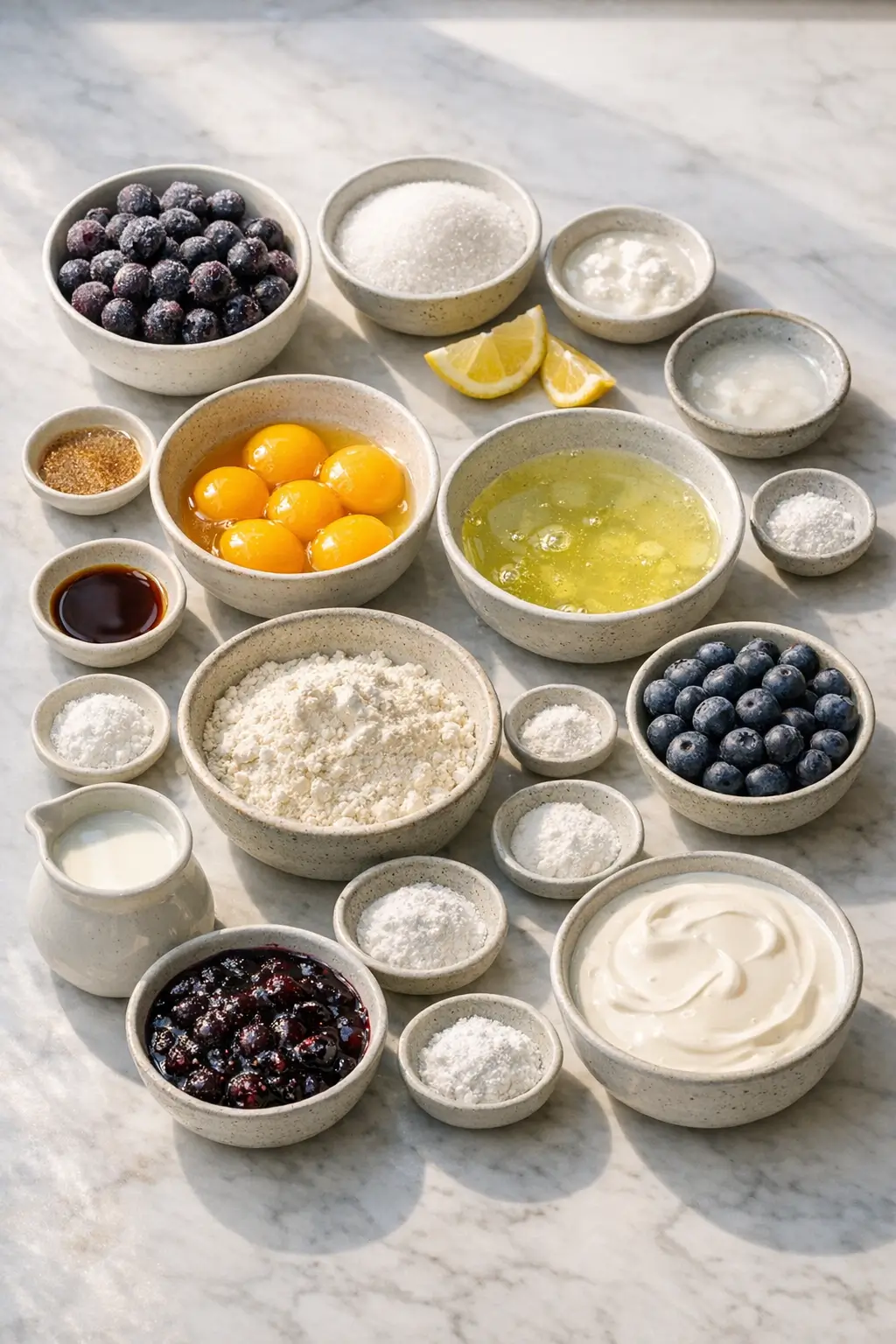
- 300 g / 2 cups frozen blueberries (do not thaw; fresh blueberries also work)
- 75 g / 6 tbsp granulated sugar
- 60 ml / 1/4 cup water
- 2 tsp fresh lemon juice (bottled is fine in a pinch)
- Optional but helpful: 1–2 tsp cornstarch mixed with 2 tsp cold water, if compote seems very thin
For the chiffon cake batter
- 5 large eggs, separated, at room temperature
- 100 g / 1/2 cup granulated sugar, divided (about 70 g / 1/3 cup for yolks, 30 g / 2 1/2 tbsp for whites)
- 60 ml / 1/4 cup neutral oil (canola, sunflower, or light olive)
- 90 ml / 3/8 cup milk, at room temperature (dairy or unsweetened non-dairy milk)
- 60 g / 1/4 cup blueberry compote (from above), cooled to room temperature
- 1 tsp vanilla extract
- 115 g / 1 cup minus 1 tbsp cake flour, sifted (or 100 g / 3/4 cup + 2 tbsp all-purpose flour plus 15 g / 2 tbsp cornstarch, sifted together)
- 1 1/2 tsp baking powder
- 1/4 tsp fine salt
For the meringue
- Reserved 5 large egg whites (from above)
- 1/4 tsp cream of tartar (or 1/2 tsp lemon juice)
- Reserved 30 g / 2 1/2 tbsp granulated sugar
For the blueberry whipped cream and assembly
- 360 ml / 1 1/2 cups heavy cream or whipping cream, well chilled
- 30 g / 1/4 cup powdered (icing) sugar, sifted
- 3–4 tbsp blueberry compote, completely chilled
- Optional: 1/2 tsp vanilla extract
- 80–120 g / 1/2–3/4 cup fresh blueberries for decorating
Kitchen note: Chiffon cakes must be baked in an ungreased aluminum tube or angel food pan so the batter can climb the sides. Nonstick pans or greasing the pan make the cake more likely to collapse.
Step-by-Step Instructions for Blueberry chiffon cake
1. Make and cool the blueberry compote
- Add the frozen blueberries, sugar, and water to a small saucepan.
- Bring to a gentle simmer over medium heat, stirring occasionally until the berries release their juices, about 5–7 minutes.
- Lightly mash some of the berries with the back of a spoon to thicken the sauce, but leave some berries whole for texture.
- Continue to simmer for another 3–5 minutes, until the liquid looks slightly syrupy. Stir in the lemon juice.
- If the compote seems very thin, stir in the cornstarch slurry and simmer 30–60 seconds more until lightly thickened.
- Transfer to a shallow bowl and cool to room temperature, then chill. You’ll use part in the batter and the rest for the whipped cream and filling.
Kitchen note: The compote should be thick enough to slowly mound on a spoon, not run like juice. Too much liquid in the batter or between layers can make the cake gummy or cause it to tear.
2. Prepare the pan and oven
- Preheat the oven to 165–170°C / 325–340°F with a rack in the lower-middle position.
- Ensure your 20–23 cm / 8–9 inch chiffon or angel food tube pan is completely clean and dry. Do not grease or line it.
- Separate the eggs, placing yolks in one bowl and whites in a large, grease-free mixing bowl. Let them stand to lose their chill if just out of the fridge.
3. Mix the yolk batter
- In the bowl with egg yolks, add 70 g / 1/3 cup of the sugar. Whisk until the mixture lightens a shade.
- Whisk in the oil until emulsified and slightly thickened.
- Add the milk, cooled blueberry compote, and vanilla. Whisk until smooth and evenly tinted.
- In a separate bowl, sift together the cake flour, baking powder, and salt.
- Sift the dry ingredients over the yolk mixture in two additions, gently whisking or using a spatula to combine. Stop as soon as no dry pockets remain. The batter should be smooth and pourable but slightly thicker than pancake batter.
4. Whip the meringue
- Add the cream of tartar to the egg whites.
- Using a stand mixer with a whisk attachment or a hand mixer, beat on medium speed until the whites are foamy and opaque.
- Gradually sprinkle in the remaining 30 g / 2 1/2 tbsp sugar while continuing to beat.
- Increase speed to medium-high and whip until you reach glossy, medium-stiff peaks. When you lift the whisk, the peak should stand up but the very tip should curl over.
Kitchen note: Overbeaten meringue (dry, clumpy, or chunky) is hard to fold and can cause visible bubbles and tunnels in the cake. If this happens, it’s usually worth starting a new batch of whites instead of trying to rescue it.
5. Fold batter and meringue together
- Start by adding about one-third of the meringue into the yolk batter.
- Use a large spatula to fold: cut down through the middle, scoop up from the bottom, and rotate the bowl as you work, turning the spatula on each stroke.
- Once mostly combined, add another third of the meringue and repeat.
- Add the final third and fold until there are no streaks of egg white. The batter should look light, smooth, and airy.
6. Fill the pan and bake
- Pour the batter into the ungreased tube pan in one steady stream, aiming around the center rather than in one spot to help level it.
- Use a skewer or thin knife to gently swirl through the batter once or twice to pop any large air pockets, especially near the sides.
- Smooth the top lightly with a spatula.
- Bake for 40–50 minutes, depending on pan size and oven. The cake is done when the top is golden, springs back when gently pressed, and a skewer inserted near the center comes out mostly clean with just a few moist crumbs.
Kitchen note: If the top is browning too fast while the center still feels very soft, tent loosely with a piece of foil for the last 10–15 minutes. Do not open the oven in the first 25 minutes or the cake can fall.
7. Invert and cool
- Immediately after removing from the oven, invert the pan onto its legs or over the neck of a sturdy bottle so the cake hangs upside down.
- Let the cake cool completely this way, at least 1 1/2 hours. This keeps the structure from collapsing as it cools.
- Once cool, run a thin offset spatula or knife around the inner and outer edges of the pan and under the bottom to release.
- Turn the cake out onto a serving plate, flat-side up if you plan to frost the top, or leave the domed side up for a more rustic look.
8. Make the blueberry whipped cream
- In a chilled bowl, combine the cold heavy cream, powdered sugar, and vanilla.
- Whip on medium speed until the cream thickens to soft peaks.
- Add 3 tbsp chilled blueberry compote and continue whipping just until you reach medium peaks that hold their shape but still look smooth.
- Taste and adjust with an extra tablespoon of compote or a teaspoon of sugar if you want more blueberry punch or sweetness.
9. Assemble the cake
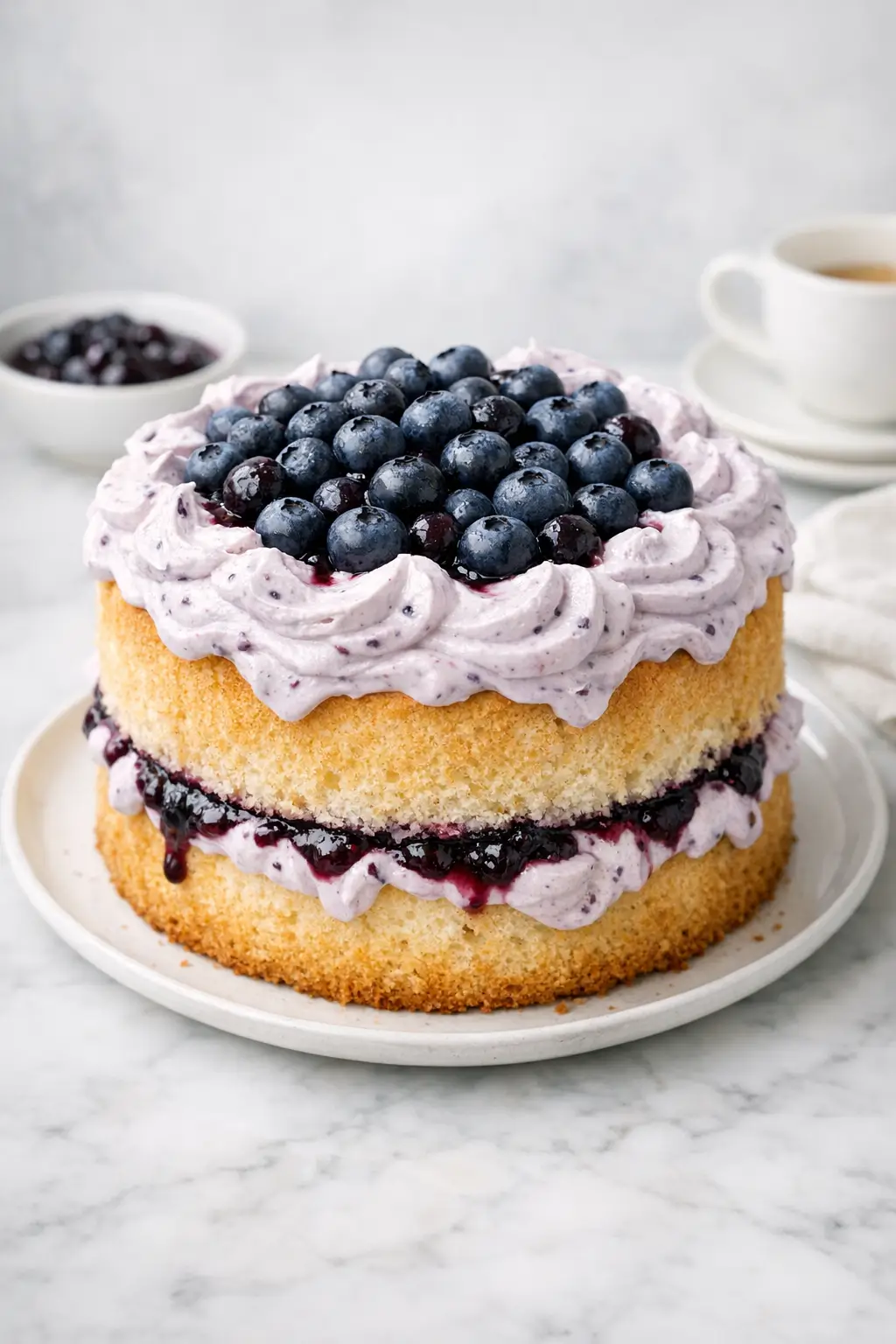
- If you want a filled cake, carefully slice the cooled chiffon horizontally into two layers using a long serrated knife. Work slowly and rotate the cake as you cut.
- Spread a thin layer of blueberry compote (about 1/4–1/3 cup) over the bottom layer, leaving a 1 cm / 1/2 inch border so it doesn’t squeeze out.
- Add a layer of whipped cream over the compote, again keeping it away from the very edge.
- Gently place the top layer back on the cake.
- Use the remaining whipped cream to cover the top and, if desired, the sides of the cake. Swirl decoratively rather than chasing a perfectly smooth finish.
- Decorate with fresh blueberries scattered over the top.
- Chill for at least 30–45 minutes before slicing so the cream firms up slightly and the flavors meld.
What to Expect
Once sliced, the blueberry chiffon cake should feel very light in the hand. The crumb is tender and spongy, with small, even air bubbles rather than large, uneven holes.
Flavor-wise, expect a gently sweet cake with noticeable blueberry notes and a little tang from the compote and whipped cream. It won’t taste like candy or jam; the fruit comes through in a more natural, slightly floral way.
The whipped cream layer adds cool richness without heaviness, so the whole dessert still feels airy. Different brands of flour and cream can affect how tall the cake rises and how firm the whipped cream sets, but the structure should remain sliceable.
Kitchen note: If your kitchen is very warm, the whipped cream can soften quickly. Keep the cake chilled and bring it out 10–15 minutes before serving for the best texture.
Ways to Change It Up
Make it vegetarian/vegan-friendly:
The base recipe is already vegetarian. For a dairy-free, egg-free version, you’d need to move away from a classic chiffon and use a sponge-style vegan batter with aquafaba meringue and plant-based cream. The texture will be denser and less springy, but you can still layer it with blueberry compote and coconut or oat-based whipped topping.
Dial the intensity of blueberry flavor:
For a stronger blueberry note, swap an extra 2–3 tablespoons of milk in the batter for additional thickened compote. You can also fold a small handful of whole blueberries into the batter right before pouring it into the pan, but be aware this may create small damp pockets and slightly uneven rise.
To make it milder, reduce the compote in the whipped cream or use plain lightly sweetened cream on the outside and keep the blueberry just in the filling.
Speed it up for a weeknight build:
If time is tight, bake the chiffon cake a day ahead, cool completely, wrap well, and refrigerate. The next day, cook the compote and chill it briefly in the freezer to cool faster, then whip the cream and assemble.
Another option is to skip splitting the cake. Leave it whole, dollop the blueberry whipped cream just on top, and spoon extra compote over each slice.
Add a lemon twist:
For a more citrus-forward cake, add 1–2 tsp finely grated lemon zest into the yolk batter along with the vanilla. This plays well with the blueberries and brightens the flavor.
Serving and Storage
Serve blueberry chiffon cake slightly chilled or at cool room temperature. The structure is best when the cream is just firm but not icy.
It pairs well with hot tea (especially Earl Grey or green tea), black coffee, or a simple glass of milk. Fresh berries on the side—strawberries, raspberries, or extra blueberries—make it look generous without extra work.
Leftovers should be stored in the refrigerator, loosely covered, for up to 2 days. After that, the whipped cream can start to weep, and the sponge may absorb too much moisture from the filling.
For neater slices, refrigerate the cake for at least 1 hour before cutting, then use a long serrated knife, wiping the blade between cuts. The cake does not freeze well once frosted with whipped cream; the texture of the cream becomes grainy after thawing.
Cultural Context
Chiffon cake itself developed in the United States in the mid-20th century as a hybrid between butter cakes and foam-based sponges, using vegetable oil and whipped egg whites for a notably light texture. The technique is particularly associated with American home baking, where tall tube pans are common.
From there, chiffon-style cakes became very popular in East and Southeast Asia, where lighter, less sugary cakes are often preferred. Bakeries across Japan, South Korea, Taiwan, and Singapore commonly offer fruit-flavored chiffon cakes, including blueberry versions.
For more background on chiffon-style cakes, see this overview from a general reference on chiffon cake structure and history. For a broader look at how blueberries are cultivated and used in North America, the U.S. Highbush Blueberry Council has a helpful summary on blueberry history and agricultural facts.
Common Questions and Troubleshooting
My cake collapsed after baking. What went wrong?
The most common causes are underbaking, opening the oven door too early, using a greased or nonstick pan, or not inverting the cake as soon as it comes out of the oven. Next time, bake until the top springs back firmly and a skewer comes out mostly clean, and be sure to cool the cake fully while inverted.
The texture is dense at the bottom. How can I fix that?
Dense, rubbery patches usually mean the batter was undermixed in spots or the meringue deflated unevenly. Check that the flour is fully incorporated into the yolk mixture before folding in the whites, and fold in three stages, making sure to scrape the bottom of the bowl.
Can I use only fresh blueberries instead of frozen?
Yes. Fresh blueberries work well for the compote and decoration. If your fresh berries are very juicy, you might need a touch more cornstarch to thicken the compote. For folding whole berries into the batter, pat them dry and dust lightly with flour to reduce sinking.
Can I bake this in a round pan instead of a tube pan?
You can, but you’ll need to adjust. Use two 20 cm / 8 inch round aluminum pans, unlined but with removable bottoms if possible, and reduce the baking time. Keep in mind that chiffon cakes without a center tube may not rise quite as high and are more delicate to handle.
How far ahead can I assemble the cake?
For the best texture, assemble it the day you plan to serve. You can bake the cake and cook the compote up to 1 day in advance. Wrap the cooled cake tightly and refrigerate, and store the compote in a covered container. Whip the cream and assemble within about 4–6 hours of serving.
Can I swap the whipped cream for buttercream?
Yes. A light cream cheese frosting or vanilla buttercream works if you prefer more stability or want the cake to sit out longer. The overall dessert will feel richer and less airy, so you might want slightly thinner layers of frosting between the cake and compote.
Conclusion
Blueberry chiffon cake rewards a little attention to detail with a dessert that feels much lighter than it looks, both in texture and sweetness. Once you’ve made it once or twice, the steps—whipping the meringue, folding, and inverting to cool—become routine rather than intimidating.
If you try this version, leave a comment with how it worked in your oven, what pan you used, and any small changes you made. Those details help other home bakers adjust and make the recipe their own, too.
Blueberry Chiffon Cake with Fresh Berry Whip

Equipment
- 20–23 cm / 8–9 inch ungreased aluminum tube or angel food pan
- Small saucepan
- Mixing bowls (including a large grease-free bowl for egg whites)
- Stand mixer with whisk attachment or hand mixer
- Whisk
- Large spatula
- Sifter or fine-mesh sieve
- Skewer or thin knife
- Offset spatula or thin knife (for releasing cake)
- Long serrated knife (for slicing layers)
Ingredients
For the blueberry compote
- 300 g frozen blueberries do not thaw; fresh blueberries also work
- 75 g granulated sugar
- 60 ml water
- 2 tsp fresh lemon juice bottled is fine in a pinch
- 1–2 tsp cornstarch optional, mixed with 2 tsp cold water if compote seems very thin
- 2 tsp cold water for cornstarch slurry (optional)
For the chiffon cake batter
- 5 large eggs separated, at room temperature
- 100 g granulated sugar divided (about 70 g for yolks, 30 g for whites)
- 60 ml neutral oil canola, sunflower, or light olive
- 90 ml milk room temperature (dairy or unsweetened non-dairy milk)
- 60 g blueberry compote cooled to room temperature
- 1 tsp vanilla extract
- 115 g cake flour sifted
- 1 1/2 tsp baking powder
- 1/4 tsp fine salt
For the meringue
- 5 large egg whites reserved from above
- 1/4 tsp cream of tartar or 1/2 tsp lemon juice
- 30 g granulated sugar reserved for whites
For the blueberry whipped cream and assembly
- 360 ml heavy cream or whipping cream well chilled
- 30 g powdered (icing) sugar sifted
- 3–4 tbsp blueberry compote completely chilled
- 1/2 tsp vanilla extract optional
- 80–120 g fresh blueberries for decorating
Instructions
- Make the compote: Add frozen blueberries, sugar, and water to a small saucepan. Bring to a gentle simmer over medium heat, stirring occasionally, until berries release juices (about 5–7 minutes). Lightly mash some berries, then simmer 3–5 minutes more until slightly syrupy; stir in lemon juice. If thin, add cornstarch slurry and simmer 30–60 seconds. Transfer to a shallow bowl; cool to room temperature, then chill.
- Prepare oven and pan: Preheat oven to 165–170°C / 325–340°F with a rack in the lower-middle position. Use a completely clean, dry 20–23 cm / 8–9 inch ungreased aluminum tube (angel food) pan—do not grease or line. Separate eggs; put yolks in one bowl and whites in a large grease-free bowl.
- Mix yolk batter: Whisk yolks with about 70 g sugar until lighter. Whisk in oil until emulsified, then whisk in milk, 60 g cooled compote, and vanilla. In a separate bowl, sift together cake flour, baking powder, and salt. Add dry ingredients to yolk mixture in two additions and mix just until smooth and no dry pockets remain.
- Whip meringue: Add cream of tartar to egg whites. Beat on medium until foamy, then gradually sprinkle in remaining 30 g sugar. Increase to medium-high and whip to glossy medium-stiff peaks (peak stands with a slight curl at the tip).
- Fold: Fold 1/3 of the meringue into the yolk batter with a large spatula. Fold in the second third, then the final third, until no white streaks remain and batter looks airy.
- Bake: Pour batter into the ungreased tube pan. Run a skewer/thin knife through once or twice to pop large air pockets; smooth the top. Bake 40–50 minutes, until golden, springs back when pressed, and a skewer near the center comes out mostly clean with a few moist crumbs (tent with foil late in baking if browning too fast; don’t open oven during the first 25 minutes).
- Invert and cool: Immediately invert pan onto its legs or over a sturdy bottle neck so cake hangs upside down. Cool completely, at least 1 1/2 hours. Release with a thin offset spatula/knife around inner and outer edges and under the bottom; turn out onto a serving plate.
- Make blueberry whipped cream: In a chilled bowl, whip cold heavy cream with powdered sugar and vanilla (if using) to soft peaks. Add about 3 tbsp chilled compote and whip just to smooth medium peaks. Adjust with more compote or a little sugar to taste.
- Assemble: Optionally slice cake horizontally into 2 layers. Spread a thin layer of compote (about 1/4–1/3 cup) on the bottom layer, leaving a border; spread whipped cream over. Replace top layer. Frost top (and sides if desired) with remaining whipped cream, swirl decoratively, and decorate with fresh blueberries. Chill 30–45 minutes before slicing.



Leave a Reply