
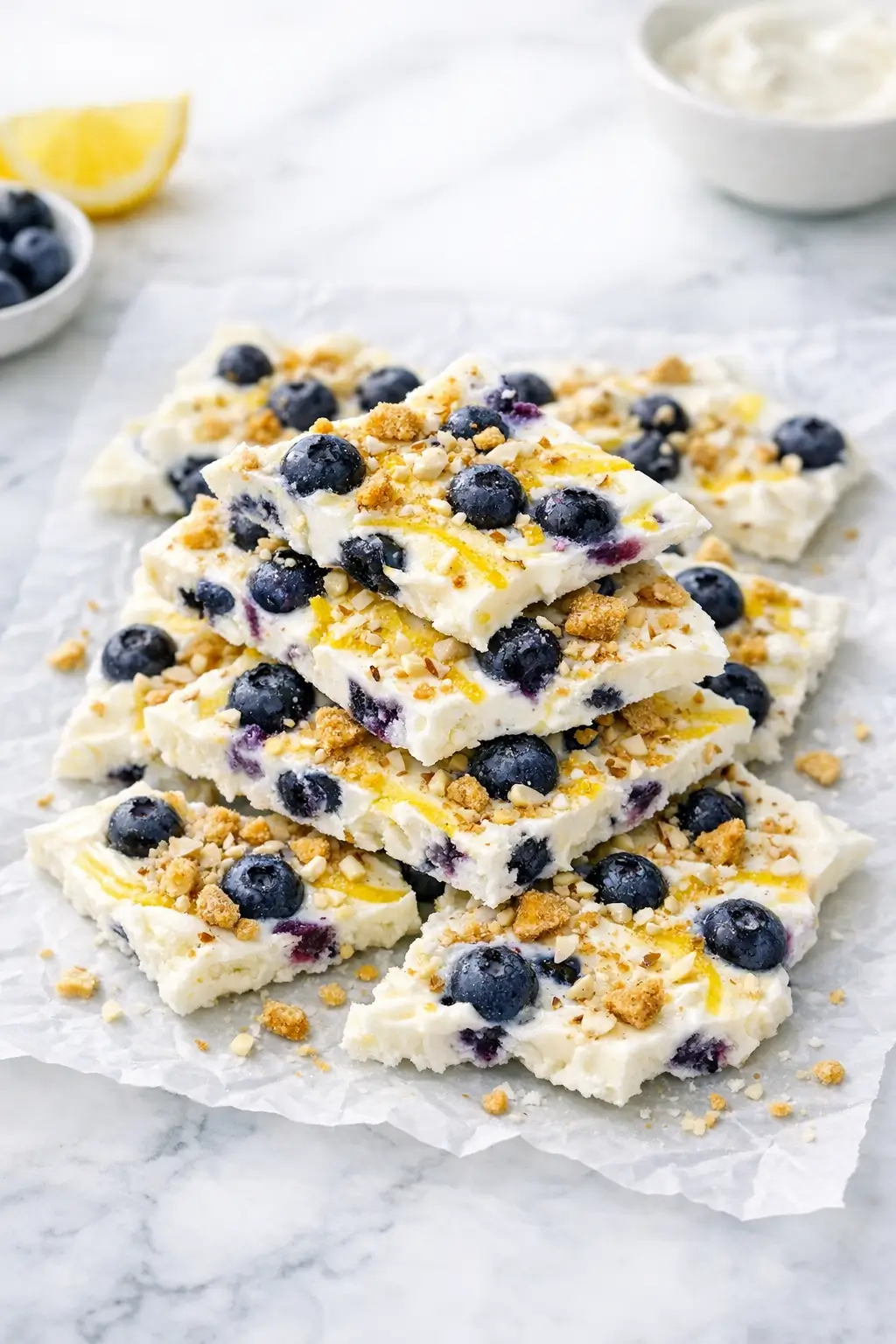
Blueberry lemon yogurt bark is one of those snacks that feels like dessert but behaves more like a high‑protein yogurt bowl straight from your freezer. It’s cool, tangy, lightly sweet, and full of juicy blueberry pockets with bright lemon running through each bite.
If you’re staring into the fridge on a busy weeknight or between kids’ activities, start by getting the baking sheet lined and the yogurt container on the counter so it can lose a bit of its chill. While you zest the lemon, quickly check that your freezer has a flat space ready so the pan can slide right in.
This frozen Greek yogurt snack is common in modern meal-prep and snack boards, especially in warmer months when turning on the oven feels like too much. It works for breakfast, after‑school, or late‑night snacks, and suits cooks who like straightforward, mostly hands‑off recipes with simple cleanup. Expect a creamy, slightly icy bite, not ice cream smoothness, and a flavor that balances tangy yogurt, citrus, and bursts of blueberry.
Ingredients
Serves 3–4
- 480 g / 2 cups thick Greek yogurt (2% or full-fat) – for a creamy, less icy texture
- 45–60 ml / 3–4 tbsp honey or maple syrup – to lightly sweeten; adjust to taste
- 1 tsp pure vanilla extract – rounds out the yogurt tang
- 1–2 tsp finely grated lemon zest (from 1 medium lemon) – for bright lemon flavor
- 10 ml / 2 tsp fresh lemon juice – sharpens the citrus and balances sweetness
- 150 g / 1 cup fresh blueberries – pat dry if recently washed so they don’t ice up
- 15–20 g / 2–3 tbsp finely chopped almonds or other nuts – for crunch; use pumpkin seeds or sunflower seeds to keep it nut-free
- 1–2 digestive biscuits or graham cracker sheets, roughly crumbled – optional, for a cookie‑like crunch on top
- Small pinch of fine sea salt – optional, but helps the flavors pop
Kitchen note: Very low‑fat yogurt (0%) freezes much icier. If you only have nonfat Greek yogurt, add an extra tablespoon of nuts or seeds for richness and expect a firmer, slightly more brittle bark.
Step-by-Step Instructions for Blueberry Lemon Yogurt Bark
-
Prepare the pan and space.
Line a small rimmed baking sheet or quarter sheet pan (roughly 23×33 cm / 9×13 in) with parchment paper, letting it overhang the sides so you can lift the bark out later.
Clear a flat area in your freezer so the pan can sit level; this prevents the yogurt from pooling to one side. -
Stir together the yogurt base.
In a medium mixing bowl, whisk the Greek yogurt until smooth and slightly loosened.
Add the honey or maple syrup, vanilla, lemon zest, lemon juice, and a small pinch of salt.
Taste the mixture; it should be a little sweeter than you want the final bark, since cold dulls sweetness. -
Adjust thickness if needed.
If your yogurt is extremely thick (standing up on the spoon), whisk in 1–2 tbsp (15–30 ml) of cold water or milk until it’s spreadable but still holds gentle peaks.
A yogurt base that is too thick will be hard to spread thinly and may freeze with uneven ridges. -
Spread the yogurt on the pan.
Pour the yogurt mixture onto the prepared pan.
Use a spatula or the back of a spoon to spread it into an even layer about 0.5–1 cm (¼–⅜ inch) thick.
It does not need to reach all the edges; focus on even thickness so it freezes uniformly.
Kitchen note: If you spread the yogurt too thin, it can shatter into very fragile shards once frozen. Aim for a thickness similar to a standard chocolate bar so the pieces hold together when you bite.
-
Add the blueberries and toppings.
Scatter the blueberries evenly over the surface.
Sprinkle the chopped almonds (or seeds) and crumbled biscuits or graham crackers, if using, over the top.
Gently press the toppings into the yogurt with clean fingertips or the flat side of a spatula so they freeze into the bark instead of falling off later. -
Create optional lemon swirls.
If you want more visible lemon flavor, stir an extra pinch of zest with 1–2 tsp of honey in a small bowl.
Drizzle this over the yogurt in thin lines, then drag a toothpick or knife tip through to create simple swirls.
This is optional but adds clear lemon pockets when you bite into the bark. -
Freeze until firm.
Transfer the pan to the freezer, making sure it’s level.
Freeze for at least 3–4 hours, or until the yogurt is completely solid in the center.
Thicker bark or warmer freezers may take closer to 5 hours or overnight. -
Cut or break into pieces.
Once solid, lift the bark out of the pan using the parchment overhang and place it on a cutting board.
For cleaner squares or rectangles, use a sharp knife to cut into pieces; for a more rustic look, snap into shards with your hands.
Serve immediately, or place the pieces back on the pan and move quickly to storage. -
Store properly.
Layer pieces in an airtight container with parchment or wax paper between layers.
Keep frozen, and eat straight from the freezer or let sit at room temperature for 2–3 minutes to soften slightly before serving.
Kitchen note: Yogurt bark starts to soften and drip after about 10 minutes at room temperature, especially in warm kitchens. If you’re serving kids, pass it out straight from the freezer and keep the rest chilled so it doesn’t puddle on the counter.
What to Expect
This blueberry lemon yogurt bark freezes into firm, snappy pieces that are creamy at the bite but slightly icy rather than fully smooth like ice cream.
The blueberries turn pleasantly jammy and give a burst of juice, while the nuts and cookie crumbs add crunch so the texture doesn’t feel flat.
Lemon zest and juice bring a noticeable citrus edge without being sour, especially if you taste and adjust the sweetness of the yogurt base before freezing.
Using full‑fat or 2% Greek yogurt yields a more indulgent, less chalky bark, while nonfat yogurt creates a firmer, icier result that tastes lighter.
Different brands of yogurt vary in thickness and tang; thicker, tangier brands will give a more pronounced yogurt flavor and slightly denser bite.
Kitchen note: If you pull the bark from a very cold chest freezer, it may be rock‑hard at first. Give it 2–4 minutes on the counter before eating so the edges soften and the flavors are easier to taste.
Ways to Change It Up
-
Simple vegetarian and vegan swap.
Use a thick plant‑based yogurt made from coconut, almond, or oat milk instead of Greek yogurt.
Sweeten with maple syrup or agave, and skip the honey if you keep it strictly vegan.
Plant‑based yogurts can be softer once frozen, so spread them slightly thicker and freeze on the longer end of the timing range. -
Make it more or less tart.
For a very lemon‑forward bark, increase the zest to 1½ lemons and add another teaspoon of lemon juice.
If you prefer it milder for young kids, cut the lemon juice in half and rely mostly on zest, which gives flavor without as much sharpness.
You can also use a vanilla‑flavored yogurt and reduce the added sweetener by a tablespoon. -
Boost the protein.
Stir 1–2 tbsp (about 10–20 g) of unflavored or vanilla whey or plant protein powder into the yogurt base before spreading.
Add a tablespoon or two of extra milk or water if the mixture becomes too thick.
This gives the bark a slightly denser, cheesecake‑like texture and makes it a more filling snack. -
Faster, small‑batch version.
Instead of a sheet pan, spread the yogurt mixture into a parchment‑lined loaf pan for a thicker bark that freezes a bit faster in the center.
Use half the quantities for 2 people, and start checking firmness around the 2½–3 hour mark.
Thicker bark pieces hold their shape longer at room temperature but need a few extra minutes to soften before eating.
Serving and Storage
Serve blueberry lemon yogurt bark straight from the freezer as a cool snack, quick breakfast component, or light dessert.
It pairs well with a small bowl of extra fresh berries, sliced peaches, or a few spoonfuls of granola for added crunch.
For a more substantial breakfast plate, serve alongside a slice of toast with nut butter or a small handful of mixed nuts.
Store the bark in a freezer‑safe airtight container, tightly sealed to prevent ice crystals and freezer odors.
With good packaging and minimal air pockets, the bark keeps its best flavor and texture for about 2–3 weeks, though it is safe to eat longer if continuously frozen.
Avoid refrigerating leftovers once thawed; the yogurt will weep and the texture becomes grainy.
Cultural Context
Yogurt‑based frozen treats draw from a long history of fermented dairy and chilled desserts across many food cultures.
Greek‑style strained yogurt, which is simply yogurt that has had some of its whey removed, has roots in the broader traditions of Eastern Mediterranean and Middle Eastern yogurt making.
For a deeper look at yogurt’s role in regional foodways, see this overview from the National Yogurt Association on the history of yogurt.
Blueberries, native to North America, have been gathered and cultivated for generations and are now widely used in both fresh and preserved forms.
Organizations like the U.S. Highbush Blueberry Council share historical and agricultural context on how blueberries moved from wild harvests to commercial crops; their site offers a concise background in this article: history of cultivated blueberries.
Common Questions and Troubleshooting
My yogurt bark turned out very icy. What happened?
This most often comes from using very low‑fat or nonfat yogurt, or from adding too much liquid.
Next time, choose 2% or full‑fat Greek yogurt and avoid thinning the mixture unless it is extremely thick.
Spreading the yogurt slightly thicker also helps reduce iciness.
The toppings keep falling off when I break the bark. How do I fix this?
Make sure to press blueberries, nuts, and cookie crumbs gently into the yogurt before freezing so they anchor in place.
If your bark is very thin, toppings have less surface to cling to; aim for about 0.5–1 cm (¼–⅜ inch) thickness for more secure toppings.
Storing pieces in a single layer until fully frozen also keeps them from rubbing against each other and knocking toppings loose.
My bark cracked into lots of tiny pieces. How can I get larger squares?
Very thinly spread yogurt tends to fracture, especially if you try to snap it by hand straight from a very cold freezer.
For larger, cleaner pieces, spread a bit thicker and use a sharp knife to cut it while it is still very firm but not rock hard, letting it sit on the counter for 2–3 minutes first.
A warm, dry knife (briefly run under hot water and dried) can help make smooth cuts.
Can I use frozen blueberries instead of fresh?
Yes, but keep them frozen and dry when adding.
If they are covered in ice crystals, quickly rinse and pat completely dry before scattering on the yogurt to avoid extra water, which can cause icy patches.
Frozen berries will bleed a little color into the yogurt as they freeze, but the flavor is still good.
How long can I keep yogurt bark in the freezer?
For the best texture and flavor, try to enjoy it within 2–3 weeks.
Over longer periods, it can pick up freezer odors and develop more ice crystals, though it remains safe to eat if kept fully frozen.
Always store bark in a sealed container or freezer bag with as much air removed as practical.
Can I pack this in a lunchbox?
Yogurt bark melts relatively quickly, so it works best for lunchboxes that include an ice pack and insulated bag.
Pack pieces in a small container so they’re not crushed, and expect them to soften by lunchtime.
For room‑temperature situations without cooling, individual yogurt cups or non‑frozen snacks are more reliable.
Conclusion
Blueberry lemon yogurt bark is a low‑effort way to turn everyday ingredients into a cold, satisfying snack that lives in your freezer.
Once you make it once or twice, you can adjust the lemon, sweetness level, and toppings to fit your household’s taste and how much crunch you like.
If you try this version, share in the comments how it went and what tweaks you made—different nuts, extra lemon, or a swirl of jam all change the character of the bark in useful ways.
Your feedback and ratings help other home cooks gauge what to expect and give them ideas for their own variations.
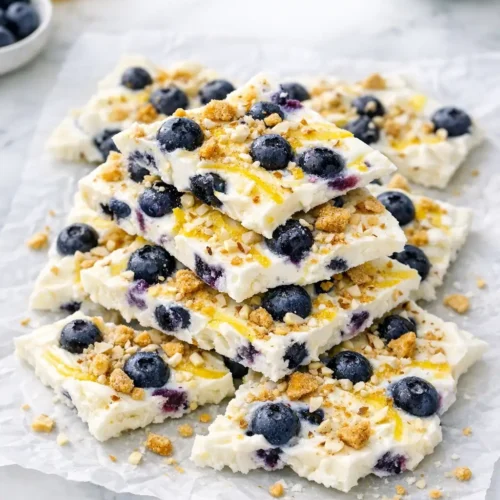
Blueberry Lemon Yogurt Bark for Busy Snack Times

Equipment
- Small rimmed baking sheet or quarter sheet pan (about 9×13 in / 23×33 cm)
- Parchment paper
- Medium mixing bowl
- Whisk
- Spatula or spoon (for spreading)
- Cutting board
- Sharp knife
- Airtight container (freezer-safe)
Ingredients
- 480 g thick Greek yogurt (2% or full-fat)
- 45–60 ml honey or maple syrup adjust to taste
- 1 tsp pure vanilla extract
- 1–2 tsp finely grated lemon zest from 1 medium lemon
- 10 ml fresh lemon juice
- 150 g fresh blueberries pat dry if recently washed
- 15–20 g finely chopped almonds or other nuts or use pumpkin seeds or sunflower seeds to keep it nut-free
- 1–2 digestive biscuits or graham cracker sheets roughly crumbled; optional
- 1 pinch fine sea salt optional
- 1–2 tbsp cold water or milk optional, only if needed to thin very thick yogurt
- 1–2 tsp honey optional, for lemon swirl (mixed with extra pinch of zest)
- lemon zest optional extra pinch, for lemon swirl
Instructions
- Prepare the pan and space. Line a small rimmed baking sheet or quarter sheet pan (about 23×33 cm / 9×13 in) with parchment paper, letting it overhang the sides. Clear a flat, level area in your freezer so the pan can sit evenly.
- Stir together the yogurt base. In a medium mixing bowl, whisk the Greek yogurt until smooth. Add the honey or maple syrup, vanilla, lemon zest, lemon juice, and a small pinch of salt. Taste and adjust; it should be slightly sweeter than you want the final bark since cold dulls sweetness.
- Adjust thickness if needed. If the yogurt is extremely thick, whisk in 1–2 tbsp (15–30 ml) cold water or milk until spreadable but still able to hold gentle peaks.
- Spread the yogurt on the pan. Pour the mixture onto the prepared pan and spread into an even layer about 0.5–1 cm (¼–⅜ inch) thick.
- Add the blueberries and toppings. Scatter blueberries over the surface. Sprinkle on chopped almonds (or seeds) and crumbled biscuits/graham crackers if using. Gently press toppings into the yogurt so they freeze in place.
- Create optional lemon swirls. Mix an extra pinch of lemon zest with 1–2 tsp honey, drizzle over the top, then drag a toothpick or knife tip through to create swirls.
- Freeze until firm. Transfer the pan to the freezer (level) and freeze at least 3–4 hours, or until completely solid in the center (longer for thicker bark or warmer freezers).
- Cut or break into pieces. Lift the bark out using the parchment, place on a cutting board, and cut with a sharp knife into squares/rectangles or snap into shards. Serve immediately or return pieces to the freezer promptly.
- Store properly. Layer pieces in an airtight container with parchment or wax paper between layers. Keep frozen; serve straight from the freezer or let sit 2–3 minutes to soften slightly.



Leave a Reply