
Chocolate Covered Matzo Crunch turns basic matzo, butter, and chocolate into a sheet pan of shattery toffee bark. It shows up on many Passover dessert tables and is especially popular at the Seder, but honestly gets eaten all week. The flavor is sweet, salty, and a little toasty, with a mix of crisp matzo and a thin, snappy caramel layer.
If you’re racing to get a holiday meal on the table in a small kitchen, start by lining your pan and setting out all the matzo first. Once the caramel is ready, you won’t have time to fumble with parchment. If you’ve got kids circling the kitchen, give them the job of sprinkling toppings once the chocolate is spread.
Ingredients
Makes about 24–30 small pieces (serves 4–6)
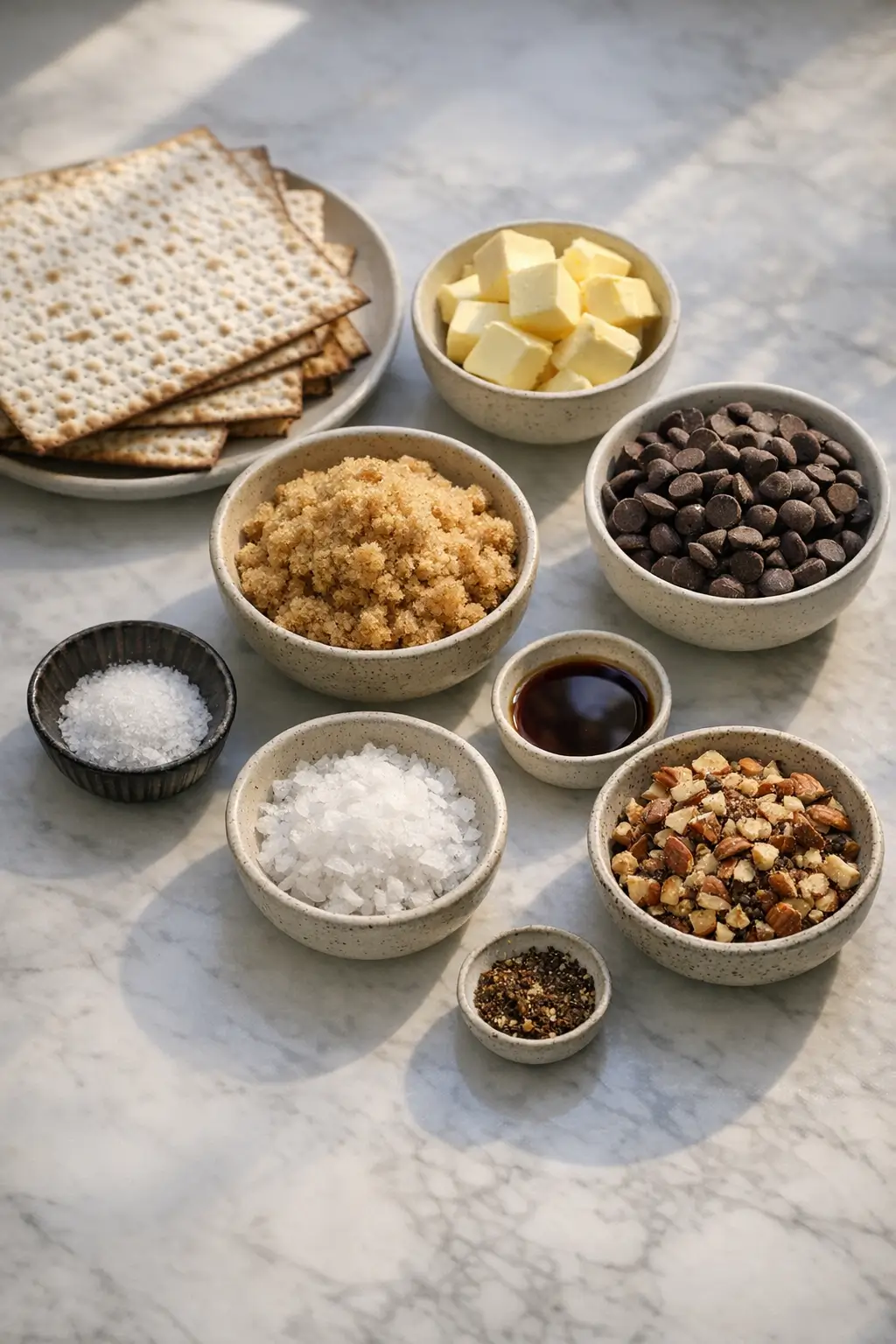
- 4 sheets (about 100 g) plain matzo, preferably kosher for Passover, whole or lightly broken to fit the pan
- 225 g / 1 cup (2 sticks) unsalted butter, cut into chunks
- 200 g / 1 cup packed light brown sugar
- 3 g / 1/2 tsp fine sea salt, plus more flaky salt for finishing
- 1 tsp vanilla extract (optional but recommended for rounder flavor)
- 255–285 g / 1 1/2–1 3/4 cups semisweet or dark chocolate chips (50–60% cacao)
- 30–40 g / 1/4 cup chopped toasted nuts, such as almonds, pecans, or pistachios (optional)
- Flaky sea salt, for sprinkling on top (optional but highly recommended)
For a dairy-free version, use parve margarine or a neutral, firm vegan butter in place of regular butter, and parve chocolate chips labeled kosher for Passover.
Step-by-Step Instructions for Chocolate Covered Matzo Crunch
Prep the pan and oven.
Line a rimmed baking sheet (roughly 18×13 inches / 46×33 cm) with heavy-duty aluminum foil, then a layer of parchment on top. This double lining makes it much easier to lift out and break later. Preheat the oven to 190°C / 375°F.Arrange the matzo.
Lay the matzo sheets on the parchment in a single layer, breaking them as needed so they cover most of the pan. Gaps are fine; the toffee will flow into them.Start the caramel base.
In a medium, heavy-bottomed saucepan, combine the butter, brown sugar, and fine sea salt. Set over medium heat and stir gently with a heatproof spatula or wooden spoon until the butter melts and the mixture is uniform and glossy.Boil to toffee stage.
Once the mixture looks smooth and starts to bubble, continue to cook at a steady boil for 3 minutes, stirring often and scraping the sides and corners of the pot so nothing scorches. The caramel should thicken slightly and turn from sandy-looking to glossy.
Kitchen note: If you smell sharp bitterness or see dark streaks at the edges, the sugar is beginning to burn. It’s safer to pull the pan off the heat and start the caramel again than to hope the flavor mellows in the oven—it won’t.
Add vanilla and pour.
Remove the pan from the heat and stir in the vanilla, if using; expect it to bubble up. Immediately pour the hot caramel over the matzo, using an offset spatula or the back of a spoon to spread it into an even layer. Work quickly but carefully—the mixture is very hot.Bake to set the toffee.
Slide the tray into the oven and bake for 10–12 minutes, until the caramel is bubbling across the surface and looks slightly darker at the edges. Ovens vary; start checking at 8 minutes and keep an eye on the color near the corners.Add chocolate chips.
Remove the pan from the oven and place it on a heat-safe surface. Immediately sprinkle the chocolate chips evenly over the hot toffee. Let them sit for 3–5 minutes so the residual heat softens them.Spread the melted chocolate.
When the chips look shiny and soft, use a clean offset spatula or the back of a spoon to gently spread the chocolate into a smooth, even layer. Aim for complete coverage, pushing the chocolate right up to the edges.
Kitchen note: If the chocolate doesn’t melt fully (some ovens run cooler), place the tray back into the still-warm, turned-off oven for 1–2 minutes. Watch closely so the chocolate softens but doesn’t seize or dry out.
Top and cool.
While the chocolate is still soft, sprinkle chopped nuts and a light pinch of flaky sea salt over the surface, if using. Let the tray cool at room temperature until it’s no longer hot, then transfer to the refrigerator for at least 45–60 minutes, or until the chocolate is firm.Break into pieces.
Use the foil or parchment to lift the set sheet of matzo crunch out of the pan. Place it on a cutting board and break it into irregular shards with your hands or a sharp knife. Expect a mixture of larger pieces and small, snackable bits.Taste and adjust salt.
Try a piece once it reaches cool room temperature. If it tastes overly sweet, lightly sprinkle a bit more flaky salt on the remaining pieces to sharpen the flavor.
What to Expect
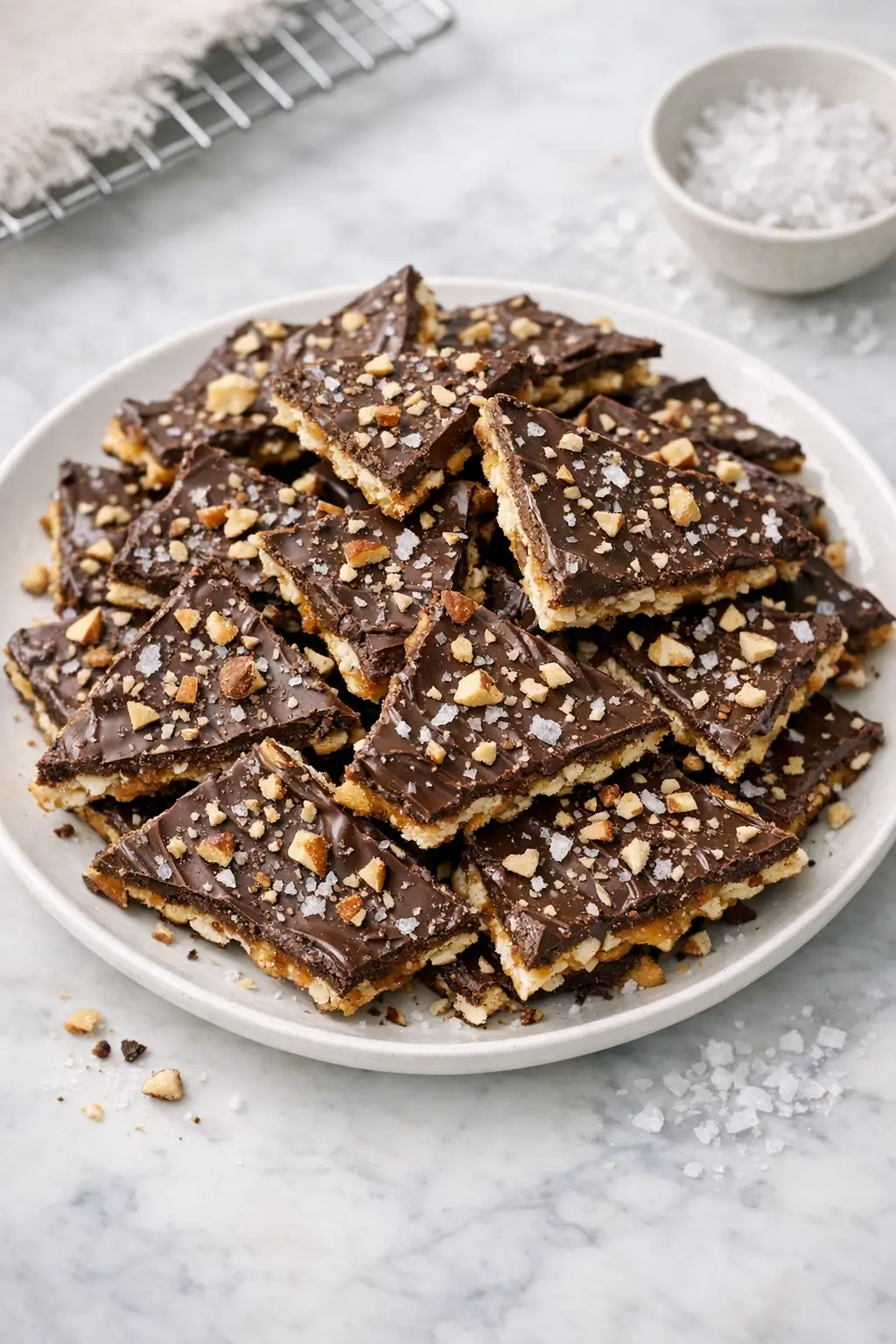
The finished Chocolate Covered Matzo Crunch should be firm and snappy straight from the fridge, with a thin, glassy layer of toffee clinging to the base of the matzo. At room temperature, the matzo stays crisp while the toffee softens slightly, making it easier to bite.
Flavor-wise, you get a clear caramel note from the brown sugar and butter, balanced by bittersweet chocolate and a hint of salt. The matzo itself is mostly about texture, adding a neutral crunch that keeps each bite from feeling like a solid block of candy.
Results vary a little with different brands of matzo and chocolate. Thicker matzo can stay slightly chewier in the center, while very thin matzo gives a more brittle, bark-like crunch. Darker chocolate (60–70%) will taste less sweet and more intense; milk chocolate yields a softer set and a sweeter overall dessert.
Kitchen note: If your toffee layer cools looking grainy rather than glossy, it usually means the sugar crystallized during cooking. The crunch will still taste fine, but next time avoid scraping any sugar crystals from the sides of the pan into the caramel as it boils.
Ways to Change It Up
A dairy-free version works well for meat-based Passover meals. Swap the butter for a firm, neutral-flavored vegan butter or margarine that’s labeled parve and, if needed, kosher for Passover. Use dairy-free chocolate chips and skip any toppings that contain dairy. The texture of the toffee stays very similar, though the flavor will be a touch less buttery.
To make the dessert spicier or more robust, sprinkle a pinch (1/4–1/2 teaspoon) of ground cinnamon, espresso powder, or even mild chili powder over the melted chocolate before it sets. The spice doesn’t overpower the caramel but adds warmth and depth, which works particularly well with dark chocolate.
For an even faster or simplified version, reduce the caramel cooking time slightly and use fewer toppings. Some cooks simply simmer the butter and brown sugar until combined and pour it over the matzo without a long boil, accepting a slightly softer, chewier layer. You can also skip nuts and just finish with chocolate and flaky salt to cut down on prep.
If you want a kid-focused pan, divide the matzo crunch visually on the tray and top half with nuts for adults and half with colorful sprinkles or toasted coconut. This keeps the base recipe the same while giving people a clear choice of textures.
Serving and Storage
Chocolate Covered Matzo Crunch is usually served as a small-bite dessert or sweet snack after the Seder meal, but it also works well alongside fruit or simple sorbet later in the week. Arrange the shards on a platter so that different sizes are available; smaller pieces tend to disappear quickly because they feel like “just one more bite.”
It pairs nicely with coffee or tea, and the sweet-salty profile plays well with tart elements like sliced oranges or fresh berries. If you prefer a neater presentation, you can trim the edges with a sharp knife and reserve the crumbs as an ice cream or yogurt topping.
To store, place fully cooled pieces in an airtight container, separating layers with parchment or wax paper to prevent sticking. Keep in the refrigerator for up to 1 week for the best texture, or freeze for up to 1 month. Thaw frozen pieces in the fridge so condensation doesn’t form directly on the chocolate.
Kitchen note: In a very warm kitchen, the chocolate can bloom (develop pale streaks) over time. This doesn’t make it unsafe; it’s just cocoa butter moving to the surface. Keeping the crunch chilled and well-sealed helps maintain a smooth, glossy finish.
Cultural Context
Matzo is an unleavened flatbread that plays a central role during Passover, when leavened grain products are avoided as a reminder of the Israelites’ hurried departure from Egypt. According to Jewish tradition, there was no time for bread dough to rise, so matzo became a symbolic “bread of affliction” and a core element of the Seder meal. Historical overviews of matzo’s role in Passover, like this piece on its baking and symbolism from History’s article on matzo as a Passover tradition, highlight how strictly its production is supervised in many communities.
Modern Passover cookery has expanded far beyond plain crackers. Many home cooks turn matzo into desserts, casseroles, and dumplings, integrating contemporary tastes with longstanding ritual requirements. For a broader look at the meaning, history, and production of matzo across different Jewish communities, see this overview: Matzo: meaning, history, and how it’s made.
Common Questions and Troubleshooting
Why did my toffee separate or look oily in the pan?
This usually comes from overheating or vigorous stirring after the mixture has started boiling. Next time, keep the heat at medium, stir gently just enough to keep the sugar from sticking on the bottom, and stop stirring for the last minute of boiling if it looks stable.
My matzo crunch is too hard to bite—what went wrong?
Very hard toffee often means the caramel boiled a bit too long or too hot. Try shaving off a minute of boiling time, or lower the heat slightly so the bubbles are active but not wild. Serving the crunch closer to room temperature also softens the texture a little.
Can I use milk chocolate instead of dark chocolate?
Yes, milk chocolate works, but the dessert will taste sweeter and the chocolate layer may be a bit softer. If you go this route, consider using slightly less chocolate by volume or increasing the flaky sea salt on top to keep the sweetness balanced.
What if I need a nut-free version for allergies?
Leave off the nuts entirely and focus on texture from other toppings like toasted coconut, seeds (such as pumpkin seeds, if appropriate for your table), or just flaky salt. Make sure all packaged ingredients are clearly labeled nut-free and prepared away from cross-contact risks.
How long can I keep leftovers, and can I store them at room temperature?
In a cool, dry kitchen (below about 21°C / 70°F), you can keep matzo crunch at room temperature for 2–3 days in an airtight container. In warmer homes or if you prefer a firmer snap, refrigerate for up to a week or freeze for longer storage.
Why is my chocolate layer streaky or dull?
Chocolate can develop streaks (bloom) if it warms and cools repeatedly or is stored in a humid environment. Keeping the shards in a tightly sealed container in the fridge minimizes this. Even if bloom appears, the matzo crunch is still safe to eat and the flavor is largely unchanged.
Kitchen note: If condensation forms on the surface when moving from fridge to room temperature, let the container sit closed until the contents reach room temp. This prevents moisture from settling directly on the chocolate and changing the texture.
Conclusion
Chocolate Covered Matzo Crunch is one of those Passover desserts that fits easily into a busy cooking schedule while still feeling festive on the table. The method is straightforward once you understand what the caramel should look and smell like, and the toppings invite small tweaks to suit whoever is eating.
If you try this version, feel free to leave a comment with how it went, what chocolate you used, and any flavor twists you enjoyed. Reader adjustments often help other home cooks troubleshoot or discover a new favorite variation, especially during a holiday week when everyone is working with different ovens, ingredients, and time constraints.
Chocolate Covered Matzo Crunch for Easy Passover

Equipment
- Rimmed baking sheet (about 18×13 inches / 46×33 cm)
- Heavy-duty aluminum foil
- Parchment paper
- Medium heavy-bottomed saucepan
- Heatproof spatula or wooden spoon
- Offset spatula or spoon (for spreading)
- Cutting board
- Knife (optional, for cutting shards)
Ingredients
- 4 sheets plain matzo about 100 g; preferably kosher for Passover; whole or lightly broken to fit the pan
- 225 g unsalted butter 1 cup (2 sticks), cut into chunks
- 200 g light brown sugar 1 cup, packed
- 1/2 tsp fine sea salt 3 g; plus more flaky sea salt for finishing
- 1 tsp vanilla extract optional but recommended
- 1 1/2–1 3/4 cups semisweet or dark chocolate chips 255–285 g; 50–60% cacao
- 1/4 cup chopped toasted nuts (almonds, pecans, or pistachios) 30–40 g; optional
- flaky sea salt for sprinkling on top (optional but highly recommended)
Instructions
- Prep the pan and oven. Line a rimmed baking sheet (roughly 18×13 inches / 46×33 cm) with heavy-duty aluminum foil, then a layer of parchment on top. Preheat the oven to 190°C / 375°F.
- Arrange the matzo. Lay the matzo sheets on the parchment in a single layer, breaking them as needed so they cover most of the pan. Gaps are fine; the toffee will flow into them.
- Start the caramel base. In a medium, heavy-bottomed saucepan, combine the butter, brown sugar, and fine sea salt. Set over medium heat and stir gently until the butter melts and the mixture is uniform and glossy.
- Boil to toffee stage. Once smooth and bubbling, cook at a steady boil for 3 minutes, stirring often and scraping the sides and corners so nothing scorches, until slightly thickened and glossy.
- Add vanilla and pour. Remove from heat and stir in the vanilla (if using). Immediately pour the hot caramel over the matzo and spread into an even layer with an offset spatula or the back of a spoon.
- Bake to set the toffee. Bake 10–12 minutes, until bubbling across the surface and slightly darker at the edges (start checking at 8 minutes).
- Add chocolate chips. Remove from the oven and immediately sprinkle the chocolate chips evenly over the hot toffee. Let sit 3–5 minutes to soften.
- Spread the melted chocolate. When the chips look shiny and soft, spread into a smooth, even layer to the edges. If needed, return the tray to the still-warm, turned-off oven for 1–2 minutes to help melt.
- Top and cool. While chocolate is soft, sprinkle chopped nuts and a light pinch of flaky sea salt (if using). Cool at room temperature, then refrigerate 45–60 minutes until firm.
- Break into pieces. Lift the sheet out using the foil/parchment. Place on a cutting board and break into irregular shards (or cut with a knife).
- Taste and adjust salt. If it tastes overly sweet, lightly sprinkle a bit more flaky salt on the remaining pieces to sharpen the flavor.



Leave a Reply