
Classic hot dogs with homemade relish are the kind of meal you can pull off even when the fridge looks bare and everyone’s already hungry. You get the snap of a grilled or pan-seared dog, a soft toasted bun, and a bright, tangy relish that wakes everything up.
If it’s a busy weeknight, start by getting the relish on first so it has a few minutes to sit while you cook the hot dogs. Cooking for kids or a crowd with different tastes? Keep the relish mild, then set out mustard, ketchup, and onions so people can build their own.
This style of hot dog shows up at ballparks, backyard cookouts, and street carts across the United States. It’s casual, familiar, and suits cooks of any level as long as you’re willing to watch the heat under the pan or grill. Expect a balance of salty, smoky sausage, lightly charred buns, and a sweet-tangy crunch from the relish.
Ingredients
Makes 4 hot dogs
For the homemade relish
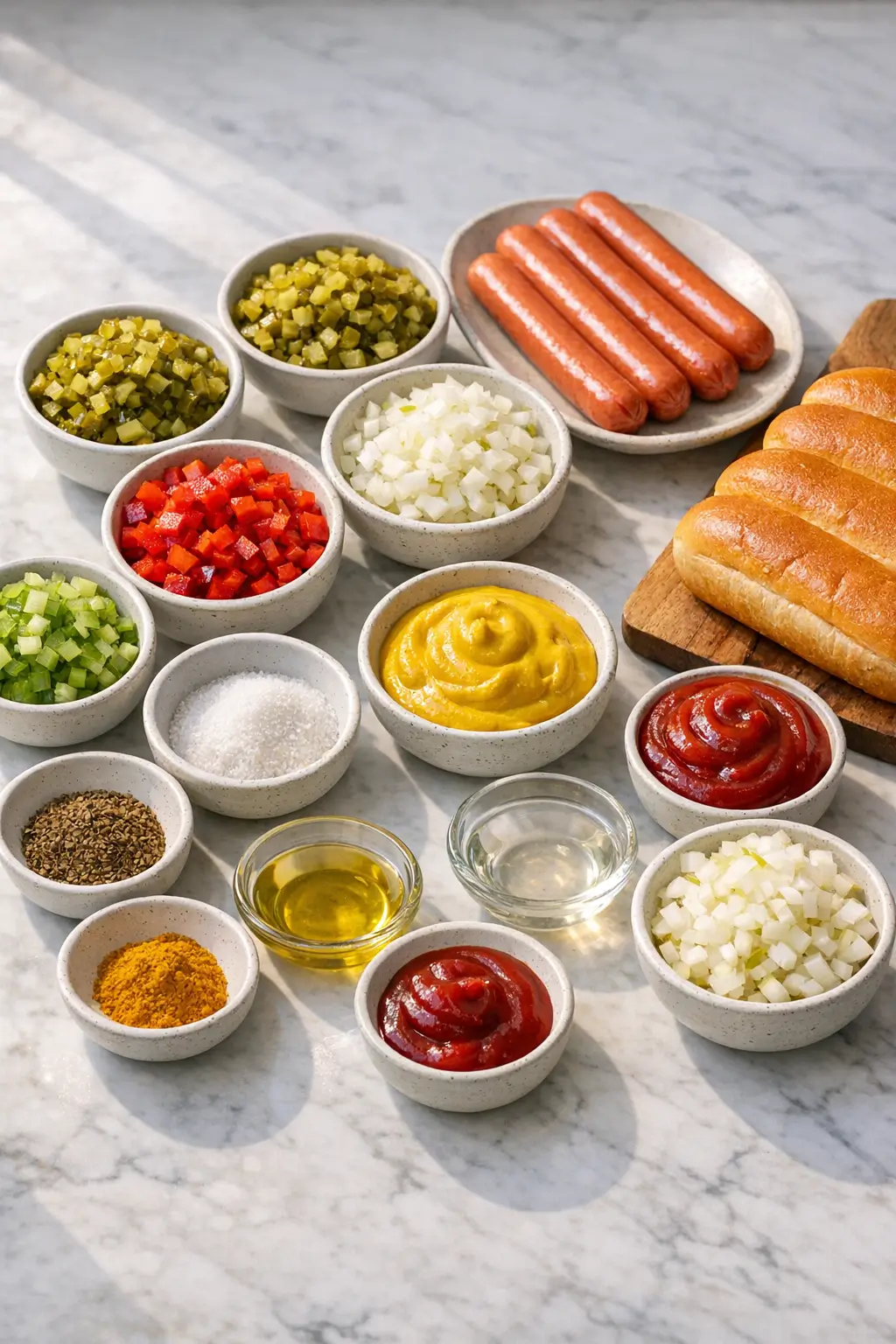
- 120 g / 1 cup finely chopped dill pickles (about 3–4 small spears)
- 40 g / 1⁄4 cup finely chopped sweet pickles or bread-and-butter pickles
- 40 g / 1⁄4 cup finely chopped yellow onion
- 30 g / 2 Tbsp finely chopped red bell pepper (for color and sweetness)
- 30 g / 2 Tbsp finely chopped celery (optional but adds crunch)
- 60 ml / 1⁄4 cup yellow mustard
- 15 ml / 1 Tbsp white vinegar (5% acidity)
- 8–10 g / 2 tsp granulated sugar, or to taste
- 1–2 g / 1⁄4 tsp celery seed
- 1–2 g / 1⁄4 tsp kosher salt, plus more to taste
- Pinch of ground turmeric for color, optional
For the hot dogs
- 4 beef or beef-and-pork hot dog sausages (standard size, about 45–56 g / 1.6–2 oz each)
- 4 hot dog buns, split (top-split or side-split)
- 10 g / 2 tsp neutral oil or softened butter, for toasting the buns
- Yellow mustard, to serve
- Ketchup, to serve if desired
- Finely chopped white or yellow onion, to serve
Kitchen note: Very thick or jumbo hot dogs may need a minute or two longer to heat through. Check the center with a quick slice in one dog if you’re unsure; it should be steaming hot.
Step-by-Step Instructions for Classic Hot Dogs with Homemade Relish
Make the relish base.
Finely chop the dill pickles, sweet pickles, onion, red bell pepper, and celery so the pieces are no larger than a pea. The smaller the pieces, the better they sit on the hot dog without falling off.Mix and season.
In a medium bowl, whisk together the yellow mustard, white vinegar, sugar, celery seed, salt, and turmeric if using. Taste the mixture; it should be tangy with a gentle sweetness and mild heat from the mustard.Combine everything.
Fold the chopped vegetables into the mustard mixture until everything is evenly coated. The relish should be thick and spoonable, not soupy. If it looks dry, add another 1–2 teaspoons of mustard or a splash of pickle brine.Let the relish rest.
Cover and let the relish sit at room temperature for at least 10–15 minutes while you prepare the hot dogs. This short rest helps the flavors blend and the sugar and salt dissolve fully.Preheat your cooking surface.
Set a grill or grill pan over medium heat, or heat a regular skillet over medium to medium-low. Give it a couple of minutes to come up to temperature. Lightly oil the grates or pan if your hot dogs tend to stick.Score the hot dogs (optional but helpful).
Use a sharp knife to cut 3–4 shallow diagonal slashes along each hot dog, about 3 mm / 1⁄8 inch deep. This helps prevent curling and gives more surface area for browning.
Kitchen note: If you cut too deeply, the hot dogs can split open and lose juices. Aim to just break the casing, not carve into the center.
Cook the hot dogs.
Place the hot dogs on the hot grill or skillet. Cook, turning every 1–2 minutes, until browned on most sides and heated through, about 6–8 minutes on a grill or 5–7 minutes in a skillet. Adjust the heat if the outsides darken before the centers feel hot.Toast the buns.
While the hot dogs cook, spread the cut sides of the buns with a thin layer of softened butter or brush lightly with oil. Place them cut side down on the grill or directly in the skillet for 30–60 seconds, just until golden at the edges and warm.Stir and adjust the relish.
Give the relish another stir. Taste and adjust with a pinch more sugar for sweetness, extra vinegar for brightness, or a bit more salt. If you prefer a thinner, more sauce-like relish, add 1–2 teaspoons of water or pickle brine and stir again.Assemble the hot dogs.
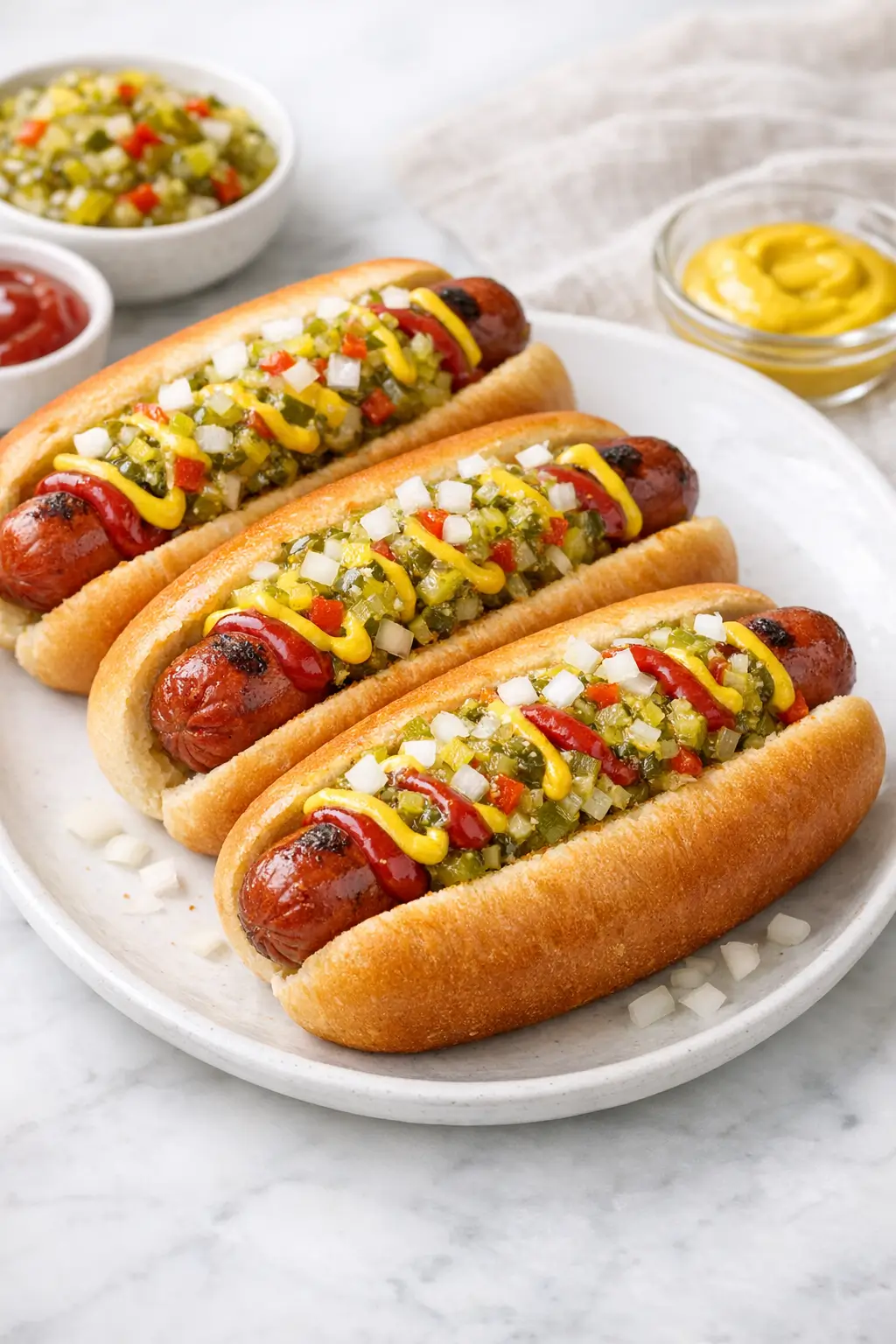
Nestle a cooked hot dog into each toasted bun. Spoon a generous line of homemade relish along the length of the sausage. Add mustard, ketchup if using, and a sprinkle of finely chopped onion.Serve right away.
Hot dogs taste best when the sausage is hot, the bun is still soft-warm, and the relish is cool. Serve immediately with any extra relish on the side so people can add more as they eat.
Kitchen note: If you’re feeding a crowd, keep cooked hot dogs warm in a covered pan over very low heat or in a 90–95°C / 200–205°F oven for up to 20 minutes. Wait to toast the buns until just before serving so they stay soft.
What to Expect
Properly cooked hot dogs will feel firm but juicy, with a light snap when you bite through the casing. The inside should be hot and evenly colored without dry, tough patches.
The homemade relish brings a mix of tangy mustard, mild sweetness, and gentle crunch. Expect it to be brighter and a bit sharper than many jarred relishes, since the vinegar and fresh vegetables stand out.
Different brands of hot dogs and buns can change the overall balance. Smokier sausages will make the dish feel richer, while very soft, enriched buns can tilt things toward comfort-food sweetness. Leaner or low-fat hot dogs may not brown as deeply and can dry more quickly, so keep an eye on them and pull as soon as they’re hot.
Kitchen note: If the relish tastes flat once it’s on the hot dog, you usually need more acid or salt. A quick drizzle of mustard or a few drops of vinegar over the relish on the bun can wake up the flavors.
Ways to Change It Up
Vegetarian or vegan twist.
Swap the meat hot dogs for your favorite plant-based sausages and use buns that are clearly labeled vegan if needed. Check that your mustard and pickles don’t contain honey or other animal-derived ingredients if that’s a concern.Spicier version.
Add 1–2 finely minced jalapeño slices or a pinch of red pepper flakes to the relish. For more heat without changing the texture, stir in a small dash of hot sauce. Just know that extra spice can mute some of the sweetness, so you may want to add an extra pinch of sugar.Milder, kid-friendly relish.
Rely more on sweet pickles and reduce or omit the red onion. You can also cut the mustard in half and replace it with a spoonful of mayonnaise for a creamier, less sharp relish.Faster, shortcut relish.
If you’re in a rush, finely chop store-bought dill pickles and stir them with yellow mustard, a touch of sugar, and a spoonful of pickle brine. You’ll lose some of the layered flavor from the fresh onion and pepper, but you still get a bright topping in about 5 minutes.Charred-onion upgrade.
Cook thinly sliced onions in a bit of oil in the same skillet before the hot dogs until deeply golden. Use them instead of raw onions as a topping along with the relish for extra sweetness and texture.
Serving and Storage
Classic hot dogs with homemade relish are usually served as a casual main dish for lunch, dinner, or backyard gatherings. They pair well with potato salad, coleslaw, grilled corn, or a simple green salad.
For a more structured meal, serve alongside oven fries or a batch of baked beans. The relish also works on burgers, grilled sausages, or even stirred into potato salad for extra tang.
Leftover relish keeps well. Transfer it to an airtight container and refrigerate for up to 1 week. The flavor will continue to develop, and the color may deepen slightly from the mustard and turmeric.
The cooked hot dogs themselves are best eaten fresh. If you have leftovers, cool them quickly, refrigerate in a covered container, and reheat in a skillet over medium-low heat with a splash of water, or briefly in the microwave just until hot.
Kitchen note: Avoid freezing the relish; the vegetables tend to soften and release water when thawed, which can make it dull and watery.
Cultural Context
Hot dogs in the United States trace back to German-style sausages that were adapted and popularized in places like New York’s Coney Island in the late 19th and early 20th centuries. Over time, they became closely associated with street vendors, baseball games, and backyard cookouts.
Relish is one of the standard condiments, adding acidity and texture that balance the richness of the sausage. Regional styles, such as Chicago’s “dragged through the garden” hot dog with its bright green relish, show how toppings can signal local identity.
For more background, the Smithsonian has a concise overview of how hot dogs became American icons in public life and at presidential events: this article on the hot dog’s cultural history. A broader look at different regional hot dog styles and their roots can be found in this reference overview of hot dogs.
Common Questions and Troubleshooting
My hot dogs split open while cooking. What happened?
The heat was likely too high, or the casing was cut too deeply when scoring. Next time, lower the burner slightly and make shallower slashes, or skip scoring and turn more frequently to prevent blistering in one spot.
The relish came out too sharp and vinegary. How can I fix it?
Stir in a bit more sugar, a spoonful of finely chopped sweet pickles, or even a teaspoon of mayonnaise to soften the edges. Let it rest 10 minutes and taste again before adding more.
My relish is watery. Did I do something wrong?
Some pickles and onions release more liquid than others. Drain off a bit of the excess or add extra chopped pickles to thicken the mixture. You can also mix in a small spoonful of yellow mustard to tighten the texture.
Can I make the relish ahead of time?
Yes. Making it up to a day in advance works well and can improve the flavor. Store it covered in the refrigerator and stir before serving. If it thickens too much, loosen with a small splash of pickle brine.
What if I only have dill pickles and no sweet pickles?
Use all dill pickles and add an extra teaspoon or two of sugar to mimic the sweetness. Taste and adjust until you get a balance you like.
How long can I keep leftover cooked hot dogs?
For food safety, keep them refrigerated and eat within 3–4 days. Reheat only once, and discard any that have sat at room temperature for more than 2 hours.
Conclusion
Classic hot dogs with homemade relish are straightforward, adaptable, and forgiving enough for a busy weeknight or a relaxed cookout. Once you mix your own relish even once, it becomes easy to adjust the flavors to suit whoever is at the table.
If you try this version, consider leaving a rating and sharing how you cooked the hot dogs—grilled, pan-seared, or another method. Any tweaks you make to the relish, from extra heat to kid-friendly sweetness, can help other home cooks find their own ideal version too.
Classic Hot Dogs with Homemade Relish Made Easy

Equipment
- Grill, grill pan, or skillet
- Medium Bowl
- Knife
- Cutting board
Ingredients
For the homemade relish
- 120 g dill pickles finely chopped (about 3–4 small spears; 1 cup)
- 40 g sweet pickles or bread-and-butter pickles finely chopped (1/4 cup)
- 40 g yellow onion finely chopped (1/4 cup)
- 30 g red bell pepper finely chopped (2 Tbsp)
- 30 g celery finely chopped (2 Tbsp; optional)
- 60 ml yellow mustard 1/4 cup
- 15 ml white vinegar 5% acidity (1 Tbsp)
- 2 tsp granulated sugar 8–10 g, or to taste
- 1/4 tsp celery seed 1–2 g
- 1/4 tsp kosher salt 1–2 g, plus more to taste
- 1 pinch ground turmeric optional, for color
For the hot dogs
- 4 beef or beef-and-pork hot dog sausages standard size, about 45–56 g each
- 4 hot dog buns split (top-split or side-split)
- 2 tsp neutral oil or softened butter for toasting buns (10 g)
- yellow mustard to serve
- ketchup to serve (optional)
- white or yellow onion finely chopped, to serve
Instructions
- Make the relish base. Finely chop the dill pickles, sweet pickles, onion, red bell pepper, and celery so the pieces are no larger than a pea.
- Mix and season. In a medium bowl, whisk together the yellow mustard, white vinegar, sugar, celery seed, salt, and turmeric if using. Taste; it should be tangy with gentle sweetness.
- Combine everything. Fold the chopped vegetables into the mustard mixture until evenly coated. If it looks dry, add another 1–2 teaspoons mustard or a splash of pickle brine.
- Let the relish rest. Cover and let sit at room temperature for at least 10–15 minutes while you prepare the hot dogs.
- Preheat your cooking surface. Heat a grill or grill pan over medium, or a skillet over medium to medium-low; preheat a couple of minutes and lightly oil if needed.
- Score the hot dogs (optional). Cut 3–4 shallow diagonal slashes in each hot dog, about 3 mm / 1/8 inch deep, to reduce curling and help browning.
- Cook the hot dogs. Cook, turning every 1–2 minutes, until browned and heated through: about 6–8 minutes on a grill or 5–7 minutes in a skillet.
- Toast the buns. Lightly butter or oil the cut sides and toast cut-side down 30–60 seconds until warm and golden at the edges.
- Stir and adjust the relish. Stir, then adjust with more sugar, vinegar, or salt. To thin, add 1–2 teaspoons water or pickle brine.
- Assemble the hot dogs. Place each hot dog in a toasted bun, spoon relish along the length, and add mustard, ketchup (if using), and chopped onion.
- Serve right away. Serve immediately, with extra relish on the side if desired.



Leave a Reply