
Classic tres leches cake is one of those fiesta desserts that looks impressive on the table but is surprisingly manageable for a home cook. You get a light, eggy sponge, a rich three‑milk soak, and a cool whipped cream topping that plays well with warm weather and big gatherings. It shows up at birthdays, graduations, and family celebrations all over Latin America and in Latin bakeries across the U.S.
If you’re squeezing this into a busy weeknight before a party, start by separating your eggs and bringing them to room temperature; that gives you a stronger whip and better rise. If your kitchen is small, clear one counter just for the cake pan so you can pour and cool without juggling other dishes. This tres leches cake is gently sweet, custardy without being soggy, and ideal for anyone comfortable with basic baking who wants a reliable, make-ahead dessert.
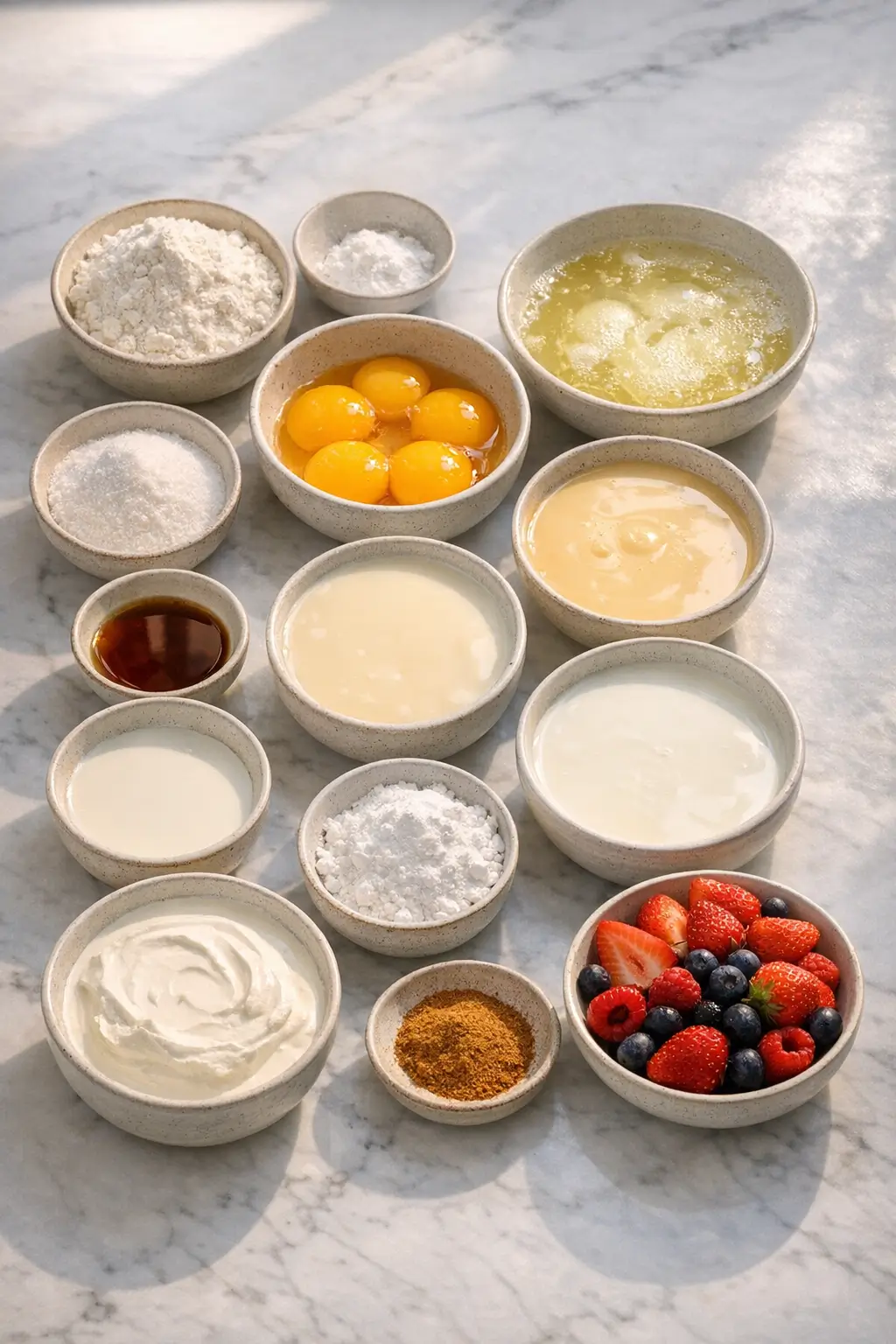
Ingredients
Makes one 9×13 in (23×33 cm) cake, 12–16 small squares
For the sponge cake
- 135 g (1 cup) all-purpose flour, spooned and leveled – forms the structure of the sponge
- 1 tsp baking powder – helps the cake rise
- 1/4 tsp fine salt – balances sweetness
- 5 large eggs, separated – whipped whites keep the cake light
- 200 g (1 cup) granulated sugar, divided – 150 g (3/4 cup) for the yolks, 50 g (1/4 cup) for the whites
- 60 ml (1/4 cup) whole milk – adds a bit of tenderness
- 1 1/2 tsp pure vanilla extract – for flavor
For the tres leches soak
- 1 can (354 ml / 12 oz) evaporated milk
- 1 can (397 g / 14 oz) sweetened condensed milk
- 120 ml (1/2 cup) whole milk or use half-and-half or heavy cream for a richer cake
- 1 tsp pure vanilla extract
For the whipped topping
- 480 ml (2 cups) cold heavy whipping cream
- 30–50 g (1/4–1/2 cup) powdered sugar, to taste
- 1 tsp pure vanilla extract
- Ground cinnamon, for dusting the top
- Fresh berries or sliced strawberries, for serving (optional)
Kitchen note: Use real sweetened condensed milk and evaporated milk here—unsweetened “coffee creamers” or evaporated-style cream in cartons will not give the same flavor or sweetness.
Step-by-Step Instructions for Classic Tres Leches Cake
Prepare the pan and oven.
Preheat your oven to 175°C / 350°F. Lightly grease a 9×13 in (23×33 cm) metal baking pan with a thin film of neutral oil or baking spray, then line the bottom with parchment. Leave the sides mostly ungreased so the batter can climb a little as it bakes.Sift the dry ingredients.
In a small bowl, whisk together the flour, baking powder, and salt. Sifting or whisking removes lumps and distributes the baking powder evenly, which helps the sponge rise uniformly.Beat the egg yolks with sugar.
In a medium mixing bowl, add the egg yolks and 150 g (3/4 cup) of the granulated sugar. Beat with a hand mixer on medium-high until the mixture is thick, pale, and roughly doubled in volume, about 3–4 minutes. It should fall from the beaters in a thick ribbon.Add milk and vanilla.
Pour the whole milk and vanilla into the yolk mixture and mix briefly until combined. Don’t worry if it loosens the mixture; the structure will come from the whites and flour.Whip the egg whites.
In a clean, dry large bowl, add the egg whites. Beat on medium speed until foamy, then gradually sprinkle in the remaining 50 g (1/4 cup) sugar. Increase speed to medium-high and whip until medium-stiff peaks form, about 3–5 minutes. The peaks should stand up but curl over at the tip.
Kitchen note: If the bowl or beaters have any grease or egg yolk, the whites may never whip properly. If they look thin and bubbly after several minutes, it’s better to start over with clean equipment than bake a dense cake.
Fold the yolks into the whites.
Scrape the beaten yolk mixture onto the whipped whites. Using a large spatula, gently fold by sweeping down the center and up the sides of the bowl, rotating as you go. Stop when you see only a few streaks; overmixing will deflate the batter.Incorporate the dry ingredients.
Sprinkle about one-third of the flour mixture over the egg foam. Fold gently just until the flour is no longer visible, then repeat with the remaining flour in two more additions. Aim to keep as much air in the batter as possible while avoiding dry pockets.Bake the sponge.
Pour the batter into the prepared pan and smooth the top. Bake for 22–27 minutes, or until the top is golden, the edges pull slightly away from the pan, and a toothpick inserted in the center comes out clean or with a few moist crumbs.Cool the cake.
Transfer the pan to a wire rack and let the cake cool for 20–30 minutes. It should still be slightly warm but not hot when you add the milk mixture. This temperature helps the milks absorb evenly without collapsing the crumb.Mix the three-milk soak.
While the cake cools, whisk together the evaporated milk, sweetened condensed milk, whole milk (or cream), and vanilla in a large measuring jug or bowl until smooth. The mixture will be pourable but noticeably thicker than plain milk.Poke holes all over the cake.
Once the cake is warm, use a fork, skewer, or toothpick to poke holes all over the surface, going almost to the bottom but not scraping the pan. Space the holes about 1 cm (1/2 in) apart for even soaking.Slowly soak the cake.
Pour about one-third of the tres leches mixture evenly across the surface, letting it seep in. Wait a minute, then add another third, focusing on any dry-looking areas. Finish with the remaining milk mixture. The cake will look very wet at first; that’s expected.Chill to absorb.
Cover the pan loosely with plastic wrap or a lid and refrigerate for at least 4 hours, ideally overnight. Over time the sponge will drink in the liquid and turn custardy from edge to center.Make the whipped cream topping.
Shortly before serving, pour the cold heavy cream into a large chilled bowl. Beat on medium speed until it begins to thicken. Add the powdered sugar and vanilla, then continue beating until medium peaks form and the cream holds shape but is still soft and spreadable.Frost the cake.
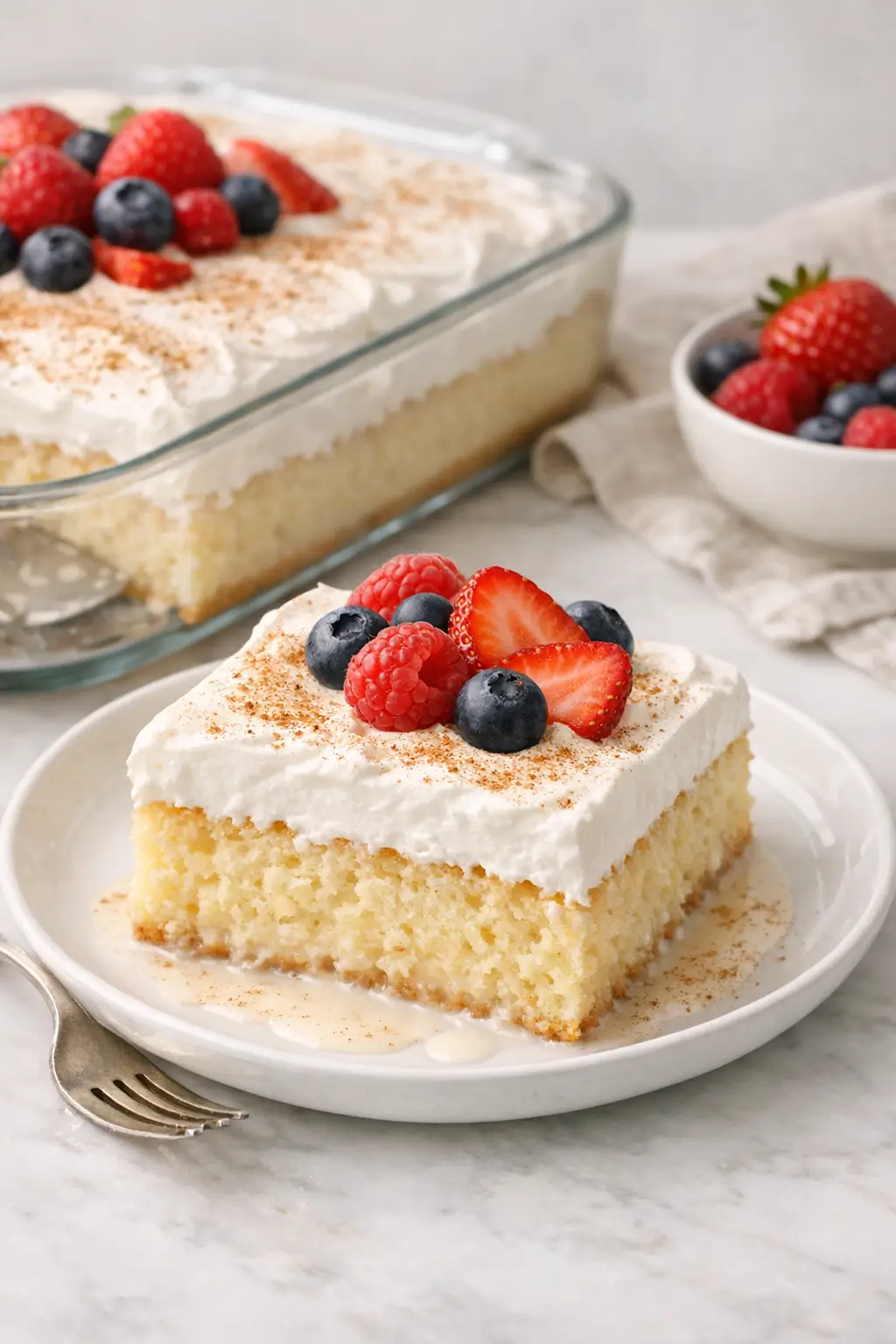
Uncover the chilled cake. If some milk has pooled lightly around the edges, that’s fine; it will spoon nicely when serving. Spread the whipped cream evenly over the top, creating soft swirls. Lightly dust with ground cinnamon.Garnish and slice.
If using, top with sliced strawberries or mixed berries just before serving so they stay fresh. Cut the cake into small squares—this dessert is rich, so modest pieces are usually enough.
Kitchen note: For a party, you can bake and soak the cake up to 24 hours in advance and whip the cream just before leaving. Transport the cake chilled, and keep it cold until serving to maintain the texture.
What to Expect
A well-made tres leches cake should feel moist and custard-like but still slice cleanly. You’ll see a fine, even crumb that has clearly absorbed the milk mixture without turning into paste.
Flavor-wise, expect gentle dairy sweetness with a hint of vanilla and a light cinnamon aroma from the topping. It is less sugary than many frosted layer cakes because much of the richness comes from milk and cream instead of thick buttercream.
Different pans, ovens, and brands of milk can all shift the final texture. A darker metal pan may brown the edges faster, while a glass pan can bake more slowly and may need a few extra minutes. Using heavy cream instead of whole milk in the soak will make the cake richer and slightly denser.
Kitchen note: If your cake seems dry after chilling, you can whisk 60 ml (1/4 cup) additional milk with 2–3 tablespoons condensed milk and spoon it over individual slices right before serving.
Ways to Change It Up
Lighter or dairy‑adjusted version.
Swap the 1/2 cup whole milk in the soak for the same amount of unsweetened canned coconut milk, and use coconut milk instead of some of the heavy cream in the topping. The cake will still be rich but with a mild coconut note. The texture may be slightly looser, so chill thoroughly before slicing.Spicier, more aromatic tres leches.
For more warmth, add 1/2 tsp ground cinnamon and 1/4 tsp ground nutmeg to the dry ingredients for the sponge, and steep a cinnamon stick in the three‑milks mixture for 10–15 minutes before removing it and soaking the cake. This gives a cozier flavor that fits autumn or evening fiestas.Faster, simplified version.
If time is tight and you’re comfortable with a small shortcut, you can bake a plain vanilla sheet cake from a mix in a 9×13 in pan and use the same three‑milks soak and whipped cream topping from this recipe. The texture won’t be as airy as a true sponge, but with a long chill, it still makes a crowd‑pleasing dessert.Fruit‑forward finish.
Instead of a plain cinnamon dusting, top the whipped cream with a mix of berries, sliced peaches, or mango. This adds acidity and freshness, which can be helpful after a heavier meal.
Serving and Storage
Tres leches cake is typically served cold or cool, cut into squares directly from the pan. It works well after a grilled meal, taco spread, or any rich fiesta menu because the chilled, milky texture is refreshing.
You can serve it simply with whipped cream and cinnamon, or add sliced strawberries, mango, or a few maraschino cherries for a classic bakery-style look. A light sprinkle of toasted coconut or shaved chocolate also fits the flavor profile without overwhelming it.
Leftovers keep well covered in the refrigerator for 3–4 days. The cake may continue to absorb liquid and soften slightly each day but should not turn mushy if baked and soaked correctly. For best texture, serve it straight from the fridge; it does not need reheating.
Kitchen note: Because this dessert is dairy-heavy, avoid leaving it at room temperature for more than 1–2 hours, especially if your kitchen or party space is warm.
Cultural Context
Tres leches cake is widely associated with celebrations across Latin America, including birthdays, baptisms, and holidays. Food historians point to it as a sponge cake soaked in a blend of evaporated milk, sweetened condensed milk, and whole milk or cream, with whipped cream on top and sometimes fruit or cinnamon. Over time, it has become a familiar dessert in Mexican and Central American restaurants and bakeries in many countries.
Its exact origin is debated, with different sources mentioning connections to several Latin American nations and to the rise of canned milk products in the early 20th century. Some accounts describe how recipes circulated on condensed milk packaging as companies expanded into Latin America, helping standardize the three‑milks format. For a concise overview of the dessert’s background, see this entry on tres leches cake and its Latin American roots. For additional cultural context, the American Society of Baking’s summary of tres leches cake discusses its ingredients and role in Latin American baking.
Common Questions and Troubleshooting
Why did my cake turn out dense instead of light and spongy?
Dense texture usually comes from one of three issues: under‑whipped egg whites, overmixing when folding, or underbaking. The whites need to reach medium‑stiff peaks so they can support the structure. When folding, stop as soon as the batter is mostly uniform, even if a few small streaks remain. Finally, bake until the center springs back and a toothpick comes out mostly clean.
My cake seems soggy and collapses when I cut it. What happened?
If the cake feels waterlogged and won’t hold a slice, it may have been underbaked, soaked while still very hot, or not chilled long enough. The sponge should be fully set before you poke and pour on the milks. After soaking, an overnight chill in the refrigerator helps the crumb firm up into a custardy but sliceable texture.
Can I make tres leches cake ahead for a fiesta?
Yes. Bake and soak the cake up to 24 hours in advance and keep it covered in the fridge. Add the whipped cream topping up to 4 hours before serving for the best texture, then garnish with fresh fruit just before you bring it to the table.
What can I use instead of evaporated milk?
Evaporated milk is traditional and gives a distinct flavor, but in a pinch you can use an equal amount of whole milk simmered gently until reduced by about one‑third and cooled. The taste won’t be identical, yet it will still produce a rich soak that works well for home baking.
Can I reduce the sweetness?
To pull back the sweetness slightly, keep the full can of evaporated milk but use 2/3 to 3/4 of the can of sweetened condensed milk in the soak. You can also hold back a couple of tablespoons of powdered sugar from the whipped cream. Be careful not to cut the condensed milk too far, or the cake may taste more like plain milk bread than tres leches.
How do I transport this cake to a party?
Use a metal or sturdy glass 9×13 in pan with a tight-fitting lid. Chill the soaked cake thoroughly first, then add the whipped cream topping and cinnamon. Keep it cold with freezer packs in an insulated bag or cooler. Avoid stacking anything on top, and slice at the party so the pieces stay neat.
Conclusion
This classic tres leches cake leans on simple pantry ingredients and a straightforward sponge technique to give you a fiesta‑worthy dessert without last‑minute stress. Once you’ve made it once, the rhythm of whipping, soaking, and chilling becomes very predictable, which is helpful when you’re juggling other dishes.
If you try it, leave a comment or rating to share how it went in your kitchen. I’m always interested in how home cooks adjust the soak, sweetness, or toppings to fit their own gatherings, and your notes often help the next baker plan their own celebration cake.
Classic Tres Leches Cake for Easy Fiesta Desserts

Equipment
- 9×13-inch (23×33 cm) metal baking pan
- Parchment paper
- Mixing bowls
- Hand mixer
- Whisk
- Rubber spatula
- Wire rack
- Large measuring jug or bowl
- Fork, skewer, or toothpick
Ingredients
For the sponge cake
- 135 g all-purpose flour spooned and leveled
- 1 tsp baking powder
- 1/4 tsp fine salt
- 5 large eggs separated
- 200 g granulated sugar divided (150 g for yolks, 50 g for whites)
- 60 ml whole milk
- 1 1/2 tsp pure vanilla extract
For the tres leches soak
- 1 can evaporated milk 354 ml / 12 oz
- 1 can sweetened condensed milk 397 g / 14 oz
- 120 ml whole milk or half-and-half or heavy cream
- 1 tsp pure vanilla extract
For the whipped topping
- 480 ml heavy whipping cream cold
- 30–50 g powdered sugar to taste
- 1 tsp pure vanilla extract
- ground cinnamon for dusting the top
- fresh berries or sliced strawberries optional, for serving
Instructions
- Prepare the pan and oven: Preheat oven to 175°C / 350°F. Lightly grease a 9×13 in (23×33 cm) metal baking pan with a thin film of neutral oil or baking spray, then line the bottom with parchment; leave the sides mostly ungreased so the batter can climb as it bakes.
- Sift the dry ingredients: In a small bowl, whisk together the flour, baking powder, and salt until evenly combined.
- Beat the egg yolks with sugar: In a medium bowl, beat the egg yolks with 150 g (3/4 cup) of the sugar on medium-high until thick, pale, and roughly doubled in volume, about 3–4 minutes.
- Add milk and vanilla: Mix the whole milk and vanilla into the yolk mixture briefly until combined.
- Whip the egg whites: In a clean, dry large bowl, beat egg whites on medium until foamy, then gradually add remaining 50 g (1/4 cup) sugar. Increase to medium-high and whip to medium-stiff peaks, about 3–5 minutes.
- Fold the yolks into the whites: Gently fold the beaten yolk mixture into the whipped whites with a large spatula until only a few streaks remain.
- Incorporate the dry ingredients: Fold in the flour mixture in three additions, folding gently just until no flour is visible each time (avoid deflating the batter).
- Bake the sponge: Pour batter into the prepared pan, smooth the top, and bake 22–27 minutes, until golden and a toothpick inserted in the center comes out clean or with a few moist crumbs.
- Cool the cake: Set the pan on a wire rack and cool 20–30 minutes, until slightly warm but not hot.
- Mix the three-milk soak: Whisk evaporated milk, sweetened condensed milk, whole milk (or cream), and vanilla until smooth and pourable.
- Poke holes all over the cake: Use a fork, skewer, or toothpick to poke holes across the surface, nearly to the bottom, spacing about 1 cm (1/2 in) apart.
- Slowly soak the cake: Pour the tres leches mixture over the cake in thirds, letting each addition absorb before adding the next; the cake will look very wet at first.
- Chill to absorb: Cover loosely and refrigerate at least 4 hours, ideally overnight, until fully absorbed and custardy.
- Make the whipped cream topping: Beat cold heavy cream until it starts to thicken, add powdered sugar and vanilla, then beat to medium peaks (soft and spreadable).
- Frost the cake: Spread whipped cream evenly over the chilled cake and dust lightly with ground cinnamon.
- Garnish and slice: Top with fresh berries if using, then cut into small squares and serve chilled.



Leave a Reply