
French Apple Tarte Tatin is all about contrast: saucy, amber-glossed apples against crisp, shattering puff pastry. It’s a restaurant-worthy flip that you can absolutely execute at home with a stovetop caramel and a short bake. Expect concentrated apple flavor, deep caramel notes, and a clean slice once it cools slightly.
Busy night? Start by pulling the puff pastry to thaw and preheating the oven; those two moves buy you minutes. Small kitchen? Use an 8-inch oven-safe skillet so the apples stack deep and cook evenly without sprawl. This is the kind of dessert that rewards focus for 10 minutes at the stove, then mostly minds itself in the oven.
Ingredients
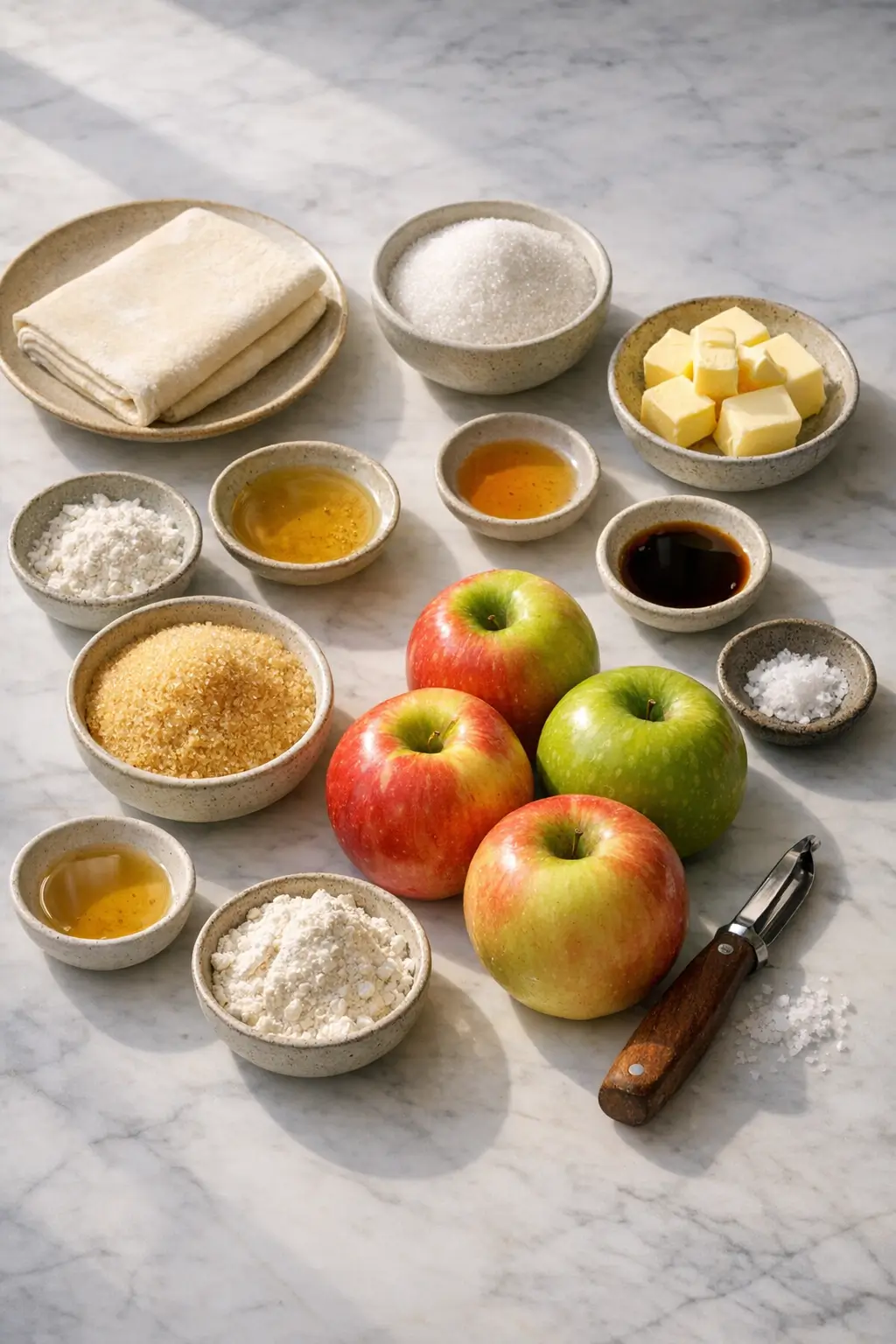
- 1 sheet (about 8 to 10 oz / 225 to 280 g) all-butter puff pastry, thawed but still cold; keep refrigerated until rolling (store-bought is great; Dufour or Pepperidge Farm both work)
- 4 large firm apples (about 2 lb / 900 g), peeled, cored, and halved; Pink Lady, Granny Smith, Honeycrisp, or Golden Delicious
- 3/4 cup (150 g) granulated sugar (for dry caramel)
- 6 Tbsp (85 g) unsalted butter, cut into chunks
- 1 tsp apple cider vinegar or lemon juice (stabilizes apples and brightens)
- 1 tsp vanilla extract (optional but classic)
- A pinch of flaky sea salt, for finishing (optional)
- Flour, for dusting the pastry
Yield: 1 small tart (8-inch / 20 cm), serves 3 to 4.
Kitchen note: Puff pastry sizes vary. Aim to roll to roughly a 9-inch (23 cm) round so it tucks down the skillet sides. If your sheet is small, gently press pastry seams to extend; if it’s large, trim and save scraps for cheese straws.
Step-by-Step Instructions for French Apple Tarte Tatin
- Preheat to 400°F (200°C). Set an oven rack in the center. Pull the puff pastry from the fridge and, on a lightly floured surface, roll to a 9-inch (23 cm) round. Slide onto a plate, poke a few holes with a fork (steam vents), and chill while you make the caramel.
- Prep the apples. Peel, core, and halve them pole-to-pole. For snug packing, you can trim a thin slice from the rounded side so they sit flatter. Keep halves together so sizes match as you arrange them later.
- Optional pectin-stability step (helps apples keep their shape): Pour just-boiled water over the apple halves in a heatproof bowl and let stand 10 minutes, then drain well and pat very dry. This brief hot soak (plus a touch of acid) helps the fruit soften without collapsing.
- Make a dry caramel. Set an 8-inch (20 cm) oven-safe skillet (cast iron ideal) over medium heat. Sprinkle in about 1/3 of the sugar in an even layer. As it liquefies at the edges, sprinkle in more sugar, nudging gently with a clean, dry heatproof spatula as needed to melt evenly. Continue until all sugar is melted to a light amber.
- Enrich the caramel. Off the heat, whisk in the butter carefully (it will bubble). Return to medium-low and stir until smooth. Add the vinegar and vanilla; cook 15 to 30 seconds to meld.
- Arrange the apples. Take the skillet off heat. Set apple halves, cut side up and rounded side down into the caramel, nestling them tightly in concentric circles. Pack them snugly; they shrink. If you have extra halves, wedge them in where you can.
- Stovetop cook to jump-start tenderness. Return skillet to medium-low and simmer the apples in the caramel for 10 to 12 minutes, shifting pieces gently with tongs so each half spends time in the bubbling caramel. You’re looking for lightly translucent edges and caramel that’s a shade deeper. If the syrup thickens too hard, splash in 1 to 2 teaspoons water to loosen.
- Cap with pastry. Remove skillet from the heat. Drape the chilled pastry over the apples. Use a spoon to tuck the edges down along the inner rim so the pastry hugs the fruit. Dock once or twice with the tip of a knife to vent.
- Bake until deeply golden, 25 to 35 minutes. Pastry should be crisp and bronzed with no raw, doughy spots. If your oven runs hot, begin checking at 22 minutes. If the very center puffs dramatically, a quick poke deflates it.
- Rest, then flip. Cool the tart 5 to 10 minutes to let the bubbling settle and the caramel thicken slightly. Run a thin spatula around the edge to free any stuck spots. Wearing oven mitts, place a rimmed plate larger than the skillet over the pastry, clamp both together, and invert in one confident motion. Lift off the skillet. Rearrange any stray apples immediately, spooning on caramel from the pan.
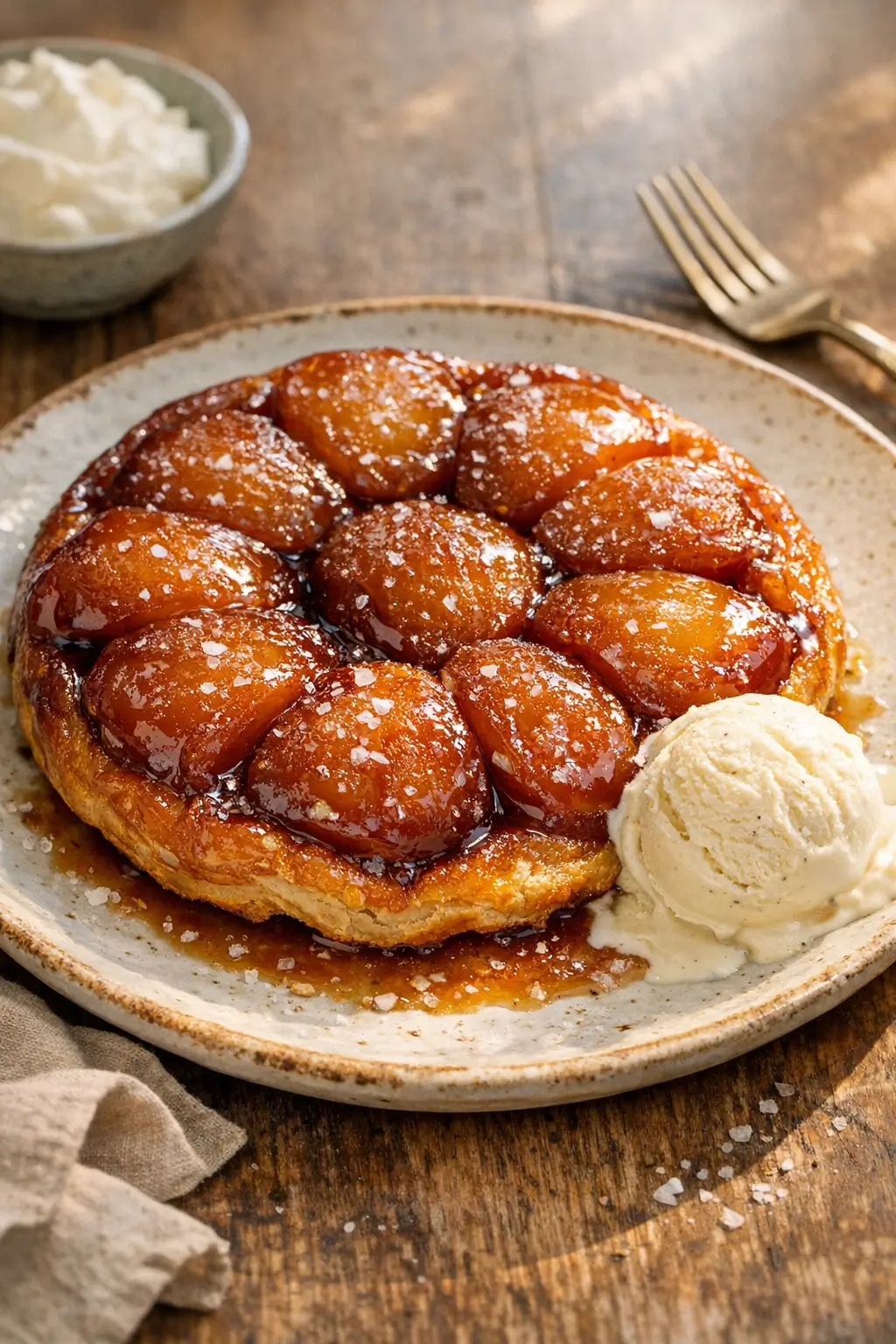
- Finish and serve. Let the tart stand 10 more minutes for cleaner slices. Sprinkle with a pinch of flaky salt if you like contrast. Serve warm or at room temperature with lightly sweetened whipped cream, crème fraîche, or vanilla ice cream.
Kitchen note: Caramel color moves fast. When it reaches a medium amber (think shiny penny), pull the pan off heat before adding butter. If it turns very dark or smells acrid, it’s best to start the caramel again rather than bake bitterness into the tart.
What to Expect
- Texture: The apples should be tender enough to cut with a spoon but still hold their curved shape. The top (which becomes the base) of puff pastry bakes crisp and flaky; a short rest after flipping prevents slumping and gives clean wedges.
- Flavor: The balance is buttery caramel with apple-forward acidity. A tiny hit of cider vinegar or lemon keeps the sweetness lively rather than heavy.
- Variability: Apple choice matters. Pink Lady and Granny Smith keep structure; Golden Delicious is more tender but still reliable. All-butter puff pastry browns faster and flakes more dramatically than vegetable-oil brands, so watch early browning and tent with foil near the end if needed.
Ways to Change It Up
- Plant-based: Use a vegan puff pastry (many supermarket brands are dairy-free) and plant-based butter. The caramel behaves the same. Trade the vanilla for a split vanilla bean if you want extra aroma without extract.
- Pear or quince: Swap apples for firm pears (Bosc) or poached quince. Expect a slightly softer set with pears and a more perfumed, honeyed finish; bake time is similar.
- Boozy gloss: Add 1 tablespoon Calvados or brandy after the butter melts into the caramel. Let the alcohol simmer off for 30 seconds before adding fruit. The trade-off is a looser, more aromatic syrup.
- Spiced: Warm 1/2 teaspoon ground cinnamon or a pinch of cardamom into the caramel off heat. Spices deepen sweetness but can overshadow delicate apple varieties—use lightly.
- Faster, oven-only caramel: Some bakers skip the stovetop and let sugar and butter melt together in the oven under the fruit. It works, and it’s more hands-off, but the caramel rarely gets as evenly amber as a controlled stovetop caramel.
Kitchen note: If this is your first time working with puff pastry, our quick lamination tips in Pumpkin Pastelitos with Puff Pastry, Weeknight Flaky Treats show how to keep pastry cold and handle seams without toughening.
Serving and Storage
Serve the tart slightly warm for the glossiest sheen and the cleanest flip. A dollop of crème fraîche or a small scoop of vanilla ice cream is classic. A drizzle of cold heavy cream across a warm slice is lovely, too.
For a simple French-ish dessert spread, pair slices with something contrasting in texture, like the tender custard of Weeknight French Clafoutis with Juicy Cherries, Simplified or the ultra-creamy Basque Cheesecake Made Easy: Burnt Top, Creamy Center for make-ahead ease.
Storage: Lightly cover leftovers and keep at room temperature up to 24 hours, or refrigerate up to 3 days. Reheat slices on a parchment-lined sheet at 300°F (150°C) for 10 to 12 minutes to revive the pastry. Freezing isn’t ideal; the caramel weeps and the pastry loses flake.
Kitchen note: If your tart cooled completely before flipping and the caramel set hard, warm the skillet back over low heat for 1 to 2 minutes to loosen, then invert.
Cultural Context
Tarte Tatin is commonly associated with the town of Lamotte‑Beuvron in France’s Sologne region and the sisters Stéphanie and Caroline Tatin, who popularized the upside‑down apple tart in their hotel dining room during the late 19th century. Stories about its “accidental” invention vary, and upside‑down fruit tarts existed earlier in French pastry. For a concise overview of the history and regional ties, see the entry on Tarte Tatin (Wikipedia) and this travel history piece from National Geographic on the dessert’s origins and lore.
Common Questions and Troubleshooting
- My caramel crystallized while melting. Can I save it? If you see sandy clumps, add 1 to 2 tablespoons of water and warm gently, swirling until the sugar dissolves, then continue to cook off the water. Always use a clean, dry spatula; stray moisture or sugar crystals on the sides of the pan can trigger crystallization.
- Which apples hold up best? Pink Lady (a.k.a. Cripps Pink) and Granny Smith stay intact with good tartness. Golden Delicious works but softens more. Very juicy apples like McIntosh and Fuji tend to collapse.
- The pastry browned before 25 minutes—what now? Tent loosely with foil and continue until the center is set and the edges are crisp. Underbaked pastry turns leathery as it cools.
- Some apples stuck to the pan when I flipped. Normal? It happens. Simply lift the apples out with a spatula and return them to place while the caramel is still warm and spreadable. No one will know.
- Can I use pie dough instead of puff pastry? Yes. Use a single round of pâte brisée or store-bought pie crust. Expect a slightly sturdier, less flaky base and add 5 to 10 minutes of bake time for full browning.
- Can I make it ahead? You can hold the stovetop-cooked apples in the skillet for several hours at room temperature before topping with pastry and baking. The finished tart is best within 6 hours of baking but keeps for a day.
- What skillet is safest? A well-seasoned cast-iron skillet or heavy stainless-steel pan with rounded sides works best. Avoid springform pans (caramel leaks) and be careful with nonstick coatings at high heat.
Conclusion
This is a focused, hands-on dessert that rewards attention to heat and timing. If you prep the pastry, choose the right apples, and watch the caramel’s color, French Apple Tarte Tatin delivers drama and balance without fuss. Share what apples you chose and how your flip went—I read every note and learn from your tweaks.
French Apple Tarte Tatin with Foolproof Caramel Tips

Equipment
- 8-inch (20 cm) oven-safe skillet (cast iron ideal)
- Heatproof spatula
- Whisk
- Tongs
- Rolling Pin
- Fork
- Rimmed plate (larger than skillet) for flipping
- Thin spatula
Ingredients
- 1 sheet all-butter puff pastry about 8 to 10 oz / 225 to 280 g; thawed but still cold; keep refrigerated until rolling
- 4 large firm apples about 2 lb / 900 g; peeled, cored, and halved (Pink Lady, Granny Smith, Honeycrisp, or Golden Delicious)
- 3/4 cup granulated sugar 150 g; for dry caramel
- 6 Tbsp unsalted butter 85 g; cut into chunks
- 1 tsp apple cider vinegar or lemon juice brightens and stabilizes apples
- 1 tsp vanilla extract optional
- 1 pinch flaky sea salt optional, for finishing
- flour for dusting the pastry
Instructions
- Preheat to 400°F (200°C). Set an oven rack in the center. Pull the puff pastry from the fridge and, on a lightly floured surface, roll to a 9-inch (23 cm) round. Slide onto a plate, poke a few holes with a fork (steam vents), and chill while you make the caramel.
- Prep the apples. Peel, core, and halve them pole-to-pole. For snug packing, you can trim a thin slice from the rounded side so they sit flatter. Keep halves together so sizes match as you arrange them later.
- Optional pectin-stability step (helps apples keep their shape): Pour just-boiled water over the apple halves in a heatproof bowl and let stand 10 minutes, then drain well and pat very dry. This brief hot soak (plus a touch of acid) helps the fruit soften without collapsing.
- Make a dry caramel. Set an 8-inch (20 cm) oven-safe skillet (cast iron ideal) over medium heat. Sprinkle in about 1/3 of the sugar in an even layer. As it liquefies at the edges, sprinkle in more sugar, nudging gently with a clean, dry heatproof spatula as needed to melt evenly. Continue until all sugar is melted to a light amber.
- Enrich the caramel. Off the heat, whisk in the butter carefully (it will bubble). Return to medium-low and stir until smooth. Add the vinegar and vanilla; cook 15 to 30 seconds to meld.
- Arrange the apples. Take the skillet off heat. Set apple halves, cut side up and rounded side down into the caramel, nestling them tightly in concentric circles. Pack them snugly; they shrink. If you have extra halves, wedge them in where you can.
- Stovetop cook to jump-start tenderness. Return skillet to medium-low and simmer the apples in the caramel for 10 to 12 minutes, shifting pieces gently with tongs so each half spends time in the bubbling caramel. You’re looking for lightly translucent edges and caramel that’s a shade deeper. If the syrup thickens too hard, splash in 1 to 2 teaspoons water to loosen.
- Cap with pastry. Remove skillet from the heat. Drape the chilled pastry over the apples. Use a spoon to tuck the edges down along the inner rim so the pastry hugs the fruit. Dock once or twice with the tip of a knife to vent.
- Bake until deeply golden, 25 to 35 minutes. Pastry should be crisp and bronzed with no raw, doughy spots. If your oven runs hot, begin checking at 22 minutes. If the very center puffs dramatically, a quick poke deflates it.
- Rest, then flip. Cool the tart 5 to 10 minutes to let the bubbling settle and the caramel thicken slightly. Run a thin spatula around the edge to free any stuck spots. Wearing oven mitts, place a rimmed plate larger than the skillet over the pastry, clamp both together, and invert in one confident motion. Lift off the skillet. Rearrange any stray apples immediately, spooning on caramel from the pan.
- Finish and serve. Let the tart stand 10 more minutes for cleaner slices. Sprinkle with a pinch of flaky salt if you like contrast. Serve warm or at room temperature with lightly sweetened whipped cream, crème fraîche, or vanilla ice cream.



Leave a Reply