
French onion soup is bistro comfort with real payoff: sweet-savory onions, a brothy base with wine, and a molten cap of Gruyère. This version focuses on dependable technique and supermarket ingredients, so you get deep color and balanced flavor without fuss. If you’re short on time tonight, start the onions first and slice the baguette while they soften. Cooking in a small kitchen? Pre‑slice the onions in the morning and refrigerate; the rest is mostly hands-off.
Expect a cozy, spoonable bowl—jammy onions, toasty bread that softens at the edges, and a browned, stretchy lid of cheese. It’s ideal as a cold‑weather dinner or a first course for company. If you’ve wanted to nail french onion soup at home, here’s a practical path.
Ingredients
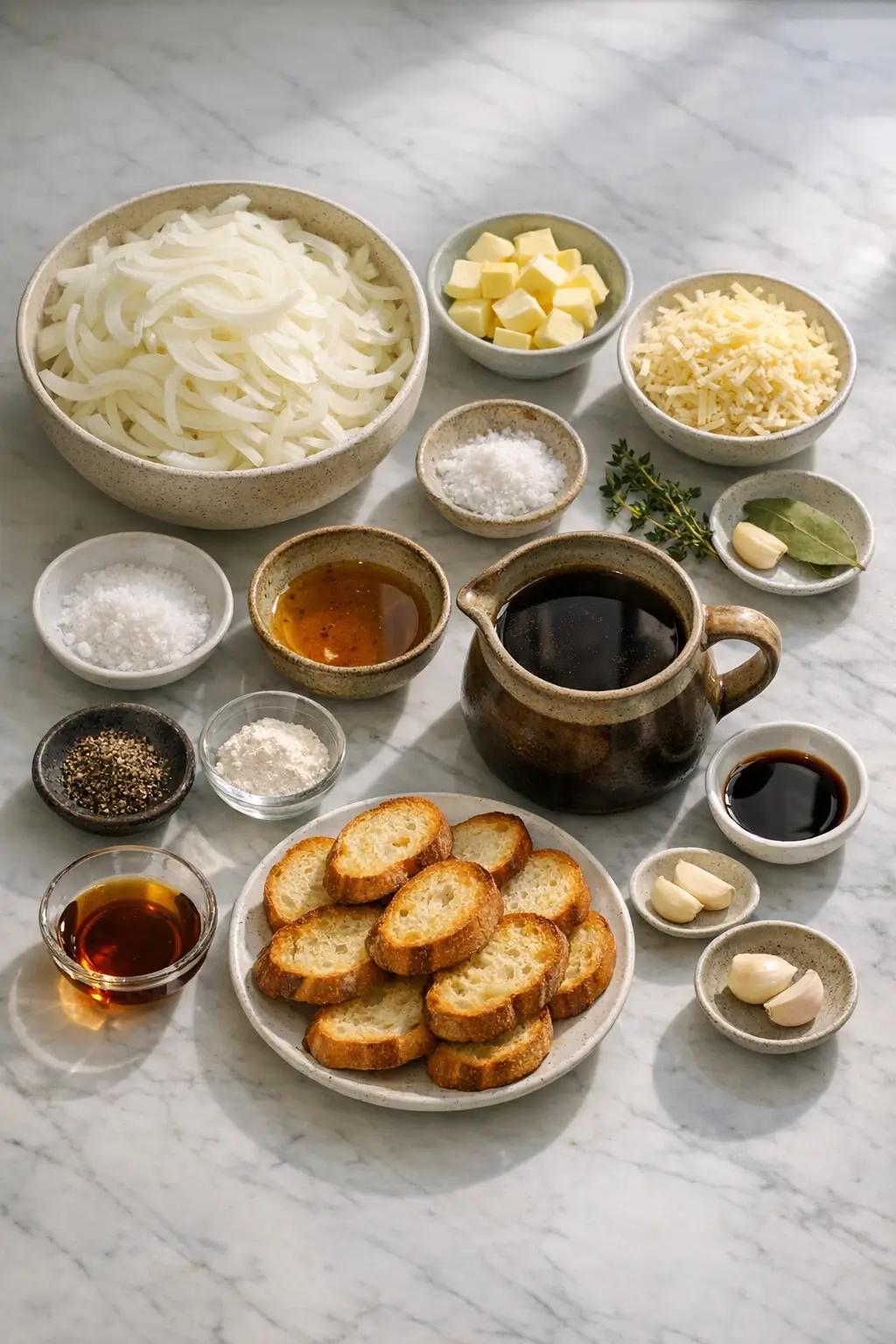
- 3 lb (1.3 kg) yellow onions, halved root-to-stem and thinly sliced (structure and natural sweetness)
- 4 tbsp (56 g) unsalted butter (caramelizing medium)
- 1 tsp (5 g) kosher salt, plus more to taste (helps onions release moisture)
- 1/2 cup (120 ml) dry sherry or dry white wine (deglaze and aroma)
Sub: 1/4 cup (60 ml) brandy or vermouth; or use stock if avoiding alcohol. - 6 cups (1.4–1.5 L) low‑sodium beef stock (savory base)
Sub: half beef + half chicken stock for a lighter profile; high‑quality veg stock for vegetarian. - 2 sprigs fresh thyme (herbal depth)
*Sub: *1/2 tsp* dried thyme.* - 1 bay leaf (rounds the broth)
- 2 tsp (6 g) all‑purpose flour, optional (very light body)
*Sub: *2 tsp* rice flour for gluten‑free; or omit for a thinner, classic broth.* - 1–2 tsp (5–10 ml) sherry vinegar or Worcestershire, to finish (balances sweetness)
- Freshly ground black pepper, to taste
- 8 baguette slices, 1/2‑inch (1.25 cm) thick (for the “raft”)
Day‑old bread toasts best. - 7 oz (200 g) Gruyère, coarsely grated (melty, nutty cap)
*Sub: Comté or Emmental; add *2 tbsp* Parmesan for extra browning if desired.* - 1 garlic clove, halved (optional, for rubbing the toasts)
Step-by-Step Instructions for french onion soup
-
Sweat, then caramelize the onions. Melt the butter in a heavy pot (5–6 qt/4.7–5.7 L Dutch oven works well) over medium heat. Add the onions and salt. Cook, stirring every few minutes, until they slump and release liquid, 10–15 minutes. Reduce to medium‑low and continue cooking, scraping the pot bottom frequently, until the onions turn deep golden to mahogany and jammy, 45–70 minutes. If browned bits threaten to scorch, add a splash of water to dissolve and keep going.
-
Optional light thickening. If you prefer a slightly rounder mouthfeel, sprinkle in the flour and stir for 1 minute to cook off the raw taste. Skip this if you want a completely clear broth.
-
Deglaze. Increase heat to medium. Add the sherry (or wine) and scrape up all browned fond. Let it simmer until mostly reduced and the onions smell winey‑sweet, 2–3 minutes.
-
Simmer the broth. Add the stock, thyme, and bay leaf. Bring just to a boil, then lower to a bare simmer. Cook 20–30 minutes to meld flavors. Fish out the herbs. Taste and season with pepper and additional salt as needed.
-
Balance the finish. Stir in sherry vinegar or a dash of Worcestershire. You want savory first, then gentle sweetness, not sugariness. Adjust gradually—start with 1/2 teaspoon, taste, and build.
-
Toast the bread. While the soup simmers, toast baguette slices on a sheet pan at 400°F (200°C) until crisp and lightly golden, 8–12 minutes, flipping once. For extra aroma, rub the hot toasts lightly with garlic.
-
Broil to gratinée. Heat the broiler and set oven rack 4–6 inches (10–15 cm) below the element. Ladle hot soup into broiler‑safe bowls on a rimmed sheet. Float 1–2 toasts on each and cover generously with Gruyère. Broil until the cheese is melted, bubbling, and browned in spots, 2–5 minutes depending on oven strength. Let the bowls rest 3–5 minutes before serving—the cheese sets slightly and the soup stops boiling.
Kitchen note: Dark color without bitterness is your north star. Think deep amber to chestnut; if the pot develops black patches, your heat is too high—deglaze with a few tablespoons of water, lower the heat, and keep stirring.
What to Expect
You’ll get a glossy, brothy soup with threads of tender onion rather than a thick stew. The bread will soften underneath while the top stays a little toasty under the cheese.
Flavor skews savory with a gentle sweetness from long‑cooked onions, rounded by wine and thyme. Beef stock gives the most “steak‑house” depth; a half beef/half chicken mix tastes a touch cleaner; all‑vegetable stock reads lighter and slightly sweeter.
Variations in pans and heat matter. Enameled cast iron browns steadily and holds heat; stainless can brown faster and requires more frequent deglazing. Grating cheese coarsely helps it melt into a cohesive lid rather than turning gluey.
Kitchen note: If the finished soup tastes sweet but dull, it usually needs salt and a small splash of acid (vinegar or more wine), not sugar. Season incrementally and retaste.
Ways to Change It Up
- Vegetarian and rich: Use a good vegetable stock and add 1–2 tsp white miso or a few drops of soy sauce at the end for umami. Keep the Gruyère or switch to a plant‑based melt if needed.
- Milder or bolder: For a gentler bowl, skip the vinegar and go with all chicken stock. For more bite, finish with an extra teaspoon of dry sherry and a few cranks of black pepper.
- Faster path: Caramelization drives flavor, but you can expedite by cooking the onions a notch hotter and deglazing with a few tablespoons of water whenever browning builds up. Some reputable methods add a pinch of baking soda to speed browning; use sparingly and watch closely—speed trades a little control for time.
- Cheese mix: Gruyère is classic, but a blend of Gruyère and a little Parmesan gives sharper browning. Emmental melts easily if Gruyère is scarce where you shop.
Serving and Storage
Serve in warmed bowls so the cheese stays supple. As a main, plan 2 slices of toast per person with a leafy salad. For a lighter side, pair with Cucumber Salad That Stays Crunchy in 15 Minutes or the chopped‑and‑hearty Italian Chopped Sandwich Salad. On soup nights, alternate with brothy options like our Easy Creamy Chicken Noodle Soup or spiced comfort like Creamy Moroccan Harira Soup for Cozy Weeknight Comfort.
Leftovers keep well. Refrigerate the soup (without bread or cheese) up to 4 days, or freeze up to 3 months. Reheat gently on the stove, then add fresh toasts and cheese and broil to serve.
Kitchen note: Use only broiler‑safe bowls or ramekins. If unsure, broil the cheese‑topped toasts separately on a sheet pan and float them on hot soup in regular bowls.

Cultural Context
Onion soups appear across French culinary history, but the gratinéed bowl most English speakers recognize became popular in the 19th century. It’s often associated with Paris market culture around Les Halles, where night workers sought hot soup before dawn. For background, see the concise overview on French onion soup and a period view of Les Halles from the Petit Palais collection, which notes how vendors and “soup and coffee sellers” served the market crowd: Les Halles (Petit Palais).
Common Questions and Troubleshooting
- My onions won’t brown—what’s wrong? Too much crowding without enough heat can steam them. Keep heat at medium to medium‑low, use a wide pot if possible, and stir every few minutes. If liquid accumulates, let it cook off before the next stir.
- The pot is scorching. How do I fix it? Lower the heat and add 2–3 tablespoons of water, scraping up browned bits. Repeat as needed. Persistent black spots mean the heat was a touch high; don’t scrape the burnt parts back into the soup.
- Can I skip wine? Yes. Deglaze with stock and add a teaspoon of sherry vinegar or lemon juice at the end to replace acidity.
- Which stock is best? Beef stock delivers the darkest, meatiest profile. A mix of beef and chicken is balanced and widely recommended by pros. Vegetable stock works if it’s robust; taste and adjust salt and acidity.
- My soup is too sweet. Add salt first, then a small splash of vinegar. Gruyère also brings savory balance once melted on top.
- No broiler‑safe bowls? Toast bread and melt cheese on the sheet pan, then float on hot soup in regular bowls.
- Can I make it ahead? Yes—the base improves after a night in the fridge. Reheat gently and broil with fresh toasts and cheese just before serving.
Conclusion
If you give this a try, leave a rating and tell us how you adjusted it—different stocks, cheeses, or timing all teach something useful. Your notes help other home cooks get a bowl that’s just right for them.



Leave a Reply