
A fresh fruit platter with honey lime dip is one of those low-effort, high-payoff dishes that works for brunch, after-school snacks, or light summer desserts. It looks generous, uses simple supermarket fruit, and comes together in under 30 minutes once you know the order of operations.
If you’re walking in the door on a busy weeknight, start by getting the cream cheese and yogurt for the honey lime dip on the counter to soften slightly while you wash and dry the fruit. Hosting a gathering with kids around? Prep the dip first, then cut no-slip, bite-size fruit pieces so little hands can grab them easily.
Flavor-wise, expect a mix of sweet, tart, and creamy: juicy fruit, a tangy honey lime yogurt dip, and just enough richness to feel like a treat without turning into cake. This version suits newer home cooks because the steps are straightforward and forgiving.
Ingredients
Serves 4 as a snack or light dessert
Honey Lime Dip
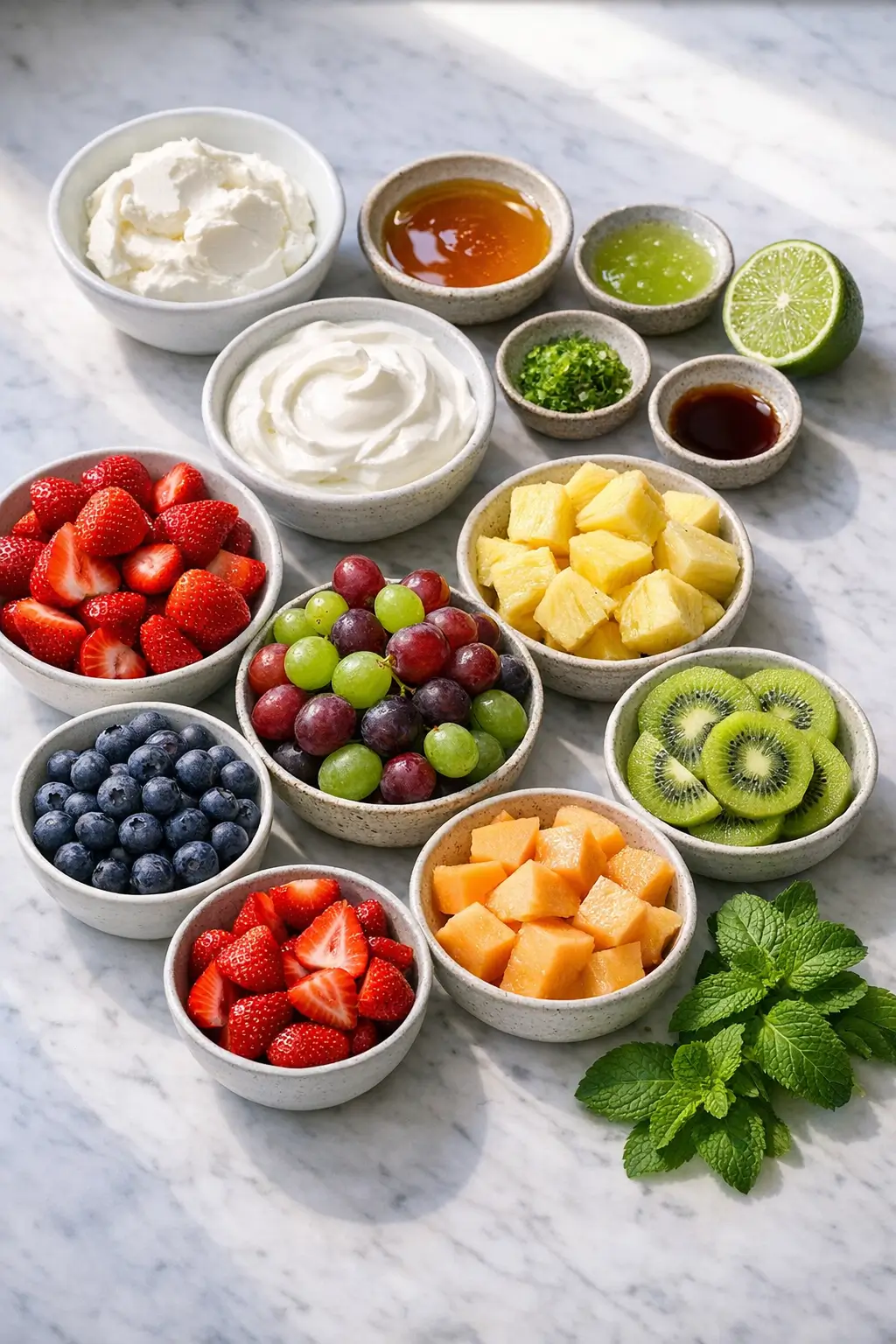
- 120 g (4 oz) cream cheese, softened – for body and tang; use full-fat or light
- 240 g (1 cup) plain Greek yogurt – thicker yogurt clings better to fruit
- 60 ml (1/4 cup) liquid honey – any mild honey
- 30 ml (2 tbsp) fresh lime juice – about 1 medium lime
- 1 tsp finely grated lime zest – adds bright aroma
- 1 tsp pure vanilla extract – softens the tang
- Pinch fine sea salt – balances the sweetness
Fresh Fruit Platter
Use about 900 g–1 kg (2–2.2 lb) total fruit for 4 people. Aim for a mix of colors and textures.
- 250 g (1 1/2 cups) strawberries, hulled and halved if large
- 150 g (1 cup) blueberries
- 150 g (1 cup) seedless grapes, left whole or halved for young kids
- 250 g (about 1 1/2 cups) pineapple chunks – fresh if possible
- 250 g (about 1 1/2 cups) melon chunks (cantaloupe or honeydew)
- 2 kiwis, peeled and sliced into rounds or wedges
- 1 large orange, peeled and sliced into half-moons or supremes
- Optional garnish: a few fresh mint sprigs and extra lime zest
Substitutions: You can swap cream cheese for Neufchâtel for a lighter dip, and Greek yogurt for plain regular yogurt if that’s what you have (strain it through a fine sieve or coffee filter for 15–20 minutes to thicken). Use any seasonal fruit you like: mango, pears, apples, cherries, or stone fruit all work well, just mind browning on apples and pears.
Step-by-Step Instructions for Fresh Fruit Platter With Honey Lime Dip
Soften and set up.
Take the cream cheese out of the fridge 15–20 minutes before you start so it softens slightly. Set out a medium mixing bowl for the dip and a large rimmed platter or board for the fruit.
Make the honey lime base.
Add the softened cream cheese to the mixing bowl. Beat with a hand mixer on medium speed for 30–45 seconds until smooth and no big lumps remain. Add the honey, lime juice, lime zest, vanilla, and a pinch of salt. Beat again until the mixture looks glossy and evenly combined.
Fold in the yogurt.
Add the Greek yogurt in two additions, beating on low or folding with a spatula until the dip is smooth and creamy. Scrape down the sides and bottom of the bowl so no streaks of cream cheese remain.
Kitchen note: If you rush the mixing and leave cream cheese too cold, you’ll see tiny lumps in the dip. It’s still safe to eat; let it sit at room temperature for 10–15 minutes and whisk firmly to smooth it out.
Chill the dip.
Transfer the dip to a serving bowl. Cover and refrigerate for at least 20–30 minutes while you prep the fruit. This helps it thicken slightly and lets the honey and lime flavors meld.
Wash and dry the berries and grapes.
Rinse strawberries, blueberries, and grapes under cool running water. Spread them out on a clean kitchen towel or paper towels and gently pat dry. Excess water will dilute the dip and create puddles on the platter.
Prep the sturdier fruits.
Peel the pineapple and melon, remove any seeds, and cut into bite-size chunks. Aim for similar sizes so they’re easy to grab with fingers or toothpicks. Peel and slice the kiwis. Peel the orange with a knife, removing the white pith, then slice into rounds or half-moons.
Kitchen note: If including apples or pears, slice them last and toss quickly in a teaspoon or two of lime or lemon juice to slow browning.
Arrange the platter.
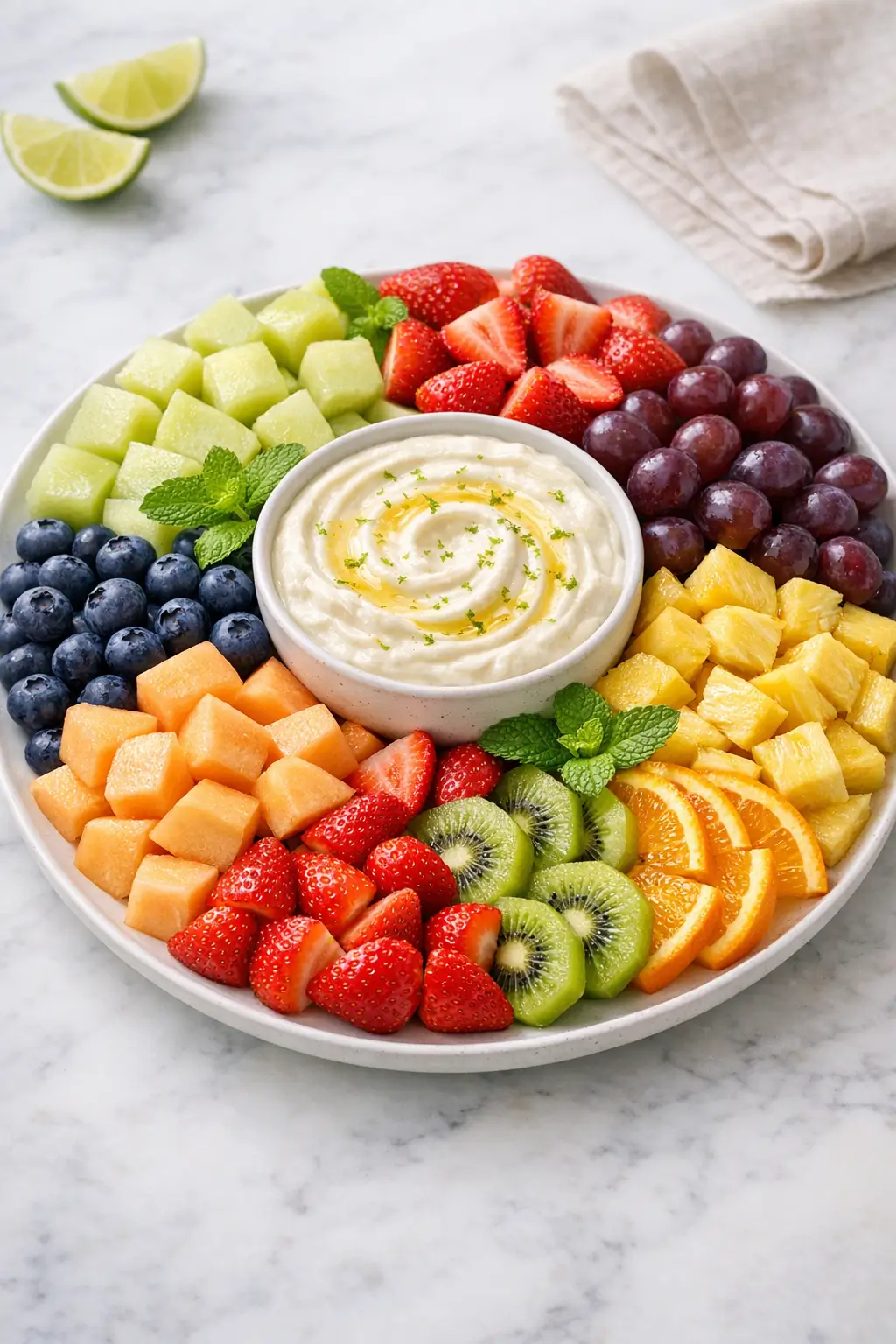
Place the chilled bowl of honey lime dip slightly off-center on your platter or board. Build loose color blocks of fruit around it: perhaps strawberries near the dip, then a row of pineapple, a patch of melon, a line of grapes, and a cluster of berries and citrus. Tuck kiwi and orange slices along the outer edge for contrast.
Add finishing touches.
Sprinkle a little extra lime zest over the dip. Add a few mint sprigs between fruit clusters if using. If you like, drizzle a tiny ribbon of honey over some of the pineapple or melon for shine.
Serve and keep an eye on time.
Serve the fruit platter soon after arranging for best texture and color. If it needs to sit out at room temperature, try to keep it under 2 hours. Return the dip to the fridge between rounds if your kitchen is very warm.
Kitchen note: On hot days, nestle the platter over a second tray filled with ice packs and a towel. It keeps yogurt-based dips safely cool without watering down the fruit.
What to Expect
The honey lime dip should be smooth, spoonable, and thick enough to cling lightly to a strawberry without running. It will firm up a bit more as it chills, especially if you use full-fat Greek yogurt.
Flavor-wise, the dip leans tangy and lightly sweet, with lime coming through clearly but not sharply. Honey adds floral sweetness and a slight stickiness that works well with juicy fruit. Vanilla softens the edges so it feels more like a dessert than breakfast yogurt.
Your fruit platter will look colorful and generous, but not fussy. Different fruits release different amounts of juice; watermelon and very ripe pineapple tend to weep more, while grapes and berries hold their shape. If your fruit is very ripe, expect a little pooling juice at the bottom of the platter over time, which is normal.
Kitchen note: Because brands of yogurt vary in thickness, you may want to adjust the texture. If the dip feels too thick, whisk in 1–2 tsp of milk or extra lime juice. If it’s too thin, add 1–2 tbsp more cream cheese and beat again.
Ways to Change It Up
Lighter or fully yogurt-based dip.
For a lighter version, skip the cream cheese and use 360 g (1 1/2 cups) Greek yogurt with the same amount of honey, lime, vanilla, and salt. The dip will be tangier and looser, more like a flavored yogurt, but still cling well enough for dipping. This is handy if you want the platter to double as a breakfast spread.
Vegan or dairy-free platter.
Swap the cream cheese and yogurt for unsweetened coconut yogurt or another thick plant-based yogurt, and use maple syrup or agave instead of honey. The lime still shines, but you’ll get a subtle coconut note. Check labels and choose the thickest non-dairy yogurt you can find so the dip doesn’t run.
Extra zesty and less sweet.
If your crowd prefers tart desserts, increase lime juice to 3 tbsp (45 ml) and reduce honey to 3 tbsp (45 ml). This pushes the dip closer to a key-lime-style flavor. It pairs especially well with sweeter fruits like ripe mango, bananas, or very sweet grapes.
Spiced honey lime dip.
Add 1/4 tsp ground cinnamon or 1/8 tsp ground ginger to the dip for a gentle spice note. Cinnamon works nicely with apples and pears, while ginger lifts tropical fruits like pineapple and mango. Introduce spices in small amounts first; you can always add a pinch more.
Faster, last-minute version.
When you truly have no time, whisk together 240 g (1 cup) Greek yogurt, 2–3 tbsp honey, 1–2 tbsp lime juice, and a pinch of salt directly in the serving bowl. Skip the cream cheese and chilling step. The result is thinner and a bit less dessert-like but works as a speedy snack dip.
Serving and Storage
Serve the fruit platter slightly chilled but not icy cold. Very cold fruit can taste muted; taking the platter out of the fridge 10–15 minutes before serving helps the flavors open up.
Common pairings include simple pastries or muffins, light egg dishes for brunch, or a cheese board if you want more savory options on the table. If you like to set up snack boards, this dip also plays well alongside nuts and plain crackers.
Leftover fruit keeps best if stored separately by type in airtight containers in the refrigerator. Most berries and grapes hold for 2–3 days; cut pineapple and melon are happiest within 3 days. Citrus segments last a bit longer.
Store the honey lime dip covered in the refrigerator for up to 3 days. Give it a quick stir before serving again; it may thicken slightly as it sits. For food safety, avoid reusing dip that has been sitting out for more than 2 hours at room temperature.
Refrigerated dip firms up, so you can let it stand at room temperature for 10–15 minutes and stir to loosen. If it still feels too thick, whisk in 1–2 teaspoons of milk, yogurt, or lime juice.
Cultural Context
Serving fresh fruit on a platter with a simple dip fits into a long pattern of fruit as a shared, end-of-meal dish rather than a heavily composed dessert. In many European and Mediterranean households, bowls or platters of seasonal fruit are still a common way to finish lunch or dinner.
Over time, cream- and yogurt-based dips have become popular additions, especially in North American home cooking, as a way to make fruit feel more like a treat while keeping preparation simple. Some modern nutrition and culinary education programs highlight fruit platters with yogurt dips as approachable snacks for families and schools, tying together convenience and more balanced eating. For a broader look at how fruit has been used in everyday meals, the Library of Congress offers historical menus and resources on American food habits through collections like the American food and cookery collections.
Common Questions and Troubleshooting
My dip turned out too thin. Can I fix it?
Yes. If the dip is runny, whisk in an extra 2–3 tbsp (30–45 g) softened cream cheese or 2 tablespoons of very thick Greek yogurt. Chill for at least 30 minutes before serving. Next time, check that your yogurt is labeled “Greek” or “strained,” not drinkable or low-fat regular yogurt, which can be looser.
The dip is too tangy from the lime. What now?
Stir in an extra tablespoon of honey and a teaspoon of vanilla, then taste. You can also mellow the acidity by adding a tablespoon or two of cream cheese or plain yogurt to rebalance the sweet-tart ratio. Avoid adding more lime unless you also increase the sweetener.
Can I make the dip ahead?
You can prepare the honey lime dip up to 24 hours in advance. Store it covered in the refrigerator. The flavor actually improves slightly as the lime and honey meld, but the lime zest may tint the dip a pale greenish color over time, which is normal.
How far ahead can I assemble the fruit platter?
For the best texture, assemble the platter no more than 1–2 hours before serving. Berries, grapes, and citrus hold up fairly well, but melon and pineapple can release juice and soften when cut too early. If you need more lead time, chop the sturdier fruits and refrigerate them in separate containers, then arrange everything shortly before guests arrive.
Is this safe for very young kids?
For toddlers and younger children, halve grapes lengthwise and cut harder fruits like apples and carrots (if using) into very small pieces to reduce choking risk. Use whole milk yogurt instead of reduced-fat for better calories and texture, and go a bit lighter on the honey for younger palates.
Can I skip the honey or use a different sweetener?
You can replace honey with an equal amount of maple syrup or agave. Each will change the flavor slightly: maple adds a caramel note, while agave is more neutral. If you omit sweetener entirely, the dip may taste quite tart and less dessert-like, so consider adding at least a spoonful of your preferred sweetener.
Kitchen note: If you’re cooking for anyone who should avoid honey (such as infants under 1 year), use a different liquid sweetener and label the dip clearly so adults know which version is which.
Conclusion
A fresh fruit platter with honey lime dip is an adaptable option for busy home kitchens: it scales up or down easily, uses everyday ingredients, and still feels special on the table.
Once you’ve made it once or twice, you can customize the fruits and sweetness level to suit whoever is eating that day, from small kids to guests who prefer tangier desserts. If you try this version, leave a comment with what fruits you used, any swaps you made in the dip, and how it went in your kitchen—your tweaks often help other home cooks adjust the recipe with confidence.
Fresh Fruit Platter With Honey Lime Dip

Equipment
- Medium mixing bowl
- Hand mixer
- Rubber spatula
- Large rimmed platter or board
- Knife
- Cutting board
- Zester or microplane
Ingredients
Honey Lime Dip
- 120 g cream cheese softened
- 240 g plain Greek yogurt
- 60 ml liquid honey
- 30 ml fresh lime juice
- 1 tsp lime zest finely grated
- 1 tsp vanilla extract pure
- 1 pinch fine sea salt
Fresh Fruit Platter
- 250 g strawberries hulled and halved if large
- 150 g blueberries
- 150 g seedless grapes left whole or halved for young kids
- 250 g pineapple cut into chunks
- 250 g melon cut into chunks (cantaloupe or honeydew)
- 2 kiwis peeled and sliced
- 1 large orange peeled and sliced
- fresh mint sprigs optional garnish
- extra lime zest optional garnish
Instructions
- Soften and set up: Take the cream cheese out of the fridge 15–20 minutes before you start so it softens slightly. Set out a medium mixing bowl for the dip and a large rimmed platter or board for the fruit.
- Make the honey lime base: Add the softened cream cheese to the mixing bowl. Beat with a hand mixer on medium speed for 30–45 seconds until smooth and no big lumps remain. Add the honey, lime juice, lime zest, vanilla, and a pinch of salt. Beat again until glossy and evenly combined.
- Fold in the yogurt: Add the Greek yogurt in two additions, beating on low or folding with a spatula until smooth and creamy. Scrape down the sides and bottom of the bowl so no streaks of cream cheese remain.
- Chill the dip: Transfer the dip to a serving bowl. Cover and refrigerate for at least 20–30 minutes while you prep the fruit.
- Wash and dry the berries and grapes: Rinse strawberries, blueberries, and grapes under cool running water. Spread on a clean towel or paper towels and gently pat dry.
- Prep the sturdier fruits: Peel the pineapple and melon, remove seeds, and cut into bite-size chunks. Peel and slice the kiwis. Peel the orange, removing white pith, then slice into rounds or half-moons.
- Arrange the platter: Place the chilled bowl of honey lime dip slightly off-center on your platter or board. Arrange fruit around it in loose color blocks and clusters for contrast.
- Add finishing touches: Sprinkle a little extra lime zest over the dip. Add mint sprigs between fruit clusters if using. Optionally drizzle a small ribbon of honey over some of the fruit for shine.
- Serve: Serve soon after arranging for best texture and color. If sitting out at room temperature, keep it under 2 hours and return the dip to the fridge between rounds if your kitchen is warm.



Leave a Reply