
Fried chicken tenders with spicy honey sit right in that sweet spot between comfort food and takeout copycat. You get juicy strips of chicken with a craggy, crisp coating, finished with a glossy drizzle of spicy honey that hits sweet first and then a gentle burn. This style of fried chicken tenders with spicy honey is common on bar menus, game-day spreads, and laid-back family dinners.
If you’re walking in the door on a busy weeknight, start the buttermilk marinade before you even take off your shoes—getting the chicken in early makes everything easier later. Cooking with kids in the house or a small kitchen? Clear one section of counter for the “dredging station” so you’re not juggling raw chicken over everything else.
These tenders work for newer cooks who want a forgiving fry and for experienced home cooks who like dialing in textures and spice levels. Expect a shatteringly crisp crust, a little sticky from the honey, and enough seasoning that you don’t need a complicated side to feel like dinner is done.
Ingredients
Serves 3–4
For the chicken tenders
- 500 g (1 lb) chicken tenders or chicken breast cut into strips – boneless, skinless; aim for even thickness so they cook evenly
- 240 ml (1 cup) buttermilk – tenderizes the chicken and helps the coating cling; mix 230 ml (scant cup) milk with 1 tbsp lemon juice or vinegar if you don’t have buttermilk
- 1 large egg – adds extra sticking power for the breading
- 1 tsp fine sea salt – seasons the meat from the inside
- 1 tsp garlic powder – gentle savory flavor without raw garlic bite
- 1 tsp smoked paprika – adds color and mild smokiness
- 1/2 tsp onion powder – rounds out the seasoning
- 1/2 tsp freshly ground black pepper – basic warmth
- 1/4–1/2 tsp cayenne pepper – optional, for extra heat in the chicken
For the coating
- 150 g (1 1/4 cups) all-purpose flour – base of the crust
- 60 g (1/2 cup) cornstarch – lightens the coating and boosts crispness
- 1 1/2 tsp fine sea salt – don’t skip; otherwise the crust will taste flat
- 1 tsp smoked paprika – echoes the marinade flavor and color
- 1 tsp garlic powder – keeps the seasoning consistent
- 1/2 tsp baking powder – helps create little bubbles and a more craggy crust
- 1/2 tsp black pepper
Kitchen note: If you only have self-rising flour, reduce or omit the baking powder and lower the added salt slightly. The tenders may puff a bit more but will still fry well.
For frying
- Neutral oil for frying, about 1–1.5 L (4–6 cups) – canola, vegetable, peanut, or another high-heat oil
For the spicy honey
- 120 ml (1/2 cup) honey – a mild, runny honey works best so the spices shine
- 1–2 tbsp hot sauce – use what you like; a Louisiana-style hot sauce gives a clean vinegar kick
- 1–2 tsp apple cider vinegar – loosens the honey and brightens the flavor
- 1/2–1 tsp crushed red pepper flakes – adjust to your heat tolerance
- Pinch of salt – keeps the honey from tasting one-note sweet
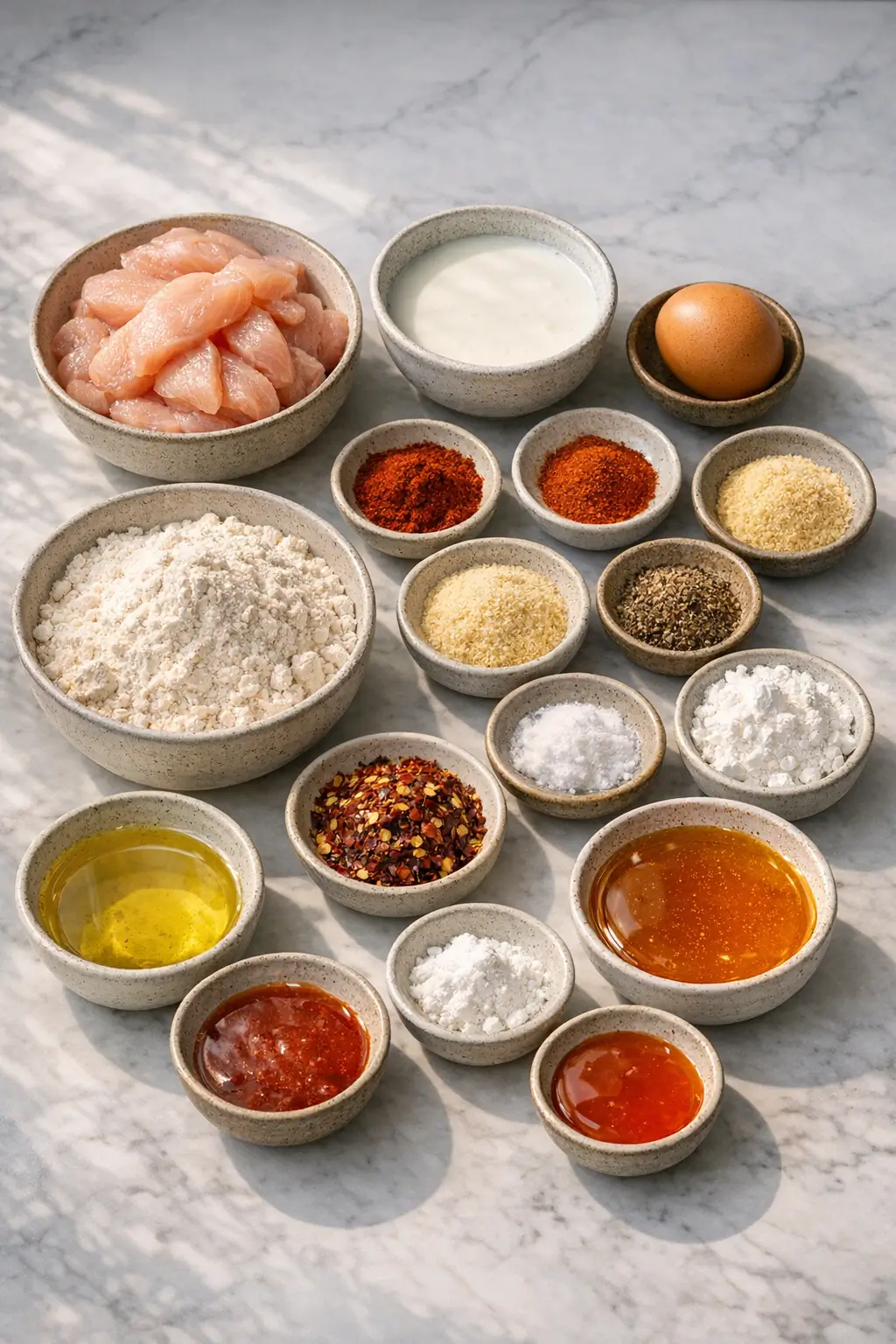
Step-by-Step Instructions for Fried Chicken Tenders with Spicy Honey
- Marinate the chicken.
- In a medium bowl, whisk together the buttermilk, egg, salt, garlic powder, smoked paprika, onion powder, black pepper, and cayenne (if using).
- Add the chicken tenders and stir or gently massage so every piece is coated.
- Cover and refrigerate for at least 30 minutes and up to 8 hours. The longer time gives a more tender, flavorful result, but even a short soak helps.
- Mix the coating.
- In a shallow dish or pie plate, combine the flour, cornstarch, salt, smoked paprika, garlic powder, baking powder, and black pepper.
- Use a fork or whisk to blend thoroughly so no pockets of baking powder or spice remain.
- Set up a tidy dredging station.
- Place the bowl of marinated chicken to the left, the flour mixture in the middle, and a clean plate or wire rack to the right for coated pieces.
- Line a baking sheet with parchment and set a wire rack on top if you have one; this is where the finished tenders will rest.
- Coat the chicken.
- Working one or two pieces at a time, lift a chicken tender from the buttermilk, letting the excess drip off.
- Dredge in the flour mixture, pressing firmly so the coating adheres and forms little clumps.
- Shake off the loose flour and place on the clean plate or rack.
- Repeat with remaining chicken.
Kitchen note: For an extra-craggy crust, quickly dip each floured tender back into the buttermilk and then into the flour a second time before frying. Just know this adds bulk, so fry in smaller batches.
- Preheat the oil.
- Pour oil into a deep, heavy pot or high-sided skillet, filling no more than halfway.
- Heat over medium to medium-high until it reaches 175–180°C (350–360°F). Use a thermometer if possible.
- If you don’t have one, drop in a pinch of flour: it should sizzle steadily and turn golden in about 10–15 seconds, not brown instantly.
- Fry in batches.
- Carefully lower 4–5 tenders into the hot oil, leaving space between them so they don’t steam.
- Fry for about 4–6 minutes total, turning once, until deeply golden brown and the internal temperature reaches 74°C (165°F).
- Adjust the heat to keep the oil in the 170–180°C (340–360°F) range; too low and they’ll be greasy, too high and the crust will brown before the center cooks.
- Drain and season.
- Transfer cooked tenders to the prepared rack or a plate lined with paper towels.
- Immediately sprinkle with a small pinch of salt while the crust is still hot.
- Let the oil return to temperature between batches, skimming out any stray bits of coating that might burn.
Kitchen note: If the first test piece is very dark after 3–4 minutes, your oil is too hot. Lower the heat and let the oil cool slightly before frying the next batch.
- Make the spicy honey.
- While the last batch of chicken fries, add the honey, hot sauce, apple cider vinegar, red pepper flakes, and a pinch of salt to a small saucepan.
- Warm over low heat, stirring often, until the honey loosens and everything is smoothly combined, 2–3 minutes. Do not boil; it can scorch and become bitter.
- Taste and adjust: more hot sauce for sharper heat, more vinegar if you want extra tang.
- Glaze or drizzle.
- You can either drizzle the warm spicy honey over the fried tenders on the rack or gently toss the tenders in a large bowl with the honey for a more fully coated finish.
- Serve any remaining spicy honey on the side for dipping.
- Hold warm if needed.
- If you need to keep batches warm while you finish frying, place the rack of cooked tenders in a 95–120°C (200–250°F) oven for up to 20–25 minutes.
- Avoid covering them tightly; trapped steam will soften the crust.
What to Expect
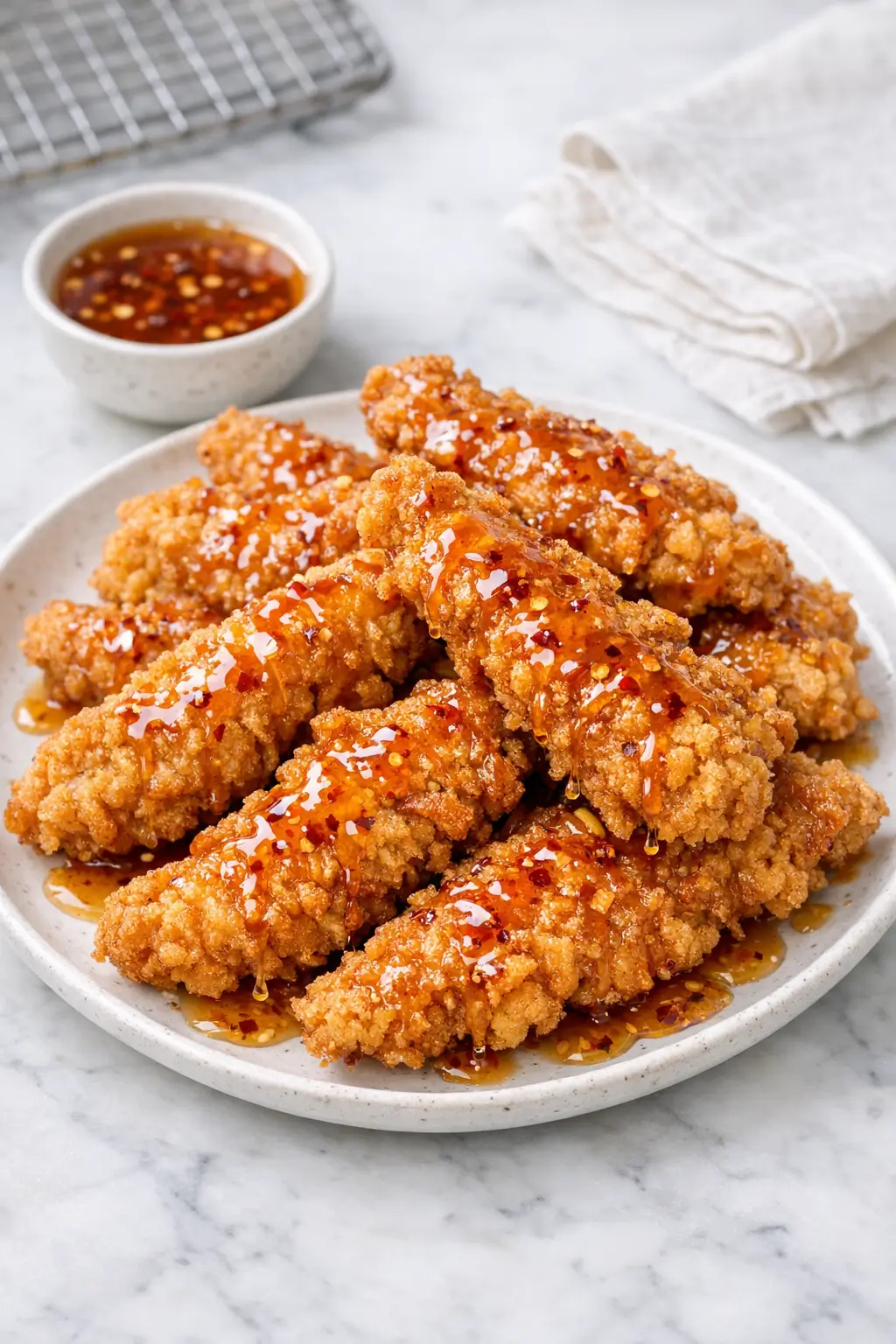
Straight from the oil, the fried chicken tenders should feel light but firm, with a rough, craggy coating rather than a smooth shell. As the spicy honey hits the hot crust, the surface becomes slightly sticky and glossy without losing all its crunch.
Inside, the meat should be fully cooked but still moist and tender, thanks to the buttermilk and relatively short cooking time. The flavor leans savory first—paprika, garlic, a whisper of smoke—followed by honey sweetness and then a clean, noticeable burn from the hot sauce and red pepper flakes.
Different oils, pans, and stoves affect browning. A cast-iron skillet will usually give you deeper color more quickly than a thinner pot, so you may need to lower the heat slightly. Different honeys also change the finish: thicker, darker honeys will give a more intense sweetness and slightly heavier glaze, while lighter honeys stay thinner and more floral.
Kitchen note: If you prefer a milder finish, glaze the tenders very lightly and serve extra spicy honey on the side. It’s easier to add more heat at the table than to pull it back.
Ways to Change It Up
- Quick oven or air-fryer version.
- For a lower-effort approach, you can bake or air-fry the coated tenders instead of deep frying.
- Lightly oil a rack set over a baking sheet, arrange the dredged chicken in a single layer, mist with cooking spray, and bake at 220°C (425°F) until cooked through and crisp at the edges, 13–18 minutes depending on thickness.
- In an air fryer, cook at 200°C (400°F) in a single layer for about 10–12 minutes, flipping once.
- The crust will be a bit drier and less dramatic, but the spicy honey still clings nicely.
- Spicier bar-snack style.
- Increase the cayenne in the marinade to 1 tsp and bump the red pepper flakes in the honey to 1 1/2–2 tsp.
- You can also add a pinch of smoked paprika or a dash of your favorite hot sauce directly into the flour coating.
- This gives a more assertive heat that lingers, closer to Nashville-inspired hot chicken flavors.
- Milder family version.
- Skip the cayenne entirely and use just 1 tbsp of a milder hot sauce in the honey, or replace part of the hot sauce with ketchup for a gentler, slightly tangy glaze.
- Serve a portion of the tenders without any honey at all for kids who prefer plain fried chicken, and pass the spicy honey at the table for those who want it.
- Simple swap toward a plant-based plate.
- Replace the chicken tenders with thick strips of firm tofu, well-pressed to remove excess moisture.
- Marinate in a mixture of plant-based milk and seasonings, then coat and fry as written.
- The texture will be softer and less fibrous than chicken, but the spicy honey (or a maple-chile glaze if you prefer to avoid honey) still gives a satisfying contrast.
Serving and Storage
Serve fried chicken tenders with spicy honey hot, ideally within a few minutes of frying and glazing. They work well with simple sides like crisp coleslaw, sliced pickles, potato wedges, or a green salad. Soft dinner rolls or toasted brioche buns turn them into easy sandwiches—just add lettuce and a swipe of mayo or slaw.
For a heavier meal, pair the tenders with mac and cheese, cornbread, or roasted vegetables. The sweet heat of the honey also plays nicely with creamy dips like ranch, blue cheese, or a basic yogurt-garlic sauce if you want more cooling contrast on the table.
Leftover tenders keep reasonably well if you plan ahead. Cool completely, then store in an airtight container in the refrigerator for up to 3 days. For best texture, reheat on a wire rack set over a baking sheet at 190°C (375°F) until hot and crisp, about 10–12 minutes. Avoid the microwave if you can—it softens the crust and can make the spicy honey run.
Kitchen note: If you know you’ll have leftovers, consider leaving some pieces un-glazed and storing the spicy honey separately. Reheat the plain tenders first, then drizzle with warm honey so the crust has a second chance to stay crisp.
Cultural Context
Fried chicken in various forms has a long history in the American South and beyond, with techniques influenced by European frying traditions and African culinary knowledge brought through the transatlantic slave trade. Modern chicken tenders grew popular in the late twentieth century as restaurants and fast-food chains began offering boneless strips as a convenient, kid-friendly option.
Spicy honey and hot honey variations are a more recent trend, often connected to the broader popularity of sweet-and-spicy combinations in American bar and comfort food culture. For a deeper look at the history and evolution of fried chicken in the United States, the National Museum of African American History & Culture offers helpful background on how the dish developed in relation to Black foodways: history of fried chicken and African American food culture.
Common Questions and Troubleshooting
My coating keeps falling off. What am I doing wrong?
This usually comes from either wet chicken or handling the pieces too much once they’re coated. Let excess buttermilk drip off before dredging, press the flour mixture on firmly, and then avoid moving the tenders around in the oil more than once to flip. Crowding the pan can also cause pieces to bump and knock off the crust.
The chicken looks brown outside but is undercooked inside. How do I fix this?
Your oil is likely too hot. Aim for 175–180°C (350–360°F) and check it periodically, especially between batches. If you don’t have a thermometer, cut into a test tender after frying; once you know how your stove behaves, you can adjust the heat earlier in the process.
Can I make the spicy honey in advance?
Yes. The spicy honey keeps well in a sealed jar at room temperature for at least a week, often longer. Rewarm gently before serving so it loosens enough to drizzle. If it thickens or crystallizes slightly over time, a brief stint over low heat will bring it back.
What if I don’t have buttermilk?
Combine regular milk with an acidic splash—about 1 tbsp lemon juice or vinegar per cup of milk—stir, and let it sit for 5–10 minutes until slightly thickened. It won’t mimic cultured buttermilk exactly but will still help tenderize the meat and give the coating something to cling to.
Can I freeze the tenders?
You can, with a few trade-offs. Arrange fully cooked, cooled tenders on a baking sheet and freeze until solid, then transfer to a freezer bag for up to 2 months. Reheat from frozen on a rack at 200°C (400°F) until hot and crisp, about 15–20 minutes. Expect a little less crunch than freshly fried, especially once glazed with honey.
Conclusion
Fried chicken tenders with spicy honey bring together a few simple pantry ingredients in a way that feels like restaurant comfort food without demanding restaurant-level effort. Once you’ve made them once and learned how your stove and pan handle frying, the process becomes mostly automatic.
If you try this version at home, share how you adjusted the heat level, whether you fried or baked, and how you served them—plain with sides, over salad, or tucked into a sandwich. Your comments and ratings help other home cooks dial in the method that fits their kitchen and weeknight rhythm best.
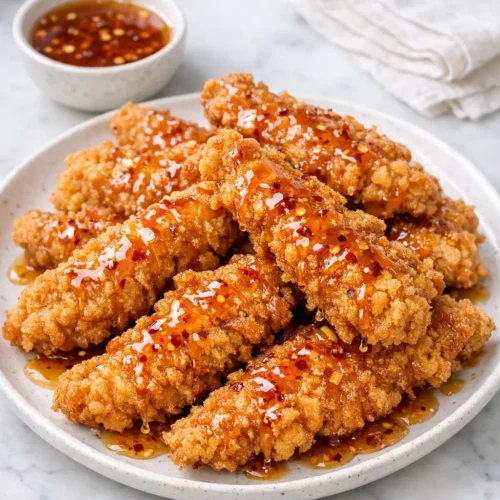
Fried Chicken Tenders with Spicy Honey

Equipment
- Medium Bowl
- Shallow dish or pie plate
- Whisk or fork
- Deep heavy pot or high-sided skillet
- Thermometer (optional but recommended)
- Wire rack
- Baking sheet
- Parchment paper
- Small saucepan
Ingredients
For the chicken tenders
- 500 g chicken tenders or chicken breast cut into strips boneless, skinless; aim for even thickness
- 240 ml buttermilk or mix 230 ml milk with 1 tbsp lemon juice or vinegar
- 1 large egg
- 1 tsp fine sea salt
- 1 tsp garlic powder
- 1 tsp smoked paprika
- 1/2 tsp onion powder
- 1/2 tsp freshly ground black pepper
- 1/4–1/2 tsp cayenne pepper optional
For the coating
- 150 g all-purpose flour
- 60 g cornstarch
- 1 1/2 tsp fine sea salt
- 1 tsp smoked paprika
- 1 tsp garlic powder
- 1/2 tsp baking powder
- 1/2 tsp black pepper
For frying
- 1–1.5 L neutral oil for frying canola, vegetable, peanut, or another high-heat oil
For the spicy honey
- 120 ml honey
- 1–2 tbsp hot sauce
- 1–2 tsp apple cider vinegar
- 1/2–1 tsp crushed red pepper flakes
- 1 pinch salt
Instructions
- Marinate the chicken: In a medium bowl, whisk together the buttermilk, egg, salt, garlic powder, smoked paprika, onion powder, black pepper, and cayenne (if using). Add the chicken and stir so every piece is coated. Cover and refrigerate for at least 30 minutes and up to 8 hours.
- Mix the coating: In a shallow dish or pie plate, combine the flour, cornstarch, salt, smoked paprika, garlic powder, baking powder, and black pepper. Whisk or fork well so no pockets remain.
- Set up a tidy dredging station: Place the marinated chicken, the flour mixture, and a clean plate or wire rack for coated pieces. Line a baking sheet with parchment and set a wire rack on top if you have one for the finished tenders.
- Coat the chicken: Working 1–2 pieces at a time, lift chicken from the buttermilk and let excess drip off. Dredge in the flour mixture, pressing firmly so the coating clings and forms little clumps. Shake off loose flour and place on the plate/rack. Repeat with remaining chicken.
- Preheat the oil: Pour oil into a deep, heavy pot or high-sided skillet (no more than halfway full). Heat to 175–180°C (350–360°F). If you don’t have a thermometer, a pinch of flour should sizzle steadily and turn golden in 10–15 seconds.
- Fry in batches: Carefully lower 4–5 tenders into the hot oil, leaving space between them. Fry 4–6 minutes total, turning once, until deeply golden and the internal temperature reaches 74°C (165°F). Keep oil around 170–180°C (340–360°F) between batches.
- Drain and season: Transfer to the rack (or a paper-towel-lined plate) and immediately sprinkle with a small pinch of salt. Let the oil return to temperature between batches and skim out stray bits of coating if needed.
- Make the spicy honey: In a small saucepan, add honey, hot sauce, apple cider vinegar, red pepper flakes, and a pinch of salt. Warm over low heat, stirring often, until loosened and smoothly combined, 2–3 minutes (do not boil). Taste and adjust.
- Glaze or drizzle: Drizzle warm spicy honey over the tenders, or gently toss in a large bowl for a more fully coated finish. Serve extra spicy honey on the side for dipping.
- Hold warm if needed: Keep batches warm on a rack in a 95–120°C (200–250°F) oven for up to 20–25 minutes. Don’t cover tightly, or steam will soften the crust.



Leave a Reply