
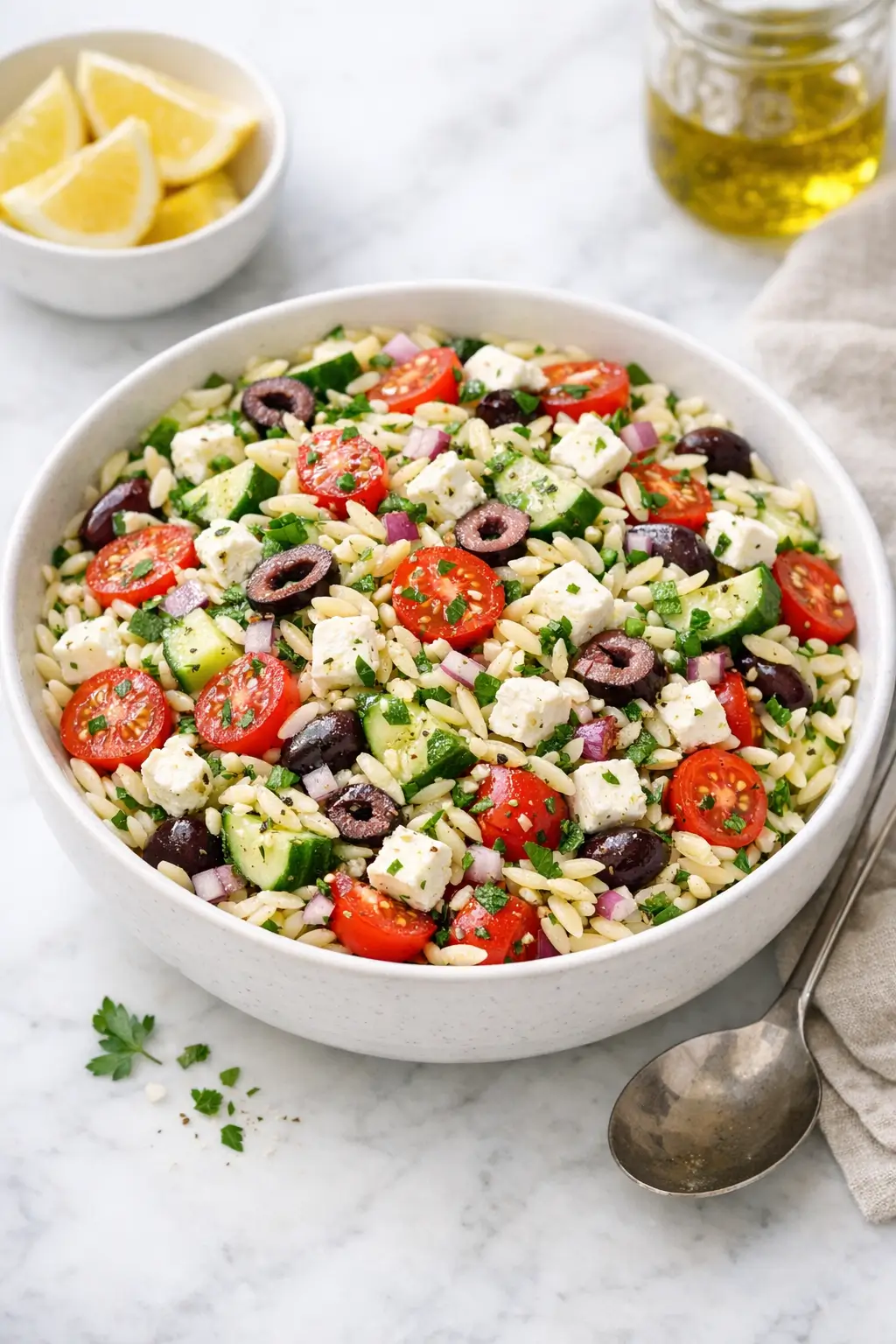
A bowl of Greek orzo salad with cucumber and feta covers a lot of weeknight bases at once: fresh crunch, salty cheese, and a make-ahead starch that actually tastes better after a rest in the fridge. You’ll see versions of this in delis and Mediterranean-inspired cafés, but it’s very doable in a small home kitchen.
If you’re making this after work, start by getting the orzo water on and pulling the feta out of the fridge so it softens a little. If you tend to get distracted, plan to mix the dressing first so it’s ready when the pasta is done.
This salad leans on classic Greek salad flavors—cucumber, tomato, red onion, olives, oregano, and feta—folded through small, tender orzo. It works well as a light main at lunch, a side for grilled meat or fish, or part of a mezze-style spread any time of year.
Ingredients
Serves 3–4 as a side, 2–3 as a light main
For the salad:
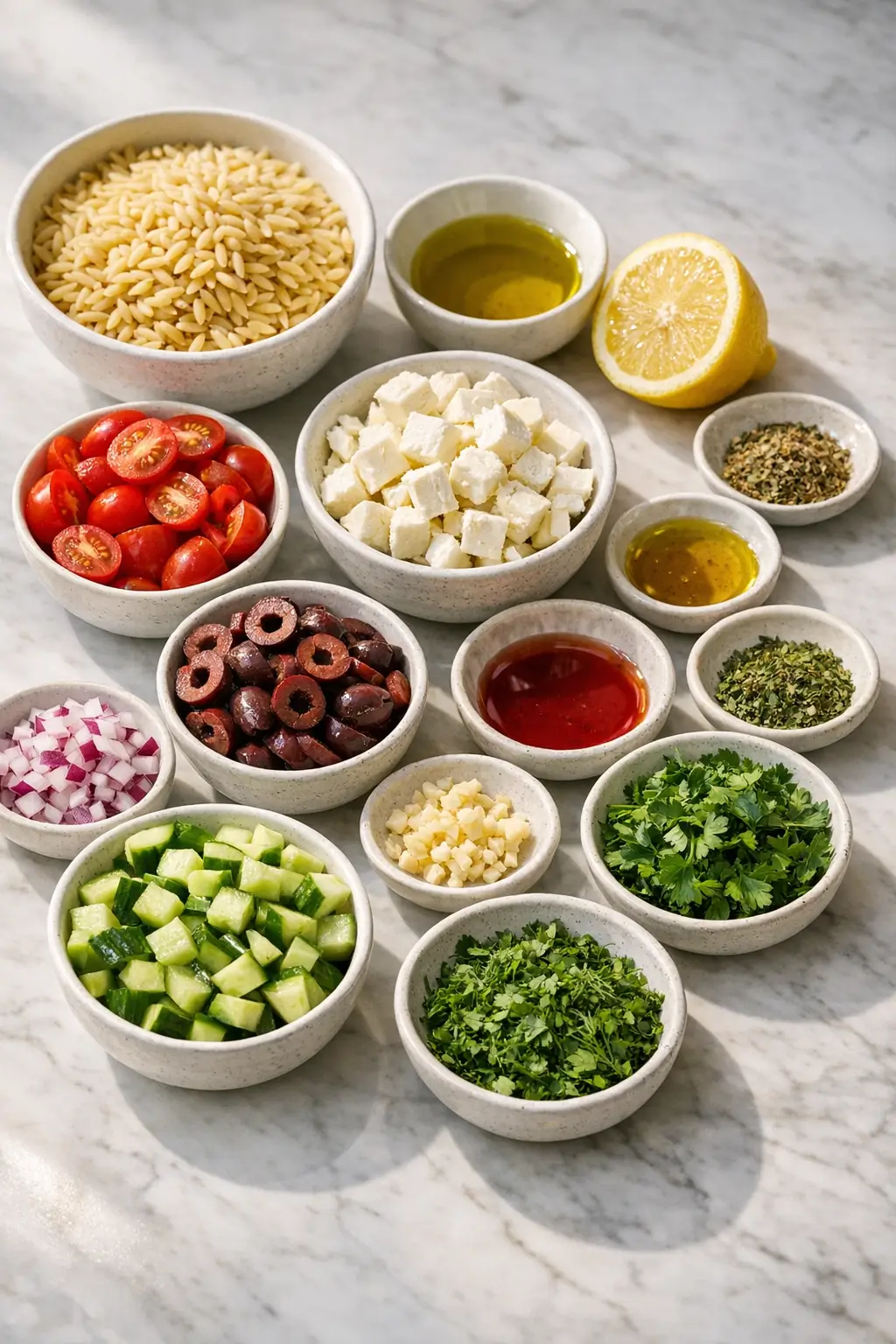
- 200 g / 7 oz dry orzo pasta (about 1 cup)
- 1 medium English cucumber (about 250 g / 9 oz), diced small
- 150 g / 1 cup cherry or grape tomatoes, halved or quartered
- 60 g / 1/2 cup pitted Kalamata olives, sliced
- 40 g / 1/4 cup finely diced red onion (about 1/4 small onion)
- 120 g / 4 oz feta cheese, cut into small cubes or crumbled
- 2 Tbsp fresh parsley, finely chopped
- 1 Tbsp fresh dill or fresh oregano, finely chopped (or 1 tsp dried oregano if fresh isn’t available)
For the lemon-oregano dressing:
- 60 ml / 1/4 cup extra-virgin olive oil
- 3 Tbsp freshly squeezed lemon juice (from about 1 large lemon)
- 1 tsp red wine vinegar (adds a sharper edge)
- 1–2 small garlic cloves, finely minced or grated
- 3/4 tsp fine sea salt, plus more to taste
- 1/4 tsp freshly ground black pepper
- 1/2–3/4 tsp dried oregano
- 1/2 tsp honey or sugar (optional, helps balance the acidity)
To finish (optional but recommended):
- 1–2 Tbsp extra-virgin olive oil, for drizzling before serving
- Extra chopped herbs or feta, for topping
Substitution notes:
- Cucumber: English cucumber has thin skin and fewer seeds, but Persian cucumbers work just as well. If using a standard waxed cucumber, peel it and scrape out the seeds.
- Feta: Use a block of feta in brine if possible; it holds its shape better. Goat cheese can work in a pinch, but it will be softer and creamier rather than crumbly.
- Orzo: Any small pasta shape (ditalini, small shells, small elbows) will work with the same weight; adjust cooking time per the package.
Step-by-Step Instructions for Greek Orzo Salad With Cucumber and Feta
Cook the orzo.
Bring a medium pot of well-salted water to a boil (it should taste pleasantly salty, like the sea). Add the orzo and cook according to package directions until just al dente—usually 8–10 minutes.
Kitchen note: Overcooked orzo turns mushy once it sits in dressing. Start checking a minute before the package time; the grains should be tender but still hold their shape with a tiny bite in the center.
Drain and cool the pasta.
Drain the orzo in a fine-mesh strainer. Rinse briefly under cool running water (10–15 seconds) to stop the cooking and remove excess starch, then shake well to drain. Spread the orzo on a tray or large plate to cool faster, or leave it in the strainer, tossing a few times as it cools.
Make the dressing.
While the orzo cooks and cools, whisk together the olive oil, lemon juice, red wine vinegar, garlic, salt, pepper, dried oregano, and honey (if using) in a small bowl or jar.
Taste and adjust: you want a bright, tangy dressing that feels slightly saltier and more acidic than you think you need. It will mellow once it coats the pasta and vegetables.
Prep the vegetables and feta.
Dice the cucumber into small, bite-size pieces so it distributes evenly. Halve or quarter the tomatoes depending on size. Thinly slice or finely dice the red onion so it doesn’t dominate any one bite. Slice the olives. Cut or crumble the feta into small pieces.
Finely chop the parsley and dill or oregano.
Combine the base of the salad.
In a large mixing bowl, add the cooled orzo, cucumber, tomatoes, red onion, and olives. Give everything a gentle toss with clean hands or a large spoon to start mixing.
Dress the salad.
Whisk the dressing again (it may have separated), then pour about three-quarters of it over the orzo mixture. Toss thoroughly to coat, scraping down the sides and bottom of the bowl so no dry pockets remain.
Let the salad sit for 5–10 minutes so the pasta can absorb some of the dressing.
Fold in feta and herbs.
Add most of the feta and chopped herbs to the bowl, reserving a little for garnish. Gently fold them through so the feta doesn’t completely break down.
Taste and decide if you need the remaining dressing, more salt, or another squeeze of lemon.
Kitchen note: If you plan to chill the salad for several hours, keep a tablespoon or two of dressing back and add it just before serving. Cold pasta tightens up and can taste drier.
Chill or serve.
You can serve the salad right away at room temperature, or cover and refrigerate for at least 30 minutes for the flavors to meld.
Before serving from the fridge, give the salad a quick toss, drizzle with a little extra olive oil, and let it sit out for 10–15 minutes to take the chill off. Top with the reserved feta and herbs.
Kitchen note: If the salad tastes flat straight from the fridge, it usually needs temperature, a pinch of salt, and a small hit of acid (lemon juice) more than it needs extra oil.
What to Expect
This Greek orzo salad lands firmly in the “crunchy but not raw” category. The orzo should be tender without mushiness, with cucumber and onion staying crisp and tomatoes just juicy enough to mingle with the dressing.
Flavors lean bright and savory. You’ll get a lemon-forward dressing backed up by dried oregano, with bursts of salt and richness from the feta and olives. Red onion adds a mild bite, especially if the salad sits for a bit.
Different brands of feta and olives vary a lot in saltiness. If yours are very salty, you may want to use slightly less added salt and taste after everything is combined before adjusting.
Kitchen note: If you usually buy pre-crumbled feta, know it can be drier and saltier than feta packed in brine. You may prefer a tiny drizzle of extra olive oil to balance that out.
Ways to Change It Up
Make it vegetarian-friendly with extra protein (no change needed for meatless).
The base recipe is already vegetarian. To make it more filling, stir in 1 cup (about 160 g) cooked chickpeas or white beans when you add the vegetables. They pick up the dressing well and turn the salad into more of a full meal.
Vegan version.
Omit the feta and add a generous extra pinch of salt and a tablespoon of nutritional yeast for a savory note. You can also use a firm vegan feta-style cheese. In this case, taste the dressing before salting heavily, as some vegan cheeses are quite salty.
Spicier take.
Add 1/4–1/2 tsp red pepper flakes to the dressing, or finely chop a mild fresh chili and stir it in with the vegetables. Another option is to sprinkle a pinch of Aleppo pepper over each serving for gentle heat and fruitiness.
Milder, kid-friendly version.
Skip the red onion or rinse it briefly under cold water to tone it down, and use fewer olives. You can also hold back some plain cooked orzo and cucumber for anyone who prefers a simpler plate.
Faster/simplified version.
Use pre-crumbled feta, pre-pitted olives, and skip fresh herbs in favor of an extra 1/2 teaspoon of dried oregano. The flavor won’t be as layered, but you can get the salad on the table in under 25 minutes.
Serving and Storage
Serve this salad slightly cool or at room temperature. Very cold pasta can mute the flavors, so if it’s been in the fridge, allow a brief rest on the counter before serving.
It works well alongside grilled chicken, lamb chops, or fish, and it’s very at home with simple skewers or burgers. For a vegetarian spread, pair it with hummus, pita, and a simple green salad or roasted vegetables.
As a work lunch, pack the salad in a lidded container and keep a small extra splash of dressing or olive oil on the side. Stir it in just before eating to refresh the texture.
Leftovers keep well, covered in the refrigerator, for up to 3 days. The cucumber will soften slightly over time but should still be pleasant.
For reheating, treat this as primarily a cold or room-temperature dish. Warming will dull the fresh herbs and soften the cucumber too much, so it’s better to enjoy it chilled rather than heated.
Cultural Context
This style of salad borrows flavors from the classic Greek village salad, or horiatiki, which typically includes tomato, cucumber, onion, olives, oregano, and feta dressed with olive oil and sometimes lemon juice. That salad is usually served without leafy greens and relies on the vegetables and cheese themselves for structure.
Orzo, known as kritharaki in Greek, is a small rice-shaped pasta used in soups, baked dishes, and salads. Combining Greek salad ingredients with orzo is a modern, widely adopted way to turn familiar flavors into a more filling side or light main. For more background on traditional Greek salad ingredients and composition, see this overview from Greek salad in Greek cuisine.
Kitchen note: This salad reflects common Greek-inspired flavors rather than a single fixed traditional recipe, so feel free to adjust the mix of vegetables and herbs to what you have access to.
Common Questions and Troubleshooting
My orzo turned out mushy. Can I save the salad?
If the pasta is only slightly overcooked, chill the salad well before serving; the texture firms up a bit when cold. Next time, start tasting the orzo a minute or two before the package time and drain it as soon as it’s just tender.
The salad tastes flat. What should I adjust first?
Check three things in order: temperature, acidity, and salt. Let it sit at room temperature for 10–15 minutes, then add a small squeeze of lemon juice and a pinch of salt. Stir well and taste again before adding more oil.
Can I make Greek orzo salad ahead of time?
Yes. For the best texture, mix everything except a portion of the feta and some of the dressing up to 24 hours in advance. Stir in the reserved dressing and feta just before serving.
How do I keep the cucumber from watering down the salad?
Dice the cucumber, then if it seems particularly juicy, sprinkle it with a small pinch of salt and let it sit in a colander for 10–15 minutes. Pat dry before adding. This step is usually only needed with standard slicing cucumbers, not English or Persian.
Can I swap in a different pasta or grain?
Small pasta shapes like ditalini or tiny shells work well. Cook them al dente and cool as you would the orzo. For a different twist, cooked and cooled farro or barley give a chewier, nutty base; just be sure they’re fully cooled before you add the feta.
Is it okay to freeze leftovers?
Freezing isn’t ideal here. The cucumber and tomatoes will weep and go soft when thawed, and the feta can turn grainy. This is one dish that’s best eaten fresh or from the fridge within a few days.
Conclusion
Greek orzo salad with cucumber and feta is the kind of dish that rewards a little prep with several easy meals. Once you’ve made it once or twice, you can start adjusting the acid, herbs, and add-ins to match your own kitchen staples.
If you try this version, consider leaving a comment or rating to share what worked for you. I’m especially curious which vegetables and herbs you reach for when you make it your own.
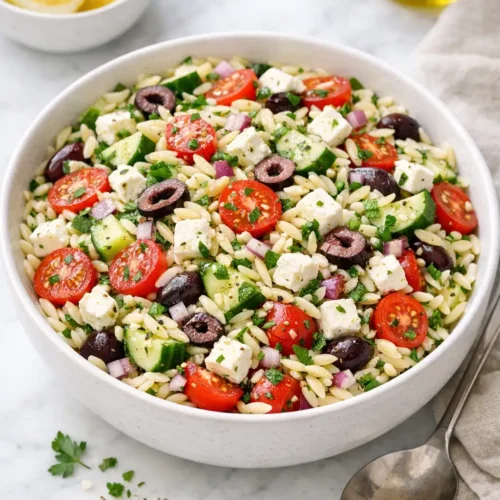
Greek Orzo Salad With Cucumber and Feta

Equipment
- Medium pot
- Fine-mesh strainer
- Large mixing bowl
- Small bowl or jar (for dressing)
- Whisk
- Tray or large plate (to cool pasta)
Ingredients
For the salad
- 200 g dry orzo pasta (about 7 oz; about 1 cup)
- 1 medium English cucumber diced small (about 250 g / 9 oz)
- 150 g cherry or grape tomatoes halved or quartered (about 1 cup)
- 60 g pitted Kalamata olives sliced (about 1/2 cup)
- 40 g red onion finely diced (about 1/4 cup; about 1/4 small onion)
- 120 g feta cheese cut into small cubes or crumbled (about 4 oz)
- 2 Tbsp fresh parsley finely chopped
- 1 Tbsp fresh dill or fresh oregano finely chopped (or 1 tsp dried oregano)
For the lemon-oregano dressing
- 60 ml extra-virgin olive oil (1/4 cup)
- 3 Tbsp freshly squeezed lemon juice (from about 1 large lemon)
- 1 tsp red wine vinegar
- 1–2 small cloves garlic finely minced or grated
- 3/4 tsp fine sea salt plus more to taste
- 1/4 tsp freshly ground black pepper
- 1/2–3/4 tsp dried oregano
- 1/2 tsp honey or sugar optional
To finish (optional)
- 1–2 Tbsp extra-virgin olive oil for drizzling before serving
- extra chopped herbs or feta for topping
Instructions
- Cook the orzo: Bring a medium pot of well-salted water to a boil. Add the orzo and cook according to package directions until just al dente, usually 8–10 minutes.
- Drain and cool the pasta: Drain orzo in a fine-mesh strainer. Rinse briefly under cool water (10–15 seconds) to stop cooking, then shake well to drain. Spread on a tray/plate to cool, or leave in the strainer and toss a few times as it cools.
- Make the dressing: Whisk together olive oil, lemon juice, red wine vinegar, garlic, salt, pepper, dried oregano, and honey (if using) in a small bowl or jar. Taste and adjust—it should be bright and tangy; it will mellow once mixed with pasta and vegetables.
- Prep the vegetables and feta: Dice cucumber small. Halve or quarter tomatoes. Thinly slice or finely dice red onion. Slice olives. Cut or crumble feta into small pieces. Finely chop parsley and dill or oregano.
- Combine the base: In a large mixing bowl, add cooled orzo, cucumber, tomatoes, red onion, and olives. Toss gently to mix.
- Dress the salad: Whisk dressing again, then pour about three-quarters over the orzo mixture. Toss thoroughly, scraping the bowl so everything is coated. Let sit 5–10 minutes to absorb.
- Fold in feta and herbs: Add most of the feta and chopped herbs, reserving a little for garnish. Gently fold so the feta doesn’t fully break down. Taste and add remaining dressing, more salt, or more lemon as needed.
- Chill or serve: Serve right away at room temperature, or cover and refrigerate at least 30 minutes. Before serving from the fridge, toss, drizzle with a little extra olive oil, and let sit 10–15 minutes to take the chill off. Top with reserved feta and herbs.



Leave a Reply