
Grilled chicken with lemon herb marinade is one of those dishes that feels a little special without asking much of you. Bright citrus, fresh herbs, and a quick grill transform basic chicken breasts into something you can serve for a weeknight dinner, a backyard cookout, or sliced over salads for lunches.
If you’re racing in the door on a busy weeknight, get the chicken into the lemon herb marinade first, then preheat the grill while it soaks up flavor. When your attention is pulled in a dozen directions, the only moments that really need you here are pounding the chicken to an even thickness and checking the internal temperature near the end.
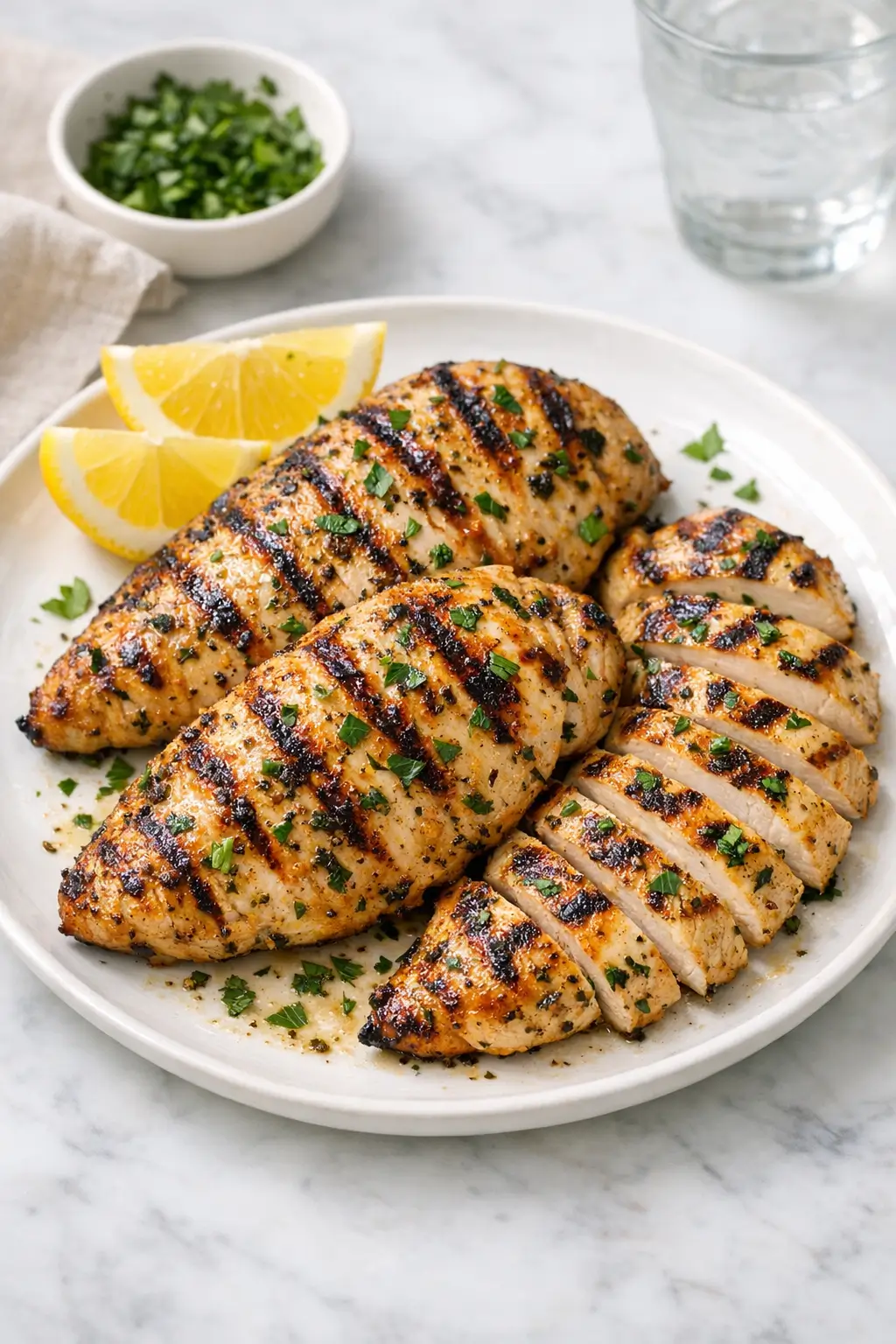
The flavor leans clean and savory: lemon-forward without being sour, plenty of garlic, and a herbal edge from thyme and parsley. Expect lightly charred edges, juicy centers, and a texture that’s tender but still feels like grilled meat.
Ingredients
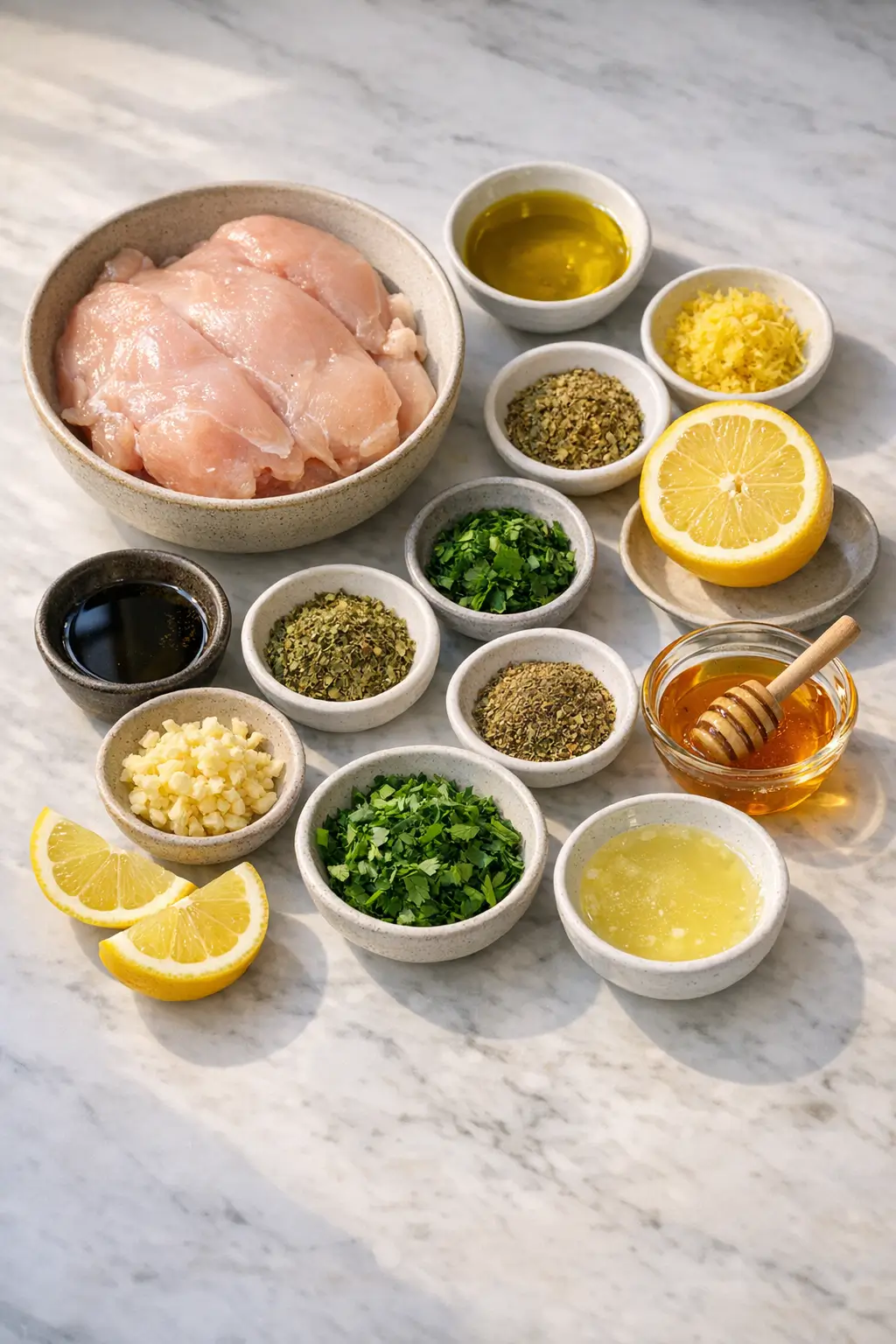
- 680 g / 1 1/2 lb boneless, skinless chicken breasts (about 3–4 small or 2 large)
- 60 ml / 1/4 cup extra-virgin olive oil – adds richness and helps prevent sticking
- 1 large lemon, zested and juiced (about 3 tbsp / 45 ml juice) – for bright acidity
- 3 garlic cloves, minced – for a pronounced savory base
- 1 tbsp finely chopped fresh parsley – freshness and color
- 1 tbsp finely chopped fresh thyme leaves – earthy herbal note (or 1 tsp dried thyme)
- 1 tsp dried oregano – Mediterranean-style depth (or use extra thyme if you prefer)
- 1 tsp fine sea salt or table salt – seasons the meat throughout
- 1/2 tsp freshly ground black pepper
- 1 tsp honey – gently rounds out the acidity (or 1 tsp sugar, or omit for a sharper finish)
- 1–2 tbsp neutral oil (such as canola or grapeseed) for the grill grates, as needed
- Optional for serving: extra lemon wedges and chopped fresh parsley
Step-by-Step Instructions for Grilled Chicken with Lemon Herb Marinade
-
Flatten the chicken for even cooking
Place the chicken breasts between two sheets of baking parchment or in a large zip-top bag. Use a meat mallet or rolling pin to gently pound the thicker end until each piece is an even 1.5–2 cm / 1/2–3/4 inch thick. This helps prevent the thin end from drying out while the thick end finishes. -
Mix the lemon herb marinade
In a medium bowl, whisk together the olive oil, lemon zest, lemon juice, minced garlic, parsley, thyme, oregano, salt, pepper, and honey. The mixture should look slightly thick and emulsified, not watery. -
Marinate the chicken
Add the chicken to a shallow dish or a zip-top bag. Pour the marinade over, turning the pieces so every surface is coated. Press out excess air if using a bag. Marinate in the refrigerator for at least 30 minutes and up to 4 hours. Longer than 4 hours with this much lemon juice can start to change the texture.
Kitchen note: If you need to prep earlier in the day, reduce the lemon juice to 2 tbsp and add 1 extra tbsp olive oil so the chicken can safely marinate up to 8 hours without turning mealy.
-
Bring the chicken closer to room temperature
About 15–20 minutes before you plan to grill, take the marinating chicken out of the refrigerator. This slight warm-up helps it cook more evenly. Keep it in the marinade while it sits. -
Preheat and oil the grill
Heat a gas or charcoal grill to medium-high heat. On most gas grills, that’s around 200–230°C / 400–450°F. Clean the grates with a grill brush, then lightly oil them: dip a folded paper towel in neutral oil and, using tongs, wipe it over the hot grates to reduce sticking. -
Shake off excess marinade
Remove the chicken from the dish, letting extra marinade drip back. Excess garlic or herbs clinging in thick clumps can scorch, so gently scrape off large bits with your fingers or a spoon. -
Grill the first side
Lay the chicken on the grill, smooth side down. You should hear a clear sizzle. Close the lid and grill for 3–4 minutes without moving, until you see defined grill marks at the edges and the underside releases easily when nudged with tongs. -
Turn and finish grilling
Flip the chicken and grill the second side for another 3–5 minutes, depending on thickness and grill heat. An instant-read thermometer should read 72°C / 165°F at the thickest point. For extra juiciness, you can pull it off the grill at 71–72°C / 160–162°F knowing carryover heat will bring it up a degree or two as it rests.
Kitchen note: If the outside is getting too dark before the chicken is cooked through, move the pieces to a cooler part of the grill or lower the burner to medium and continue, checking the internal temperature every 1–2 minutes.
-
Rest the chicken
Transfer the grilled chicken to a plate or cutting board and tent loosely with foil. Rest for 5 minutes to let the juices redistribute. Skipping this step usually leads to juice spilling onto the cutting board instead of staying in the meat. -
Slice and serve
Slice the chicken across the grain into strips or serve the breasts whole. Finish with a squeeze of fresh lemon juice and a sprinkle of chopped parsley if you like.
Kitchen note: If you’re planning for leftovers for salads or meal prep, let the chicken cool completely before refrigerating. Warm chicken sealed in a container can steam and lose some of its grilled texture.
What to Expect
This grilled chicken will not be buttery-soft like slow-cooked thighs, but it should be tender and juicy with a nice chew. The pounding step and short, hot cooking help you avoid the dry, stringy texture that often happens with boneless breasts.
Flavor-wise, expect lemon to lead, backed by garlic and herbs rather than heavy smokiness. The honey is subtle; it’s there to balance acidity and support browning more than to make the chicken taste sweet.
Different grills behave differently. A very hot charcoal grill may give deeper charring and a slightly smokier edge, while an indoor grill pan will produce lighter marks and less smoke. Using dried herbs instead of fresh will shift the flavor slightly toward an earthier, more concentrated herbal note.
Kitchen note: If your chicken tastes sharper or more acidic than you like, shorten the marinating time next round or add an extra drizzle of olive oil over the grilled pieces before serving to soften the edges.
Ways to Change It Up
1. Make it dairy-free and grill-pan friendly
This base recipe is already dairy-free, so it works for most guests. For apartment cooking, use a ridged grill pan or heavy skillet on the stovetop. Preheat well, sear 3–4 minutes per side, then reduce the heat to medium and finish until the chicken reaches temperature.
2. Turn down the acidity and make it milder
If anyone at the table is sensitive to citrus, cut the lemon juice down to 2 tbsp and replace the missing tablespoon with olive oil. You’ll still get lemon aroma from the zest, but with a softer bite. You can also reduce or omit the black pepper to keep the flavor very gentle.
3. Add more heat for spice lovers
For a spicier version, whisk 1/2–1 tsp red pepper flakes or 1/2 tsp mild chili powder into the marinade. Another option is to leave the base recipe as is and sprinkle a little chili powder or Aleppo pepper on the cooked chicken so you can control heat at the table.
4. Faster “no-marinate” version
If you’re truly short on time, skip the long marinating step. Pat the chicken very dry, brush with olive oil, then season on both sides with salt, pepper, garlic powder, dried thyme, and lemon zest. Grill as directed, then squeeze lemon juice over right before serving. The flavor won’t be as deep as an actual marinade, but it still gives a clear lemon-herb profile.
5. Herb and citrus swaps
Use lime instead of lemon for a slightly sharper citrus note, or swap parsley for basil for a more summery aroma. Just keep the total amount of fresh herbs around 2 tbsp so the balance stays similar.
Serving and Storage
Grilled chicken with lemon herb marinade works well as a main dish with simple sides like grilled vegetables, roasted potatoes, rice, or a leafy salad. Slices of the chicken make excellent toppers for grain bowls, pasta salads, or stuffed into pitas with crisp lettuce and cucumbers.
For a lighter meal, serve the chicken sliced over greens with extra lemon wedges and a drizzle of olive oil. The clean flavors also pair nicely with yogurt-based dips or tzatziki if you want something creamy on the side.
Leftover grilled chicken keeps in an airtight container in the refrigerator for 3–4 days. Reheat gently in a covered skillet over low heat with a spoonful of water or broth, just until warmed through, to avoid drying it out.
For longer storage, cool the chicken completely, slice or leave whole, and freeze in an airtight container or freezer bag for up to 2 months. Thaw overnight in the fridge before reheating or using cold in salads.
Cultural Context
Lemon, herbs, and grilled poultry show up together in many Mediterranean and Middle Eastern cuisines, where simple marinades make the most of fresh ingredients and outdoor cooking. The combination of olive oil, citrus, and herbs such as thyme or oregano is broadly associated with Mediterranean eating patterns rather than a single country.
Historically, grilling and roasting poultry over live fire has been a practical way to cook meat in regions with warm climates and access to charcoal or wood. Citrus became increasingly common in the Mediterranean after the spread of cultivated lemons, and it now appears in many regional dishes. For a concise overview of how lemons became embedded in Mediterranean foodways, see this article from the Biblioteca Nazionale Centrale di Roma: historical perspectives on lemon in Mediterranean cuisine.
Grilled chicken marinated in citrus and herbs also appears in contemporary nutrition and culinary education resources as an example of a lean protein dish aligned with Mediterranean-style diets. The Oldways organization provides background on this pattern of eating and its health research: overview of the Mediterranean diet and traditions.
Common Questions and Troubleshooting
Why is my grilled chicken still coming out dry?
The two most common issues are uneven thickness and overcooking. Make sure the breasts are an even thickness before marinating, and rely on an instant-read thermometer instead of time alone. Pull the chicken from the grill as soon as it reaches 71–72°C / 160–162°F, then rest.
Can I use chicken thighs instead of breasts?
Yes, boneless, skinless thighs work very well and are even more forgiving. Pound to an even thickness if needed, marinate as directed, and expect total grill time to be slightly longer—often 8–10 minutes per side depending on size. Keep the target internal temperature at 72°C / 165°F.
What if I don’t have fresh herbs?
You can replace the fresh parsley and thyme with 1–1 1/2 tsp total dried herbs, such as dried thyme, oregano, or an Italian seasoning blend. Dried herbs are more potent, so use less by volume and let the chicken marinate at least 45–60 minutes so they have time to hydrate.
Is it safe to reuse the leftover marinade as a sauce?
Marinade that has been in contact with raw chicken should not be used directly as a sauce. If you want to use it, bring it to a rolling boil in a small saucepan for at least 1–2 minutes, then simmer until slightly thickened. Alternatively, set aside a small portion of marinade before adding the raw chicken and keep it separate for drizzling.
How long can I leave the chicken in the marinade?
With the full amount of lemon juice, keep the marinating time between 30 minutes and 4 hours. Beyond that, the acidity can start to make the outer layer of the meat a bit mushy. For an overnight option, reduce the lemon juice and increase the olive oil as noted in the kitchen note above.
Can I bake instead of grill?
You can. Arrange marinated chicken on a parchment-lined baking tray, discarding excess marinade. Bake at 200°C / 400°F for about 18–22 minutes, depending on thickness, until it reaches 72°C / 165°F. You won’t get the same grill marks, but the flavor of the marinade will still come through.
Conclusion
Grilled chicken with lemon herb marinade is a straightforward way to make boneless chicken breasts more appealing, whether you’re cooking outdoors or on a stovetop grill pan. Once you’ve made it a couple of times, you can adjust the lemon, herbs, and heat level to fit your own kitchen and the people you cook for.
If you try this version, consider leaving a rating and sharing how it worked with your grill, pan, or oven setup. Any small tweaks—extra herbs, a different citrus, or a spice addition—can help other home cooks get reliable results too.
Grilled Chicken with Lemon Herb Marinade Made Easy

Equipment
- Grill (gas or charcoal) or grill pan
- Medium Bowl
- Whisk
- Meat mallet or rolling pin
- Parchment paper or zip-top bag
- Tongs
- Grill brush
- Instant-read thermometer
Ingredients
- 680 g boneless, skinless chicken breasts about 1 1/2 lb; about 3–4 small or 2 large
- 60 ml extra-virgin olive oil
- 1 large lemon zested and juiced (about 3 tbsp / 45 ml juice)
- 3 cloves garlic minced
- 1 tbsp fresh parsley finely chopped, plus more for serving (optional)
- 1 tbsp fresh thyme leaves finely chopped (or 1 tsp dried thyme)
- 1 tsp dried oregano
- 1 tsp fine sea salt or table salt
- 1/2 tsp freshly ground black pepper
- 1 tsp honey or 1 tsp sugar, or omit
- 1–2 tbsp neutral oil such as canola or grapeseed, for oiling grill grates as needed
- lemon wedges optional, for serving
Instructions
- Flatten the chicken for even cooking. Place the chicken breasts between two sheets of baking parchment or in a large zip-top bag. Use a meat mallet or rolling pin to gently pound the thicker end until each piece is an even 1.5–2 cm / 1/2–3/4 inch thick.
- Mix the lemon herb marinade. In a medium bowl, whisk together the olive oil, lemon zest, lemon juice, minced garlic, parsley, thyme, oregano, salt, pepper, and honey until slightly thick and emulsified.
- Marinate the chicken. Add the chicken to a shallow dish or a zip-top bag. Pour the marinade over and turn to coat. Marinate in the refrigerator for at least 30 minutes and up to 4 hours.
- Bring the chicken closer to room temperature. About 15–20 minutes before grilling, remove the chicken from the refrigerator and let it sit in the marinade.
- Preheat and oil the grill. Heat a gas or charcoal grill to medium-high (about 200–230°C / 400–450°F). Clean the grates, then lightly oil them with a paper towel dipped in neutral oil, using tongs.
- Shake off excess marinade. Remove chicken, letting extra marinade drip back. Gently scrape off large clumps of garlic or herbs so they don’t scorch.
- Grill the first side. Place chicken on the grill and cook with the lid closed for 3–4 minutes without moving, until it releases easily and has clear grill marks.
- Turn and finish grilling. Flip and grill 3–5 minutes more, until an instant-read thermometer reads 72°C / 165°F at the thickest point (or pull at 71–72°C / 160–162°F and let carryover heat finish).
- Rest the chicken. Transfer to a plate or cutting board and tent loosely with foil. Rest 5 minutes to redistribute juices.
- Slice and serve. Slice across the grain or serve whole. Finish with a squeeze of lemon and a sprinkle of chopped parsley, if desired.



Leave a Reply