
Grilled chicken thighs with hot honey glaze land in that sweet spot between comfort food and weeknight practicality. You get crispy, smoky skin, juicy dark meat, and a sticky glaze that walks the line between sweet and spicy. This style of hot honey chicken shows up everywhere from backyard cookouts to casual restaurants, especially in warmer months when the grill is already working hard.
If you’re starting this on a busy weeknight, get the chicken seasoned and the grill preheating first; you can stir the hot honey glaze together while the thighs come up to room temperature. Cooking in a small apartment or with an older grill, keep the heat at medium so the honey doesn’t burn and the skin has time to render.
Ingredients
Serves 3–4
For the chicken:
- 1.1–1.3 kg (2½–3 lb) bone-in, skin-on chicken thighs (about 6–8 thighs)
- 2 tsp kosher salt (or 1½ tsp fine sea salt), divided
- 1 tsp freshly ground black pepper
- 1 tsp smoked paprika (adds gentle smokiness and color)
- ½ tsp garlic powder (for a savory base)
- 1 tbsp neutral oil (such as canola, grapeseed, or avocado) for the grill grates
For the hot honey glaze:
- 120 ml (½ cup) runny honey
- 1–2 tsp red pepper flakes, to taste
- 1 tbsp apple cider vinegar (balances the sweetness)
- ½ tsp smoked paprika
- ½ tsp garlic powder
- ¼ tsp fine salt, or to taste
- Optional: 1–2 tsp hot sauce (for extra layered heat)
To serve (optional but recommended):
- Lime or lemon wedges, for squeezing
- Thinly sliced green onions or chopped fresh cilantro
- Simple sides like grilled corn, slaw, or a crisp salad
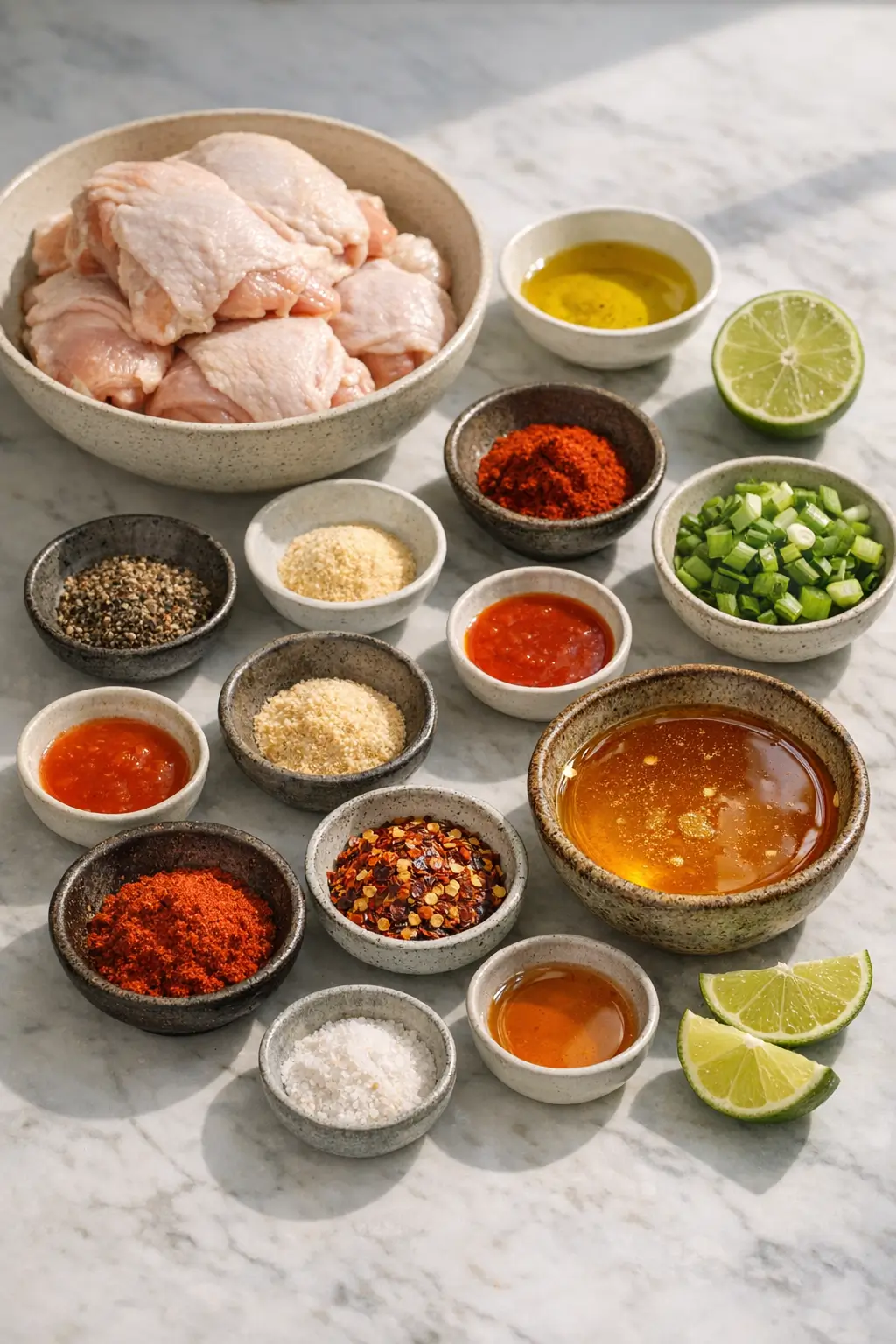
Kitchen note: If your chicken thighs are very large or still quite cold, they’ll take longer to reach temperature. Plan for the longer end of the cooking window and rely on a thermometer, not just time.
Step-by-Step Instructions for Grilled Chicken Thighs with Hot Honey Glaze
Prep the chicken.
Pat the chicken thighs dry on all sides with paper towels; this helps the skin crisp instead of steaming.
Trim any large flaps of excess fat if needed.Season thoroughly.
In a small bowl, combine 1½ teaspoons of the kosher salt, black pepper, 1 teaspoon smoked paprika, and ½ teaspoon garlic powder.
Sprinkle this mixture evenly over both sides of the chicken thighs, gently pressing it into the skin.
Let the thighs sit at room temperature for 20–30 minutes while you prepare the grill; this takes the chill off and helps them cook more evenly.Preheat and set up the grill.
Heat a gas or charcoal grill for two-zone cooking: one side medium-high direct heat, the other side lower indirect heat.
Aim for about 190–205°C (375–400°F) on the hot side.
Clean the grates, then oil them lightly with a folded paper towel dipped in neutral oil and held with tongs.Mix the hot honey glaze.
While the grill heats, stir together the honey, red pepper flakes, apple cider vinegar, smoked paprika, garlic powder, and salt in a small heatproof bowl.
If using hot sauce, whisk it in now.
The glaze should taste a bit too intense on its own; it will mellow on the chicken.Start the thighs over indirect heat.
Place the thighs skin-side up on the cooler, indirect side of the grill.
Close the lid and cook for 10–15 minutes, until the fat under the skin begins to render and the internal temperature reaches around 60–65°C (140–150°F).
This slower start helps avoid flare-ups and burnt skin.Crisp the skin over direct heat.
Move the thighs skin-side down over the hotter, direct side of the grill.
Cook 3–5 minutes, watching closely for flare-ups, until the skin is browned and crisp but not charred.
Adjust the thighs around the grates as needed to avoid hot spots.
Kitchen note: If you get sudden flames under the chicken, slide the thighs back to the indirect side rather than dousing the fire. Keeping the lid closed more often also reduces flare-ups.
Flip and start glazing.
Turn the thighs skin-side up again and move them back to the indirect side.
Brush each piece lightly with the hot honey glaze.
Close the lid and cook 3–5 minutes.
The glaze should look glossy and just starting to set, not dark or bitter.Build layers of glaze.
Continue to cook over indirect heat, brushing with a thin layer of glaze every 3–5 minutes.
Turn pieces occasionally for even cooking.
Plan for 10–15 minutes in this phase, depending on the size of the thighs and your grill temperature.Check doneness carefully.
Begin checking internal temperature in the thickest part of a couple of thighs (avoid touching bone) after about 20 minutes total grill time.
Look for at least 74°C (165°F); many cooks prefer thighs closer to 80–85°C (175–185°F) for softer, more tender dark meat.
The juices should run mostly clear, and the meat will feel springy but not squishy when pressed.Finish with a final glaze and rest.
Once the thighs hit your target temperature, brush with a final light coat of hot honey.
Transfer them to a platter, tent loosely with foil, and rest 5–10 minutes.
Resting lets the glaze firm slightly and the juices redistribute.Garnish and serve.
Just before serving, squeeze lime or lemon over the chicken and scatter green onions or cilantro on top, if using.
Serve any remaining hot honey glaze on the side, thinning with a splash of hot water if it’s too thick to drizzle.
Kitchen note: Sugar burns quickly. Keep most of the glazing time over indirect heat and only move to direct heat briefly if you need a touch more char.
What to Expect
These grilled chicken thighs finish with deeply browned, slightly crisp skin and juicy meat that pulls easily from the bone without falling apart.
The hot honey glaze forms a shiny, sticky coating that clings to your fingers and the plate.
On flavor, expect clear sweet heat rather than aggressive spice.
The red pepper flakes and any added hot sauce provide a slow, building warmth, but the honey and vinegar keep it balanced.
You should be able to taste smoke from the grill, gentle garlic and paprika in the background, and a little brightness from the citrus.
Different grills and fuels will change the final character.
Charcoal tends to deliver more pronounced smokiness, while gas gives a cleaner, more controlled cook.
If your honey has a distinct floral or strong wildflower profile, that will come through in the glaze.
Kitchen note: If you prefer a thicker, more lacquered glaze, brush on a final generous layer and leave the thighs over very low indirect heat for an extra 5 minutes, watching closely so the sugars don’t scorch.
Ways to Change It Up
1. Make it friendly for very mild palates.
For a gentler version, cut the red pepper flakes down to ¼–½ teaspoon and skip the hot sauce.
You’ll still get plenty of flavor from the honey, vinegar, and paprika without much perceived heat.
You can also serve the hot honey on the side, brushing the thighs with plain honey while grilling, and letting diners add spicy drizzle to taste at the table.
2. Go spicier and more complex.
If you like a bolder kick, increase the red pepper flakes to 2–3 teaspoons and use a robust hot sauce instead of a mild one.
A pinch of cayenne or a spoonful of chili paste can also deepen the heat.
Keeping the sweet and acidic components in roughly the same proportions helps the glaze stay balanced, even when it’s hotter.
3. Faster weeknight version.
For a quicker cook, use boneless, skinless chicken thighs.
Reduce the initial indirect grilling time to 5–7 minutes per side over medium-high direct heat, then start glazing once the internal temperature reaches about 65°C (150°F).
You won’t get crispy skin, but you’ll still have juicy meat and plenty of sweet-heat flavor in less time.
4. Add citrus or herb notes.
Stir 1–2 teaspoons of finely grated orange or lemon zest into the hot honey glaze for a brighter profile.
Fresh thyme leaves or a small sprig of rosemary tucked on the grill near the thighs can add a subtle herbal aroma without changing the core recipe.
Serving and Storage
These grilled chicken thighs with hot honey glaze work well as a main dish for casual dinners, backyard cookouts, or weekend meal prep.
They’re excellent with simple sides that can handle a bit of sweetness and spice, like grilled corn, roasted potatoes, or a crisp slaw.
Soft bread or rolls are handy for catching extra glaze.
For a lighter plate, pair with a vinegar-based cucumber salad or quick-pickled vegetables.
The tang cuts through the richness of the skin and balances the honey.
Leftover thighs can be sliced over salads or grain bowls, where the glaze acts almost like a dressing component.
Cool leftovers completely, then store in an airtight container in the refrigerator for up to 3 days.
Reheat gently in a 180°C (350°F) oven for 10–15 minutes, or until warmed through, to help the skin re-crisp slightly.
You can also reheat in a covered skillet over low heat with a splash of water.
Avoid microwaving on high, which tends to toughen the meat and can make the glaze burn in spots.
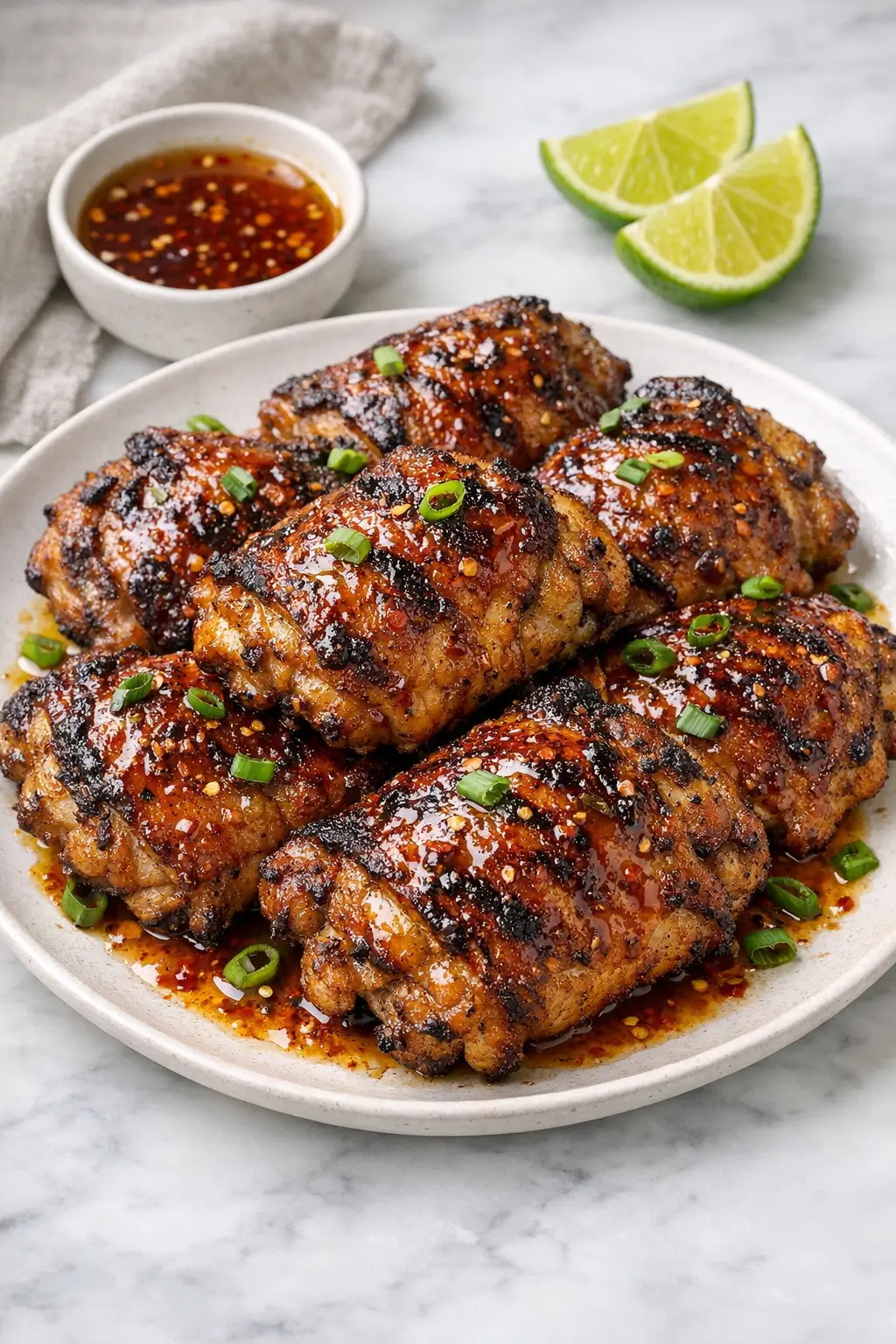
Kitchen note: If you plan to meal-prep these, under-glaze slightly on day one and add a fresh, thin brush of hot honey in the last few minutes of reheating to bring back the shine.
Cultural Context
Grilled chicken shows up in many food cultures worldwide, from Southeast Asian ayam bakar to Mexican pollo al carbón, with each tradition using different marinades, fuels, and serving styles.
In North America, bone-in grilled chicken has long been a staple of backyard barbecues and community cookouts, often finished with sweet or tangy sauces.
Hot honey as a specific condiment—honey infused with dried or fresh chilies—has become especially visible in the United States in the last decade, appearing on pizza, fried chicken, and sandwiches.
Food trend analysts note its rise as part of a broader interest in “sweet heat” flavors that blend sugar and spice.
For an overview of hot honey’s recent popularity, see this article on the growth of the condiment in American cuisine from Restaurantware’s flavor trend series and the background on the ingredient in the Hot Honey food profile by the National Honey Board and Datassential.
Common Questions and Troubleshooting
Why is my chicken burning before it’s cooked through?
The most common cause is grilling directly over high heat from the start, especially once honey is added.
Begin over indirect heat to render the fat, and only glaze generously when the meat is close to done.
If flare-ups happen, move the chicken to the cooler side and close the lid.
How do I know when the thighs are done without drying them out?
Use an instant-read thermometer inserted into the thickest part of the meat, avoiding the bone.
Aim for at least 74°C (165°F), but know that dark meat stays moist even up to 80–85°C (175–185°F).
If you don’t have a thermometer, pierce near the bone; the juices should run mostly clear, and the meat should not look translucent.
Can I make the hot honey glaze less sweet?
Yes.
You can reduce the honey slightly and increase the apple cider vinegar by 1–2 teaspoons, or add a splash of soy sauce for more savory depth.
Just keep enough honey in the mix for it to cling to the chicken and caramelize.
What if I don’t have a grill?
You can roast the seasoned thighs on a wire rack set over a baking sheet at 200°C (400°F) for 30–35 minutes, then brush with the hot honey glaze and return to the oven for another 5–10 minutes, watching the glaze closely.
Finish under the broiler for 1–2 minutes if you want a bit more char, keeping the pan at least 15 cm (6 inches) from the heat source.
How spicy is this recipe?
With 1 teaspoon of red pepper flakes and no additional hot sauce, most people find it gently to moderately spicy.
If you’re cooking for kids or heat-sensitive diners, start with ½ teaspoon flakes and serve more hot honey at the table.
Conversely, spice lovers can double the flakes and add hot sauce to taste.
Can I use boneless, skinless chicken breasts instead?
You can, but they behave differently on the grill.
Keep the heat at medium, start checking for doneness around 10–12 minutes total cook time, and glaze lightly to avoid burning.
Breasts dry out faster than thighs, so pull them as soon as they reach 74°C (165°F) and rest briefly before serving.
Conclusion
Grilled chicken thighs with hot honey glaze bring together a short ingredient list, forgiving dark meat, and a simple technique that works on most backyard grills.
Once you get comfortable managing two-zone heat and brushing on the glaze gradually, this can become an easy repeat meal rather than a special project.
If you try this version, consider noting your grill setup, timings, and any tweaks to the heat level so you can dial it in next time.
Share your adjustments, sides, and results in the comments—especially how spicy you like your hot honey—so other home cooks can learn from your experience too.
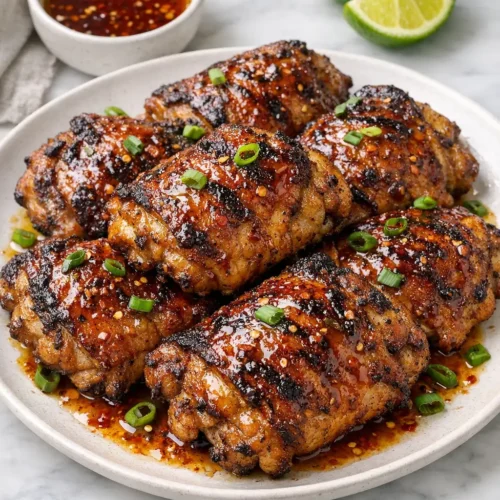
Grilled Chicken Thighs with Hot Honey Glaze

Equipment
- Grill (gas or charcoal)
- Tongs
- Small bowl
- Basting brush
- Instant-read thermometer
- Paper towels
Ingredients
For the chicken
- 2 1/2–3 lb bone-in, skin-on chicken thighs about 6–8 thighs (1.1–1.3 kg)
- 2 tsp kosher salt divided (or 1 1/2 tsp fine sea salt)
- 1 tsp freshly ground black pepper
- 1 tsp smoked paprika
- 1/2 tsp garlic powder
- 1 tbsp neutral oil for the grill grates (canola, grapeseed, or avocado)
For the hot honey glaze
- 1/2 cup runny honey 120 ml
- 1–2 tsp red pepper flakes to taste
- 1 tbsp apple cider vinegar
- 1/2 tsp smoked paprika
- 1/2 tsp garlic powder
- 1/4 tsp fine salt or to taste
- 1–2 tsp hot sauce optional
To serve (optional)
- lime or lemon wedges for squeezing
- thinly sliced green onions or chopped fresh cilantro
Instructions
- Prep the chicken: Pat the chicken thighs dry on all sides with paper towels. Trim any large flaps of excess fat if needed.
- Season thoroughly: In a small bowl, combine 1 1/2 teaspoons of the kosher salt, black pepper, 1 teaspoon smoked paprika, and 1/2 teaspoon garlic powder. Sprinkle evenly over both sides of the thighs, pressing into the skin. Let sit at room temperature for 20–30 minutes while you prepare the grill.
- Preheat and set up the grill: Prepare a two-zone grill (one side medium-high direct heat, the other lower indirect). Aim for about 190–205°C (375–400°F) on the hot side. Clean grates and oil lightly with a paper towel dipped in neutral oil held with tongs.
- Mix the hot honey glaze: Stir together honey, red pepper flakes, apple cider vinegar, smoked paprika, garlic powder, and salt in a small heatproof bowl. Whisk in hot sauce if using.
- Start the thighs over indirect heat: Place thighs skin-side up on the cooler side. Close lid and cook 10–15 minutes, until fat begins to render and internal temperature is around 60–65°C (140–150°F).
- Crisp the skin over direct heat: Move thighs skin-side down over direct heat and cook 3–5 minutes, watching for flare-ups, until browned and crisp but not charred.
- Flip and start glazing: Turn thighs skin-side up and move back to indirect heat. Brush lightly with hot honey glaze, close lid, and cook 3–5 minutes until glossy and beginning to set.
- Build layers of glaze: Continue cooking over indirect heat, brushing on a thin layer of glaze every 3–5 minutes and turning pieces occasionally, for 10–15 minutes.
- Check doneness: Begin checking the thickest part (avoid bone) after about 20 minutes total grill time. Cook to at least 74°C (165°F), or up to 80–85°C (175–185°F) for more tender thighs.
- Finish with a final glaze and rest: Brush with a final light coat of hot honey, transfer to a platter, tent loosely with foil, and rest 5–10 minutes.
- Garnish and serve: Squeeze lime or lemon over the chicken and top with green onions or cilantro if using. Serve remaining glaze on the side (thin with a splash of hot water if needed).



Leave a Reply