
Homemade lemonade concentrate is one of those quiet party helpers that does a lot of work in the background. You prep it once, tuck it in the fridge or freezer, and then simply top up pitchers as guests serve themselves. The result is bright, balanced lemonade that tastes like actual lemons, not powder.
If you’re racing to get ready for a backyard gathering or kids’ birthday, start by getting the lemons juiced and a simple syrup on the stove. Once those two pieces are done, you can relax—the rest is mostly assembly. This drink is right at home on a summer party drink station, but it also works for brunches or casual dinners any time of year.
The flavor here is clean and citrusy with adjustable sweetness, and the texture stays light and refreshing even when you batch it in big dispensers. It suits newer cooks as well as confident hosts who just want reliable, make-ahead structure for a crowd.
Ingredients
This recipe makes about 2 cups / 480 ml lemonade concentrate, which you can dilute to make roughly 8 cups / 2 liters of lemonade (about 8–10 servings). Scale up as needed for your drink station.
For the lemonade concentrate
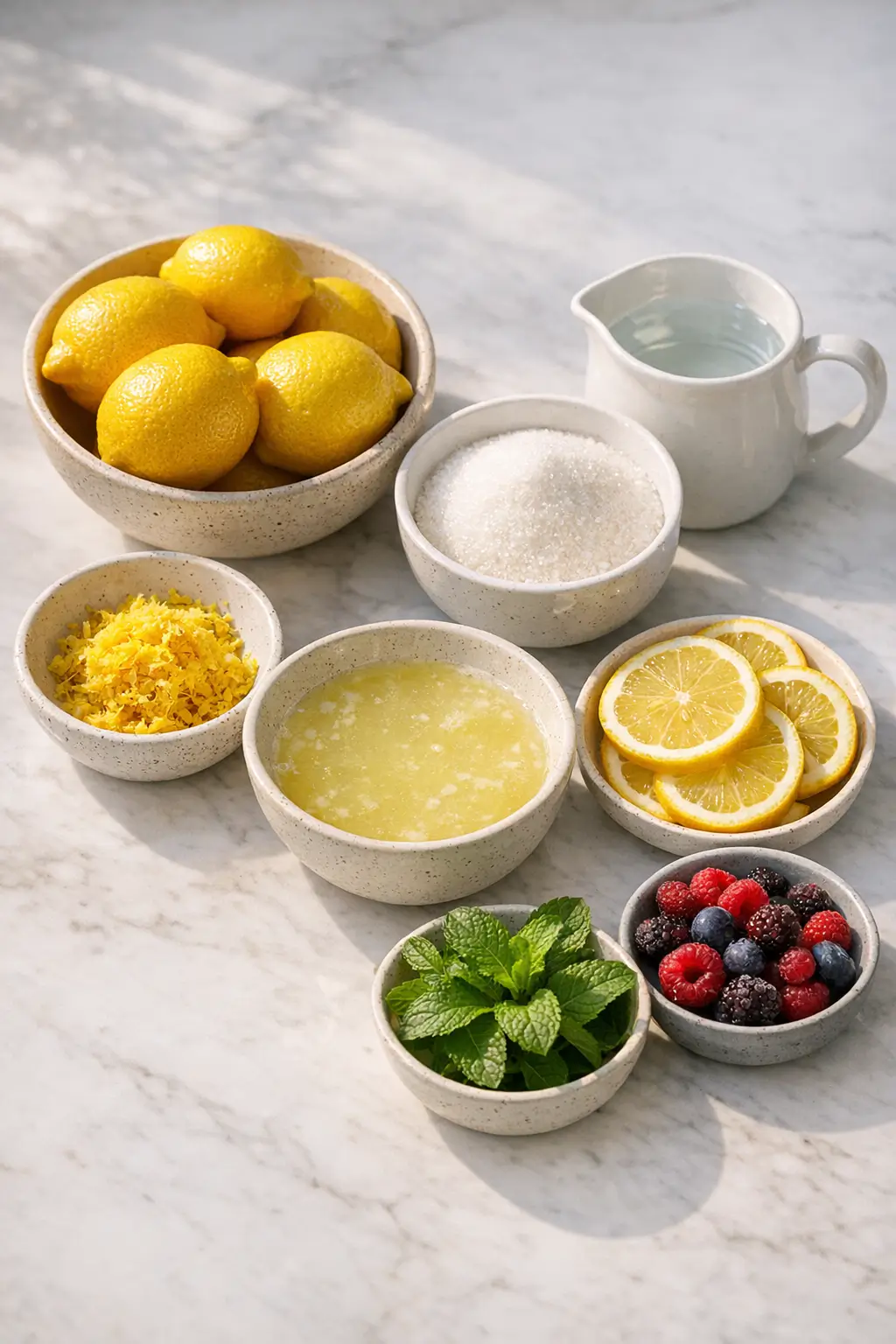
- 8 medium lemons (about 1.5 cups / 360 ml fresh lemon juice)
- 1 cup / 200 g granulated sugar
- 1 cup / 240 ml water
- 1 lemon, zest only (optional, for extra lemon aroma)
For serving at the drink station (per 2 cups / 480 ml concentrate)
- 6 cups / 1.4 liters cold still water or a mix of still and sparkling water, to taste
- Ice, to fill drink dispenser
- Optional garnishes: lemon slices, lime slices, fresh mint sprigs, frozen berries
Kitchen note: The sweetness of lemons varies by season and variety. Always taste your concentrate with water before committing to a big batch in the dispenser; you can whisk in a little extra sugar (dissolved in warm water) if needed.
Step-by-Step Instructions for Homemade Lemonade Concentrate
Wash and prep the lemons.
Rinse all lemons under warm water and scrub lightly to remove any waxy coating, especially if you’re using the zest. Pat dry.Zest one lemon (optional but recommended).
Using a microplane or fine grater, remove the yellow outer peel from one lemon, avoiding the white pith, which is bitter. Set the zest aside.Juice the lemons.
Roll each lemon firmly on the counter with your palm to loosen the juice. Cut in half and juice with a hand juicer or reamer, catching any seeds. Measure out 1.5 cups / 360 ml of juice; add a little extra from another lemon if needed.Make the simple syrup base.
In a medium saucepan, combine 1 cup / 200 g sugar and 1 cup / 240 ml water. Set over medium heat and stir frequently until the sugar is completely dissolved and the liquid is clear, 3–5 minutes. The mixture should be hot but not boiling hard.Cool slightly.
Remove the pan from the heat and let the syrup cool for about 10 minutes. You want it warm, not scalding, so it doesn’t dull the fresh flavor of the lemon juice.Combine syrup, zest, and juice.
Stir the lemon zest into the warm syrup, then pour in the lemon juice. Whisk until fully blended. Taste a spoonful; it should be quite strong and sweeter than you’d drink straight, since this is the concentrate.
Kitchen note: If the concentrate tastes harsh or overly sharp, let it rest for 15–20 minutes at room temperature. The zest and syrup mellow the edges of the acidity as they sit.
Strain if you prefer a smoother concentrate.
For a clear, pulp-free base that won’t clog drink dispenser spigots, pour the mixture through a fine-mesh sieve into a large measuring jug or bowl, pressing gently to capture the juices but discarding zest and any pulp. If your dispenser has a wide spout, you can skip this step and keep the zest for more aroma.Chill thoroughly.
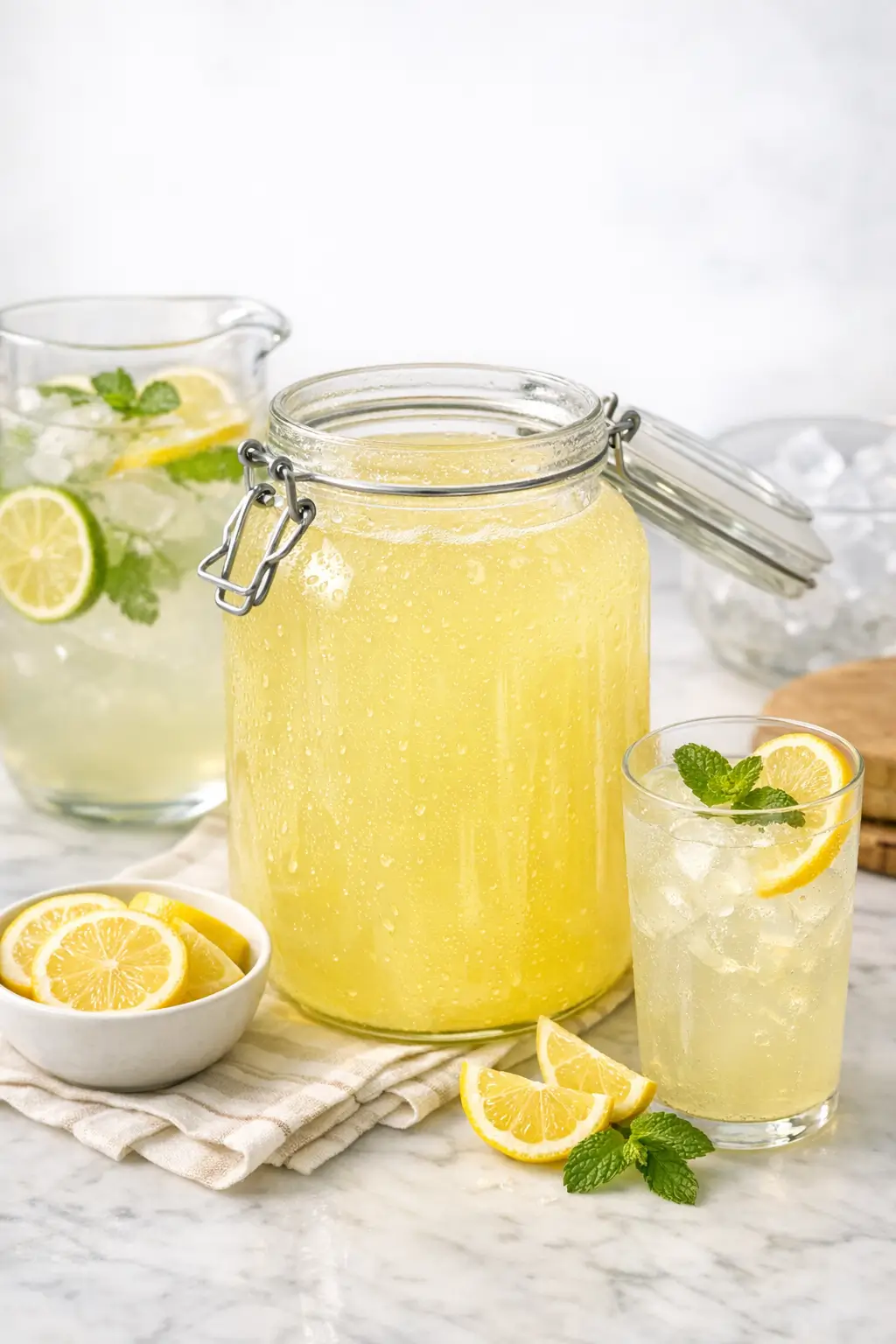
Transfer the strained concentrate to a clean jar or bottle with a tight lid. Cool to room temperature, then refrigerate until cold, at least 2 hours. Cold concentrate mixes more evenly with cold water in a party dispenser.Set up the drink station.
For each 2 cups / 480 ml of concentrate, pour 6 cups / 1.4 liters of cold water into a large pitcher or drink dispenser. Add 1.5–2 cups / 360–480 ml of ice to chill further. Stir well, then taste. If it’s too strong, add more water in 1/2 cup / 120 ml increments; if it’s weak, top up with a little extra concentrate.Garnish and label.
Float lemon and lime slices on top and tuck in a few mint sprigs or frozen berries for color. Add a simple label with a suggested ratio such as “1 part concentrate to 3 parts water” near the station so anyone refilling pitchers can keep the flavor consistent.
Kitchen note: For a self-serve station with kids, keep at least one dispenser slightly weaker (more water) to account for lots of ice in cups. The ice will dilute the drink over time.
- For freezer storage.
If you’re prepping days or weeks ahead, pour cooled concentrate into freezer-safe containers or ice cube trays, leaving a little headspace for expansion. Freeze until solid. For a party, thaw overnight in the fridge or at room temperature for a few hours, then stir before mixing with water.
What to Expect
When mixed at a 1:3 ratio (1 part concentrate to 3 parts water), the finished lemonade should taste bright and tart with enough sweetness to be refreshing but not sticky.
The texture is light and clean, without pulp, so it flows easily through drink dispenser spigots and doesn’t separate heavily as it sits.
You may notice a thin ring of zest or micro-pulp near the top of pitchers if you skipped straining; just give it a quick stir every so often. Different lemon varieties and sugar brands can nudge the flavor slightly more tart or more mellow, which is why tasting and adjusting with a splash more water or a spoon of dissolved sugar is smart before guests arrive.
Kitchen note: Outdoor events on hot days often dull flavor faster because ice melts quickly. Expect to top up with a bit more concentrate as the party goes on to keep the lemonade from tasting washed out.
Ways to Change It Up
Sparkling or lighter version.
Swap half or all of the still water at the station with chilled sparkling water for a bubbly lemonade. For a lighter, all-day-sipping style, use 1 part concentrate to 4 parts water so guests can refill often without a sugar crash.Herb-infused lemonade.
Add a small handful of fresh mint, basil, or rosemary to the warm simple syrup after you take it off the heat. Let it steep 10–15 minutes, then strain out the herbs before adding the lemon juice. This adds subtle complexity without complicating the prep.Berry lemonade bar.
Keep the base lemonade classic, but set out bowls of frozen strawberries, raspberries, or blueberries near the drink station. Guests can drop them into their cups as edible “ice cubes,” which slowly tint the drink and add a gentle fruit note.Less sugar or alternative sweeteners.
For a less sweet option, reduce the sugar to 3/4 cup / 150 g and taste after mixing with water. If you want to replace part of the sugar with honey or agave, dissolve it in warm water separately, then blend into the concentrate. Expect a slightly different flavor and a touch more haze in the drink.Make-ahead cocktail base.
For an adults-only dispenser, mix the concentrate with cold water as usual, then offer spirits like vodka or gin on the side so guests can spike individual glasses. This keeps the main batch kid-friendly while still using the same core concentrate.
Serving and Storage
At a party drink station, the easiest approach is to mix one large dispenser of lemonade at the start, then keep extra cold concentrate in the fridge so you can quickly refresh the dispenser as it empties.
Aim for 1 to 1.5 cups / 240–360 ml of finished lemonade per guest, depending on the weather and what else you’re serving. For kids’ parties or very hot days, plan on the higher end.
Lemonade pairs cleanly with grilled foods, sandwiches, picnic spreads, and snack-style buffets. It also sits nicely next to unsweetened iced tea for a DIY “Arnold Palmer” setup where guests can mix the two in their glasses.
Refrigerated, the concentrate keeps well in a tightly sealed jar for 7–10 days. Beyond that, the flavor gradually fades. For longer storage, freeze for 3–4 months; thaw overnight in the fridge and stir before using.
Kitchen note: If you notice any off smells, cloudiness that doesn’t disperse with shaking, or bubbles in a refrigerated jar that hasn’t been opened, discard the concentrate rather than risk serving it.
Cultural Context
Lemon-based drinks have a long history, with early versions of sweetened lemon beverages appearing in medieval Egypt and spreading around the Mediterranean world. Over time, various forms of lemonade—still, sparkling, and frozen—became common across Europe and North America as sugar and citrus became more widely available.
For a concise overview of how lemons moved through trade routes and into everyday cooking and drinks, the food history article from the British Museum offers useful background: this short history of lemons.
In the United States, lemonade has become linked with summertime, fairs, and casual gatherings, often served from large jugs or stands. That tradition adapts easily into modern drink stations, where a concentrate like this allows faster setup and more consistent flavor from pitcher to pitcher.
Common Questions and Troubleshooting
Why does my lemonade taste too tart at the party, even though it tasted fine earlier?
Ice melt and warm outdoor temperatures both dilute and flatten flavors over time. Before guests arrive, keep the dispenser cold and only half-filled with ice. During the event, refresh flavor by adding small amounts of concentrate—about 1/4 cup / 60 ml at a time—stirring and tasting as you go.
Can I use bottled lemon juice instead of fresh?
Fresh juice gives the cleanest, brightest flavor and is worth the effort for a drink station where lemonade is the star. In a pinch, you can substitute high-quality bottled lemon juice labeled 100% lemon juice with no additives, but expect a slightly more muted and uniform flavor. Always taste and adjust with a bit more sugar or a small splash of fresh lemon if available.
How do I scale this for a large crowd?
Decide how many total liters or quarts of finished lemonade you want, then multiply the concentrate and water components accordingly. For example, to make about 4 liters / 16 cups of lemonade, use 4 cups / 960 ml concentrate and 12 cups / 2.8 liters water as a starting point. Mix in batches so you can taste and adjust rather than committing everything to one too-strong or too-weak container.
My drink dispenser spigot keeps clogging. What can I do?
This usually happens when there’s pulp, zest, or floating fruit caught in a narrow spout. Strain the concentrate finely before chilling and avoid adding loose berries or herb sprigs directly to the dispenser. Instead, float garnishes in a separate open pitcher or set them out in bowls for guests to add to their glasses.
Can I make a lower-sugar version that’s still safe to store?
You can reduce sugar modestly, but sugar does help preserve the concentrate in the fridge and freezer. If you cut the sugar significantly, lean more on freezing for storage rather than keeping it chilled for long periods, and plan to use lower-sugar batches within 3–4 days in the refrigerator.
How far in advance can I prepare the concentrate for a party?
For the best flavor, make it up to 3 days ahead and refrigerate in a sealed jar. If your schedule is tighter, you can prepare and freeze it weeks in advance, then thaw the day before and give it a good stir.
Conclusion
A simple jar of lemonade concentrate can take a lot of pressure off the host at any gathering. Once it’s chilling in the fridge or freezer, you have a flexible base that can become classic lemonade, sparkling drinks, or a light mixer for adults.
If you try this for your next party drink station, consider leaving a quick rating and sharing how you adjusted the sweetness or ratios for your guests. Your tweaks and notes help other home cooks dial in a version that works for their own kitchens, crowds, and climates.
Homemade Lemonade Concentrate for Easy Party Stations

Equipment
- Microplane or fine grater
- Citrus juicer or reamer
- Medium saucepan
- Whisk
- Fine-mesh sieve (optional)
- Measuring cup
- Jar or bottle with tight lid
- Large pitcher or drink dispenser
Ingredients
For the lemonade concentrate
- 8 medium lemons juiced (about 1.5 cups / 360 ml fresh lemon juice)
- 1 cup granulated sugar 200 g
- 1 cup water 240 ml
- 1 lemon zest zest only (optional, for extra lemon aroma)
For serving (per 2 cups / 480 ml concentrate)
- 6 cups cold still water or a mix of still and sparkling water, to taste (1.4 liters)
- ice to fill drink dispenser
- lemon slices optional garnish
- lime slices optional garnish
- fresh mint sprigs optional garnish
- frozen berries optional garnish
Instructions
- Wash and prep the lemons. Rinse all lemons under warm water and scrub lightly to remove any waxy coating, especially if you’re using the zest. Pat dry.
- Zest one lemon (optional but recommended). Using a microplane or fine grater, remove the yellow outer peel from one lemon, avoiding the white pith. Set the zest aside.
- Juice the lemons. Roll each lemon on the counter to loosen juice, halve, and juice, catching seeds. Measure out 1.5 cups / 360 ml of juice; add a little extra from another lemon if needed.
- Make the simple syrup base. In a medium saucepan, combine 1 cup / 200 g sugar and 1 cup / 240 ml water. Set over medium heat and stir until the sugar dissolves and the liquid is clear, 3–5 minutes (hot but not boiling hard).
- Cool slightly. Remove from heat and let the syrup cool about 10 minutes; you want it warm, not scalding.
- Combine syrup, zest, and juice. Stir zest into the warm syrup, then pour in the lemon juice and whisk until blended. Taste; it should be strong and sweeter than you’d drink straight since it’s a concentrate. If it tastes harsh, let it rest 15–20 minutes at room temperature to mellow.
- Strain if you prefer a smoother concentrate. Pour through a fine-mesh sieve into a measuring jug or bowl, pressing gently; discard zest/pulp. (Skip if your dispenser spout is wide and you want more aroma.)
- Chill thoroughly. Transfer concentrate to a clean jar or bottle with a tight lid. Cool to room temperature, then refrigerate until cold, at least 2 hours.
- Set up the drink station. For each 2 cups / 480 ml concentrate, mix with 6 cups / 1.4 liters cold water in a pitcher or dispenser. Add about 1.5–2 cups / 360–480 ml ice and stir. Taste and adjust: add more water in 1/2 cup / 120 ml increments if too strong, or a little extra concentrate if weak.
- Garnish and label. Add lemon/lime slices, mint, or frozen berries if desired, and label the ratio (e.g., “1 part concentrate to 3 parts water”) for easy refills.
- For freezer storage (optional). Pour cooled concentrate into freezer-safe containers or ice cube trays, leaving headspace, and freeze. Thaw overnight in the fridge (or a few hours at room temp) and stir before mixing with water.



Leave a Reply