
Homemade salsa verde with roasted tomatillos is one of those low-effort, high-impact sauces that instantly makes a simple meal feel thought-out. Roasting concentrates the natural tartness of tomatillos into something deeper and slightly sweet, while the chiles, onion, and cilantro add heat and freshness.
If you’re racing to get dinner on the table after work, start by preheating the broiler and husking the tomatillos so they’re ready to roast. If you’re juggling kids or a very small kitchen, clear one section of counter now for a cutting board and blender so you’re not shuffling things mid-recipe.
This salsa verde shows up alongside tacos, quesadillas, grilled meats, and eggs in many Mexican and Mexican-American kitchens. It’s especially handy for weeknights and casual gatherings, and suits any cook comfortable with basic knife work and using the broiler. Expect a pourable, slightly chunky salsa with a bright, tangy bite and light smokiness—not a thick, ultra-smooth dip.
Ingredients
Makes about 2 cups (serves 3–4 as a generous condiment)
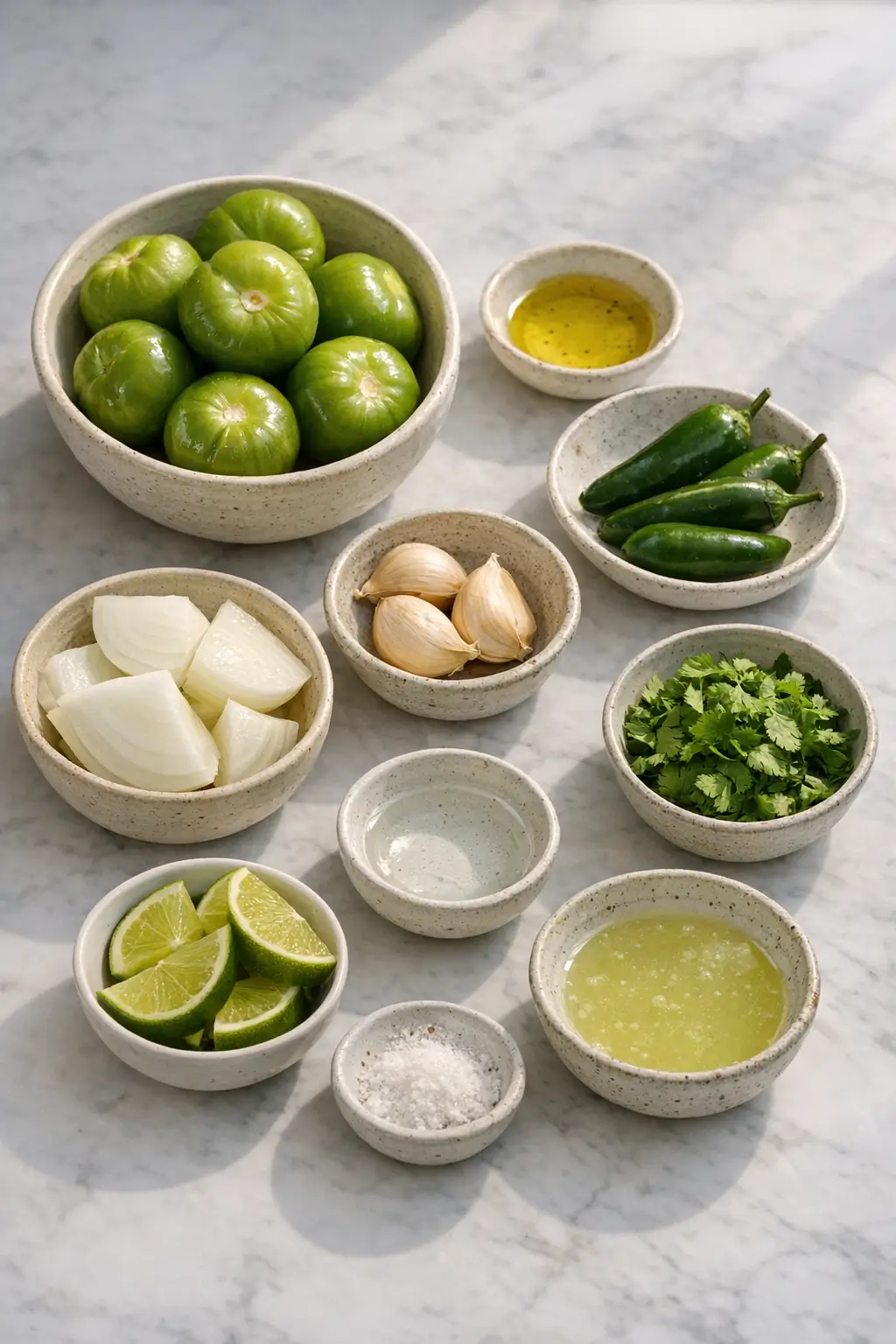
- 450 g / 1 lb tomatillos, husked and rinsed (about 8–10 medium)
- 2–3 fresh jalapeño or serrano chiles, stems removed (leave seeds for more heat; remove for milder)
- 3 large garlic cloves, unpeeled
- 60 g / 1/2 medium white onion, cut into thick slices or wedges
- 15 g / about 1/2 cup loosely packed fresh cilantro leaves and tender stems, roughly chopped
- 15–30 ml / 1–2 tbsp fresh lime juice, to taste
- 3–5 g / 1/2–1 tsp fine sea salt, to taste
- 15–30 ml / 1–2 tbsp neutral oil (such as avocado or canola; optional, helps browning and softens sharpness)
- 30–60 ml / 2–4 tbsp water, as needed to adjust consistency
Possible substitutions and additions:
- White onion → yellow onion works; red onion will add a slight pink tint but is fine in a pinch.
- Fresh jalapeño/serrano → canned pickled jalapeños for a different, slightly vinegar-forward flavor; start with 1 and adjust.
- Lime juice can be partly replaced with apple cider vinegar (use 1–2 tsp to start) if you are out of limes.
- For a smokier version, add 1 canned chipotle in adobo or 1–2 dried chiles de árbol (lightly toasted and destemmed) when blending.
Step-by-Step Instructions for Homemade Salsa Verde with Roasted Tomatillos
-
Prep the tomatillos and vegetables.
Remove the papery husks from the tomatillos and rinse them under warm water to remove the sticky residue. Pat dry. Halve any very large tomatillos so they roast more evenly. Peel the outer skin from the onion and cut into thick slices or wedges so the pieces don’t burn under the broiler. -
Arrange on a sheet pan.
Line a rimmed baking sheet with foil for easier cleanup. Spread the tomatillos, onion, whole chiles, and unpeeled garlic cloves in a single layer. If using the optional oil, drizzle it lightly over the vegetables and toss with your hands to coat. -
Broil until blistered on one side.
Position an oven rack about 4–6 inches (10–15 cm) below your broiler and preheat it on high for a few minutes. Slide the pan under the broiler. Roast for about 5–7 minutes, or until the tomatillos are blistered and charred in spots and starting to soften, and the chiles are darkened in places.
Kitchen note: Broilers vary a lot. If you see the garlic skins turning very dark before the tomatillos soften, use tongs to pull the garlic off the tray early so it doesn’t burn and turn bitter.
-
Turn and finish roasting.
Using tongs, turn the tomatillos and chiles so a new side faces the heat. Flip or stir the onions. Continue to broil for another 4–6 minutes, until the tomatillos are completely softened, collapsed in places, and well-speckled with char. Some juices may leak onto the pan; keep these for blending. -
Cool briefly and peel garlic.
Set the pan on a heat-safe surface and let the vegetables cool for 5–10 minutes, just until they’re comfortable to handle. Slip off and discard the garlic skins. Transfer the tomatillos, onion, chiles, peeled garlic, and all accumulated pan juices into a blender or food processor. -
Blend the base salsa.
Add 1/2 tsp salt to start, along with 2 tbsp water and 1 tbsp lime juice. Pulse a few times, then blend until the salsa is mostly smooth but still has some texture, or stop earlier for a chunkier style. If your blender struggles, add another tablespoon of water to help it catch. -
Check heat level and adjust.
Taste a small spoonful. If it’s milder than you prefer and you reserved any roasted chiles, add them and blend again. For more acidity, add an extra 1/2–1 tbsp lime juice. Add more salt in small pinches; a good salsa verde should taste bright and fully seasoned without feeling salty.
Kitchen note: Tomatillos vary in tartness. If your salsa tastes too sharp even after salt, add 1–2 tsp water and another 1 tsp oil or a pinch of sugar to round the flavor rather than more lime.
-
Stir in cilantro off the heat.
Add the chopped cilantro and pulse just a few times, or stir it in by hand for a fresher look and flavor. Blending it heavily can make the salsa slightly darker and more opaque, which is fine but less vibrant. -
Adjust thickness.
For a dipping consistency (for chips), add a bit more water, 1 tbsp at a time, to make it easily spoonable. For using as a sauce over enchiladas or chilaquiles, keep it a little looser. The salsa will thicken slightly as it chills. -
Chill or serve.
You can serve the salsa slightly warm from the blender, at room temperature, or chilled. For the most blended flavor, cover and refrigerate for at least 30–60 minutes so the onion, cilantro, and chiles can meld with the tomatillos.
Kitchen note: If you plan to store the salsa for several days, keep a touch on the salty and tangy side when you first season it—flavors tend to mute a bit in the fridge.
What to Expect
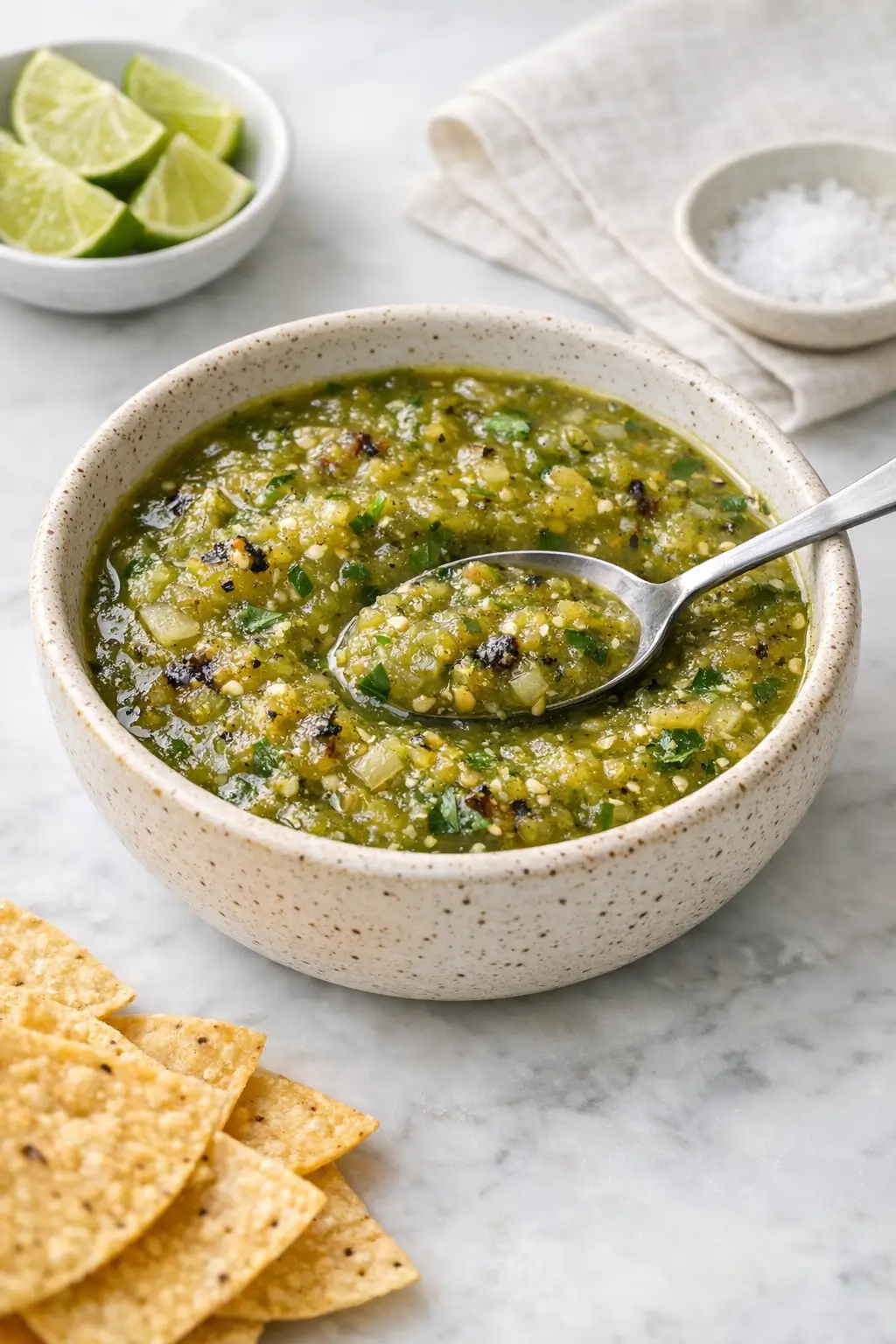
This homemade salsa verde with roasted tomatillos should pour rather than plop. It will be thinner than jarred supermarket salsa, with small flecks of cilantro, chile, and onion visible.
The texture can range from slightly chunky to mostly smooth depending on how long you blend. Even when blended well, tiny seeds and skins from the tomatillos and chiles give it a light, rustic feel rather than a perfectly silky sauce.
Flavor-wise, expect bright acidity from the tomatillos and lime, gentle smokiness from the roasting, and herbal notes from the cilantro. Serrano chiles will usually give a sharper, more direct heat than jalapeños. If your oven runs hot and you get more charring, the salsa may lean a bit smokier and slightly sweeter.
Different salt brands and lime varieties can also shift the balance. Some limes are more floral and mild; others are quite aggressive. It’s normal to need an extra squeeze of lime or a pinch of salt right before serving, especially if the salsa has been chilled.
Ways to Change It Up
1. Simple vegan creamy version
This salsa is already naturally vegan, but you can change the texture by blending in 1 small ripe avocado with the roasted vegetables. Add a splash of water if it thickens too much.
The avocado version is great as a taco sauce or dip but will lose its bright green color faster and doesn’t keep quite as long. Keep it in the fridge for up to 2 days and press plastic wrap directly onto the surface to limit browning.
Kitchen note: If you add avocado, taste for acidity again and bump up the lime juice—the fat will dull sharp flavors.
2. Milder, kid-friendly salsa verde
For a gentler heat, use 1 small jalapeño, deseeded and deveined, and roast it thoroughly so the flavor is soft and a bit sweet. You can even roast half a green bell pepper alongside the tomatillos and include it for more body with less spice.
In this version, lean on onion, cilantro, and lime for flavor. Serve it with tortilla chips, quesadillas, or scrambled eggs where you want brightness without much heat.
3. Smoky, spicier variation
To make a bolder salsa, add 1–2 dried chiles de árbol (toasted briefly in a dry pan until fragrant) or 1 canned chipotle pepper in adobo to the blender along with the roasted vegetables. Either option brings a deeper, smokier flavor and more heat.
This style pairs well with grilled steak, roasted vegetables, or hearty bean dishes. It will also darken the color slightly from bright green to an olive or yellow-green tone, which is normal.
4. Faster stovetop version
If using the broiler isn’t convenient, you can approximate the flavor in a skillet. Heat a dry cast-iron or heavy skillet over medium-high and add the husked tomatillos, chiles, garlic (in skins), and onion.
Cook, turning occasionally, until the vegetables are softened and charred in spots. The timing is similar, around 10–15 minutes total. Then proceed with blending as directed.
Serving and Storage
Salsa verde with roasted tomatillos is highly flexible. Spoon it over tacos, burritos, and quesadillas, or use it to brighten grain bowls and grilled vegetables. It also works well over roasted chicken, pork, or fish.
For breakfast, drizzle it over fried or scrambled eggs, or use it as part of a sauce base for chilaquiles or huevos rancheros-style dishes. It brings enough acidity to cut through rich foods like refried beans, cheese, and avocado.
Serve the salsa slightly chilled or at cool room temperature. If it’s been in the fridge, give it a quick stir and taste for salt and lime before putting it on the table; cold temperatures can mute both.
Stored in a clean, airtight container in the refrigerator, this salsa keeps well for about 4–5 days. The flavor may mellow slightly, and the color can shift from bright to a softer green, but that’s expected.
For food safety, avoid letting the salsa sit at room temperature for more than 2 hours, especially if serving outdoors in warm weather. Because of the fresh ingredients and relatively low oil content, this is not a candidate for home canning without tested, specialized guidelines.
Cultural Context
Salsa verde made with tomatillos and green chiles is closely associated with Mexican cuisine, where it appears on tables alongside red salsas and other condiments. Roasting the ingredients on a comal, griddle, or directly over flame is a longstanding technique that concentrates flavor and adds a light smokiness.
In Mexico and the Southwestern United States, this type of salsa verde is often served with dishes such as enchiladas, chilaquiles, tacos, and chicharrón. For a concise overview of how salsa verde fits into Mexican sauces, you can read more in this entry on Mexican salsas from México Desconocido and in the general description of salsa verde in an encyclopedia overview of green sauces.
While many regional and family variations exist, the core idea remains consistent: a fresh, tangy, moderately spicy sauce that complements a wide range of everyday dishes.
Common Questions and Troubleshooting
My salsa verde came out too sour—can I fix it?
Yes. First, make sure it’s properly salted; a small pinch of salt can balance acidity. If it’s still too sharp, blend in 1–2 tsp neutral oil and 1–2 tsp water, or a small piece of ripe avocado. You can also add a pinch of sugar, but add it last and sparingly so the salsa doesn’t taste sweet.
The salsa is bitter and harsh. What went wrong?
Common causes are burned garlic or chiles, or using too much raw onion. Next time, pull the garlic from the broiler as soon as the skins darken and the cloves feel soft, even if the tomatillos need more time. You can also rinse finely chopped raw onion under cold water, then drain well before adding to tame any harsh edges.
Kitchen note: If your current batch is already bitter, try blending in a fresh roasted tomatillo and a bit more cilantro plus lime and salt. It won’t erase the bitterness completely, but it can rebalance it.
My salsa is too watery. How can I thicken it?
Tomatillos release a lot of juice as they roast. To thicken, blend in another roasted tomatillo if you have one, or add a small piece of ripe avocado. You can also simmer the salsa gently in a small saucepan for 5–10 minutes to reduce and concentrate it, then cool before serving.
The salsa is thicker than I like. Can I thin it without diluting flavor too much?
Add 1–2 tbsp water at a time and taste after each addition. A tiny extra pinch of salt and lime juice will help keep the flavor bright. If you know you’ll be using the salsa as a cooking sauce (for example, simmering with chicken), it’s fine to keep it a bit thinner.
Can I freeze homemade salsa verde?
You can, though the texture changes slightly. Freeze in small containers or ice cube trays for up to 2 months. Thaw in the refrigerator and stir well; the salsa may look separated at first but usually comes back together. Expect a little loss in brightness and adjust with fresh lime and cilantro if desired.
Is it safe to can this salsa at home?
This recipe is developed for fresh use and refrigerator storage only. Safe water-bath canning requires tested, specific ratios of acid and vegetables. If you’re interested in canning, look for a recipe that has been lab-tested for home preservation, typically through a university extension or similar source.
Conclusion
Homemade salsa verde with roasted tomatillos is a practical way to bring brightness and complexity to simple meals, using mostly pantry and produce-drawer staples. Once you’ve made it a few times, you can adjust the heat, texture, and smokiness to fit your kitchen and your eaters.
If you try this version, feel free to leave a comment or rating to share how it went. I always appreciate hearing what you served it with, any chile swaps you made, or how you adjusted the heat level for your table.
Homemade Salsa Verde with Roasted Tomatillos

Equipment
- Rimmed baking sheet
- Aluminum foil
- Tongs
- Blender or food processor
- Cutting board
- Knife
Ingredients
- 450 g tomatillos husked and rinsed (about 8–10 medium)
- 2–3 jalapeño or serrano chiles stems removed (leave seeds for more heat; remove for milder)
- 3 garlic cloves large, unpeeled
- 60 g white onion cut into thick slices or wedges
- 15 g fresh cilantro leaves and tender stems loosely packed, roughly chopped
- 15–30 ml fresh lime juice to taste
- 3–5 g fine sea salt to taste
- 15–30 ml neutral oil such as avocado or canola; optional
- 30–60 ml water as needed to adjust consistency
Instructions
- Prep the tomatillos and vegetables. Remove husks from the tomatillos, rinse under warm water to remove sticky residue, and pat dry. Halve very large tomatillos. Peel the onion and cut into thick slices or wedges.
- Arrange on a sheet pan. Line a rimmed baking sheet with foil. Spread tomatillos, onion, whole chiles, and unpeeled garlic in a single layer. If using oil, drizzle lightly and toss to coat.
- Broil until blistered on one side. Set an oven rack 4–6 inches (10–15 cm) below the broiler and preheat broiler on high. Broil 5–7 minutes, until tomatillos blister/char in spots and begin to soften and chiles darken in places.
- Turn and finish roasting. Using tongs, turn tomatillos and chiles; flip or stir onions. Broil another 4–6 minutes, until tomatillos are fully softened and well-speckled with char. Keep any pan juices for blending.
- Cool briefly and peel garlic. Let vegetables cool 5–10 minutes until safe to handle. Slip off and discard garlic skins. Transfer tomatillos, onion, chiles, peeled garlic, and all pan juices to a blender or food processor.
- Blend the base salsa. Add 1/2 tsp salt to start, plus 2 tbsp water and 1 tbsp lime juice. Pulse, then blend to mostly smooth with some texture (or stop earlier for chunkier salsa). Add more water if needed to help it blend.
- Check heat level and adjust. Taste and adjust with more roasted chiles (if reserved), more lime juice (about 1/2–1 tbsp), and more salt in small pinches until bright and well-seasoned.
- Stir in cilantro off the heat. Add chopped cilantro and pulse just a few times, or stir in by hand for a fresher look and flavor.
- Adjust thickness. Add water 1 tbsp at a time to reach your preferred consistency; the salsa will thicken slightly as it chills.
- Chill or serve. Serve warm, at room temperature, or chilled. For best melded flavor, cover and refrigerate 30–60 minutes before serving.



Leave a Reply