
Irish apple cake with brown sugar custard is the kind of dessert that quietly wins over a table. You get a tender, apple-studded cake with soft spice, a lightly crunchy, buttery crumble-like top, and a warm, pourable brown sugar custard that soaks into every slice.
If you’re making this on a busy weeknight or right before guests arrive, start by getting the butter out to soften and preheating the oven. While the oven comes up to temperature, peel and chop the apples so they’re ready the moment your batter is mixed.
This style of Irish apple cake is common as a homely dessert or tea-time bake, especially in cooler months and around St. Patrick’s Day. It suits a patient but not fussy baker: someone who likes simple mixing, rustic texture, and the reward of warm cake with sauce rather than elaborate decoration.
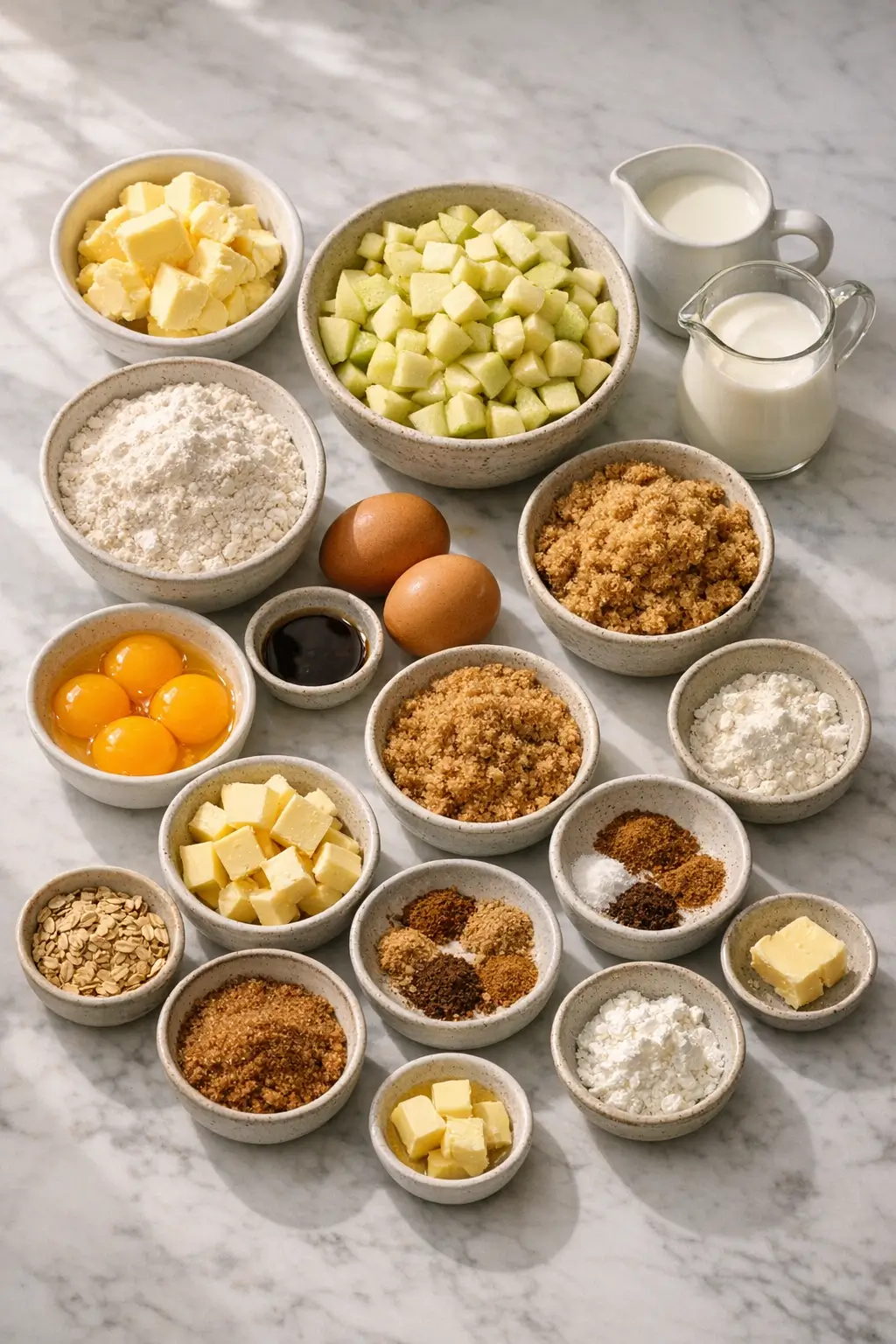
Ingredients
Makes one 8–9 inch / 20–23 cm round cake (about 8 slices)
For the apple cake
- 170 g / 3⁄4 cup unsalted butter, softened – for richness and a tender crumb
- 150 g / 3⁄4 cup packed light brown sugar – sweetens the batter and adds light caramel notes
- 2 large eggs, at room temperature if possible – bind the batter
- 1 tsp vanilla extract – rounds out the brown sugar and spice
- 250 g / 2 cups all-purpose (plain) flour – main structure
- 2 tsp baking powder – helps the dense, apple-heavy batter rise
- 1⁄2 tsp fine sea salt – balances sweetness
- 1 tsp ground cinnamon – warm spice for the apples
- 1⁄4 tsp ground nutmeg – adds background warmth; freshly grated if you have it
- 1⁄4 tsp ground cloves – use sparingly; it’s strong but classic in many Irish-style versions
- 120 ml / 1⁄2 cup whole milk – loosens the batter
- 3–4 tart apples (about 600–700 g / 1 1⁄4–1 1⁄2 lb), such as Granny Smith, peeled, cored, and chopped into 1–1.5 cm / 1⁄2 inch cubes – the star; they should hold their shape
Kitchen note: If your apples are very juicy, lightly pat the cubes dry with a clean towel after chopping. Too much surface moisture can make the center of the cake bake up gummy instead of tender.
For the buttery crumble-style top
This isn’t a thick streusel, more a thin, crisp topping that echoes versions with a crumble crown.
- 65 g / 1⁄2 cup all-purpose (plain) flour
- 50 g / 1⁄4 cup packed light brown sugar
- 1⁄4 tsp ground cinnamon
- 55 g / 4 tbsp cold unsalted butter, diced
- Optional: 2 tbsp rolled oats – for a slightly more rustic, nubbly texture
For the warm brown sugar custard sauce
- 4 large egg yolks – for body and silkiness
- 100 g / 1⁄2 cup packed light brown sugar – gives the custard its caramel color and flavor
- 2 tbsp (16 g) cornstarch / cornflour – keeps the custard thick and pourable without scrambling
- 1⁄4 tsp fine sea salt – sharpens the sweetness
- 240 ml / 1 cup whole milk
- 120 ml / 1⁄2 cup heavy cream (double cream) – for richness
- 1 tbsp unsalted butter – stirred in at the end for gloss
- 2 tsp vanilla extract – classic custard flavor
Step-by-Step Instructions for Irish Apple Cake with Brown Sugar Custard
1. Preheat and prepare your pan
- Preheat the oven to 180°C / 350°F.
- Butter and line an 8–9 inch / 20–23 cm springform pan (or deep round cake tin) with parchment on the base.
- Lightly flour the sides, tapping out excess. This helps the tall, moist cake release cleanly.
Kitchen note: A springform pan makes slicing and serving much easier. If you use a regular cake tin, let the cake cool longer before turning it out so it doesn’t break.
2. Mix the crumble-style topping
- In a small bowl, combine the flour, brown sugar, cinnamon, and oats if using.
- Add the cold diced butter and rub it into the dry ingredients with your fingertips until it forms small, damp crumbs. You’re aiming for pea-sized bits, not a smooth paste.
- Chill this bowl in the fridge while you make the cake batter so the topping stays cold and bakes crisp.
3. Prep the apples
- Peel, core, and chop the apples into 1–1.5 cm / 1⁄2 inch cubes.
- If they start to brown while you work, you can toss them very lightly with a teaspoon of lemon juice, but it’s not essential—they’ll be hidden in the batter.
- Set aside on a towel-lined plate to wick away any excess juice.
4. Make the cake batter
- In a medium bowl, whisk together the flour, baking powder, salt, cinnamon, nutmeg, and cloves.
- In a separate large bowl, beat the softened butter with the brown sugar using a hand mixer or wooden spoon until lighter in color and slightly fluffy, about 2–3 minutes.
- Beat in the eggs one at a time, scraping down the bowl between additions, then mix in the vanilla.
- Add about one-third of the dry ingredients to the butter mixture and mix just until combined.
- Pour in half the milk, mix gently, then repeat with another third of the dry ingredients, the remaining milk, and finally the last third of the dry mix.
- The batter will be thick but spreadable. Avoid over-mixing at this stage; stirring just until no dry streaks remain keeps the crumb tender.
5. Fold in the apples
- Add the chopped apples to the bowl and use a spatula to fold them through the batter until they’re evenly distributed.
- You’ll have a very apple-heavy, chunky batter; that’s exactly what you want for this style of cake.
Kitchen note: If the batter seems impossibly thick once the apples are in, drizzle in 1–2 tbsp extra milk and fold gently. Different flours and apple varieties absorb moisture differently.
6. Assemble and bake
- Scrape the batter into the prepared pan. Use a spatula or the back of a spoon to press it into an even layer, nudging it right up to the edges and smoothing the top.
- Sprinkle the chilled crumble topping evenly over the surface. Try not to press it down too hard; light contact is enough.
- Bake on the middle rack for 45–55 minutes, rotating the pan once around the 35-minute mark.
- Start checking at 45 minutes. The cake is done when the top is a deep golden brown, the edges are pulling slightly from the sides, and a skewer inserted into the center comes out with moist crumbs but no wet batter. Because the cake is dense with fruit, the very center will feel softer than a standard sponge.
- If the top is browning too fast but the center still looks wet, tent loosely with foil and continue baking in 5-minute increments.
7. Cool before slicing
- Set the pan on a wire rack and cool for 20–30 minutes.
- Run a thin knife around the edge and gently release the springform ring.
- You can serve the cake slightly warm or at room temperature. Warm cake will be more fragile when sliced but especially good with hot custard.
What to Expect
This Irish apple cake bakes up moist and quite substantial, somewhere between a soft scone batter and a traditional butter cake in texture. The crumb is tender rather than fluffy, with generous pockets of softened apple in nearly every bite.
The top should be lightly crisp and crumbly from the brown sugar and butter, but not a thick, separate streusel layer. As the cake stands, that topping softens slightly where it meets the apples and stays crisper at the very surface.
Flavor-wise, expect more gentle warmth than aggressive spice. Brown sugar adds a light toffee note that sits behind the apples rather than overpowering them. The cloves and nutmeg are present but in the background; cinnamon is the most obvious spice.
Different oven calibrations and pan sizes will shift bake time. A smaller, deeper pan tends to need closer to the full 55 minutes, while a wider pan may be done earlier. Using very juicy apples can make the center feel almost pudding-like; it should still slice cleanly once cooled.
Kitchen note: If you cut into the cake and find the very center a bit too moist for your taste, you can return individual slices to a low oven (about 150°C / 300°F) for 8–10 minutes to gently dry and warm them before serving.
Ways to Change It Up
1. Simple nut-free, oat-free topping
If you prefer a very plain, sugar-crusted top, leave out the oats and reduce the crumble to just flour, brown sugar, cinnamon, and butter. Sprinkle a little extra granulated sugar over the crumble right before baking for a more crackly finish.
This version travels and stores especially well because the topping stays uniform rather than nubbly.
2. Vegetarian and easily adapted for a richer, cream-free custard
The cake itself is already vegetarian. For a lighter custard without cream, replace the cream with more whole milk and add an extra 1 tsp cornstarch to help it thicken. The texture will be slightly less silky but still smooth and pourable.
For a dairy-reduced approach, you can experiment with full-fat oat milk in the custard plus plant-based butter in both cake and topping. Expect a slightly less traditional flavor and a thinner sauce.
3. Make it milder for spice-shy eaters
For kids or anyone sensitive to spice, reduce the cloves to a pinch and the nutmeg to a small grating, or omit them entirely and rely on cinnamon alone.
You can also use a sweeter apple such as Honeycrisp or Pink Lady in place of all or part of the tart apples. The cake will taste sweeter and a bit less sharp.
4. Add a little extra crunch and warmth
For more texture, stir 30 g / 1⁄4 cup chopped toasted walnuts or pecans into the crumble topping before baking. They’ll toast further in the oven and add a slightly bitter edge that balances the brown sugar.
If you like your desserts on the spicier side, increase the cinnamon to 1 1⁄2 tsp and add a small pinch of extra nutmeg.
Kitchen note: If you add nuts, keep an eye on the topping in the last 10 minutes of baking. Nuts can scorch faster than the rest of the crumble; tent with foil if they darken too much.
5. Faster, simplified version
On a tight schedule, you can skip the crumble entirely and instead sprinkle 2–3 tbsp coarse or granulated sugar over the batter before baking. This reduces prep by 5–10 minutes and still gives a lightly crackly top.
You can also serve the cake with softly whipped cream or a scoop of vanilla ice cream in place of the custard when you truly need a shortcut.
Serving and Storage
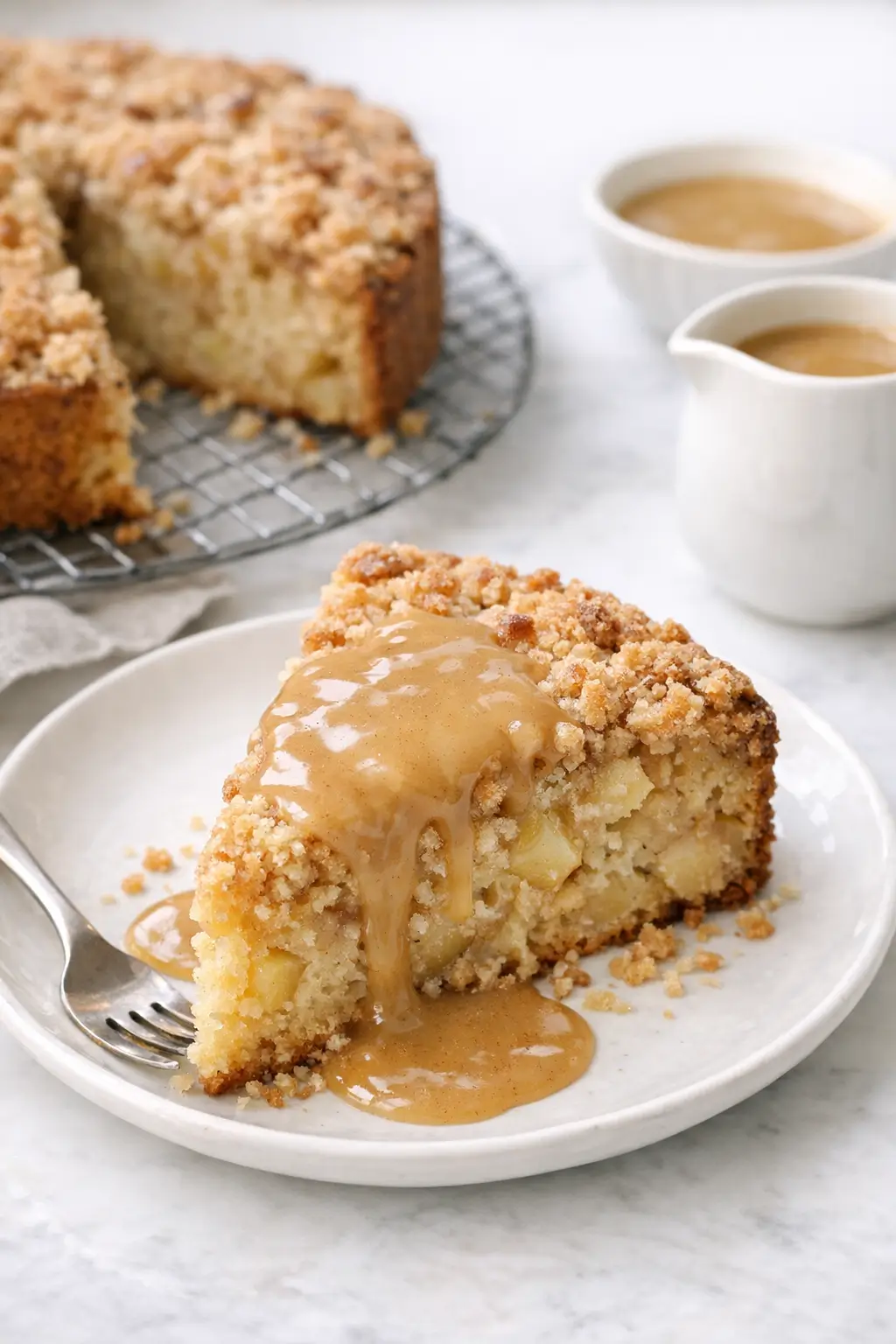
This cake is most often served slightly warm with the brown sugar custard poured over each slice so it soaks into the crumb. It also works at room temperature with the custard warm on the side for guests to add themselves.
For a full dessert plate, pair a slice with softly whipped cream or vanilla ice cream. If you enjoy contrasting textures, a crisp salad like Shirazi Salad, Fast and Fresh with Mint and Lime or a bright fruit salad on the table keeps the rest of the meal feeling light.
The cake keeps well, tightly covered at cool room temperature, for 1–2 days. Because of the high fruit content, refrigerate after that for up to 4 days; bring to room temperature or warm slices briefly in a 150°C / 300°F oven before serving.
The custard is best within 2 days. Store it in an airtight container in the fridge and rewarm gently in a small saucepan over low heat, whisking and adding a splash of milk if it thickens too much.
You can freeze the cake (without custard) for up to 2 months. Wrap individual slices well, then thaw overnight in the fridge and refresh in a low oven. Avoid freezing the custard; its texture can become grainy when thawed.
Cultural Context
Irish apple cake is often associated with rural baking traditions, particularly in regions such as County Kerry, where versions known as “Kerry apple cake” have been made for generations. The cake draws on Ireland’s long history of apple growing; apples have been cultivated there since at least the 18th century and were a practical way to add sweetness to farmhouse baking when sugar was less accessible.
Many historical versions were made in heavy pots over the fire and had a texture somewhere between bread and cake. Over time, recipes evolved to include more butter, sugar, and sometimes spices, while a warm vanilla custard or simple pouring cream remained a common accompaniment. For more background on the evolution of the dish, resources like this overview from Puratos on the history of Irish apple cake and this discussion of regional variations in Irish apple bakes from Recipe Rogue offer accessible context.
Common Questions and Troubleshooting
Why is my cake still wet in the middle when the top is brown?
Irish-style apple cakes are dense with fruit, so the center naturally takes longer to set. If the top is done but the middle is underbaked, tent the cake loosely with foil and continue baking, checking every 5 minutes until a skewer comes out with just moist crumbs. Make a note of the total bake time for your oven for next time.
My crumble topping sank—what happened?
If the butter in the topping is too soft or the crumble was pressed firmly into the batter, it can merge into the cake instead of sitting on top. Next time, keep the butter cold, chill the topping briefly, and scatter it gently in an even layer over the batter.
Can I swap in different apples?
Yes. Firm, slightly tart apples like Granny Smith, Braeburn, or Jonagold hold up well. Very soft, sweet apples can break down too much and make the center wetter and sweeter. If using sweeter varieties, you might reduce the brown sugar in the cake by 1–2 tbsp if you prefer a less sweet result.
How do I avoid scrambling the custard?
Always start by whisking the egg yolks, brown sugar, cornstarch, and salt together until smooth. Warm the milk and cream until steaming but not boiling, then whisk a small ladleful into the yolks to temper them before adding everything back to the pot. Keep the heat on low to medium-low and whisk constantly until the custard thickens.
Can I make the cake or custard ahead?
The cake can be baked a day ahead, cooled completely, and stored well wrapped at room temperature. The custard can be cooked up to 2 days in advance; press plastic wrap directly onto the surface to prevent a skin from forming. Rewarm gently, whisking and loosening with a splash of milk if needed.
Is there a way to reduce the richness?
You can use 2% milk in the cake and swap the cream in the custard for more whole or 2% milk, increasing the cornstarch slightly as noted above. The cake will be a touch less plush, and the custard a little lighter, but the overall character stays the same.
Conclusion
Irish apple cake with brown sugar custard is a practical, rewarding bake: straightforward to mix, forgiving in appearance, and generous at the table. If you try it, leave a comment with how it baked in your oven and what apples you used; that kind of detail helps other home cooks. Feel free to share any twists you make—extra spice, nuts, or a different sauce—so this cozy dessert keeps evolving in your own kitchen.
Irish Apple Cake with Brown Sugar Custard Comfort

Equipment
- 8–9 inch (20–23 cm) springform pan or deep round cake tin
- Parchment paper
- Mixing bowls
- Whisk
- Hand mixer or wooden spoon
- Rubber spatula
- Wire rack
- Small saucepan
Ingredients
For the apple cake
- 170 g unsalted butter softened
- 150 g light brown sugar packed
- 2 large eggs room temperature if possible
- 1 tsp vanilla extract
- 250 g all-purpose flour (plain flour)
- 2 tsp baking powder
- 1/2 tsp fine sea salt
- 1 tsp ground cinnamon
- 1/4 tsp ground nutmeg
- 1/4 tsp ground cloves
- 120 ml whole milk
- 3–4 tart apples (such as Granny Smith) about 600–700 g; peeled, cored, and chopped into 1–1.5 cm (1/2-inch) cubes
For the buttery crumble-style top
- 65 g all-purpose flour (plain flour)
- 50 g light brown sugar packed
- 1/4 tsp ground cinnamon
- 55 g unsalted butter cold, diced
- 2 tbsp rolled oats optional
For the warm brown sugar custard sauce
- 4 large egg yolks
- 100 g light brown sugar packed
- 2 tbsp cornstarch (cornflour) about 16 g
- 1/4 tsp fine sea salt
- 240 ml whole milk
- 120 ml heavy cream (double cream)
- 1 tbsp unsalted butter stirred in at the end
- 2 tsp vanilla extract
Instructions
- Preheat the oven to 180°C / 350°F. Butter and line an 8–9 inch (20–23 cm) springform pan with parchment on the base, then lightly flour the sides and tap out excess.
- Make the crumble-style topping: in a small bowl, combine flour, brown sugar, cinnamon, and optional oats. Add cold diced butter and rub in with fingertips until pea-sized damp crumbs form. Refrigerate while you make the batter.
- Prep the apples: peel, core, and chop into 1–1.5 cm (1/2-inch) cubes. If desired, toss very lightly with a little lemon juice to slow browning, then set on a towel-lined plate to wick excess juice.
- In a medium bowl, whisk together the flour, baking powder, salt, cinnamon, nutmeg, and cloves.
- In a large bowl, beat softened butter and brown sugar until lighter and slightly fluffy, about 2–3 minutes. Beat in eggs one at a time (scraping down between additions), then mix in vanilla.
- Add one-third of the dry ingredients to the butter mixture and mix just to combine. Add half the milk and mix gently. Repeat with another third of dry ingredients, remaining milk, then the final third of dry ingredients, mixing only until no dry streaks remain (the batter will be thick).
- Fold in the chopped apples with a spatula until evenly distributed. If the batter becomes too stiff, drizzle in 1–2 tablespoons extra milk and fold gently.
- Scrape batter into the prepared pan and smooth the top. Sprinkle the chilled crumble topping evenly over the surface without pressing hard. Bake on the middle rack for 45–55 minutes, rotating the pan once around the 35-minute mark, until a skewer in the center comes out with moist crumbs but no wet batter (tent with foil if the top browns too quickly).
- Cool on a wire rack for 20–30 minutes. Run a thin knife around the edge and release the springform ring. Serve slightly warm or at room temperature.
- Make the brown sugar custard sauce: whisk egg yolks, brown sugar, cornstarch, and salt until smooth. Warm milk and cream until steaming (not boiling), then whisk a small ladleful into the yolk mixture to temper. Return everything to the saucepan and cook over low to medium-low heat, whisking constantly, until thickened and pourable. Off heat, whisk in butter and vanilla. Serve warm over slices of cake.



Leave a Reply