
Lemon ricotta pancakes with berry compote sit right in that sweet spot between familiar comfort food and a brunch dish that feels a bit special. You still mix a simple batter in one bowl and a quick fruit topping in another, but ricotta and lemon turn basic pancakes into something softer, custard-like, and bright.
If you’re staring at a busy weekend morning, start by zesting and juicing the lemon and measuring the ricotta so those key ingredients are ready. If your kitchen is small or crowded, prep the berry compote first so it can quietly simmer on a back burner while you cook the pancakes.
These pancakes are typically served as a breakfast or brunch dish at cafés and diners, especially in spring and summer when berries are everywhere. The texture is fluffier and more tender than classic diner pancakes, with a gentle tang rather than intense sweetness. Home cooks who don’t mind separating a few eggs and stirring a simmering pan will be very comfortable with this recipe.
Ingredients
Serves 3–4 (about 10–12 small pancakes)
For the lemon ricotta pancakes
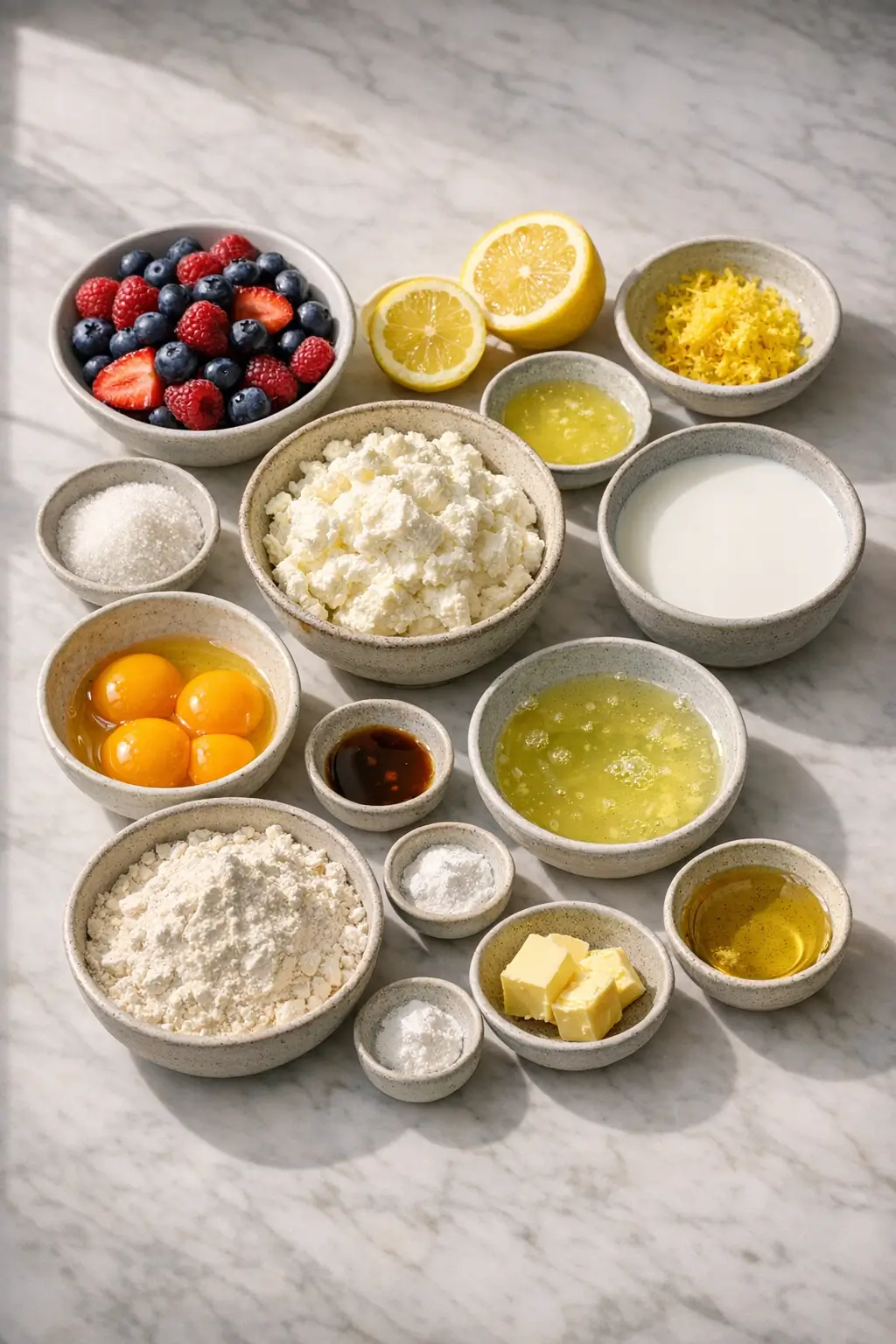
- 150 g (about 1 cup) ricotta cheese – whole-milk ricotta keeps the pancakes moist and tender
- 240 ml (1 cup) milk – dairy or unsweetened oat or almond milk both work
- 3 large eggs, separated – yolks enrich the batter, whites get whipped for extra lift
- 2 tbsp freshly squeezed lemon juice – for bright flavor and a bit of tang
- 1 tbsp finely grated lemon zest – adds most of the lemon aroma
- 1 tsp vanilla extract – rounds out the citrus
- 130 g (1 cup) all-purpose flour – spooned and leveled
- 2 tbsp granulated sugar – enough to lightly sweeten the batter without competing with the berries
- 1 ½ tsp baking powder – for rise
- ¼ tsp baking soda – helps with browning and tenderness
- ½ tsp fine sea salt – sharpens the flavors
- 1–2 tbsp unsalted butter or neutral oil, for the pan
Kitchen note: If your ricotta seems very wet, drain it in a fine-mesh sieve for 10–15 minutes first. Too much liquid can make the batter thin and the pancakes spread too far in the pan.
For the berry compote
- 300 g (about 2 cups) mixed berries, fresh or frozen – blueberries, raspberries, strawberries, or blackberries
- 2–3 tbsp sugar or maple syrup, to taste – adjust based on how tart your berries are
- 1 tbsp freshly squeezed lemon juice – ties the compote to the pancakes
- 1–2 tbsp water – only if needed, to help the berries start releasing juices
To serve (optional)
- Extra berries
- Lemon zest curls or a light microplane grate over the top
- A spoonful of ricotta or Greek yogurt
- Maple syrup, if you like things sweeter
Step-by-Step Instructions for Lemon Ricotta Pancakes with Berry Compote
Start with the berry compote.
Add the berries, 2 tablespoons sugar or maple syrup, and lemon juice to a small saucepan. If the berries are very dry, splash in 1 tablespoon of water.
Simmer until glossy and slightly thickened.
Set the saucepan over medium-low heat. Cook, stirring occasionally, until the berries start to soften and release their juices, about 5–8 minutes for fresh berries or 8–10 minutes for frozen.
You’re aiming for spoonable fruit with some intact berries left, not a fully smooth sauce.
Adjust sweetness and keep warm.
Taste the compote and add more sugar or maple syrup if needed. If it looks too thick, add another splash of water; if it seems too thin, let it bubble gently for another 2–3 minutes.
Turn the heat to the lowest setting or switch it off and cover the pan to keep the compote warm while you make the pancakes.
Separate the eggs and set up mixing bowls.
Crack the eggs, placing the yolks in a large mixing bowl and the whites in a clean medium bowl. Make sure no yolk gets into the whites so they’ll whip properly.
Mix the wet ingredients.
To the bowl with the yolks, add ricotta, milk, lemon juice, lemon zest, and vanilla. Whisk until the mixture is mostly smooth. A few small ricotta curds are fine.
Combine the dry ingredients.
In a separate bowl, whisk together the flour, sugar, baking powder, baking soda, and salt. This step helps the leaveners distribute evenly so you don’t get pockets of baking powder in the finished pancakes.
Bring the batter together gently.
Tip the dry ingredients into the ricotta mixture. Use a spatula or whisk to fold and stir just until no dry flour remains. The batter will be thick and a bit lumpy from the ricotta.
Avoid over-mixing; a few small streaks of flour will finish hydrating while the batter rests.
Whip the egg whites to soft peaks.
Using a hand mixer or a clean whisk, beat the egg whites until they hold soft, droopy peaks that just stand up when you lift the whisk. This usually takes 2–4 minutes with a mixer, a bit longer by hand.
Fold in the egg whites for lightness.
Stir one big spoonful of the whipped whites into the batter to loosen it. Then add the remaining whites in 2–3 additions, gently folding with a spatula and rotating the bowl.
Stop folding as soon as you don’t see large streaks of white. Some small pockets are fine; over-folding will deflate the batter.
Kitchen note: If the batter sits for more than 10–15 minutes, the egg whites will slowly deflate and the baking powder will lose some punch. If you need to pause, keep the batter at room temperature and give it one or two very gentle folds before you start cooking.
Preheat the pan or griddle.
Place a nonstick skillet or griddle over medium heat and let it warm for at least 3–4 minutes. Lightly brush or wipe the surface with butter or oil.
To test the heat, flick on a droplet of water; it should dance and evaporate quickly but not vanish instantly.
Portion the batter.
Scoop about 60 ml (¼ cup) of batter per pancake onto the hot surface, leaving room for gentle spreading. The batter will be thicker than standard pancake batter.
Cook the first side slowly.
Cook the pancakes for 2–3 minutes, adjusting the heat to keep the bottoms from browning too quickly. Look for small bubbles forming around the edges and a slight matte look on the surface.
Flip and finish cooking.
Once the edges look set and the underside is golden, slide a thin spatula underneath and flip carefully. Cook another 1½–3 minutes, until the second side is golden and the centers feel springy when lightly pressed.
Hold pancakes warm while you finish the batch.
Transfer cooked pancakes to a baking sheet and keep them in a low oven at about 90–100°C (200°F) while you cook the remaining batter. Add a light film of butter or oil to the pan between batches.
Serve with warm berry compote.
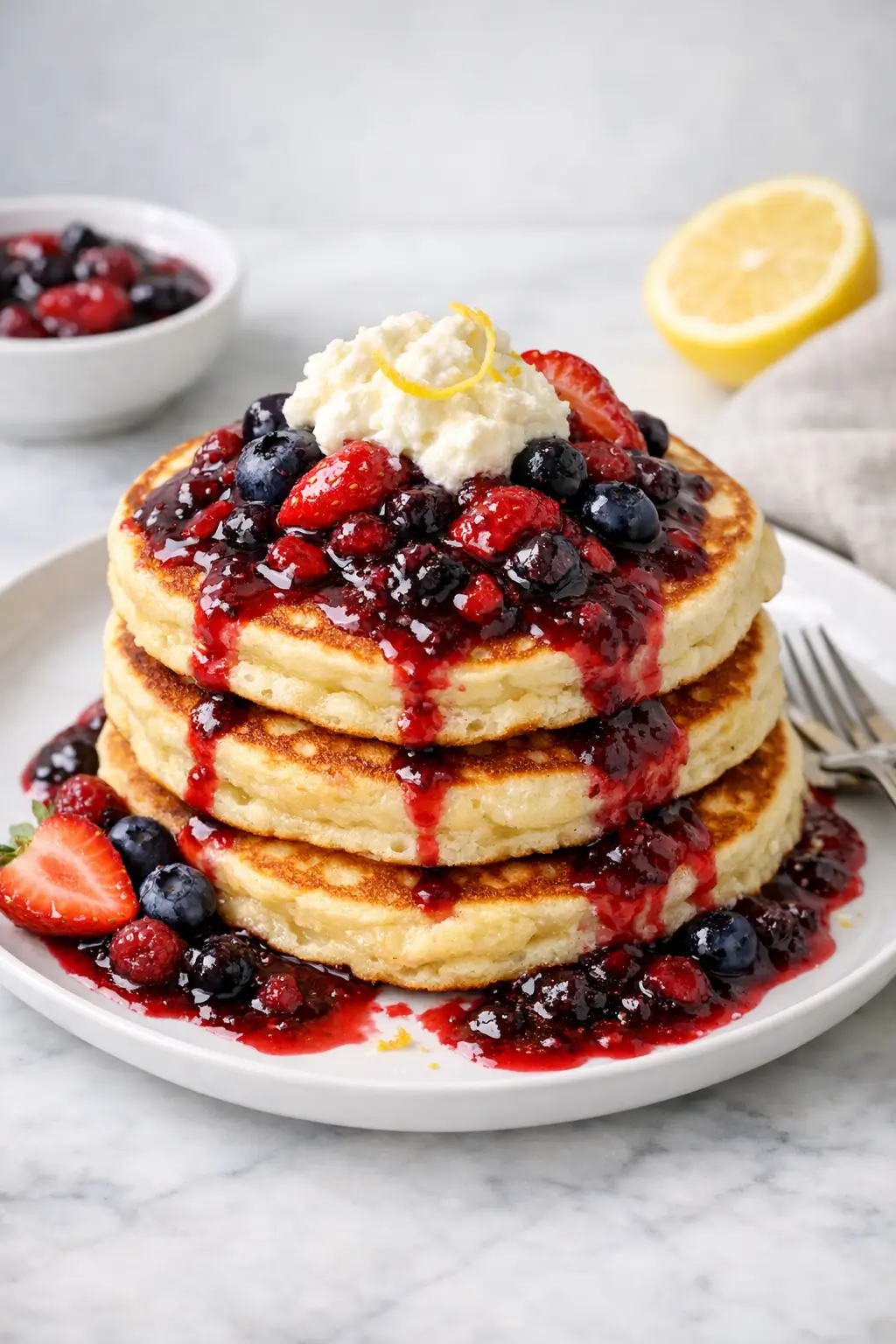
Stack 2–3 pancakes on each plate. Spoon warm berry compote over the top, letting it run down the sides. Add any optional toppings you like and finish with a light dusting of lemon zest.
Kitchen note: If your pancakes are browning before the centers are cooked through, lower the heat slightly and give them another 30–60 seconds per side. Thicker batters, like this ricotta version, prefer a slightly lower, steadier heat than very thin pancake batters.
What to Expect
These lemon ricotta pancakes tend to be thicker than standard buttermilk pancakes, with a very tender, almost souffle-like interior. The ricotta keeps them moist, so they won’t feel dry even if they sit for a few minutes.
Flavor-wise, expect a gentle lemon aroma rather than a sharp, sour flavor. The sugar level in the batter is modest because the berry compote does most of the sweetening work.
A nonstick pan will usually give more even browning and easier flipping than stainless steel. Different brands of ricotta can change the batter thickness; drier ricotta gives a thicker, puffier pancake, while very wet ricotta makes the batter looser and the pancakes slightly flatter.
Kitchen note: If your first pancake comes out too thick or too dense, whisk 1–2 tablespoons of extra milk into the remaining batter to loosen it slightly before continuing.
Ways to Change It Up
Make it vegetarian or closer to vegan.
The base recipe is already meatless. To move toward a vegan version, use a thick plant-based yogurt in place of ricotta and a neutral non-dairy milk. Replace the eggs with a commercial egg replacer or 3 tablespoons aquafaba per egg, whipped before folding in.
The texture won’t be quite as souffle-like, but you can still get soft, fluffy pancakes with a pleasantly tangy berry topping.
Adjust the heat level—spicier or milder.
For a brighter, more complex topping that isn’t exactly spicy but has more depth, add a small pinch of ground ginger or a strip of fresh lemon peel to the berry compote as it simmers, then remove the peel before serving.
If you’re cooking for very young kids or anyone sensitive to acidity, reduce the lemon juice in the batter to 1 tablespoon and let the compote be a bit sweeter.
Speed it up for weekdays.
When time is tight, skip separating the eggs. Whisk whole eggs straight into the wet ingredients, and rely on the baking powder and baking soda for lift. The pancakes will be slightly less airy but still tender.
You can also make the compote up to 3 days in advance, store it in the fridge, and warm it gently on the stove or in the microwave while you cook the pancakes.
Serving and Storage
These pancakes are usually served stacked, with warm berry compote spooned generously over the top so it cascades down the sides. A dollop of ricotta, yogurt, or lightly sweetened whipped cream works well if you enjoy extra creaminess.
Simple add-ons like crisp bacon, breakfast sausage, or a vegetable frittata turn this into more of a full brunch plate. For a lighter spread, serve the pancakes alongside a citrus salad or a simple bowl of sliced fruit.
Leftover pancakes keep well for about 2 days in the refrigerator. Cool them completely, then stack with small squares of parchment between each pancake and store in an airtight container.
Reheat in a low oven (about 160°C / 325°F) for 8–10 minutes, or in a dry nonstick pan over low heat, flipping once. The berry compote can be reheated gently on the stove or in the microwave, adding a teaspoon or two of water if it has thickened in the fridge.
Kitchen note: These pancakes also freeze surprisingly well. Arrange them in a single layer on a baking sheet, freeze until solid, then transfer to a freezer bag. Reheat from frozen in a toaster or low oven until warmed through.
Cultural Context
Pancakes in various forms appear across many food cultures, from North American diner-style stacks to European crepes and numerous regional griddle cakes. In the United States, fluffy wheat-based pancakes like these are a common breakfast or brunch choice at home and in restaurants.
Dishes that enrich the batter with cheese or other dairy have long existed in different traditions, including Central and Eastern European cheese pancakes and similar griddle cakes. For a broader look at how pancakes developed around the world, the article “Hot off the Griddle, Here’s the History of Pancakes” from National Geographic offers a concise overview: history of pancakes across cultures.
Modern brunch dishes like lemon ricotta pancakes with berry compote sit within this wider pattern of using enriched batters and fruit toppings to turn a simple staple into a more celebratory meal.
Common Questions and Troubleshooting
Why are my pancakes dense instead of fluffy?
Dense pancakes usually come from over-mixing or from batter that has sat too long. Once you add the dry ingredients and especially after folding in the whipped egg whites, mix gently and only until combined. Cook the batter within 15 minutes for the best lift.
My pancakes are burning before they’re cooked through. What should I change?
This usually means the pan is too hot. Ricotta batters are thick and need a slightly lower flame than standard pancake batter. Reduce the heat to medium-low, give the pan a minute to cool, and cook the next batch a bit more slowly.
Can I substitute the ricotta?
If you don’t have ricotta, a thick full-fat Greek yogurt is the closest stand-in. The pancakes will be a bit tangier and slightly less custardy inside, but still soft. Avoid very loose yogurt; if it’s on the thin side, strain it in a sieve for 15–20 minutes first.
What if I don’t want to whip egg whites separately?
You can whisk whole eggs into the wet ingredients and skip the separate whipping step. Expect pancakes that are a little flatter and less airy but still tender. Make sure your baking powder is fresh to support good rise.
How long does the berry compote keep, and how do I store it?
Berry compote will keep in the refrigerator for 3–4 days in a covered container. Reheat gently over low heat, adding a teaspoon or two of water if it has thickened too much.
Can I double the recipe for a crowd?
Yes, you can double both the batter and the compote. Use a larger griddle or two skillets to keep cook times manageable, and hold finished pancakes in a low oven so they stay warm without drying out.
Conclusion
Lemon ricotta pancakes with berry compote offer a useful balance of comfort and freshness, with a texture that feels a little more luxurious than everyday pancakes. Once you’ve made the recipe once or twice, the steps will feel straightforward enough to bring out for guests or for a quieter weekend breakfast.
If you try this version, consider leaving a comment or rating to share how it went in your kitchen. I’m always interested in the small adjustments—different berries, extra lemon, or a favorite topping—that make a recipe truly work for your household.
Lemon Ricotta Pancakes with Berry Compote

Equipment
- Small saucepan
- Nonstick skillet or griddle
- Large mixing bowl
- Medium Bowl
- Whisk
- Rubber spatula
- Hand mixer (optional)
- Thin spatula
- Baking sheet (to hold pancakes warm)
- Fine-mesh sieve (optional, to drain ricotta)
Ingredients
For the lemon ricotta pancakes
- 150 g ricotta cheese whole-milk preferred
- 240 ml milk dairy or unsweetened oat/almond milk
- 3 large eggs separated
- 2 tbsp freshly squeezed lemon juice
- 1 tbsp lemon zest finely grated
- 1 tsp vanilla extract
- 130 g all-purpose flour spooned and leveled
- 2 tbsp granulated sugar
- 1 1/2 tsp baking powder
- 1/4 tsp baking soda
- 1/2 tsp fine sea salt
- 1–2 tbsp unsalted butter or neutral oil for the pan
For the berry compote
- 300 g mixed berries fresh or frozen (blueberries, raspberries, strawberries, and/or blackberries)
- 2–3 tbsp sugar or maple syrup to taste
- 1 tbsp freshly squeezed lemon juice
- 1–2 tbsp water only if needed
To serve (optional)
- extra berries
- lemon zest curls or finely grated
- ricotta or Greek yogurt for serving
- maple syrup to taste
Instructions
- Start with the berry compote. Add the berries, 2 tablespoons sugar or maple syrup, and lemon juice to a small saucepan. If the berries are very dry, splash in 1 tablespoon of water.
- Simmer until glossy and slightly thickened. Set the saucepan over medium-low heat and cook, stirring occasionally, until the berries soften and release their juices, about 5–8 minutes for fresh berries or 8–10 minutes for frozen. Aim for spoonable fruit with some intact berries left.
- Adjust sweetness and keep warm. Taste the compote and add more sugar or maple syrup if needed. If too thick, add another splash of water; if too thin, simmer 2–3 minutes more. Keep warm on very low heat (or cover off-heat) while you make the pancakes.
- Separate the eggs. Put yolks in a large mixing bowl and whites in a clean medium bowl, keeping yolk out of the whites so they’ll whip properly.
- Mix the wet ingredients. To the yolks, add ricotta, milk, lemon juice, lemon zest, and vanilla, and whisk until mostly smooth (small ricotta curds are fine).
- Combine the dry ingredients. In a separate bowl, whisk together flour, sugar, baking powder, baking soda, and salt.
- Bring the batter together gently. Add dry ingredients to the ricotta mixture and fold/stir just until no dry flour remains. Avoid over-mixing.
- Whip the egg whites to soft peaks. Using a hand mixer or clean whisk, beat until soft, droopy peaks form, about 2–4 minutes with a mixer (longer by hand).
- Fold in the egg whites. Stir in one spoonful to loosen the batter, then fold in the rest in 2–3 additions until you no longer see large streaks of white (small pockets are fine).
- Preheat the pan or griddle. Heat a nonstick skillet or griddle over medium for 3–4 minutes and lightly brush with butter or oil; a droplet of water should dance and evaporate quickly.
- Portion the batter. Scoop about 60 ml (1/4 cup) batter per pancake onto the hot surface, leaving room for spreading.
- Cook the first side. Cook 2–3 minutes, adjusting heat to prevent over-browning, until bubbles form around the edges and the surface looks slightly matte.
- Flip and finish. Flip carefully and cook 1 1/2–3 minutes more, until golden and the centers feel springy when lightly pressed.
- Hold pancakes warm. Transfer to a baking sheet and keep in a low oven (about 200°F / 90–100°C) while cooking the remaining batter, adding a light film of butter or oil between batches.
- Serve with warm berry compote. Stack 2–3 pancakes per plate, spoon compote over top, and finish with optional toppings like extra berries, ricotta/Greek yogurt, maple syrup, and a little lemon zest.



Leave a Reply