
Meyer lemon posset looks elegant but cooks more like a quick sauce than a fussy custard. You warm cream and sugar, stir in Meyer lemon juice, and let the citrus do the thickening as it chills. The result is a silky, spoonable dessert that’s brighter and softer than classic lemon posset thanks to the naturally sweeter Meyer lemons.
If it’s a busy weeknight, start by juicing and zesting your Meyer lemons, then set out your serving glasses so you can pour as soon as the cream is ready. Sharing a small kitchen or cooking with kids around, keep the stovetop clear and stay close during the 3–5 minutes of simmering; that’s the only part that truly needs your full attention.
Ingredients
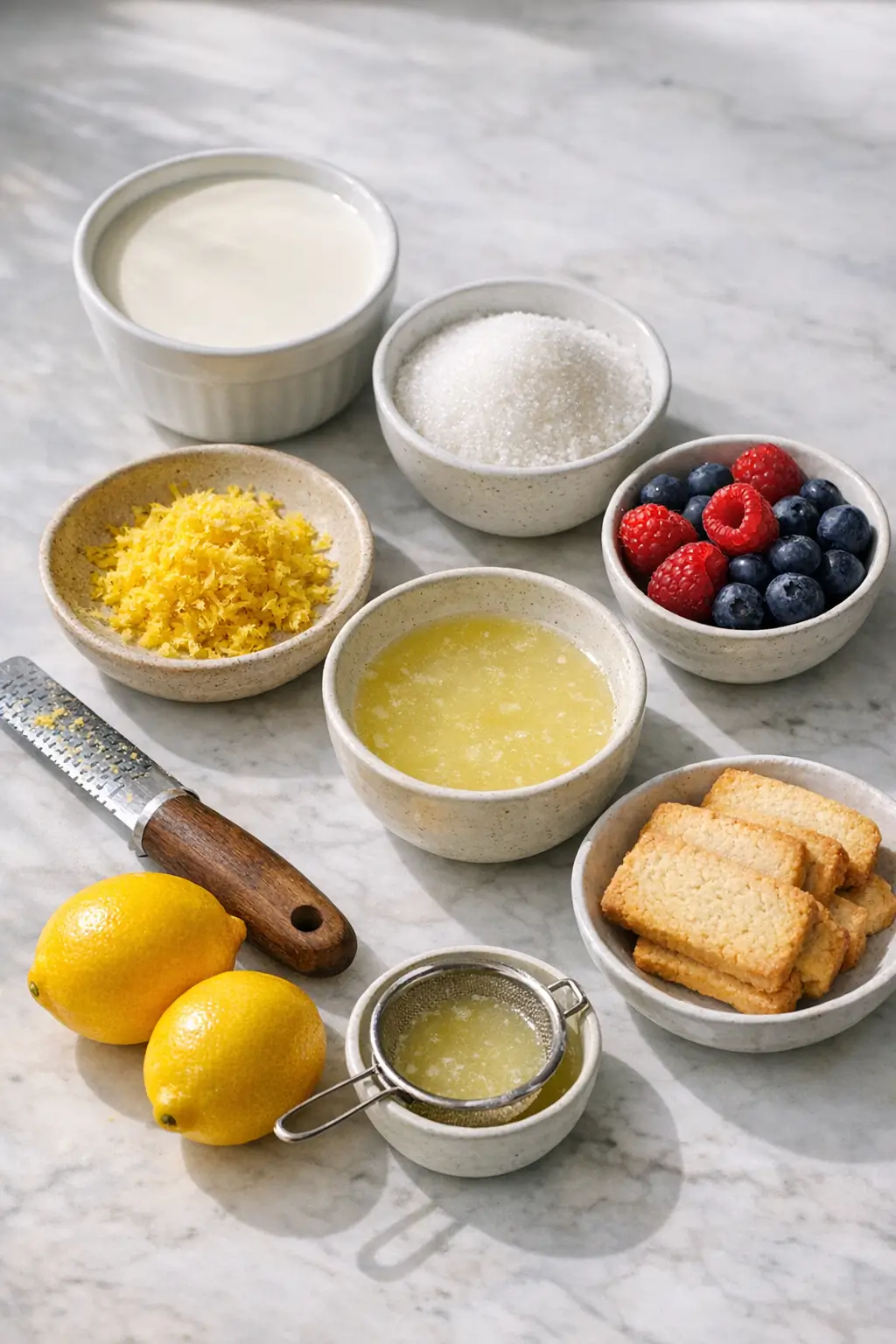
- 480 ml (2 cups) heavy whipping cream (35% fat) – base of the posset
- 135 g (2/3 cup) granulated or caster sugar – sweetness and helps the cream set
- 2–3 Meyer lemons, finely zested – about 1 tbsp packed zest
- 80 ml (1/3 cup) freshly squeezed Meyer lemon juice – strained of seeds and pulp
- Pinch of fine sea salt (optional) – sharpens the lemon flavor
- Fresh berries, such as raspberries or blueberries, for serving (optional)
- Crisp butter cookies or shortbread, for serving (optional)
Kitchen note: Use full-fat heavy cream only. Half-and-half or light cream will not set properly, especially with the gentler acidity of Meyer lemons.
Step-by-Step Instructions for Meyer Lemon Posset
Chill the serving glasses.
Clear 4–6 small ramekins, dessert glasses, or small jars (about 120 ml / 1/2 cup capacity each) and place them on a tray. Pop the tray in the fridge or freezer while you cook the cream. Chilled dishes help the posset set a bit faster and more evenly.
Prep the Meyer lemons.
Finely zest 2 Meyer lemons, avoiding the white pith, until you have about 1 tablespoon of zest. Juice the lemons, then strain the juice to remove seeds and any large pulp. Measure 80 ml (1/3 cup) of juice and keep it ready by the stove.
Combine cream, sugar, zest, and salt.
In a medium, heavy-bottomed saucepan (at least 2-quart/2-litre capacity), add the 480 ml (2 cups) cream, 135 g (2/3 cup) sugar, Meyer lemon zest, and a tiny pinch of fine sea salt if using. Stir to combine before turning on the heat so nothing scorches on the bottom.
Heat gently to a steady simmer.
Set the pan over medium heat and stir frequently with a heatproof spatula or wooden spoon until the sugar is fully dissolved and the cream is hot but not yet boiling. You’re aiming for small, lazy bubbles around the edges rather than a vigorous boil.
Simmer to concentrate the cream.
Once you see gentle bubbling, reduce the heat to medium-low and start a timer for 3–5 minutes. Keep the cream at a steady simmer, stirring often and scraping the bottom of the pan. The mixture will feel slightly thicker and leave a thin coating on the spatula when it’s ready.
Kitchen note: If the cream starts to climb up the sides of the pan or you see large, rolling bubbles, your heat is too high. Slide the pan off the burner for 20–30 seconds, reduce the heat, and return it to a gentle simmer.
Cool slightly before adding the juice.
Take the pan off the heat and let the cream sit for 5 minutes. This quick rest brings the temperature down just enough so the lemon juice sets the cream instead of causing grainy curdling.
Stir in the Meyer lemon juice.
Slowly pour the 80 ml (1/3 cup) Meyer lemon juice into the warm cream while stirring steadily. The mixture should thicken almost immediately and become satin-smooth. Taste a small spoonful; if you prefer it slightly sharper and the texture still feels loose, you can add up to 1 extra tablespoon of juice.
Strain for extra-smooth texture (optional).
For a finer, restaurant-style finish, set a fine-mesh sieve over a jug or large measuring cup and pour the posset mixture through. This step removes zest bits and any surface skin that may have formed.
Portion into glasses.
Remove the chilled ramekins or glasses from the fridge. Divide the warm posset evenly between them, leaving a little headspace for garnish later. A small ladle or jug with a spout makes this less messy.
Chill until set.
Place the filled dishes on a tray, cover lightly with plastic wrap (not touching the surface if possible), and refrigerate for at least 3 hours, or until the center of each posset jiggles just slightly when you nudge the glass. Overnight chilling will give you a firmer, slice-off-the-spoon texture.
Garnish just before serving.
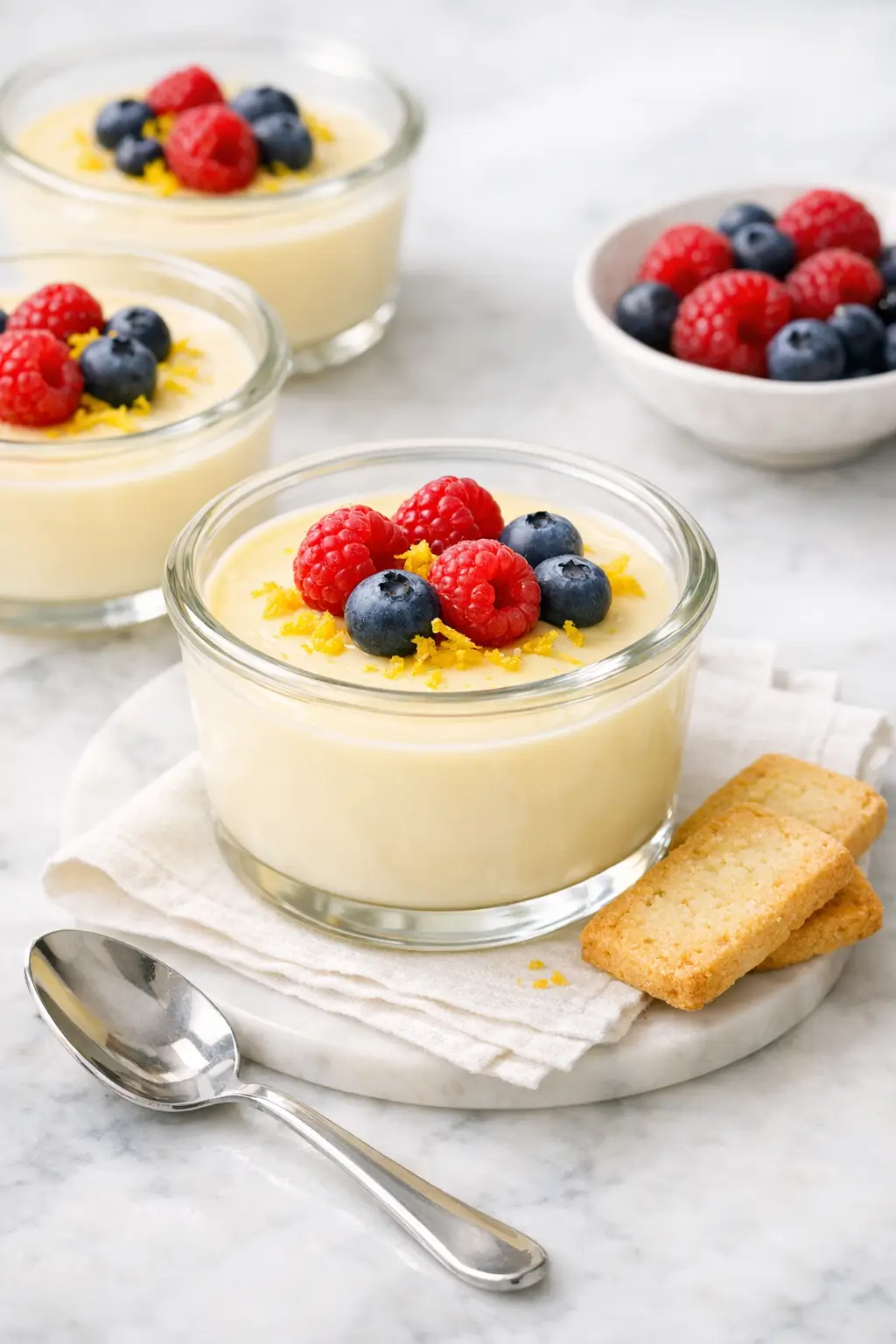
Right before serving, top each Meyer lemon posset with a few fresh berries and a pinch of extra Meyer lemon zest if you like. A crisp butter cookie or shortbread on the side adds welcome crunch.
Kitchen note: If your posset hasn’t set after 4–5 hours, it likely didn’t simmer long enough. You can still serve it as a soft, pourable cream over berries or cake rather than discarding it.
What to Expect
Meyer lemon posset should have a texture somewhere between loose panna cotta and thick sour cream. It will hold the impression of a spoon but still feel soft and creamy on the tongue.
Thanks to the natural sweetness and floral character of Meyer lemons, the flavor leans bright and citrusy without the sharp edge you get from standard lemons. You’ll notice a gentle, almost mandarin-like aroma, especially if you leave a bit of zest in the mixture.
Results do vary slightly with pan and brand of cream. A wider pan may reduce the cream more quickly and give a firmer set, while ultra-pasteurized cream can sometimes feel a touch less silky. None of these differences will ruin the dessert; they simply shift it from very soft to a bit more dense.
Kitchen note: If you know your refrigerator runs extra cold, check the posset at the 2 1/2–3 hour mark; it may be ready sooner and can become a bit too stiff if left for more than 24 hours before serving.
Ways to Change It Up
A lighter, yogurt-forward version.
Swap 120 ml (1/2 cup) of the cream for full-fat plain Greek yogurt. Chill the cream mixture until completely cold, then whisk in the yogurt at the end before portioning. You’ll get a tangier, slightly lighter-tasting dessert, though it may set a bit more softly.
Classic lemon instead of Meyer.
If Meyer lemons aren’t available, use regular lemons but reduce the juice to 60 ml (1/4 cup) to avoid an overly sharp or bitter result. Taste, then add another tablespoon of juice only if needed. The flavor will be more assertive and less floral.
A milder, kid-friendly version.
For kids (or anyone who prefers things sweeter), keep the cream and sugar as written but use only 60 ml (1/4 cup) Meyer lemon juice and skip most of the zest. This gives a gentle citrus note without a strong tang.
Faster “mini shots” for a crowd.
Pour the posset into very small glasses (about 60 ml / 1/4 cup each) rather than larger ramekins. The mixture will chill and set closer to 2 hours, and the small size helps balance the richness for grazing-style dessert spreads.
Serving and Storage
Meyer lemon posset is typically served chilled in its own glass or ramekin, often with a few berries and something crisp on the side for texture. Fresh raspberries, blueberries, or thin almond cookies all work nicely.
For a fuller dessert plate, pair the posset with simple butter cookies, a slice of plain pound cake, or a scattering of crushed shortbread. The bright citrus also plays well after roasted chicken, grilled fish, or spring vegetable pastas when you want something rich but not heavy.
Store the covered possets in the refrigerator for up to 3 days. After that, the edges may start to weep a little liquid and the citrus flavor can fade. If any condensation forms on top, gently blot with a corner of paper towel before garnishing.
To serve make-ahead posset for guests, keep garnishes separate until just before bringing them to the table so the berries stay fresh and the zest remains aromatic.
Cultural Context
Modern lemon and Meyer lemon posset belong to a family of British cream desserts that rely on citrus to thicken dairy. The name “posset” originally referred to a hot drink of milk curdled with ale or wine, often spiced and used as a home remedy in medieval and early modern Europe. Over time, the term shifted to the chilled, cream-based dessert that’s now common in British-inspired cooking.
Posset’s history is documented in food and drink references, including modern summaries of its evolution from drink to spoon dessert, for example in the Oxford Companion to Food and other historical overviews of British beverages. A concise outline of that change appears in the entry on posset in the online reference summary of posset and in discussions of medieval drinks and their descendants.
Meyer lemons themselves are a relatively recent addition to this style of dessert. They are a hybrid citrus, likely between a citron and a mandarin/pomelo hybrid, first introduced to the United States from China in the early 20th century. Their milder acidity and floral aroma are described in resources like the encyclopedic entry on Meyer lemons, which helps explain why they soften the edges of a traditional lemon posset.
Common Questions and Troubleshooting
Why didn’t my posset set firmly?
Most often, the cream either didn’t simmer long enough or the cream’s fat content was too low. Next time, use heavy cream with at least 35% fat and keep it at a gentle simmer for the full 3–5 minutes, stirring often. You can still serve a too-soft batch as a sauce over berries or cake.
Can I reduce the sugar?
You can cut the sugar to 100 g (1/2 cup), but the texture may be a little looser and the lemon will taste more prominent. Sugar not only sweetens but also supports the way the cream and acid interact, so large reductions can affect the set.
Can I use bottled Meyer lemon juice?
Fresh juice is strongly preferred. Bottled citrus juice can be dull and slightly bitter, and acidity levels vary, which can interfere with proper thickening. If bottled is your only option, test a half batch first.
Why does my posset taste bitter?
Bitterness usually comes from getting too much white pith when zesting or using more juice than the cream can balance. Zest lightly with a microplane, turning the lemon frequently, and measure the juice rather than squeezing “by feel.”
Can I make this dairy-free?
Traditional posset relies on dairy proteins and fat to thicken in the presence of acid. Most plant-based milks don’t behave the same way, so a dairy-free version would really be a different style of dessert (more like a coconut pudding set with starch or gelatin) rather than a true posset.
How far in advance can I make Meyer lemon posset?
The flavor and texture are best within 24 hours, and still very good up to 3 days. After that, separation and flavor loss become more noticeable. For entertaining, making it the day before gives you the most reliable texture.
Conclusion
Meyer lemon posset is a straightforward spring dessert that rewards a few minutes of attention at the stove with several days of ready-to-serve, chilled portions. Once you understand how the cream, sugar, and citrus work together, it becomes easy to adjust the tartness, sweetness, and serving size to suit your table.
If you make this version, I’d value your notes in the comments—especially how firm it set in your fridge and what garnishes you enjoyed most. Feel free to share any small adjustments you tried so other home cooks can benefit from your experience.
Meyer Lemon Posset for Easy Spring Dessert

Equipment
- Medium heavy-bottomed saucepan
- Heatproof spatula or wooden spoon
- Microplane or fine zester
- Citrus juicer
- Fine-mesh sieve
- Measuring cup or jug with spout
- Ramekins or dessert glasses (about 120 ml / 1/2 cup)
- Tray
Ingredients
- 480 ml heavy whipping cream (35% fat)
- 135 g granulated or caster sugar
- 2-3 Meyer lemons finely zested (about 1 tbsp packed zest)
- 80 ml freshly squeezed Meyer lemon juice strained of seeds and pulp
- 1 pinch fine sea salt optional
- fresh berries (such as raspberries or blueberries) optional, for serving
- crisp butter cookies or shortbread optional, for serving
Instructions
- Chill the serving glasses. Clear 4–6 small ramekins, dessert glasses, or small jars (about 120 ml / 1/2 cup capacity each) and place them on a tray. Pop the tray in the fridge or freezer while you cook the cream.
- Prep the Meyer lemons. Finely zest 2 Meyer lemons, avoiding the white pith, until you have about 1 tablespoon of zest. Juice the lemons, then strain the juice to remove seeds and any large pulp. Measure 80 ml (1/3 cup) of juice and keep it ready by the stove.
- Combine cream, sugar, zest, and salt. In a medium, heavy-bottomed saucepan, add the cream, sugar, Meyer lemon zest, and a tiny pinch of fine sea salt if using. Stir to combine before turning on the heat.
- Heat gently to a steady simmer. Set the pan over medium heat and stir frequently until the sugar is fully dissolved and the cream is hot but not yet boiling (small bubbles around the edges, not a vigorous boil).
- Simmer to concentrate the cream. Reduce heat to medium-low and simmer for 3–5 minutes, stirring often and scraping the bottom, until slightly thicker and it lightly coats the spatula.
- Cool slightly before adding the juice. Take the pan off the heat and let the cream sit for 5 minutes.
- Stir in the Meyer lemon juice. Slowly pour the lemon juice into the warm cream while stirring steadily. The mixture should thicken almost immediately. If you prefer it sharper and it still feels loose, add up to 1 extra tablespoon of juice.
- Strain for extra-smooth texture (optional). Pour the posset mixture through a fine-mesh sieve set over a jug or large measuring cup.
- Portion into glasses. Remove the chilled ramekins or glasses from the fridge. Divide the warm posset evenly between them, leaving a little headspace for garnish.
- Chill until set. Place the filled dishes on a tray, cover lightly, and refrigerate for at least 3 hours, or until the centers jiggle slightly. Overnight chilling yields a firmer texture.
- Garnish just before serving. Top with fresh berries and a pinch of extra Meyer lemon zest if you like. Serve with crisp butter cookies or shortbread on the side.



Leave a Reply