
A carrot cake bundt feels instantly more special than a sheet cake, and the bright orange glaze makes this one right at home on an Easter Sunday table. This orange glazed carrot bundt cake leans into fresh carrots, warm spice, and a simple citrus icing that drips into every ridge of the pan. You get all the familiar comfort of carrot cake, with a little extra shine for spring menus.
If you are juggling side dishes and a main course, start this cake the day before so it is fully cooled and ready to glaze. If kids are helping, have them wash and peel the carrots while you measure the dry ingredients. The flavor is gently spiced, the crumb is moist but not heavy, and the glaze brings a clean, orangey finish instead of a thick frosting.
Ingredients
Makes one 10–12 cup bundt cake (about 10–12 slices)
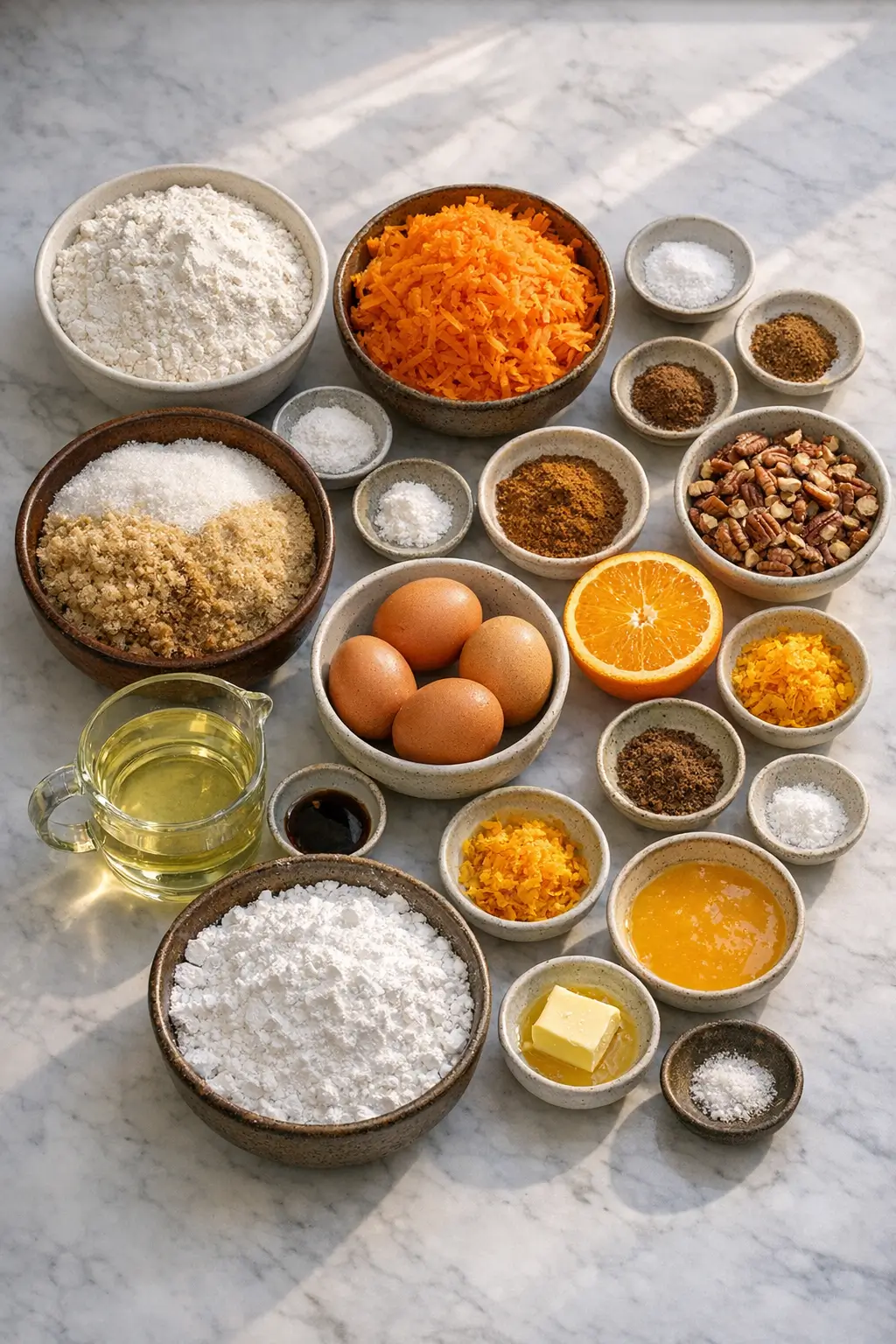
For the carrot bundt cake
- 300 g / 2 1/2 cups all-purpose flour, spooned and leveled
- 2 tsp baking powder
- 1 tsp baking soda
- 1/2 tsp fine salt
- 2 tsp ground cinnamon
- 1/2 tsp ground nutmeg
- 1/4 tsp ground cloves or extra cinnamon if you prefer it milder
- 200 g / 1 cup granulated sugar
- 110 g / 1/2 cup firmly packed light brown sugar
- 240 ml / 1 cup neutral oil (such as canola, sunflower, or grapeseed)
- 4 large eggs, at room temperature
- 2 tsp vanilla extract
- 360 g / about 3 packed cups finely grated carrots (from 4–5 medium carrots)
- 100 g / 1 cup finely chopped pecans or walnuts or leave them out for a nut-free cake
- 1 tbsp finely grated orange zest (from 1 large orange)
Kitchen note: Finely grate the carrots on the small holes of a box grater. Coarse shreds can make the cake look streaky and may leave firm bits instead of melting into the crumb.
For the glossy orange glaze
- 240 g / 2 cups powdered (confectioners’) sugar, sifted
- 3–4 tbsp freshly squeezed orange juice, plus more as needed
- 1–2 tsp finely grated orange zest
- 15 g / 1 tbsp unsalted butter, melted or use neutral oil for a slightly thinner, dairy-free glaze
- Pinch of fine salt
Optional garnish:
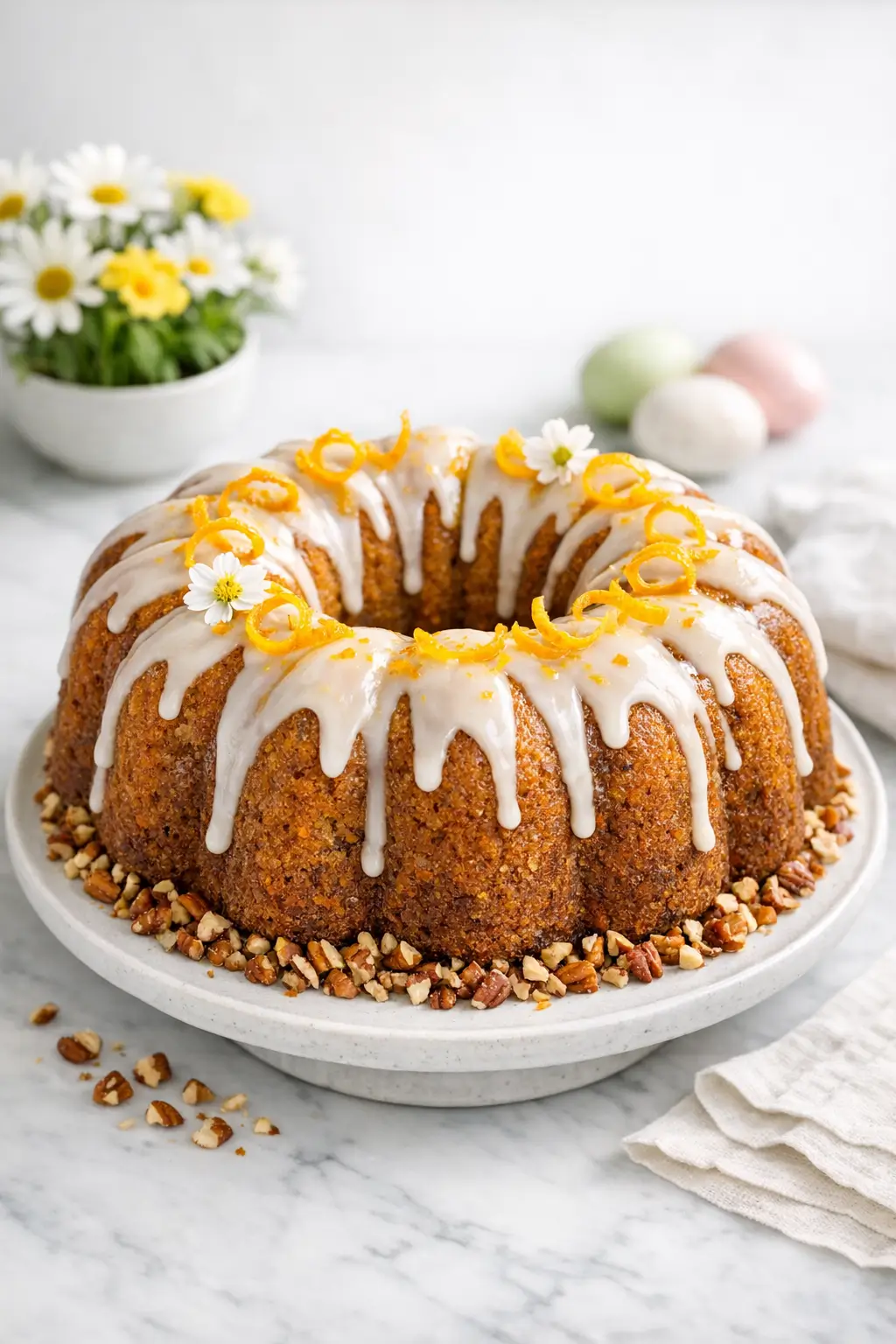
- Extra orange zest curls
- A few chopped toasted nuts around the base
- Small edible flowers for spring (make sure they are safe to eat)
Step-by-Step Instructions for Orange Glazed Carrot Bundt Cake
- Prepare the pan and oven.
- Place a rack in the center of the oven and preheat to 175°C / 350°F.
- Generously grease a 10–12 cup bundt pan, making sure to work into every ridge. Lightly dust with flour, then tap out the excess.
Kitchen note: Bundt cakes love to stick. If your pan is older or very detailed, consider brushing it with melted butter or oil and then dusting with flour, or use a baking spray that contains flour.
- Mix the dry ingredients.
- In a medium bowl, whisk together the flour, baking powder, baking soda, salt, cinnamon, nutmeg, and cloves until well combined.
- Set aside.
- Combine sugars and wet ingredients.
- In a large mixing bowl, whisk the granulated sugar and brown sugar until no large lumps of brown sugar remain.
- Add the oil and whisk until the mixture looks thick and glossy.
- Whisk in the eggs one at a time, mixing until fully incorporated after each addition.
- Stir in the vanilla extract and orange zest.
- Fold in the dry ingredients.
- Add about half of the flour mixture to the wet ingredients and gently fold with a spatula until just combined.
- Add the remaining flour and fold again, stopping as soon as you no longer see dry streaks.
Kitchen note: Overmixing at this stage can toughen the crumb. It is fine if the batter still looks a bit lumpy; it will smooth out as you fold in the carrots.
- Add carrots and nuts.
- Add the grated carrots to the bowl and fold them through the batter until evenly distributed.
- If using nuts, fold them in at the end so they do not clump in one area.
- The batter will be fairly thick but should still flow off the spatula in dollops.
- Fill the pan.
- Scrape the batter into the prepared bundt pan, pressing it gently into the crevices.
- Smooth the top with a spatula and tap the pan firmly on the counter 2–3 times to release any large air pockets.
- Bake.
- Bake for 45–55 minutes, depending on your oven and pan, until the top is deeply golden and a skewer or thin knife inserted into the center comes out with a few moist crumbs but no wet batter.
- If the top is browning too fast around the 40-minute mark, tent it very loosely with foil for the final 5–10 minutes.
- Cool in the pan briefly.
- Transfer the bundt pan to a wire rack and let the cake cool in the pan for 15 minutes.
- Run a thin, flexible spatula or plastic knife gently around the center tube and outer edges if needed to loosen.
- Invert and cool completely.
- Place a cooling rack on top of the pan, flip the whole thing over, and lift off the pan.
- If you feel resistance, give the inverted pan a few taps on the rack before lifting.
- Let the cake cool completely, at least 1–1 1/2 hours, before glazing.
-
Make the orange glaze.
- In a medium bowl, whisk together the powdered sugar, 3 tablespoons orange juice, orange zest, melted butter, and a pinch of salt.
- Adjust with a few drops more orange juice if needed until the glaze is smooth and thick but still runs in a slow ribbon.
-
Glaze the cake.
- Set the cooled cake on a rack over a sheet of parchment or a tray to catch drips.
- Spoon the glaze evenly over the top of the cake, letting it cascade down the ridges.
- If you want a very glossy, slightly thicker look, let the first layer set for 10–15 minutes, then drizzle on a second thin layer.
-
Finish and set.
- While the glaze is still soft, decorate with extra orange zest or a ring of chopped nuts around the base if you like.
- Leave the cake at room temperature for at least 30 minutes so the glaze can set before slicing.
Kitchen note: For the cleanest slices, use a thin, sharp knife and wipe it between cuts. The glaze will firm up on the outside but stay a bit soft underneath.
What to Expect
This cake bakes up with a tender, moist crumb that holds together well when sliced. The grated carrots soften completely in the oven, so you do not bite into distinct pieces; they simply keep the interior plush and gently sweet.
Spice-wise, the flavor leans warm rather than hot. Cinnamon, nutmeg, and a hint of clove sit in the background while the orange zest and glaze feel brighter and more forward. If you are used to very sweet cream cheese frosting, this will taste lighter and more citrus-driven.
Texture can shift slightly with your pan and oven. A darker, heavier bundt pan tends to give a deeper caramelized crust, while a lighter, nonstick pan stays more golden. In either case, you should see a fine, even crumb speckled with orange carrot flecks.
Ways to Change It Up
- Make it nut-free or seed-crunchy.
- Leave out the nuts entirely for a smoother crumb that is easier for kids or anyone who does not enjoy nuts in cake.
- For a bit of crunch without nuts, stir 2–3 tbsp of toasted pumpkin or sunflower seeds into the batter, or just sprinkle them over the glaze.
- Dial the spices up or down.
- For a bolder, cozier cake, increase the cinnamon to 2 1/2–3 tsp and add 1/2 tsp ground ginger.
- For a milder version, cut the cinnamon to 1 1/2 tsp and skip the cloves, letting orange and vanilla lead.
- Add a cream cheese element.
- If your crowd expects cream cheese with carrot cake, you can serve slices with a spoonful of softly whipped, lightly sweetened cream cheese on the side.
- Another option is to whisk a few tablespoons of softened cream cheese into half of the orange glaze for a tangier drizzle, and keep the rest as-is.
- Simplify for busy days.
- When time is tight, bake the batter in a 9×13-inch pan (lined and greased) instead of a bundt. Start checking at 30–35 minutes.
- You will lose the sculpted Easter centerpiece look, but gain quicker baking and easier transport for potlucks.
Kitchen note: If you switch to a 9×13 pan, do not overfill. Leave at least 1 cm / 1/2 inch from the rim so the batter can rise without spilling.
- Add-ins for more texture.
- Fold in 1/2 cup golden raisins or chopped dried apricots along with the carrots if your family likes fruit in carrot cake.
- A small handful of shredded coconut (about 1/3 cup) makes the crumb a bit denser and more tropical, which pairs nicely with the orange.
Serving and Storage
For Easter Sunday, this orange glazed carrot bundt cake works well as a dessert centerpiece or as part of a late-morning brunch. The glossy glaze and ring shape make it easy to place in the middle of the table and slice as people finish their main plate.
Serve at room temperature for the best texture. The citrus notes play nicely alongside savory mains like roasted chicken or ham, and the warm spices sit comfortably next to spring salads. If you are building a dessert spread, this cake pairs well with lighter, fruit-forward options such as Mango Sticky Rice Made Easy: Creamy, Foolproof Dessert or bright citrus bakes like Lemon Bars With Shortbread Crust for Spring Parties.
To store, let the glaze set fully, then cover the cake loosely with foil or an overturned large bowl and keep at cool room temperature for up to 2 days. For longer storage, refrigerate well wrapped for up to 4 days; bring slices back toward room temperature before serving so the crumb softens again.
The cake also freezes well without the glaze. Wrap the cooled bundt tightly in plastic and then in foil, and freeze for up to 2 months. Thaw overnight in the refrigerator, bring to room temperature, and glaze a few hours before serving.
Kitchen note: If your kitchen is very warm on Easter Sunday, consider storing the glazed cake in the fridge and taking it out 45–60 minutes before serving so the glaze does not slide.
Cultural Context
Carrot-based sweets appear in several culinary traditions, from European carrot puddings to modern carrot cakes. Many food historians trace the roots of carrot cake to medieval Europe, when carrots were used as a practical sweetener in puddings and baked desserts at a time when sugar was scarce. Over centuries, these preparations evolved into the baked cakes familiar today, with recipes appearing in European cookbooks by the 19th century.
Carrot cake gained widespread popularity in the United States during the mid-20th century and is now firmly associated with spring and Easter gatherings. The use of citrus, like orange zest or glaze, echoes broader spring baking patterns that highlight fresh, bright flavors after winter. For more on the history and evolution of carrot cake, you can explore this overview of the dessert in a general reference on carrot cake history. To learn about another Easter-associated cake tradition, see this explanation of the Polish mazurek in an overview of mazurek as a Polish Easter cake.
Common Questions and Troubleshooting
My bundt cake stuck to the pan. What can I do next time?
Make sure to grease every detail of the pan thoroughly and then dust it with flour, tapping out the excess. Allow the cake to cool for about 15 minutes before inverting; turning it out when it is piping hot or completely cold both increase the risk of sticking. If you bake bundt cakes often, a lighter-colored, good-quality nonstick pan can also help.
The center of the cake was underbaked while the outside was done. How do I fix this?
Oven temperatures often run a bit hot or cool. If your cake browns too quickly but the center tests underdone, lower the oven to 165–170°C / 330–340°F and extend the baking time slightly, tenting the top with foil as needed. Positioning the rack closer to the center of the oven rather than too high also encourages more even baking.
Can I use pre-shredded carrots from a bag?
You can, but they are often quite dry and coarse. If that is your only option, chop them a bit more with a knife and toss with 1–2 tbsp orange juice before folding into the batter so they soften and integrate better. Freshly grated carrots will still give the most even, moist crumb.
Can I swap the orange glaze for cream cheese frosting?
Yes. A simple cream cheese glaze made from cream cheese, powdered sugar, a splash of milk, and a little vanilla (plus some orange zest if you like) works well. Keep the consistency thin enough to pour so it hugs the bundt contours instead of sitting in thick patches.
How far ahead can I make this for Easter?
You can bake the cake up to 2 days ahead and glaze it the night before or the morning of Easter Sunday. For an even longer lead time, freeze the unglazed cake, thaw it overnight in the fridge, and glaze on the day you plan to serve.
My glaze is too thin or too thick. How do I fix it?
If the glaze runs straight off the cake and pools on the tray, whisk in a few more spoonfuls of powdered sugar. If it is so thick that it will not drip, add orange juice a teaspoon at a time until it loosens into a slow ribbon.
Kitchen note: Humidity affects powdered sugar glazes. On very damp days you may need a little extra sugar to reach the same consistency.
Conclusion
This orange glazed carrot bundt cake is designed to feel festive without demanding your whole weekend, which makes it a practical choice for Easter Sunday or any spring get-together. You can bake it in advance, glaze it in one simple step, and carry it straight to the table as a centerpiece.
If you try it, I would love to hear how it worked in your oven, which add-ins you chose, and how it fit with the rest of your menu. Leave a comment and rating, and share any small adjustments you made so other home cooks can benefit from your tweaks too.
Orange Glazed Carrot Bundt Cake for Easter

Equipment
- 10–12 cup bundt pan
- Oven
- Mixing bowls
- Whisk
- Rubber spatula
- Box grater
- Wire rack
- Sifter (optional)
- Skewer or thin knife (for doneness test)
Ingredients
For the carrot bundt cake
- 300 g all-purpose flour spooned and leveled (about 2 1/2 cups)
- 2 tsp baking powder
- 1 tsp baking soda
- 1/2 tsp fine salt
- 2 tsp ground cinnamon
- 1/2 tsp ground nutmeg
- 1/4 tsp ground cloves or extra cinnamon if you prefer it milder
- 200 g granulated sugar about 1 cup
- 110 g light brown sugar firmly packed (about 1/2 cup)
- 240 ml neutral oil such as canola, sunflower, or grapeseed (about 1 cup)
- 4 large eggs room temperature
- 2 tsp vanilla extract
- 360 g finely grated carrots about 3 packed cups, from 4–5 medium carrots
- 100 g pecans or walnuts finely chopped (about 1 cup); optional
- 1 tbsp orange zest finely grated (from 1 large orange)
For the glossy orange glaze
- 240 g powdered sugar sifted (about 2 cups)
- 3–4 tbsp freshly squeezed orange juice plus more as needed
- 1–2 tsp orange zest finely grated
- 15 g unsalted butter melted (about 1 tbsp); or use neutral oil for dairy-free
- 1 pinch fine salt
Optional garnish
- orange zest curls
- chopped toasted nuts for around the base
- edible flowers optional; ensure they are safe to eat
Instructions
- Prepare the pan and oven: Place a rack in the center of the oven and preheat to 175°C / 350°F. Generously grease a 10–12 cup bundt pan, working into every ridge. Lightly dust with flour, then tap out excess.
- Mix the dry ingredients: In a medium bowl, whisk together the flour, baking powder, baking soda, salt, cinnamon, nutmeg, and cloves until well combined. Set aside.
- Combine sugars and wet ingredients: In a large mixing bowl, whisk granulated sugar and brown sugar until no large lumps remain. Add oil and whisk until thick and glossy. Whisk in eggs one at a time until incorporated. Stir in vanilla extract and orange zest.
- Fold in the dry ingredients: Add about half of the flour mixture to the wet ingredients and gently fold with a spatula until just combined. Add remaining flour and fold again, stopping as soon as dry streaks disappear.
- Add carrots and nuts: Fold grated carrots into the batter until evenly distributed. If using nuts, fold them in at the end so they don’t clump.
- Fill the pan: Scrape batter into the prepared bundt pan, pressing gently into crevices. Smooth the top and tap the pan firmly on the counter 2–3 times to release large air pockets.
- Bake: Bake 45–55 minutes, until deeply golden and a skewer inserted in the center comes out with a few moist crumbs but no wet batter. If browning too fast around 40 minutes, tent loosely with foil for the final 5–10 minutes.
- Cool in the pan briefly: Transfer the pan to a wire rack and cool 15 minutes. Run a thin, flexible spatula or plastic knife around the center tube and outer edges if needed to loosen.
- Invert and cool completely: Place a cooling rack on top of the pan, invert, and lift off the pan (tap the inverted pan a few times if it resists). Cool completely, at least 1 to 1 1/2 hours, before glazing.
- Make the orange glaze: Whisk powdered sugar, 3 tablespoons orange juice, orange zest, melted butter, and a pinch of salt until smooth. Add a few drops more orange juice as needed until thick but pourable in a slow ribbon.
- Glaze the cake: Set the cooled cake on a rack over parchment or a tray. Spoon glaze evenly over the cake so it cascades down the ridges. For a glossier, slightly thicker look, let the first layer set 10–15 minutes, then drizzle a second thin layer.
- Finish and set: While glaze is soft, garnish with extra zest, nuts, or edible flowers if desired. Let stand at room temperature at least 30 minutes for the glaze to set before slicing.



Leave a Reply