
A roasted beet salad with goat cheese and citrus looks impressive on a spring table, but it relies on simple supermarket ingredients and relaxed prep. Sweet, earthy beets, creamy goat cheese, bright orange segments, and peppery greens do most of the work for you.
If you’re racing between work, soccer practice, and guests arriving soon, start by getting the beets into the oven—everything else can be done while they roast. Hosting in a small kitchen? Toast the nuts and mix the dressing first so your cutting board stays free for citrus and greens later.
The flavors here are gently sweet, tangy, and a little peppery, with soft beets, crunchy nuts, and pockets of creamy cheese. It suits newer cooks who want clear structure and more experienced cooks who like a flexible, make-ahead side.
Ingredients
Serves 3–4 as a side salad
For the roasted beets
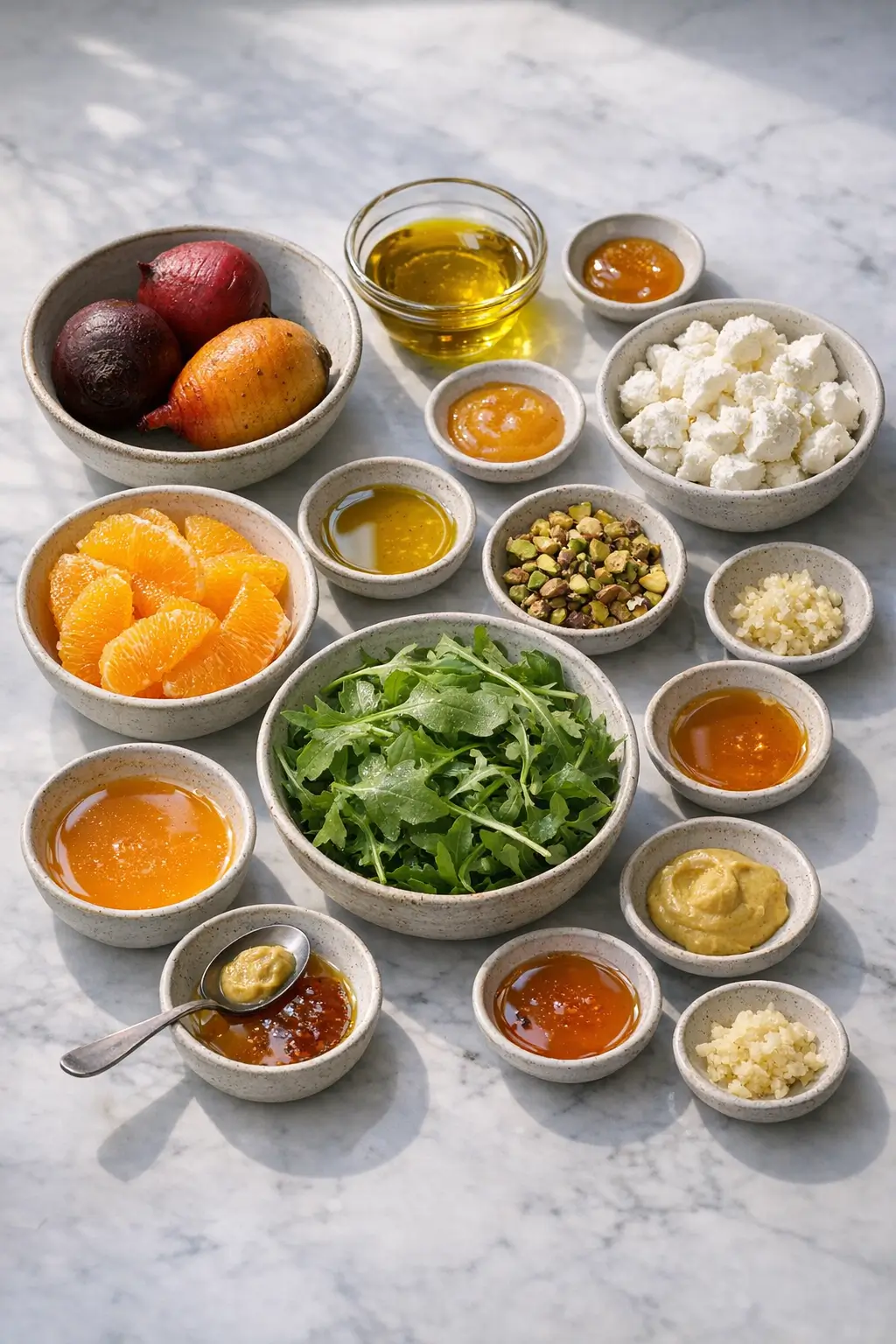
- 3 medium beets (about 450 g / 1 lb), any color – scrubbed
- 1 tablespoon (15 ml) olive oil
- 1/4 teaspoon fine sea salt, plus more to taste
For the citrus and greens
- 2 medium navel oranges – peeled and segmented, juices reserved
- 2 big handfuls arugula (about 60 g / 2 oz) – or other tender greens
For the goat cheese and crunch
- 75 g (about 2.5 oz / 3/4 cup loosely packed) soft goat cheese, crumbled
- 40 g (about 1/3 cup) shelled pistachios, roughly chopped
Kitchen note: If pistachios are pricey or hard to find, walnuts or pecans give a similar nutty crunch and also toast well.
For the orange vinaigrette
- 3 tablespoons (45 ml) extra-virgin olive oil
- 2 tablespoons (30 ml) fresh orange juice – use what you squeezed from segmenting
- 1 tablespoon (15 ml) apple cider vinegar
- 1 teaspoon smooth Dijon mustard
- 1 teaspoon honey
- 1 small garlic clove, very finely minced or grated
- 1/4 teaspoon fine sea salt
- Freshly ground black pepper, to taste
Step-by-Step Instructions for Roasted Beet Salad With Goat Cheese and Citrus
Roast the beets.
Preheat the oven to 400°F (200°C). Trim beet tops and roots if needed, then scrub well. Wrap each beet in a small piece of foil with a light drizzle of the 1 tablespoon olive oil and a pinch of salt, and place on a baking sheet.
Roast for 45–60 minutes, depending on size. Beets are ready when a knife slides in with little resistance.
Cool and peel.
Transfer the wrapped beets to a plate and let them cool until comfortable to handle, 15–20 minutes. Unwrap over the plate to catch any juices. Use a paper towel or clean dish towel to rub off the skins; they should slip off easily.
Cut the peeled beets into bite-size wedges or 1.5 cm (1/2-inch) cubes. Let them cool to just slightly warm or room temperature so they don’t wilt the greens on contact.
Kitchen note: Oven times for beets vary a lot. If yours are still firm after 45 minutes, keep roasting in 10-minute bursts, checking with a knife each time rather than relying only on the clock.
Segment the oranges.
While the beets roast or cool, prepare the citrus. Use a sharp knife to slice off the top and bottom of each orange. Stand the orange upright and slice down along the curve to remove the peel and white pith.
Hold the peeled orange over a bowl to catch juices and cut between the membranes to release neat segments. Squeeze the remaining membrane over the bowl to extract extra juice for the vinaigrette.
Toast the pistachios.
Set a small dry skillet over medium heat. Add the chopped pistachios and toast, stirring or shaking the pan often, for 3–5 minutes until fragrant and slightly darkened in spots.
Immediately transfer to a plate to cool so they don’t continue browning in the hot pan.
Make the orange vinaigrette.
In a small jar or bowl, combine 3 tablespoons olive oil, 2 tablespoons orange juice, 1 tablespoon apple cider vinegar, 1 teaspoon Dijon mustard, 1 teaspoon honey, garlic, salt, and several grinds of black pepper.
Whisk until emulsified and slightly thickened, or screw on the lid and shake. Taste and adjust: add a pinch more salt for depth, more vinegar for sharper tang, or extra honey if your citrus is quite tart.
Dress the beets separately.
Add the cut beets to a medium bowl and spoon over 2–3 tablespoons of the vinaigrette. Toss gently until coated.
Let them sit for at least 5–10 minutes so the flavors sink in while you prep the greens and plate.
Kitchen note: Coating the beets in dressing first lets them absorb flavor and keeps their color from bleeding too much into the greens once everything is tossed together.
Prepare the greens and goat cheese.
Place the arugula in a large mixing bowl. Crumble the goat cheese into small pieces so it distributes evenly. If your goat cheese is very firm, let it sit at room temperature for 10–15 minutes first.
Toss the greens lightly.
Drizzle 2–3 tablespoons of the vinaigrette over the arugula and toss gently with clean hands or salad tongs until lightly coated. You’re aiming for a thin sheen, not a heavy coating.
Assemble the salad.
For a platter presentation, spread the dressed arugula on a wide, shallow serving dish. Arrange the marinated beet wedges over the greens, then tuck in the orange segments.
Scatter the crumbled goat cheese and toasted pistachios over the top. Spoon a little more vinaigrette over everything, especially the citrus and beets.
Final seasoning and serve.
Finish with a few grinds of black pepper and a light sprinkle of salt, especially on the citrus and greens. Serve right away, or hold at cool room temperature for up to 30 minutes before serving.
Kitchen note: If you plan to photograph or plate this salad for a party, keep a few extra orange segments, beet wedges, and pistachios aside to place on top at the last minute so the colors stay vivid for photos and serving.
What to Expect
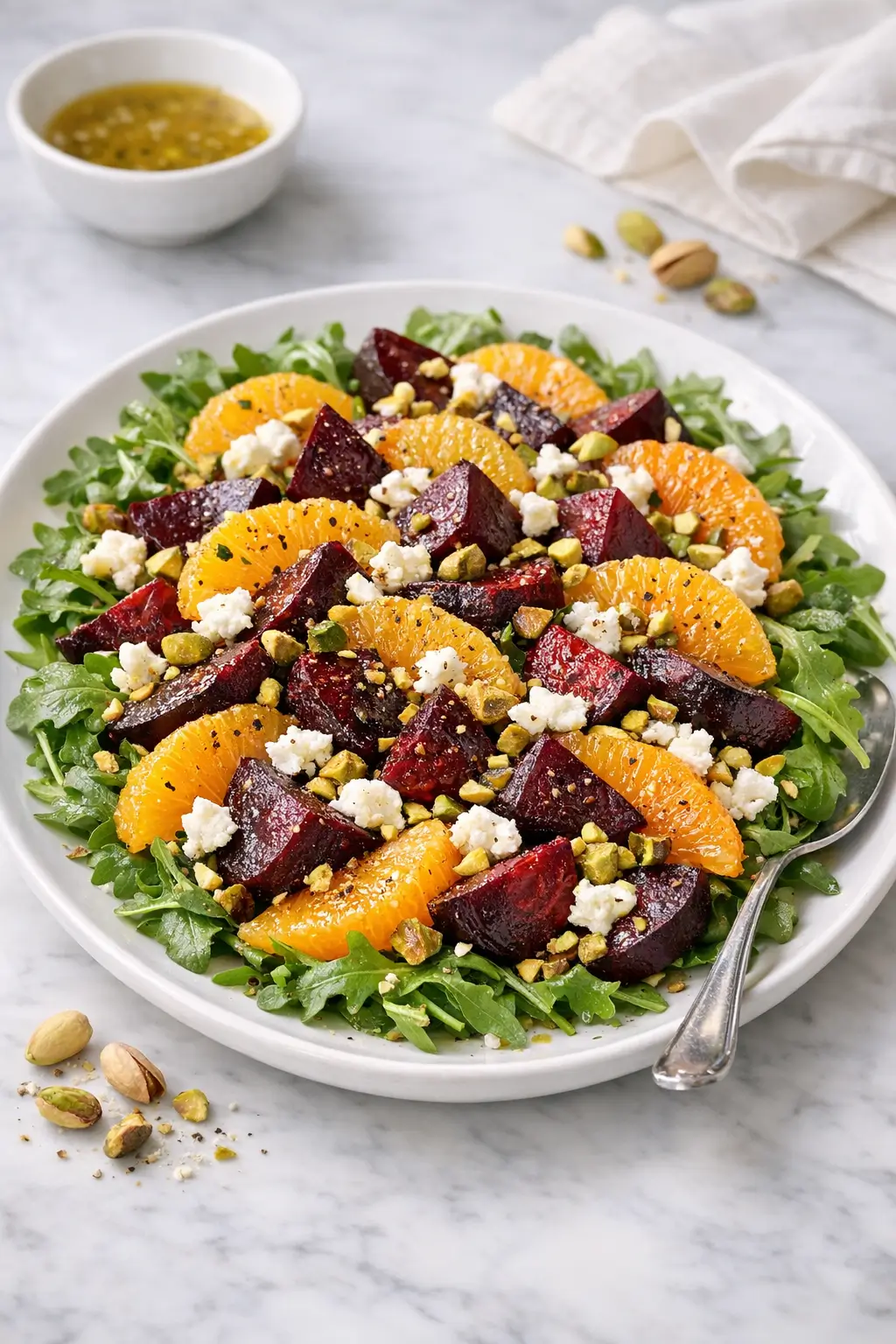
The finished salad should look vivid and layered: jewel-toned beets, bright orange segments, flecks of white goat cheese, and a bed of deep green arugula.
Texture-wise, you’ll have tender beets, juicy citrus, creamy cheese, and crunchy nuts in each forkful. The greens should stay perky, not soggy.
Flavor-wise, expect gentle sweetness from the beets and oranges, balanced by the peppery bite of arugula and tang from the vinaigrette and goat cheese. The pistachios add a toasty, slightly savory note.
Using golden or striped (chioggia) beets will give a slightly milder, less “earthy” flavor compared to deep red ones. Different brands of goat cheese can lean more tangy or more milky; both work, but a softer, fresher cheese will melt a bit into the dressing for extra creaminess.
Ways to Change It Up
Make it vegetarian-plus or fully vegan.
The recipe is already vegetarian, but to make it vegan you can swap the goat cheese for vegan soft “goat-style” cheese or crumbled firm tofu tossed with a little lemon juice and salt. Replace the honey with maple syrup or agave in the dressing.
Adjust the heat level and sharpness.
For more bite, add a small pinch of red pepper flakes to the vinaigrette or scatter sliced radishes over the top. To keep it gentler (for kids or spice-averse guests), stick with the base recipe and consider swapping arugula for softer greens like spring mix or baby spinach.
Faster, simpler version with pre-cooked beets.
To save time on a weeknight, use vacuum-packed cooked beets from the produce section. Pat them dry, cube, and toss directly with the vinaigrette. You’ll skip nearly an hour of roasting but lose a little of the deep caramelized sweetness.
Change the nuts or add seeds.
If pistachios aren’t your thing, toasted walnuts, pecans, or pumpkin seeds work well. Choose one that fits your menu—for example, walnuts for a more rustic feel or pumpkin seeds if you need a nut-free option.
Kitchen note: If you substitute nuts, toast them separately and taste before adding salt; some brands of roasted nuts are already salted and can quickly make the salad overseasoned.
Serving and Storage
This roasted beet salad with goat cheese and citrus works as a side for spring or early summer meals, brunches, or any menu where you want color and freshness without heavy prep.
It pairs well with simple grilled or roasted meats and fish, like roast chicken, grilled salmon, or seared pork chops. For a more plant-forward spread, serve it alongside something hearty and starchy such as Creamy Lemon Orzo With Parmesan or a comforting grain-based salad.
For entertaining, you can plate it on a large platter so guests can see all the colors, or assemble individual plates if you want a more composed feel. Either way, add the last drizzle of vinaigrette and nuts just before serving so everything stays crisp.
Leftovers keep reasonably well, though the greens will soften. Store the salad in an airtight container in the refrigerator for up to 2 days; for best texture, store beets, citrus, greens, nuts, and goat cheese separately if you know you’ll have leftovers.
To serve leftovers, add a small splash of extra vinegar or citrus juice to brighten the flavors again, since cold mutes acidity. The salad is best eaten cold or slightly cool; reheating isn’t recommended because it will wilt the greens and melt the cheese.
Cultural Context
Beets and citrus have long histories in different food traditions. Beets are native to the Mediterranean region, where early varieties were prized for their leaves before the roots became common in cooking. Citrus fruits such as oranges and lemons spread through trade routes across the Mediterranean and Middle East, eventually becoming staples in salads and cold dishes.
Combining roasted beets with oranges and soft cheese draws on these broader patterns of pairing sweet root vegetables with tangy, acidic flavors. For a deeper look at beet history and cultivation, see this overview from the Royal Horticultural Society. You can also read about the spread and cultural significance of citrus in this article from the Citrus Roots historical project.
Common Questions and Troubleshooting
My beets are still hard after an hour in the oven. What went wrong?
Beets vary widely in size and density, and older beets can take longer to soften. Keep roasting in 10–15 minute intervals until a thin knife pierces the center easily. Make sure they’re well wrapped in foil so they effectively steam and roast at the same time.
The goat cheese smeared everywhere and turned the salad pink. How do I avoid this?
Let the beets cool to at least warm-room temperature before adding cheese, and crumble the goat cheese in at the very end rather than tossing vigorously. If you want super clean contrasts of color, scatter the cheese on after everything else is arranged on the platter.
My greens turned soggy quickly. How can I keep them crisp?
Dry the arugula thoroughly after washing—any extra water dilutes the dressing and softens the leaves. Toss greens with only a light coating of dressing and add the beets and citrus on top right before serving, rather than letting the finished salad sit in the fridge for hours.
Can I roast the beets ahead of time?
Yes. Roast, peel, and cut the beets up to 3 days in advance. Store them in an airtight container in the refrigerator with a few tablespoons of vinaigrette. Assemble with fresh greens, citrus, nuts, and cheese shortly before serving.
What if I don’t like arugula?
Use baby spinach, tender kale, or a mixed spring blend instead. Just keep in mind that heavier greens like kale can handle more dressing, while very delicate mixes prefer a lighter hand.
Kitchen note: If using kale, massage it briefly with a spoonful of vinaigrette and a pinch of salt for a minute or two until slightly softened and darker in color. This helps it eat more tenderly in a salad.
Conclusion
This roasted beet salad with goat cheese and citrus is flexible enough for a busy weeknight but colorful enough to earn a place at a spring brunch or holiday table.
Once you’ve made it once, you can lean on the same structure—roasted vegetable, bright fruit, salty cheese, crunchy topping, and a simple vinaigrette—to build other salads from what you have on hand.
If you try it, share how you adapted the greens, nuts, or citrus to fit your pantry, and leave a rating or note so other home cooks can see what worked for you.
Roasted Beet Salad with Goat Cheese and Citrus

Equipment
- Oven
- Baking sheet
- Aluminum foil
- Small skillet
- Sharp knife
- Cutting board
- Mixing bowls
- Whisk or jar with lid
Ingredients
For the roasted beets
- 3 medium beets about 450 g / 1 lb, any color; scrubbed
- 1 tbsp olive oil
- 1/4 tsp fine sea salt plus more to taste
For the citrus and greens
- 2 medium navel oranges peeled and segmented, juices reserved
- 2 big handfuls arugula about 60 g / 2 oz; or other tender greens
For the goat cheese and crunch
- 75 g soft goat cheese crumbled
- 40 g shelled pistachios roughly chopped
For the orange vinaigrette
- 3 tbsp extra-virgin olive oil
- 2 tbsp fresh orange juice use what you squeezed from segmenting
- 1 tbsp apple cider vinegar
- 1 tsp smooth Dijon mustard
- 1 tsp honey
- 1 small clove garlic very finely minced or grated
- 1/4 tsp fine sea salt
- freshly ground black pepper to taste
Instructions
- Roast the beets. Preheat the oven to 400°F (200°C). Trim beet tops and roots if needed, then scrub well. Wrap each beet in a small piece of foil with a light drizzle of the 1 tablespoon olive oil and a pinch of salt, and place on a baking sheet. Roast for 45–60 minutes, depending on size, until a knife slides in with little resistance.
- Cool and peel. Transfer the wrapped beets to a plate and cool until comfortable to handle, 15–20 minutes. Unwrap over the plate to catch juices. Rub off skins with a paper towel or clean dish towel. Cut into bite-size wedges or 1.5 cm (1/2-inch) cubes and let cool to slightly warm or room temperature.
- Segment the oranges. Slice off the top and bottom of each orange, then remove peel and pith. Hold the orange over a bowl to catch juices and cut between membranes to release segments. Squeeze the remaining membrane to extract extra juice for the vinaigrette.
- Toast the pistachios. Heat a small dry skillet over medium. Add chopped pistachios and toast, stirring or shaking often, 3–5 minutes until fragrant and lightly darkened. Transfer to a plate to cool.
- Make the orange vinaigrette. In a small jar or bowl, combine 3 tablespoons olive oil, 2 tablespoons orange juice, 1 tablespoon apple cider vinegar, 1 teaspoon Dijon mustard, 1 teaspoon honey, garlic, salt, and several grinds of black pepper. Whisk until emulsified (or shake in a jar). Taste and adjust.
- Dress the beets separately. Toss cut beets with 2–3 tablespoons vinaigrette in a medium bowl. Let sit 5–10 minutes to absorb flavor.
- Prepare the greens and goat cheese. Place arugula in a large bowl. Crumble goat cheese into small pieces (let it sit at room temperature 10–15 minutes first if very firm).
- Toss the greens lightly. Drizzle 2–3 tablespoons vinaigrette over the arugula and toss gently until lightly coated.
- Assemble the salad. Spread dressed arugula on a serving platter. Arrange marinated beets over the greens and tuck in orange segments. Scatter goat cheese and toasted pistachios on top and spoon a little more vinaigrette over everything.
- Final seasoning and serve. Finish with black pepper and a light sprinkle of salt, especially on the citrus and greens. Serve right away, or hold at cool room temperature up to 30 minutes.



Leave a Reply