
Sheet pan roasted vegetables for weekly meal prep are one of those quiet workhorse recipes that keep busy weeks from derailing.
If you’re staring at a fridge full of odds-and-ends produce, this is a practical way to turn them into ready-to-eat building blocks for lunches and dinners. The vegetables roast together on one pan, pick up caramelized edges, and hold up well in the fridge for several days. Expect tender centers, some crisp edges, and a mellow, concentrated sweetness rather than restaurant-style deep charring.
If it’s a hectic weeknight, start by getting the oven heating and chopping the hardest vegetables first (carrots, sweet potatoes). If you’re working in a small kitchen, clear one cutting board-sized space and keep a scrap bowl nearby to stay organized.
Ingredients
Serves 3–4 as a side, or 2–3 as a meal-prep base
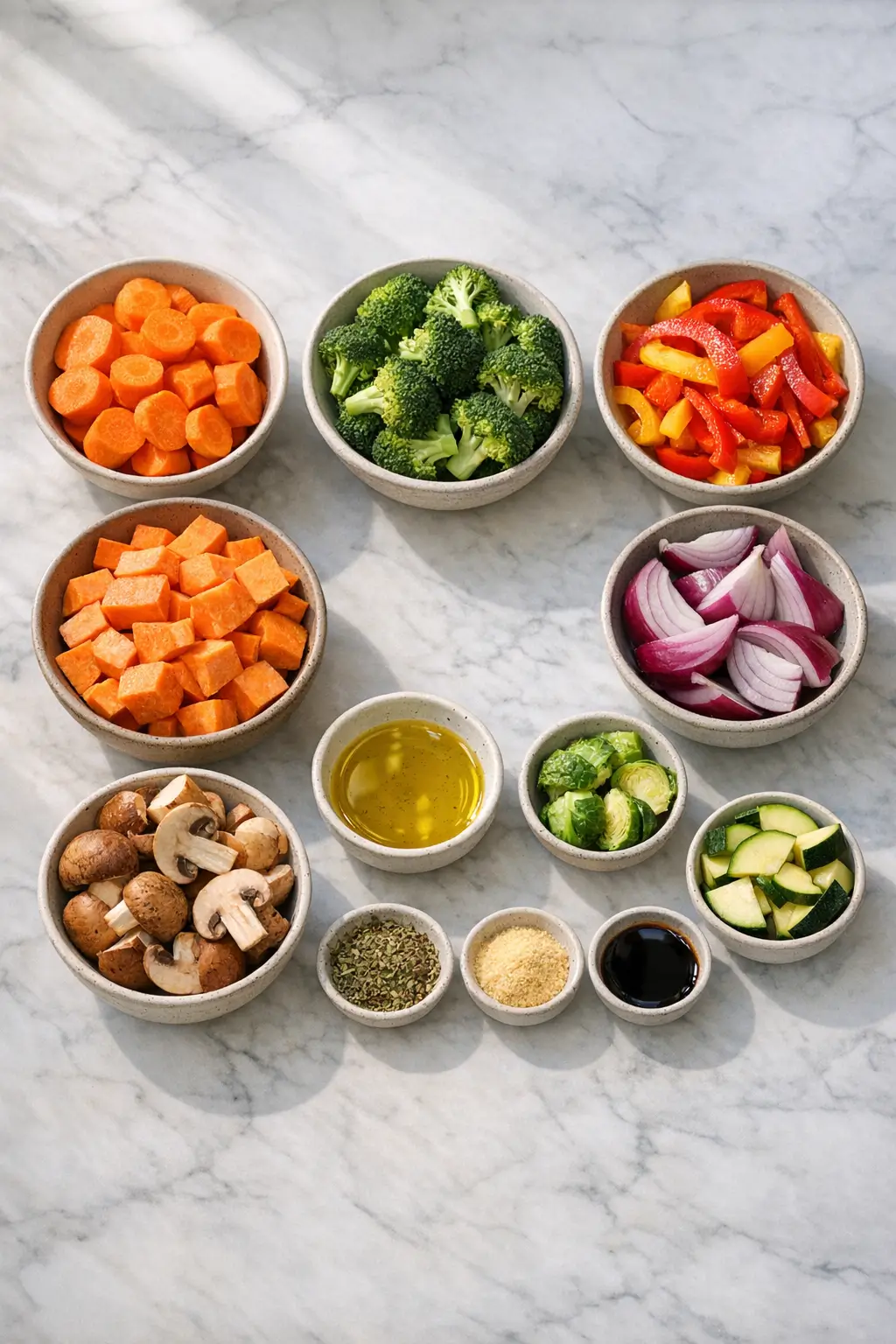
Base vegetables
- 2 medium (about 400 g / 14 oz) carrots, peeled if needed, cut into 1.5 cm / 1⁄2 in coins – sturdy sweetness, roasts well
- 1 medium (about 300 g / 10.5 oz) sweet potato, cut into 1.5 cm / 1⁄2 in cubes – adds creaminess and natural sweetness
- 1 small (about 250 g / 9 oz) head broccoli, cut into bite-size florets – brings color and slight crisp-tender bite
- 1 small (about 250 g / 9 oz) red onion, peeled and cut into 2.5 cm / 1 in wedges – softens and sweetens in the oven
- 1 red or yellow bell pepper (about 150 g / 5 oz), seeded and sliced into strips – softer veg that roasts quickly
Oil and seasoning
- 3 tbsp (45 ml) extra-virgin olive oil – helps browning and keeps vegetables moist
- 1 tsp fine sea salt, plus more to taste
- 1⁄2 tsp freshly ground black pepper
- 1 tsp dried Italian herb blend or 1⁄2 tsp dried thyme + 1⁄2 tsp dried oregano
- 1⁄2 tsp garlic powder – gentle garlic flavor that won’t burn the way fresh garlic can
- 1 tbsp (15 ml) balsamic vinegar – added at the end for brightness; sherry vinegar or red wine vinegar also work
Optional add-ins for variety
- 120 g / 4 oz Brussels sprouts, halved – add with the carrots and sweet potatoes
- 120 g / 4 oz mushrooms, halved or quartered – add with broccoli and peppers
- 1 small zucchini, sliced into half-moons – for softer, juicier bites; cooks quickly
Kitchen note: Crowding is the main reason sheet pan roasted vegetables end up steamed instead of browned. If the vegetables cover more than a single snug layer, divide them between two pans or roast in batches.
Step-by-Step Instructions for Sheet Pan Roasted Vegetables for Weekly Meal Prep
- Preheat the oven and prepare the pan.
- Set your oven to 425°F / 220°C. Give it at least 10–15 minutes to fully preheat.
- Line a large, sturdy rimmed sheet pan (roughly 18×13 in / 46×33 cm) with parchment paper for easier cleanup, or leave it unlined for slightly better browning.
- If your oven runs cool or you prefer deeper browning, place the empty pan in the oven while it preheats so it gets hot.
- Prep the firm vegetables first.
- Peel and slice the carrots into even coins.
- Scrub or peel the sweet potato and cut into 1.5 cm / 1⁄2 in cubes.
- If using Brussels sprouts, trim and halve them.
- Transfer these firmer vegetables to a large mixing bowl.
Kitchen note: Aim for similar size pieces among the firm vegetables. If carrots are much thicker than the sweet potato cubes, they’ll stay hard in the center when everything else is done.
- Add the quicker-cooking vegetables.
- Cut the broccoli into bite-size florets, keeping some stem attached.
- Slice the bell pepper into strips.
- Cut the red onion into wedges, leaving the root end just barely intact so layers hold together.
- If using mushrooms or zucchini, prep them now.
- Add all of these vegetables to the bowl with the firm ones.
- Season the vegetables evenly.
- Drizzle the olive oil over the vegetables.
- Sprinkle in the salt, pepper, dried herbs, and garlic powder.
- Toss thoroughly with clean hands or a large spoon until every piece looks lightly coated with oil and seasoning; add another teaspoon or so of oil only if there are dry spots.
Kitchen note: Over-oiling can make reheated vegetables taste greasy. The goal is a thin, glossy sheen—if you see oil pooling at the bottom of the bowl, you’ve added a bit too much.
- Arrange on the sheet pan.
- Spread the vegetables onto the prepared pan in a single, even layer.
- Flip any thick carrot coins or sweet potato cubes so one flat side is in direct contact with the pan for better browning.
- If needed, use a second pan rather than piling vegetables on top of one another.
- Roast the vegetables.
- Place the pan on the middle rack and roast for 20 minutes.
- After 20 minutes, remove the pan, stir the vegetables, and spread them back into a single layer, rotating the pan front-to-back.
- Continue roasting for another 10–15 minutes, checking at the 10-minute mark. Total roasting time is usually 30–35 minutes, depending on your oven and how crowded the pan is.
- Check for doneness.
- Carrots and sweet potatoes should be tender when pierced with a fork but not falling apart.
- Broccoli florets and pepper strips should have lightly browned or charred edges.
- Taste one piece of each type of vegetable. If the centers still feel firm or starchy, return the pan to the oven for 5–10 more minutes.
- Finish with acidity.
- As soon as the vegetables come out of the oven, drizzle the balsamic vinegar over the hot vegetables.
- Toss gently on the pan to coat. The residual heat will soften the vinegar’s sharpness and help it cling to the vegetables.
- Taste and adjust with a pinch more salt or pepper if needed.
- Cool for meal prep.
- Let the roasted vegetables cool on the pan for 15–20 minutes before packing into containers. This helps prevent excess condensation that can make them soggy.
- Divide into airtight meal-prep containers in portions you’ll actually grab during the week.
Kitchen note: For best texture, keep the vegetables in a shallow layer in the container instead of compressing them into a deep stack. They cool faster and reheat more evenly.
What to Expect
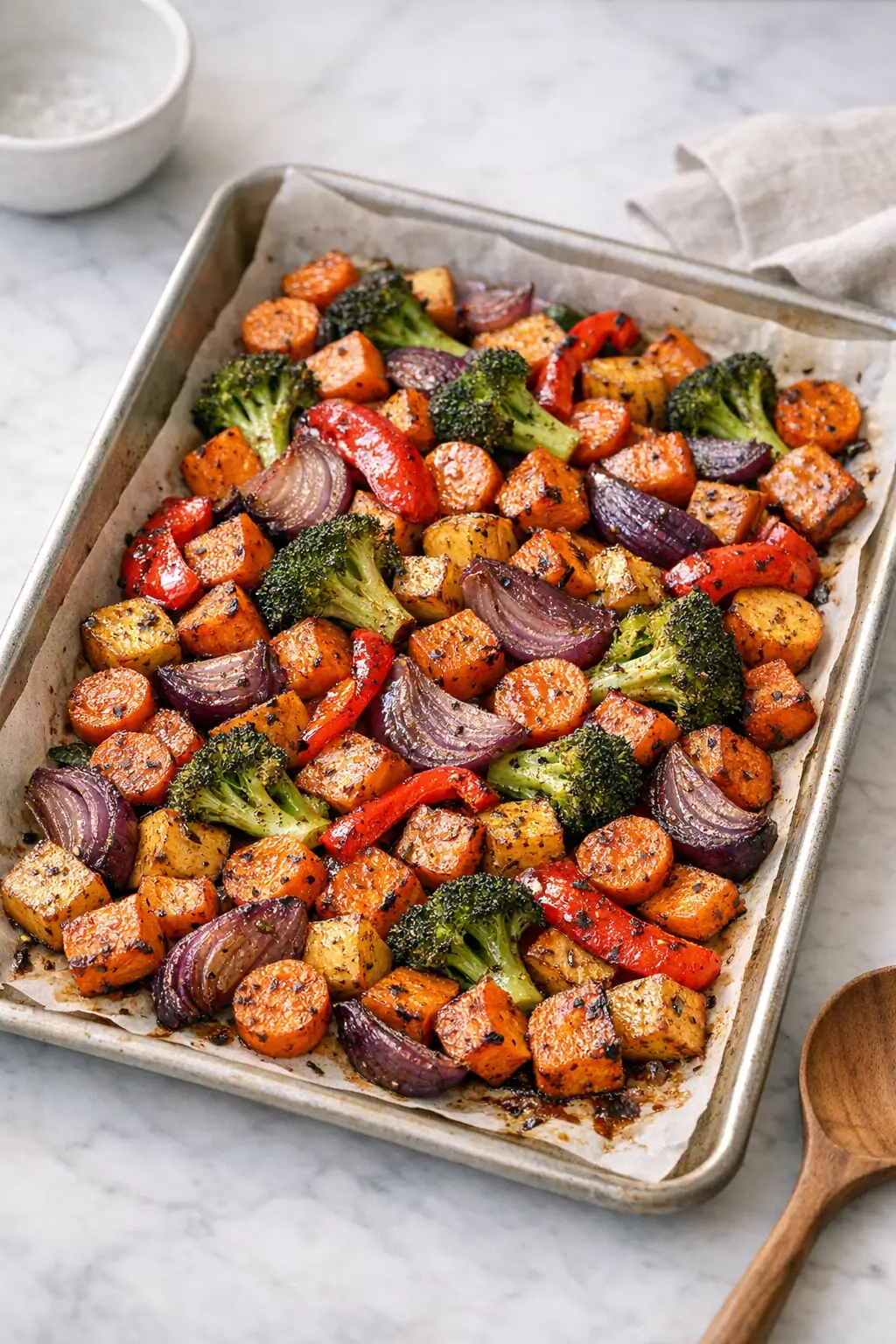
The finished roasted vegetables will be tender throughout, with some pieces showing caramelized, browned edges.
Carrots and sweet potatoes become soft and slightly creamy, while broccoli, peppers, and onions keep a bit more bite. Once refrigerated and reheated, the vegetables lose a touch of their initial crispness, which is normal for meal prep, but they should not be mushy.
Flavor-wise, expect a mildly sweet base from the roasting process, rounded out by the dried herbs and garlic.
The balsamic vinegar adds a gentle tang and a bit of complexity without making the vegetables taste like a salad dressing. Different ovens, pan materials, and even the moisture level of your vegetables will affect browning, so slight variation in color and texture from batch to batch is normal.
Ways to Change It Up
1. Make it fully plant-based and protein-focused.
The base recipe is already vegetarian and vegan, but you can turn it into more of a complete meal prep component by adding a plant protein.
Toss a drained can of chickpeas (about 240 g / 8.5 oz cooked) with the vegetables in step 4, then roast as directed. Chickpeas will dry slightly and become toasty at the edges, which holds up well for reheating.
2. Adjust the heat level.
For more warmth, add 1⁄2–1 tsp smoked paprika and a pinch of red pepper flakes with the dried herbs.
Smoked paprika reinforces the roasted, slightly smoky flavor without making the vegetables “spicy hot,” while red pepper flakes add noticeable heat. To keep the tray very mild—for kids or heat-sensitive eaters—simply omit pepper flakes and use sweet paprika or no paprika at all.
3. Make a faster, simplified version.
If you’re short on time or oven space, focus on quicker-cooking vegetables.
Use just broccoli, bell peppers, onions, and mushrooms, cut into similar-sized pieces. Skip the sweet potato and carrots, reduce the roasting time to 18–22 minutes, and stir halfway through. You trade some of the creamy sweetness from root vegetables for speed and a slightly lighter, less filling mix.
4. Play with different seasonings.
The same roasting method works with different flavor profiles.
Try cumin and coriander with a squeeze of lime at the end, or use rosemary and lemon zest instead of the Italian herb blend and balsamic. The key is to keep total dried herbs and spices to around 1.5–2 tsp so the vegetables don’t taste dusty.
Serving and Storage
For weekly meal prep, think of these sheet pan roasted vegetables as a flexible base, not a complete meal.
They work well alongside simple proteins like baked chicken, tofu, tempeh, pan-seared fish, or lentils. You can also turn them into grain bowls by serving over cooked quinoa, brown rice, or farro with a spoonful of yogurt or hummus on top.
Fold leftover roasted vegetables into omelets or frittatas, tuck them into wraps with hummus, or toss them with cooked pasta and a bit more olive oil and lemon juice for a quick dinner.
For storage, let the vegetables cool completely, then transfer to airtight containers.
Refrigerate for up to 4 days. For the best texture, reheat only what you plan to eat.
To reheat, spread a portion on a small baking sheet and warm at 375°F / 190°C for 8–10 minutes, or reheat in a skillet over medium heat with a small splash of water or oil. The microwave also works; reheat in short bursts, stirring between each, knowing the vegetables will soften more.
Freezing is possible but will soften the vegetables significantly once thawed.
If you do freeze them, use within 1 month and plan to add them to soups, stews, or grain-based casseroles rather than serving on their own.
Cultural Context
Roasting vegetables in an enclosed oven has deep roots in European cooking, especially in regions where large hearths and later enclosed ovens were central to household kitchens.
As modern home ovens became common, sheet pans made it easier to roast mixed vegetables in a single layer, which encourages browning instead of stewing. This technique fits into a broader trend of “tray bakes” and one-pan meals that emphasize efficiency and minimal cleanup.
Roasted vegetable dishes appear in many cultural contexts, often tied to seasonal produce and home economies. For a broader overview of how roasting and baking evolved in domestic kitchens, see this article from the Science and Media Museum on the history of the kitchen. You can also explore how changing oven technology influenced everyday cooking in this piece from the Victoria and Albert Museum on the history of cooking.
Common Questions and Troubleshooting
My vegetables came out soft but pale. What went wrong?
Pale vegetables usually mean the oven temperature was too low, the pan was overcrowded, or there was too much moisture.
Confirm your oven is actually hitting 425°F / 220°C (an inexpensive oven thermometer helps), spread vegetables in a single layer with some space between pieces, and dry them well after washing before tossing with oil.
Some vegetables were burned while others were still firm. How do I fix that?
Uneven size is the main culprit.
Cut firmer vegetables like carrots and sweet potatoes into smaller pieces and softer ones like peppers and onions slightly larger. If your oven heats unevenly, rotate the pan and give everything a stir halfway through roasting so nothing sits in the hottest spot the whole time.
Can I roast frozen vegetables for meal prep instead of fresh?
Yes, but they behave differently.
Frozen vegetables release more water as they thaw in the oven, so they won’t brown as deeply and can turn softer. Roast them from frozen at a slightly higher temperature (around 435°F / 225°C) and avoid very watery vegetables like frozen zucchini. Expect more of a tender, steamed-roasted result that still works well in grain bowls and pastas.
How long can I keep roasted vegetables in the fridge?
For home meal prep, 3–4 days in the refrigerator in a sealed container is a reasonable guideline.
After that, quality drops and textures become noticeably softer. If something smells off, looks slimy, or has visible mold, discard it rather than trying to salvage it.
I’m worried about soggy reheated vegetables. Any tips?
For the best texture, reheat in a hot oven or skillet rather than the microwave.
Spread vegetables out in a single layer and warm just until hot. Avoid covering them while reheating, which traps steam. Also, cool them quickly after roasting, and don’t seal them in containers while they’re still warm.
Can I double this recipe for more portions?
You can, but use two sheet pans and rotate their positions halfway through.
If both pans sit directly on top of each other, steam gets trapped and slows browning. Stagger them on separate racks, then swap them and stir the vegetables halfway through cooking.
Conclusion
Sheet pan roasted vegetables for weekly meal prep are less about precision and more about paying attention to a few small details: pan space, oven temperature, and cutting vegetables to similar sizes.
Once you have that rhythm down, you can swap vegetables based on what you have, change the seasoning, and still get reliable results. If you try this version, feel free to leave a comment with what vegetables you used, any spice tweaks you enjoyed, or how you’ve been folding them into your weekly lunches and dinners.
Sheet Pan Roasted Vegetables for Easy Meal Prep

Equipment
- Rimmed sheet pan (about 18×13 in / 46×33 cm)
- Parchment paper (optional)
- Cutting board
- Chef’s knife
- Large mixing bowl
- Large spoon (or clean hands for tossing)
Ingredients
Base vegetables
- 2 medium carrots about 400 g / 14 oz; peeled if needed; cut into 1.5 cm / 1/2 in coins
- 1 medium sweet potato about 300 g / 10.5 oz; cut into 1.5 cm / 1/2 in cubes
- 1 small broccoli head about 250 g / 9 oz; cut into bite-size florets
- 1 small red onion about 250 g / 9 oz; peeled and cut into 2.5 cm / 1 in wedges
- 1 red or yellow bell pepper about 150 g / 5 oz; seeded and sliced into strips
Oil and seasoning
- 3 tbsp extra-virgin olive oil 45 ml
- 1 tsp fine sea salt plus more to taste
- 1/2 tsp freshly ground black pepper
- 1 tsp dried Italian herb blend or 1/2 tsp dried thyme + 1/2 tsp dried oregano
- 1/2 tsp garlic powder
- 1 tbsp balsamic vinegar 15 ml; add at the end
Optional add-ins for variety
- 120 g Brussels sprouts 4 oz; halved (add with carrots and sweet potatoes)
- 120 g mushrooms 4 oz; halved or quartered (add with broccoli and peppers)
- 1 small zucchini sliced into half-moons
Instructions
- Preheat the oven to 425°F / 220°C. Line a large rimmed sheet pan (about 18×13 in / 46×33 cm) with parchment for easier cleanup (or leave unlined for better browning). For deeper browning, preheat the empty pan in the oven.
- Prep the firm vegetables: slice carrots into even coins and cut sweet potato into 1.5 cm / 1/2 in cubes. If using Brussels sprouts, trim and halve. Add to a large mixing bowl.
- Add the quicker-cooking vegetables: cut broccoli into bite-size florets, slice bell pepper into strips, and cut red onion into wedges (leave root end barely intact). If using mushrooms or zucchini, prep and add them too.
- Season: drizzle olive oil over the vegetables, then add salt, pepper, dried herbs, and garlic powder. Toss thoroughly until everything is lightly coated; add a little more oil only if there are dry spots.
- Arrange: spread vegetables on the sheet pan in a single even layer. Place flat sides of thicker carrot coins and sweet potato cubes against the pan for better browning. If crowded, use a second pan.
- Roast: roast on the middle rack for 20 minutes. Remove, stir, spread back into a single layer, and rotate the pan. Roast 10–15 minutes more, for a total of about 30–35 minutes.
- Check doneness: carrots and sweet potatoes should be fork-tender; broccoli and peppers should have lightly browned edges. If needed, roast 5–10 minutes longer.
- Finish: immediately drizzle balsamic vinegar over the hot vegetables and toss gently on the pan. Taste and adjust salt and pepper as needed.
- Cool for meal prep: cool on the pan for 15–20 minutes before packing into airtight containers to reduce condensation and sogginess.



Leave a Reply