
On nights when everyone is hungry and time is tight, sheet pan salmon with asparagus and potatoes gives you a full spring dinner with almost no hovering over the stove. You get juicy salmon, tender-crisp asparagus, and golden potatoes on one tray, using mostly pantry ingredients.
If it’s a busy weeknight, start by getting the potatoes cut first — they take the longest. If your oven runs hot or your sheet pan is dark, mentally note to check things 3–5 minutes early.
The flavors lean bright and savory: lemon, garlic, olive oil, and a bit of Dijon. It feels right at home during spring when asparagus is in season but works any time you can find good spears. This is a good fit for newer cooks or anyone with a small kitchen who wants a proper dinner with minimal cleanup.
Ingredients
Serves 3–4
For the potatoes and asparagus
- 500 g / 1 lb baby yellow or red potatoes, halved or quartered into 2.5 cm / 1-inch pieces (roast up creamy inside, crisp outside)
- 2 tbsp (30 ml) olive oil, divided
- 1 tsp kosher salt, divided (use slightly less if using fine salt)
- 1/2 tsp freshly ground black pepper, divided
- 1/2 tsp garlic powder (seasons the veg evenly without burning)
- 1/2 tsp dried thyme or Italian seasoning (adds herbal flavor without extra chopping)
- 1 bunch asparagus (about 300 g / 10–12 oz), woody ends snapped or trimmed off
For the salmon and marinade
- 4 skin-on salmon fillets (120–150 g / 4–5 oz each), about 2.5 cm / 1 inch thick
- 2 tbsp (30 ml) olive oil
- 2 tbsp (30 ml) fresh lemon juice (about 1 lemon)
- 1 tbsp (15 g) Dijon mustard (helps the marinade cling, adds tang)
- 1 tbsp (15 g) honey or pure maple syrup (softens the acidity and helps browning)
- 2 garlic cloves, finely minced
- 1/2 tsp kosher salt
- 1/4 tsp freshly ground black pepper
- 1/4 tsp smoked paprika or sweet paprika (color and gentle warmth)
- 1 tbsp finely chopped fresh dill or parsley, plus more for serving optional but recommended
To finish
- Lemon wedges, for serving
- Flaky sea salt, to finish optional
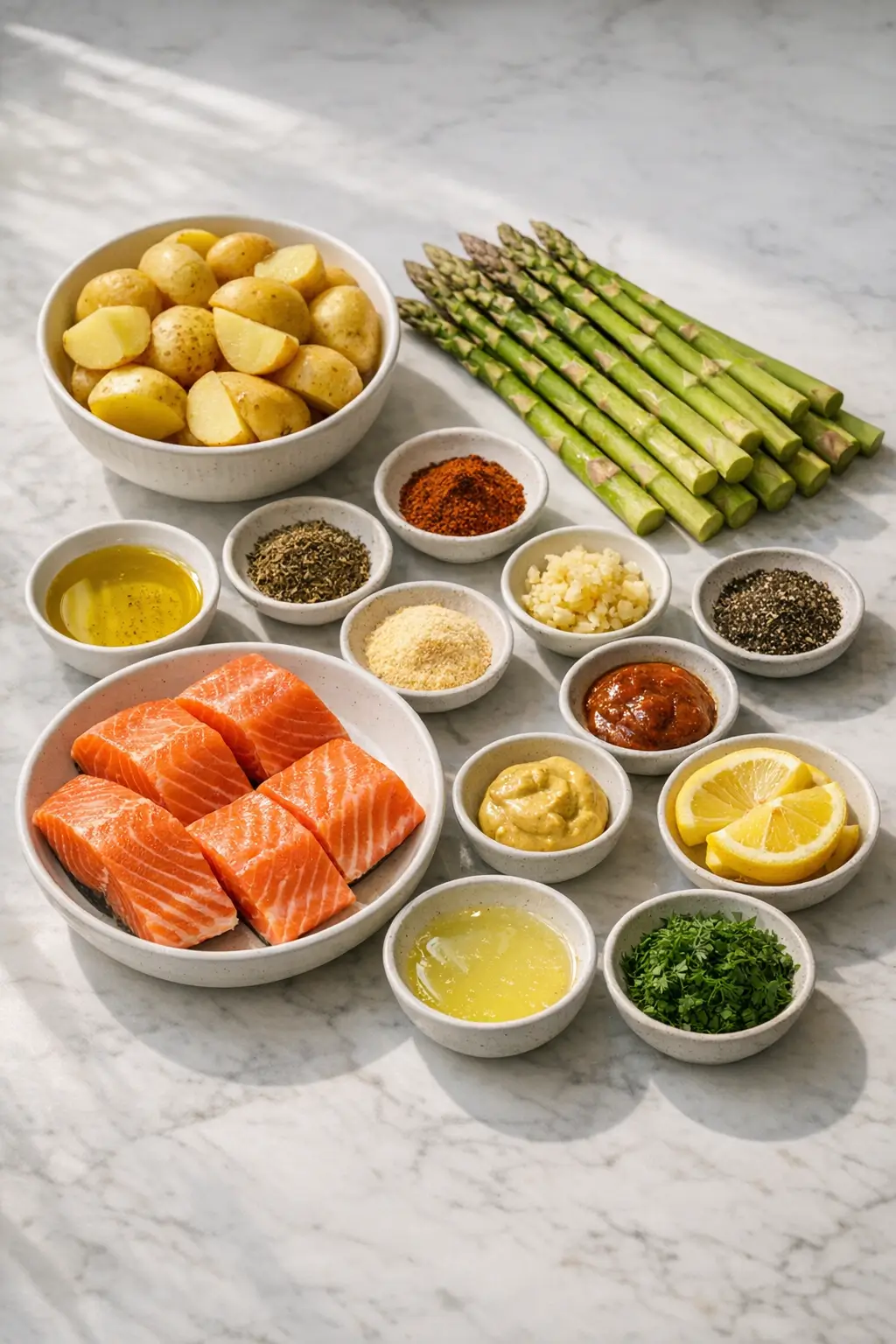
Kitchen note: If your salmon fillets are much thinner than 2.5 cm / 1 inch, they will cook faster. Plan to start checking them for doneness a few minutes earlier than the times given below.
Step-by-Step Instructions for Sheet Pan Salmon With Asparagus and Potatoes
Preheat the oven and prepare the pan.
Heat the oven to 220°C / 425°F with a rack in the middle. Line a large, rimmed sheet pan (about 18×13 inches) with parchment for easier cleanup, or lightly oil it.Start the potatoes.
In a large bowl, toss the potato pieces with 1.5 tbsp olive oil, 1/2 tsp salt, 1/4 tsp pepper, garlic powder, and dried thyme or Italian seasoning until evenly coated. Spread in a single layer on the sheet pan, cut sides down when possible.Roast the potatoes alone.
Roast for 15–20 minutes, stirring once halfway through, until the edges are just starting to brown and the centers are barely tender when pierced with a knife. This head start lets them finish at the same time as the salmon and asparagus.
Kitchen note: If your potatoes are still very firm after 20 minutes, your oven may run cool or the pieces may be larger. Give them another 5–10 minutes before adding the salmon and asparagus so they don’t stay underdone.
Mix the salmon marinade while potatoes roast.
In the same bowl (no need to wash), whisk together 2 tbsp olive oil, lemon juice, Dijon, honey, minced garlic, 1/2 tsp salt, 1/4 tsp pepper, paprika, and chopped dill or parsley. Taste; it should be tangy and lightly sweet.Coat the salmon.
Pat the salmon fillets dry with paper towels so the marinade adheres well. Add them to the bowl and gently turn until all sides are coated. Leave them flesh side down in the marinade while the potatoes finish roasting.Prep the asparagus.
Trim or snap away the woody ends of the asparagus. In a small bowl, toss the spears with the remaining 1/2 tbsp olive oil and a pinch each of salt and pepper. Thicker spears do well in this high heat; if yours are pencil-thin, plan to add them a couple of minutes later so they do not overcook.Rearrange the pan.
When the potatoes have had their head start, remove the sheet pan from the oven. Use a spatula to push the potatoes to one third to one half of the pan, leaving space for the salmon and asparagus.Add the salmon.
Place the salmon fillets skin side down on the cleared part of the pan. Spoon any remaining marinade over the top of the fish, but avoid pouring so much that it floods the potatoes or they will soften instead of crisping.Add the asparagus.
Arrange the seasoned asparagus in a single layer around the salmon and potatoes, avoiding any heavy overlap so the vegetables roast rather than steam.Roast everything together.
Return the pan to the oven and roast for 10–12 minutes. The asparagus should be bright green and just tender, and the salmon should be nearly cooked through.Check for doneness.
For medium, the salmon should flake easily with a fork and read 50–52°C / 122–125°F in the thickest part when checked with an instant-read thermometer. Potatoes should be deeply golden on the cut sides and tender all the way through.Optional quick broil.
If you like a bit more color on the salmon and asparagus tips, switch the oven to broil / grill and cook for 1–2 minutes, watching closely so nothing burns.Rest and finish.
Let the salmon rest on the pan for 3–5 minutes so the juices redistribute. Sprinkle everything with a pinch of flaky salt and extra chopped herbs if using. Serve straight from the pan with lemon wedges on the side.
Kitchen note: If your pan is very crowded or your oven tends to steam food, use two pans or stagger the asparagus on a second rack. Good air circulation is what gives you crisp potatoes and lightly caramelized asparagus.
What to Expect
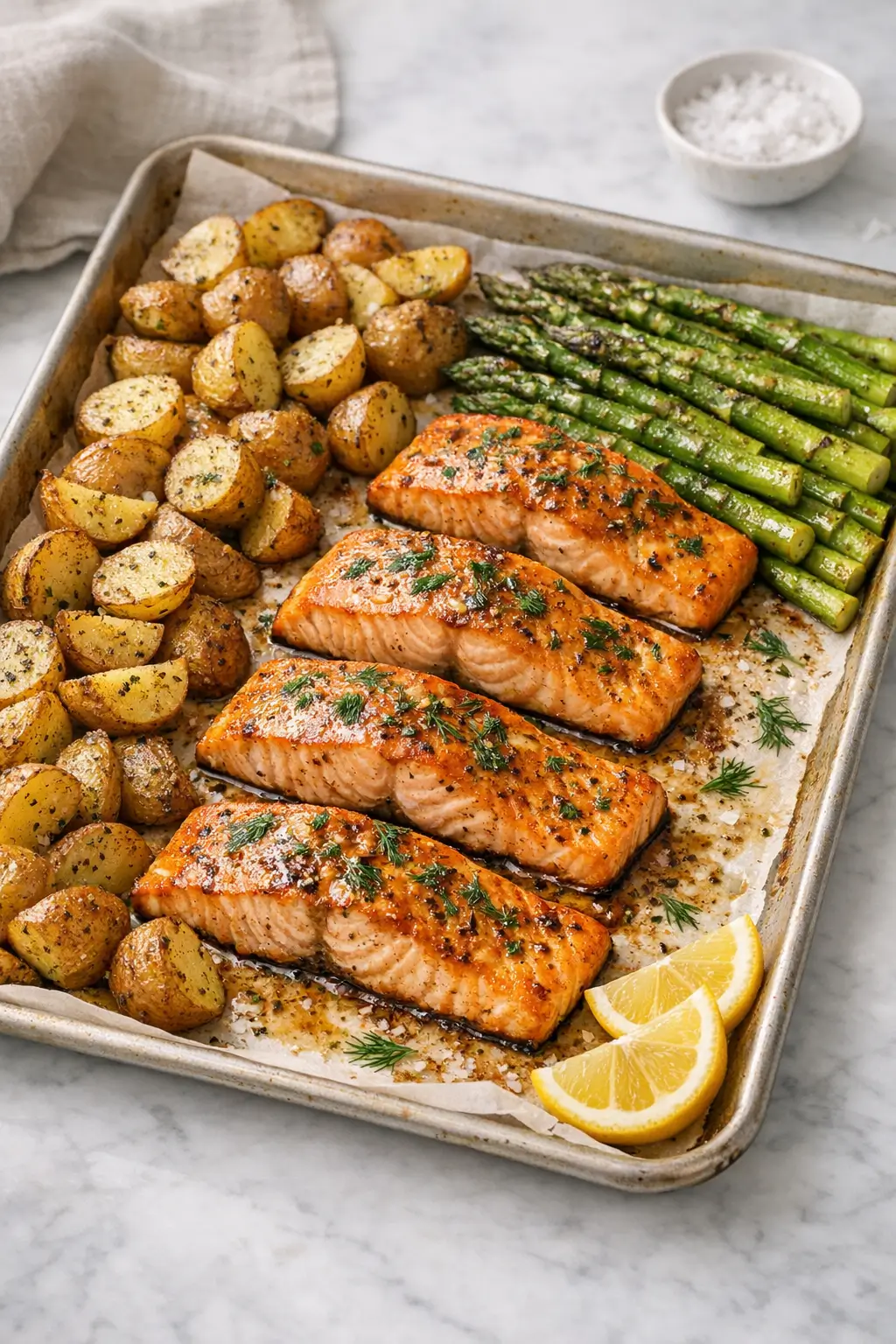
This sheet pan dinner is more relaxed than restaurant-plated salmon, and that is part of the appeal. The salmon turns out moist with a lightly firm, flaky texture rather than silky; the honey-Dijon marinade gives the surface a gentle sheen and a bit of caramelization.
The potatoes will be soft in the center with crisp edges where they contact the hot pan. Expect them to be more “roasty” than shatteringly crunchy unless you use a second pan just for potatoes so they have extra space.
Asparagus should be tender but still snappy toward the tips, with a slight char on thinner spears. Flavor-wise, the combination leans bright and savory: lemon, garlic, a whisper of sweetness, and some herbal notes from dried thyme and fresh dill or parsley.
Different ovens and pan materials can shift things. A dark, thin pan may brown the potatoes faster and require checking 3–4 minutes earlier, while a heavy, light-colored pan might need the full time. Farmed salmon tends to stay a little moister than wild, which can dry out more quickly.
Kitchen note: If your asparagus looks done before the salmon, you can quickly lift the spears off to a plate and return the pan to the oven for a couple more minutes. Better to remove asparagus early than let it collapse and turn dull.
Ways to Change It Up
1. Make it dairy-free, or add a creamy element.
This base recipe is already dairy-free. If you want a creamy contrast, serve with a quick yogurt sauce: stir Greek yogurt with lemon, salt, pepper, and herbs, similar to the dill yogurt sauce used in some salmon sheet pan recipes. You can spoon it over at the table so it stays cool against the hot fish.
2. Go spicier with chili and citrus.
For more heat, add 1/2–1 tsp red pepper flakes or 1 tsp chili-garlic sauce to the marinade, and bump up the lemon juice slightly to keep the balance. You can also sprinkle a bit of Aleppo pepper or smoked chili over the cooked salmon for a softer, fruity heat.
3. Make a milder, kid-friendlier version.
Skip the Dijon and smoked paprika, and reduce the garlic to 1 clove. Use just olive oil, lemon, a small squeeze of honey, and salt and pepper for the salmon. The result is simpler and less sharp, which many kids find easier.
4. Swap the vegetables based on what you have.
If asparagus is out of season or pricey, you can swap in trimmed green beans or small broccoli florets. Keep the total amount about the same and cut pieces similar in size to the asparagus so they roast on the same timeline.
5. Short on time? Parboil or microwave the potatoes.
If you really need dinner in under 25 minutes, briefly microwave the cut potatoes with a splash of water for 3–4 minutes until just starting to soften. Dry them well, then proceed with oil and seasonings and roast. They will crisp faster and line up better with a shorter salmon cook.
Kitchen note: Whenever you change vegetables, keep their water content and size in mind. Dense roots like carrots need more time than asparagus, while watery veg like zucchini can soften quickly and benefit from being added later.
Serving and Storage
Serve the sheet pan right on a trivet in the center of the table, then use a spatula to portion salmon fillets and scoop up potatoes and asparagus. A squeeze of fresh lemon over each plate brightens everything and cuts through the richness of the fish.
If you want a little extra on the side, something crisp and fresh balances the roasted elements well. A simple green salad or a crunchy side like Cucumber Salad That Stays Crunchy in 15 Minutes works nicely. For a more filling plate, pair this with a grain-based side such as Creamy Lemon Orzo With Parmesan in 25 Minutes to echo the lemony flavors.
Leftovers keep up to 2 days in the refrigerator. Cool completely, then store salmon, potatoes, and asparagus together in a shallow, airtight container.
To reheat, use a low oven: 150–160°C / 300–325°F for about 8–10 minutes, just until the salmon is warmed through. Microwaving is fast but can overcook the fish; use 50% power in short bursts if you go that route.
Potatoes will lose some crispness after chilling, but they still reheat well. Asparagus becomes softer over time, so do not plan to hold it for more than a day if texture is important to you.
Cultural Context
Salmon and asparagus show up together frequently in spring menus in North America and Europe because they dovetail with the natural growing and fishing seasons. Asparagus is widely regarded as a quintessential spring vegetable, with traditional seasons in many regions running from April into early summer. Resources on asparagus history note that it has been prized since antiquity and has strong seasonal associations in places like Germany and the UK, where it appears on dedicated spring menus and at festivals.
For more background, see articles such as this overview of asparagus as a spring vegetable and this look at how sheet pan dinners became a modern home-cooking trend, which explains why one-pan meals like this are now common in weeknight cooking.
Common Questions and Troubleshooting
My potatoes are still hard when the salmon is done. What happened?
Most often, the potatoes were cut too large or crowded too tightly on the pan, or your oven runs cooler than the set temperature. Next time, cut them into smaller 2.5 cm / 1-inch pieces, give them a bit more space, and consider roasting them 5–10 minutes longer before adding the salmon and asparagus.
The asparagus came out limp and stringy. How do I fix that?
Limp asparagus usually means it was either overcooked or started out a bit old and woody. Use fresher, firm spears, snap off the tough ends, and if yours are thin, add them a few minutes after the salmon goes in so they roast for less time overall.
My salmon turned out dry. How can I keep it moist?
Dry salmon is typically slightly overcooked. Aim for a pull temperature of 50–52°C / 122–125°F in the thickest part and let carryover heat finish the job. You can also choose center-cut fillets that are an even thickness and avoid broiling for too long.
Can I use frozen salmon fillets?
Yes, but they should be fully thawed and patted very dry before marinating so they roast rather than steam. Thicker fillets may need an extra 2–3 minutes in the oven; very thin ones may cook in less.
What if I do not have asparagus?
You can swap in green beans, broccolini, or small broccoli florets. Keep the pieces on the smaller side so they roast in about the same time, and watch for charring at the edges.
How far ahead can I prep this?
You can cut the potatoes and store them submerged in cold water in the fridge for up to 24 hours, then drain and dry very well before roasting. The salmon can sit in the marinade for up to 30–45 minutes in the refrigerator. Wait to dress the asparagus until just before roasting.
Kitchen note: If you prep potatoes ahead in water, drying them thoroughly before roasting is non-negotiable. Surface moisture will fight against browning and keep them from crisping.
Conclusion
This sheet pan salmon with asparagus and potatoes is designed for the nights when you want a solid, seasonal dinner with a minimum of decision-making. You can adjust the seasoning, switch up the herbs, or add a yogurt sauce on the side, but the core method remains the same and forgiving.
If you try it, leave a comment with how it went and what vegetables or flavor tweaks you used. Your notes and ratings help other home cooks get dinner on the table with a bit more confidence and a bit less stress.
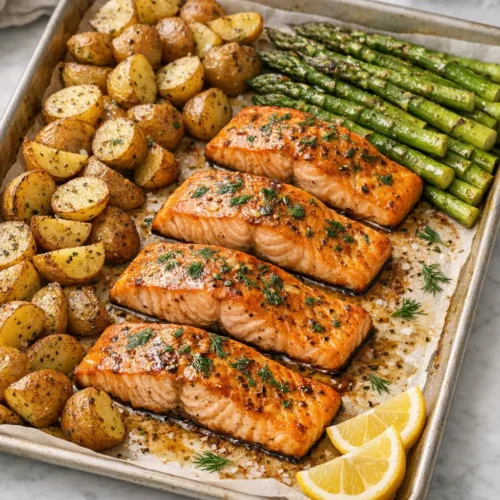
Sheet Pan Salmon With Asparagus and Potatoes

Equipment
- Rimmed sheet pan (about 18×13 inches)
- Parchment paper
- Large bowl
- Small bowl
- Whisk
- Spatula
- Instant-read thermometer (optional)
Ingredients
For the potatoes and asparagus
- 500 g baby yellow or red potatoes halved or quartered into 2.5 cm / 1-inch pieces
- 2 tbsp olive oil divided
- 1 tsp kosher salt divided
- 1/2 tsp freshly ground black pepper divided
- 1/2 tsp garlic powder
- 1/2 tsp dried thyme or Italian seasoning
- 1 bunch asparagus woody ends snapped or trimmed off (about 300 g / 10–12 oz)
For the salmon and marinade
- 4 skin-on salmon fillets 120–150 g / 4–5 oz each; about 2.5 cm / 1 inch thick
- 2 tbsp olive oil
- 2 tbsp fresh lemon juice about 1 lemon
- 1 tbsp Dijon mustard
- 1 tbsp honey or pure maple syrup
- 2 cloves garlic finely minced
- 1/2 tsp kosher salt
- 1/4 tsp freshly ground black pepper
- 1/4 tsp smoked paprika or sweet paprika
- 1 tbsp fresh dill or parsley finely chopped, plus more for serving (optional but recommended)
To finish
- lemon wedges for serving
- flaky sea salt optional, to finish
Instructions
- Heat the oven to 220°C / 425°F with a rack in the middle. Line a large, rimmed sheet pan (about 18×13 inches) with parchment for easier cleanup, or lightly oil it.
- In a large bowl, toss the potato pieces with 1.5 tbsp olive oil, 1/2 tsp salt, 1/4 tsp pepper, garlic powder, and dried thyme or Italian seasoning until evenly coated. Spread in a single layer on the sheet pan, cut sides down when possible.
- Roast for 15–20 minutes, stirring once halfway through, until the edges are just starting to brown and the centers are barely tender when pierced with a knife.
- In the same bowl (no need to wash), whisk together 2 tbsp olive oil, lemon juice, Dijon, honey, minced garlic, 1/2 tsp salt, 1/4 tsp pepper, paprika, and chopped dill or parsley. Taste; it should be tangy and lightly sweet.
- Pat the salmon fillets dry with paper towels. Add them to the bowl and gently turn until all sides are coated. Leave them flesh side down in the marinade while the potatoes finish roasting.
- Trim or snap away the woody ends of the asparagus. In a small bowl, toss the spears with the remaining 1/2 tbsp olive oil and a pinch each of salt and pepper.
- Remove the sheet pan from the oven. Use a spatula to push the potatoes to one third to one half of the pan, leaving space for the salmon and asparagus.
- Place the salmon fillets skin side down on the cleared part of the pan. Spoon any remaining marinade over the top of the fish, avoiding flooding the potatoes.
- Arrange the seasoned asparagus in a single layer around the salmon and potatoes, avoiding heavy overlap so the vegetables roast rather than steam.
- Return the pan to the oven and roast for 10–12 minutes, until the asparagus is bright green and just tender and the salmon is nearly cooked through.
- Check for doneness: for medium, salmon should flake easily and read 50–52°C / 125–125°F in the thickest part. Potatoes should be deeply golden on the cut sides and tender all the way through.
- Optional: switch the oven to broil / grill and cook 1–2 minutes for extra color, watching closely so nothing burns.
- Let the salmon rest on the pan for 3–5 minutes. Sprinkle with flaky salt and extra chopped herbs if using, and serve with lemon wedges.



Leave a Reply