
Spaghetti carbonara is one of those dishes that looks fancy but actually comes together fast if you set yourself up well. It’s a staple in many Roman-inspired trattorias and a smart option for a late work night or a low-effort weekend dinner at home.
If you’ve had a long day, get the pasta water on the stove right now—that buys you 10 minutes to cube the guanciale, grate the cheese, and crack the eggs. In a small kitchen, clear a bit of counter space and line up your bowl, pan, and tongs so you can move quickly once the pasta is cooked.
This version stays close to the classic: salty pork, plenty of Pecorino Romano, silky egg sauce, and lots of black pepper. Expect a glossy coating on the noodles, not a heavy pool of sauce, and a balance of richness with a sharp, savory edge from the cheese. It’s ideal for confident beginners through experienced home cooks who like unfussy but precise recipes.
Ingredients
Serves 2–3
- 200 g (7 oz) dried spaghetti – or other long pasta like bucatini or linguine
- 80 g (3 oz) guanciale, cut into small batons or cubes – cured pork jowl, traditional for carbonara; pancetta is a realistic substitute
- 2 large egg yolks
- 1 large whole egg – the mix of yolks and whole egg gives a creamy but not overly dense sauce
- 60 g (2 oz / about 1 cup loosely packed) finely grated Pecorino Romano – use the smallest holes on a grater; a 50/50 mix of Pecorino Romano and Parmigiano Reggiano works if you prefer a slightly milder, less salty flavor
- 1–1 ½ tsp freshly ground black pepper, divided – some for the egg mixture, some for finishing
- 8–10 g (1 ½–2 tsp) kosher salt for the pasta water – you’ll use a little less salt than usual because the cheese and guanciale are both salty
- 60–120 ml (¼–½ cup) hot starchy pasta water, reserved – for adjusting the consistency of the sauce
Kitchen note: Weighing the cheese if you can makes a big difference. Too much packed cheese in the egg mixture can make the sauce seize and go pasty.
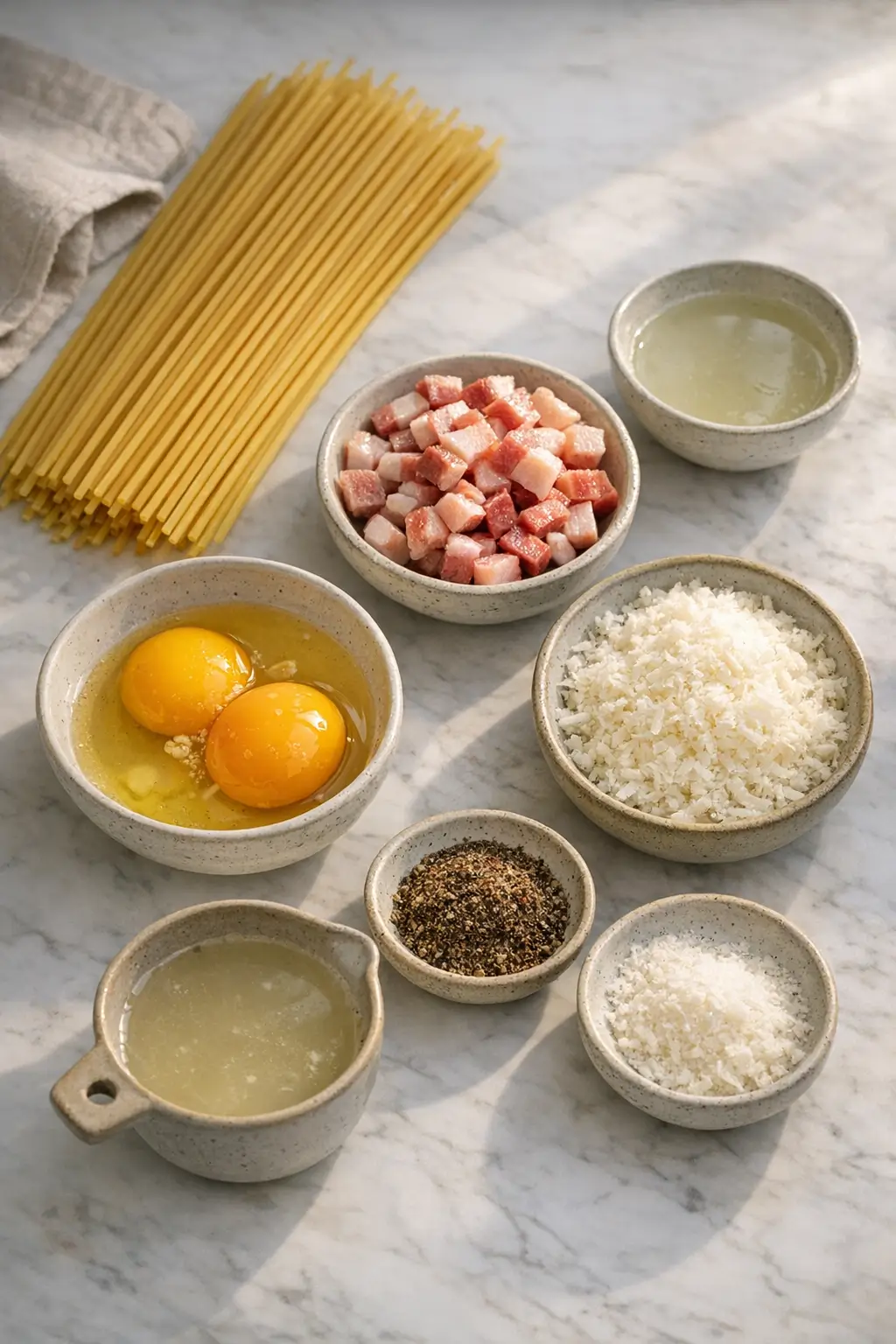
Step-by-Step Instructions for Spaghetti carbonara
- Set up your workspace.
- Fill a medium-large pot with about 2 liters (roughly 2 quarts) of water and bring it to a boil over high heat.
- Place a large skillet or sauté pan on the stove but leave it off for now.
- In a medium heatproof bowl, add the egg yolks, whole egg, grated Pecorino Romano, and about ½ teaspoon of the black pepper. Do not mix yet.
- Prep the guanciale.
- Trim off any tough rind from the guanciale if present.
- Cut into roughly 5 mm (¼-inch) batons or cubes. Smaller pieces render more evenly and tuck nicely into the strands of pasta.
- Salt the water and start the pasta.
- When the water is at a rolling boil, add the kosher salt.
- Drop in the spaghetti and stir for the first 20–30 seconds to prevent sticking.
- Cook until just shy of al dente—usually 1–2 minutes less than the package time. You’ll finish it in the pan with the guanciale.
- Render and crisp the guanciale.
- While the pasta cooks, turn the skillet to medium heat and add the guanciale in a single layer.
- Let it render slowly, stirring occasionally, until the fat has melted, and the pieces are golden and just crisp at the edges, about 6–8 minutes.
- Adjust the heat as needed so the fat gently bubbles but does not smoke or burn.
Kitchen note: If the guanciale starts to brown too quickly or you see wisps of smoke, lower the heat and slide the pan off the burner for a minute. Burnt fat will give the whole dish a bitter taste that’s hard to fix.
- Build the egg and cheese mixture.
- While the guanciale finishes, vigorously whisk the eggs, Pecorino, and initial black pepper together until thick, smooth, and creamy.
- The mixture should be closer to a paste than a liquid at this stage. This helps it cling to the pasta.
- Reserve pasta water and drain.
- When the spaghetti is just shy of al dente, dip a heatproof measuring cup into the pot and reserve at least 1 cup (240 ml) of the starchy water.
- Drain the pasta quickly in a colander, but do not rinse.
- Combine pasta and guanciale off the heat.
- Turn the heat under the guanciale pan to low, then off.
- Add the hot drained spaghetti directly to the pan with the rendered fat and guanciale.
- Toss thoroughly with tongs or two forks so the fat lightly coats all the strands.
- Let the pasta sit in the warm pan for about 30–45 seconds to cool very slightly; this step helps avoid scrambling the eggs.
- Temper the egg mixture.
- Whisk 1–2 tablespoons of the hot pasta water into the egg and cheese mixture, whisking constantly.
- The goal is to warm the eggs gently so they’re less shocked when they hit the pasta.
- Create the sauce.
- Pour the tempered egg-cheese mixture over the warm pasta in the pan.
- Toss vigorously and continuously for 1–2 minutes, lifting and folding the strands so every part gets coated.
- Add small splashes of hot pasta water as you toss until the sauce loosens into a glossy, lightly creamy coating that clings to the noodles but doesn’t pool at the bottom of the pan.
Kitchen note: If the sauce looks thin and watery, keep tossing off the heat; it will thicken as the eggs gently set. If it looks grainy or like soft scrambled eggs, mix in a spoonful of hot pasta water and toss firmly—the added moisture can help smooth it out a bit.
Taste and adjust.
- Taste a strand of pasta.
- Add a pinch more black pepper and a small sprinkle of Pecorino if needed.
- Salt carefully; the cheese and guanciale are usually enough.
Plate and serve immediately.
- Divide the spaghetti carbonara between warm bowls or plates.
- Top with a final dusting of Pecorino and another grind of black pepper.
- Serve right away while the sauce is still silky; it will thicken as it cools.
What to Expect
The finished pasta should have a light, glossy coating, not a heavy, pooled sauce. Each strand is wrapped in a thin, creamy layer that feels rich but not cloying.
The guanciale brings salty, porky depth with a slight chew in the center and crisp edges. Pecorino Romano and black pepper add sharpness and warmth, so the overall flavor leans savory and peppery rather than mild or buttery.
Texture can vary slightly depending on your heat, timing, and how much pasta water you add. A hotter pan and quick tossing give a thicker, tighter coating; a cooler pan and more water produce a looser, silkier feel. Both are valid as long as you avoid visible scrambled egg curds.
Kitchen note: If you consistently end up with scrambled bits, let the pan cool a little longer before adding the egg mixture, and start with a generous splash of pasta water to buffer the heat.
Ways to Change It Up
- Vegetarian-style version.
- Omit the guanciale and instead gently sauté sliced mushrooms in olive oil with a pinch of salt until deeply browned.
- Use the mushrooms and their juices in place of the pork fat when you toss with the pasta.
- You’ll lose the cured pork flavor but still get a savory, umami-rich, egg-and-cheese coated pasta.
- Richer and spicier.
- Increase the guanciale to 100 g (3 ½ oz) and add a small pinch of red pepper flakes to the pan during the last minute of rendering.
- Use all Pecorino Romano instead of a Pecorino/Parmesan mix.
- Expect a saltier, punchier dish with more heat and a more pronounced cured meat flavor.
- Milder and kid-friendly.
- Swap half the Pecorino for Parmigiano Reggiano to soften the sharpness.
- Render the guanciale until just lightly crisp so the pieces stay more tender.
- Go easier on the black pepper and offer extra at the table.
- Faster, simplified version.
- Use pre-diced pancetta if that’s what you can get, and finely grate the cheese in advance.
- Stick with whole eggs only (2 large eggs for this quantity of pasta) instead of yolks plus whole egg; it’s a touch lighter and more forgiving.
- This version is slightly less silky but easier to manage when you’re juggling kids, homework, and a timer.
Serving and Storage
Spaghetti carbonara is at its best straight from the pan, when the sauce is warm and fluid. Serve it as a main course with a simple green side like dressed arugula or a basic mixed salad to cut the richness.
A crisp, low-oak white wine or sparkling water with lemon works well alongside. Garlic bread is common on many tables, though a plain crusty loaf is enough to balance the salty, creamy pasta.
Leftovers are not traditional, but they are realistic. Cool any remaining pasta quickly, then store in an airtight container in the refrigerator for up to 2 days.
To reheat, add a spoonful of water and a small knob of butter or drizzle of olive oil to a skillet over low heat. Add the leftover carbonara and rewarm gently, tossing frequently, just until heated through.
Kitchen note: The reheated sauce will never be as silky as when freshly made and may feel a bit denser, but careful low-heat reheating helps avoid dry, rubbery pasta.

Cultural Context
Carbonara is closely associated with Roman cuisine and is part of a family of dishes built around cured pork, hard cheese, and black pepper. Many historical sources group it with other Lazio-region pastas like amatriciana and gricia, which share similar ingredients but differ in sauce components.
The exact origin story is debated, with theories ranging from coal workers’ meals to influences from World War II rations, but the modern version centers on pasta, guanciale, eggs, Pecorino Romano, and pepper. For a concise overview of carbonara’s ingredients and evolution, see this entry on carbonara and its history. Broader context on Roman cooking, including dishes that use similar ingredients, can be found in this summary of Roman cuisine.
Common Questions and Troubleshooting
Why did my sauce turn into scrambled eggs?
This usually means the eggs were exposed to too much direct heat. Next time, let the pan cool for 30–60 seconds after adding the pasta to the guanciale, then turn off the heat before adding the egg mixture. Temper the eggs with hot pasta water, and keep the pasta moving as you toss.
My sauce is too thick and clumpy—what happened?
Often this comes from too much cheese packed into the egg mixture or not enough pasta water. Thin the sauce by adding a spoonful of very hot pasta water at a time while tossing vigorously. In the future, weigh your cheese and start with a looser consistency; you can always tighten it with extra cheese at the end.
Can I use only whole eggs instead of yolks and a whole egg?
Yes. For a slightly lighter and more forgiving sauce, use 2 large whole eggs instead of 2 yolks plus 1 whole egg. The result will be a bit less dense and custardy but still pleasantly creamy.
What if I can’t find guanciale?
Good-quality pancetta is the closest substitute and behaves similarly in the pan. Unsweetened, thick-cut bacon can work in a pinch; just be aware that smoky flavors will push the dish away from a typical Roman profile and you may want to reduce added salt slightly.
How far in advance can I grate the cheese and prep ingredients?
You can grate the Pecorino and dice the guanciale up to 2 days ahead and store them tightly covered in the refrigerator. Bring them closer to room temperature while the pasta water heats so they incorporate more easily and render evenly.
Is it safe to eat the eggs this way?
The residual heat from the pasta and pan gently cooks the eggs into a sauce, but they are not boiled or fried. If you’re concerned, use very fresh eggs from a trusted source. Some cooks choose pasteurized shell eggs for extra reassurance.
Conclusion
Spaghetti carbonara rewards a bit of attention to timing and heat, but it asks very little in terms of ingredients or equipment. Once you’ve made it a couple of times, the steps become second nature.
I encourage you to experiment within the boundaries of the method—try a guanciale versus pancetta batch, adjust the Pecorino-to-Parmesan ratio, or play with how loose or tight you like the sauce. If you make this, leave a comment and rating to share what worked in your kitchen and any tweaks you made so other home cooks can benefit from your experience.

Easy Spaghetti Carbonara for Busy Home Cooks

Equipment
- Medium-large pot
- Large skillet or sauté pan
- Medium heatproof bowl
- Tongs
- Colander
- Heatproof measuring cup
- Whisk
Ingredients
- 200 g dried spaghetti or other long pasta like bucatini or linguine
- 80 g guanciale cut into small batons or cubes (pancetta is a substitute)
- 2 large egg yolks
- 1 large whole egg
- 60 g finely grated Pecorino Romano about 1 cup loosely packed
- 1–1 1/2 tsp freshly ground black pepper divided
- 8–10 g kosher salt for the pasta water
- 60–120 ml hot starchy pasta water reserved, for adjusting sauce consistency
Instructions
- Set up your workspace: Bring a medium-large pot with about 2 liters of water to a boil. Set a large skillet on the stove (off for now). In a medium heatproof bowl, add the egg yolks, whole egg, grated Pecorino Romano, and about 1/2 teaspoon of the black pepper (do not mix yet).
- Prep the guanciale: Trim any tough rind, then cut into roughly 5 mm (1/4-inch) batons or cubes.
- Salt the water and start the pasta: When the water reaches a rolling boil, add the kosher salt. Add the spaghetti and stir for 20–30 seconds to prevent sticking. Cook until just shy of al dente (about 1–2 minutes less than package time).
- Render and crisp the guanciale: While the pasta cooks, heat the skillet over medium and add guanciale in a single layer. Cook, stirring occasionally, until fat renders and pieces are golden and just crisp at the edges, about 6–8 minutes; adjust heat so fat bubbles gently without smoking.
- Build the egg and cheese mixture: Whisk the eggs, Pecorino, and the initial black pepper together until thick, smooth, and creamy (closer to a paste than a liquid).
- Reserve pasta water and drain: When spaghetti is just shy of al dente, reserve at least 1 cup (240 ml) pasta water, then drain quickly in a colander (do not rinse).
- Combine pasta and guanciale off the heat: Turn heat under the guanciale pan to low, then off. Add drained spaghetti to the pan and toss thoroughly to coat in rendered fat. Let sit 30–45 seconds to cool slightly.
- Temper the egg mixture: Whisk 1–2 tablespoons hot pasta water into the egg-cheese mixture, whisking constantly to gently warm the eggs.
- Create the sauce: Pour the tempered egg-cheese mixture over the warm pasta. Toss vigorously and continuously for 1–2 minutes, adding small splashes of hot pasta water as needed until the sauce becomes glossy and lightly creamy and clings to the noodles without pooling.
- Taste and adjust: Add more black pepper and a small sprinkle of Pecorino if needed. Salt carefully (the guanciale and cheese are salty).
- Plate and serve immediately: Divide among warm bowls or plates. Finish with more Pecorino and black pepper and serve right away while silky.



Leave a Reply