
Sparkling rose sangria with strawberries is one of those low-effort, high-reward pitcher drinks that feels a little special without demanding bar-tending skills. It shows up most often at warm-weather get-togethers, brunches, and backyard dinners, but it works just as well for a Friday night on the couch.
If you’re walking in the door after a busy day, start by getting the fruit sliced and the rosé and lemonade into the fridge so everything chills quickly. Hosting in a small kitchen? Mix the sangria right in the serving pitcher so you only wash one container.
This version is light, bubbly, and gently sweet, with plenty of fresh strawberry flavor and citrus to keep it bright. It suits newer home cooks and occasional entertainers who want something reliable and refreshing without fuss.
Ingredients
Serves 4 (about 6–8 small drinks)
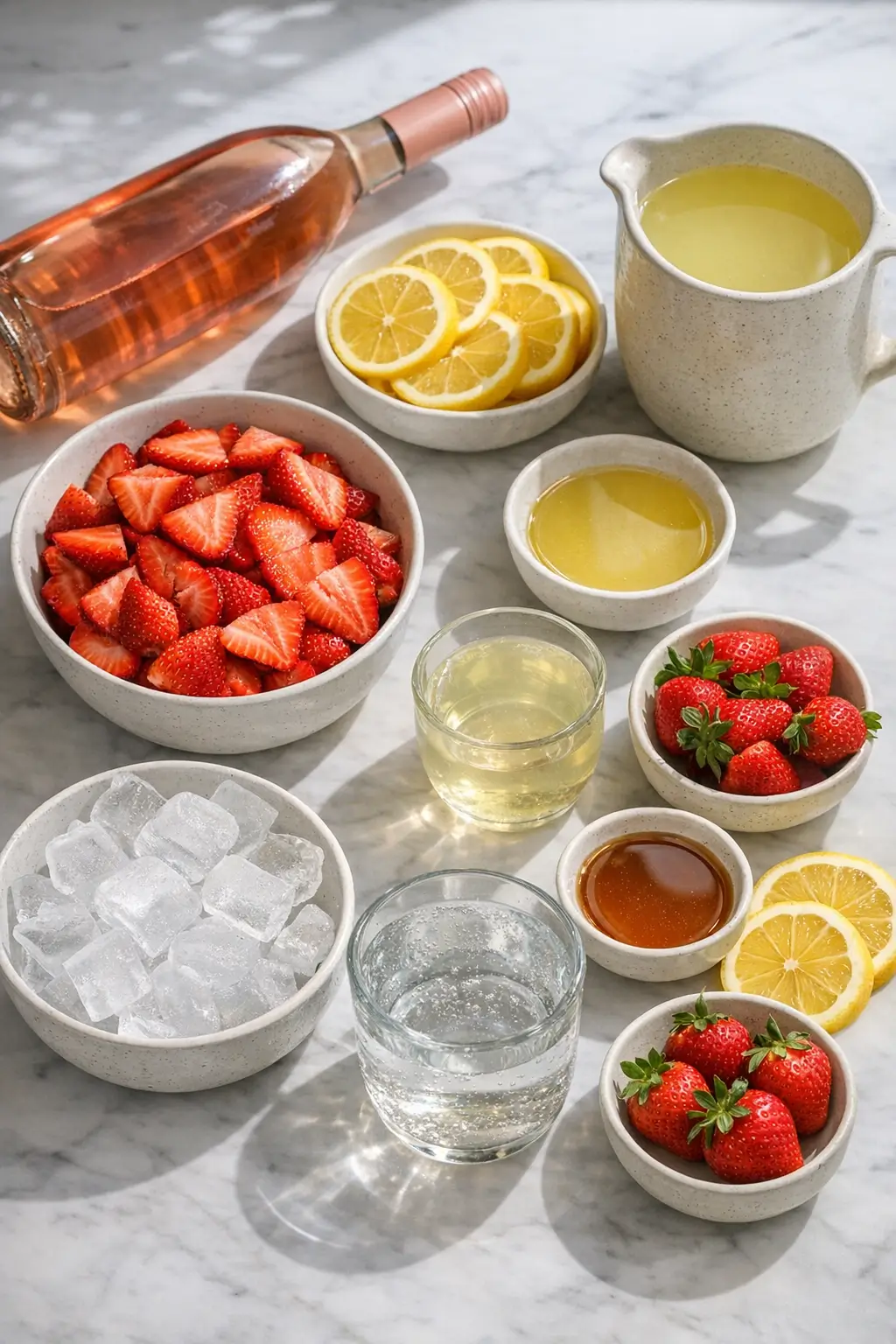
- 500 g / 1 lb fresh strawberries, hulled and sliced
- 1 medium lemon, well-scrubbed and thinly sliced (remove visible seeds)
- 750 ml / 1 standard bottle dry rosé wine, well-chilled
- 960 ml / 4 cups lemonade, chilled (store-bought or homemade)
- 240 ml / 1 cup sparkling water or club soda, well-chilled, for topping just before serving
- 30–60 ml / 2–4 tbsp simple syrup or agave nectar, optional, to taste if your lemonade is very tart
- Ice cubes, for serving
- Extra strawberries and lemon slices, for garnish (optional)
Kitchen note: Use a dry or off-dry rosé here. Very sweet rosé plus sweet lemonade can make the sangria taste flat and sugary instead of bright and refreshing.
Step-by-Step Instructions for Sparkling Rose Sangria with Strawberries
-
Chill the base ingredients.
If possible, place the bottle of rosé, lemonade, and sparkling water in the refrigerator at least 2 hours before mixing. Cold ingredients help the sangria stay crisp instead of watered down by extra ice.
-
Prep the strawberries.
Rinse the strawberries under cool water, pat them dry, hull them, and slice them into roughly 0.5 cm / 1⁄4-inch slices. Aim for evenly sized pieces so they infuse at the same rate and are easy to sip around.
-
Slice the lemon.
Scrub the lemon well, then slice it into thin rounds. Pick out visible seeds so no one ends up chewing on them in their glass. If the lemon is large, you can cut the rounds in half so they fit more comfortably in the pitcher.
-
Combine fruit in a pitcher.
Add the sliced strawberries and lemon to a large pitcher (about 2 liters / 2 quarts capacity). Lightly press the fruit with a long spoon once or twice to start releasing juices, but don’t mash it; you want slices, not pulp.
-
Add the rosé and lemonade.
Pour the chilled rosé over the fruit, followed by the lemonade. Stir gently from the bottom of the pitcher to distribute the fruit and combine the liquids.
-
Taste and adjust sweetness.
Spoon a small sample into a glass (avoiding the fruit) and taste. If the lemonade is quite tart or your rosé is very dry, stir in 2 tbsp (30 ml) simple syrup or agave. Taste again and add up to another 2 tbsp (30 ml) only if needed. Remember the sangria will seem slightly sweeter once the strawberries infuse.
-
Let it chill and infuse.
Cover the pitcher and refrigerate for at least 1–2 hours, and up to 4 hours. This resting time allows the strawberries to tint the sangria a deeper pink and infuse their flavor, while the lemon rounds add a gentle citrus edge.
Kitchen note: Because strawberries are delicate, avoid chilling the fruit in the wine overnight. Beyond about 6 hours they can soften too much and start to look and taste a bit tired.
-
Add the sparkle just before serving.
When you’re almost ready to pour, gently stir the sangria to lift the fruit from the bottom. Then top with the chilled sparkling water or club soda. Stir once or twice more, being careful not to knock out too much carbonation.
-
Prepare the glasses.
Fill wine glasses or tumblers about halfway with ice. If you want a stronger sangria with less dilution, use fewer ice cubes and rely on well-chilled ingredients instead.
-
Serve the sangria.
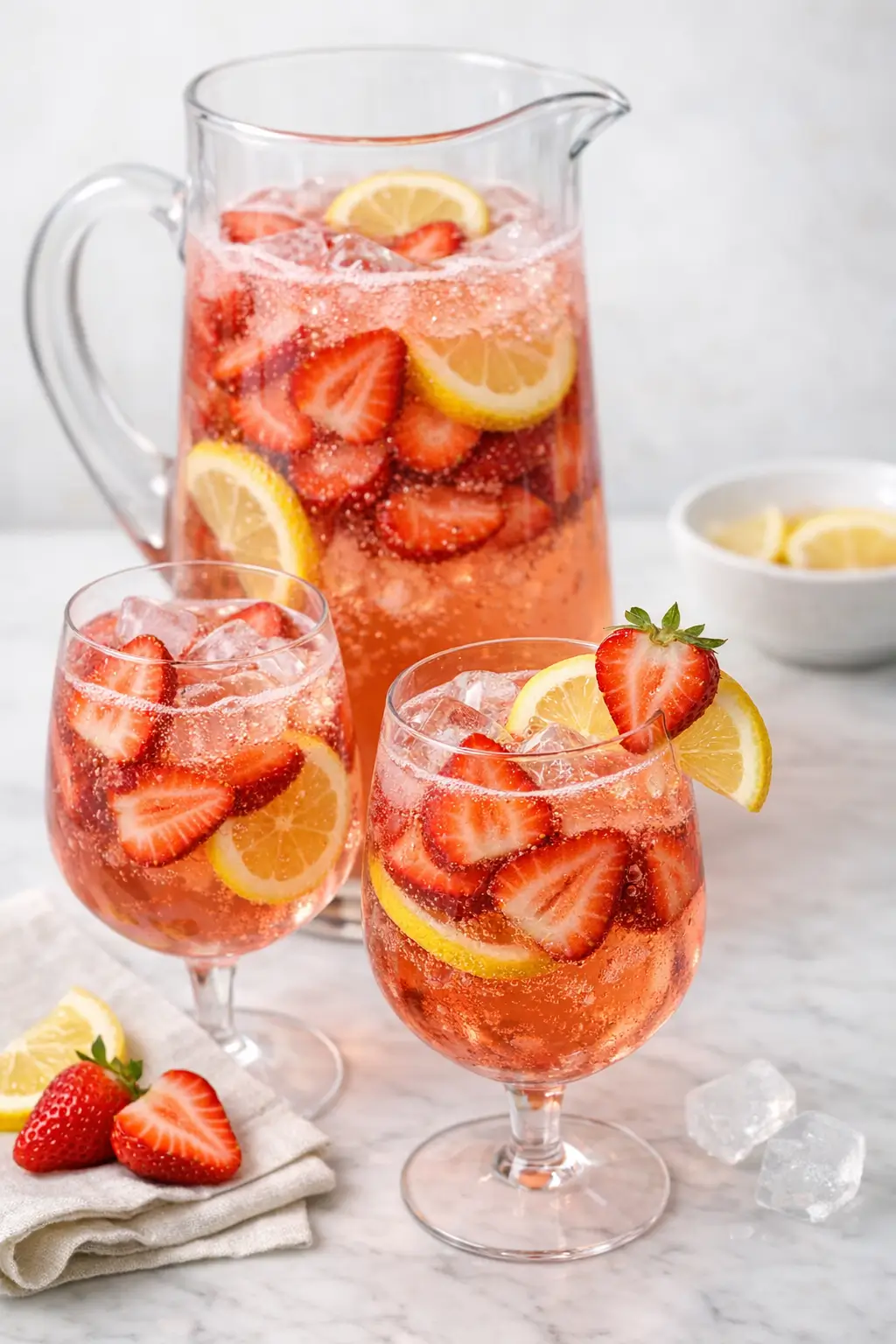
Pour the sparkling rosé sangria over the ice, making sure each glass gets several slices of strawberry and lemon. Garnish with extra strawberry slices or a lemon wheel on the rim, if you like. Serve immediately while it’s still bubbly.
Kitchen note: If you’re serving over several hours, keep the pitcher in the fridge between rounds and top individual glasses with a splash more sparkling water to refresh the fizz.
What to Expect
The finished sangria should be a clear, rosy pink with slightly softened but still intact slices of strawberry and lemon floating throughout.
On the palate, expect a gentle sweetness from the lemonade and fruit, balanced by the dry rosé and a subtle citrus bite. It should taste light and refreshing, not syrupy.
Carbonation from the sparkling water is present but not aggressive; think gentle bubbles more than a full-on spritz. If your sparkling water is very fizzy, those bubbles will mellow as the pitcher sits.
Different rosé wines will shift the flavor. A very dry rosé brings more acidity and highlights the lemon, while an off-dry bottle leans into the strawberry and candy-like notes. Store-brand lemonade often tastes sweeter than fresh, which may mean you skip added sweetener entirely.
If your kitchen runs warm or the pitcher sits out on the table for a while, the ice in each glass will gradually soften the flavors. The sangria will still be pleasant, just less intense and a little lighter in color.
Kitchen note: If the flavor tastes a bit flat after sitting out, a small pinch of fine sea salt in the pitcher (really just a few grains) can brighten the fruit without actually making the drink salty.
Ways to Change It Up
-
Simple strawberry-rosé mocktail (non-alcoholic).
Swap the rosé for 750 ml / 3 cups non-alcoholic rosé-style sparkling juice and replace the lemonade with 3 cups light lemonade or lemon sparkling water. Skip any added sweetener at first and only adjust after tasting, since most grape-based rosé juices are already quite sweet.
-
Extra-berry and spicier version.
For a sangria with a bit more complexity, add 125 g / 1 cup raspberries or sliced cherries and tuck in 2–3 very thin slices of fresh ginger when you add the lemon. The extra berries boost color and aroma, while ginger adds a mild heat that keeps the drink from reading as purely sweet.
-
Faster, by-the-glass sangria.
If you don’t have time to chill a full pitcher, build individual servings directly in the glass. Add a small handful of sliced strawberries and one lemon slice to each glass, then pour in 90 ml / 3 oz chilled rosé and 60 ml / 2 oz chilled lemonade. Let it sit for 5–10 minutes, then top with 30–60 ml / 1–2 oz sparkling water and ice. The flavor won’t be as deeply infused as the make-ahead version, but it’s still bright and refreshing.
-
Boozier celebration version.
For occasions where you want a stronger drink, stir in 120 ml / 1⁄2 cup strawberry liqueur, elderflower liqueur, or vodka along with the rosé and lemonade. In this case, taste before adding any extra sweetener, since many liqueurs bring their own sugar.
Serving and Storage
Sparkling rose sangria with strawberries is typically served cold in wine glasses, stemless wine tumblers, or sturdy rocks glasses.
It pairs well with simple summer foods like grilled chicken, shrimp skewers, light pasta salads, and cheese boards with fresh fruit. Salty snacks—such as olives, nuts, or crisp potato chips—also play nicely with the fruity, gently sweet profile.
For brunch, consider serving it alongside a light egg dish or a savory tart instead of heavier, syrupy options. The acidity in the rosé and lemon helps cut through richness.
If you’re serving outdoors, keep the pitcher in an ice bucket or return it to the refrigerator between pours to preserve both chill and carbonation.
Leftover sangria is best within 24 hours. After that, the fruit softens more and the bubbles fade. Store any remaining sangria in a covered container in the refrigerator, removing the lemon slices if you plan to keep it more than about 6–8 hours, since the pith can add bitterness over time.
To refresh slightly flat leftovers, strain out the fruit, add a splash of fresh lemonade and sparkling water, then serve over new ice with freshly sliced strawberries.
Kitchen note: If you anticipate leftovers, keep some of the sliced strawberries aside and add them fresh to the glasses the next day instead of relying only on the softer, overnight-soaked fruit.
Cultural Context
Sangria is commonly associated with Spain and, more broadly, the Iberian Peninsula, where wine-based punches with fruit have been enjoyed in various forms for centuries.
Traditional versions are often built on red wine with citrus and sometimes brandy, while white and rosé variations developed later and have become popular in many parts of the world, especially in warmer months. Modern sangria recipes frequently adapt to local wines, fruits, and preferences for sweetness.
For a concise overview of sangria’s historical roots and evolution in Spanish food culture, see this background from the Smithsonian’s food history resources. You can also read more about Spanish wine and regional drinking customs through this educational article from the British Mountaineering Council’s guide to Spanish drinking culture, which touches on sangria’s place among other local drinks.
Common Questions and Troubleshooting
My sangria tastes too sweet. How can I fix it?
Stir in extra lemon juice, 1–2 tablespoons at a time, and add a splash of cold sparkling water to dilute. Using more ice in individual glasses also helps lighten the perception of sweetness as it melts.
The strawberries turned mushy. What went wrong?
Most likely the fruit sat in the rosé and lemonade for too long, especially if it was stored overnight. For best texture, limit the infusion to about 4 hours and avoid freezing and thawing the berries first, which softens them.
Can I make this the day before?
You can mix the rosé and lemonade up to 24 hours in advance and chill that base separately. Add the sliced strawberries and lemon about 2–4 hours before serving, and wait to add sparkling water until right before you pour so you keep the bubbles.
What if I don’t have lemonade?
Use equal parts fresh orange juice and water with 1–2 tablespoons of sugar or simple syrup stirred in, then adjust to taste. The sangria will lean more citrusy and a bit less tart than with lemonade, but it still works well.
Can I use frozen strawberries?
Yes, but add them closer to serving time and serve within a couple of hours. Frozen berries cool the sangria nicely and release flavor quickly, but they break down faster and make the drink slightly cloudier.
How do I keep the bubbles from disappearing?
Always add sparkling water just before serving and stir gently. Keep both the bottle of sparkling water and the pitcher cold, and avoid leaving the sangria at room temperature for long stretches.
Kitchen note: If you’re serving a crowd, consider keeping the sparkling water on the side so guests can top up their own glasses. This keeps each pour fresher and fizzier.
Conclusion
Sparkling rose sangria with strawberries is a straightforward, make-ahead pitcher drink that’s easy to scale for a few people or a small gathering.
Once you’re comfortable with the base method, it’s simple to adjust the sweetness, change the fruit, or add a different sparkling element to suit your own taste.
If you try this version, consider leaving a rating and sharing how you customized it—different rosés, extra berries, or even a non-alcoholic twist all help other home cooks understand how flexible it can be.

Sparkling Rose Sangria with Strawberries Made Easy

Equipment
- Large pitcher (about 2 liters / 2 quarts)
- Knife
- Cutting board
- Long spoon
Ingredients
- 500 g fresh strawberries hulled and sliced
- 1 medium lemon well-scrubbed and thinly sliced (remove visible seeds)
- 750 ml dry rosé wine well-chilled
- 960 ml lemonade chilled (store-bought or homemade)
- 240 ml sparkling water or club soda well-chilled, for topping just before serving
- 30–60 ml simple syrup or agave nectar optional, to taste if lemonade is very tart
- ice cubes for serving
- extra strawberries and lemon slices optional, for garnish
Instructions
- Chill the base ingredients. If possible, place the rosé, lemonade, and sparkling water in the refrigerator at least 2 hours before mixing.
- Prep the strawberries. Rinse, pat dry, hull, and slice into roughly 0.5 cm / 1/4-inch slices.
- Slice the lemon. Scrub well, slice into thin rounds, and remove visible seeds (halve rounds if the lemon is large so they fit in the pitcher).
- Combine fruit in a pitcher. Add sliced strawberries and lemon to a large pitcher and lightly press once or twice with a long spoon to release a little juice (don’t mash).
- Add the rosé and lemonade. Pour chilled rosé over the fruit, followed by the lemonade. Stir gently to combine and distribute fruit.
- Taste and adjust sweetness. Taste a small sample; if needed, stir in 2 tbsp (30 ml) simple syrup or agave, then add up to 2 tbsp (30 ml) more only if needed.
- Let it chill and infuse. Cover and refrigerate for at least 1–2 hours (up to 4 hours) to infuse strawberry and lemon flavor.
- Add the sparkle just before serving. Gently stir to lift fruit, top with chilled sparkling water or club soda, and stir once or twice carefully to keep carbonation.
- Prepare the glasses. Fill wine glasses or tumblers about halfway with ice.
- Serve. Pour sangria over ice, ensuring each glass gets strawberry and lemon slices. Garnish with extra fruit if desired and serve immediately.



Leave a Reply