
Spiced apple butter pork tenderloin is my idea of a cozy dinner that doesn’t wreck your evening. You get that sweet-spicy, apple-forward glaze, but the pork still tastes like pork (not dessert). The move is: sear first for color, then finish in the oven so it stays juicy, and build a quick pan sauce while it rests.
Reader check-in: if you’ve got kids circling the stove or you’re juggling homework and a timer, slice the apples and measure the sauce ingredients before you even touch the pork. The whole thing moves fast once the pan’s hot. I tested this twice and the only “failure” was when I skipped the thermometer—never again.
Ingredients
- 1 pork tenderloin (about 450–600 g / 1–1 1/4 lb), silver skin trimmed
- 1 1/2 tsp / 9 g kosher salt (Diamond Crystal) or 3/4 tsp / 4–5 g fine salt
- 1/2 tsp / 1 g black pepper
- 1 tsp / 2 g smoked paprika or sweet paprika (either works)
- 1/2 tsp / 1 g ground cinnamon
- 1/8 tsp ground cloves (optional, but it’s the “apple butter” vibe)
- 1 tbsp / 15 ml olive oil (for searing)
- 1 tbsp / 14 g unsalted butter
- 1 small yellow onion (about 150 g), sliced into thin wedges
- 1 crisp apple (about 180–220 g), cored and sliced (Honeycrisp, Fuji, Pink Lady)
- 2 garlic cloves, finely grated or minced
- 1/3 cup / 80 ml apple cider or unsweetened apple juice
- 1/4 cup / 80 g apple butter
- 1 tbsp / 15 g Dijon mustard
- 1 tbsp / 15 ml apple cider vinegar
- 1 tsp / 4 g packed brown sugar (optional; depends on how sweet your apple butter is)
- 1–2 tsp fresh thyme leaves or 1/2 tsp dried thyme
Substitutions I actually use:
- No apple butter? You can swap in applesauce plus 1–2 tsp extra brown sugar, but the sauce won’t get as glossy or intense.
- No Dijon? Whole-grain mustard is fine (a little chunkier).
- No cider vinegar? White wine vinegar works; skip balsamic here unless you want the sauce darker and louder.
Step-by-Step Spiced Apple Butter Pork Tenderloin
-
Heat the oven to 220°C / 425°F. Put a large oven-safe skillet (cast iron is great) over medium-high heat.
-
Pat the pork dry. Season all over with the salt, pepper, smoked paprika, cinnamon, and cloves.
-
Add the olive oil to the hot pan. Sear the tenderloin 2–3 minutes per side until you’ve got real browning (not just gray). Transfer to a plate.
-
Drop the butter into the pan. Add the onion and apple with a pinch of salt and cook 3–5 minutes, tossing, until the edges start taking on color.
-
Stir in the garlic for 30 seconds (just until you can smell it). Then pour in the cider to deglaze, scraping up the browned bits.
-
Whisk the apple butter, Dijon, vinegar, and (if using) brown sugar in a small bowl. Stir it into the skillet. The sauce will look a little loose right now—good. It tightens as it reduces.
-
Nestle the pork back into the pan, on top of the apples and onions. Spoon some sauce over the top.
-
Slide the skillet into the oven and roast 10–16 minutes, depending on thickness, until the thickest part hits 63°C / 145°F.
One thing — don’t cook by time alone. Pork tenderloin goes from juicy to dry fast, and every tenderloin is a different shape.
-
Move the pork to a cutting board and tent loosely with foil. Rest 10 minutes.
-
While it rests, simmer the pan sauce on the stove over medium for 2–4 minutes until it’s glossy and coats a spoon. If it gets too thick, splash in a tablespoon of cider or water.
Heads up: if your apples cooked down into more of an applesauce situation, that’s not “wrong.” It’s basically a built-in side and it still tastes great.
-
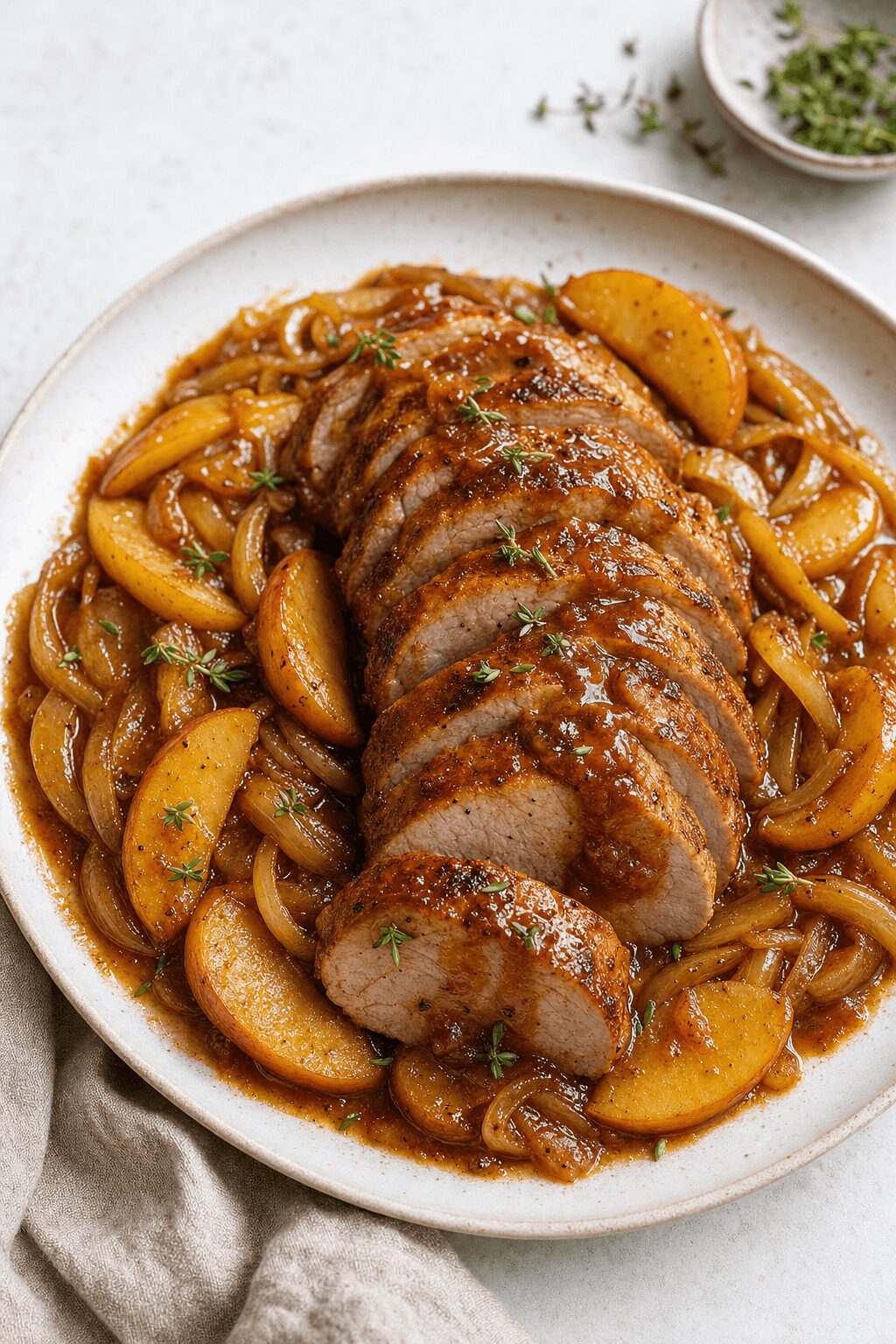
Slice the pork into 1–1.5 cm / 1/2-inch medallions. Spoon the apple-butter sauce over the top and scatter thyme.
What to Expect
You’ll get tender slices with a faint blush in the center (that’s normal at 145°F), plus a sticky-glossy sauce that’s sweet, tangy, and gently warm from the cinnamon. The apples may stay in slices or soften into a chunky mash depending on the variety and how hard your stove runs. Either way, it eats like comfort food without being heavy.
Ways to Change It Up
- Want more “savory dinner” and less sweet? Skip the brown sugar and add an extra 1 tsp Dijon plus another splash of vinegar.
- If you’re cooking for someone who hates fruit pieces in meat dishes, cook the apples/onions as written, then mash them with a fork right in the pan and reduce into a smooth-ish sauce.
- Vegetarian adaptation (same flavor idea): roast thick slabs of cauliflower or seared halloumi and spoon the reduced apple-butter sauce over. The sauce works; the cozy factor stays.
Serving and Storage
I like this with buttered egg noodles, mashed potatoes, or a simple rice pilaf—stuff that soaks up sauce. A green side that doesn’t compete helps: roasted broccoli, sautéed green beans, or a sharp arugula salad.
Leftovers keep 3–4 days airtight in the fridge. Reheat gently in a covered skillet with a splash of water or cider; microwaving works, but the pork can tighten up if you blast it.
Freezer note: you can freeze the sliced pork with sauce for up to 2 months, but the apple texture gets softer after thawing. Still totally usable for weeknight lunches.
Common Questions
Can I use pork loin instead of pork tenderloin?
Not for this timing. Pork loin is a different cut (bigger, denser) and it’ll be undercooked if you follow these minutes. Use tenderloin here.
My sauce tastes too sweet—how do I fix it?
Add 1–2 tsp more cider vinegar and a pinch more salt. Sweetness usually needs acid and salt, not more mustard.
What internal temp are you aiming for, exactly?
I pull it at 145°F / 63°C, then rest it. That’s the point where it stays juicy and still eats like dinner.
Do I have to sear first?
If you skip it, the pork will cook through, but you’ll lose the browned flavor that makes the sauce taste deeper. Searing is the part that matters.
Can I make it ahead?
You can make the sauce base (apple butter + Dijon + vinegar + cider) earlier in the day and keep it in the fridge. Cook the pork fresh; reheated tenderloin is never as tender as the first night.
Apple butter itself has a long “make it last through winter” history in American home cooking—if you’re curious, the National Park Service has a neat page on orchard products like apple butter in Pennsylvania: Hopewell Furnace National Historic Site on apples and orchard goods.
And if you want the practical, old-school explanation of why apple butter gets so dark and thick (and why people stirred it for hours), this museum write-up is genuinely interesting: Western Illinois Museum on apple butter making.
If you make this, pay attention to the moment the sauce turns glossy in the pan—that’s your cue that dinner’s basically done. Next time, try adding a tiny splash of bourbon to the sauce (off the heat) and tell me if it tastes like the holidays or if that’s just me.
Spiced Apple Butter Pork Tenderloin That Tastes Like Fall

Equipment
- Large oven-safe skillet (cast iron)
- Small bowl
- Whisk
- Instant-read thermometer
- Cutting board
- Aluminum foil
Ingredients
- 1 pork tenderloin about 450–600 g / 1–1 1/4 lb; silver skin trimmed
- 1 1/2 tsp kosher salt Diamond Crystal; or 3/4 tsp fine salt
- 1/2 tsp black pepper
- 1 tsp smoked paprika or sweet paprika
- 1/2 tsp ground cinnamon
- 1/8 tsp ground cloves optional
- 1 tbsp olive oil for searing
- 1 tbsp unsalted butter
- 1 small yellow onion about 150 g; sliced into thin wedges
- 1 crisp apple about 180–220 g; cored and sliced (Honeycrisp, Fuji, Pink Lady)
- 2 garlic cloves finely grated or minced
- 1/3 cup apple cider or unsweetened apple juice
- 1/4 cup apple butter
- 1 tbsp Dijon mustard
- 1 tbsp apple cider vinegar
- 1 tsp packed brown sugar optional; depends on how sweet your apple butter is
- 1–2 tsp fresh thyme leaves or 1/2 tsp dried thyme
Instructions
- Heat the oven to 220°C / 425°F. Put a large oven-safe skillet over medium-high heat.
- Pat the pork dry. Season all over with the salt, pepper, smoked paprika, cinnamon, and cloves.
- Add the olive oil to the hot pan. Sear the tenderloin 2–3 minutes per side until well browned. Transfer to a plate.
- Add the butter to the pan. Add the onion and apple with a pinch of salt and cook 3–5 minutes, tossing, until the edges start to color.
- Stir in the garlic for about 30 seconds. Pour in the cider to deglaze, scraping up the browned bits.
- Whisk the apple butter, Dijon, vinegar, and (if using) brown sugar in a small bowl. Stir it into the skillet; the sauce will tighten as it reduces.
- Nestle the pork back into the pan on top of the apples and onions. Spoon some sauce over the top.
- Roast 10–16 minutes, depending on thickness, until the thickest part reaches 63°C / 145°F.
- Move the pork to a cutting board and tent loosely with foil. Rest 10 minutes.
- While it rests, simmer the pan sauce over medium for 2–4 minutes until glossy and spoon-coating. If too thick, splash in a tablespoon of cider or water.
- Slice the pork into 1–1.5 cm / 1/2-inch medallions. Spoon the apple-butter sauce over the top and scatter thyme.



Leave a Reply