
Spring roll bowl with peanut sauce takes everything you like about fresh spring rolls and reshapes it into stackable meal prep lunches. You still get cool rice noodles, crisp vegetables, herbs, and a rich, salty-sweet peanut sauce, but there’s no fussy rolling or fragile rice paper to worry about. The flavors are light and fresh enough for warm weather, yet satisfying enough for a workday lunch.
If you’re staring at a busy week, start by cooking the noodles and whisking the peanut sauce so they can cool while you chop vegetables. If you tend to get interrupted (kids, calls, small kitchen), keep the herbs and lettuce in a separate bowl so they stay crisp until you pack everything. These bowls reward a bit of upfront prep and then quietly wait in the fridge for you.
Ingredients
Serves 3–4
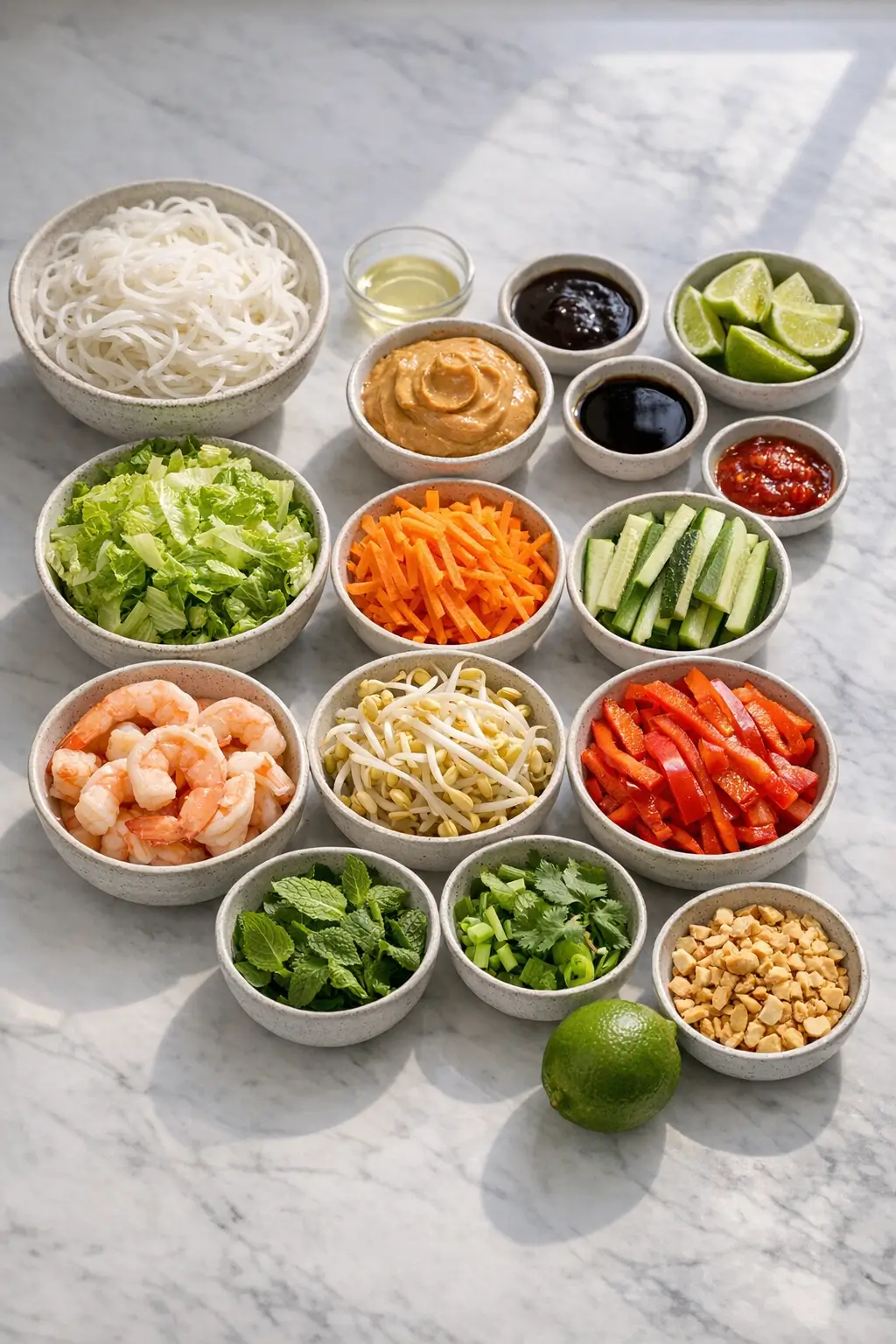
For the bowls
- 180 g / 6 oz thin rice vermicelli noodles (about 4 small bundles) – base of the bowl
- 1 tbsp neutral oil (such as canola or grapeseed) – to keep noodles from clumping
- 1 small romaine heart or 1/2 small butter lettuce, shredded (about 120 g / 4 oz) – fresh crunch
- 1 medium (120 g / 4 oz) carrot, cut into matchsticks or shredded
- 1/2 English cucumber, seeded if very watery, cut into thin batons
- 1 small (120 g / 4 oz) red bell pepper, thinly sliced
- 120 g / 4 oz mung bean sprouts, rinsed and drained
- 15–20 fresh mint leaves, roughly torn
- 15–20 fresh cilantro sprigs (leaves and tender stems)
- 2 scallions, thinly sliced
- 150 g / 5 oz cooked shrimp, peeled and halved lengthwise or firm tofu, cubed – main protein for the bowls
- 30 g / 1 oz (about 1/4 cup) roasted peanuts, roughly chopped – for topping
- 1 small lime, cut into wedges, for serving (optional but brightens the bowls)
Kitchen note: If you’re packing several days of lunches, keep the lettuce and herbs separate until the day you eat so they don’t compress and wilt under the noodles.
For the peanut sauce
- 90 g / 1/3 cup creamy peanut butter (smooth, not natural that separates heavily)
- 45 ml / 3 tbsp hoisin sauce
- 30 ml / 2 tbsp soy sauce (regular or low-sodium)
- 30 ml / 2 tbsp fresh lime juice (about 1 lime)
- 15 ml / 1 tbsp rice vinegar
- 15 ml / 1 tbsp honey or maple syrup
- 1 small garlic clove, finely minced or grated
- 1–2 tsp chili-garlic sauce or sriracha, to taste
- 60–90 ml / 1/4–1/3 cup warm water, as needed to thin
Substitutions:
- Use smooth almond butter if you need a peanut-free version; flavor will be slightly different but still works.
- Tamari can stand in for soy sauce if you need the sauce to be gluten-free—just confirm your hoisin is also gluten-free.
- For a sweeter profile, increase hoisin slightly and reduce soy sauce; for saltier, do the reverse.
Step-by-Step Instructions for Spring Roll Bowl With Peanut Sauce Meal Prep
Cook and cool the rice noodles.
Bring a medium pot of water to a boil. Add the rice vermicelli, stir to separate, and cook according to package directions, usually 3–5 minutes. The noodles should be tender but still springy. Drain in a colander and rinse under cool water until no longer warm. Shake off excess water and toss with 1 tbsp neutral oil to prevent sticking.Season the noodles lightly.
Once drained and cooled, taste a noodle. If it seems bland, sprinkle very lightly with soy sauce or a pinch of salt and toss again. This step keeps the base of your bowl from tasting flat when you dig past the vegetables later in the week.Prep the vegetables.
While the noodles cook and cool, shred the lettuce, cut the carrot and cucumber into matchsticks, slice the bell pepper, and rinse and drain the bean sprouts. Pat extra moisture off the cucumber and sprouts with a clean towel so they don’t water down your bowls in the fridge.Prep the herbs and scallions.
Rinse the mint and cilantro and dry them well in a salad spinner or between towels. Roughly tear the mint and cilantro leaves and slice the scallions. Keeping the herbs fairly large helps them stay vibrant over a couple of days rather than bruising into mush.Prepare your protein.
If using pre-cooked shrimp, pat it dry and slice larger shrimp in half lengthwise so they tuck into the bowls easily. For tofu, press it briefly in a towel to remove excess moisture, then cube. You can use it plain for the cleanest flavor, or quickly sear in a nonstick skillet with a splash of soy sauce until lightly golden.
Kitchen note: Avoid very wet proteins like recently boiled shrimp or tofu straight from the package; too much surface moisture seeps into the noodles and greens and shortens the time the bowls stay crisp.
Whisk the peanut sauce.
In a medium bowl, combine the peanut butter, hoisin, soy sauce, lime juice, rice vinegar, honey or maple syrup, minced garlic, and chili-garlic sauce. Whisk until smooth; it will be thick at first. Gradually whisk in 1/4 cup (60 ml) warm water, adding more a tablespoon at a time until the sauce is pourable but still clings to a spoon.Taste and adjust the sauce.
Taste with a clean spoon. If it feels too thick or intense, add another spoonful of warm water. For more heat, add a touch more chili-garlic sauce. For more brightness, squeeze in extra lime juice. You’re aiming for a balance of salty, sweet, tangy, and spicy that you’d happily eat as a dip.Set up a simple assembly line.
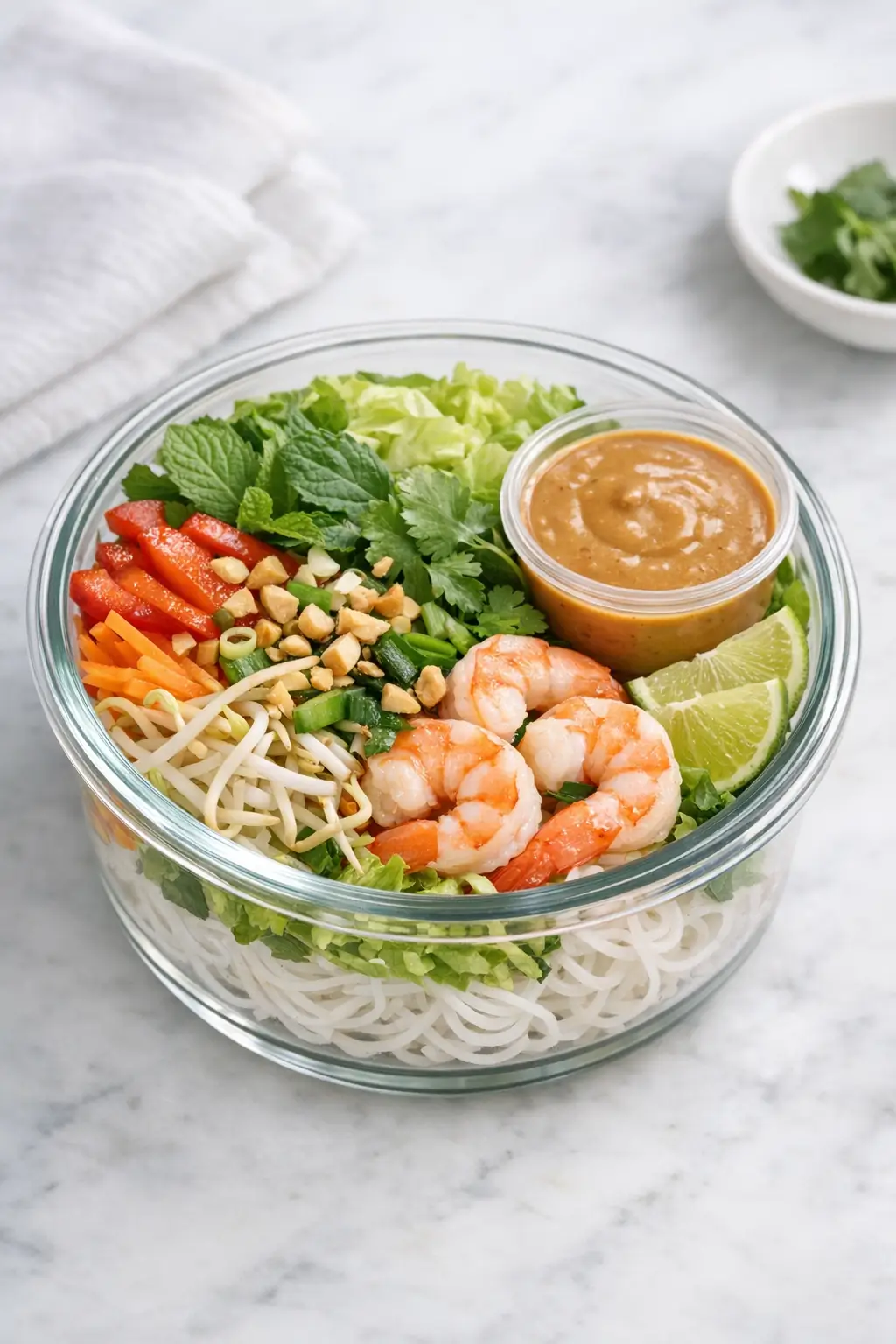
Line up 3–4 airtight meal prep containers. Divide the cooled noodles evenly among them, forming a loose nest in one half or third of each container. A gentle press with your fingertips helps them settle without compacting into a solid block.Layer the vegetables.
On top of or next to the noodles, add a generous handful of shredded lettuce, then scatter the carrot, cucumber, bell pepper, and bean sprouts. Try to keep watery items like cucumber toward the top or side rather than buried against the noodles.Add herbs, scallions, and protein.
Sprinkle each bowl with mint, cilantro, and scallions. Arrange the shrimp or tofu over the vegetables so they’re easy to see when you open the lid. Visible protein is a subtle cue that the bowl will actually keep you full.Top with peanuts and lime wedges.
Divide the chopped peanuts among the containers. If you like an extra hit of brightness, tuck a lime wedge into each container, ideally in a corner away from the lettuce so it doesn’t bruise the leaves.Portion and pack the peanut sauce.
Transfer the sauce into 3–4 small lidded containers or dressing cups. Store them separately from the bowls so the greens stay crisp. When ready to eat, drizzle the sauce over the bowl and toss gently to coat.
Kitchen note: In many home fridges the top shelf runs colder than the door. Store your prepped bowls on a middle shelf where temperatures are steady; extreme cold can dull the herbs and turn them dark more quickly.
Chill and store.
Let the assembled bowls cool completely if anything is still warm, then seal and refrigerate up to 3 days. For best texture, eat the shrimp versions within 2–3 days and tofu versions within 3–4 days, checking that everything still smells fresh.Serve.
When you’re ready to eat, open a bowl, remove the lime wedge if using, and drizzle on the peanut sauce. Squeeze lime over the top, toss with chopsticks or a fork to distribute the sauce, and eat chilled or at cool room temperature. No reheating required.
What to Expect
The finished bowls are cool and crisp rather than hot and saucy. Rice noodles stay soft and slightly springy, while the vegetables keep their crunch if you’ve dried them well and kept the sauce separate.
Flavor-wise, you get a clean base of noodles and lettuce, sharp freshness from herbs and scallions, and a peanut sauce that’s rich enough to feel satisfying without being heavy. The hoisin brings sweetness and a bit of depth, while lime and vinegar keep things bright.
Texture will vary with your knife work and storage. Very thinly shredded vegetables will soften a bit by day three, while thicker matchsticks keep more bite. Tofu versions feel a bit heartier and denser than shrimp versions, which stay lighter and more delicate.
Kitchen note: If you find the bowls taste muted on day two, add a pinch of salt directly to the veggies and a quick squeeze of lime just before tossing with the peanut sauce; cold food often needs a tiny flavor boost.
Ways to Change It Up
Vegetarian or vegan version.
Use firm or extra-firm tofu as your main protein and pan-sear it in a little oil and soy sauce for extra flavor. Replace honey with maple syrup in the peanut sauce to keep everything fully plant-based. You can also add edamame or sliced avocado for more plant-based protein and richness.Make it spicier or milder.
For more heat, increase the chili-garlic sauce in the peanut dressing, add thinly sliced fresh chili to the bowls, or sprinkle a little crushed red pepper before serving. To keep things very mild, omit the chili-garlic sauce and use just a pinch of red pepper flakes, or leave it out entirely and rely on lime and garlic for interest.Faster prep using pre-cut vegetables.
If your main constraint is time, use a bagged coleslaw mix in place of hand-cut carrots and some of the bell pepper. Many grocery stores also carry pre-shredded carrots and washed herb mixes, which reduce knife work. The trade-off is slightly less crunch and variety in texture, but it gets you to finished bowls in under 30 minutes.Alternate grains.
Swap the rice vermicelli for cooked and cooled brown rice, quinoa, or even thin whole-wheat spaghetti if that’s what you have. You’ll lose some of the classic spring roll noodle texture, but the bowls become a bit more robust and may keep you full longer, especially for very active days.
Serving and Storage
These bowls are designed to be eaten chilled, similar to a noodle salad. They make sense as grab-and-go work lunches, quick dinners when you don’t want to cook, or a base for a larger spread with additional proteins.
You can serve them straight from the fridge or let them sit at room temperature for 10–15 minutes to take the chill off, which can help the flavors open up. A final squeeze of lime and a scattering of extra herbs or peanuts right before serving is an easy upgrade.
Stored in airtight containers, shrimp versions are best within 2–3 days; tofu-based bowls can stretch to 3–4 days if your fridge runs cold and you’ve dried the vegetables well. Always rely on your senses—if anything smells off or looks slimy, discard it.
Leftover peanut sauce keeps for 4–5 days in a sealed jar in the fridge. It will thicken as it chills; whisk in a teaspoon of warm water at a time until it loosens to a drizzle again. Use extra sauce as a dip for raw vegetables or spooned over grilled chicken or tofu.
Cultural Context
Spring roll bowls borrow flavors and components from Vietnamese fresh spring rolls, often known as gỏi cuốn, but skip the rice paper wrapping to make things easier for home cooks. Typical fillings for these rolls include rice vermicelli, lettuce, herbs, shrimp or pork, and a dipping sauce that may be fish-sauce based or peanut based.
This “in a bowl” format also loosely echoes some Vietnamese rice noodle salads, where cool noodles, herbs, vegetables, and a protein come together in one dish. For a concise overview of Vietnamese fresh rolls and their ingredients, see this entry on gỏi cuốn. Broader context about how noodle, herb, and fresh vegetable combinations show up across the cuisine can be found in this summary of Vietnamese cuisine.
Kitchen note: This bowl-style recipe is not a traditional Vietnamese dish, but rather a practical way to enjoy similar flavors in a format that works well for packed lunches and make-ahead meals.
Common Questions and Troubleshooting
My noodles turned sticky and clumped together. What happened?
Rice vermicelli can easily glue together if it’s overcooked or not rinsed. Next time, cook them just until tender, rinse thoroughly under cold water, and toss with a bit of oil. If they’re already clumpy, you can sometimes rescue them by rinsing briefly in warm water and gently loosening with your fingers before re-chilling.
The vegetables look soggy after a day or two. How can I keep them crisp?
Make sure everything is very dry before packing—spin or pat lettuce and herbs dry, and blot cucumber and sprouts. Keep the peanut sauce separate until serving so it doesn’t sit directly on the vegetables. You can also store especially delicate items like herbs in a separate small container and add them the morning you plan to eat the bowl.
Can I swap the peanut butter for another nut or seed butter?
Yes. Almond butter is the closest swap and will give a slightly milder, toastier flavor. Sunflower seed butter works for a nut-free version, though it can taste a bit stronger; balance it with a splash more lime juice and a bit of extra sweetener. Always taste and adjust, especially if your substitute has added salt or sugar.
Is this safe to keep at room temperature for a few hours?
For food safety, keep the bowls refrigerated until you’re ready to eat. If you’re packing them in a lunch bag, use an ice pack and aim to eat within 3–4 hours. Protein like shrimp and tofu, plus cooked noodles, should not sit in the temperature “danger zone” for long stretches.
Can I double the recipe for a larger household?
You can, but use a large mixing bowl for the vegetables and have extra containers ready. Be careful not to pack the noodles too tightly at the bottom of each container or they’ll compress into a solid mass. If doubling, consider making an extra half batch of peanut sauce so you don’t run short.
Kitchen note: If your fridge tends to dry things out, cover the bowls with both a lid and a quick press of parchment or wax paper over the surface of the vegetables before sealing; this creates a small humidity buffer that helps prevent herbs and lettuce from wilting.
Conclusion
This spring roll bowl with peanut sauce meal prep is essentially a structured salad that leans on noodles and a flavorful dressing to feel satisfying. It fits neatly into a Sunday prep session, rewards a bit of chopping, and then gives you several low-effort lunches.
If you try it, use the amounts here as a starting point and adjust the ratio of noodles to vegetables or sauce to suit how you like to eat at midday. Share how it worked for you, any swaps you made, or tricks you found helpful in the comments and recipe ratings so other home cooks can benefit from your tweaks too.
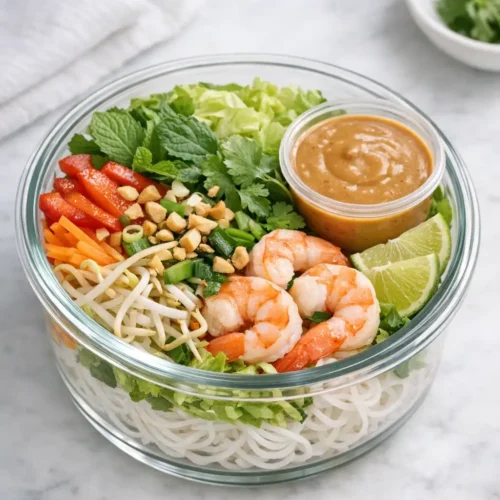
Spring Roll Bowl With Peanut Sauce Meal Prep

Equipment
- Medium pot
- Colander
- Medium Bowl
- Whisk
- Knife
- Cutting board
- Airtight meal prep containers
- Small lidded containers (for sauce)
Ingredients
For the bowls
- 180 g thin rice vermicelli noodles about 6 oz; about 4 small bundles
- 1 tbsp neutral oil such as canola or grapeseed
- 1 small romaine heart or 1/2 small butter lettuce, shredded (about 120 g / 4 oz)
- 1 medium carrot cut into matchsticks or shredded (about 120 g / 4 oz)
- 1/2 English cucumber seeded if very watery; cut into thin batons
- 1 small red bell pepper thinly sliced (about 120 g / 4 oz)
- 120 g mung bean sprouts rinsed and drained
- 15–20 fresh mint leaves roughly torn
- 15–20 fresh cilantro sprigs leaves and tender stems
- 2 scallions thinly sliced
- 150 g cooked shrimp peeled and halved lengthwise, or firm tofu, cubed
- 30 g roasted peanuts roughly chopped (about 1 oz / about 1/4 cup)
- 1 small lime cut into wedges, for serving (optional)
For the peanut sauce
- 90 g creamy peanut butter smooth, not heavily separating natural peanut butter (about 1/3 cup)
- 45 ml hoisin sauce 3 tbsp
- 30 ml soy sauce regular or low-sodium (2 tbsp)
- 30 ml fresh lime juice 2 tbsp (about 1 lime)
- 15 ml rice vinegar 1 tbsp
- 15 ml honey or maple syrup 1 tbsp
- 1 small garlic clove finely minced or grated
- 1–2 tsp chili-garlic sauce or sriracha to taste
- 60–90 ml warm water as needed to thin (1/4–1/3 cup)
Instructions
- Cook and cool the rice noodles: Bring a medium pot of water to a boil. Add the rice vermicelli, stir to separate, and cook according to package directions (usually 3–5 minutes) until tender but still springy. Drain in a colander and rinse under cool water until no longer warm. Shake off excess water and toss with neutral oil to prevent sticking.
- Season the noodles lightly: Taste a noodle. If it seems bland, sprinkle very lightly with soy sauce or a pinch of salt and toss again.
- Prep the vegetables: Shred the lettuce, cut the carrot and cucumber into matchsticks, slice the bell pepper, and rinse and drain the bean sprouts. Pat extra moisture off the cucumber and sprouts with a clean towel so they don’t water down your bowls.
- Prep the herbs and scallions: Rinse the mint and cilantro and dry well. Roughly tear the mint leaves, keep cilantro leaves and tender stems, and slice the scallions.
- Prepare your protein: If using cooked shrimp, pat dry and slice larger shrimp in half lengthwise. If using tofu, press briefly to remove excess moisture, then cube (optional: quickly sear in a nonstick skillet with a splash of soy sauce until lightly golden).
- Whisk the peanut sauce: In a medium bowl, combine peanut butter, hoisin, soy sauce, lime juice, rice vinegar, honey or maple syrup, garlic, and chili-garlic sauce. Whisk until smooth, then gradually whisk in warm water (start with 60 ml / 1/4 cup) until pourable but still clings to a spoon.
- Taste and adjust the sauce: Add more warm water if too thick, more chili-garlic sauce for heat, or extra lime juice for brightness.
- Set up for assembly: Line up 3–4 airtight meal prep containers. Divide cooled noodles evenly among them, forming a loose nest.
- Layer the vegetables: Add shredded lettuce, then carrot, cucumber, bell pepper, and bean sprouts. Keep watery items like cucumber toward the top or side.
- Add herbs, scallions, and protein: Sprinkle mint, cilantro, and scallions over each bowl and arrange shrimp or tofu on top.
- Top with peanuts and lime wedges: Divide chopped peanuts among containers and tuck in a lime wedge if using.
- Portion the peanut sauce separately: Transfer sauce into 3–4 small lidded containers and store separately so the bowls stay crisp.
- Chill and store: Seal and refrigerate up to 3 days (shrimp bowls best within 2–3 days; tofu bowls within 3–4 days).
- Serve: Drizzle peanut sauce over the bowl, squeeze lime over the top, toss gently, and eat chilled or at cool room temperature (no reheating required).


Leave a Reply