
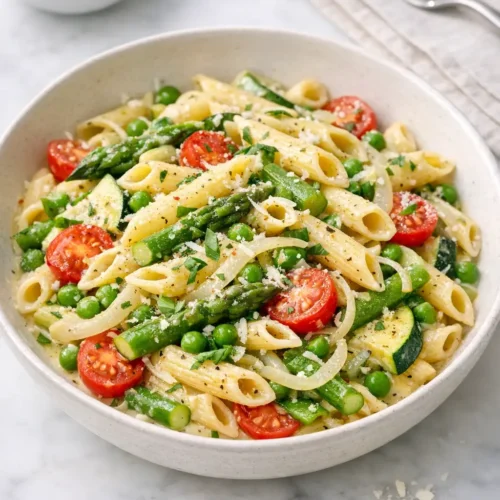
Spring vegetable pasta primavera is one of those dinners that looks restaurant-fancy but can absolutely happen on a busy Tuesday. You get a skillet full of tender-crisp asparagus, peas, and onions tangled with pasta in a light, creamy Parmesan sauce.
If you’ve had a long day, start by putting a big pot of water on to boil and pulling all the vegetables onto one cutting board. If someone’s hungry and asking when dinner is, focus on slicing the asparagus and onion first—those go in the pan before anything else. This version cooks in about 30 minutes, uses one pan plus the pasta pot, and is forgiving enough for small kitchens and multitasking cooks.
Ingredients
Serves 3–4
For the pasta and vegetables
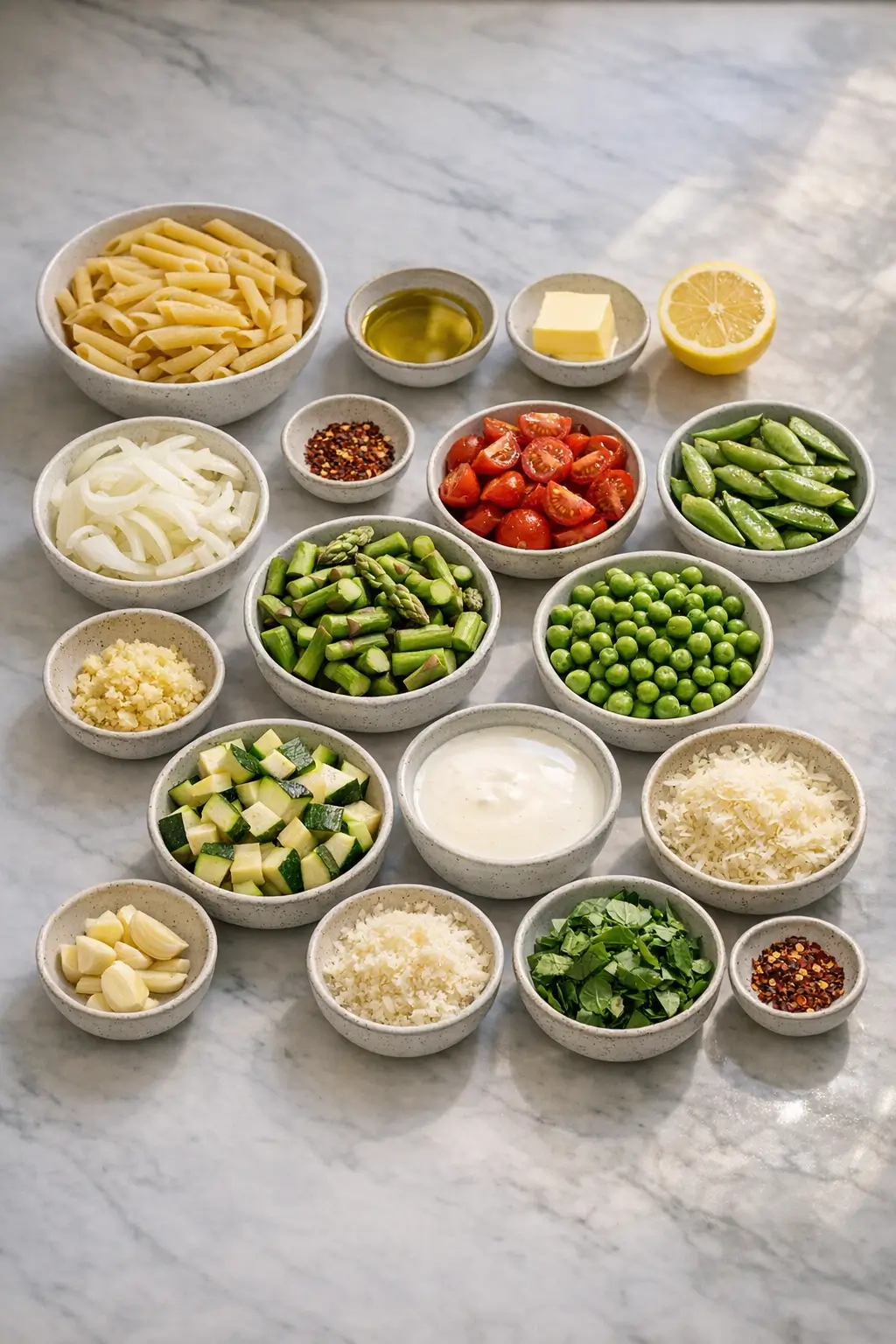
- 10 oz (280 g) short pasta such as penne, fusilli, or farfalle
- 1 1/2 tsp fine sea salt, for the pasta water (plus more to taste)
- 2 Tbsp olive oil
- 1 Tbsp unsalted butter (for flavor and a silky sauce; use all olive oil to make it lighter)
- 1 small yellow onion (about 4 oz / 115 g), thinly sliced
- 3 cloves garlic, finely minced
- 8 oz (225 g) asparagus, woody ends snapped off, spears cut into 1–2 inch (2.5–5 cm) pieces on a bias
- 1 cup (120 g) sugar snap peas or snow peas, strings removed and halved on a bias (or use an extra cup of asparagus or frozen peas)
- 3/4 cup (90 g) fresh or frozen peas (no need to thaw if frozen)
- 1 small zucchini (about 6 oz / 170 g), quartered lengthwise and sliced into 1/4-inch (6 mm) pieces
- 1/2 cup (75 g) cherry or grape tomatoes, halved (for color and sweetness; can omit if out of season)
For the sauce
- 1/2 cup (120 ml) heavy cream (or use 1/3 cup / 80 ml half-and-half plus 2 Tbsp reserved pasta water)
- 1/2 cup (40 g) freshly grated Parmesan cheese, plus more for serving
- 1/2 cup (120 ml) reserved starchy pasta cooking water, plus more as needed
- 1 tsp finely grated lemon zest (from 1 organic lemon)
- 2 Tbsp fresh lemon juice
- 1/4 tsp freshly ground black pepper, plus more to taste
- 1/4 tsp red pepper flakes (optional, for gentle heat)
- 1/4 cup (6–8 g) chopped fresh basil leaves, lightly packed (or a mix of basil and flat-leaf parsley)
Kitchen note: Grate the Parmesan on the fine holes of a box grater or a microplane. Pre-grated cheese often clumps and won’t melt smoothly into the light cream sauce.
Step-by-Step Instructions for Spring Vegetable Pasta Primavera
Boil the pasta water and prep vegetables.
Fill a large pot with at least 3 quarts (3 liters) of water and bring it to a boil. While it heats, slice the onion, mince the garlic, and prep the asparagus, peas, zucchini, and tomatoes. Keep the vegetables grouped on a board so you can add them in quickly.
Salt the water and cook the pasta.
When the water boils, add the 1 1/2 tsp salt, then the pasta. Cook 1–2 minutes less than the package suggests for al dente. Stir in the first few minutes to prevent sticking.
Kitchen note: Start checking the pasta 2 minutes before the earliest time on the package. You want it just shy of your ideal texture because it will finish cooking in the pan with the sauce.
Start the aromatics.
While the pasta cooks, place a large, deep skillet over medium heat. Add the olive oil and butter. Once the butter melts and foams slightly, add the sliced onion and a pinch of salt. Cook, stirring occasionally, until the onion is soft and translucent with light golden edges, about 5–7 minutes.
Add garlic and tougher vegetables.
Add the minced garlic, asparagus pieces, and zucchini to the skillet. Stir to coat in the fat. Cook for 3–4 minutes, until the asparagus turns a brighter green and just begins to become tender at the thickest parts.
Layer in peas and snap peas.
Stir in the snap peas (or snow peas) and the peas. If using frozen peas, add them straight from the freezer. Cook for another 2–3 minutes. The vegetables should look vibrant and just tender but still crisp when bitten.
Moisten the pan and hold the vegetables.
Ladle in 1/4 cup (60 ml) of the pasta cooking water into the skillet and gently scrape up any browned bits from the bottom. Turn the heat down to low to keep the vegetables warm but not browning.
Reserve pasta water, then drain pasta.
When the pasta is just shy of al dente, dip a heatproof measuring cup into the pot and collect at least 1 cup (240 ml) of the starchy cooking water. Set aside. Drain the pasta well.
Combine pasta and vegetables.
Add the drained pasta directly into the skillet with the vegetables. Toss well over low heat so everything is evenly distributed.
Build the light cream sauce.
Pour in the heavy cream and 1/4 cup (60 ml) of the reserved pasta water. Toss or gently stir so the cream and water coat the pasta and vegetables. The liquid should look thin at this stage; it will thicken as it simmers and as you add cheese.
Add Parmesan and seasonings off the heat.
Turn the heat down to very low or even off. Sprinkle in the grated Parmesan gradually, tossing constantly so it melts evenly instead of clumping. Add the lemon zest, lemon juice, black pepper, and red pepper flakes if using. If the sauce looks too thick or sticky, splash in more pasta water a tablespoon at a time until it coats the pasta in a thin, glossy layer.
Fold in tomatoes and herbs.
Add the halved cherry tomatoes and most of the chopped basil, reserving a little for garnish. Gently fold everything together so you don’t crush the vegetables.
Taste and adjust.
Taste a piece of pasta and a few vegetables. Add more salt if needed, another squeeze of lemon for brightness, and extra pepper to balance the cream. If the dish has cooled slightly, warm it over low heat for 1–2 minutes, stirring often.
Kitchen note: If the sauce ever looks oily or “split,” take the pan off the heat and add a spoonful of warm pasta water while tossing vigorously. The starch will help bring it back together.
Serve.
Transfer the pasta primavera to warmed bowls. Top with the remaining basil, extra Parmesan, and a final drizzle of olive oil if you like. Serve immediately while the vegetables are still bright and the sauce is silky.
What to Expect
This spring vegetable pasta primavera is light but not skimpy. The sauce should gently coat the noodles—closer to a glossy sheen than a heavy blanket.
Asparagus and peas stay slightly crisp, so you get contrast with the tender pasta. The lemon and Parmesan keep the cream from feeling heavy, especially if you finish with a squeeze of lemon at the table.
Different pans and stoves change the timing. A thinner skillet may brown the onions faster and need a slightly lower heat. Whole wheat or legume-based pastas can drink up more liquid, so you may want an extra splash of pasta water at the end.
Kitchen note: This dish is at its absolute best in the first 20 minutes after cooking. If you plan to serve it later, undercook the pasta by another minute and keep a little extra pasta water on hand to loosen before serving.
Ways to Change It Up
1. Make it vegetarian and lighter (already meatless, but lighter).
The base recipe is already vegetarian, but you can make it feel even lighter by swapping the heavy cream for half-and-half or whole milk plus extra Parmesan. The sauce will be thinner and less clingy, which some people prefer in warmer weather.
For extra protein without meat, add a drained can of chickpeas in step 8 when you combine pasta and vegetables, or toss in cubed fresh mozzarella off the heat to soften slightly.
2. Make it fully vegan.
Replace the butter with olive oil, use a rich unsweetened oat or soy cream in place of dairy cream, and skip the Parmesan in favor of nutritional yeast or a finely grated plant-based Parmesan-style cheese.
A squeeze of extra lemon and a generous amount of herbs help mimic the brightness that Parmesan usually brings. Keep in mind that vegan cheeses melt differently; add them off the heat to avoid graininess.
3. Turn up the heat.
If you like a spicier pasta, increase the red pepper flakes to 1/2–3/4 tsp, or sauté a sliced fresh chili with the onion. You can also finish each bowl with a spoonful of chili crisp or a drizzle of chili oil.
Spice can slightly mute delicate vegetable flavors, so taste and adjust salt and lemon at the end to keep everything balanced.
4. Make it milder and kid-friendly.
Skip the red pepper flakes and cut the black pepper in half. Use smaller vegetable pieces so they’re easy to spear with a fork, and lean on peas, zucchini, and very thin asparagus slices, which tend to be more familiar.
If you have selective eaters, you can keep some vegetables aside and offer them on the side or on top of plain buttered pasta, using a little of the cream and cheese sauce as a “bridge” flavor.
5. Faster and more streamlined.
On a truly rushed night, drop the zucchini and tomatoes, and use just asparagus and peas. Both cook quickly and feel very spring-forward. You can also cook the peas directly in the pasta water for the last 2 minutes instead of sautéing them.
Using a thinner pasta like spaghetti or linguine can shave a few minutes off the boiling time. Just keep an eye on clumping and stir frequently in the first few minutes of cooking.
Serving and Storage
Serve this pasta primavera hot, ideally straight from the pan to shallow bowls. A squeeze of fresh lemon over each serving and a final dusting of Parmesan make the colors pop and keep the dish tasting bright.
It pairs well with simple sides that echo the freshness of the sauce. A crisp salad like Spring Pea and Mint Salad With Feta or a light soup such as Pea and Mint Soup That Tastes Like Spring keeps the meal firmly in the spring lane.
Leftovers keep in an airtight container in the refrigerator for up to 3 days. The vegetables will soften a bit, and the sauce will thicken as the pasta absorbs it.
To reheat, add a splash of water or milk to a skillet over low heat, then add the pasta and gently loosen it as it warms. Stir frequently and add a little extra Parmesan or olive oil at the end if it tastes flat.
Kitchen note: Avoid microwaving in one big heap on high power—it tends to create dry edges and cold centers. Reheat in smaller portions and stir halfway through if you do use the microwave.

Cultural Context
Pasta primavera is widely recognized as an Italian-American dish that became popular in the 1970s, rather than a classic recipe from Italy itself. The name “primavera” means “spring” in Italian and points to the emphasis on fresh seasonal vegetables rather than a specific, rigid set of ingredients.
The dish gained broader attention after being served at Le Cirque in New York City and featured in a 1977 article by Craig Claiborne and Pierre Franey. You can read more about its development and the way it fits into Italian-American restaurant cooking on resources like this overview of pasta primavera and broader discussions of Italian-American cuisine from institutions such as the Italian American Museum.
Common Questions and Troubleshooting
My sauce turned out thin and watery. How can I fix it?
Let the pasta sit in the pan over low heat for 1–2 minutes, tossing constantly. The starch from the pasta will help thicken the liquid. Add a bit more grated Parmesan, which melts and naturally tightens the sauce.
If it’s still loose, allow it to rest off the heat for a few minutes. The sauce thickens as it cools slightly, so avoid adding too much extra cheese or you might overshoot and end up with a gluey texture.
The sauce looks oily or broken—what went wrong?
Usually this happens when the heat is too high while adding the cheese or when there isn’t enough starchy pasta water in the pan. Take the pan off the heat, add a spoonful or two of warm pasta water, and toss vigorously.
Next time, lower the heat before stirring in the Parmesan and add it gradually. Finely grated cheese melts much more evenly than thicker shavings.
Can I use different vegetables?
Yes. Primavera is flexible by design. Broccoli florets, thinly sliced carrots, green beans, or baby spinach all work well. Add firmer vegetables earlier (with the onion or asparagus) and tender ones like spinach right at the end.
Avoid very watery vegetables like large ripe tomatoes or mushrooms unless you sauté off their moisture first, or you may thin the sauce more than you’d like.
How can I make this ahead for guests?
Cook the vegetables and the sauce base (cream, pasta water, lemon, and cheese) up to 1 hour ahead and keep them warm over very low heat, adding splashes of water as needed. Boil the pasta just before serving, undercooking it by 2 minutes.
Toss the hot pasta with the warmed vegetables and sauce, then adjust with more pasta water, salt, and lemon right before bringing it to the table.
Is there a way to add protein without changing the sauce too much?
Grilled or pan-seared chicken, sautéed shrimp, or flaked poached salmon all tuck into this pasta easily. Fold them in at the very end, just long enough to warm through.
For a vegetarian protein boost, add rinsed canned white beans or chickpeas with the pasta in step 8. They’ll absorb some of the sauce and make the dish more filling without a lot of extra work.
Can I freeze leftovers?
Freezing is not ideal here. Cream sauces tend to split after thawing, and the tender vegetables can turn mushy. If you do freeze a portion, thaw it overnight in the fridge and reheat very gently with extra cream and pasta water, expecting a softer, less vibrant result.
Conclusion
Spring vegetable pasta primavera is a straightforward way to make the most of short-season produce without spending your whole evening cooking. With a bit of chopping and a watchful eye on the pasta water, you get a colorful, lemony bowl that feels special but doesn’t demand restaurant-level effort.
If you try this version, I’d love to hear how it fits into your routine—what vegetables you used, how you adjusted the cream, or any add-ins you enjoyed. Share your tweaks and results in the comments so other home cooks can benefit from your experience too.
Spring Vegetable Pasta Primavera in 30 Minutes

Equipment
- Large pot
- Large deep skillet
- Cutting board
- Knife
- Heatproof measuring cup
- Colander
Ingredients
For the pasta and vegetables
- 10 oz short pasta (penne, fusilli, or farfalle)
- 1 1/2 tsp fine sea salt for the pasta water, plus more to taste
- 2 Tbsp olive oil
- 1 Tbsp unsalted butter optional; use all olive oil to make it lighter
- 1 small yellow onion thinly sliced (about 4 oz / 115 g)
- 3 cloves garlic finely minced
- 8 oz asparagus woody ends snapped off; cut into 1–2 inch pieces on a bias
- 1 cup sugar snap peas or snow peas strings removed and halved on a bias
- 3/4 cup peas (fresh or frozen) no need to thaw if frozen
- 1 small zucchini quartered lengthwise and sliced into 1/4-inch pieces (about 6 oz / 170 g)
- 1/2 cup cherry or grape tomatoes halved (optional)
For the sauce
- 1/2 cup heavy cream or 1/3 cup half-and-half plus 2 Tbsp reserved pasta water
- 1/2 cup freshly grated Parmesan cheese plus more for serving
- 1/2 cup reserved starchy pasta cooking water plus more as needed
- 1 tsp lemon zest finely grated (from 1 organic lemon)
- 2 Tbsp fresh lemon juice
- 1/4 tsp freshly ground black pepper plus more to taste
- 1/4 tsp red pepper flakes optional
- 1/4 cup fresh basil leaves chopped, lightly packed (or mix of basil and flat-leaf parsley)
Instructions
- Boil the pasta water and prep vegetables: Fill a large pot with at least 3 quarts (3 liters) of water and bring it to a boil. While it heats, slice the onion, mince the garlic, and prep the asparagus, peas, zucchini, and tomatoes.
- Salt the water and cook the pasta: When the water boils, add the salt, then the pasta. Cook 1–2 minutes less than the package suggests for al dente, stirring in the first few minutes to prevent sticking.
- Start the aromatics: While the pasta cooks, heat a large deep skillet over medium. Add olive oil and butter. When the butter melts, add sliced onion and a pinch of salt; cook until soft and lightly golden at the edges, about 5–7 minutes.
- Add garlic and tougher vegetables: Add minced garlic, asparagus, and zucchini. Stir to coat and cook 3–4 minutes, until asparagus brightens and begins to turn tender.
- Layer in peas and snap peas: Stir in snap peas (or snow peas) and peas (frozen straight from the freezer is fine). Cook 2–3 minutes, until vibrant and tender-crisp.
- Moisten the pan and hold the vegetables: Add about 1/4 cup (60 ml) pasta cooking water and scrape up browned bits. Reduce heat to low to keep vegetables warm.
- Reserve pasta water, then drain pasta: When pasta is just shy of al dente, reserve at least 1 cup (240 ml) starchy cooking water, then drain the pasta well.
- Combine pasta and vegetables: Add drained pasta to the skillet and toss over low heat until evenly distributed.
- Build the light cream sauce: Add heavy cream and 1/4 cup (60 ml) reserved pasta water; toss until the pasta and vegetables are coated.
- Add Parmesan and seasonings off the heat: Turn heat to very low or off and sprinkle in Parmesan gradually while tossing. Add lemon zest, lemon juice, black pepper, and red pepper flakes (if using). Loosen with more pasta water as needed until glossy and lightly coating.
- Fold in tomatoes and herbs: Gently fold in halved tomatoes and most of the chopped basil, reserving a little for garnish.
- Taste and adjust: Season with more salt, lemon, and pepper to taste. If needed, warm over low heat 1–2 minutes, stirring often.
- Serve: Divide into warmed bowls and top with remaining basil, extra Parmesan, and a drizzle of olive oil if desired. Serve immediately.



Leave a Reply