
On the hottest days, watermelon agua fresca is one of the easiest ways to get something cold, bright, and not too heavy into a glass.
If you’re coming home from work and everyone’s hot and cranky, start by chilling your glasses and cutting the watermelon; that’s the only real work here. Hosting in a small kitchen? Blend in batches and stash a pitcher in the fridge so you’re not wrestling appliances when guests arrive.
Ingredients
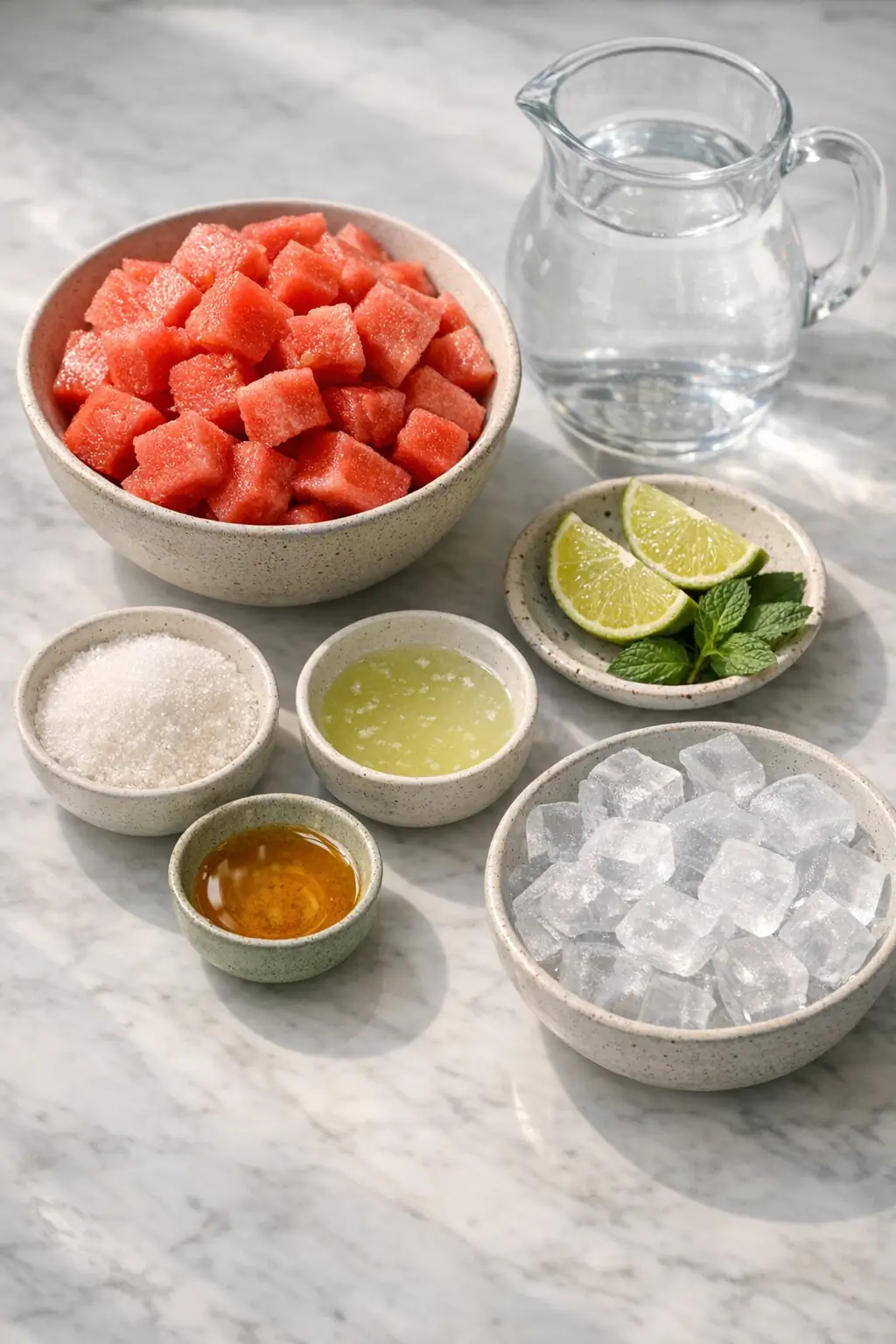
- 800 g / about 6 cups seedless watermelon, cut in cubes (from roughly 1/4 of a medium melon)
- 720 ml / 3 cups cold water, divided, plus more to taste
- 60 ml / 1/4 cup freshly squeezed lime juice (about 2 medium limes)
- 30–50 g / 2–4 tbsp granulated sugar, to taste
- Pinch of fine sea salt (balances the sweetness)
- Ice cubes, for serving
- Lime wedges and a few fresh mint leaves, for optional garnish
Substitutions:
- Use agave syrup or honey instead of sugar; start with 2 tbsp and adjust.
- For a less diluted flavor, swap part of the water for sparkling water right before serving so it stays fizzy.
Step-by-Step Instructions for Watermelon Agua Fresca
Chill what you can.
If you have time, chill the watermelon cubes, water, and serving glasses in the refrigerator for 30–60 minutes. This helps you use less ice later, which keeps the flavor stronger.Blend the first batch.
Add about half of the watermelon cubes to a blender along with 1 1/2 cups (360 ml) of the cold water, all of the lime juice, 2 tbsp (30 g) of sugar, and a small pinch of salt.
Blend on high until completely smooth, about 30–45 seconds.Taste before you commit.
Pour a splash of the blended mixture into a glass with a couple of ice cubes and taste.
Adjust with more sugar for sweetness, more lime for tartness, or a little extra water if it’s thicker or sweeter than you like.
Kitchen note: Watermelons vary a lot in sweetness. Always adjust the sugar and water after tasting the first blend rather than adding the full amount up front.
Blend the rest.
Return the test splash to the blender jar if you removed a lot.
Add the remaining watermelon and another 1 1/2 cups (360 ml) cold water, then blend again until smooth.
If your blender is small, work in two full batches using the same proportions.Strain for a smoother drink (optional but recommended).
Set a fine-mesh sieve over a large bowl or pitcher.
Pour the blended watermelon mixture through the sieve, using a spoon or spatula to stir and press so the liquid passes through.
Discard the pulpy solids if you prefer a lighter texture, or keep a bit if you like more body.Chill, then adjust again.
Refrigerate the strained agua fresca for at least 30 minutes if possible; cold temperatures slightly mute sweetness and acidity.
Taste once it’s cold and make final small adjustments to lime or sugar as needed, stirring well to dissolve.Prepare the glasses.
Fill each glass halfway to three-quarters full with ice.
If you like a little flair, lightly rub a lime wedge around the rim and dip in a shallow plate of sugar or chili-lime seasoning before adding the ice.Serve.
Give the pitcher a good stir so nothing settles.
Pour the watermelon agua fresca over the ice, garnish with lime wedges and a couple of mint leaves, and serve immediately.
Kitchen note: If you plan to sip slowly outside on a very warm day, consider filling glasses only halfway with ice and keeping the pitcher in the fridge, then topping up as needed so it doesn’t get diluted too quickly.
What to Expect
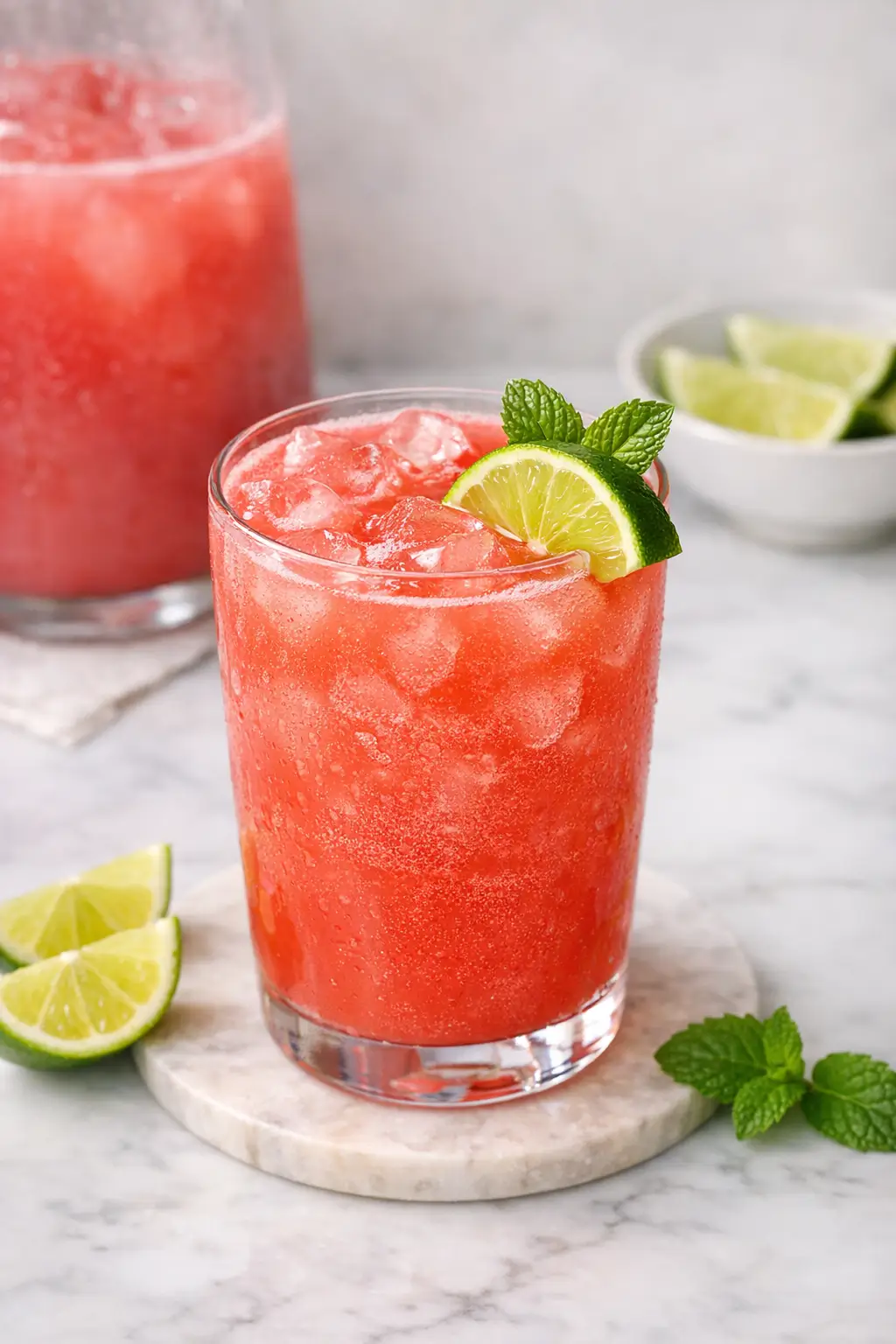
A finished glass of watermelon agua fresca should look bright pink-red and slightly opaque, similar to a light juice rather than a smoothie.
The texture is thin enough to sip easily through a straw but has a bit more body than flavored water, especially if you keep some pulp.
Flavor-wise, expect gentle sweetness, fresh melon flavor, and a clear lime edge that keeps it from tasting flat or overly sugary.
Different blenders can change the texture: high-speed models often make it almost silky, while basic blenders may leave a few fine bits of pulp that some people enjoy.
Sugar level also shifts with the watermelon you start with; a very ripe melon means you might use only the minimum sugar, while a mellower melon might need the full range.
Ways to Change It Up
Milder, no-added-sugar version.
Skip the sugar and taste the blended watermelon and lime first.
If it needs just a little help, add a small splash of orange juice or apple juice instead of granulated sugar to keep the ingredient list very short.Herb-forward and more aromatic.
Add a small handful of fresh mint or basil leaves to the blender with the watermelon.
Strain well so you don’t end up with torn leaves in the glass, and garnish with the same herb so drinkers know what to expect.
Kitchen note: Whole herb leaves can get bitter if over-blended. Pulse them briefly instead of running the blender on high for a long time.
Spicier, snack-time version.
Blend in 2–4 thin slices of fresh jalapeño (seeds removed for less heat) along with the melon and water.
Taste and add another slice only if you want a stronger kick.
Serve in glasses rimmed with chili-lime seasoning and pair with salty snacks.Faster, single-glass small batch.
For one large serving, blend 1 1/2 cups watermelon cubes with 1/2 cup cold water, 1–2 tsp sugar, a squeeze of lime, and ice directly in the blender.
Pour straight into a glass and drink right away; the texture will be more like a light slushy.Vegan creamy twist.
Replace 1 cup (240 ml) of the water with chilled coconut water for a rounder, slightly creamy impression without dairy.
This version is a bit richer and pairs nicely with spicy grilled foods.
Serving and Storage
Watermelon agua fresca is typically served very cold, over ice, as a non-alcoholic drink alongside daytime meals or snacks.
It works especially well with grilled dishes, tacos, and salty snacks because the fruit and lime help balance heat and salt.
For a more substantial snack board, you can pour small glasses and offer them with chips and salsa, grilled corn, or light salads.
Leftover agua fresca keeps in the refrigerator for about 2 days in a covered pitcher.
Stir well before serving again, as some natural separation is normal.
Freezing isn’t ideal if you want to drink it as-is, but leftovers can be poured into ice pop molds or ice cube trays and frozen for later use in smoothies or to chill other drinks.
Cultural Context
Agua fresca, which translates roughly as “fresh water,” refers to a broad family of drinks made by blending fruit, grains, seeds, or flowers with water and a bit of sugar.
They are commonly sold by street vendors, in markets, and in casual restaurants in Mexico and parts of Central America as a way to enjoy seasonal produce in a simple, drinkable form.
Watermelon versions, often called agua de sandía, appear especially in warm months when melons are abundant and inexpensive.
For a concise overview of the broader category of these drinks, see this background on agua fresca and its typical ingredients.
If you’re interested in how watermelon itself is grown and used across different regions, the National Watermelon Promotion Board offers additional context on varieties and seasonality in its educational overview of watermelon.
Common Questions and Troubleshooting
Why does my watermelon agua fresca taste bland?
Usually the melon itself isn’t very sweet or was stored too long.
Add a bit more lime juice first to sharpen the flavor, then add sugar a teaspoon at a time until it tastes balanced; in some cases, you may also want to reduce the added water slightly in your next batch.
My drink separated in the fridge. Is it ruined?
Separation is normal; the lighter juice rises and the slightly heavier pulp sinks.
Just stir or gently shake the pitcher before pouring, and the texture should come back together without a problem.
Can I make watermelon agua fresca ahead for a party?
Yes, you can blend and strain it up to 24 hours in advance and store it covered in the refrigerator.
For best flavor, hold back a little lime juice and stir it in shortly before serving, then pour the drink over fresh ice so the first round isn’t diluted.
Kitchen note: If you’re serving outside in very hot weather, keep the main pitcher in the fridge or a cooler and only set out a smaller carafe on the table, refilling as needed.
Can I skip straining, or use a blender bottle instead?
You can skip straining if you don’t mind a pulpy, smoothie-like texture; some people actually prefer it that way.
A blender bottle won’t break down the fruit well enough, though, so you still need a standard or immersion blender for the first step.
What if I only have regular seeded watermelon?
You can still make the drink; it just requires a bit more prep.
Cut slices, remove the black seeds with the tip of a knife or your fingers, then cube and proceed as directed; any small pale seeds that escape usually get caught in the strainer.
Can I use frozen watermelon cubes?
Frozen cubes work well, especially if fresh watermelon is very soft or not in season.
Blend them with slightly warmer water (cool, not ice-cold) so the blender doesn’t struggle, then adjust the final thickness with extra water once everything is smooth.
Conclusion
Watermelon agua fresca is a low-effort way to turn a cut watermelon into something everyone actually finishes, not just a bowl of leftover cubes in the fridge.
Once you’re comfortable with the basic balance of fruit, water, lime, and sugar, it becomes easy to adjust future batches based on how your particular melon tastes.
If you try this version, share any tweaks—extra herbs, different sweeteners, or spice levels—in the comments so other home cooks can benefit.
Honest ratings and questions also help fine-tune the guidance here for different kitchens and blenders.
Watermelon Agua Fresca for Warm Days

Equipment
- Blender
- Fine-mesh sieve
- Large bowl or pitcher
- Spoon or spatula
Ingredients
- 800 g seedless watermelon cut in cubes (about 6 cups; from roughly 1/4 of a medium melon)
- 720 ml cold water divided, plus more to taste
- 60 ml freshly squeezed lime juice about 2 medium limes
- 30–50 g granulated sugar to taste (2–4 tbsp)
- 1 pinch fine sea salt
- ice cubes for serving
- lime wedges optional garnish
- fresh mint leaves optional garnish
Instructions
- Chill what you can. If you have time, chill the watermelon cubes, water, and serving glasses in the refrigerator for 30–60 minutes. This helps you use less ice later, which keeps the flavor stronger.
- Blend the first batch. Add about half of the watermelon cubes to a blender along with 1 1/2 cups (360 ml) of the cold water, all of the lime juice, 2 tbsp (30 g) of sugar, and a small pinch of salt. Blend on high until completely smooth, about 30–45 seconds.
- Taste before you commit. Pour a splash of the blended mixture into a glass with a couple of ice cubes and taste. Adjust with more sugar for sweetness, more lime for tartness, or a little extra water if it’s thicker or sweeter than you like.
- Blend the rest. Return the test splash to the blender jar if you removed a lot. Add the remaining watermelon and another 1 1/2 cups (360 ml) cold water, then blend again until smooth. If your blender is small, work in two full batches using the same proportions.
- Strain for a smoother drink (optional but recommended). Set a fine-mesh sieve over a large bowl or pitcher. Pour the blended watermelon mixture through the sieve, using a spoon or spatula to stir and press so the liquid passes through. Discard the pulpy solids if you prefer a lighter texture, or keep a bit if you like more body.
- Chill, then adjust again. Refrigerate the strained agua fresca for at least 30 minutes if possible; cold temperatures slightly mute sweetness and acidity. Taste once it’s cold and make final small adjustments to lime or sugar as needed, stirring well to dissolve.
- Prepare the glasses. Fill each glass halfway to three-quarters full with ice. If you like a little flair, lightly rub a lime wedge around the rim and dip in a shallow plate of sugar or chili-lime seasoning before adding the ice.
- Serve. Give the pitcher a good stir so nothing settles. Pour the watermelon agua fresca over the ice, garnish with lime wedges and a couple of mint leaves, and serve immediately.



Leave a Reply