
Cozy beef stew with potatoes and carrots is one of those meals that quietly takes care of dinner for you. While it simmers, you can clear the table, help with homework, or just sit down for a minute. The payoff is a pot of tender beef, soft potatoes, and sweet carrots in a rich, spoon-coating gravy.
If you’re racing in the door on a weeknight, start by getting the beef searing and the oven preheating; everything else can fall into place while the first batch browns. If you know your stove runs hot, make a mental note now to keep the heat at medium once the liquid goes in so the stew gently simmers instead of boiling.
This style of beef stew shows up across North American home kitchens, especially in colder months, as an everyday dinner more than a special-occasion dish. It suits any reasonably patient cook: if you can chop vegetables and give a pot an occasional stir, you can handle this recipe. Expect deep savory flavor, a little sweetness from the vegetables, and a cozy, brothy gravy that begs for bread or a bowl of rice.
Ingredients
Serves 3–4
For the stew
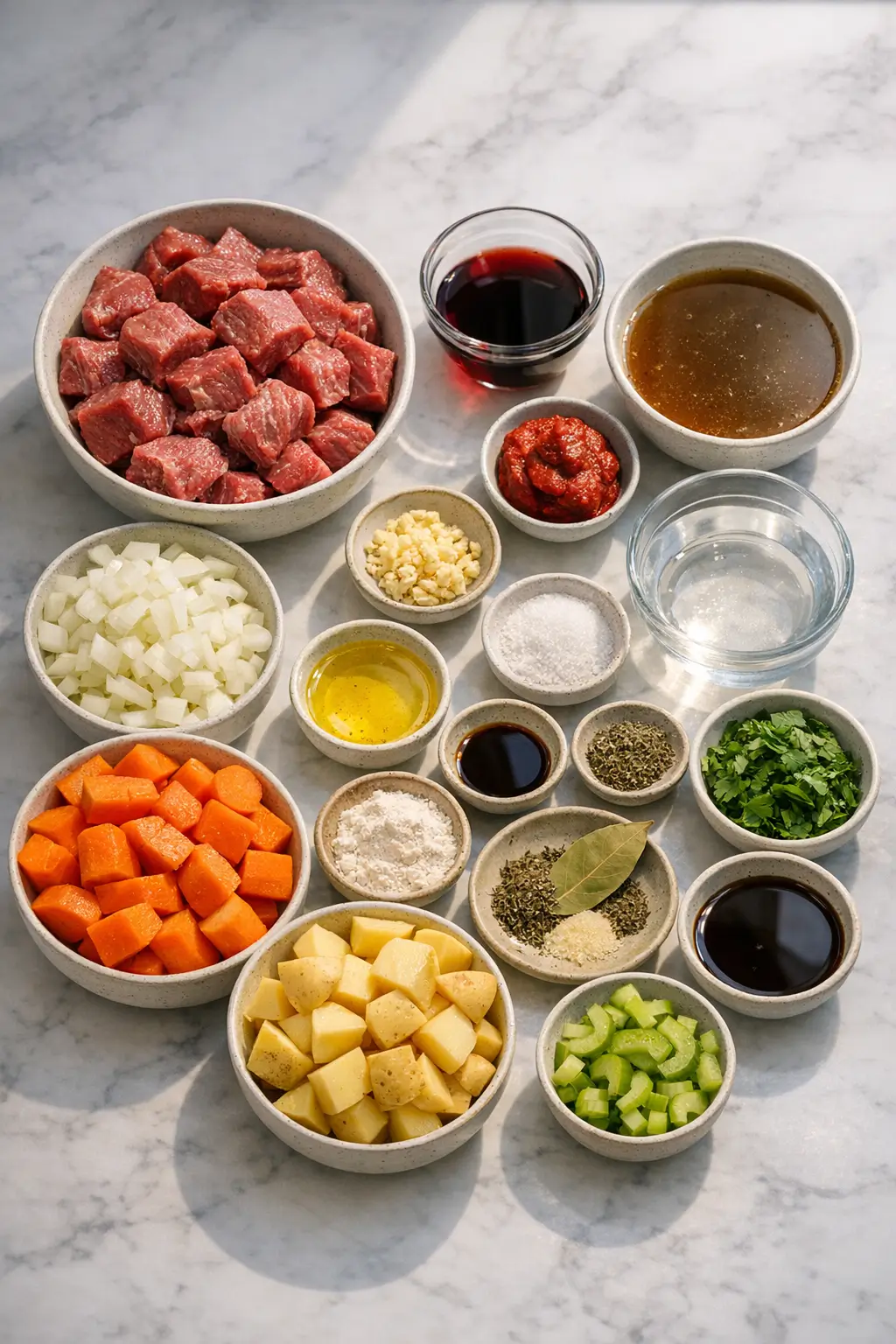
- 700 g / 1½ lb well-marbled beef chuck, cut into 3 cm / 1¼ in chunks (boneless “stew beef” labeled chuck works)
- 1¼ tsp fine sea salt, divided (plus more to taste)
- ¾ tsp freshly ground black pepper, divided
- 2 tbsp (30 ml) neutral oil (canola, vegetable, or light olive oil)
- 1 medium (150 g) yellow onion, chopped
- 2 cloves garlic, minced
- 2 tbsp (30 g) tomato paste (adds depth and gentle acidity)
- 2 tbsp (16 g) all-purpose flour (helps thicken the gravy)
- 120 ml / ½ cup dry red wine or extra beef broth if avoiding alcohol
- 480 ml / 2 cups low-sodium beef broth
- 240 ml / 1 cup water
- 1 tsp Worcestershire sauce (optional but adds umami)
- 1 tsp sugar (balances acidity; omit if you prefer)
- 1 bay leaf
- 1 tsp dried thyme or 2–3 sprigs fresh thyme
- 2 medium (200 g) carrots, peeled and cut into 2 cm / ¾ in chunks on the diagonal
- 350 g / 12 oz waxy or all-purpose potatoes (Yukon gold or red), cut into 3 cm / 1¼ in chunks
- 1 stalk (60 g) celery, sliced (optional, for extra savoriness)
To finish
- 1–2 tbsp chopped fresh parsley (optional, for brightness)
- Additional salt and pepper to taste
Substitution notes:
- Beef: Boneless beef chuck gives the best tenderness. Blade roast or beef shoulder can be used with similar results.
- Potatoes: Waxy potatoes hold their shape best. Standard russet potatoes work but may break down more and thicken the stew.
- Broth: If you only have chicken stock, it can stand in; the flavor will be slightly lighter.
- Herbs: Italian seasoning can replace thyme in a pinch; use ½ tsp and adjust to taste.
Step-by-Step Instructions for Cozy Beef Stew with Potatoes and Carrots
-
Season and dry the beef.
Pat the beef chunks dry with paper towels so they brown instead of steaming. Toss with 1 tsp salt and ½ tsp black pepper. -
Brown the meat in batches.
Heat 1 tbsp oil in a heavy Dutch oven (about 5–6 qt / 4.5–5.5 L) over medium-high heat until the oil shimmers.
Add about a third of the beef in a single layer, leaving space between pieces.
Sear until deeply browned on at least two sides, about 6–8 minutes per batch.
Transfer browned beef to a bowl and repeat with remaining oil and meat.
Kitchen note: If the bottom of the pot looks like it’s burning instead of forming dark brown bits, lower the heat slightly and splash in a tablespoon of water to loosen the fond before it scorches.
-
Soften the aromatics.
Lower the heat to medium.
Add the chopped onion (and celery if using) with a small pinch of salt.
Cook, stirring and scraping up any browned bits, until the onion is translucent and lightly golden, 5–7 minutes.
Stir in the garlic and cook just until fragrant, about 30 seconds. -
Cook the tomato paste.
Add the tomato paste and stir to coat the onions.
Cook for 1–2 minutes, stirring frequently, until the paste darkens slightly and smells sweet.
This step develops flavor and removes any raw, metallic taste. -
Build a quick roux.
Sprinkle the flour over the vegetables and stir well.
Cook for 1–2 minutes, scraping the bottom, until no dry flour remains.
The mixture will look thick and slightly pasty. -
Deglaze with wine and add liquids.
Pour in the red wine (or extra broth), stirring and scraping the pot as the liquid bubbles.
Let it simmer for about 2 minutes to reduce slightly.
Stir in the beef broth, water, Worcestershire (if using), sugar, bay leaf, and thyme. -
Return the beef and bring to a simmer.
Add the browned beef and any accumulated juices back to the pot.
Bring the liquid just up to a gentle simmer over medium heat.
You should see small bubbles lazily breaking the surface rather than a rolling boil.
Kitchen note: A hard boil can toughen the outside of the beef before the collagen has time to melt. If you see vigorous bubbling, lower the heat until the surface barely trembles.
- Slow-cook the beef until almost tender.
Once gently simmering, cover the pot with a tight-fitting lid.
You can either:
-
Move it to a preheated 160–170°C / 325°F oven, or
-
Leave it on the stovetop over low heat.
Cook for about 60–75 minutes, checking once or twice to be sure the stew is not boiling and the liquid level is still generous.
The beef should be starting to turn tender but not falling apart.
-
Add the carrots and potatoes.
Stir in the carrot chunks and potato pieces.
Recover the pot and continue cooking until the vegetables and beef are fully tender, another 35–45 minutes.
Timing will vary with the size of your chunks and the actual temperature of your oven or burner. -
Adjust thickness and seasoning.
Remove the bay leaf.
If the stew seems too thin, uncover and simmer on the stovetop for 5–10 minutes to reduce, stirring occasionally.
If it’s thicker than you like, stir in a splash of hot water or broth.
Taste and season with the remaining ¼ tsp salt and ¼ tsp pepper, adding more if needed.
Kitchen note: Fat can pool on top toward the end of cooking. Skim it off with a spoon, or cool the stew slightly and blot the surface with a folded paper towel for a lighter finish.
-
Finish with herbs and rest.
Stir in the chopped parsley, if using.
Let the stew rest off the heat, covered, for at least 10 minutes.
This short pause helps the flavors settle and the meat relax a bit more. -
Serve.
Ladle the stew into warm bowls.
Garnish with extra parsley or a grind of pepper if you like.
Serve with crusty bread, buttered noodles, rice, or a simple green salad alongside.
What to Expect
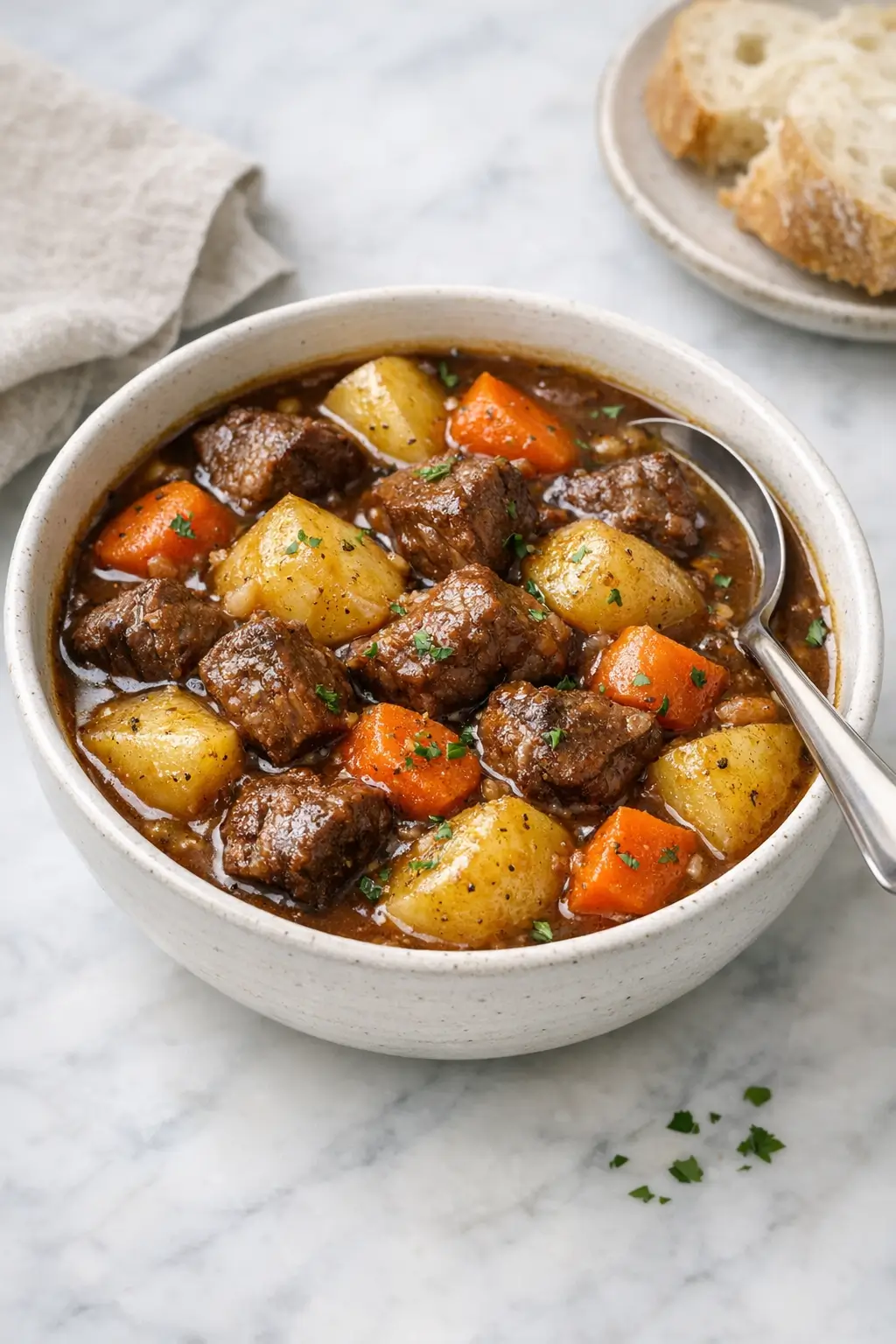
This cozy beef stew should have a glossy, medium-thick gravy that coats the back of a spoon but still eats like a soup rather than a pot roast.
The beef will be tender enough to cut with a spoon, though some pieces may still hold a bit more chew depending on the exact cut and marbling.
Carrots become sweet and soft without disintegrating if cut into larger chunks, and potatoes may shed a little starch into the broth, which is helpful for body.
Onions and celery largely melt into the sauce, giving you flavor without obvious pieces.
Flavor-wise, expect a balance of savory broth, gentle acidity from tomato paste and wine, and soft sweetness from the carrots and onions.
Low-sodium broth and careful salting let you adjust seasoning at the end without accidentally pushing it too far.
Different beef brands will vary in richness; fattier chuck will give a silkier mouthfeel, while leaner stew meat may produce a slightly lighter body.
Kitchen note: If your beef is still chewy after the stated time, don’t panic or crank up the heat. Keep the stew at a gentle simmer, cover, and give it another 20–30 minutes; collagen needs time, not higher temperature, to break down.
Ways to Change It Up
-
Simple vegetarian-style version.
Skip the beef and double the potatoes and carrots, adding 200 g / 7 oz mushrooms for meaty texture.
Use vegetable broth instead of beef.
You’ll lose the gelatin-rich body from beef, so consider stirring in 1–2 tbsp butter or olive oil at the end for richness, or serving over polenta. -
Beef stew with more or less heat.
For a spicier take, add ¼–½ tsp crushed red pepper flakes with the garlic and tomato paste.
Smoky paprika or chipotle powder also works well; start with ½ tsp and increase to taste.
For a very mild stew, simply omit pepper flakes, use sweet paprika only, and lean on thyme and parsley for warmth without spice. -
Hands-off, slightly faster version.
To streamline, cut the beef into slightly smaller chunks (about 2.5 cm / 1 in) and cook the entire stew on the stovetop at the gentlest simmer you can manage.
The meat will become tender a bit sooner, often around the 1½-hour mark.
You’ll still want to add the carrots and potatoes partway through so they don’t overcook, but you save time by skipping the oven transfer. -
Extra-vegetable variation.
If you have parsnips, turnips, or frozen peas, you can fold small amounts into the finished stew.
Add firm root vegetables along with the carrots and potatoes.
Stir peas in during the last 5 minutes so they stay bright.
Just be aware that every extra vegetable slightly changes the flavor balance and can thin the stew as they release moisture.
Serving and Storage
Serve this beef stew in warm bowls so the gravy doesn’t thicken too quickly on contact with a cold surface.
A slice of crusty bread, a scoop of mashed potatoes, or a spoonful of buttered egg noodles all work well to stretch the meal.
For something lighter, a simple green salad with a sharp vinaigrette helps cut through the richness.
The stew also sits well on low heat for 15–20 minutes if someone is running late; just add a splash of water if it tightens up.
Leftovers often taste even better the next day as the flavors meld.
Cool leftovers to room temperature within an hour or so, then refrigerate in a covered container for up to 4 days.
For longer storage, freeze in portioned containers for up to 3 months.
Thaw overnight in the fridge when possible.
Reheat gently on the stovetop over low to medium-low heat, adding a little water or broth if the stew has thickened in the fridge.
Cultural Context
Stews that combine beef with root vegetables and potatoes appear in many cuisines, but in North American home cooking this style often reads as a general “beef stew” rather than a region-specific dish.
Historically, stewing has been a way to make tougher cuts of meat tender by cooking them slowly in liquid, a technique documented in sources as far back as ancient Roman cookery.
Food historians note that adding potatoes and carrots to meat stews became common after these crops spread widely in Europe and the Americas.
Dishes like Irish stew and various French wine-based stews show related ideas of simmering inexpensive cuts with hardy vegetables over low heat.
For a broader look at how stews developed across cultures, see this overview of stews on Encyclopedia.com and this article on the history of beef stew from Back Then History.
Common Questions and Troubleshooting
My stew came out too thin. How can I fix it?
If the flavor is good but the liquid feels more like soup, simmer the stew uncovered over medium-low heat, stirring often, until it reduces to your preferred thickness.
You can also mash a few potato pieces against the side of the pot to release starch and lightly thicken the gravy.
If you prefer using a slurry, whisk 1 tsp cornstarch with 2 tsp cold water, stir it into the simmering stew, and cook for 2–3 minutes.
The beef is still tough after 2 hours. What went wrong?
Usually this means it just needs more time.
Collagen in chuck breaks down slowly, and some pieces are naturally more stubborn.
Keep the stew at a gentle simmer, cover it again, and check every 20 minutes; once the collagen melts, the texture will shift quickly from chewy to tender.
Avoid boiling, which can tighten the meat fibers and delay softening.
Can I make this ahead or use it for meal prep?
Yes, this stew keeps and reheats very well.
Cook it fully, cool, and refrigerate.
On day two, scrape off any solid fat on top if you prefer a leaner meal, then reheat on the stovetop over low heat until piping hot.
You may want to add a splash of water or broth to loosen the texture.
What if I don’t cook with wine?
You can replace the red wine with the same volume of beef or vegetable broth.
To mimic a bit of the brightness wine brings, add 1–2 tsp balsamic or red wine vinegar at the end of cooking, tasting as you go.
Give the stew a few minutes to simmer after adding any vinegar so the flavors integrate.
Can I use a slow cooker instead?
You can adapt this by searing the beef and sautéing the aromatics in a pan, then transferring everything to a slow cooker with the liquids and vegetables.
Cook on low for 7–8 hours or high for about 4–5 hours, until the beef is tender and the potatoes are soft.
If the liquid seems thin at the end, remove the lid and cook on high for another 20–30 minutes to reduce slightly.
Kitchen note: In a slow cooker, cut the potatoes a bit larger so they don’t over-soften, and resist lifting the lid too often—every peek can add 20–30 minutes to the total cook time.
Conclusion
This cozy beef stew with potatoes and carrots is meant to be a reliable, forgiving pot of food you can return to all winter.
Once you’ve made it once or twice, you’ll get a feel for how your own stove or oven behaves, and small adjustments to timing will become second nature.
If you try it, I’d value hearing how it went for you—what kind of beef you used, whether you added extra vegetables, or how your family liked it.
Feel free to leave a rating and share any tweaks or questions so other home cooks can benefit from your experience too.
Cozy Beef Stew with Potatoes and Carrots

Equipment
- Heavy Dutch oven (5–6 qt / 4.5–5.5 L) with lid
- Oven (optional, for braising)
- Cutting board
- Chef’s knife
- Measuring spoons
- Measuring cup
- Wooden spoon
- Paper towels
Ingredients
- 700 g beef chuck well-marbled; cut into 3 cm / 1 1/4 in chunks
- 1 1/4 tsp fine sea salt divided, plus more to taste
- 3/4 tsp freshly ground black pepper divided
- 2 tbsp neutral oil canola, vegetable, or light olive oil
- 1 medium yellow onion chopped (about 150 g)
- 2 cloves garlic minced
- 2 tbsp tomato paste
- 2 tbsp all-purpose flour
- 120 ml dry red wine or extra beef broth
- 480 ml low-sodium beef broth
- 240 ml water
- 1 tsp Worcestershire sauce optional
- 1 tsp sugar optional
- 1 bay leaf
- 1 tsp dried thyme or 2–3 sprigs fresh thyme
- 2 medium carrots peeled and cut into 2 cm / 3/4 in chunks on the diagonal (about 200 g)
- 350 g waxy or all-purpose potatoes Yukon gold or red; cut into 3 cm / 1 1/4 in chunks
- 1 stalk celery sliced (optional; about 60 g)
- 1–2 tbsp fresh parsley chopped, to finish (optional)
- additional salt and pepper to taste
Instructions
- Season and dry the beef. Pat the beef chunks dry with paper towels so they brown instead of steaming. Toss with 1 tsp salt and 1/2 tsp black pepper.
- Brown the meat in batches. Heat 1 tbsp oil in a heavy Dutch oven over medium-high heat until shimmering. Add about a third of the beef in a single layer and sear until deeply browned on at least two sides, about 6–8 minutes per batch. Transfer browned beef to a bowl and repeat with remaining oil and meat.
- Soften the aromatics. Lower heat to medium. Add chopped onion (and celery if using) with a pinch of salt and cook, stirring and scraping up browned bits, until onion is translucent and lightly golden, 5–7 minutes. Stir in garlic and cook until fragrant, about 30 seconds.
- Cook the tomato paste. Add tomato paste and stir to coat onions. Cook 1–2 minutes, stirring frequently, until the paste darkens slightly.
- Build a quick roux. Sprinkle flour over the vegetables and stir well. Cook 1–2 minutes, scraping the bottom, until no dry flour remains and the mixture looks thick and pasty.
- Deglaze with wine and add liquids. Pour in red wine (or extra broth), stirring and scraping as it bubbles. Simmer about 2 minutes to reduce slightly. Stir in beef broth, water, Worcestershire (if using), sugar, bay leaf, and thyme.
- Return the beef and bring to a simmer. Add browned beef and any accumulated juices back to the pot. Bring to a gentle simmer over medium heat (small bubbles, not a rolling boil).
- Slow-cook the beef until almost tender. Cover with a tight-fitting lid. Either move to a preheated 160–170°C / 325°F oven or keep on the stovetop over low heat. Cook 60–75 minutes, checking once or twice to ensure it stays at a gentle simmer.
- Add the carrots and potatoes. Stir in carrots and potatoes. Cover again and continue cooking until vegetables and beef are fully tender, another 35–45 minutes.
- Adjust thickness and seasoning. Remove bay leaf. If too thin, uncover and simmer 5–10 minutes to reduce; if too thick, add a splash of hot water or broth. Taste and season with remaining 1/4 tsp salt and 1/4 tsp pepper, adding more as needed.
- Finish with herbs and rest. Stir in chopped parsley (if using). Rest off heat, covered, for at least 10 minutes.
- Serve. Ladle into warm bowls and garnish with extra parsley or pepper if desired. Serve with crusty bread, noodles, or rice.



Leave a Reply