
Vegetable soup with beans is one of those rare fall recipes that feels like a warm hug but still behaves well in a busy kitchen. It works for Sunday meal prep, packed lunches, or a quick dinner when everyone is hungry at slightly different times.
If you’re racing in the door after work or juggling homework at the table, start by getting the onions, carrots, and celery chopped and into the pot first—they can soften while you open the cans of beans and tomatoes. If your stovetop runs hot, keep the heat at medium so the vegetables gently sweat instead of scorching.
This style of soup shows up in many cool-weather traditions, from European countryside cooking to everyday home kitchens in North America. It’s typically eaten for lunch or dinner, especially on chilly days from early fall through winter. Expect a lightly brothy but hearty bowl with tender beans, soft vegetables, and a clean tomato-herb flavor rather than heavy creaminess.
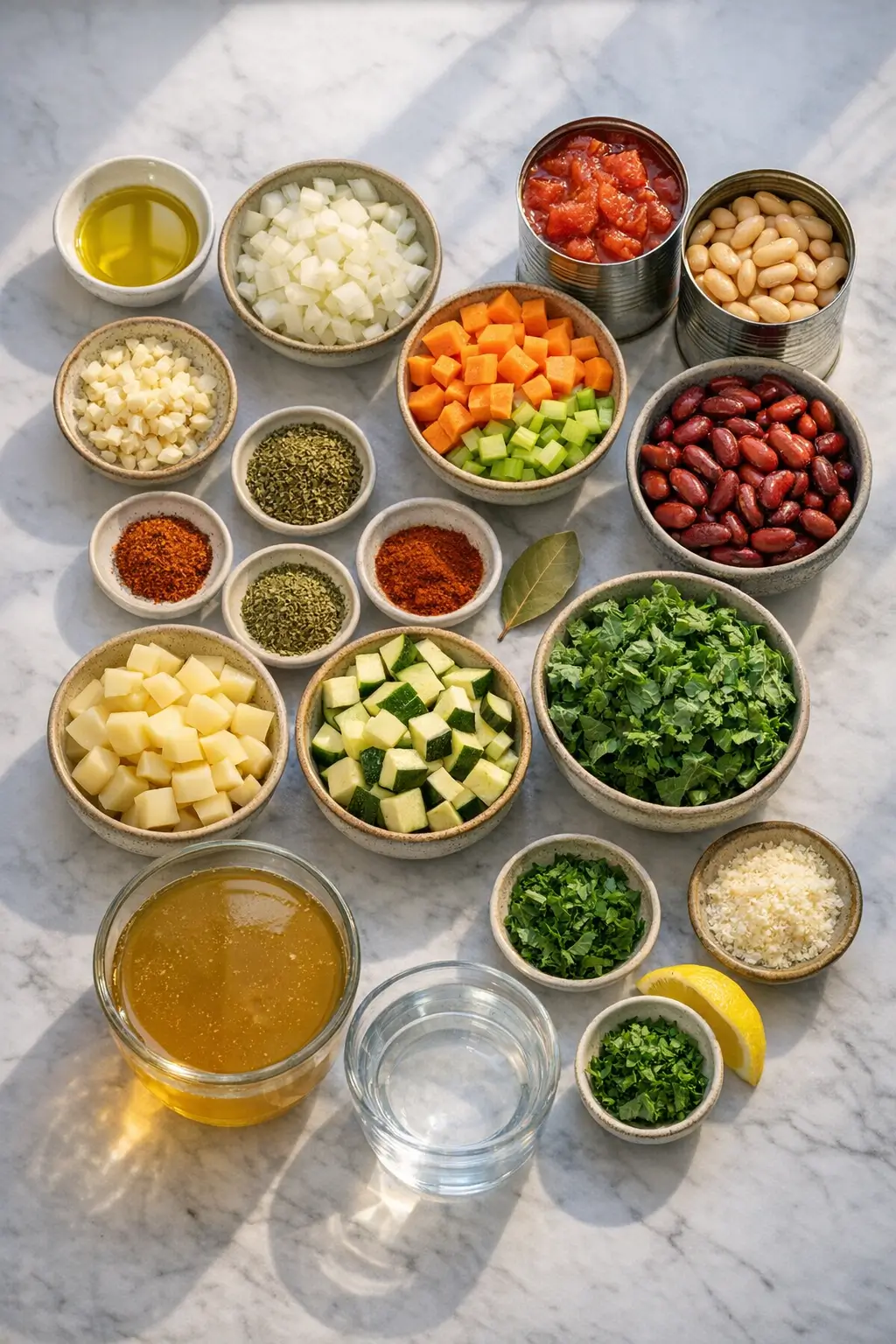
Ingredients
- 2 tbsp (30 ml) olive oil – for sautéing and flavor
- 1 medium yellow onion (about 200 g), diced
- 2 medium carrots (about 150 g), diced
- 2 celery stalks (about 100 g), diced
- 3 cloves garlic, minced
- 1 tsp dried oregano
- 1 tsp dried thyme
- 1 bay leaf
- 1/2 tsp smoked paprika (optional but adds gentle smokiness)
- 1/2 tsp fine sea salt, plus more to taste
- Freshly ground black pepper, to taste
- 1 medium waxy potato (about 200 g), diced – helps make the soup more filling
- 1 small zucchini (about 150 g), diced – adds light sweetness and texture
- 1 can (14.5 oz / 400 g) diced tomatoes, with juices
- 4 cups (1 liter) low-sodium vegetable broth
- 1 cup (240 ml) water – adjust for a thicker or thinner soup
- 1 can (15 oz / 425 g) cannellini or great northern beans, drained and rinsed
- 1 can (15 oz / 425 g) kidney or pinto beans, drained and rinsed
- 2 packed cups (about 60 g) chopped kale or baby spinach, thick stems removed
- 1–2 tsp red wine vinegar or lemon juice, to finish
- Optional garnish: 2 tbsp (8 g) chopped fresh parsley and freshly grated Parmesan, if not keeping the soup vegan
Substitutions:
- Onion: use 2 small shallots or 1 leek (white and light green parts) if that’s what you have.
- Potato: swap with 1/2 cup (90 g) small pasta like ditalini or elbow; cook directly in the soup, adding a bit more broth as needed.
- Zucchini: use chopped green beans, bell pepper, or extra carrots instead.
- Kale or spinach: chard or frozen spinach work; just squeeze excess water from frozen spinach before adding.
- Cannellini/kidney beans: any canned beans you like—chickpeas, navy beans, or black beans all behave well in this soup.
Step-by-Step Instructions for Vegetable Soup with Beans
-
Start the flavor base.
Heat the olive oil in a large heavy-bottomed pot over medium heat.
Add the diced onion, carrot, and celery with a pinch of salt.
Cook, stirring occasionally, for 6–8 minutes, until the onion is translucent and the vegetables are starting to soften without browning deeply. -
Bloom the aromatics.
Stir in the minced garlic, dried oregano, dried thyme, bay leaf, and smoked paprika.
Cook for 1 minute, stirring constantly, until the garlic smells fragrant and the spices darken slightly.
This step helps the soup taste rounded instead of flat. -
Add sturdier vegetables.
Tip in the diced potato and zucchini and stir to coat in the oil and spices.
Cook 2–3 minutes, just to start the cooking process and pick up flavor from the pot. -
Deglaze and add liquids.
Pour in the diced tomatoes with their juices, the vegetable broth, and the water.
Scrape the bottom of the pot with a wooden spoon to release any browned bits.
Bring the soup up to a gentle boil over medium-high heat. -
Simmer until the vegetables are just tender.
Once boiling, reduce the heat to a steady simmer.
Partially cover the pot and cook for 15–20 minutes, or until the potatoes are tender when pierced with the tip of a knife.
Check a couple of cubes; small differences in size and potato type can affect timing.
Kitchen note: If the soup seems to reduce too quickly or the vegetables are not yet tender, add 1/2 cup (120 ml) hot water, stir, and continue simmering—especially on powerful gas burners that evaporate liquid fast.
-
Add the beans.
Stir in the rinsed cannellini and kidney beans.
Taste the broth and season with another pinch of salt and several grinds of black pepper.
Keep the soup at a gentle simmer for 5–10 minutes so the beans warm through and share their starch with the broth. -
Finish with greens and acidity.
Add the chopped kale or spinach.
Simmer for 3–5 minutes, just until the greens soften but still look vibrant.
Remove the bay leaf.
Turn off the heat and stir in 1 teaspoon of red wine vinegar or lemon juice, then taste and add up to 1 teaspoon more if needed; you’re aiming for a bright, balanced finish. -
Adjust consistency and seasoning.
If the soup is thicker than you’d like for meal prep containers, loosen it with a splash of hot water or broth.
For a lightly creamier texture without dairy, mash a small scoop of potatoes and beans against the side of the pot and stir them back in.
Adjust salt and pepper once more; cooled soup will taste slightly less salty, so season until it tastes well-rounded but not salty. -
Cool for meal prep.
Let the soup stand uncovered off the heat for 15–20 minutes, then partially cover and cool until just warm before portioning into containers.
This helps prevent condensation from watering down the flavor.
Kitchen note: Avoid putting very hot soup into the fridge; it can warm up the entire fridge and slow cooling.
Let containers cool to room temperature (no more than 1–1.5 hours) before sealing and refrigerating.
What to Expect
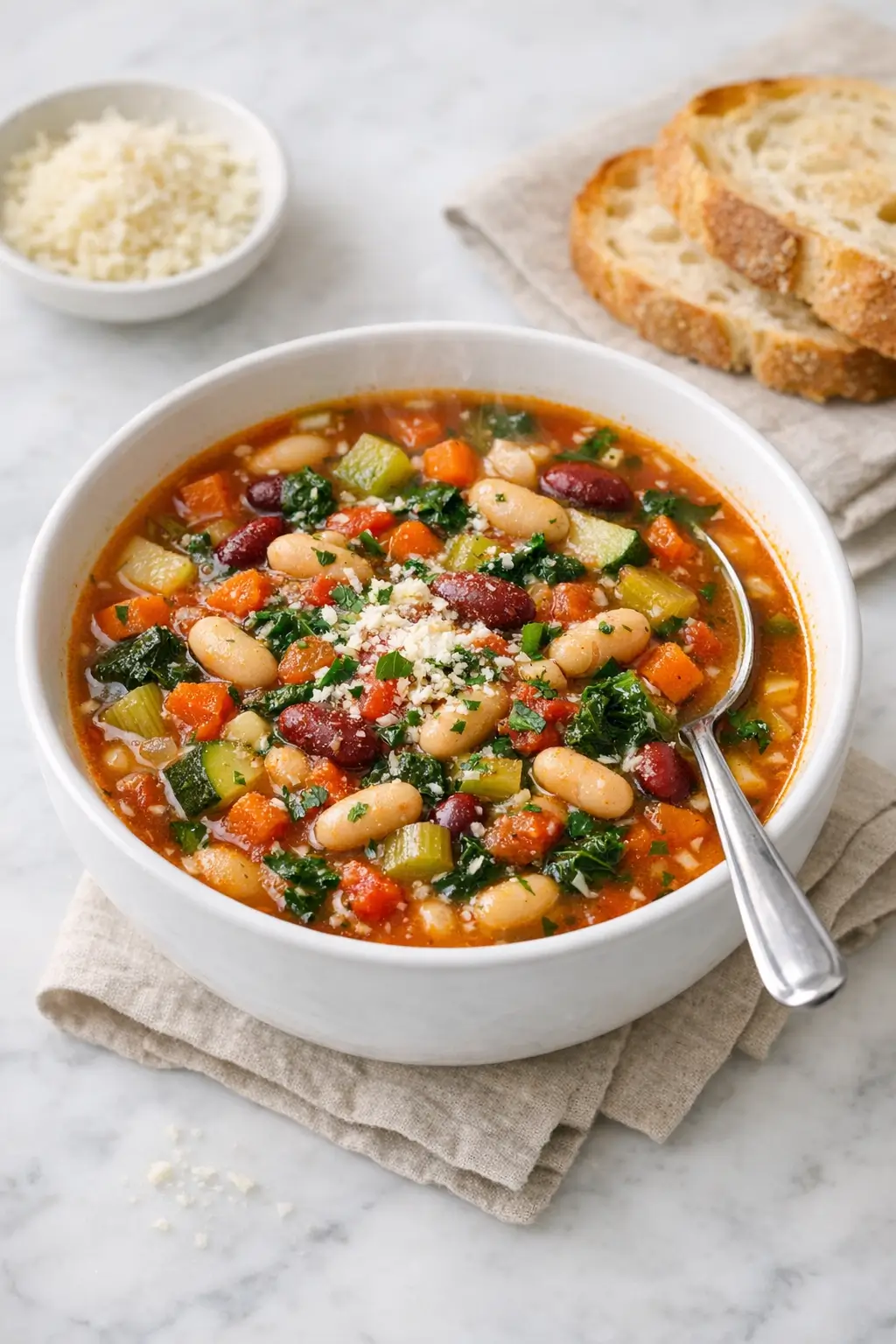
This vegetable soup with beans lands somewhere between brothy and hearty.
The broth is tomato-forward but not thick like pasta sauce, with small starch contributions from the potatoes and beans to give it a lightly silky feel.
Vegetables should be soft enough to eat with a spoon but not falling apart.
Flavor-wise, expect a clean, savory base from onion, garlic, and herbs with gentle smokiness if you used smoked paprika.
The tomatoes bring mild acidity, which is balanced by the beans and a small splash of vinegar at the end.
It’s satisfying but not heavy, which makes it good for lunches or a first course before a more substantial main.
Different broths and tomatoes can change the character noticeably.
A very low-sodium broth will need more salt and may taste flat until seasoned generously.
Richer boxed broths can make the soup taste almost stew-like.
Tomatoes packed in puree give a deeper color and more pronounced tomato flavor compared with tomatoes in light juice.
Ways to Change It Up
-
Make it fully vegan and extra hearty.
The base recipe is already meatless and easily vegan if you skip Parmesan.
For more body, stir in 2–3 tablespoons of nutritional yeast at the end for a light cheesy note, or add 1/2 cup (90 g) small pasta in place of the potato.
Keep an eye on the liquid level; pasta absorbs more broth. -
Cozy, spicier version.
Add 1/4–1/2 teaspoon red pepper flakes along with the dried herbs and increase smoked paprika up to 1 teaspoon.
You can also stir in a spoonful of chili crisp or harissa into individual bowls so different people can adjust the heat level. -
Very mild, kid-friendly version.
Skip the smoked paprika and red pepper flakes, and consider peeling the zucchini and carrots if you have very texture-sensitive eaters.
Slightly undercook the vegetables (by 2–3 minutes) so they hold their shape, and serve with grated cheese on top and some bread on the side to make the meal feel familiar. -
Faster pressure cooker method.
Use the sauté function to cook the aromatics as written, then add everything except the beans, greens, and vinegar.
Cook on high pressure for 4 minutes, quick-release, add the beans and greens, and simmer on sauté until the greens wilt.
Taste and finish with vinegar.
Kitchen note: When using an electric pressure cooker, avoid filling past the max line with brothy soups; beans and starchy vegetables can foam and need a bit of headroom.
Serving and Storage
This soup works best as a fall and winter main dish with something crunchy alongside.
Serve it with crusty bread, simple toast, or a quick green salad dressed with lemon and olive oil.
A sprinkle of Parmesan or a drizzle of good olive oil on each bowl right before serving turns it into a more complete-feeling meal.
For a fuller spread on a weekend, you can pair this with a basic grilled cheese, toasted pita, or baked potatoes.
Because the broth is not overly thick, it also reheats cleanly and doesn’t turn pasty, which is ideal for taking in a thermos or reheating at the office.
Cool leftovers completely, then store in airtight containers in the refrigerator for up to 4 days.
For longer storage, freeze in individual portions for up to 3 months.
Leave a little headspace in each container because the soup will expand as it freezes.
To reheat from the fridge, warm gently on the stovetop over medium-low heat, adding a splash of water or broth if it has thickened.
From frozen, thaw overnight in the refrigerator when possible, or reheat directly from frozen over low heat, covered, stirring occasionally.
Microwaving is fine; stir halfway through so the beans heat evenly without bursting.
Cultural Context
Vegetable soup with beans sits in a long line of bean-and-vegetable soups cooked in cooler months in many regions.
Dishes like Italian ribollita, which combines vegetables, beans, and bread, show how households have stretched simple ingredients into multiple meals over time.
You can read more about the background of ribollita in this overview from the Italian cuisine entry on Tuscan ribollita and its origins.
Across Europe and the Americas, bean-based soups and stews often served as practical ways to use seasonal vegetables and pantry staples.
Many traditions rely on beans for affordable protein, particularly in colder months when fresh produce choices narrow.
For a broader look at how vegetable soups appear around the world, see this general reference on vegetable soup styles and variations.
Common Questions and Troubleshooting
My soup tastes flat. What should I add?
First, check salt; under-seasoning is the most common issue.
Then adjust acidity by adding an extra splash of vinegar or lemon juice.
A small drizzle of olive oil at the end can also round out the flavor.
The vegetables got mushy. How can I avoid that next time?
Cut the potatoes and carrots into slightly larger pieces and start checking them a few minutes earlier than the recipe suggests.
Once they’re just tender, add the beans and greens and reduce the simmer time.
Remember that vegetables continue to soften a bit as the soup cools.
Can I use dried beans instead of canned?
Yes, but cook them separately until tender before adding them to the soup.
This prevents the vegetables from overcooking while you wait for beans to soften.
You’ll need about 1 1/2 cups (250 g) cooked beans to replace each can.
My beans are falling apart. Is that a problem?
Not necessarily—some people like the creamier texture.
To keep beans more intact, add them later in the simmer (around the last 5–8 minutes) and avoid a vigorous boil.
Gentle heat keeps the skins from bursting.
How can I make this work better for meal prep?
Cook the soup slightly under where you’d want it for serving the first day, especially the vegetables.
They’ll soften more as you reheat.
Store in shallow containers to help it chill faster and label with the date so you remember when it was made.
Kitchen note: If you plan to freeze most of the batch, consider leaving the greens out of the portion that goes into the freezer and adding fresh greens when you reheat—they can darken and soften more after long freezing.
Is it safe to leave the soup out to cool?
Let the soup cool until no longer steaming, but aim to get it into the refrigerator within about 1–1.5 hours.
If you’re making a large batch, transfer it into several smaller containers so it cools more quickly.
Conclusion
Vegetable soup with beans is a flexible, forgiving option for fall meal prep that uses simple pantry ingredients and a few fresh vegetables.
Once you’ve made it once or twice, it becomes easy to adjust the vegetables, beans, and seasonings based on what you already have.
If you try this version, consider leaving a comment or rating to share how it went in your kitchen.
I’m always interested in how home cooks adapt recipes to different stovetops, broths, and household tastes.
Feel free to note any swaps you made so other readers can benefit from your adjustments too.
Vegetable Soup with Beans for Easy Fall Prep

Equipment
- Large heavy-bottomed pot
- Wooden spoon
- Chef’s knife
- Cutting board
- Measuring cups and spoons
Ingredients
- 2 tbsp olive oil
- 1 medium yellow onion diced
- 2 medium carrots diced
- 2 celery stalks diced
- 3 cloves garlic minced
- 1 tsp dried oregano
- 1 tsp dried thyme
- 1 bay leaf
- 1/2 tsp smoked paprika optional
- 1/2 tsp fine sea salt plus more to taste
- freshly ground black pepper to taste
- 1 medium waxy potato diced
- 1 small zucchini diced
- 1 can diced tomatoes 14.5 oz / 400 g, with juices
- 4 cups low-sodium vegetable broth
- 1 cup water plus more as needed
- 1 can cannellini or great northern beans 15 oz / 425 g, drained and rinsed
- 1 can kidney or pinto beans 15 oz / 425 g, drained and rinsed
- 2 cups kale or baby spinach packed, chopped; thick stems removed
- 1-2 tsp red wine vinegar or lemon juice to finish
- 2 tbsp fresh parsley chopped, optional garnish
- freshly grated Parmesan optional garnish
Instructions
- Start the flavor base: Heat the olive oil in a large heavy-bottomed pot over medium heat. Add the diced onion, carrot, and celery with a pinch of salt. Cook, stirring occasionally, for 6–8 minutes, until the onion is translucent and the vegetables are starting to soften without browning deeply.
- Bloom the aromatics: Stir in the minced garlic, dried oregano, dried thyme, bay leaf, and smoked paprika. Cook for 1 minute, stirring constantly, until fragrant and the spices darken slightly.
- Add sturdier vegetables: Add the diced potato and zucchini and stir to coat in the oil and spices. Cook 2–3 minutes.
- Deglaze and add liquids: Add the diced tomatoes with their juices, vegetable broth, and water. Scrape the bottom of the pot to release any browned bits. Bring to a gentle boil over medium-high heat.
- Simmer until just tender: Reduce heat to a steady simmer. Partially cover and cook 15–20 minutes, or until potatoes are tender when pierced with a knife tip.
- Add the beans: Stir in the drained and rinsed cannellini (or great northern) beans and kidney (or pinto) beans. Taste and season with more salt and black pepper. Simmer gently 5–10 minutes to warm the beans through.
- Finish with greens and acidity: Add the chopped kale or spinach and simmer 3–5 minutes until wilted but still vibrant. Remove the bay leaf. Turn off the heat and stir in 1 teaspoon red wine vinegar or lemon juice, then taste and add up to 1 teaspoon more if needed.
- Adjust consistency and seasoning: If the soup is thicker than you’d like, loosen with a splash of hot water or broth. For a lightly creamier texture without dairy, mash a small scoop of potatoes and beans against the side of the pot and stir back in. Adjust salt and pepper.
- Cool for meal prep: Let the soup stand uncovered off the heat for 15–20 minutes, then cool until just warm before portioning into containers. Refrigerate within 1–1.5 hours.



Leave a Reply