
A good Father’s Day steak marinade with garlic and herbs should do two things very well: season the outside of the meat deeply, and help you hit tender, juicy results without babysitting the grill. This version leans on pantry staples (soy sauce and Worcestershire) plus fresh garlic and herbs for big flavor that feels special but is still forgiving if you’re juggling kids, guests, or an unfamiliar grill.
If you know it’ll be a busy Sunday, get the marinade mixed in the morning so the steak can quietly absorb flavor while you handle everything else. If you’re nervous about overcooking, plan to pull the steak off the heat a few degrees before your target doneness and let carryover heat finish the job.
Ingredients
Serves 3–4
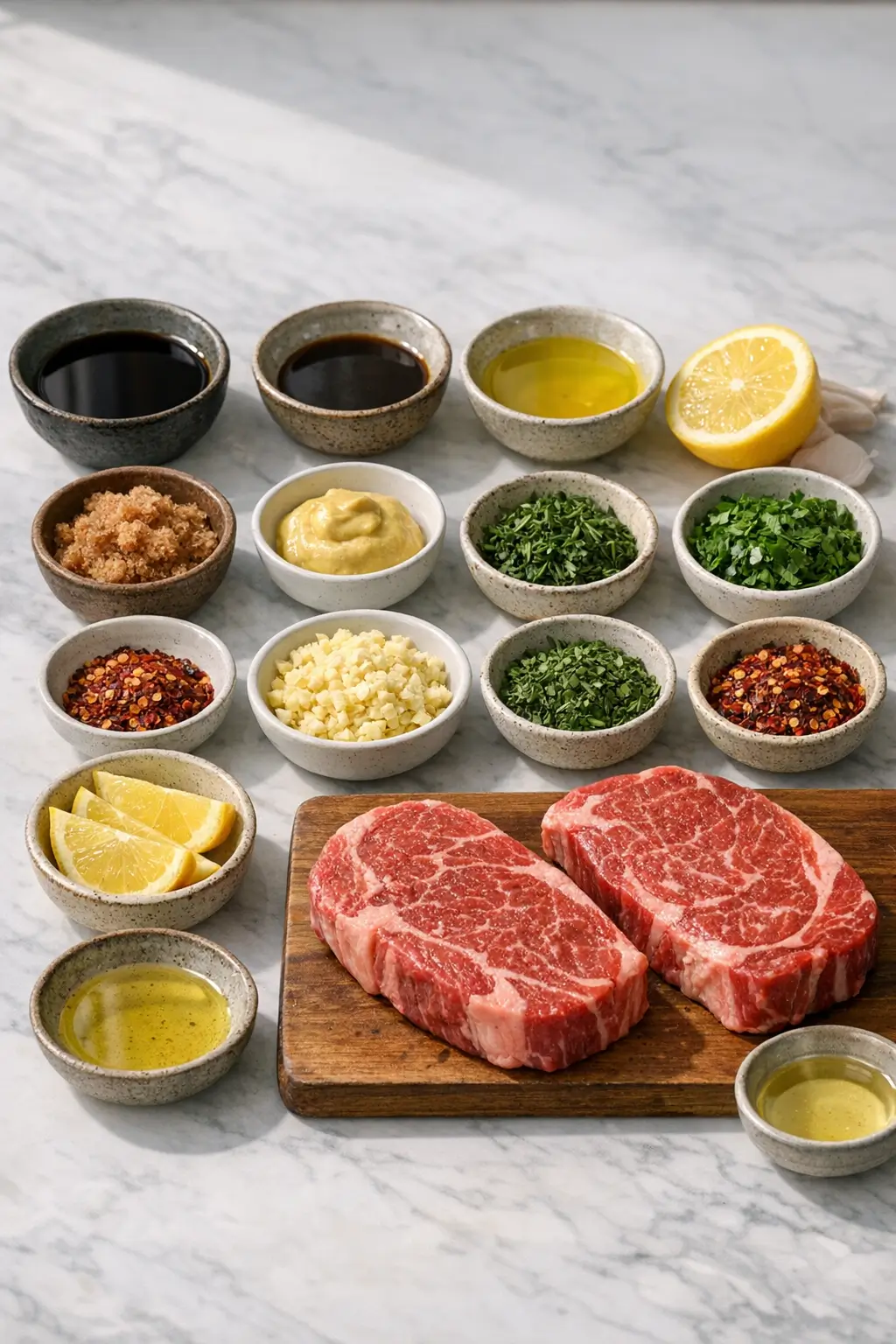
For the garlic and herb steak marinade
- 80 ml (1/3 cup) soy sauce – base seasoning and umami; use low-sodium if you’re salt‑sensitive
- 60 ml (1/4 cup) Worcestershire sauce – adds tang and depth
- 60 ml (1/4 cup) olive oil – helps carry fat‑soluble flavors and keeps the exterior from drying out
- 30 ml (2 tbsp) fresh lemon juice – gentle acidity for brightness and light tenderizing
- 15 ml (1 tbsp) Dijon mustard – helps the marinade cling and adds subtle sharpness
- 15 ml (1 tbsp) brown sugar, packed – balances salt and helps with browning
- 4 cloves garlic, finely minced (about 2 tbsp) – strong aromatic backbone
- 1 tbsp finely chopped fresh rosemary – classic steak herb; use 1 tsp dried rosemary if needed
- 1 tbsp finely chopped fresh thyme leaves – earthy flavor; use 1 tsp dried thyme if needed
- 2 tbsp finely chopped fresh flat‑leaf parsley – freshness and color
- 1/2 tsp freshly ground black pepper – gentle heat
- 1/4 tsp red pepper flakes – optional, for a mild kick
For the steak
- 680–900 g (1 1/2–2 lb) steak, about 2–4 individual steaks, 2.5–3 cm (1–1¼ inches) thick; ribeye, strip, sirloin, or flank all work
- 1–2 tsp neutral oil (for the grill grates or pan)
- Flaky sea salt, to finish (optional)
- Extra chopped parsley or rosemary, for serving (optional)
Kitchen note: If using very thin steaks (under 2 cm / 3/4 inch), shorten the marinating time so the surface doesn’t turn mushy from too much acid.
Step-by-Step Instructions for Father’s Day Steak Marinade with Garlic and Herbs
Mix the marinade.
In a medium bowl or measuring jug, whisk together the soy sauce, Worcestershire sauce, olive oil, lemon juice, Dijon mustard, brown sugar, minced garlic, rosemary, thyme, parsley, black pepper, and red pepper flakes (if using) until the sugar is mostly dissolved and the mixture looks emulsified.Prep the steak.
Pat the steaks dry on both sides with paper towels. This helps them sear instead of steaming. Trim thick pockets of hard outside fat if there are any, but leave most of the fat cap in place for flavor.Marinate the meat.
Place the steaks in a zip‑top bag or a shallow glass dish in a single layer as much as possible. Pour the marinade over the steaks, turning to coat all sides. Press out excess air if using a bag, seal, and massage gently so the marinade reaches all surfaces.Chill and marinate.
Refrigerate for at least 1 hour and up to 8 hours, turning the steaks once or twice if they aren’t fully submerged. For a classic Father’s Day schedule, late‑morning marinating for evening grilling works well (4–6 hours).
Kitchen note: Because this marinade contains both soy and Worcestershire, it seasons quickly. Longer than about 8 hours can make the exterior overly salty and a little too soft, especially on thinner cuts like flank steak.
Bring to room temperature.
About 30–45 minutes before cooking, remove the steaks from the fridge. Lift them from the marinade, letting excess drip off back into the dish. Discard the used marinade. Lay the steaks on a rack or plate and let them come a bit closer to room temperature for more even cooking.Preheat your cooking surface.
For grilling, heat a gas grill to medium‑high (about 230–260°C / 450–500°F). For charcoal, aim for a hot direct‑heat zone where you can only hold your hand 5–7 cm (2–3 inches) above the grate for 2–3 seconds. For stovetop, preheat a heavy cast‑iron or stainless skillet over medium‑high heat until very hot, then lightly oil the pan.Oil the grates or pan.
Just before the steaks go on, lightly oil the grill grates (use tongs and a folded oiled paper towel) or add 1–2 tsp neutral oil to the hot skillet. This step helps prevent sticking, especially where the herbs and garlic clung to the meat.Season lightly before cooking (optional).
If you used low‑sodium soy sauce, you may want to add a small pinch of salt to each side right before cooking. If you used regular soy, the marinade alone often provides enough salt, so skip extra unless you prefer a very seasoned crust.Sear the first side.
Place the steaks on the grill or in the pan, laying them away from you. Cook without moving them for 3–4 minutes for medium‑rare on a 2.5–3 cm (1–1¼ inch) steak. You’re looking for a deep brown crust with some char around the edges.Flip and monitor internal temperature.
Flip the steaks and cook another 3–4 minutes on the second side, then begin checking the internal temperature with an instant‑read thermometer:- 49–52°C (120–125°F): rare
- 54–57°C (130–135°F): medium‑rare
- 60–63°C (140–145°F): medium
- 66–68°C (150–155°F): medium‑well
Kitchen note: Pull the steak off the heat 2–3°C (3–5°F) before your goal temperature. Carryover cooking during resting will take it the rest of the way without drying the meat.
Adjust for thinner or thicker steaks.
For thinner steaks, reduce the searing time by 1–2 minutes per side and check early. For very thick steaks (over 4 cm / 1½ inches), sear 2–3 minutes per side, then move to indirect heat (or a 180°C / 350°F oven) to finish gently until the thermometer shows your target.Rest the steak.
Transfer cooked steaks to a warm plate or cutting board. Loosely tent with foil and rest for 5–10 minutes. Resting allows the juices to redistribute so they don’t all spill out when you slice.Slice and finish.
For strip, ribeye, or sirloin, you can serve steaks whole. For flank or other long‑grain cuts, slice thinly across the grain at a slight angle. Sprinkle with a pinch of flaky sea salt and a little extra chopped parsley or rosemary right before serving, if you like.
What to Expect
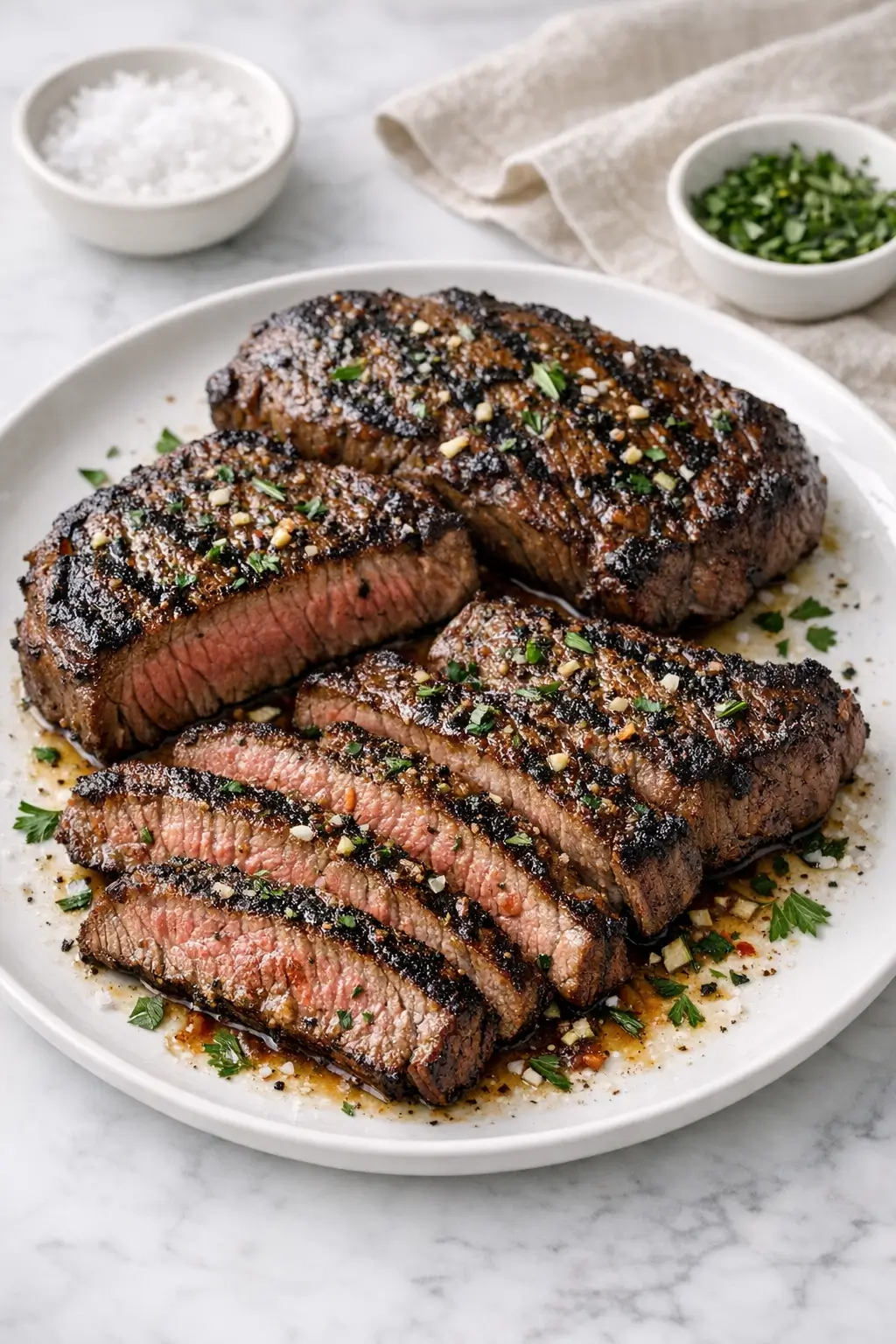
This Father’s Day steak marinade with garlic and herbs gives you a flavorful outer layer and a tender interior, especially on mid‑range cuts like sirloin or flank. The soy sauce and Worcestershire create a savory, almost steakhouse‑style crust when seared over high heat.
Garlic and fresh herbs come through clearly but do not completely hide the taste of the beef. The touch of lemon and brown sugar balances saltiness and adds a subtle tang and sweetness without making the steak taste “saucy” or like a glaze.
Different cuts and cooking methods will shift the final texture. Ribeye will be rich and ultra‑juicy with rendered fat, while flank can be pleasantly chewy but still tender if sliced thinly across the grain. Gas grills usually produce more even browning, while charcoal grills add a bit more smoky edge to the marinade flavors.
Kitchen note: If your steak comes out gray instead of browned, the heat was too low or the surface was too wet. Next time, dry the steaks more thoroughly and give the grill or pan extra time to preheat.
Ways to Change It Up
Herb‑forward, no‑soy version.
For those avoiding soy or wanting a lighter profile, replace the soy sauce with 80 ml (1/3 cup) beef stock plus an extra 1/2 tsp salt, and bump the fresh herbs up to 4 tbsp total. You’ll lose a bit of the deep umami, but gain a cleaner, more herb‑driven flavor.Bolder and spicier.
Increase red pepper flakes to 1 tsp, add 1 tsp smoked paprika, and swap half the lemon juice for 15 ml (1 tbsp) red wine vinegar. The steak will have more heat and a lightly smoky note, which works well if your Dad likes more assertive flavors.Milder, kid‑friendly version.
Reduce the garlic to 2 cloves, skip the red pepper flakes, and increase the brown sugar to 2 tbsp. The result is a slightly sweeter, gentler marinade that still tastes like garlic and herbs but won’t overwhelm younger palates.Make‑ahead freezer option.
Add the steak and marinade to a freezer bag, squeeze out air, seal, and freeze flat for up to 2 months. Thaw overnight in the refrigerator before cooking. Because the steak marinates as it defrosts, cut the original marinating window to about 2–4 hours after it’s fully thawed.Grill‑pan or oven broiler only.
If you don’t have outdoor space, this marinade still works well under a broiler or in a ripping hot cast‑iron pan. The sugars and soy will help mimic those grill marks and caramelized edges.
Serving and Storage
This steak is at its best right after resting and slicing, served warm. For a Father’s Day spread, pair it with simply grilled vegetables, a green salad, or a starchy side like roasted potatoes or corn on the cob.
Leftovers make good use of every slice. Chill any remaining steak within 2 hours of cooking, storing it in an airtight container in the refrigerator for up to 3 days. For food safety, don’t reuse leftover marinade; discard it once the raw meat has been removed.
To reheat, aim to warm the steak gently rather than cook it further. Let slices come to room temperature for 15–20 minutes, or briefly warm them in a covered skillet over very low heat with a splash of water or stock until just heated through.
Cold leftover steak can also be sliced thin and added to salads or grain bowls where a slight chew is an asset rather than a flaw. Avoid microwaving on high power, which tends to turn well‑cooked edges tough and rubbery.
Cultural Context
Grilled steak has become a common centerpiece of Father’s Day meals in the United States, reflecting the holiday’s association with outdoor cooking and casual family gatherings. Surveys of American consumers have consistently shown steak as a popular choice for celebrating fathers around the grill.
Marinating meat, however, is a much older technique that predates modern holidays. Culinary historians trace marinades back to early preservation methods using brine, vinegar, and herbs to both flavor and help protect meat before cooking. Over time, that practice evolved into today’s oil‑and acid‑based mixtures designed mainly for taste and tenderness, rather than long‑term storage.
If you’re curious about the broader history and purpose of marinades, the food industry journal Prepared Foods explains how modern marinades balance acid, oil, and aromatics to season meat and adjust texture in a controlled way (overview of marinade functionality). For a shorter historical look at how the term itself developed from early brining practices, The Old Foodie provides a concise summary of marinade origins (brief history of the marinade).
Common Questions and Troubleshooting
My steak tasted too salty. What should I adjust next time?
First, confirm whether you used regular or low‑sodium soy sauce. With regular soy, you can reduce the soy sauce to 60 ml (1/4 cup) and add 20 ml (4 tsp) water to keep the liquid volume similar. You can also shorten the marinating time to 1–3 hours for thinner cuts.
The outside burned before the inside was done. How do I fix that?
This usually means the heat was too high or the grate was too close to the coals. Next time, create a two‑zone fire on a charcoal grill (one hot side, one cooler) or dial a gas grill back to medium once you get good sear marks, then move the steak to indirect heat to finish cooking more gently.
Kitchen note: If flare‑ups from dripping fat are scorching the exterior, keep a cooler zone ready and move the steak temporarily until the flames die down rather than dousing the grill.
Can I use dried herbs and garlic powder instead of fresh?
Yes, but adjust the amounts. Use 1 tsp dried rosemary, 1 tsp dried thyme, and 1 tsp dried parsley flakes in place of the fresh herbs. Swap the fresh garlic for 1 1/2 tsp garlic powder, whisking it well so it doesn’t clump. The flavor will be slightly less bright but more consistent and pantry‑friendly.
Is it okay to marinate overnight?
For thicker steaks over 3 cm (1¼ inches), an overnight marinate of 8–12 hours can work, but you may want to cut the lemon juice in half to prevent the surface from becoming too soft. For standard 2.5 cm (1 inch) steaks, sticking to 2–6 hours gives a good balance of flavor and texture.
How do I know when to stop cooking if I don’t have a thermometer?
Use both time and the touch test as backup. On a hot grill, a 2.5–3 cm (1–1¼ inch) steak will usually reach medium‑rare in about 6–8 minutes total, turning once. Press the center with a finger or tongs: it should feel similar to the fleshy part at the base of your thumb when you touch your thumb and middle finger together.
Can I reuse the marinade as a sauce if I boil it?
Technically, you can boil leftover marinade for several minutes to kill bacteria, but the flavor can become harsh and overly salty. For a safer and better‑tasting option, set aside a small portion of fresh marinade in a separate bowl before adding the raw meat, then reduce that reserved amount briefly in a pan if you want a drizzle for serving.
Conclusion
This Father’s Day steak marinade with garlic and herbs is designed to be practical for a crowded grill and a busy schedule while still delivering a steak that feels like a treat. With a handful of pantry ingredients and some fresh herbs, you get a flexible base that works on ribeye, strip, sirloin, or flank without demanding restaurant‑level technique.
Use the timing ranges and temperature cues as a guide, then adjust to your own grill, pan, and preferred doneness. When you try it, share how long you marinated, which cut of steak you used, and any tweaks you made so other readers can benefit from your version in the comments and ratings.
Father’s Day Steak Marinade with Garlic and Herbs

Equipment
- Medium bowl or measuring jug
- Whisk
- Zip-top bag or shallow glass dish
- Paper towels
- Grill or heavy skillet (cast-iron or stainless)
- Tongs
- Instant-read thermometer
- Rack or plate
Ingredients
For the garlic and herb steak marinade
- 80 ml soy sauce about 1/3 cup; use low-sodium if desired
- 60 ml Worcestershire sauce about 1/4 cup
- 60 ml olive oil about 1/4 cup
- 30 ml fresh lemon juice about 2 tbsp
- 15 ml Dijon mustard about 1 tbsp
- 15 ml brown sugar packed; about 1 tbsp
- 4 cloves garlic finely minced (about 2 tbsp)
- 1 tbsp fresh rosemary finely chopped (or 1 tsp dried)
- 1 tbsp fresh thyme leaves finely chopped (or 1 tsp dried)
- 2 tbsp fresh flat-leaf parsley finely chopped
- 1/2 tsp freshly ground black pepper
- 1/4 tsp red pepper flakes optional
For the steak
- 680–900 g steak about 1 1/2–2 lb; 2–4 steaks, 2.5–3 cm (1–1 1/4 inches) thick; ribeye, strip, sirloin, or flank
- 1–2 tsp neutral oil for the grill grates or pan
- flaky sea salt to finish (optional)
- extra chopped parsley or rosemary for serving (optional)
Instructions
- Mix the marinade: In a medium bowl or measuring jug, whisk together the soy sauce, Worcestershire sauce, olive oil, lemon juice, Dijon mustard, brown sugar, minced garlic, rosemary, thyme, parsley, black pepper, and red pepper flakes (if using) until the sugar is mostly dissolved and the mixture looks emulsified.
- Prep the steak: Pat the steaks dry on both sides with paper towels. Trim thick pockets of hard outside fat if there are any, but leave most of the fat cap in place for flavor.
- Marinate the meat: Place the steaks in a zip-top bag or shallow glass dish in as close to a single layer as possible. Pour the marinade over the steaks, turning to coat all sides. Press out excess air if using a bag, seal, and massage gently so the marinade reaches all surfaces.
- Chill and marinate: Refrigerate for at least 1 hour and up to 8 hours, turning the steaks once or twice if they aren’t fully submerged.
- Bring to room temperature: 30–45 minutes before cooking, remove steaks from the fridge. Lift from the marinade (letting excess drip off) and discard the used marinade. Lay steaks on a rack or plate to take the chill off for more even cooking.
- Preheat your cooking surface: Heat a gas grill to medium-high (about 230–260°C / 450–500°F), prepare a hot direct-heat zone on charcoal, or preheat a heavy cast-iron or stainless skillet over medium-high until very hot.
- Oil the grates or pan: Lightly oil grill grates (with tongs and a folded oiled paper towel) or add 1–2 tsp neutral oil to the hot skillet to prevent sticking.
- Season lightly before cooking (optional): If you used low-sodium soy sauce, add a small pinch of salt to each side right before cooking; if you used regular soy, you may not need extra salt.
- Sear the first side: Place steaks on the grill or in the pan and cook without moving for 3–4 minutes for medium-rare on a 2.5–3 cm (1–1¼ inch) steak, aiming for a deep brown crust.
- Flip and monitor internal temperature: Flip and cook another 3–4 minutes, then begin checking with an instant-read thermometer (49–52°C / 120–125°F rare; 54–57°C / 130–135°F medium-rare; 60–63°C / 140–145°F medium; 66–68°C / 150–155°F medium-well). Pull the steak 2–3°C (3–5°F) before your target temperature for carryover cooking.
- Adjust for thinner or thicker steaks: For thinner steaks, reduce searing time by 1–2 minutes per side and check early. For very thick steaks (over 4 cm / 1½ inches), sear 2–3 minutes per side, then move to indirect heat (or a 180°C / 350°F oven) to finish until the thermometer shows your target.
- Rest the steak: Transfer cooked steaks to a warm plate or cutting board. Loosely tent with foil and rest 5–10 minutes.
- Slice and finish: Serve strip, ribeye, or sirloin whole if desired. For flank or long-grain cuts, slice thinly across the grain. Finish with flaky sea salt and extra chopped parsley or rosemary, if using.



Leave a Reply