
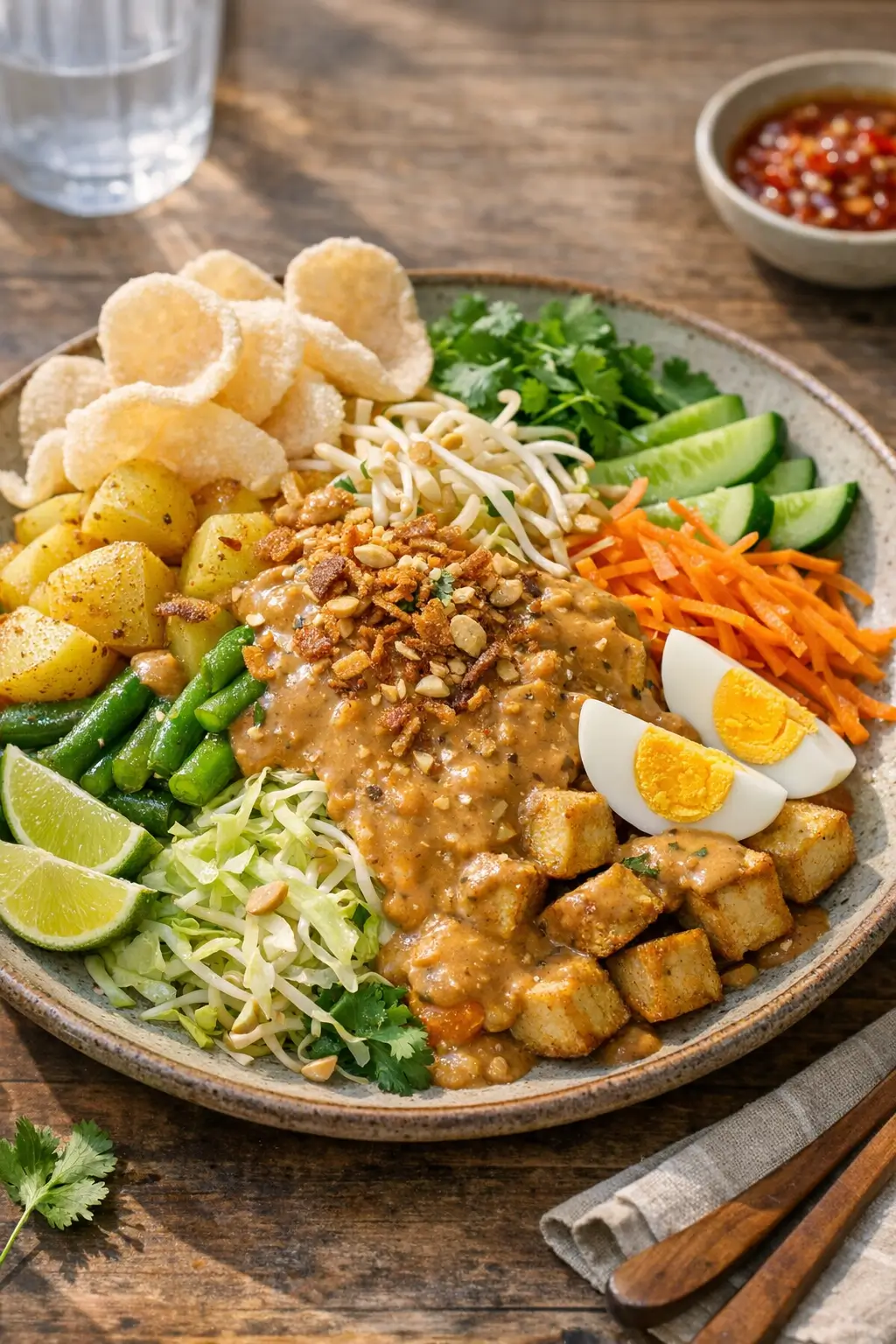
A warm-cool, colorful plate that eats like a meal, Indonesian gado-gado layers tender potatoes, crisp-tender beans, and fresh salad crunch under a savory-sweet peanut sauce. The appeal is immediate: rich, nutty dressing over vegetables you likely have, finished with hard‑boiled eggs and crackly toppings. If you’re moving fast tonight, start the potatoes first and make the peanut sauce while they simmer. Cooking for distracted kids or roommates? Keep the sauce just-spicy-enough and put extra chili on the table. Expect a mellow, creamy, tangy bowl that’s hearty without feeling heavy—perfect for a weeknight or a light weekend lunch. You’ll plate it warm or at room temperature, which is how gado-gado is commonly served across Indonesia.
Ingredients
- 450 g / 1 lb waxy potatoes (Yukon Gold), cut into 2.5 cm / 1 in chunks — adds warmth and substance
- 200 g / 7 oz green beans, trimmed and halved — bright, crisp-tender bite
- 150 g / 5 oz (about 2 cups) shredded green or Napa cabbage — cool crunch
- 120 g / 4 oz (about 2 cups) bean sprouts — juicy snap
- 1 small (200 g / 7 oz) cucumber, halved lengthwise and sliced — refreshing contrast
- 1 medium (100 g / 3.5 oz) carrot, shredded or ribboned — sweetness and color
- 3 to 4 large eggs — soft- to hard‑boiled, your choice
- 225 g / 8 oz firm tofu or tempeh, optional — pan-fried for extra protein
- 1 to 2 cups prawn crackers (kerupuk) or plain rice crackers — classic crunch
substitute: roasted peanuts or crispy fried onions if shellfish is an issue - 2 to 3 tbsp fried shallots — aromatic finish
substitute: store‑bought crispy onions - Lime wedges and fresh cilantro or Thai basil, optional — brightness at the end
Quick Peanut Sauce (no-cook or 2‑minute simmer)
- 120 g / 1/2 cup smooth peanut butter
- 120–180 ml / 1/2–3/4 cup warm water — to loosen to a pourable consistency
- 30 ml / 2 tbsp soy sauce — savory depth
substitute: use 1 tbsp soy + 1 tbsp kecap manis for a sweeter edge - 30 ml / 2 tbsp fresh lime juice — tang and balance
- 12 g / 1 tbsp brown sugar or finely grated palm sugar — gentle sweetness
- 2 garlic cloves, finely grated or minced
- 1–2 tsp sambal oelek or minced red chili — adjust heat to taste
- 1 tsp toasted sesame oil, optional — round, nutty finish

Kitchen note: Peanut sauce thickens as it cools and when it hits starchy vegetables. Keep extra warm water and a squeeze of lime handy to thin and brighten just before serving.
Step-by-Step Instructions for Indonesian Gado-Gado
- Cook the potatoes. Bring a medium pot of well‑salted water to a boil. Add the potato chunks and simmer until just tender when pierced with a knife, 8–12 minutes depending on size. They should hold their edges.
- Blanch the beans. In the last 2–3 minutes of the potato time, add the green beans to the same pot. Cook until bright green and crisp‑tender. Use a slotted spoon to lift potatoes and beans into a colander, rinse quickly under cool water, and drain well.
- Boil the eggs. In the now‑empty pot, cover the eggs with cold water and bring to a gentle boil. Lower to a simmer for 7 minutes for jammy centers or 9–10 minutes for fully set. Transfer to an ice bath for 5 minutes, then peel and quarter.
- Prep the raw vegetables. While the eggs cook, arrange the cabbage, bean sprouts, cucumber, and carrot on a large platter or individual bowls. Pat them dry with a clean towel so the sauce clings.
- Optional tofu or tempeh. Pat dry and cut into bite‑size pieces. Pan‑fry in 1–2 tbsp neutral oil over medium‑high heat until golden on multiple sides, about 5–7 minutes. Season lightly with salt. This adds satisfying chew and extra protein.
- Make the quick peanut sauce. In a bowl, whisk peanut butter with 1/2 cup warm water until smooth. Add soy sauce, lime juice, brown sugar, garlic, and chili. Whisk until glossy. Adjust with more warm water to the texture of warm heavy cream. Taste and balance: add a pinch more sugar for heat, another squeeze of lime for richness, or soy for salt.
- Optional 2‑minute simmer. For a mellower garlic bite and slightly thicker sauce, pour the sauce into a small pan and simmer 1–2 minutes over low heat, stirring. Do not boil hard or it may split.
- Assemble. Pile the potatoes and beans onto the platter with the raw vegetables. Tuck in the egg wedges and any fried tofu/tempeh. Spoon a generous amount of peanut sauce over everything; pass the rest at the table.
- Finish with crunch. Scatter fried shallots and prawn crackers (or roasted peanuts/crispy onions) over the top. Serve with lime wedges and fresh herbs if using.
Kitchen note: Sauce breaking or going oily? Whisk in 1–2 tbsp warm water off the heat until it comes back together. If it still looks dull, a quick squeeze of lime often fixes it.
What to Expect
The finished plate is intentionally mixed in temperature and texture: warm potatoes and beans meet cool, crisp cabbage, sprouts, and cucumber. The peanut sauce lands creamy but not pasty; it should flow and pool lightly without smothering.
Flavor is savory‑sweet first, then tangy with a gentle chili glow. Soy sauce and garlic provide backbone, while lime keeps the sauce from feeling heavy. Fried shallots and crackers add a lightly bitter, toasty crunch that balances the richness.
Different brands of peanut butter and soy sauce change the balance. Natural peanut butter may need extra sugar and salt; shelf‑stable brands are often sweeter. Some soy sauces are saltier—taste and adjust before dressing. If you used tempeh, expect a pleasant nutty bitterness that complements the sauce.
Kitchen note: If your potatoes taste flat, they were likely cooked in under‑salted water. Next time, salt the water so it tastes like a light soup; the seasoning carries into the potatoes.
Ways to Change It Up
- Vegan all the way: Omit eggs and prawn crackers. Load up on fried tofu and tempeh, and consider adding steamed broccoli or spinach. The sauce is already vegan as written. For a peanut‑free version, sunflower seed butter works with a slightly earthier finish; add an extra teaspoon of sugar and a touch more lime to balance.
- Spicier or milder: For more heat, swap sambal oelek for minced bird’s eye chili or add a spoon of chili crisp to the sauce. To dial it back, use just 1/2 tsp chili or none at all, then serve a small bowl of sambal at the table so heat lovers can adjust.
- Faster weeknight path: Use pre‑cooked vacuum‑packed potatoes or microwave cubed potatoes in a covered bowl with a splash of water for 5–7 minutes until tender. Buy pre‑shredded coleslaw mix for the cabbage and carrot. Pre‑boiled eggs from the deli case and bagged washed sprouts cut prep to minutes.
- Extra‑crisp tofu technique: If pan‑frying tofu, toss pieces with 1–2 tsp cornstarch before the skillet. It forms a delicate crust that holds sauce. For more step‑by‑step tofu texture tips, see the technique in Crispy Szechuan Tofu Stir-Fry in 25 Tasty Minutes and adapt the method, not the flavors.
Serving and Storage
Gado-gado is commonly eaten at room temperature. Serve it as a main dish salad or with steamed rice or sliced rice cakes if you want it extra hearty. Arrange components on a platter for family‑style eating and pass extra sauce so everyone can dress to taste.
For pairings, think light and fresh. A small side like Cucumber Salad That Stays Crunchy in 15 Minutes keeps the table crisp. For dessert, the creamy comfort of Mango Sticky Rice Made Easy: Creamy, Foolproof Dessert echoes Southeast Asian flavors without competing.
Store components separately for best texture. The peanut sauce keeps 4–5 days in an airtight jar in the refrigerator; thin with warm water and re‑season with lime before serving. Blanched vegetables keep 2–3 days; pat them dry before chilling to avoid waterlogging. Hard‑boiled eggs (peeled or unpeeled) hold up to 1 week. Fried tofu/tempeh is best day‑of but can be re‑crisped in a skillet with a tiny splash of oil.
Avoid tossing the entire salad in advance; the sauce will soften raw vegetables and mute the crunch of crackers and shallots.
Kitchen note: If you’re packing leftovers for lunch, keep sauce and crunchy toppings separate and add them just before eating. A tiny lime wedge in the container helps wake flavors up.
Cultural Context
Gado-gado is associated with Jakarta’s Betawi community and is sold widely across Indonesia by hawkers and in restaurants. The name is often explained as “mix‑mix,” reflecting how the dish combines cooked and raw elements on one plate. It’s typically served at room temperature with krupuk (crackers) or lontong (compressed rice cakes).
Two quick references if you’re curious about background rather than exact recipes: the concise overview on Wikipedia’s gado‑gado entry outlines the components and common variations, and The Jakarta Post reported in 2018 that gado‑gado was among five dishes promoted by the Ministry of Tourism as national foods of Indonesia (news coverage here). These are helpful starting points for understanding how widely the salad is enjoyed and adapted.
Common Questions and Troubleshooting
- My sauce is too thick. What now? Whisk in warm water 1 tablespoon at a time until it flows like warm heavy cream. Re‑taste; thinning can dull flavor, so add a pinch of sugar or a drop of soy and a squeeze of lime to rebalance.
- The sauce split and looks oily. How do I fix it? Take it off the heat if you warmed it. Whisk in a small splash of warm water until smooth. If it still looks broken, emulsify with a teaspoon of peanut butter and a squeeze of lime.
- Can I use natural peanut butter? Yes. Stir it very well before measuring. Because it’s less sweet and saltier, you’ll likely want a touch more sugar and possibly a splash more lime.
- How do I keep vegetables from getting soggy? Don’t over‑cook. Blanch beans briefly, then cool and dry. Pat raw vegetables dry before plating so the sauce clings instead of sliding off.
- I can’t find prawn crackers. What else works? Roasted peanuts, crispy fried shallots, or even crispy onions from the grocery store give the needed crunch. Rice crackers are a shellfish‑free stand‑in with a different but pleasant texture.
- Can I make it ahead? Yes—prep components up to a day in advance, but keep the sauce and crunchy elements separate until serving. Assemble just before eating.
- What if I want it milder for kids? Skip the chili in the main sauce and offer sambal on the side. You can also add an extra teaspoon of sugar and a bit more lime to keep the sauce lively without heat.
- Any good protein add‑ins? Fried tofu or tempeh are classic. Leftover roast chicken or poached shrimp work too; add after dressing so they don’t dry out.
Conclusion
This is a flexible, forgiving salad built around a great peanut sauce and a balance of textures. Keep the vegetables crisp, the potatoes just tender, and the dressing pourable and bright. If you make it, leave a comment with how you adjusted the heat, which vegetables you used, and any smart swaps you discovered—your notes help other home cooks get dinner on the table with confidence.
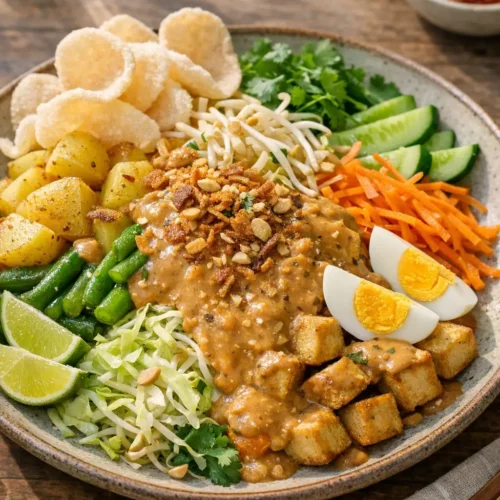
Indonesian Gado-Gado with Quick Peanut Sauce Tonight

Equipment
- Medium pot
- Colander
- Slotted spoon
- Mixing bowl
- Whisk
- Small skillet (optional, to pan-fry tofu/tempeh)
- Small saucepan (optional, to simmer sauce)
- Knife and cutting board
- Ice bath bowl
Ingredients
Gado-Gado
- 450 g waxy potatoes (Yukon Gold) cut into 2.5 cm / 1 in chunks
- 200 g green beans trimmed and halved
- 150 g green or Napa cabbage shredded (about 2 cups)
- 120 g bean sprouts about 2 cups
- 1 small cucumber halved lengthwise and sliced (about 200 g / 7 oz)
- 1 medium carrot shredded or ribboned (about 100 g / 3.5 oz)
- 3 to 4 large eggs soft- to hard-boiled, as desired
- 225 g firm tofu or tempeh optional; pan-fried
- 1 to 2 cups prawn crackers (kerupuk) or plain rice crackers for serving; substitute roasted peanuts or crispy fried onions if needed
- 2 to 3 tbsp fried shallots for serving; substitute store-bought crispy onions
- lime wedges optional, for serving
- fresh cilantro or Thai basil optional, for serving
Quick Peanut Sauce
- 120 g smooth peanut butter about 1/2 cup
- 120–180 ml warm water to loosen to a pourable consistency
- 30 ml soy sauce about 2 tbsp
- 30 ml fresh lime juice about 2 tbsp
- 12 g brown sugar or finely grated palm sugar about 1 tbsp
- 2 garlic cloves finely grated or minced
- 1–2 tsp sambal oelek or minced red chili to taste
- 1 tsp toasted sesame oil optional
Instructions
- Cook the potatoes. Bring a medium pot of well-salted water to a boil. Add the potato chunks and simmer until just tender when pierced with a knife, 8–12 minutes depending on size; they should hold their edges.
- Blanch the beans. In the last 2–3 minutes of the potato time, add the green beans to the same pot. Cook until bright green and crisp-tender. Use a slotted spoon to lift potatoes and beans into a colander, rinse quickly under cool water, and drain well.
- Boil the eggs. In the now-empty pot, cover the eggs with cold water and bring to a gentle boil. Lower to a simmer for 7 minutes for jammy centers or 9–10 minutes for fully set. Transfer to an ice bath for 5 minutes, then peel and quarter.
- Prep the raw vegetables. While the eggs cook, arrange the cabbage, bean sprouts, cucumber, and carrot on a large platter or individual bowls. Pat them dry with a clean towel so the sauce clings.
- Optional tofu or tempeh. Pat dry and cut into bite-size pieces. Pan-fry in 1–2 tbsp neutral oil over medium-high heat until golden on multiple sides, about 5–7 minutes. Season lightly with salt.
- Make the quick peanut sauce. In a bowl, whisk peanut butter with 1/2 cup warm water until smooth. Add soy sauce, lime juice, brown sugar, garlic, and chili. Whisk until glossy. Adjust with more warm water to the texture of warm heavy cream; taste and balance with more sugar, lime, or soy as needed.
- Optional 2-minute simmer. For a mellower garlic bite and slightly thicker sauce, pour the sauce into a small pan and simmer 1–2 minutes over low heat, stirring. Do not boil hard or it may split.
- Assemble. Pile the potatoes and beans onto the platter with the raw vegetables. Tuck in the egg wedges and any fried tofu/tempeh. Spoon a generous amount of peanut sauce over everything; pass the rest at the table.
- Finish with crunch. Scatter fried shallots and prawn crackers (or roasted peanuts/crispy onions) over the top. Serve with lime wedges and fresh herbs if using.



Leave a Reply