
Maple glazed sweet potato wedges are the fall side I make when I want something that reads “holiday” but still works on a Tuesday. You roast the wedges hard and hot first, then add maple at the end so it turns into a shiny glaze instead of burning on the pan.
Reader check-in: if you’ve got kids orbiting the oven and you’re short on bandwidth, line the pan with foil or parchment and use tongs to flip—less mess, fewer sticky fingers, faster cleanup. The first time I tested these, I added the maple too early and got a sheet pan that basically needed therapy. Don’t do that.
Ingredients
- Sweet potatoes (medium, orange-fleshed), scrubbed well: 700 g / 1 1/2 lb (about 2 medium)
- Olive oil: 30 ml / 2 tbsp
- Kosher salt: 3 g / 1/2 tsp, plus more to taste
- Black pepper: 1–2 g / about 1/2 tsp, to taste
- Pure maple syrup: 30 ml / 2 tbsp
- Finely grated lemon zest: 1/2 tsp (from 1 lemon)
Optional (but I use it often):
- Smoked paprika: 1/2 tsp (good if you’re serving anything porky)
- Flaky salt: a pinch, for the platter
Ingredient notes that matter:
- Pick sweet potatoes that are similar in thickness so the wedges finish at the same time.
- Use real maple syrup. Pancake syrup won’t reduce the same way, and it tastes like candle.
- Lemon zest isn’t “extra.” It keeps the whole thing from leaning cloying.
Step-by-Step maple glazed sweet potato wedges
-
Heat the oven and prep the pan. Set the oven to 220°C / 425°F. Put a rimmed sheet pan in the oven while it heats. (Hot pan = better browning.) Line it with foil or parchment if you want an easier cleanup.
-
Cut the wedges. Slice each sweet potato in half lengthwise, then cut each half into 4 wedges for a total of about 8 wedges per potato. Aim for roughly 2.5 cm / 1 inch at the thick end.
-
Oil and season. Toss wedges in a bowl with the olive oil, kosher salt, and black pepper (and smoked paprika if using) until everything looks evenly slicked.
-
Roast hard, first. Carefully pull out the hot pan, spread the wedges in a single layer, and roast 20 minutes.
-
Flip, then keep going. Use tongs to flip each wedge. Roast another 10 minutes.
One thing — don’t crowd the pan. If the wedges are touching, they steam and you’ll get soft edges. Use two pans if you have to.
-
Add maple at the right moment. Take the pan out and drizzle the maple syrup over the wedges. Toss gently right on the pan (tongs again), then spread them back out.
Important: maple goes on now, not earlier. On a 425°F pan, it’ll caramelize fast.
-
Finish roasting until glazed. Roast 5–10 minutes more, until the wedges are tender when pierced and the glaze looks thick and shiny. Timing depends on wedge size and how wet your sweet potatoes are.
-
Zest and serve. While the wedges are still hot, sprinkle over the lemon zest and a pinch of flaky salt if you’re into that. Give them 2 minutes to settle before moving to a platter—the glaze tightens up as it cools.
Heads up: if the glaze looks thin after the final roast, your wedges were probably a little crowded or the oven runs cool. Just spread them out and give them another 3–4 minutes.
What to Expect
You’ll get wedges that are tender and creamy in the middle with browned edges and a tacky maple sheen—not a crunchy fry situation, so don’t expect that. The flavor lands sweet-salty with a little bitterness from the caramelization, and the lemon zest keeps it bright. If your wedges are cut thicker, they’ll be more fluffy and less browned. Thin wedges brown faster but can go soft if you over-glaze.
Ways to Change It Up
-
Vegan? You’re already there. This version uses olive oil and maple syrup, so it’s naturally vegan.
-
I sometimes go savory-sweet: add 1 tsp Dijon mustard to the maple syrup and drizzle that on in step 6. It tastes more “grown-up,” and it’s nice with chicken or pork.
-
If you want a warm-spice direction, toss in 1/4 tsp cinnamon with the oil. Keep it subtle or it starts tasting like dessert.
Serving and Storage
Serve these with anything roasted or grilled: roast chicken, pork chops, sausages, or a simple lentil salad. If you’re building a fall dinner board, they’re great next to sautéed greens and something tangy like pickles.
Storage: cool completely, then refrigerate in an airtight container for up to 4 days.
Reheating: spread on a sheet pan and reheat at 205°C / 400°F for 8–12 minutes. The glaze won’t be as glossy and the edges won’t stay as crisp as day one, but they’ll still taste good. Microwave reheating works in a pinch, but it makes the outside soft.

Common Questions
Can I peel the sweet potatoes?
Sure, but I usually don’t. The skins help the wedges hold their shape and you get a little extra chew at the edges. If the skins are tough (some are), peel them.
Why are my wedges sticking to the pan?
Maple syrup is basically edible glue once it reduces. Line the pan, or at least make sure you’re using enough oil and flipping with a thin metal spatula/tongs. Also, don’t try to move them the second they come out—give it a minute and they release more easily.
Can I make these ahead for a holiday table?
You can roast them fully and reheat on a sheet pan at 400°F as above. Honest truth: the glaze gets a little less pretty, but it’s still a solid side. If you’re trying to time everything, roast up to step 5, hold at room temp for an hour or two, then glaze and finish right before serving.
Can I use honey instead of maple syrup?
Yes. It browns faster than maple, so watch the final 5–10 minutes like a hawk. Flavor-wise, it’s a bit more floral.
Are “yams” the same as sweet potatoes?
In most U.S. grocery stores, “yams” are usually orange-fleshed sweet potatoes. True yams are a different plant and look totally different.
A quick bit of context, since maple shows up everywhere in fall cooking: maple sugaring in North America has deep Indigenous roots, and it’s worth reading about beyond the pancake-bottle version of the story. I like the Smithsonian’s National Museum of American History object write-up on maple syrup production and history: Smithsonian National Museum of American History on maple syrup production history.
Sweet potatoes also have a long, global story. If you want a readable overview that’s more than “they’re orange,” this reference is useful: Encyclopedia.com overview of sweet potatoes.
Wrap-up-wise, this is the part I care about: roast first, glaze late. If you try the Dijon version, tell me what you served it with—I’m always looking for new pairings that aren’t just “more turkey.”
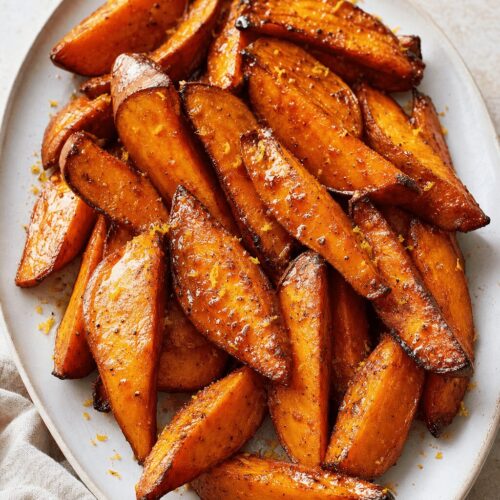
Maple Glazed Sweet Potato Wedges With Crisp Edges

Equipment
- Rimmed sheet pan
- Parchment paper or foil (optional)
- Mixing bowl
- Tongs
Ingredients
- 700 g sweet potatoes (medium, orange-fleshed), scrubbed well about 2 medium; 1 1/2 lb
- 30 ml olive oil 2 tbsp
- 3 g kosher salt 1/2 tsp, plus more to taste
- 1–2 g black pepper about 1/2 tsp, to taste
- 30 ml pure maple syrup 2 tbsp
- 1/2 tsp finely grated lemon zest from 1 lemon
Optional
- 1/2 tsp smoked paprika
- a pinch flaky salt for serving
Instructions
- Heat the oven and prep the pan. Set the oven to 220°C / 425°F. Put a rimmed sheet pan in the oven while it heats (hot pan = better browning). Line it with foil or parchment if you want easier cleanup.
- Cut the wedges. Slice each sweet potato in half lengthwise, then cut each half into 4 wedges (about 8 wedges per potato). Aim for roughly 2.5 cm / 1 inch at the thick end.
- Oil and season. Toss wedges in a bowl with the olive oil, kosher salt, and black pepper (and smoked paprika if using) until evenly coated.
- Roast hard, first. Carefully pull out the hot pan, spread the wedges in a single layer, and roast 20 minutes.
- Flip, then keep going. Use tongs to flip each wedge. Roast another 10 minutes. Don’t crowd the pan; use two pans if needed.
- Add maple at the right moment. Take the pan out and drizzle the maple syrup over the wedges. Toss gently on the pan (tongs), then spread them back out. Maple goes on now, not earlier.
- Finish roasting until glazed. Roast 5–10 minutes more, until tender when pierced and the glaze looks thick and shiny.
- Zest and serve. While the wedges are still hot, sprinkle over the lemon zest and a pinch of flaky salt if using. Rest 2 minutes before moving to a platter so the glaze tightens.



Leave a Reply