
Pumpkin Bread Pudding with Caramel Sauce is a spoon dessert: bread soaked in pumpkin custard, baked until the middle sets, then finished with warm caramel. Expect a soft center and browned bread tips, not the tidy crumb of a cake. I prefer a modest drizzle of sauce, with the rest passed at the table.
If you’re fitting dessert around dinner and kids’ bedtime, assemble the pudding the night before and refrigerate it. The bread can soak while you get on with everything else. This small batch serves four, and the homemade sauce cooks separately so you can make it ahead, too.
Ingredients
Serves: 4. Hands-on time: about 20 minutes. Soaking: 30 minutes. Baking: approximately 30–45 minutes. Resting: 10 minutes. Allow roughly 1 hour 30 minutes altogether; an overnight soak replaces the room-temperature soaking time.
You’ll need a roughly 1-quart / 1-liter baking dish, approximately 7 × 5 inches / 18 × 13 cm, a mixing bowl, whisk, and small heavy-bottomed stainless-steel saucepan. The baking window is an estimate for this reduced batch; start checking early rather than treating the timer as a promise.
For the pudding
- 6 ounces / 170 g day-old white bread, about 2⅔ cups cut into ¾-inch / 2 cm cubes. Choose a plain loaf with enough structure to survive soaking.
- 5 ounces / 142 g pumpkin puree, a scant ⅔ cup.
- 2 large eggs, approximately 100 g without shells.
- ⅔ cup / 160 ml half-and-half.
- ⅓ cup / 80 ml whole milk.
- ¼ cup / 50 g granulated sugar.
- 1 tablespoon plus 2 teaspoons / 24 g packed light brown sugar.
- 1 teaspoon / approximately 2 g pumpkin pie spice.
- ¾ teaspoon / 4 ml vanilla extract.
- A generous pinch of fine salt, approximately ⅙ teaspoon / 1 g.
- 1 teaspoon / 5 g softened butter, for greasing the dish.
The custard proportions follow a reduced pumpkin bread pudding formula, with a supermarket spice blend in place of individually measured spices. Brioche works instead of plain white bread; expect a richer, slightly sweeter pudding. Weigh the bread when possible because loosely piled cubes aren’t a reliable measure.
Buy pumpkin puree, not pumpkin pie filling. The filling already contains sweeteners and seasoning, which changes this custard. Homemade puree works if you drain excess moisture first; it should resemble the thick puree from a can.
For the caramel sauce
- ½ cup / 100 g granulated cane sugar.
- 3 tablespoons / 43 g unsalted butter, softened and cut into pieces.
- ¼ cup / 60 ml heavy cream, at room temperature.
- ¼ teaspoon / 1.5 g fine salt, or to taste.
This makes approximately ½ cup / 120 ml sauce, enough for four servings with some available for extra drizzling. Keep heavy cream here rather than substituting the pudding’s half-and-half; the sauce formula depends on that richer dairy.
Step-by-Step Pumpkin Bread Pudding with Caramel Sauce
- Prepare the dish and bread. Butter the baking dish, including its corners. Cut the bread into cubes and spread them inside without packing them down. Leave the crusts attached unless they’re exceptionally tough.
- Whisk the custard. Combine the eggs, pumpkin, half-and-half, milk, both sugars, spice, vanilla, and salt until evenly blended. Scrape the bowl’s bottom so no thick pumpkin pockets remain, then pour the mixture over the bread.
- Let the bread absorb it. Rest for 30 minutes, gently pressing exposed pieces into the liquid. Before baking, fold the mixture once to redistribute the custard. The soak matters: bread that’s wet outside but dry inside won’t give you an evenly tender pudding. Alternatively, cover and refrigerate for up to 24 hours.
- Bake until set. Heat the oven to 350°F / 175°C, with a rack in the middle. Bake for approximately 30–45 minutes, checking from 30 minutes because this batch is smaller than a full-size pudding. The surface should begin to brown, and a tester inserted into the center should emerge without liquid custard. A deeper dish or refrigerated mixture may need longer.
- Melt the sauce sugar. While the pudding bakes, put the sauce sugar in the saucepan over medium heat. Stir with a wooden spoon or heat-resistant spatula; it’ll clump before melting into an amber liquid. Watch the color, not a fixed number of minutes. Don’t let it become dark brown or smell scorched.
- Add butter, then cream. Carefully stir in the softened butter. Slowly pour in the room-temperature cream while stirring, then let the combined sauce boil for 1 minute. Remove from the heat and stir in the salt. Heads up: it bubbles vigorously when the dairy goes in, so keep your face and hands away from the steam.
- Rest before serving. Leave the pudding for 10 minutes after baking. Let the caramel cool slightly, too; it’ll thicken as it cools. Spoon the pudding into bowls and drizzle with sauce rather than soaking the entire dish in caramel. (Keep the sauce separate if you’re saving leftovers.)
What to Expect
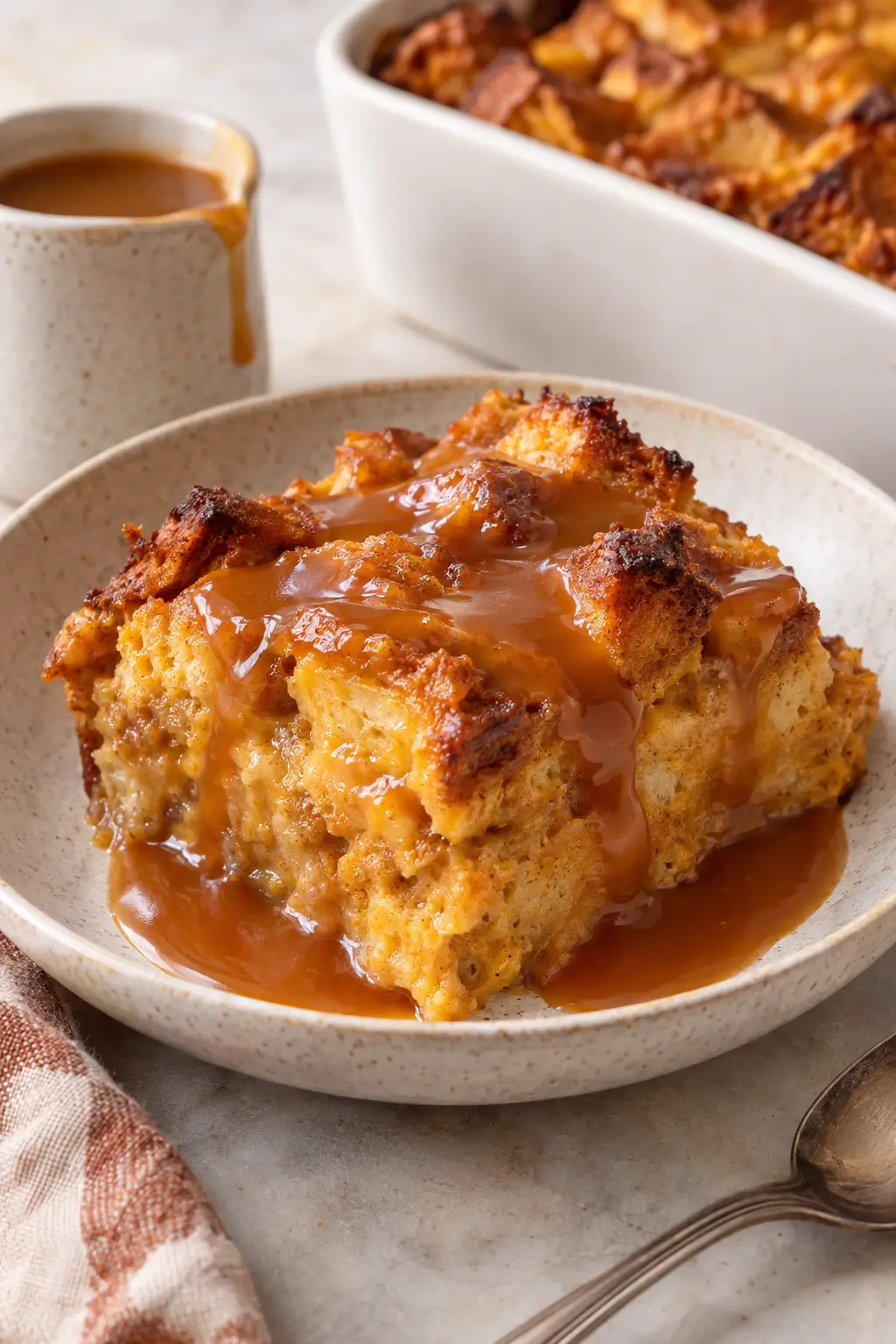
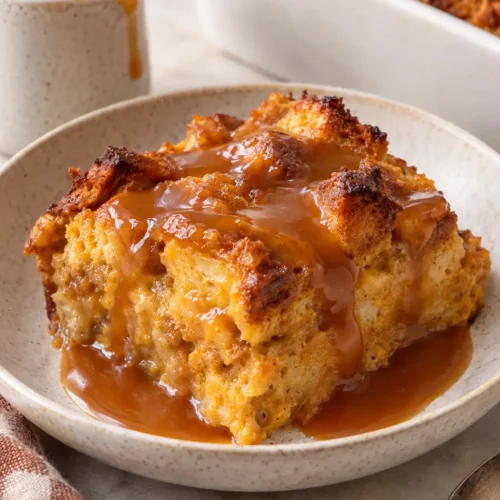
The pudding is orange-gold with an uneven top where bread corners poke through. Inside, the bread should be tender and custardy, with recognizable pieces rather than a completely smooth filling. Brioche makes a softer result; crusty white bread leaves more texture.
Pumpkin and warming spice lead, while caramel adds buttery sweetness and a little salt. It’s already sweet before the sauce. I wouldn’t add a thick caramel blanket—the contrast is better when you can still taste the pudding.
Ways to Change It Up
For a gluten-free adaptation, use the same weight of thick-cut gluten-free white bread. Check the other ingredient labels, too. The texture depends on the loaf, so choose one that holds together rather than an especially crumbly bread.
A little crystallized ginger makes a useful flavor change. Finely chop 1 tablespoon / approximately 10 g and scatter it over the finished pudding; it adds chewy, sharper ginger bites without changing the custard. Skip it if you’re serving people who dislike ginger’s heat.
The base recipe is vegetarian. I wouldn’t attempt a vegan version by simply removing the eggs: they’re part of the custard’s structure, and that would need a different formula.
Serving and Storage
Serve warm, with vanilla ice cream or lightly whipped cream if you want something cool alongside it. Coffee is my choice with this dessert; I’d keep the accompaniments simple rather than adding another sweet sauce.
Using yesterday’s bread isn’t a compromise here. The Food Timeline’s bread pudding history discusses the dish’s connection to using stale bread and documents how bread-based puddings vary across cuisines. That’s useful context for a dessert whose texture changes with the loaf you have.
Refrigerate leftover pudding in a covered shallow container within 2 hours, and eat it within 3–4 days. Freeze individual portions without sauce for up to 2 months for best quality, then thaw overnight in the refrigerator.
To reheat, cover a portion and microwave in short bursts, or use a 350°F / 175°C oven for approximately 10–15 minutes. Heat leftovers to 165°F / 74°C throughout; larger or colder portions take longer. The microwave softens the browned top, so use the oven if that texture matters to you.
Store cooled caramel separately in a sealed container in the refrigerator for up to 2 weeks. Warm it gently until pourable before serving; don’t mistake its cold thickness for a failed batch.
Common Questions
Can I assemble it the night before?
Yes. Cover the bread and custard and refrigerate for up to 24 hours, then gently redistribute the mixture before baking. Use a baking dish whose manufacturer permits the intended temperature change; don’t put cold glass directly into a hot oven unless it’s specifically safe to do so.
Why is the middle still wet?
A browned surface doesn’t mean the center has set. Keep baking if the tester brings up liquid custard, especially when the dish is deep or the pudding started cold. Next time, check the bread weight and use thick pumpkin puree rather than watery homemade puree.
Can I use fresh bread or leftover pumpkin bread?
Plain white bread or brioche can work even if it isn’t stale, although firmer bread is easier to handle during soaking. If you mean a sweet pumpkin quick bread, I’d save it for another dessert: these quantities are built around ordinary bread, not a moist cake-like loaf.
What if the caramel tastes bitter?
Start again if it tastes burnt. Extra cream won’t remove that flavor. On the next attempt, stop at amber and have the butter and cream measured beside the stove before heating the sugar; the color changes quickly near the end.
Can I skip making the sauce?
Absolutely. Use approximately ½ cup / 120 ml store-bought caramel sauce, warmed according to its label. I’d choose that shortcut over rushing a pan of hot sugar while dinner needs attention.
Give each bowl its own drizzle, then pass the sauce. If you’re reheating a portion tomorrow, keep that caramel separate until the pudding is hot—that’s the small detail I’d bother with.
Make-Ahead Pumpkin Bread Pudding with Caramel Sauce

Equipment
- 1-quart / 1-liter baking dish, approximately 7 × 5 inches
- Mixing bowl
- Whisk
- Small heavy-bottomed stainless-steel saucepan
- Wooden spoon or heat-resistant spatula
- Cake tester
Ingredients
For the pudding
- 6 oz day-old white bread 170 g; about 2⅔ cups, cut into ¾-inch / 2 cm cubes
- 5 oz pumpkin puree 142 g; a scant ⅔ cup; not pumpkin pie filling
- 2 large eggs approximately 100 g without shells
- 2/3 cup half-and-half 160 ml
- 1/3 cup whole milk 80 ml
- 1/4 cup granulated sugar 50 g
- 1 tablespoon plus 2 teaspoons light brown sugar packed; 24 g
- 1 teaspoon pumpkin pie spice approximately 2 g
- 3/4 teaspoon vanilla extract 4 ml
- 1/6 teaspoon fine salt a generous pinch; approximately 1 g
- 1 teaspoon butter softened; 5 g; for greasing the dish
For the caramel sauce
- 1/2 cup granulated cane sugar 100 g
- 3 tablespoons unsalted butter 43 g; softened and cut into pieces
- 1/4 cup heavy cream 60 ml; at room temperature
- 1/4 teaspoon fine salt 1.5 g; or to taste
Instructions
- Butter the baking dish, including its corners. Cut the bread into ¾-inch / 2 cm cubes and spread them inside without packing them down. Leave the crusts attached unless exceptionally tough.
- Whisk together the eggs, pumpkin, half-and-half, milk, both pudding sugars, pumpkin pie spice, vanilla, and pudding salt until evenly blended. Scrape the bowl’s bottom so no thick pumpkin pockets remain, then pour the custard over the bread.
- Let soak for 30 minutes, gently pressing exposed bread into the liquid. Before baking, fold the mixture once to redistribute the custard. Alternatively, cover and refrigerate for up to 24 hours. Use a baking dish suitable for the intended temperature change; do not put cold glass directly into a hot oven unless the manufacturer permits it.
- Heat the oven to 350°F / 175°C with a rack in the middle. Bake for approximately 30–45 minutes, checking from 30 minutes. The surface should begin to brown, and a tester inserted into the center should emerge without liquid custard. A deeper dish or refrigerated mixture may need longer.
- While the pudding bakes, put the caramel sauce sugar in the saucepan over medium heat. Stir with a wooden spoon or heat-resistant spatula; it will clump before melting into an amber liquid. Watch the color rather than a fixed time, and do not let it become dark brown or smell scorched.
- Carefully stir the softened unsalted butter into the melted sugar. Slowly pour in the room-temperature heavy cream while stirring, then let the combined sauce boil for 1 minute. Remove from the heat and stir in the sauce salt. The mixture bubbles vigorously when the dairy goes in, so keep your face and hands away from the steam.
- Rest the pudding for 10 minutes after baking. Let the caramel cool slightly; it will thicken as it cools. Spoon the pudding into bowls and drizzle with sauce, passing the remaining sauce separately. Keep the sauce separate when saving leftovers.



Leave a Reply