
Spatchcock turkey with dry brine is the method I recommend to anyone who’s nervous about roasting a whole bird. You cut out the backbone, press the turkey flat, salt it a day ahead, and it roasts in about 90 minutes. A whole bird done the usual way can take most of the afternoon.
Once it’s flat, the thighs and breast cook at nearly the same speed. That’s the whole trick.
If you’re juggling kids and a full fridge, salt the bird the night before and leave it alone. It doesn’t need anything from you until it goes in the oven. I switched to this after too many years of dry breast meat and thighs that were still pink at the bone.
Ingredients
First, a reality check. You can rarely find a whole turkey under about 10 lb, so this feeds 4 people with plenty of leftovers. Honestly, that’s half the reason to make it.
Turkey
- 1 whole turkey, 5.5–6.5 kg (12–14 lb), fully thawed, with the neck and giblets removed
A 10 lb bird works too. Just start checking the temperature sooner.
Dry brine
- 1/3 cup (about 45 g) kosher salt. I use Diamond Crystal.
- 2 tbsp baking powder, which dries the skin so it browns and crisps
- 2 tsp freshly ground black pepper
- Zest of 1 orange (optional, but it makes the drippings smell great)
Maple herb butter
- 1/4 cup (60 g) unsalted butter, softened
- 3 garlic cloves, minced
- 2 tbsp pure maple syrup. Pancake syrup is mostly corn syrup and burns faster. Don’t use it.
- 1 tbsp fresh rosemary, minced
- 1 tbsp fresh thyme, minced
- 1 tbsp fresh sage, minced (optional)
For the pan
- 2 onions, cut into thick wedges
- 3 large carrots, cut into chunks
- 4 celery stalks, cut into chunks
- 3/4 cup (180 ml) water
You’ll also need sturdy poultry shears, a rimmed baking sheet with a wire rack, a roasting pan or second sheet pan, and an instant-read thermometer. Don’t skip the thermometer. It’s the only reliable way to know when the bird is done.
Step-by-Step Spatchcock Turkey with Dry Brine
The name has an odd history. According to this Worldwide Words piece on the word spatchcock, the term appears in 18th- and 19th-century cookbooks and came back into use late in the 20th century. Where it came from is still debated. One theory says it’s Irish, a mash-up of “dispatch” and “cock.”
-
Cut out the backbone. Pat the turkey dry with paper towels. Set it breast side down with the tail toward you, then cut along one side of the backbone from tail to neck with your shears. Do the same on the other side and lift the backbone out. (The first time I did this, my shears were cheap and flimsy. I finished the job with a chef’s knife and a lot of swearing. Good shears are worth buying.) Keep the backbone for stock.
-
Flatten it. Flip the bird breast side up. Put both palms on the breastbone and push down hard until you feel it crack and the turkey lies flat. Tuck the wing tips behind the breast so they don’t burn.
-
Mix and apply the dry brine. Stir together the salt, baking powder, pepper, and orange zest. Pat the turkey dry again, then sprinkle the mixture evenly over both sides. Use a little more on the thick breast and thighs. Slide your fingers under the breast skin to loosen it and rub some of the brine directly onto the meat.
Baking powder, not baking soda. Soda leaves a soapy, metallic taste on the skin. If baking powder is all you have, use it. If it’s only soda, leave it out.
-
Refrigerate uncovered. Put the turkey skin side up on the wire rack set over the baking sheet. Leave it uncovered in the fridge for 12 to 24 hours. You can go up to 48 if your schedule needs it. By the end, the skin will look dry, tight, and a little translucent. That’s what you want. Don’t rinse it.
-
Make the herb butter. Mash the butter, garlic, maple syrup, rosemary, thyme, and sage together with a fork. You can make this a day or two ahead and keep it in the fridge. Let it soften before you use it.
-
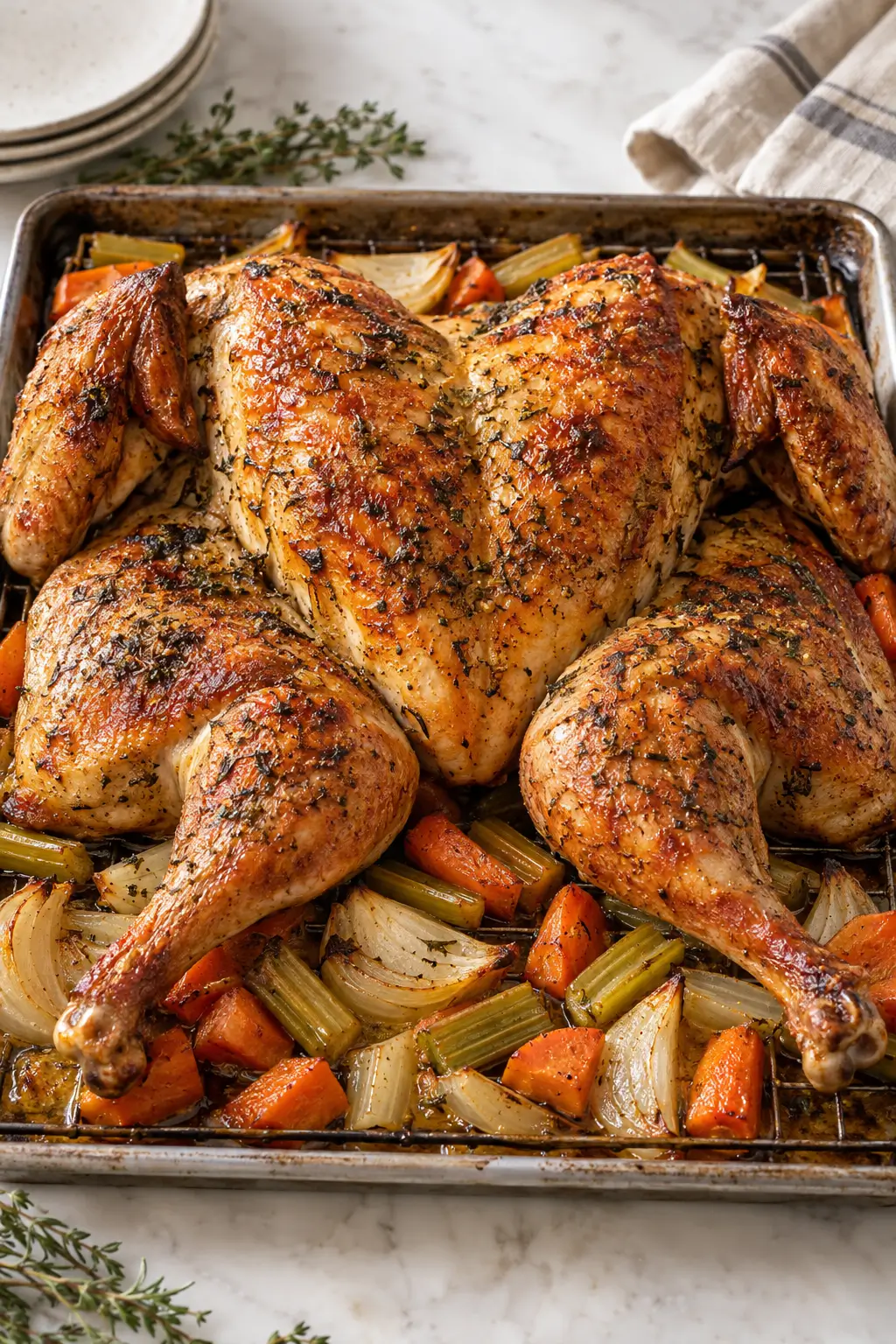
Set up the pan. Heat the oven to 450°F (230°C) with a rack in the lower middle. Spread the onions, carrots, and celery in the roasting pan and pour in the water. Set the turkey on top, skin side up, with the legs spread out flat. Rub the herb butter over the skin and push some under the breast skin.
-
Roast hot, then lower the heat. Roast for 30 minutes at 450°F. Then turn the oven down to 350°F (175°C) and roast for another 45 to 75 minutes, rotating the pan once along the way. If the pan looks dry and the drippings start smoking, add a splash of water.
Heads up: the maple syrup in the butter browns fast. If the breast is getting dark before the meat is done, lay a loose sheet of foil over that spot and keep going.
-
Check the temperature early. Start checking about an hour into the total roasting time. Push the thermometer into the thickest part of the thigh without touching bone. The bird is done when it reads 165°F (74°C). Most 12–14 lb turkeys get there in about 90 minutes total. Ovens vary a lot, though, so trust the thermometer, not the clock.
-
Rest, then carve. Move the turkey to a cutting board and let it sit for about 20 minutes before carving. The juices settle back into the meat, so less runs out onto the board.
What to Expect
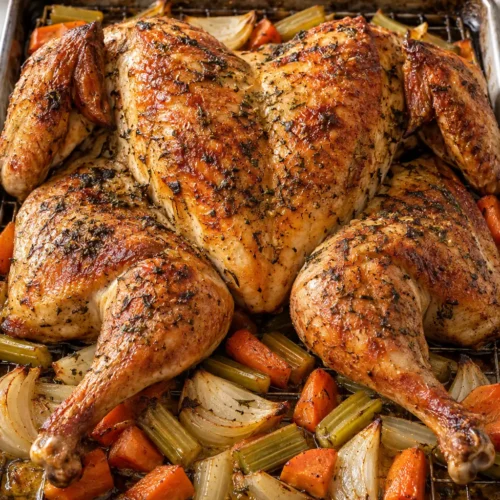
The skin comes out deep golden and crackly in most spots. Around the edges of the legs and near the wings it’ll be close to mahogany. It won’t look like a magazine cover, because a flat bird never does. You’ll trade that look for meat that’s evenly cooked and seasoned all the way through.
The flavor is savory first, with the herbs coming through clearly and a faint sweetness from the maple. If your oven runs cool or you use a deep roasting pan, the skin on the lower edges will be softer. A shallow pan gets more air around the bird.
Ways to Change It Up
For a citrus-herb version, blitz the salt with 2 tbsp brown sugar, orange zest, pepper, and the leaves from a few sprigs each of rosemary, thyme, and sage in a food processor, then use that as your brine. Add sliced orange, lemon, and a halved head of garlic to the vegetables in the pan. Every 20 minutes or so, brush the skin with a mix of olive oil and pan juices. The brown sugar browns faster, so keep the foil handy.
A smoky, pantry-spice version is also good:
- Swap the brine for kosher salt, cracked black peppercorns, paprika, poultry seasoning, garlic powder, and onion powder.
- This one roasts at a steady 350°F the whole time, which takes about 2 hours. Pull it when the thigh reads 165°F. The skin isn’t as crisp, but the paprika gives you a lovely color.
To make it dairy-free, use olive oil instead of butter in the herb mix. Leave out the maple, since it won’t stick to the oil very well. The skin still crisps up nicely.
Serving and Storage
To carve, cut off the legs where the thigh meets the body. Then slice each breast half off the bone in one piece and cut it crosswise. The flat shape makes this much easier than carving a whole round bird.
This is classic holiday-table food. Serve it with cranberry sauce with orange zest, a from-scratch green bean casserole, and either sweet potato casserole with pecan streusel or colcannon if you’d rather have savory potatoes. Finish with a slice of pecan pie.
Leftover meat keeps for 3 to 4 days in a sealed container in the fridge. You can freeze it for up to 3 months. Freeze it in portions with a spoonful of pan juices or broth so it doesn’t dry out.
To reheat, put the slices in a covered dish with a splash of broth and warm them at 325°F until hot. The meat stays moist this way, but the skin won’t crisp up again. Peel it off and snack on it the first night.
Common Questions
I only have Morton kosher salt. Does that change anything?
Yes. Morton grains are smaller and packed tighter, so the same cup holds more salt. Use about 1/4 cup instead of 1/3, or weigh it out to about 45 g. Table salt is even denser. I wouldn’t use it here at all.
Is a wet brine better?
I don’t think so for this method. A wet brine gives you juicy meat but floppy skin, and finding room for a bucket in the fridge is a pain. If you’re set on it, my easy turkey brine covers the timing. Dry the bird really well before it goes in the oven.
I forgot to salt it last night. Is it ruined?
No. Even 6 hours of dry brining makes a difference. The outer layer of meat will be well seasoned and the very center less so, but it’ll still beat a turkey you salt right before roasting.
Can I spatchcock a bigger turkey?
Above about 16 lb, it gets hard to crack the breastbone, and the flattened bird may not fit on a standard sheet pan. Measure your pan and your oven first. Cooking time goes up too, so start checking the temperature at the same point and go from there.
Can I make gravy from the drippings?
Yes, and the roasted vegetables add a lot of flavor. Taste before you add any salt, though. The dry brine already seasons the drippings, so they’re often salty enough on their own.
The backbone you cut out on day one is the best part of the prep, so don’t throw it away. Roast it next to the turkey or simmer it with the neck for stock, and your gravy is halfway done before the bird is out of the oven. If you try the paprika version, tell me how the skin turned out in your oven. I’d like to know whether a hotter oven crisps it more.
Spatchcock Turkey with Dry Brine, Crisp Skin in 90 Minutes

Equipment
- Poultry shears
- Rimmed baking sheet
- Wire rack
- Roasting pan
- Instant-read thermometer
- Paper towels
Ingredients
Turkey
- 1 whole turkey, 5.5–6.5 kg (12–14 lb) fully thawed, neck and giblets removed; a 10 lb bird also works
Dry brine
- 1/3 cup kosher salt about 45 g, Diamond Crystal preferred
- 2 tbsp baking powder dries the skin so it crisps
- 2 tsp black pepper freshly ground
- 1 orange zest from 1 orange, optional
Maple herb butter
- 1/4 cup unsalted butter softened, about 60 g
- 3 cloves garlic minced
- 2 tbsp pure maple syrup not pancake syrup
- 1 tbsp fresh rosemary minced
- 1 tbsp fresh thyme minced
- 1 tbsp fresh sage minced, optional
For the pan
- 2 onions cut into thick wedges
- 3 large carrots cut into chunks
- 4 stalks celery cut into chunks
- 3/4 cup water 180 ml
Instructions
- Cut out the backbone. Pat the turkey dry with paper towels. Set it breast side down with the tail toward you, then cut along both sides of the backbone from tail to neck with poultry shears and lift the backbone out. Keep the backbone for stock.
- Flatten it. Flip the bird breast side up, place both palms on the breastbone, and push down hard until it cracks and the turkey lies flat. Tuck the wing tips behind the breast so they don’t burn.
- Mix and apply the dry brine. Stir together the salt, baking powder, pepper, and orange zest. Pat the turkey dry again and sprinkle the mixture evenly over both sides, using a little more on the breast and thighs. Loosen the breast skin with your fingers and rub some brine directly onto the meat.
- Refrigerate uncovered. Place the turkey skin side up on a wire rack set over a baking sheet and refrigerate uncovered for 12 to 24 hours, or up to 48 if needed. The skin should look dry, tight, and slightly translucent. Do not rinse it.
- Make the herb butter. Mash the butter, garlic, maple syrup, rosemary, thyme, and sage together with a fork. You can make it a day or two ahead and refrigerate it. Let it soften before using.
- Set up the pan. Heat the oven to 450°F (230°C) with a rack in the lower middle. Spread the onions, carrots, and celery in the roasting pan and pour in the water. Set the turkey on top, skin side up, with the legs spread flat. Rub the herb butter over the skin and push some under the breast skin.
- Roast hot, then lower the heat. Roast for 30 minutes at 450°F. Reduce the oven to 350°F (175°C) and roast another 45 to 75 minutes, rotating the pan once. If the pan looks dry and the drippings start smoking, add a splash of water. If the breast darkens too early, tent that spot loosely with foil.
- Check the temperature early. Start checking about an hour into roasting. Insert an instant-read thermometer into the thickest part of the thigh without touching bone. The bird is done at 165°F (74°C). Most 12 to 14 lb turkeys take about 90 minutes total, but trust the thermometer over the clock.
- Rest, then carve. Move the turkey to a cutting board and rest it for about 20 minutes before carving so the juices settle back into the meat.



Leave a Reply