
Crisp on the outside, saucy in the center—this Tunisian street‑food classic is all about contrasts. Tunisian brik à l’œuf folds a whole egg, tuna, parsley, and onion into a paper‑thin wrapper and fries it until the whites are set and the yolk runs. Here we swap in supermarket phyllo for traditional brik pastry (malsouka/warka) and shallow‑fry for less oil. Expect a bracing squeeze of lemon and, if you like, a dab of harissa.
If it’s a busy weeknight, set out a plate with four lemon wedges and open the tuna now so assembly stays quick. Cooking with kids or in a tiny kitchen? Clear a landing space near the stove—these fry fast, and you’ll want your paper‑towel‑lined sheet pan ready.
You’ll get crisp, flaky layers from phyllo; a savory, gently garlicky hit from harissa if using; and a rich, just‑set egg that acts like its own sauce.
Ingredients
- 8 sheets phyllo pastry (about 9×14 in / 23×36 cm), thawed and kept covered (stand‑in for traditional brik pastry)
- 1 can (5 to 7 oz / 140 to 200 g) tuna in olive oil, well drained (flavor and moisture)
- 4 large eggs (one per turnover)
- 1/4 small onion (about 1.5 oz / 40 g), very finely minced (sweetness and mild bite)
- 2 tablespoons (8 g) finely chopped flat‑leaf parsley (freshness)
- 1/2 teaspoon fine salt, or to taste
- 1/4 teaspoon black pepper
- 2 cups (about 17 fl oz / 480 ml) neutral oil for shallow frying (canola, sunflower, or peanut)
- 1 lemon, cut into wedges (to finish)
- 1 to 2 teaspoons (5 to 10 g) harissa, optional, for serving (heat and depth)
- Optional add‑ins: 1 tablespoon capers, chopped; or a pinch of cumin; or 2 tablespoons mashed potato for a creamier center.
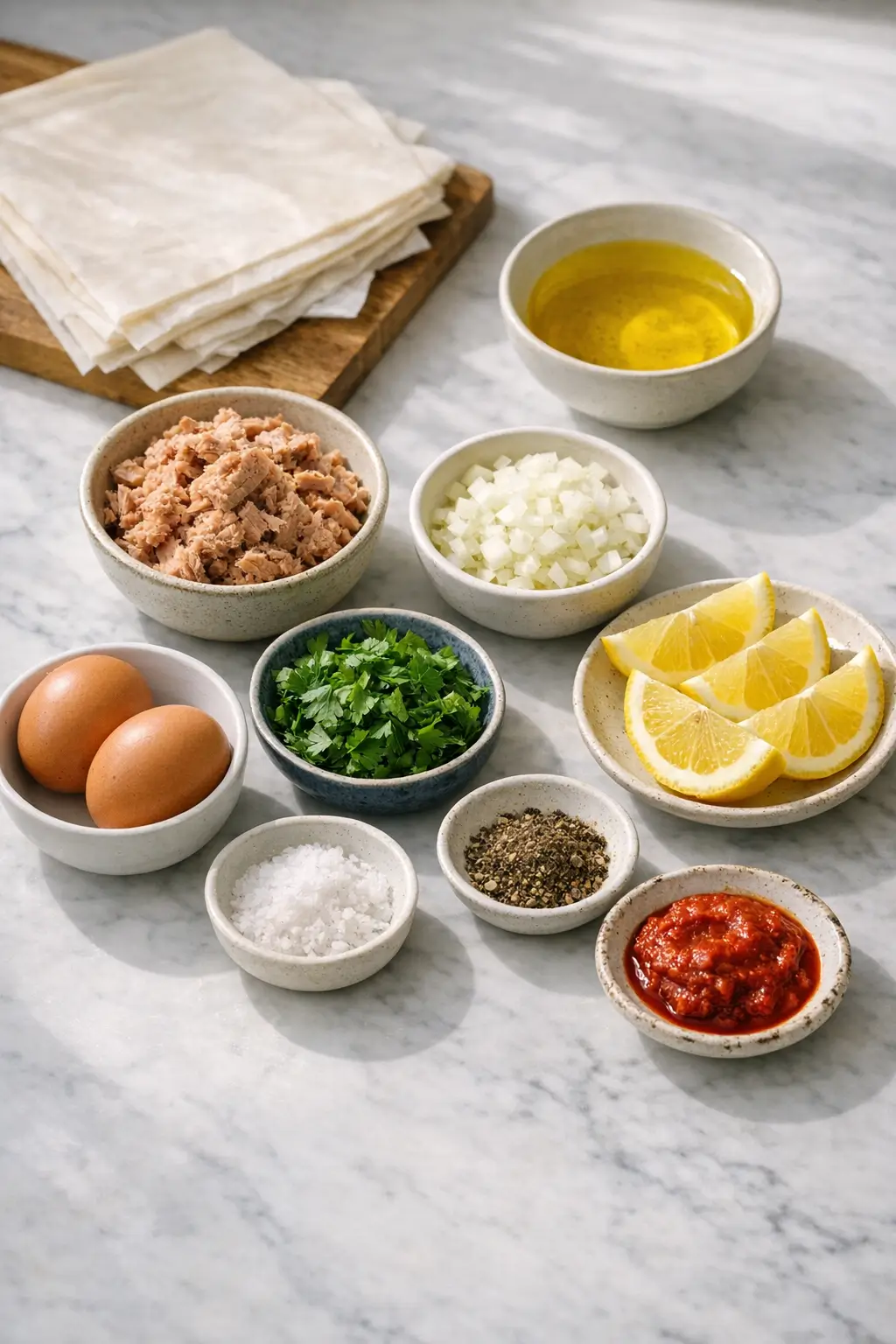
Kitchen note: Thaw phyllo overnight in the fridge, then bring to room temp for 30 to 45 minutes. Keep it covered with a barely damp towel so it stays pliable; dry phyllo shatters.
Step-by-Step Instructions for Tunisian brik à l’œuf
1) Make the filling base. In a small bowl, mix drained tuna, minced onion, parsley, salt, and pepper. Taste—it should be well seasoned and a little herby. Set four equal mounds on a plate so assembly moves quickly.
2) Heat the oil. Pour about 1/2 inch (1.25 cm) of neutral oil into a wide skillet. Warm over medium to medium‑high heat until it reaches about 350°F/175°C. If you don’t have a thermometer, a corner of phyllo should bubble briskly without browning instantly.
3) Prepare your station. Line a sheet pan with paper towels next to the stove. Crack each egg into a small cup or ramekin. This lets you slide it in where you want it and reduces the chance of a broken yolk.
4) Layer the phyllo. Take two sheets of phyllo and stack them, brushing or lightly misting the top sheet with a thin film of oil so the layers adhere. Work with one turnover at a time; keep the rest covered.
5) Add filling and egg. Place one portion of tuna mixture just off‑center on the short side of the phyllo stack, creating a shallow well in the middle with the back of a spoon. Gently slide one egg from its cup into the well so the yolk sits in the center.
6) Fold and seal. Fold the short edge up and over the filling, then fold in the sides to enclose, and continue folding into a neat triangle or envelope. Press the edges firmly so they stick. If a little white escapes, it will help seal the seam in the oil.
7) Fry. Carefully slide the turnover into the hot oil, seam‑side down. Fry 1 to 2 minutes, spooning hot oil over the top so the white sets on the surface, then flip and fry 45 to 90 seconds more. Aim for deep golden edges. The white should look mostly opaque; the center should still feel slightly soft.
8) Drain and finish. Transfer to the prepared tray to drain. Repeat with remaining turnovers, adjusting heat so the oil stays hot but not smoking. Serve immediately with lemon wedges and a dab of harissa if you enjoy heat.
Kitchen note: For a runny yolk, pull the brik while the center still yields to gentle pressure—carryover heat will finish the white. If you prefer a set yolk, give it another 30 to 60 seconds.
What to Expect
-
Texture: The pastry will be shatter‑crisp at the edges and a little tender where it cradles the egg. Expect some flake fall‑off; that’s normal with phyllo. The center will be saucy from the yolk.
-
Flavor: Savory tuna, mild onion sweetness, and parsley’s freshness lead. Lemon brightens the richness. Harissa adds a warm, earthy chile note rather than blow‑your‑head‑off heat; use lightly and add more at the table.
-
Equipment and brand variance: Thin phyllo browns faster than thicker styles. Heavier skillets (cast iron) hold heat well but can overbrown if the burner runs hot—drop to medium once the first pastry is in. Oil‑packed tuna tastes fuller than water‑packed; drain either well to avoid splatter.
Ways to Change It Up
-
Meat‑free or vegan: Skip tuna and build a quick mash of 1/2 cup (120 g) potato with parsley, onion, salt, and pepper. For a vegetarian version, keep the egg for that saucy center. For vegan, omit the egg and add 2 tablespoons (30 g) chickpeas, lightly mashed; you’ll get a creamy interior but lose the runny‑yolk effect.
-
Spicier or milder: Mix 1/2 to 1 teaspoon harissa into the tuna for heat woven through the filling, or keep it on the side so each eater controls the burn. Sensitive to spice? Use just lemon and black pepper.
-
Faster or simplified: Use large square spring‑roll wrappers instead of phyllo; they’re sturdier and easier to fold, though the crunch is slightly different. Prefer baking? Brush both sides with oil and bake at 425°F/220°C for 10 to 14 minutes, flipping once; you’ll get a crisp shell, but the yolk tends to set more.
Kitchen note: If phyllo tears while folding, patch with a small scrap brushed with oil. Once in the oil, the white will help “glue” seams shut.
Serving and Storage
Serve these hot, within minutes of frying, with lemon wedges and optional harissa on the table. They’re commonly enjoyed as a starter or light meal. A bright salad balances the richness—try our Cucumber Salad That Stays Crunchy in 15 Minutes or the herb‑forward Shirazi Salad, Fast and Fresh with Mint and Lime. For a North African‑style spread, pair with a warming bowl of Creamy Moroccan Harira Soup for Cozy Weeknight Comfort or add eggs to the table with Weeknight Roasted Red Pepper Shakshuka with Feta.
Short hold: Keep finished brik on a wire rack over a sheet pan in a 250°F/120°C oven for up to 15 minutes while you fry the rest.
Leftovers: The pastry softens as it sits, and runny yolks complicate storage. If needed, refrigerate for up to 24 hours in a covered container. Re‑crisp in a 350°F/175°C oven or air fryer for 4 to 6 minutes; the yolk will fully set.
Make‑ahead: Mix the tuna, onion, and parsley up to 3 days in advance and chill. Don’t add the egg until right before frying, and keep phyllo wrapped so it doesn’t dry out.
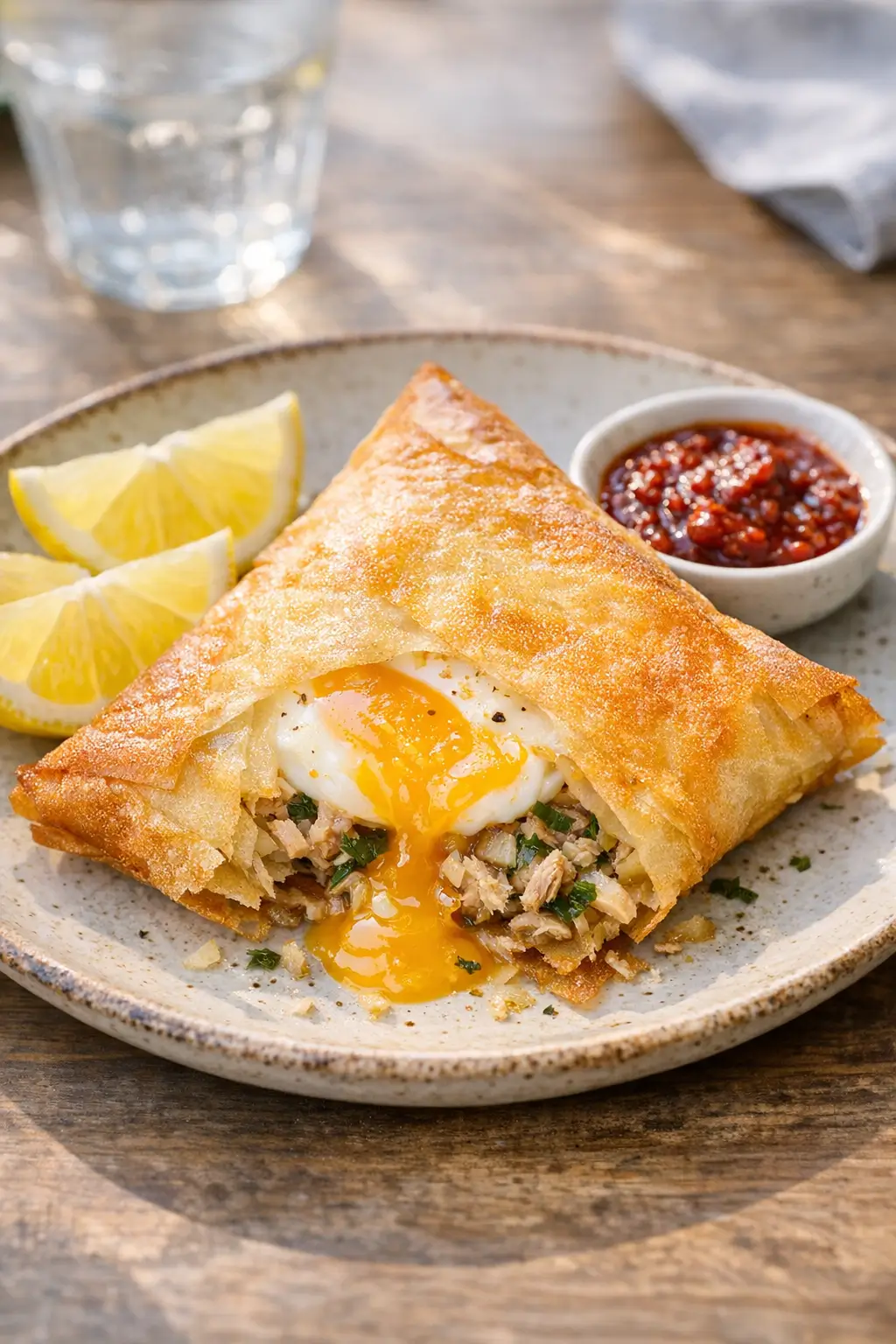
Kitchen note: If you plan to hold or reheat, cook the yolk a touch more at the outset; fully runny centers don’t reheat well and can weep into the pastry.
Cultural Context
Brik is a Maghrebi fried pastry known by several names—brik, bourek, malsouka/warka sheets—and appears widely in Tunisia as street food and at the home table, especially during Ramadan iftar. The classic brik à l’œuf encloses a whole egg, often with tuna, herbs, and sometimes capers. Traditional wrappers are made by swiping a thin batter over a hot pan to create flexible sheets; phyllo is a pragmatic stand‑in many cooks use abroad. For background on the pastry family and regional names, see the overview on Brik (encyclopedic summary). For context on harissa’s cultural importance in Tunisia—including its 2022 recognition by UNESCO—see UNESCO’s note on harissa as intangible cultural heritage.
Common Questions and Troubleshooting
-
My egg leaked from the pastry while folding. What went wrong? Likely the well in the tuna wasn’t deep enough or the phyllo cracked. Create a shallow crater in the filling to cradle the yolk and fold decisively. If a seam opens, patch with a small oiled scrap of phyllo and press to seal.
-
How do I keep the yolk runny but whites set? Fry hot and fast. Spoon hot oil over the top surface to set the white without overcooking the yolk, then pull the pastry while the center still feels a bit soft. Practice on the first one and adjust time by 15‑ to 30‑second increments.
-
Can I bake instead of fry? Yes, but timing is touchy. Bake on a preheated sheet at 425°F/220°C, brushed with oil, for 10 to 14 minutes, flipping once. Expect a more evenly crisp shell and a more set egg. Baking is handy when avoiding stovetop splatter.
-
What oil temperature is best? Around 350°F/175°C. Much hotter and phyllo browns before the white sets; cooler and the pastry drinks oil. Without a thermometer, look for steady bubbling around a phyllo corner without instant browning.
-
I can’t find phyllo. What else works? Large spring‑roll wrappers or round warka/malsouka (if available) are good alternatives. Spring‑roll wrappers are sturdier and easier to handle but fry up differently—crisp and bubbly rather than flaky.
-
Do I need capers or cheese? No. This version focuses on tuna, parsley, onion, and egg with lemon. Capers or a pinch of cumin are optional accents if you enjoy brininess or warm spice.
-
Can I swap the tuna? Absolutely. Cooked flaked white fish, sautéed shrimp, or a little leftover roast chicken work. Keep pieces small so the egg can nestle in the center.
-
Is it safe to save leftovers with a runny yolk? Refrigerate promptly and reheat thoroughly; the yolk will firm up on reheating. When cooking for anyone who needs fully set eggs, extend frying by 30 to 60 seconds.
Conclusion
This shallow‑fried, phyllo‑wrapped version brings the spirit of brik to a regular grocery run. Once you’ve done one or two, the cadence—fold, slide in the egg, fry—becomes second nature. Share how you seasoned yours, whether you went lemon‑only or added harissa, and what tweaks helped you hit your ideal yolk. Ratings and comments help other home cooks dial in their timing and tools, so report back with what worked in your kitchen.
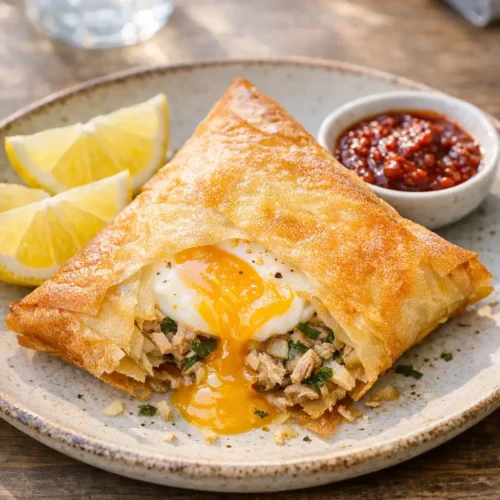
Tunisian Brik à l’Oeuf with Crisp Phyllo, Fast

Equipment
- Wide skillet
- Sheet pan
- Paper towels
- Small bowl
- Small cups or ramekins (for eggs)
- Spoon
- Thermometer (optional)
Ingredients
- 8 sheets phyllo pastry (about 9×14 in / 23×36 cm) thawed and kept covered
- 1 can tuna in olive oil 5 to 7 oz / 140 to 200 g, well drained
- 4 large eggs one per turnover
- 1/4 small onion about 1.5 oz / 40 g, very finely minced
- 2 tbsp flat-leaf parsley finely chopped (8 g)
- 1/2 tsp fine salt or to taste
- 1/4 tsp black pepper
- 2 cups neutral oil for shallow frying (canola, sunflower, or peanut)
- 1 lemon cut into wedges, to finish
- 1 to 2 tsp harissa optional, for serving
Instructions
- Make the filling base. In a small bowl, mix drained tuna, minced onion, parsley, salt, and pepper. Taste—it should be well seasoned and a little herby. Set four equal mounds on a plate so assembly moves quickly.
- Heat the oil. Pour about 1/2 inch (1.25 cm) of neutral oil into a wide skillet. Warm over medium to medium‑high heat until it reaches about 350°F/175°C. If you don’t have a thermometer, a corner of phyllo should bubble briskly without browning instantly.
- Prepare your station. Line a sheet pan with paper towels next to the stove. Crack each egg into a small cup or ramekin. This lets you slide it in where you want it and reduces the chance of a broken yolk.
- Layer the phyllo. Take two sheets of phyllo and stack them, brushing or lightly misting the top sheet with a thin film of oil so the layers adhere. Work with one turnover at a time; keep the rest covered.
- Add filling and egg. Place one portion of tuna mixture just off‑center on the short side of the phyllo stack, creating a shallow well in the middle with the back of a spoon. Gently slide one egg from its cup into the well so the yolk sits in the center.
- Fold and seal. Fold the short edge up and over the filling, then fold in the sides to enclose, and continue folding into a neat triangle or envelope. Press the edges firmly so they stick. If a little white escapes, it will help seal the seam in the oil.
- Fry. Carefully slide the turnover into the hot oil, seam‑side down. Fry 1 to 2 minutes, spooning hot oil over the top so the white sets on the surface, then flip and fry 45 to 90 seconds more. Aim for deep golden edges. The white should look mostly opaque; the center should still feel slightly soft.
- Drain and finish. Transfer to the prepared tray to drain. Repeat with remaining turnovers, adjusting heat so the oil stays hot but not smoking. Serve immediately with lemon wedges and a dab of harissa if you enjoy heat.



Leave a Reply