
Apple cider chicken marinade is one of those small bits of prep that quietly transforms a basic roast into something you actually look forward to. The cider and cider vinegar bring gentle sweetness and tang, while herbs, garlic, and a little oil keep the chicken juicy and well seasoned all the way through.
If you’re staring at a whole chicken on a busy weeknight, start the marinade first, then preheat the oven and clear a small space on the counter for trimming. If you have kids running around or a tiny kitchen, set a timer for the marinating window so you don’t forget it in the fridge.
This style of marinade shows up often in cool-weather cooking, especially in regions where apples and cider are common fall ingredients. It’s ideal for Sunday dinners, casual company, or any time you want a low-effort main dish that tastes like more work than it was. The flavor is mellow, lightly herby, and family-friendly rather than sharp or spicy.
Ingredients
Serves 3–4 (for one 1.4–1.8 kg / 3–4 lb whole chicken or about 1.1–1.3 kg / 2½–3 lb bone-in parts)
For the apple cider chicken marinade
- 240 ml / 1 cup apple cider (not vinegar; adds gentle sweetness and apple flavor)
- 60 ml / 1⁄4 cup apple cider vinegar (balances the sweetness and helps tenderize)
- 45 ml / 3 Tbsp extra-virgin olive oil (keeps the meat moist and helps browning)
- 30 ml / 2 Tbsp Dijon mustard (adds tang and helps the marinade cling)
- 30 ml / 2 Tbsp maple syrup or firmly packed light brown sugar (rounds the acidity)
- 3 cloves garlic, finely grated or minced (aromatic base)
- 2 tsp fine sea salt or kosher salt, plus extra for the skin
- 1 tsp freshly ground black pepper
- 1 tsp dried thyme or 2 tsp finely chopped fresh thyme
- 1 tsp dried rosemary, lightly crushed or 2 tsp finely chopped fresh rosemary
- 1 tsp sweet paprika (for color and mild warmth)
- Optional: 1⁄4 tsp ground allspice or cinnamon (for a subtle fall spice note)
For the chicken and roasting
- 1 whole chicken, 1.4–1.8 kg / 3–4 lb (or the equivalent weight in bone-in thighs, drumsticks, or leg quarters)
- 1 small onion, quartered (to stuff the cavity and/or scatter in pan; adds flavor to drippings)
- 1 small firm apple, cored and quartered (optional, for pan aroma and a mild apple note)
- 1–2 tsp olive oil (for the skin, if needed)
- Additional salt and black pepper for the outside of the chicken

Kitchen note: If your apple cider is very sweet (some brands are), reduce or skip the maple syrup/brown sugar the first time you make this. You can always add sweetness later with a drizzle of honey over the carved chicken.
Step-by-Step Instructions for Apple Cider Chicken Marinade for Roasting
-
Make the marinade base.
In a medium bowl or large measuring jug, whisk together the apple cider, apple cider vinegar, olive oil, Dijon mustard, and maple syrup or brown sugar until the sugar dissolves and the liquids look emulsified. -
Add aromatics and seasoning.
Stir in the minced garlic, salt, black pepper, thyme, rosemary, paprika, and allspice or cinnamon (if using). Taste a small spoonful; it should be pleasantly salty, a bit tangy, and lightly sweet. Adjust salt or acidity with a pinch more salt or a teaspoon of vinegar if needed. -
Prepare the chicken.
Remove the chicken from its packaging and pat it very dry with paper towels, including the cavity. Trim away any large excess fat around the cavity opening. Tucking the wing tips behind the shoulders helps prevent burning during roasting. -
Marinate in a bag or dish.
Place the chicken in a large zip-top bag or a snug nonreactive dish (glass or stainless steel). Pour the apple cider marinade over, turning the bird so it’s well coated. If using a bag, press out excess air and seal; if using a dish, turn the chicken a couple of times so marinade gets into all sides. -
Chill and marinate.
Refrigerate the chicken in the marinade for at least 2 hours and up to 12 hours. Rotate or flip the chicken once or twice during this time so every surface gets equal contact with the marinade.
Kitchen note: Because the marinade contains vinegar, very long marinating (over about 18 hours) can start to soften the outer texture of the meat. For best results, keep it within the 2–12 hour window.
-
Bring the chicken closer to room temperature.
About 30–40 minutes before you plan to roast, remove the marinating chicken from the refrigerator. Take the chicken out of the liquid and place it on a plate or rack set over a tray. Let excess marinade drip off. Discard any marinade that has had raw chicken sitting in it. -
Dry the skin thoroughly.
Pat the chicken dry again with fresh paper towels, including crevices near the legs and wings. A drier surface means better browning. Lightly rub the skin with 1–2 teaspoons olive oil if it seems dry, then season the outside generously with salt and a little black pepper. -
Preheat the oven and prepare the pan.
Set an oven rack in the lower-middle position and preheat the oven to 220°C / 425°F. Use a roasting pan with a rack if you have one, or a sturdy oven-safe skillet or baking dish if not. Scatter the onion quarters and apple pieces (if using) in the pan as a bed for the chicken. -
Stuff and truss (optional).
Place a couple of onion wedges and apple pieces inside the cavity for extra moisture and aroma. If you like, loosely tie the legs together with kitchen twine for more even cooking and a tidy shape, but it isn’t strictly necessary. -
Roast at high heat to start.
Place the chicken breast-side up on the rack or directly on top of the onions and apples. Roast at 220°C / 425°F for 20 minutes to set the skin and start browning. -
Lower the heat and continue roasting.
Without opening the oven more than necessary, reduce the temperature to 190°C / 375°F. Continue roasting for about 40–55 minutes more, depending on your oven and the exact size of the bird. That’s roughly 18–22 minutes per 500 g / 1 lb overall. -
Check for doneness.
Start checking the internal temperature from around the 55-minute total mark for a 1.4–1.8 kg / 3–4 lb chicken. Insert an instant-read thermometer into the thickest part of the thigh, without hitting bone. You’re aiming for 73–75°C / 165–167°F in the thigh and at least 71°C / 160°F in the breast.
Kitchen note: If the skin is browning too fast before the chicken is cooked through, loosely tent just the darker areas with a small piece of foil. Avoid sealing the whole pan or the skin can steam and soften.
-
Rest the chicken.
Transfer the roasted chicken to a cutting board or platter, tent loosely with foil, and let it rest for 10–15 minutes. This helps the juices redistribute and makes carving easier and less messy. -
Deglaze the pan (optional but rewarding).
While the chicken rests, pour off most of the fat from the roasting pan, leaving the browned bits, onions, and apples. Place the pan over medium heat on the stovetop and add a splash (60 ml / 1⁄4 cup) of water, extra apple cider, or low-sodium chicken stock. Scrape up the browned bits with a wooden spoon and simmer for a few minutes to make a simple pan sauce. Taste and season with a pinch of salt or a tiny drizzle of maple syrup if it’s very sharp. -
Carve and serve.
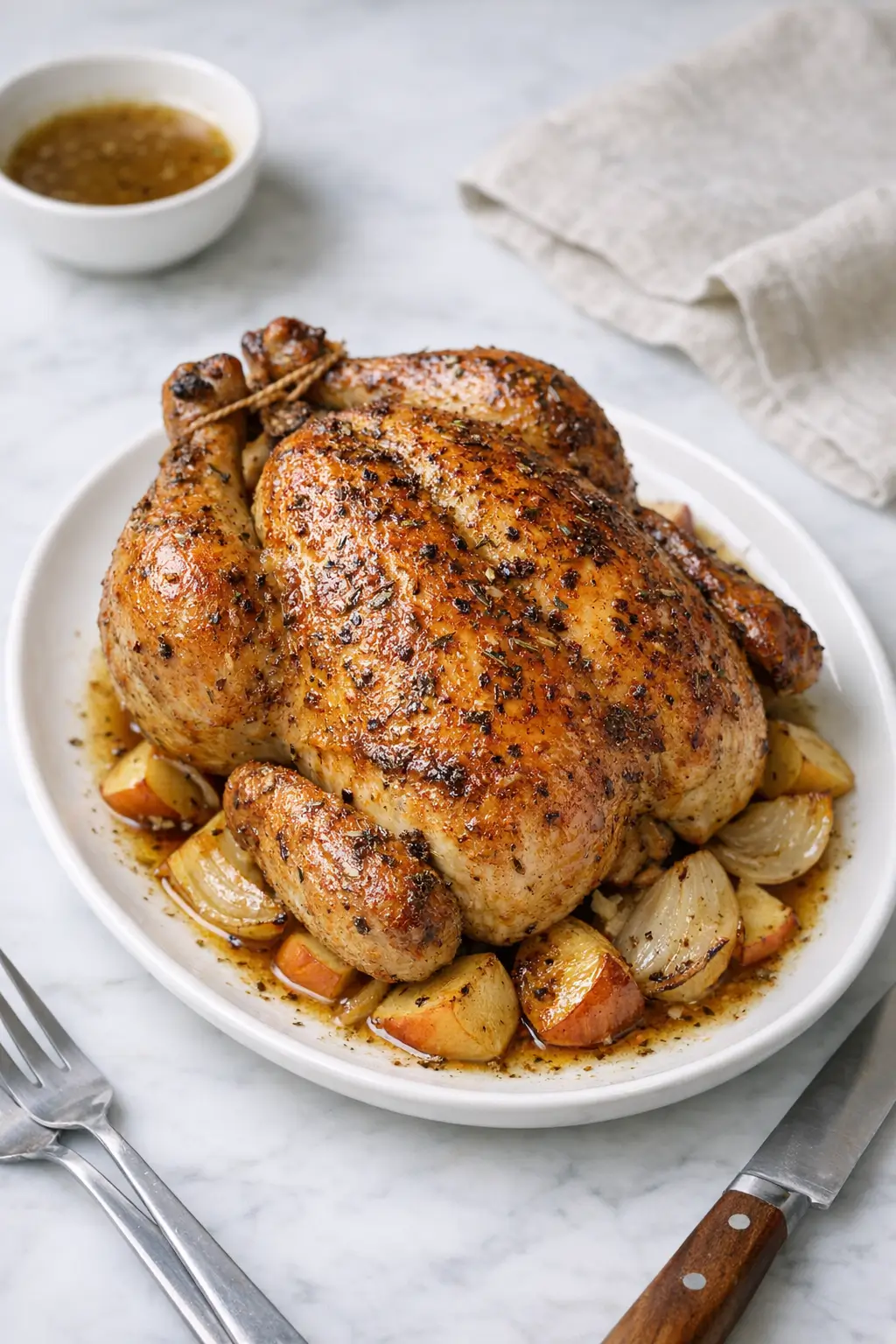
Remove any twine. Carve the chicken into legs, thighs, wings, and breast slices. Serve with the roasted onion and apple pieces and a spoonful of the pan juices over the top.
What to Expect
This apple cider chicken marinade produces meat that’s well seasoned to the bone rather than just on the surface. The cider and vinegar add gentle tang and sweetness without making the chicken taste like dessert.
Texture-wise, the breast meat should be moist but not overly soft, and the dark meat will be tender and a little richer. The skin turns a deep golden-brown from the sugars in the cider and maple syrup, especially if you let the surface dry before roasting.
Different ovens and pan types affect the final result. A dark metal pan tends to brown more aggressively than a pale ceramic dish, and convection settings can shave several minutes off the cooking time. It’s normal for the onion and apple pieces in the pan to caramelize deeply around the edges.
Kitchen note: If you’re used to very salty store-bought rotisserie chicken, this version may taste slightly less salty. You can always sprinkle a pinch of flaky salt over the carved meat right before serving.
Ways to Change It Up
-
Simple sheet pan parts instead of whole chicken.
Use 1.1–1.3 kg / 2½–3 lb bone-in, skin-on thighs and drumsticks instead of a whole bird. Marinate as directed, arrange on a sheet pan with sliced onions and apples, and roast at 220°C / 425°F for 35–45 minutes until the thickest pieces reach 73–75°C / 165–167°F. -
Milder for very young kids or sensitive palates.
Reduce the apple cider vinegar to 2 Tbsp, skip the optional allspice/cinnamon, and lower the black pepper to 1⁄2 tsp. This keeps the overall profile gentle and a bit sweeter, which many children prefer. -
Spicier fall version.
Add 1⁄2–1 tsp crushed red pepper flakes or a pinch of cayenne to the marinade, and increase the smoked or sweet paprika to 2 tsp. This gives the marinade more warmth without overwhelming the apple notes. -
Herb-forward variation.
Swap half of the cider (1⁄2 cup) for low-sodium chicken stock and increase the fresh chopped thyme and rosemary to 1 Tbsp each. You’ll get a more savory, herb-driven roast with lighter sweetness. -
Make-ahead freezer option.
Combine all marinade ingredients in a freezer bag with chicken pieces instead of a whole bird. Squeeze out the air, seal, and freeze flat for up to 2 months. Transfer to the refrigerator the night before you plan to cook; as it thaws, the chicken will marinate. Roast as directed for parts.
Serving and Storage
Serve this roast chicken with simple sides that soak up the pan juices: roasted potatoes, buttered rice, or a loaf of crusty bread are all good fits. Lightly bitter greens like sautéed kale, roasted Brussels sprouts, or a crisp salad balance the sweetness of the apple cider.
Because the marinade already brings apples and warm spices, you don’t need complicated sauces. A spoonful of the pan juices and a squeeze of lemon over the carved meat brighten the flavors nicely. Leftover chicken is excellent in sandwiches, grain bowls, or a next-day salad.
Cool leftovers to room temperature within 1 hour, then store in airtight containers in the refrigerator for up to 3–4 days. For longer keeping, shred or slice the meat and freeze it in small portions for up to 2 months.
When reheating, gently warm pieces in a covered dish in a 160°C / 325°F oven until just heated through, or warm sliced meat in a skillet with a splash of water or stock. Microwaving works in a pinch, but use short bursts and cover the chicken to avoid drying it out.
Kitchen note: Roasted skin loses its crispness when chilled and reheated. If crisp skin is important to you, roast only what you plan to eat that day and use leftover meat for dishes where texture matters less, like soups or casseroles.
Cultural Context
Apple cider and poultry pairings appear in many cool-weather cooking traditions where apples are abundant. In parts of North America and northern Europe, cider has long been used to braise or roast meat, adding acidity and gentle fruit sweetness.
For a concise overview of how apples have been cultivated and used in food and drink, including cider, the U.S. Department of Agriculture provides historical materials through the National Agricultural Library. You can explore some of that background via this resource from the National Agricultural Library: history of apple culture and cider.
Similarly, roast chicken holds a steady place in many home-cooking traditions as a straightforward, shareable main dish. The Smithsonian’s National Museum of American History has documented how roast chicken and similar dishes show up in American domestic cookbooks and advertisements; see this brief discussion of twentieth-century chicken and poultry marketing: advertising chicken and poultry.
Common Questions and Troubleshooting
Why did my chicken turn out a little dry even though I followed the times?
Oven temperatures vary, and whole chickens also differ in shape and fat content. Use the roasting times as a guideline, but rely on an instant-read thermometer and start checking early. Pull the chicken from the oven when the thigh reaches 73–75°C / 165–167°F and let it rest so carryover heat finishes the job without overcooking.
The marinade smells very vinegary. Will the chicken taste sharp?
The vinegar aroma is stronger before cooking. During roasting, much of the acidity softens, especially when combined with cider and a bit of maple syrup or brown sugar. If you’re sensitive to acidity, use the milder variation with less vinegar and taste your marinade before adding the chicken.
Can I use boneless, skinless chicken breasts with this marinade?
You can, but they’re more prone to drying out in a long roast. For boneless breasts, marinate no more than 2–4 hours, then roast at 220°C / 425°F for 18–25 minutes, depending on thickness, until the center reaches 71°C / 160°F. Rest for 5–10 minutes before slicing. Consider basting once with pan juices during cooking.
Is it safe to reuse the leftover marinade as a sauce?
Not without further cooking. Once raw chicken has sat in the marinade, it must be boiled for at least 3–5 minutes to be safe. In this recipe, discarding used marinade is simpler, and you can build a quick pan sauce from the roasting juices instead.
What if my chicken skin never really browns?
Usually this means the surface was too wet or the oven temperature ran cooler than expected. Next time, dry the chicken very thoroughly before roasting and consider leaving it uncovered in the refrigerator for 30–60 minutes after marinating to air-dry the skin. You can also increase the initial high-heat stage by 5–10 minutes, watching closely.
How far in advance can I marinate the chicken?
Aim for a minimum of 2 hours and a practical maximum of about 12 hours in the refrigerator. Beyond that, the acidic ingredients can start to make the outer layers of the meat a bit mushy. If you need more lead time, use the freezer method described in the make-ahead variation.
Conclusion
An apple cider chicken marinade is a small step that delivers gentle sweetness, balanced acidity, and dependable moisture in a roast chicken. With a few pantry staples and some planning for the marinating time, you can turn an ordinary bird into a satisfying center-of-the-table meal.
If you try this version, leave a comment with how long you marinated and what sides you served it with so other home cooks can adjust. Detailed notes on what worked, what didn’t, and any tweaks you made help keep the recipe useful for a wide range of kitchens.
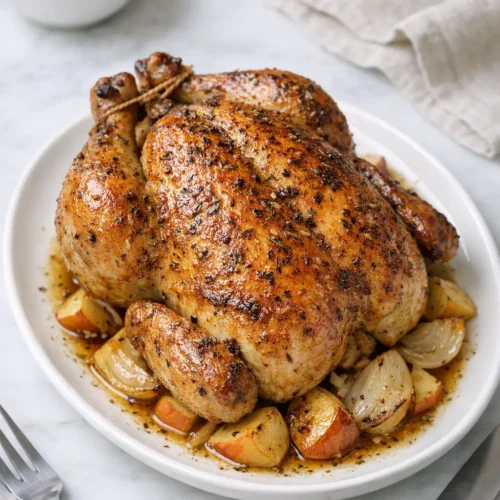
Apple Cider Chicken Marinade for Easy Roasting

Equipment
- Medium bowl or large measuring jug
- Whisk
- Large zip-top bag or nonreactive dish (glass or stainless steel)
- Paper towels
- Roasting pan with rack (optional)
- Oven-safe skillet or baking dish
- Instant-read thermometer
- Wooden spoon (for deglazing, optional)
- Kitchen twine (optional)
Ingredients
For the apple cider chicken marinade
- 240 ml apple cider not vinegar
- 60 ml apple cider vinegar
- 45 ml extra-virgin olive oil
- 30 ml Dijon mustard
- 30 ml maple syrup or firmly packed light brown sugar
- 3 cloves garlic finely grated or minced
- 2 tsp fine sea salt or kosher salt
- 1 tsp freshly ground black pepper
- 1 tsp dried thyme or 2 tsp finely chopped fresh thyme
- 1 tsp dried rosemary lightly crushed; or 2 tsp finely chopped fresh rosemary
- 1 tsp sweet paprika
- 1/4 tsp ground allspice optional; or cinnamon
For the chicken and roasting
- 1 whole chicken 1.4–1.8 kg / 3–4 lb
- 1 small onion quartered
- 1 small firm apple cored and quartered (optional)
- 1–2 tsp olive oil for the skin, if needed
- salt for seasoning the outside of the chicken
- black pepper for seasoning the outside of the chicken
Instructions
- Make the marinade base. In a medium bowl or large measuring jug, whisk together the apple cider, apple cider vinegar, olive oil, Dijon mustard, and maple syrup or brown sugar until the sugar dissolves and the liquids look emulsified.
- Add aromatics and seasoning. Stir in the garlic, salt, black pepper, thyme, rosemary, paprika, and allspice or cinnamon (if using). Taste and adjust salt or acidity if needed.
- Prepare the chicken. Pat the chicken very dry (including the cavity), trim any large excess fat near the cavity opening, and tuck wing tips behind the shoulders.
- Marinate in a bag or dish. Place chicken in a large zip-top bag or snug nonreactive dish. Pour marinade over and turn to coat well; seal bag (pressing out excess air) or turn chicken a couple of times in the dish.
- Chill and marinate. Refrigerate at least 2 hours and up to 12 hours, flipping/rotating once or twice so all surfaces contact the marinade.
- Bring closer to room temperature. About 30–40 minutes before roasting, remove chicken from the fridge, lift it out of the marinade, let excess drip off on a plate or rack, and discard used marinade.
- Dry the skin thoroughly. Pat chicken dry again. Lightly rub the skin with 1–2 teaspoons olive oil if needed, then season the outside generously with salt and a little black pepper.
- Preheat oven and prepare pan. Set a rack in the lower-middle position and preheat to 220°C / 425°F. Arrange onion quarters and apple pieces (if using) in a roasting pan (with rack if available) or an oven-safe skillet/baking dish.
- Stuff and truss (optional). Add a couple onion wedges and apple pieces to the cavity. Tie legs loosely with kitchen twine if desired.
- Roast at high heat to start. Place chicken breast-side up on the rack or directly on the onions/apples and roast at 220°C / 425°F for 20 minutes.
- Lower heat and continue roasting. Reduce oven to 190°C / 375°F and roast 40–55 minutes more, depending on size and oven, until nearly done.
- Check for doneness. Using an instant-read thermometer, check the thickest part of the thigh (avoid bone). Target 73–75°C / 165–167°F in the thigh and at least 71°C / 160°F in the breast; tent darkening spots with foil if needed.
- Rest the chicken. Transfer to a board or platter, tent loosely with foil, and rest 10–15 minutes.
- Deglaze the pan (optional). Pour off most fat, leaving browned bits. Set pan over medium heat, add a splash (about 60 ml / 1/4 cup) water, apple cider, or low-sodium chicken stock, scrape up browned bits, and simmer a few minutes; season to taste.
- Carve and serve. Remove twine (if used), carve into pieces, and serve with the roasted onion/apple and pan juices.



Leave a Reply