
Butternut squash soup with maple and thyme is one of those quietly comforting dishes that earns its place in regular rotation. It’s naturally sweet from the squash and maple, grounded by onion and garlic, and lifted with fresh thyme so it never tastes flat.
If you’re staring at a busy weeknight, start by getting the squash in the oven—that hands-off roasting time is where most of the flavor happens. Cooking in a small kitchen? Dice the onion and peel the garlic while the squash roasts so the stovetop portion feels easy.
This soup shows up most often as a cool-weather lunch or simple dinner, and it works just as well for a holiday starter as it does for Sunday meal prep. Expect something silky rather than heavy, with gentle maple sweetness, soft thyme aroma, and a texture that plays well with crusty bread or a simple salad.
Ingredients
Serves 3–4
- 1.2–1.4 kg / 2½–3 lb butternut squash (about 1 medium), peeled, seeded, and cut into 2.5 cm / 1-inch cubes – main body of the soup
- 2 tbsp (30 ml) olive oil, divided – for roasting and sautéing
- 2 tbsp (30 ml) pure maple syrup – adds gentle sweetness and caramelization
- 1 medium yellow onion (about 150 g / 5 oz), chopped
- 4 garlic cloves, peeled and left whole – mellow, sweet garlic flavor once roasted
- 1½ tsp fresh thyme leaves, plus extra small sprigs for garnish; or ½ tsp dried thyme – herb backbone
- ¼ tsp ground cinnamon – optional, but it rounds out the maple and squash
- 1.1–1.25 liters (4½–5 cups) low-sodium vegetable broth – start with 4½ cups and adjust for thickness; chicken broth can be used if not vegetarian
- ½ tsp fine sea salt, plus more to taste
- Freshly ground black pepper, to taste
- 2–4 tbsp (30–60 ml) heavy cream or full-fat coconut milk, optional – for extra richness and gloss
- 1–2 tsp (5–10 ml) apple cider vinegar or lemon juice, to finish – balances the sweetness
Optional garnishes (choose a couple):
- Toasted pumpkin seeds or chopped walnuts
- Extra thyme leaves
- A small drizzle of maple syrup
- Swirl of cream or coconut milk

Kitchen note: If your squash is very large, weigh out about 1.2 kg / 2½ lb of peeled cubes. Extra squash will make the soup too thick and slightly bland unless you also increase the seasoning and broth.
Step-by-Step Instructions for Butternut Squash Soup with Maple and Thyme
-
Preheat and prep the vegetables.
Preheat your oven to 200°C / 400°F. Line a large baking tray with parchment for easier cleanup.
Spread the butternut squash cubes and whole garlic cloves on the tray in a single layer. Drizzle with 1½ tbsp olive oil and 2 tbsp maple syrup, then sprinkle with a good pinch of salt and a few grinds of black pepper. Toss with your hands or a spatula until everything is evenly coated, then spread out again.
-
Roast until tender and caramelized.
Roast for 30–35 minutes, turning the squash once halfway through. The edges should have some browned spots and the cubes should be very tender when pierced with a knife.
If your cubes are smaller, start checking at 25 minutes; larger pieces may need closer to 40 minutes.
Kitchen note: If the squash is browning too quickly but still firm in the center, lower the oven to 180°C / 350°F and loosely tent the tray with foil so the pieces cook through without burning the maple.
-
Sauté the onion and thyme.
When the squash has about 10 minutes left, heat the remaining ½ tbsp olive oil in a medium pot over medium heat.
Add the chopped onion and ½ tsp salt. Cook, stirring occasionally, for 6–8 minutes until the onion is translucent and lightly golden at the edges.
Stir in the thyme and cinnamon (if using) and cook for 30–60 seconds more, just until fragrant.
-
Combine roasted vegetables and broth.
Transfer the roasted squash and garlic (along with any syrupy juices from the pan) into the pot with the onions.
Pour in 4½ cups (about 1.1 liters) of vegetable broth. Bring to a gentle simmer over medium heat.
Once it starts to bubble, reduce the heat and simmer for 5–10 minutes to let the flavors blend.
-
Blend until smooth.
Remove the pot from the heat. Use an immersion blender to puree the soup directly in the pot until completely smooth.
If you prefer to use a countertop blender, work in batches, filling the blender no more than halfway each time and holding the lid with a folded towel to prevent hot splashes. Return the blended soup to the pot.
Kitchen note: If the soup seems too thick to blend smoothly, add a splash or two of broth or water before blending. It’s easier to thin a thick soup than to fix one that has become watery.
-
Adjust thickness and season.
Set the pot back over low heat. If the soup is thicker than you like, whisk in additional broth, a little at a time, until it reaches your preferred consistency.
Stir in the cream or coconut milk, if using. Taste and add more salt and pepper as needed.
Finally, stir in 1–2 tsp apple cider vinegar or lemon juice. Start with 1 teaspoon, taste, and only add more if the soup still feels a bit sweet or flat.
-
Warm through and serve.
Let the soup gently heat for another 2–3 minutes, without boiling, so the flavors settle.
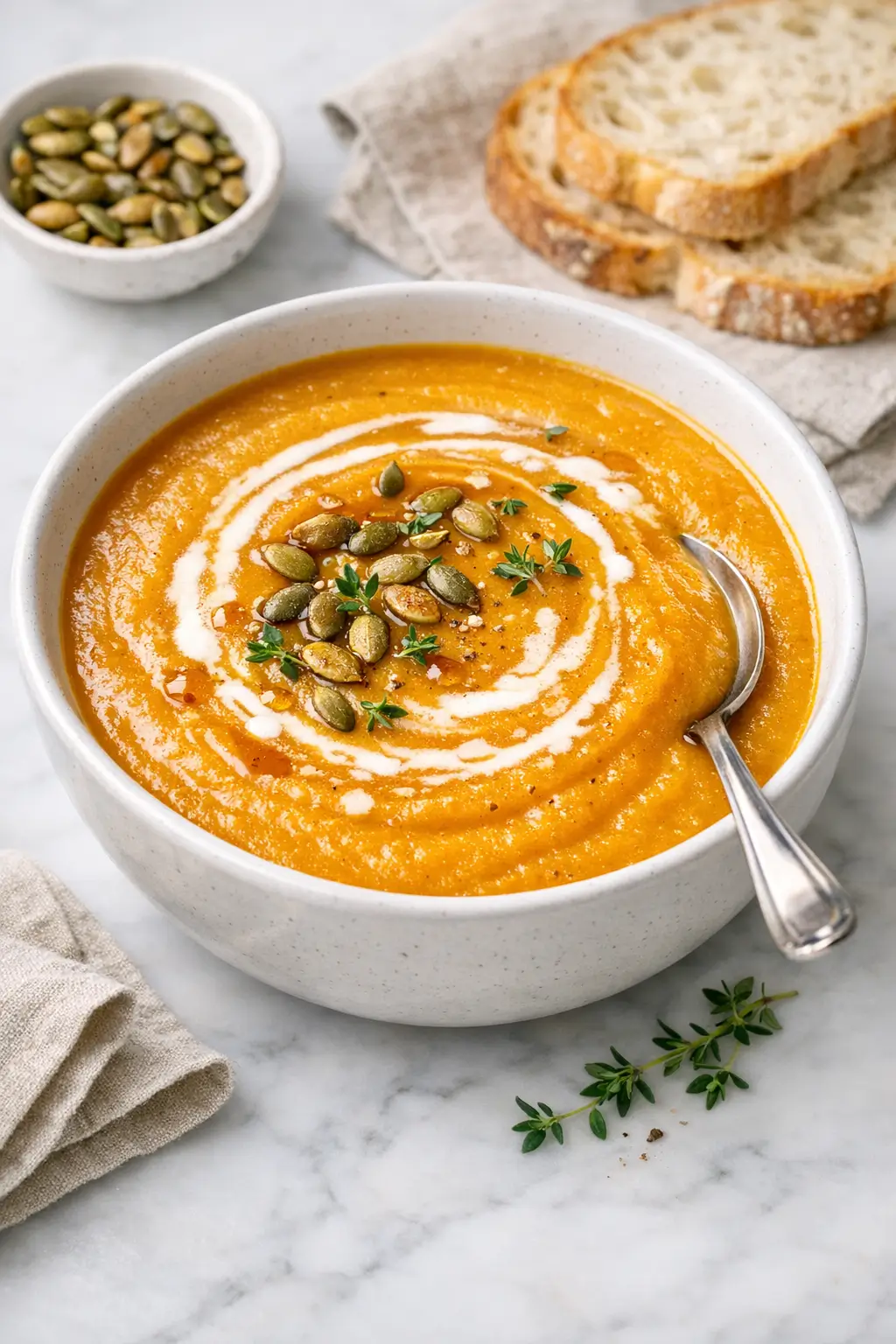
Ladle into bowls and garnish with toasted nuts or seeds, a light drizzle of maple, extra thyme, and/or a swirl of cream.
Kitchen note: If you plan to freeze most of the batch, skip the cream in the pot. Instead, add a splash of cream only to the portions you’re reheating; dairy-free soup generally freezes and thaws more reliably.
What to Expect
This soup should be smooth and velvety, but not so thick that a spoon stands straight up. Think pourable, with enough body to coat the back of the spoon.
Roasting concentrates the butternut squash, so you’ll taste deep, earthy sweetness rather than something sugary. Maple syrup underlines that sweetness without dominating, while thyme and onion keep the flavor profile savory.
If you use vegetable broth and skip the cream, the soup will taste lighter and a bit more “clean.” Adding cream or coconut milk gives a rounder mouthfeel and slightly mutes the sweetness. Different broths, especially salty commercial brands, can change the overall salt level, so always taste and adjust at the end.
Ways to Change It Up
-
Make it fully vegan and dairy-free.
Use vegetable broth and skip the cream, or swap in full-fat coconut milk for a gentle, creamy finish. Coconut will add its own subtle flavor, which plays well with maple and squash.
-
Dial the spice up or down.
For more warmth, add a pinch of cayenne, smoked paprika, or extra black pepper when you sauté the onions. To keep things very mild, omit the cinnamon and rely only on thyme and black pepper for seasoning.
-
Simplify for a faster pot version.
If you’re in a real hurry, you can skip roasting and simmer peeled squash cubes directly in the broth with onion, garlic, and thyme until soft, then blend with maple at the end. The flavor will be a bit less caramelized and more straightforward, but still satisfying and cozy.
-
Add extra vegetables.
Toss a chopped carrot or a small apple on the tray with the squash for extra sweetness and complexity. You may want to hold back a teaspoon of maple if your add-ins are quite sweet.
Serving and Storage
Serve this butternut squash soup warm as a starter or as a main with crusty bread, grilled cheese, or a simple green salad. It pairs nicely with sharp cheeses, bitter greens, and anything that brings a bit of texture, like toasted nuts or seeds.
For a slightly more festive feel, finish each bowl with a drizzle of cream and a few thyme leaves. If you’re serving it as part of a holiday menu, keep the garnishes simple so the soup doesn’t compete with the main course.
Leftovers keep well in the refrigerator, covered, for 3–4 days. Reheat gently on the stove over low to medium-low heat, adding a splash of water or broth if it has thickened.
For longer storage, cool the soup completely, portion into airtight containers, and freeze for up to 2–3 months. Thaw overnight in the fridge when possible, then rewarm slowly, stirring often.
Kitchen note: When reheating, avoid a hard boil—especially if you’ve added cream—as vigorous bubbling can cause the soup to split or feel grainy. Gentle heat and stirring restore a smooth texture.
Cultural Context
Puréed squash soups show up in many cuisines wherever hard-skinned winter squashes are common. In North America, butternut squash has become a popular cool-weather ingredient thanks to its natural sweetness and smooth texture when cooked and blended, as noted in general references to its culinary uses.
For broader context, you can read about how squashes are used for soups in various traditions in this overview of pumpkin and squash soups. Another example of squash-based soup with cultural significance is Haiti’s soup joumou, which is closely tied to Haitian independence and illustrates how squash soups can carry historical meaning as well as nourishment; more details are available through this entry on soup joumou.
Common Questions and Troubleshooting
My soup turned out too thick. How can I fix it without losing flavor?
Whisk in warm vegetable broth or water, a few tablespoons at a time, over low heat until it reaches the consistency you like. Taste as you go; thinning can soften the seasoning, so add a pinch of salt or a squeeze of lemon if it tastes muted.
The soup tastes too sweet. What should I adjust?
Balance sweetness with acid and salt. Start by adding an extra teaspoon of apple cider vinegar or lemon juice and a small pinch of salt, then taste again. For next time, you can slightly reduce the maple syrup, especially if your squash is very ripe and sweet.
My soup tastes flat or bland even though I followed the recipe.
Different broths and squashes vary. Try adding another pinch of salt, a grind or two of black pepper, and a bit more thyme. Warming the soup gently for a few extra minutes after seasoning also helps the flavors meld.
Can I use frozen butternut squash instead of fresh?
Yes, but the texture and flavor will be a bit different. Frozen squash is usually blanched, so it won’t caramelize in the same way. Roast it from frozen with the oil and maple until it picks up color, and keep an eye on the tray so excess moisture can evaporate.
Is it okay to make this ahead for a dinner party?
This soup holds up very well. Make it up to two days in advance, cool completely, and refrigerate. Reheat slowly before serving, adding a splash of broth if it has thickened. Add garnishes right at the table so they stay crisp and fresh.
Conclusion
This butternut squash soup with maple and thyme is straightforward to cook, gentle in flavor, and flexible enough to adapt to your kitchen and schedule. Once you’ve made it once or twice, it becomes the kind of recipe you can cook almost from memory.
If you try it, consider leaving a comment or rating to share how it went. I’m always interested to hear what small adjustments—extra thyme, a splash more vinegar, a different garnish—worked well in your kitchen.
Butternut Squash Soup with Maple and Thyme

Equipment
- Oven
- Large baking tray
- Parchment paper
- Medium pot
- Immersion blender or countertop blender
- Spatula
- Knife
- Cutting board
Ingredients
- 1.2–1.4 kg butternut squash about 1 medium; peeled, seeded, and cut into 2.5 cm / 1-inch cubes
- 2 tbsp olive oil divided
- 2 tbsp pure maple syrup
- 1 medium yellow onion chopped (about 150 g / 5 oz)
- 4 cloves garlic peeled and left whole
- 1 1/2 tsp fresh thyme leaves plus extra small sprigs for garnish; or 1/2 tsp dried thyme
- 1/4 tsp ground cinnamon optional
- 1.1–1.25 liters low-sodium vegetable broth start with 4 1/2 cups and adjust for thickness; chicken broth can be used if not vegetarian
- 1/2 tsp fine sea salt plus more to taste
- freshly ground black pepper to taste
- 2–4 tbsp heavy cream or full-fat coconut milk optional
- 1–2 tsp apple cider vinegar or lemon juice to finish
Instructions
- Preheat oven to 200°C / 400°F. Line a large baking tray with parchment. Spread the butternut squash cubes and whole garlic cloves on the tray. Drizzle with 1 1/2 tbsp olive oil and 2 tbsp maple syrup, season with a pinch of salt and black pepper, toss to coat, then spread out again.
- Roast 30–35 minutes, turning once halfway through, until very tender and caramelized at the edges (start checking at 25 minutes for smaller cubes; up to 40 minutes for larger). If browning too fast, lower oven to 180°C / 350°F and loosely tent with foil.
- When the squash has about 10 minutes left, heat the remaining 1/2 tbsp olive oil in a medium pot over medium heat. Add chopped onion and 1/2 tsp salt and cook 6–8 minutes until translucent and lightly golden. Stir in thyme and cinnamon (if using) and cook 30–60 seconds until fragrant.
- Add the roasted squash and garlic (and any pan juices) to the pot. Pour in 4 1/2 cups (about 1.1 liters) vegetable broth. Bring to a gentle simmer, then reduce heat and simmer 5–10 minutes.
- Remove from heat and blend until completely smooth using an immersion blender. If using a countertop blender, blend in batches (no more than halfway full) and return soup to the pot.
- Return pot to low heat. Thin with additional broth as needed. Stir in cream or coconut milk (if using). Taste and adjust salt and pepper. Stir in 1–2 tsp apple cider vinegar or lemon juice, starting with 1 tsp and adding more only if needed.
- Warm gently 2–3 minutes without boiling. Serve with garnishes such as toasted nuts or seeds, extra thyme, a drizzle of maple, and/or a swirl of cream.



Leave a Reply