
On late-winter days when the produce aisle still looks a little sleepy, citrus salad with grapefruit and blood oranges is a reliable way to get something bright and fresh on the table.
If you’re racing the clock on a weeknight, start by whisking the simple dressing in the serving bowl so it’s ready when the citrus is cut. If you have kids or roommates wandering through the kitchen, hand them a colander and let them rinse the mint while you segment the fruit.
This salad leans on peak-season grapefruit and blood oranges, dressed lightly so their juice and color do most of the work. Expect a mix of sweet, tart, and gently bitter notes, with no heavy greens to wilt in the fridge. It works as a side for rich mains, a brunch platter, or a light dessert after something hearty.
Ingredients
Serves 3–4 as a side
For the salad
- 2 medium pink or ruby grapefruits (about 600 g total / 1 ⅓ lb), peeled and segmented
- 3 medium blood oranges (about 450 g / 1 lb), peeled and segmented
- 1 medium navel or Cara Cara orange (about 180 g / 6 oz), peeled and segmented, for extra sweetness
- 2 tbsp (20 g) pomegranate seeds, optional, for color and crunch
- 2–3 tbsp (6–9 g) fresh mint leaves, roughly torn or thinly sliced
For the honey–lime dressing
- 2 tbsp (30 ml) extra-virgin olive oil
- 1 ½ tbsp (30 ml) freshly squeezed lime juice (from about 1 lime)
- 1 tbsp (15 ml) freshly squeezed grapefruit or orange juice (squeeze from your trimmings)
- 1–1 ½ tbsp (15–22 g) runny honey, to taste
- ⅛ tsp fine sea salt, plus more to taste
- Freshly ground black pepper, to taste (about 4–5 twists)
Substitutions and notes:
- Use a mild honey here; strong buckwheat-style honeys can overpower the citrus.
- Maple syrup works in place of honey for a vegan version; start with 1 tbsp (15 ml) and adjust to taste.
- If limes are pricey, use all lemon juice or even just extra grapefruit/orange juice with a splash of apple cider vinegar for bite.
- Mint can be swapped for basil in warmer months for a softer, anise-like note.

Step-by-Step Instructions for Citrus Salad with Grapefruit and Blood Oranges
-
Mix the dressing base.
In a large, shallow serving bowl, whisk together the olive oil, lime juice, grapefruit or orange juice, honey, salt, and several grinds of black pepper until the honey dissolves and the mixture looks glossy and slightly thickened.
Taste with a segment of citrus if you have one trimmed already; the dressing should taste a touch sharper and sweeter than you like on its own because it will be diluted by citrus juice.
-
Prepare your cutting setup.
Set a medium bowl on the counter to catch juices, and place a fine-mesh strainer over it if you’d like to remove any seeds. Keep a sharp chef’s knife or large serrated knife and a small paring knife nearby.
Line a plate or board with a piece of paper towel to hold the finished segments (supremes) so they don’t slide around too much.
-
Peel the grapefruit and oranges.
Slice a thin slice off the top and bottom of one grapefruit so it stands flat. Working from top to bottom, follow the curve of the fruit with your knife, cutting away the peel and all the white pith in strips.
Rotate as you go until all the peel is removed and you see only flesh, with the membranes as thin white lines.
-
Segment the citrus without pith.
Holding the peeled grapefruit over the bowl to catch juices, use the paring knife to cut along each side of a membrane line toward the center, freeing a clean, skinless wedge (this is a “supreme”). Drop each segment onto the paper towel–lined plate.
Work all the way around the fruit, then gently squeeze the remaining membrane over the bowl to release extra juice for the dressing. Repeat with the remaining grapefruit and all the oranges.
Kitchen note: Work slowly with the knife and keep your fingers tucked back; citrus is slippery, and it’s easy to nick yourself if you rush this step.
-
Blot very juicy segments (optional).
If your citrus is especially juicy, lightly pat the segments with another paper towel. You don’t want them dry, but removing excess surface juice keeps the salad from looking soupy once it hits the bowl.
-
Adjust the dressing with citrus juice.
Measure 2–3 tbsp (30–45 ml) of the strained citrus juice from the bowl into your serving bowl with the dressing base. Whisk to combine and taste again.
If it feels too sharp, whisk in another ½–1 tbsp (7–15 g) honey. If it tastes flat, add a pinch more salt or another squeeze of lime.
-
Toss segments gently in the dressing.
Add the citrus segments to the serving bowl. Use clean hands to turn them gently in the dressing, or use two large spoons, scooping from the bottom so you don’t break up the pieces.
Aim to coat each segment lightly; you should still see some of the dressing pooling at the bottom of the bowl.
-
Layer for color.
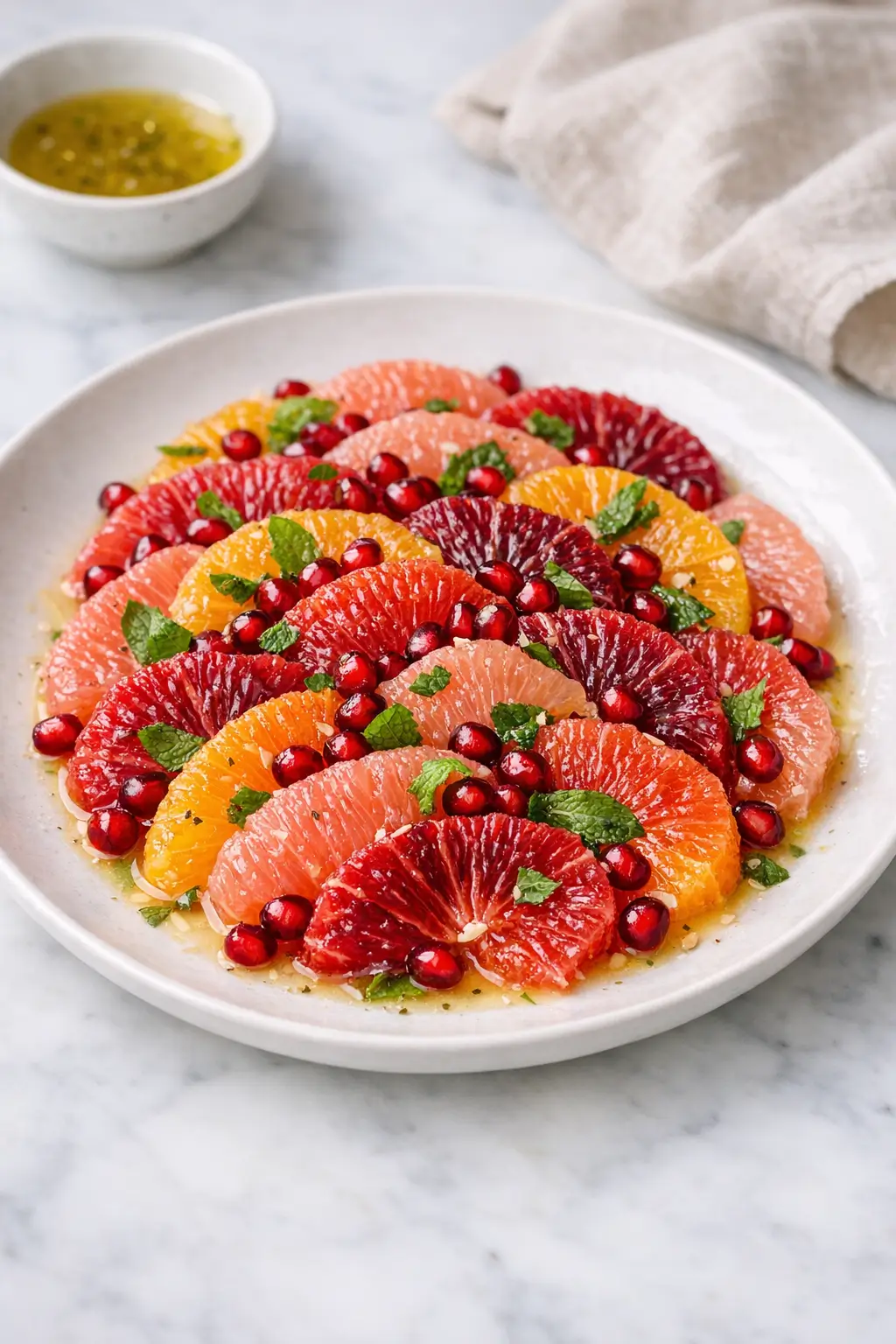
For a platter presentation, lift the dressed segments out with your hands and arrange them slightly overlapping on a wide, shallow plate, alternating colors so the pink grapefruit and deep red blood oranges are scattered around.
Spoon a little of the remaining dressing from the bowl over the top, especially over any paler orange segments so they pick up more shine.
-
Finish with herbs and crunch.
Scatter the pomegranate seeds over the citrus, if using, then sprinkle on the torn or sliced mint leaves.
Add a final small pinch of salt over the top (it brings out sweetness), plus another twist or two of pepper if you enjoy a subtle bite.
-
Rest briefly before serving.
Let the salad sit at room temperature for 5–10 minutes so the flavors meld and the herbs soften slightly.
Serve soon after dressing for the best color and texture.
Kitchen note: If you need to hold the salad longer than 30 minutes, keep the citrus and dressing separate in the fridge, then toss with mint and pomegranate just before serving. Fully dressed citrus will keep, but the mint darkens and the colors bleed more over time.
What to Expect
This citrus salad is soft and spoonable, not crisp like a lettuce salad.
The grapefruit brings a gentle bitterness and juiciness, while the blood oranges add sweet, berry-like notes and that deep red color. The extra navel or Cara Cara orange rounds things out with a classic orange sweetness.
The dressing is light and glossy, more like a seasoned citrus juice than a thick vinaigrette. You should see a shallow pool in the bottom of the bowl, which is exactly what you want for spooning over yogurt or soaking into anything you serve alongside.
Color-wise, expect the blood orange segments to tint the dressing slightly pink over time. That means the first 20–30 minutes after assembly are the most vibrant, especially if you want strong contrast between the grapefruit and blood oranges.
Kitchen note: Not all blood oranges are equally pigmented. Some will be streaked or only lightly colored. The flavor will still work; you’ll just end up with a softer, more orange-toned salad.
Ways to Change It Up
-
Make it fully vegan and extra bright.
Swap the honey for maple syrup and increase the lime juice to 2 tbsp (30 ml) total to keep the dressing vivid. Maple adds a caramel note that plays nicely with the slightly raspberry flavor of blood oranges.
-
Add creaminess with avocado or cheese.
For a more substantial salad, gently fold in 1 firm-ripe avocado, cut into bite-size chunks, or scatter over 60–90 g (2–3 oz) soft goat cheese or fresh ricotta.
Add these just before serving so they don’t break apart.
-
Go spicier and savory.
Add ¼ tsp Aleppo pepper or red pepper flakes to the dressing and an extra pinch of salt, then serve the salad over a bed of peppery arugula.
This works especially well next to roasted chicken or fatty fish.
-
Faster, rustic version.
If segmenting feels like too much on a busy night, simply peel the citrus with your hands, remove as much pith as you reasonably can, and slice into thin rounds or half-moons.
Arrange on a plate, drizzle with the whisked dressing, and finish with herbs and pomegranate; the eating experience is slightly different but the flavors stay the same.
Serving and Storage
This salad is most often served as a side dish or first course, especially in late winter when citrus is at its peak and heavier mains are common.
It pairs well with roasted meats (think chicken, pork, or salmon), rich braises, or creamy pasta dishes that appreciate a sharp, juicy contrast. For another bright but cozy option on the table, you could serve it alongside Pea and Mint Soup That Tastes Like Spring.
For brunch, tuck the citrus salad between egg dishes and baked goods. It’s especially good next to French-Style Savory Crêpes with Melty Cheese & Veg or as a counterpoint to something rich like French Onion Soup with Deep Flavor, Simple Steps.
Leftovers keep surprisingly well because there are no greens to wilt. Store the salad in an airtight container in the refrigerator for up to 2 days.
The mint will darken and the blood orange juice will stain the lighter segments more deeply, but the flavors stay clean. Stir gently before serving and taste for seasoning; you may want an extra pinch of salt or squeeze of lime to wake it back up.
Kitchen note: Avoid freezing this salad. The citrus segments turn mushy and lose their fresh bite once thawed.
Cultural Context
Citrus salads like this one sit at the intersection of fruit course and savory side, and they show up in many Mediterranean-influenced tables during the cooler months. Blood oranges in particular are closely associated with the Mediterranean, especially Sicily and parts of Spain, where they have been grown since at least the 18th century.
In those regions, sliced or segmented citrus is often served simply with olive oil, sometimes with fennel or olives, as a way to highlight seasonal fruit rather than hide it. Blood oranges develop their deep color when warm days are followed by cool nights, which is why they’re strongly linked to winter harvests in temperate climates.
If you’re curious about the background of blood oranges and their connection to Mediterranean agriculture, this overview from the citrus entry on blood oranges and their history is a useful starting point. For a broader look at how citrus moved into European cuisines, you can also explore this brief history of oranges in the Mediterranean region from the orange fruit entry.
Common Questions and Troubleshooting
My salad tastes too bitter. What can I do?
First, check that you’ve removed all of the thick white pith when peeling; that’s where much of the bitterness lives. Next, whisk in another 1–2 tsp honey (or maple syrup) and a pinch of salt directly into the remaining dressing in the bowl, then gently turn the citrus segments through it again.
If one grapefruit is particularly sharp, you can remove a few of its segments and replace them with extra orange to rebalance.
My citrus segments are falling apart. Did I overwork them?
Probably not; some varieties are simply more delicate.
Use a slightly sharper knife next time and cut with smooth strokes rather than sawing, which can tear the membranes. When tossing, use your hands to cradle and lift the segments instead of stirring.
Broken segments won’t hurt the flavor; the salad just looks a bit more rustic.
Can I prep citrus salad with grapefruit and blood oranges ahead for a party?
Yes, with a few adjustments.
You can peel and segment all the citrus up to 1 day in advance and store it in a covered container in its juices in the refrigerator. Mix the dressing separately and keep it chilled.
About 30–45 minutes before serving, drain off most of the stored juice (reserve for drinking or cocktails), toss the citrus gently with the dressing, then finish with mint and pomegranate right before it hits the table.
Kitchen note: If you dress the salad many hours ahead, the blood oranges will bleed color more intensely and the herbs will lose their brightness.
What if I can’t find blood oranges?
You can still make this salad with a mix of grapefruits and regular oranges such as Cara Cara or navel.
The flavor will lean more toward classic orange and grapefruit, without the raspberry-like note and deep red color, but the honey–lime dressing and mint will still give you that same refreshing, late-winter feel.
Is it okay to leave out the mint?
Yes. The salad will taste a bit sweeter and simpler without it.
If you want another fresh note, thinly sliced basil or even a small amount of very finely sliced fennel bulb can take its place without overpowering the citrus.
Conclusion
This citrus salad makes the most of late-winter grapefruit and blood oranges without asking much from you beyond a little knife work.
Once you’ve tried it a couple of times, segmenting the citrus becomes almost meditative, and the rest of the recipe is just whisking and gentle tossing. If you make it, I’d love to hear how it went in your kitchen—leave a comment with the combinations of citrus you used, and any tweaks you made so other home cooks can learn from your version too.
Citrus Salad with Grapefruit and Blood Oranges Ease

Equipment
- Large shallow serving bowl
- Medium bowl (to catch juices)
- Fine-mesh strainer (optional)
- Chef’s knife or large serrated knife
- Paring knife
- Paper towels
- Two large spoons (optional, for tossing)
Ingredients
For the salad
- 2 medium pink or ruby grapefruits peeled and segmented (about 600 g total / 1 1/3 lb)
- 3 medium blood oranges peeled and segmented (about 450 g / 1 lb)
- 1 medium navel or Cara Cara orange peeled and segmented (about 180 g / 6 oz)
- 2 tbsp pomegranate seeds optional (about 20 g)
- 2–3 tbsp fresh mint leaves roughly torn or thinly sliced (about 6–9 g)
For the honey–lime dressing
- 2 tbsp extra-virgin olive oil 30 ml
- 1 1/2 tbsp freshly squeezed lime juice 30 ml (from about 1 lime)
- 1 tbsp freshly squeezed grapefruit or orange juice 15 ml (from trimmings)
- 1–1 1/2 tbsp runny honey to taste (15–22 g)
- 1/8 tsp fine sea salt plus more to taste
- freshly ground black pepper to taste (about 4–5 twists)
Instructions
- Mix the dressing base. In a large, shallow serving bowl, whisk together the olive oil, lime juice, grapefruit or orange juice, honey, salt, and several grinds of black pepper until the honey dissolves and the mixture looks glossy and slightly thickened. Taste with a segment of citrus if you have one trimmed already; the dressing should taste a touch sharper and sweeter than you like on its own because it will be diluted by citrus juice.
- Prepare your cutting setup. Set a medium bowl on the counter to catch juices, and place a fine-mesh strainer over it if you’d like to remove any seeds. Keep a sharp chef’s knife or large serrated knife and a small paring knife nearby. Line a plate or board with a piece of paper towel to hold the finished segments (supremes) so they don’t slide around too much.
- Peel the grapefruit and oranges. Slice a thin slice off the top and bottom of one grapefruit so it stands flat. Working from top to bottom, follow the curve of the fruit with your knife, cutting away the peel and all the white pith in strips. Rotate as you go until all the peel is removed and you see only flesh, with the membranes as thin white lines.
- Segment the citrus without pith. Holding the peeled grapefruit over the bowl to catch juices, use the paring knife to cut along each side of a membrane line toward the center, freeing a clean, skinless wedge (a “supreme”). Drop each segment onto the paper towel–lined plate. Work all the way around the fruit, then gently squeeze the remaining membrane over the bowl to release extra juice for the dressing. Repeat with the remaining grapefruit and all the oranges. Kitchen note: Work slowly with the knife and keep your fingers tucked back; citrus is slippery, and it’s easy to nick yourself if you rush this step.
- Blot very juicy segments (optional). If your citrus is especially juicy, lightly pat the segments with another paper towel. You don’t want them dry, but removing excess surface juice keeps the salad from looking soupy once it hits the bowl.
- Adjust the dressing with citrus juice. Measure 2–3 tbsp (30–45 ml) of the strained citrus juice from the bowl into your serving bowl with the dressing base. Whisk to combine and taste again. If it feels too sharp, whisk in another 1/2–1 tbsp honey. If it tastes flat, add a pinch more salt or another squeeze of lime.
- Toss segments gently in the dressing. Add the citrus segments to the serving bowl. Use clean hands to turn them gently in the dressing, or use two large spoons, scooping from the bottom so you don’t break up the pieces. Aim to coat each segment lightly; you should still see some of the dressing pooling at the bottom of the bowl.
- Layer for color. For a platter presentation, lift the dressed segments out with your hands and arrange them slightly overlapping on a wide, shallow plate, alternating colors. Spoon a little of the remaining dressing from the bowl over the top, especially over any paler orange segments so they pick up more shine.
- Finish with herbs and crunch. Scatter the pomegranate seeds over the citrus, if using, then sprinkle on the torn or sliced mint leaves. Add a final small pinch of salt over the top, plus another twist or two of pepper if you enjoy a subtle bite.
- Rest briefly before serving. Let the salad sit at room temperature for 5–10 minutes so the flavors meld and the herbs soften slightly. Serve soon after dressing for the best color and texture.



Leave a Reply