
Cold pasta salad jars are my favorite kind of lazy-organized lunch: cook a pot of pasta once, chop a few vegetables, and you’ve got grab-and-go meals for days. The trick is in how you layer everything so the pasta stays bouncy, the veggies stay crisp, and nothing turns into a soggy mess by Wednesday. This version leans Mediterranean—rotini, crunchy cucumbers and peppers, olives, and feta in a simple vinaigrette—but the base method works with lots of flavor profiles.
If you’re throwing this together on a Sunday night with kids wandering in and out of the kitchen, do yourself a favor and cook the pasta first so it can cool while you chop. By the time the vegetables are done, you’re basically assembling.
Ingredients
Makes 4 lunch jars (each a generous single serving)
For the pasta and vegetables
- 250 g / 8 oz dry short pasta (rotini, fusilli, farfalle all work) – shapes with ridges hold dressing well
- 1 small cucumber (about 150 g / 5 oz), quartered lengthwise and sliced – crunch and freshness
- 1 small red bell pepper (about 120 g / 4 oz), diced
- 150 g / 5 oz cherry or grape tomatoes, halved
- 60 g / 2 oz red onion, very thinly sliced (about 1/4 small onion) – for bite; rinse in cold water if you want it milder
- 60 g / 2 oz pitted Kalamata olives, halved or sliced
- 120 g / 4 oz feta cheese, cut in small cubes or crumbled
- 2 tbsp chopped fresh parsley (optional, but brightens everything)
For the vinaigrette (jar bottom layer)
- 4 tbsp extra-virgin olive oil
- 3 tbsp red wine vinegar
- 1 tsp Dijon mustard – helps the dressing emulsify so it doesn’t separate in the jar
- 1 small garlic clove, finely minced or grated
- 1 tsp dried oregano
- 1/2 tsp fine sea salt, plus more to taste
- 1/4 tsp freshly ground black pepper
Optional add-ins for more protein
- 150 g / 5 oz cooked chickpeas, rinsed and well drained – budget-friendly protein that holds up in the jar
- or 150–200 g / 5.3–7 oz cooked chicken breast, diced – cool completely before adding
Substitution notes:
- You can swap feta with 120 g / 4 oz mozzarella pearls for a milder, creamier version; it won’t be as salty, so taste and bump up the seasoning.
- Use any firm cucumber type (English, Persian, or mini); avoid very watery overripe cucumbers or the salad will weep liquid by day three.
- Not a fan of olives? Add 2–3 tbsp toasted sunflower seeds instead for some texture and salt.
Step-by-Step Cold Pasta Salad Jars for Easy Lunch Meal Prep
-
Cook and cool the pasta.
Bring a large pot of well-salted water to a boil (it should taste like the sea). Add the pasta and cook until just at or slightly past al dente according to package directions—about 8–10 minutes for rotini. Slightly softer than hot pasta is fine here; it firms up when cold. -
Chill the pasta quickly.
Drain in a colander, rinse under cold running water while tossing until the pasta is completely cool, then drain very well. You don’t want water trapped in the spirals. I usually let it sit in the colander for 5 minutes, shaking it once or twice.
One thing—if the pasta is even a little warm when it goes into the jars, steam will build up and you’ll get condensation and mushy texture by midweek. -
Prep the vegetables and extras.
While the pasta cooks and cools, chop the cucumber, pepper, tomatoes, onion, and olives as listed. If using chickpeas or chicken, have those ready and chilled too. Keep everything in separate piles or bowls; this makes layering easier. -
Mix the vinaigrette.
In a small bowl or liquid measuring cup, whisk together the olive oil, red wine vinegar, Dijon, garlic, oregano, salt, and pepper until slightly thickened and emulsified. Taste and adjust—if it doesn’t taste a little punchy now, it’ll taste flat once it’s coating pasta. -
Lay out your jars.
Use four 500–750 ml / 16–24 oz wide-mouth jars with tight-fitting lids. Smaller jars work if you want lighter portions, but don’t cram everything; packed pasta clumps. -
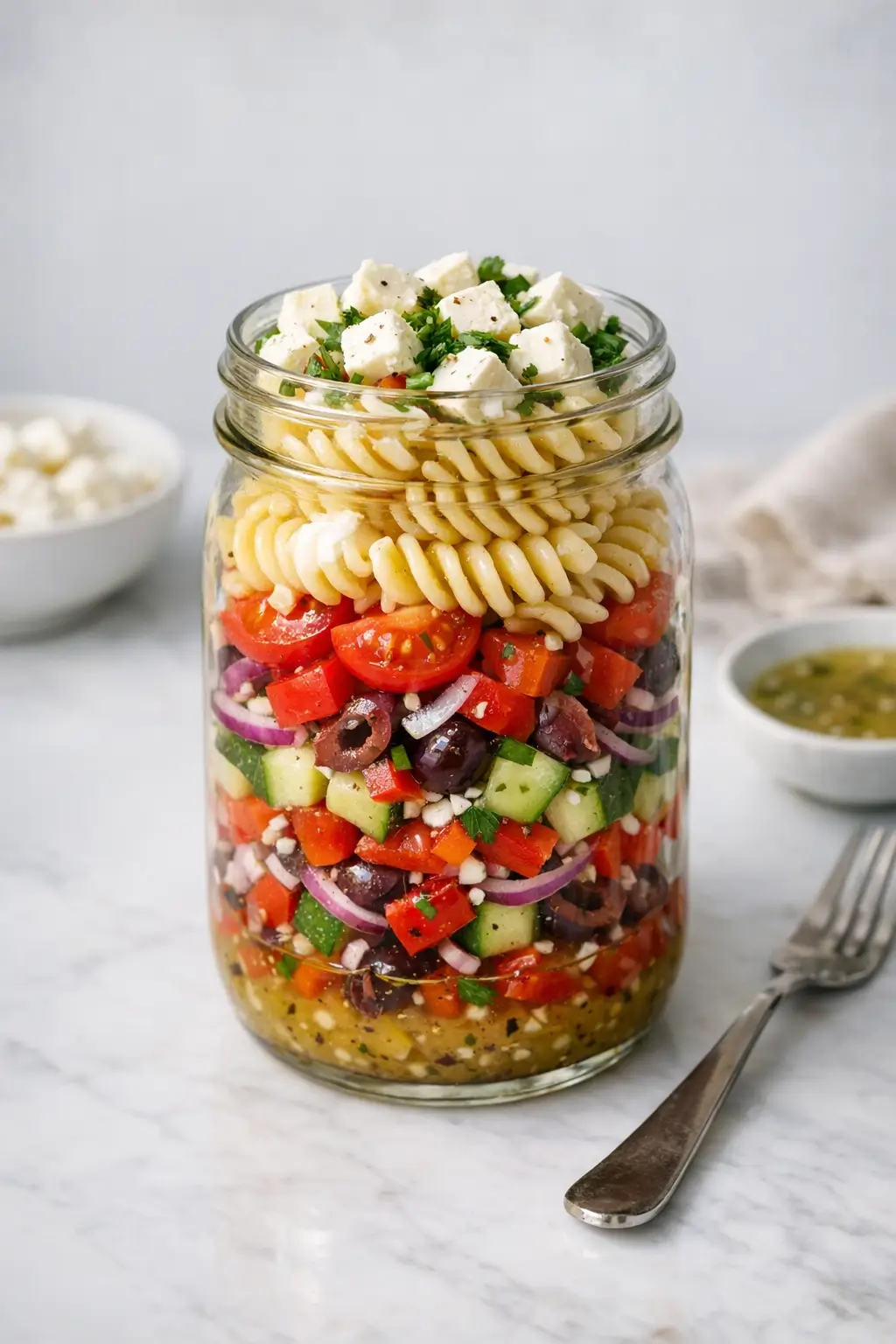
Layer 1 – dressing (bottom).
Divide the vinaigrette evenly between the jars, about 2 tbsp per jar. This is your “soggy shield” layer. -
Layer 2 – sturdy veg and beans.
Add a layer of red onion, peppers, cucumbers, olives, and chickpeas (if using) on top of the dressing, dividing them roughly evenly between the jars. These sit happily in the vinaigrette and actually taste better after a few days.
Tip: Tomatoes are a bit softer, so I usually keep them for the next layer up instead of directly in the dressing. -
Layer 3 – tomatoes and protein.
Add the halved tomatoes and chicken (if using) on top of the sturdier vegetables. Try to keep the chicken away from the direct dressing layer; it holds its texture better that way. -
Layer 4 – pasta.
Spoon the cooled, very well-drained pasta into each jar, almost to the top. Gently tap the jar on the counter to settle everything, but don’t pack it down hard. Pasta needs a bit of space so the dressing can move around when you shake it. -
Layer 5 – cheese and herbs (top).
Finish with feta and parsley right at the top, away from the dressing. This keeps the cheese from breaking down or going mushy over a few days. It’ll still get some flavor from the dressing when you shake the jar. -
Seal and chill.
Screw the lids on tightly. Refrigerate the jars for at least 2 hours before eating so the flavors start to mingle. These keep well in the fridge for up to 4 days. -
To serve – shake or bowl.
When you’re ready to eat, do one of two things:- Give the jar a good shake (really, don’t be dainty) to distribute the dressing, then eat straight from the jar with a fork.
- Or tip everything into a bowl and toss gently. If it looks a bit dry after tossing, drizzle in a splash of olive oil or vinegar.
-
Packing for work or school.
If the jars won’t stay refrigerated the whole time, pack them in an insulated lunch bag with two frozen ice packs (one above, one below). Cold pasta salad is still a perishable food; food safety guidelines recommend keeping it at 41°F / 5°C or below as much as possible, especially if there’s cheese or chicken involved.
What to Expect
You end up with a pasta salad that’s bright and tangy rather than gloopy, with enough dressing to coat everything without a puddle at the bottom. The pasta should be tender but not falling apart, and the cucumbers and peppers stay crunchy if you’ve layered them against the dressing.
By day three the flavors are even better—more “pasta deli counter” energy—but the feta will soften slightly and the tomatoes relax a bit. If you’re used to mayo-based salads, this one will taste lighter and more acidic, which is exactly what makes it lunch-friendly.
Ways to Change It Up
If you want a veg-only version, just skip the chicken and double the chickpeas. The jars hold up the same way, and the chickpeas soak up the vinaigrette nicely. I’d keep the feta in for richness.
Vegan take: use chickpeas (or white beans) for protein, swap the feta for a firm vegan feta or leave it out, and add a spoonful of toasted nuts or seeds at the top for richness. The flavor is still solid, but you’ll miss a bit of salty depth without cheese—so don’t skimp on seasoning the dressing.
You can also push this toward an Italian deli vibe. Use sliced pepperoncini, a handful of diced salami, and provolone instead of feta, and keep the same vinaigrette. It’s saltier and a little heavier, but very satisfying if you want something closer to an antipasto-in-a-jar situation.
Serving and Storage
For a quick desk lunch, I like to pour a jar into a bowl and top it with a handful of extra greens—baby spinach or arugula—right before eating. The pasta salad acts as the “dressing” for the greens and you don’t need anything else.
At home, this goes well next to grilled chicken, salmon, or even something simple like a store-bought rotisserie chicken if you’re stretching one cook night into several lunches. It also works as a side for burgers or sausages when you don’t want to make a separate salad.
Store the jars in the coldest part of your fridge (usually the back, not the door) for up to 4 days. Beyond that, the tomatoes and cucumbers start to go soft and the pasta loses its texture.
To pack ahead for a lunch without fridge access, keep the jars in the fridge overnight, then move them straight into an insulated bag with ice packs in the morning. Don’t leave them at room temperature for more than 2 hours total; cooked pasta dishes are still considered perishable, even without meat.
Common Questions
Can I use a different pasta shape?
Yes, but keep it short and sturdy. Rotini, fusilli, farfalle, penne, or small shells work well. Tiny shapes like ditalini or orzo can turn a bit mushy when packed tightly in jars, and long pasta like spaghetti is just annoying to eat cold from a jar.
What if I want a creamier dressing?
You can whisk 2–3 tbsp plain Greek yogurt into the vinaigrette for a lightly creamy version. Just know it won’t stay quite as stable in the jar past day three, and it’ll taste a bit less sharp. I don’t recommend full-on mayo-based dressing here; it’s thicker, doesn’t flow as easily when you shake the jar, and it’s touchier for food safety if your lunch bag runs warm.
Can I make these gluten-free?
Yes. Use a gluten-free short pasta you already like in cold dishes. Some gluten-free pastas get firm and grainy in the fridge, so if you’re testing a new brand, cook a small portion, chill it, and taste it the next day before committing to four jars.
How far in advance can I prep these?
Four days is my comfortable limit for quality. The salad may technically be safe a bit longer if kept very cold the whole time, but the vegetables lose crunch and the pasta gets waterlogged. If you want lunches for a whole week, make one batch on Sunday and another on Wednesday.
What if my salad seems dry when I open the jar?
That usually means the pasta absorbed more dressing than expected. Before giving up on it, add a drizzle of olive oil and a splash of vinegar, then shake or toss again. Next time you make it, bump the dressing up by 1–2 tbsp overall.
I first made these cold pasta salad jars when I got sick of sad desk sandwiches and needed something I could literally grab while running out the door. Once you’ve done it once, it becomes one of those “cook on Sunday, thank yourself on Thursday” situations.
If you tweak the veggies or swap in a different cheese that you love, tell me what you tried—I’m always looking for new combinations to test in my own lunch rotation.

Cold Pasta Salad Jars for Easy Lunch Meal Prep

Equipment
- Large pot
- Colander
- Chef’s knife
- Cutting board
- Small bowl or liquid measuring cup
- Whisk
- 4 wide-mouth jars (500–750 ml / 16–24 oz) with lids
Ingredients
For the pasta and vegetables
- 250 g dry short pasta (rotini, fusilli, farfalle) 8 oz; shapes with ridges hold dressing well
- 1 small cucumber about 150 g / 5 oz; quartered lengthwise and sliced
- 1 small red bell pepper about 120 g / 4 oz; diced
- 150 g cherry or grape tomatoes 5 oz; halved
- 60 g red onion 2 oz; very thinly sliced (about 1/4 small onion); rinse in cold water if you want it milder
- 60 g pitted Kalamata olives 2 oz; halved or sliced
- 120 g feta cheese 4 oz; cut in small cubes or crumbled
- 2 tbsp fresh parsley chopped; optional
For the vinaigrette (jar bottom layer)
- 4 tbsp extra-virgin olive oil
- 3 tbsp red wine vinegar
- 1 tsp Dijon mustard
- 1 small clove garlic finely minced or grated
- 1 tsp dried oregano
- 1/2 tsp fine sea salt plus more to taste
- 1/4 tsp freshly ground black pepper
Optional add-ins for more protein
- 150 g cooked chickpeas rinsed and well drained; optional
- 150–200 g cooked chicken breast diced; optional; cool completely before adding
Instructions
- Cook and cool the pasta. Bring a large pot of well-salted water to a boil. Add the pasta and cook until just at or slightly past al dente according to package directions—about 8–10 minutes for rotini.
- Chill the pasta quickly. Drain in a colander, rinse under cold running water while tossing until completely cool, then drain very well. Let it sit in the colander for about 5 minutes, shaking once or twice.
- Prep the vegetables and extras. Chop the cucumber, pepper, tomatoes, onion, and olives as listed. If using chickpeas or chicken, have those ready and chilled too.
- Mix the vinaigrette. Whisk together olive oil, red wine vinegar, Dijon, garlic, oregano, salt, and pepper until slightly thickened and emulsified. Taste and adjust seasoning.
- Lay out your jars. Use four 500–750 ml / 16–24 oz wide-mouth jars with tight-fitting lids.
- Layer 1 – dressing (bottom). Divide the vinaigrette evenly between the jars, about 2 tbsp per jar.
- Layer 2 – sturdy veg and beans. Add red onion, peppers, cucumbers, olives, and chickpeas (if using), dividing roughly evenly between jars.
- Layer 3 – tomatoes and protein. Add the halved tomatoes and chicken (if using) on top of the sturdier vegetables.
- Layer 4 – pasta. Spoon the cooled, very well-drained pasta into each jar, almost to the top. Tap gently to settle but don’t pack tightly.
- Layer 5 – cheese and herbs (top). Finish with feta and parsley at the very top, away from the dressing.
- Seal and chill. Screw the lids on tightly and refrigerate at least 2 hours before eating. Store up to 4 days.
- To serve. Shake the jar well to distribute dressing and eat from the jar, or tip into a bowl and toss. If it seems dry, add a drizzle of olive oil or a splash of vinegar.



Leave a Reply