
An easy hummus platter with veggies and pita is one of those low-effort, high-reward spreads that works for busy weeknights, casual lunches, or last‑minute guests. The hummus is creamy and lemony, the vegetables are crisp and sweet, and the warm pita makes it feel like a complete meal instead of just a snack.
If you’re rushing in the door, start by getting the chickpeas draining and the oven heating for the pita. While the food processor runs, use that time to quickly wash and slice your vegetables so everything is ready together.
This kind of platter shows up in many Mediterranean and Middle Eastern–inspired spreads and is usually eaten as an appetizer or light meal, especially in warmer months. It suits newer cooks because most of the work is in basic chopping, and more experienced cooks can fine‑tune the texture and seasoning of the hummus. Expect a smooth, rich dip, crunchy vegetables, and a flexible format you can adapt to whoever is at the table.
Ingredients
Serves 3–4 as a light meal, 4–6 as an appetizer
For the hummus
- 1 can (15 oz / 425 g) chickpeas (garbanzo beans), drained and rinsed – base of the hummus
- 3–4 tbsp (45–60 ml) extra-virgin olive oil, plus more for drizzling – adds richness and helps with a smooth texture
- 3 tbsp (45 ml) tahini (sesame paste) – gives hummus its nutty flavor and creaminess
- 3 tbsp (45 ml) fresh lemon juice – brightens and balances the richness
- 1–2 small garlic cloves, roughly chopped – for sharp, savory flavor
- 1/2 tsp fine sea salt, plus more to taste – start here and adjust
- 2–4 tbsp (30–60 ml) cold water or chickpea liquid (aquafaba) – to thin and lighten the hummus
- Optional: 1/2 tsp ground cumin – adds a warm, earthy note
- Optional garnish: pinch of smoked paprika or sweet paprika, extra olive oil, a few whole chickpeas, chopped fresh parsley
Kitchen note: If your tahini has separated in the jar, stir it very well before measuring. Thick, un-stirred tahini can make the hummus seize and turn pasty instead of creamy.
For the veggie and pita platter
- 3–4 small carrots, peeled and cut into sticks (about 2 cups / 220 g)
- 1 small cucumber, sliced into rounds or sticks
- 1 red, yellow, or orange bell pepper, seeded and sliced into strips
- 1 cup (150 g) cherry or grape tomatoes, left whole or halved
- 4 small radishes, thinly sliced (optional but great for crunch)
- 2–3 pita breads (about 250 g total) – plain or whole‑wheat
- 1 tbsp (15 ml) olive oil – for brushing pita
- Optional extras: a handful of olives, crumbled feta or a dairy‑free feta, or a few pepperoncini for tang

Step-by-Step Instructions for Easy Hummus Platter With Veggies and Pita
- Prep the chickpeas and tools.
- Drain and rinse the chickpeas in a colander.
- Set aside a small spoonful of chickpeas if you want to use them later as a garnish.
- Fit your food processor with the steel blade.
- Blend the tahini and lemon first.
- Add the tahini and lemon juice to the food processor.
- Process for 30–45 seconds, scrape down the bowl, then process again until the mixture looks lighter in color and slightly thickened.
- This step helps create a fluffy base so the hummus ends up smoother.
- Add garlic, salt, and olive oil.
- Add the chopped garlic, salt, and olive oil to the tahini mixture.
- Process for another 30 seconds or so, until the garlic is finely minced and everything is well combined.
- Add the chickpeas in stages.
- Add about half of the chickpeas and process for 1 minute.
- Scrape down the sides, then add the remaining chickpeas.
- Process again for 1–2 minutes, until the mixture looks very thick and mostly smooth.
Kitchen note: If the hummus forms a tight ball and just spins around the bowl, stop the machine and add 1–2 tablespoons of cold water, then process again. Repeat as needed until it loosens and looks creamy.
- Adjust consistency with cold water.
- With the motor running, drizzle in 2 tablespoons of cold water.
- Continue blending for 30–60 seconds.
- Check the texture: it should be smooth and soft enough to hold a gentle swirl, not stiff like mashed potatoes.
- If it still seems dense, add another tablespoon of water at a time, pulsing between additions.
- Taste and season.
- Stop the processor and taste the hummus.
- Add more salt if it tastes flat, or more lemon juice if you want extra brightness.
- If using cumin, add it now and pulse to combine.
- Chill while you prepare the vegetables.
- Transfer the hummus to a serving bowl.
- Use the back of a spoon to swirl the top and make a shallow well in the center.
- Cover and refrigerate while you prep the vegetables and pita.
- Even 15–20 minutes in the fridge helps the flavors settle.
- Prep the vegetables.
- Peel and cut carrots into even sticks.
- Slice the cucumber into rounds or sticks.
- Core and seed the bell pepper, then slice into strips.
- Rinse the tomatoes and radishes; slice radishes thinly.
- Pat everything dry with a clean towel so moisture doesn’t pool on the platter.
- Warm the pita.
- Heat the oven to 375°F (190°C) or use a dry skillet over medium heat.
- Brush both sides of each pita lightly with olive oil.
- Warm in the oven for 5–7 minutes, or in the skillet for 1–2 minutes per side, until soft, pliable, and just starting to toast.
- Cut each pita into 6–8 wedges.
Kitchen note: Pita goes from warm to brittle quickly if it overbakes. Pull it as soon as it’s soft and fragrant; carryover heat will finish the job without drying it out.
-
Assemble the platter.
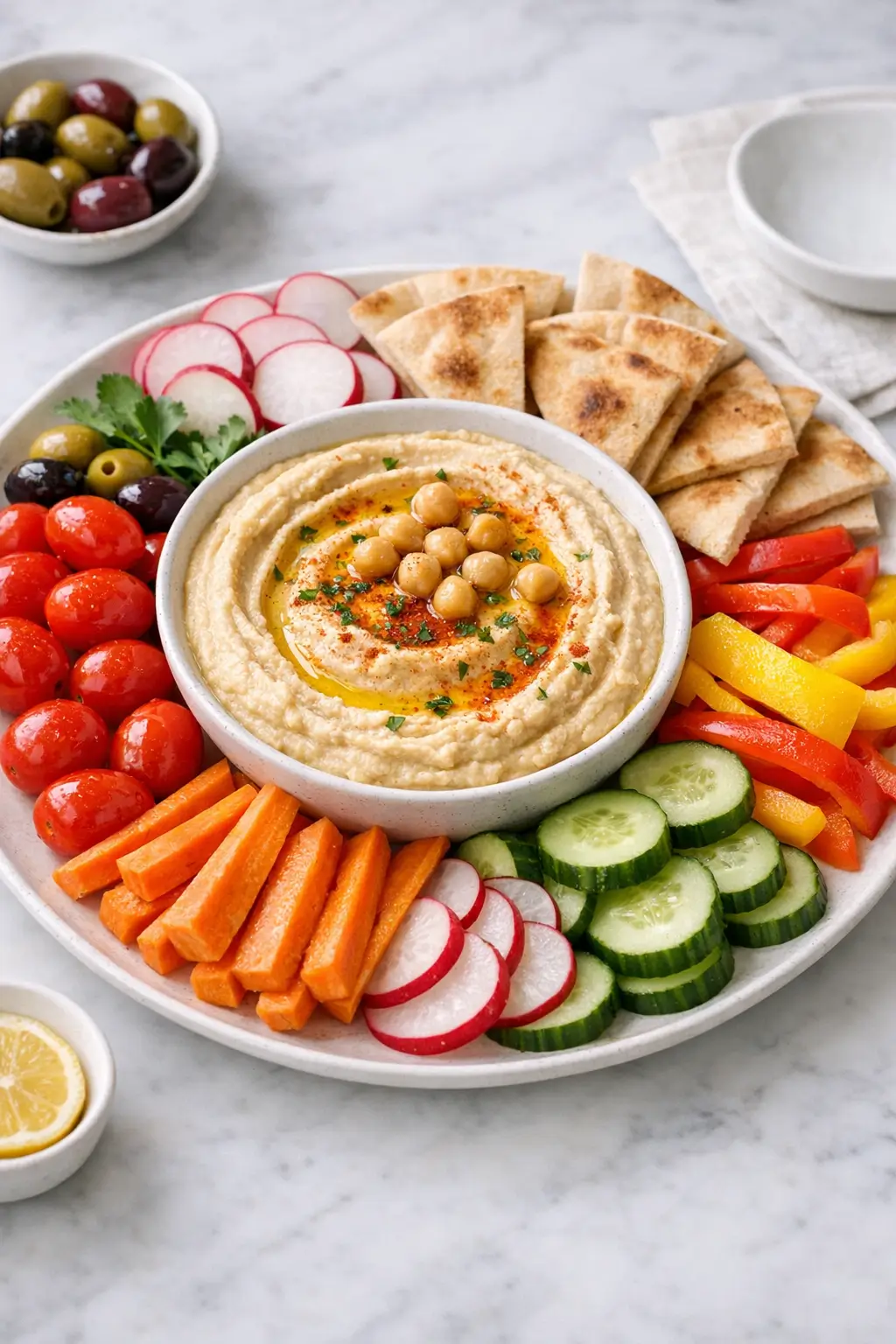
- Place the bowl of hummus slightly off-center on a large serving board or platter.
- Arrange the vegetable sticks and slices in loose piles around it.
- Fan the warm pita wedges in one or two areas so people can see them clearly.
- If you’re using olives or cheese, tuck them into small open spots.
-
Finish the hummus.
- Just before serving, drizzle the hummus with a spoonful of olive oil.
- Sprinkle with smoked or sweet paprika, the reserved whole chickpeas, and a little chopped parsley if you have it.
- Serve immediately while the pita is still warm and the vegetables are crisp.
Kitchen note: If you’re assembling this platter ahead, hold off on the final olive oil drizzle and paprika until right before serving so the top of the hummus stays fresh-looking and doesn’t form a skin.
What to Expect
The finished hummus should be very smooth, thick enough to sit in soft swirls, and loose enough that a carrot stick can swipe through it without snapping. It will firm up a little in the fridge, so aim for slightly looser than you think you need while blending.
Flavor-wise, expect a balance of nutty tahini, mild chickpeas, bright lemon, and a gentle garlic edge. The vegetables bring sweetness and crunch while the pita adds chew and warmth. If you use smoked paprika or cumin, there will be a subtle smoky or earthy note in the background.
Different tahini brands vary a lot. Some are naturally runnier and mild, while others are thicker and more bitter, which can shift the flavor and texture. Food processors also differ; a smaller or less powerful model may leave a bit more texture in the hummus, which is still completely fine for a weeknight platter.
Ways to Change It Up
- Make it fully vegan and dairy-free.
- The base recipe is already vegan if you skip any cheese toppings.
- For extra richness without dairy, drizzle with more olive oil or top the hummus with a spoonful of toasted pine nuts or sunflower seeds instead of feta.
- Serve with additional plant-based items like marinated chickpeas or grilled zucchini slices.
- Adjust the heat level.
- For a spicier platter, sprinkle Aleppo pepper, crushed red pepper flakes, or a drizzle of chili oil over the hummus.
- Another option is to serve a small bowl of chili crisp or harissa on the side so each person can add their own heat.
- To keep it very mild for kids or spice-sensitive eaters, skip any hot peppers and go easy on the raw garlic; one small clove is usually enough.
- Speed things up further.
- On a really tight night, you can use a high‑quality store-bought hummus and focus your energy on prepping fresh vegetables and warming pita.
- Swirl the hummus into a serving bowl, drizzle with olive oil, and add a quick topping like chopped herbs or a pinch of paprika to make it feel more homemade.
- You can also serve pre‑cut vegetables from the produce section; just rinse and dry them well for best texture.
- Change the vegetable mix.
- Swap or add in what you have: sugar snap peas, blanched green beans, endive leaves, or lightly steamed broccoli florets all work.
- In colder months, add roasted vegetables (like roasted carrots or cauliflower) served at room temperature for a different texture.
- For a heartier platter, include wedges of hard‑boiled egg or some small falafel if you have them on hand.
Serving and Storage
This hummus platter works well as a starter before a simple main course, or as the main event alongside a pot of soup or a grain salad. For a more filling spread, pair it with dishes like lentil soup, roasted vegetables, or a simple grain salad.
Bright, crunchy vegetables are the natural pairing here, but you can also add some briny elements like olives or pickled onions to cut through the richness of the hummus. Warm pita is classic; if you run short, crackers or crispbread stand in reasonably well.
Leftover hummus keeps well in an airtight container in the refrigerator for up to 4–5 days. Press a small piece of parchment or plastic wrap directly onto the surface before sealing if you want to minimize any drying on top.
Vegetables can be stored in separate containers lined with a paper towel for 2–3 days; keep tomatoes and cucumbers in their own containers so they don’t water down the crisper items. Pita is best the day it’s warmed but can be wrapped and stored at room temperature for 1 day or refrigerated for up to 3 days, then reheated in a low oven until soft.
Cultural Context
Hummus is widely associated with cuisines across the Eastern Mediterranean and Levant, where chickpeas and tahini have long been staple ingredients. It is commonly served as part of a broader mezze table—a collection of small dishes including salads, dips, breads, and pickles.
Historically, hummus is documented as a chickpea and tahini preparation in medieval Arabic cookbooks, evolving over time into the lemon- and garlic-seasoned version many people know today. For a concise overview of hummus and its ingredients, see this summary of hummus as a Levantine dish on this hummus reference page. To understand tahini’s broader role across regional cuisines, this entry on tahini and its uses gives additional context.
Common Questions and Troubleshooting
My hummus is grainy instead of smooth. What went wrong?
Grainy texture usually means the chickpeas weren’t processed long enough or there isn’t enough liquid. Keep blending for another 1–2 minutes, and add more cold water or a bit of chickpea liquid until the texture loosens and smooths out. Very old canned chickpeas can also stay a bit firm; if this happens often, try a different brand.
The hummus tastes bitter. How can I fix it?
Bitterness often comes from tahini. Stir your tahini well before using, and next time, try a different brand. To fix a batch that’s already made, add a splash more lemon juice, a pinch of salt, and another tablespoon of olive oil. A small pinch of cumin can also help round out harsh flavors.
My hummus is too thick and pasty. Can I rescue it?
Yes. Scrape it back into the food processor and blend in cold water, 1 tablespoon at a time, until it softens to a creamy texture. Taste and rebalance the seasoning after thinning; diluted hummus may need a bit more salt or lemon.
How far in advance can I assemble the platter?
You can make the hummus up to 2 days ahead and keep it covered in the fridge. Most vegetables can be washed and cut a day ahead and stored in separate containers. Wait to warm and cut the pita and to arrange everything on the platter until 30–60 minutes before serving so the bread stays soft and the vegetables look fresh.
Kitchen note: If you’re preparing vegetables ahead, keep high‑moisture items (like cucumbers and tomatoes) in separate containers from carrots and peppers. This helps keep the crisper vegetables from becoming soggy overnight.
Can I freeze leftover hummus?
Hummus freezes reasonably well. Spoon it into a small airtight container, leaving a little room for expansion, and freeze for up to 2 months. Thaw overnight in the refrigerator and stir in a splash of water or olive oil if needed to restore a creamy texture before serving.
Conclusion
An easy hummus platter with veggies and pita is one of those flexible options that can act as a starter, a simple lunch, or a relaxed dinner spread. Once you know how to get the hummus creamy and how to balance the lemon, garlic, and salt, the rest is a matter of arranging fresh vegetables and warm bread in a way that suits your table.
If you try this version, consider leaving a comment or rating to share what vegetable combinations or toppings worked best for you. Small tweaks—an extra squeeze of lemon, a sprinkle of herbs, or a different mix of dippers—can make it your own while still keeping the process quick and approachable for everyday cooking.
Easy Hummus Platter With Veggies and Pita

Equipment
- Colander
- Food processor (steel blade)
- Serving platter or board
- Oven or skillet
- Pastry brush
- Knife
- Cutting board
Ingredients
For the hummus
- 1 can chickpeas (garbanzo beans) 15 oz / 425 g, drained and rinsed
- 3–4 tbsp extra-virgin olive oil plus more for drizzling
- 3 tbsp tahini (sesame paste)
- 3 tbsp fresh lemon juice
- 1–2 small cloves garlic roughly chopped
- 1/2 tsp fine sea salt plus more to taste
- 2–4 tbsp cold water or chickpea liquid (aquafaba)
- 1/2 tsp ground cumin optional
- smoked paprika or sweet paprika optional garnish, pinch
- whole chickpeas optional garnish, a few
- fresh parsley optional garnish, chopped
For the veggie and pita platter
- 3–4 small carrots peeled and cut into sticks (about 2 cups / 220 g)
- 1 small cucumber sliced into rounds or sticks
- 1 bell pepper (red, yellow, or orange) seeded and sliced into strips
- 1 cup cherry or grape tomatoes left whole or halved (150 g)
- 4 small radishes thinly sliced (optional)
- 2–3 pita breads about 250 g total; plain or whole-wheat
- 1 tbsp olive oil for brushing pita
- olives optional
- feta or dairy-free feta optional
- pepperoncini optional
Instructions
- Drain and rinse the chickpeas in a colander. Reserve a small spoonful for garnish if desired. Fit a food processor with the steel blade.
- Add tahini and lemon juice to the food processor. Process 30–45 seconds, scrape down, then process again until lighter in color and slightly thickened.
- Add chopped garlic, salt, and olive oil. Process about 30 seconds until the garlic is finely minced and everything is well combined.
- Add about half the chickpeas and process 1 minute. Scrape down, add remaining chickpeas, and process 1–2 minutes until very thick and mostly smooth.
- With the motor running, drizzle in 2 tablespoons cold water and blend 30–60 seconds. Add more water 1 tablespoon at a time as needed until smooth and creamy.
- Taste and season with more salt and/or lemon juice. If using cumin, add it now and pulse to combine.
- Transfer hummus to a serving bowl, swirl the top with the back of a spoon, cover, and refrigerate 15–20 minutes while you prepare the vegetables and pita.
- Prep the vegetables: cut carrots into sticks, slice cucumber, slice bell pepper into strips, rinse tomatoes and radishes and slice radishes thinly. Pat everything dry.
- Warm the pita: heat oven to 375°F (190°C) or use a dry skillet over medium. Brush pita lightly with olive oil and warm 5–7 minutes in the oven (or 1–2 minutes per side in a skillet) until soft and just starting to toast. Cut into 6–8 wedges.
- Assemble the platter: place hummus bowl slightly off-center on a large platter or board and arrange vegetables and warm pita around it. Add any optional extras (olives/cheese/pepperoncini) if using.
- Finish the hummus just before serving: drizzle with olive oil and sprinkle with paprika; top with reserved chickpeas and chopped parsley if desired. Serve immediately.



Leave a Reply